Salt Plains National Wildlife Refuge Travel Guide — Oklahoma
Our Salt Plains National Wildlife Refuge guide covers practical planning for Salt Plains National Wildlife Refuge Oklahoma — best time to visit, getting there, and what to do on the ground.
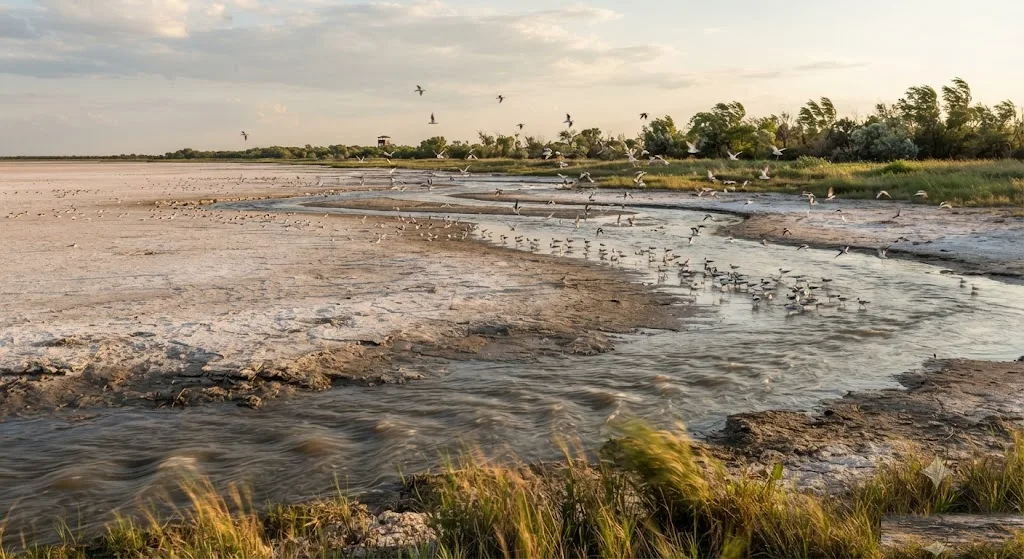
For those seeking an unparalleled encounter with nature, the Salt Plains National Wildlife Refuge Oklahoma stands as a truly unique destination. This expansive refuge, established in 1930, is a critical stopover for migratory birds, offering exceptional birdwatching opportunities amidst a striking landscape of vast salt flats and diverse wetlands. We've explored the refuge extensively to bring you the definitive guide to planning your visit, ensuring you make the most of its natural wonders, from the shimmering salt flats to the rare hourglass selenite crystals found nowhere else on Earth.
Why Visit Salt Plains National Wildlife Refuge
The allure of the Salt Plains National Wildlife Refuge is multifaceted. First and foremost, it's a globally important bird area, recognized by the National Audubon Society and a site of international importance within the Western Hemisphere Shorebird Reserve Network. Over 300 species of birds have been observed here, making it a premier destination for birdwatchers. Imagine witnessing thousands of shorebirds, waterfowl, and even endangered whooping cranes during their migratory journeys.
Beyond the avian spectacle, the refuge offers a landscape unlike any other east of the Rockies. The vast, shimmering salt flats, remnants of an ancient ocean, create an almost otherworldly vista. It's here, beneath the surface, that you'll find the refuge's most distinctive geological treasure: hourglass selenite crystals. These unique formations, with their characteristic sand inclusions, are found only at Salt Plains, offering a one-of-a-kind treasure hunt for visitors.
The refuge also provides a vital habitat for numerous mammal species, including white-tailed deer, red-eared sliders, and nine-banded armadillos, often seen during dawn and dusk. It's a place where conservation efforts are tangible, with managed wetlands and prairies supporting a thriving ecosystem.
Who It's Best For
The Salt Plains National Wildlife Refuge appeals to a diverse range of travelers. It's an absolute must for **avid birdwatchers and wildlife photographers**, who will find endless opportunities to observe and capture stunning images of migratory and resident species. Families with children will discover that the **crystal digging area** provides an engaging and educational hands-on activity, turning a day trip into a memorable treasure hunt. Nature enthusiasts and hikers will appreciate the network of trails that wind through varied habitats, offering tranquil moments and scenic views. Even those simply seeking a peaceful escape from urban life will find solace in the vast, open skies and serene landscapes of this remarkable refuge.
Getting There & Parking
The Salt Plains National Wildlife Refuge is located in Alfalfa County, northern Oklahoma, primarily north of the small town of Jet. The Visitor Center and Headquarters are situated at 71189 Harper Road, Jet, OK 73749-4953. If you're heading directly to the Selenite Crystal Digging Area, the address is 66003 Garvin Road, Cherokee, OK 73728. From this gate, you'll drive about a mile further to the designated digging area, clearly marked with bright orange signs. We recommend checking a map or using GPS coordinates (36.710, -98.271 for the digging area) to ensure accurate navigation. The refuge itself is open daily from sunrise to sunset, year-round, and there are no entrance fees. Parking is readily available at the Visitor Center, trailheads, and the crystal digging area. Remember to rinse any salt off your vehicle after visiting the salt flats to protect its finish.
Top Things to Do
When planning your visit, you'll find a surprising array of things to do at Salt Plains National Wildlife Refuge, catering to various interests:
- Crystal Digging: This is arguably the most unique and popular activity. From April 1 through October 15, visitors can dig for free hourglass selenite crystals in a designated area of the salt flats. We recommend bringing a shovel, water for rinsing, sunscreen, a hat, gloves, and a bucket to collect your finds. You're permitted to take up to 10 pounds of crystals plus one large cluster per day.
- Birdwatching: With over 300 species documented, the refuge is a birder's paradise. The observation tower on Sand Creek Bay and the Sandpiper Trail are excellent spots to view shorebirds, waterbirds, and waterfowl. Fall and spring migrations are particularly spectacular, bringing thousands of sandhill cranes and even endangered whooping cranes. Winter is prime for spotting bald eagles.
- Hiking: Explore the diverse habitats on foot. The refuge offers several trails, including the Eagle Roost National Recreation Trail, Hoot Owl Loop, and Sandpiper Nature Trail. These trails provide opportunities for wildlife observation and offer varying lengths and difficulty levels.
- Harold F. Miller Auto Tour: This 2.5-mile one-way scenic drive winds through managed wetlands, offering excellent opportunities to view wildflowers, waterfowl, and other wildlife from the comfort of your vehicle.
- Photography: The unique landscapes, abundant wildlife, and stunning sunsets provide endless photographic opportunities. Special permits are available for commercial photography on the salt flats.
- Fishing: Fishing is permitted in designated areas from April 1 to October 15, following Oklahoma Department of Wildlife Conservation regulations. Bonham Pond offers free catch-and-release fishing for kids and people with disabilities during this season.
- Hunting: Seasonal hunting for pheasant, quail, dove, ducks, geese, and sandhill cranes is permitted in designated areas. White-tailed deer and spring turkey hunting require a permit through the Oklahoma Department of Wildlife Conservation's Controlled Hunting Program.
These things to do at Salt Plains National Wildlife Refuge ensure a fulfilling visit for any nature lover.
Best Time to Visit
The optimal time to visit Salt Plains National Wildlife Refuge largely depends on your primary interest. For **birdwatching**, we highly recommend the **spring (March to May)** and **fall (July through October)** migration periods. During these seasons, you can witness thousands of shorebirds, waterfowl, and even endangered whooping cranes. **Winter months** (November to February) are ideal for spotting **bald eagles** and other raptors.
If your goal is to experience the unique **crystal digging**, you must plan your trip between **April 1 and October 15**. This is the only period when the designated digging area is open to the public. Keep in mind that summer temperatures can be very hot, and there is little to no shade on the salt flats, so an umbrella or shade tent is advisable.
The refuge is open daily from sunrise to sunset year-round, and the Visitor Center has specific hours, including extended weekend hours during the crystal digging season (April 1 - October 15: Mon-Fri 7:30am-4pm, Sat 10am-5pm, Sun 1pm-5pm). Always check current conditions and specific event schedules before your visit.
Where to Stay Nearby
While the Salt Plains National Wildlife Refuge itself doesn't offer overnight accommodations, there are several convenient options for Salt Plains National Wildlife Refuge lodging in the surrounding communities and at the adjacent state park.
- Salt Plains State Park: Located right next door, Salt Plains State Park offers both RV campsites and primitive tent camping sites, along with renovated, eco-friendly cabins. Cabins include amenities like beds, refrigerators, and stoves, with some units being pet-friendly for a small fee. Online reservations are required for all campsites.
- Jet, Oklahoma: The small town of Jet, just north of the refuge, offers limited but charming options. The Salt Plains Motel provides a cozy retreat with local charm and proximity to the refuge. Twin Springs Lodge in Jet is another option, particularly popular with hunters, offering comfortable stays and access to outdoor activities.
- Cherokee, Oklahoma: As the county seat of Alfalfa County, Cherokee offers some basic lodging choices. You can find motels and guesthouses here, providing a convenient base for exploring the refuge.
- Alva, Oklahoma: Approximately 30-40 minutes northwest of the refuge, Alva provides more extensive lodging options, including chain hotels like Holiday Inn Express Hotel & Suites Alva, Comfort Inn & Suites Alva, Days Inn by Wyndham Alva, and Western Motel. These offer a wider range of amenities, often including pools, gyms, and free Wi-Fi.
- Enid, Oklahoma: For the broadest selection of hotels, restaurants, and amenities, Enid is about 50 miles southeast of the refuge. Options here include La Quinta Inn & Suites by Wyndham Enid, Country Inn & Suites by Radisson, and Hampton Inn & Suites Enid. While further, it might be a good choice for those seeking more dining and entertainment options after a day at the refuge.
Our team recommends booking accommodations in advance, especially during peak crystal digging season or major bird migration periods, as Salt Plains National Wildlife Refuge lodging options can fill up quickly.
Sample 2-Day Itinerary
To truly immerse yourself in the wonders of the Salt Plains National Wildlife Refuge, we suggest a two-day itinerary:
Day 1: Crystal Hunting and Auto Tour
- Morning (Sunrise - Noon): Arrive early at the Selenite Crystal Digging Area (66003 Garvin Road, Cherokee, OK 73728) to beat the heat and crowds. Spend the morning digging for hourglass selenite crystals. Remember your shovel, water, sunscreen, and a bucket!
- Lunch: Enjoy a picnic lunch you've packed, perhaps at one of the picnic areas at nearby Salt Plains State Park, or grab a bite in Jet.
- Afternoon (1:00 PM - 4:00 PM): Take the Harold F. Miller Auto Tour, a 2.5-mile scenic drive through the refuge's managed wetlands. Keep an eye out for waterfowl, deer, and other wildlife. Afterwards, visit the Visitor Center (71189 Harper Road, Jet, OK 73749-4953) to learn more about the refuge's ecology and history.
- Late Afternoon/Evening: Check into your chosen Salt Plains National Wildlife Refuge lodging in Jet, Cherokee, or Alva. Enjoy dinner at a local eatery.
Day 2: Birdwatching and Hiking
- Morning (Sunrise - Noon): Dedicate your morning to birdwatching. Head to the Eagle Roost National Recreation Trail and Hoot Owl Loop near the refuge headquarters. Hike to the wildlife observation tower on Sand Creek Bay for excellent views of shorebirds and waterbirds.
- Lunch: Pack another picnic to enjoy amidst nature, or revisit a local restaurant.
- Afternoon (1:00 PM - 4:00 PM): Explore more of the refuge's hiking trails, such as the Sandpiper Nature Trail, which leads to another shorebird observation tower. Consider a visit to Salt Plains State Park to explore its trails or enjoy the Great Salt Plains Lake.
- Late Afternoon: If time allows, consider a short drive to the nearby Devine Artesian Well for a refreshing drink of naturally filtered water.
- Departure: Begin your journey home, carrying memories and perhaps a bucket of unique crystals.
Is It Worth Visiting?
Without a doubt, our team believes the Salt Plains National Wildlife Refuge is worth visiting. This isn't just another pretty park; it's a truly exceptional natural area that offers experiences found nowhere else. The sheer scale of the salt flats, the vibrant birdlife, and the unique opportunity to dig for hourglass selenite crystals combine to create a destination that leaves a lasting impression.
For birdwatchers, the refuge's status as a Globally Important Bird Area and a critical stopover on the Western Hemisphere Shorebird Reserve Network speaks for itself. For families, the crystal digging provides an engaging, hands-on adventure that is both educational and exciting. We are confident that any traveler with an appreciation for unique landscapes and abundant wildlife will find that the Salt Plains National Wildlife Refuge is worth visiting, offering a memorable and enriching experience that stands out among Oklahoma's many attractions. It's a testament to the diverse beauty of Oklahoma, offering a stark contrast to other notable sites like the Oklahoma City National Memorial or the National Cowboy & Western Heritage Museum, yet equally compelling in its own right.
How to Get There
Reaching the Salt Plains National Wildlife Refuge involves a scenic drive through north-central Oklahoma. The refuge is located in Alfalfa County, primarily north of the small town of Jet (population 230).
- From Oklahoma City: The refuge is approximately a 2-hour drive northwest. We recommend taking US-81 North to OK-11 West, or a similar route that navigates through the state's picturesque rural landscapes.
- From Tulsa: Expect a drive of about 2.5 to 3 hours, heading west on US-412 W, then connecting to state highways that lead to the refuge.
- From Wichita, Kansas: The refuge is about a 1.5 to 2-hour drive south, typically via US-81 S and then connecting to local roads.
The main Visitor Center and Headquarters are located at 71189 Harper Road, Jet, OK 73749-4953. For the Selenite Crystal Digging Area, the address is 66003 Garvin Road, Cherokee, OK 73728. Follow the signs from the gate for about a mile to reach the designated digging spot. The town of Jet itself is easily accessible via US Highway 64. While planning how to get to Salt Plains National Wildlife Refuge, we advise downloading offline maps, as cell service can be spotty in some rural areas.
Salt Plains National Wildlife Refuge camping
While direct camping within the Salt Plains National Wildlife Refuge is not permitted, the adjacent Salt Plains State Park offers excellent camping facilities. You'll find a range of options, including premium RV campsites and primitive tent camping sites. Reservations for all RV and tent campsites must be made online. The state park also provides modern comfort stations with showers for campers' convenience.
things to do in Jet
Jet, Oklahoma, while small, serves as a gateway to the Salt Plains region and offers a few local attractions. It's known as the "geese hunting capital of Oklahoma," attracting hunters during seasonal periods. Beyond the Salt Plains National Wildlife Refuge, visitors can explore Salt Plains State Park, which offers additional hiking trails, fishing opportunities on Great Salt Plains Lake, and a sandy beach. The town itself has a quaint charm, with local diners and historic sites.
Salt Plains National Wildlife Refuge with kids
Visiting the Salt Plains National Wildlife Refuge with kids is a fantastic idea, especially if they enjoy outdoor adventures. The most popular activity for children is undoubtedly the crystal digging, where they can unearth unique hourglass selenite crystals. This hands-on treasure hunt is both exciting and educational. Additionally, Bonham Pond offers free catch-and-release fishing specifically for kids and people with disabilities from April 1 to October 15. The easy hiking trails, like the Eagle Roost Nature Trail, are suitable for younger explorers, and the Harold F. Miller Auto Tour allows for wildlife viewing from the car, which can be great for all ages. Remember to pack plenty of water, snacks, sun protection, and a change of clothes, as it can get messy!
best hotels near Salt Plains National Wildlife Refuge
For the best hotels near Salt Plains National Wildlife Refuge, we recommend considering options in nearby towns like Alva or Enid for a wider selection of amenities. In Alva (about 30-40 minutes away), you'll find choices such as the Holiday Inn Express Hotel & Suites Alva, Comfort Inn & Suites Alva, and Days Inn by Wyndham Alva. If you prefer to stay closer, the Salt Plains Motel in Jet offers a local, cozy experience. For those seeking a more rustic or immersive stay, the cabins and campsites at Salt Plains State Park are an excellent choice. Enid, though further (around 50 miles), provides the most extensive range of accommodations, including several highly-rated chain hotels.
Salt Plains National Wildlife Refuge tips
To make the most of your visit to Salt Plains National Wildlife Refuge, our team has gathered some essential tips:
- Plan for Crystal Digging Season: If digging for crystals is a priority, ensure your visit falls between April 1 and October 15.
- Pack Smart for the Salt Flats: Bring a shovel, plenty of water (for drinking and rinsing crystals), sunscreen, a wide-brimmed hat, sunglasses, and gloves. Wear old shoes you don't mind getting salty, and consider a change of clothes.
- Stay Hydrated: The salt flats offer no shade, and temperatures can be extreme, especially in summer. Carry ample drinking water.
- Protect Your Vehicle: Rinse your vehicle thoroughly after visiting the salt flats to prevent salt corrosion.
- Respect Wildlife: Maintain a respectful distance from all wildlife and do not disturb or collect plants and animals. Drones are prohibited.
- Check Visitor Center Hours: While the refuge is open sunrise to sunset, the Visitor Center has specific hours, including extended weekend hours during crystal digging season.
- Download Offline Maps: Cell service can be unreliable in rural Oklahoma, so have maps downloaded before you go.
where to stay near Salt Plains National Wildlife Refuge
When deciding where to stay near Salt Plains National Wildlife Refuge, you have several options depending on your preference for amenities and proximity. The closest options are the Salt Plains Motel in Jet and the cabins or campsites at Salt Plains State Park. For a slightly wider array of modern hotels and services, we suggest looking at Alva, Oklahoma, which is about a 30-40 minute drive. Enid, about an hour away, offers the most comprehensive selection of lodging and dining, making it a good base if you plan to explore other parts of north-central Oklahoma or prefer more urban conveniences.
Our team's verdict is clear: The Salt Plains National Wildlife Refuge is an essential stop for anyone exploring Oklahoma's natural wonders. Its unique combination of vast salt flats, critical bird habitat, and the singular opportunity to dig for hourglass selenite crystals makes it a standout destination. From the quiet contemplation of a birdwatching expedition to the thrilling discovery of a crystal, this refuge offers an authentic and enriching experience that goes far beyond typical travel fare. We highly recommend adding it to your Plan Your US Trip itinerary, perhaps combining it with a visit to the nearby Wichita Mountains Wildlife Refuge for a comprehensive Oklahoma wildlife adventure.
Last updated: 2026-07-08 by the Roam States team.