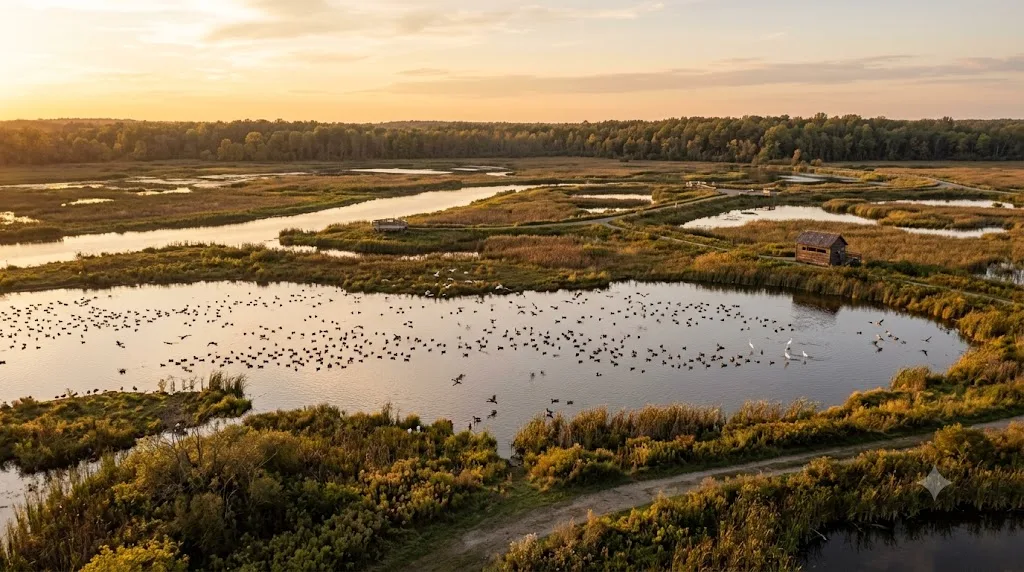
Shiawassee National Wildlife Refuge Travel Guide — Michigan
Our Shiawassee National Wildlife Refuge guide covers practical planning for Shiawassee National Wildlife Refuge Michigan — best time to visit, getting there, and what to do on the ground. This refuge is a critical stopover for migratory birds, offering excellent birdwatching opportunities and scenic driving routes. It's a haven for diverse wildlife, especially during migration seasons.
Why Visit Shiawassee National Wildlife Refuge
The Shiawassee National Wildlife Refuge in Michigan is a jewel in the heart of the Great Lakes Bay Region, established in 1953 to protect and enhance critical wetland habitats for migratory birds. Spanning approximately 10,000 acres, this refuge is a vibrant ecosystem where four rivers—the Tittabawassee, Flint, Cass, and Shiawassee—converge, creating one of Michigan's largest and most productive wetland areas. We've found that its designation as a United States Important Bird Area underscores its global significance for waterfowl, making it an unparalleled destination for birdwatchers and nature enthusiasts alike.
Beyond its ecological importance, the refuge offers a profound sense of tranquility and a chance to reconnect with nature. Imagine observing thousands of ducks and geese during their spring and fall migrations, or spotting a majestic bald eagle soaring overhead. The diverse habitats, from bottomland hardwood forests to expansive marshes and grasslands, support over 270 species of migratory birds and more than 100 songbird species annually. It’s not just birds; white-tailed deer, muskrats, and various other wildlife also call this refuge home. For us, it's a place where every visit reveals something new, a testament to Michigan's rich natural heritage.
Who It's Best For
The Shiawassee National Wildlife Refuge is an ideal destination for a wide array of visitors. Birdwatchers, from seasoned ornithologists to casual observers, will find themselves in paradise, especially during the peak migration seasons when tens of thousands of waterfowl descend upon the "Shiawassee Flats". Photographers will appreciate the abundant wildlife and scenic landscapes, with observation towers and photo blinds providing excellent opportunities to capture stunning shots.
Hikers and bicyclists will enjoy the refuge's extensive trail system, offering miles of paths through diverse ecosystems. Families with children will find the auto tour route particularly engaging, allowing for easy wildlife viewing from the comfort of their vehicle, with opportunities to stop at observation decks. Educational programs at the Green Point Environmental Learning Center also make it a fantastic spot for students of all ages to learn about environmental conservation. Whether you're seeking solitude in nature, an active outdoor adventure, or an educational family outing, this refuge offers something for everyone.
Getting There & Parking
The Shiawassee National Wildlife Refuge is conveniently located in Saginaw County, Michigan, making it an accessible natural escape. The refuge headquarters is situated about 5 miles south of Saginaw, at 6975 Mower Road, off highway M-13. For those relying on GPS, the Green Point Environmental Learning Center, which serves as a visitor center and trailhead, is located at 3010 Maple Street in Saginaw.
When considering how to get to Shiawassee National Wildlife Refuge, most visitors will arrive by private vehicle. From I-75, a common route involves taking exit 149 and heading west on M-46 for about 2 miles. After crossing the Tittabawassee River, you'll head south on Michigan Avenue and then turn left onto Maple Street, which leads directly to the Green Point Environmental Learning Center. Public transportation directly to the refuge is limited, so driving is highly recommended.
Parking is generally available at various trailheads and at the Green Point Environmental Learning Center. For the popular Wildlife Drive Auto Tour, located at 6000 Bishop Road, Saginaw, MI 48601, there are designated pull-offs and parking areas along the route to allow visitors to stop and observe wildlife. We always recommend checking the official U.S. Fish and Wildlife Service website for the most up-to-date information on parking availability and any potential closures, especially during hunting seasons or due to environmental conditions like flooding.
Top Things to Do
There are numerous things to do at Shiawassee National Wildlife Refuge, catering to a variety of interests. Our team finds that the best way to experience the refuge's diverse ecosystems and abundant wildlife is through a combination of driving and hiking.
- Wildlife Drive Auto Tour: This 6.5-mile self-guided loop is a highlight, offering exceptional opportunities to view birds, deer, and other wildlife from your vehicle. The route features observation decks with spotting scopes, perfect for getting a closer look at the distant activity. In 2026, an updated Auto Tour Route is in effect for the spring and summer seasons due to maintenance on the normal route, which is also a 12-mile drive. This updated route is open from sunrise to sunset, seven days a week, unless otherwise posted. The Wildlife Drive is typically open annually from June 1 to September 30, from sunrise to sunset, but note that it may close due to flooding or other conditions.
- Birdwatching: As an Important Bird Area, birdwatching is paramount here. With over 270 species of migratory birds, including waterfowl, shorebirds, wading birds, songbirds, and raptors, you'll want to bring your binoculars. The peak migration seasons in spring and fall are particularly spectacular, with thousands of ducks and geese present.
- Hiking and Biking: The refuge boasts over 12 miles of public trails, open year-round from sunrise to sunset (with potential closures during hunting periods or due to flooding). The Ferguson Bayou Trail is a 5-mile route along dikes, featuring observation towers and photography blinds. The Woodland Trail offers a 4.5 to 5-mile network through bottomland hardwood forests, popular with hikers, mountain bikers, and cross-country skiers. Bicycles are allowed on the Woodland, Ferguson Bayou, and Germania Trails, but not on the wildlife drive or Green Point Trails.
- Photography: From sweeping landscapes to close-ups of diverse wildlife, the refuge offers endless photographic opportunities. Early mornings and late afternoons provide the best light and most active wildlife.
- Paddling: Boating is permitted on navigable waterways flowing through the refuge, such as the Shiawassee, Cass, and Tittabawassee Rivers. Kayaking the slow-moving Shiawassee River is a scenic experience, suitable for families, though you'll need to bring your own equipment.
- Environmental Education: The Green Point Environmental Learning Center provides natural history displays and offers free, curriculum-based environmental education programs for students.
These things to do at Shiawassee National Wildlife Refuge ensure a rich and immersive nature experience for all visitors.
Best Time to Visit
To truly appreciate the Shiawassee National Wildlife Refuge, timing your visit is key, especially if your primary interest is wildlife observation. Our team recommends focusing on the migratory seasons for the most spectacular displays.
- Spring Migration (March-May): As the ice thaws, thousands of waterfowl return to the refuge, making spring an excellent time for birdwatching. The landscape awakens with fresh greenery, and many species are in their vibrant breeding plumage.
- Summer (June-August): While the peak of migration has passed, summer offers lush landscapes and opportunities to see nesting birds, deer, and other resident wildlife. The Wildlife Drive Auto Tour is typically open during these months, from June 1 to September 30, sunrise to sunset. This is also a good time for hiking and kayaking.
- Fall Migration (September-November): This is arguably the most dramatic time to visit. Late October often sees peak numbers, with up to 20,000 Canada geese and 30,000 ducks present. The changing autumn foliage adds another layer of beauty to the scenic drives and trails. However, be aware that some trails may have limited access or closures during hunting periods in October and November.
- Winter (December-February): While fewer migratory birds are present, winter offers a stark beauty and opportunities for cross-country skiing and snowshoeing on some trails. Resident wildlife, including bald eagles, can still be spotted against the snowy backdrop.
Regardless of the season, early mornings and late afternoons are generally the best times for wildlife viewing, as animals are most active during these periods. Always check the refuge's official website for current hours, conditions, and any seasonal closures before your visit, especially concerning the Auto Tour Route and specific trails.
Where to Stay Nearby
When planning your trip to Shiawassee National Wildlife Refuge Michigan, you'll find a variety of lodging options in the nearby city of Saginaw and surrounding towns. While there isn't Shiawassee National Wildlife Refuge lodging directly within the refuge itself, several comfortable hotels and inns are just a short drive away.
Saginaw offers a range of accommodations, from well-known hotel chains to charming local establishments. We've identified several options that provide a good base for exploring the refuge and the wider Great Lakes Bay Region:
- Montague Inn Bed & Breakfast: Located in Saginaw, this historic mansion offers a unique and elegant stay, often recommended for a full weekend experience in the area.
- Four Points by Sheraton Saginaw: A modern option with amenities like an indoor-outdoor pool, conveniently located in Saginaw's shopping district.
- Ramada by Wyndham Saginaw Hotel & Suites: Offers a comfortable stay with good reviews from travelers.
- Baymont by Wyndham Bridgeport/Frankenmuth: Situated in Bridgeport, this hotel provides easy access to both the refuge and the popular Bavarian town of Frankenmuth.
- Red Roof Inn Saginaw - Frankenmuth: A budget-friendly, pet-friendly option located off I-75, offering free Wi-Fi and expanded cable.
- Comfort Inn Birch Run - Frankenmuth and Home2 Suites By Hilton Frankenmuth: These are excellent choices if you plan to combine your refuge visit with a trip to Frankenmuth, which is about 25 minutes away.
For those seeking something a bit different, there are also cabin rentals available in nearby areas like Midland and Sanford, offering waterfront vistas and a more secluded experience. We recommend booking your Shiawassee National Wildlife Refuge lodging in advance, especially during peak migration seasons or if you're visiting on a weekend.
Sample 2-Day Itinerary
To help you make the most of your visit to Shiawassee National Wildlife Refuge Michigan, our team has crafted a sample 2-day itinerary, blending wildlife observation with local exploration.
Day 1: Immersion in the Refuge
- Morning (Sunrise - Noon): Start your day early at the refuge. Head directly to the Wildlife Drive Auto Tour (6000 Bishop Rd, Saginaw, MI 48601). The early hours are prime for wildlife viewing, as animals are most active. Drive the 6.5-mile route, stopping at observation decks to use spotting scopes and capture photographs. Keep an eye out for bald eagles, egrets, herons, and deer. Remember the updated Auto Tour Route for 2026 is a 12-mile drive open sunrise to sunset.
- Late Morning/Lunch: After the auto tour, explore one of the Shiawassee National Wildlife Refuge hiking trails. We suggest the Ferguson Bayou Trail (west end of Curtis Road), a 5-mile loop along dikes that offers excellent views of wetlands and includes observation towers and a photo blind. Pack a picnic lunch to enjoy at one of the designated areas or a scenic spot along the trail.
- Afternoon: Visit the Green Point Environmental Learning Center (3010 Maple Street, Saginaw). Explore its natural history displays and walk a portion of its 2.5 miles of footpaths, which lead to a fishing dock on the Tittabawassee River. This is a great opportunity to learn more about the refuge's ecosystems and conservation efforts.
- Evening: Head back to Saginaw for dinner. Consider dining at one of the local restaurants in Old Town Saginaw, known for its antique shops and eateries.
Day 2: Further Exploration & Local Culture
- Morning: Return to the refuge for a different perspective. If you enjoy paddling, consider kayaking the slow-moving Shiawassee River (access from Cass River Boat Launch on M-13). Alternatively, explore the Woodland Trail (5050 Stroebel Rd, Saginaw, MI 48609), a 4.5-mile network through bottomland hardwood forests, popular with hikers and mountain bikers.
- Late Morning/Lunch: Drive into Saginaw to explore some of its cultural attractions. The Castle Museum of Saginaw County History, housed in a striking château-style former post office, offers fascinating insights into local history. Nearby, the Saginaw Art Museum showcases works spanning thousands of years. For lunch, the SVRC Marketplace offers a European-style market with unique vendors and eateries.
- Afternoon: Immerse yourself in the tranquility of the Japanese Cultural Center, Tea House & Gardens, revered as one of the most authentic Japanese gardens in North America. Alternatively, if you're traveling with kids, the Children's Zoo at Celebration Square or the Mid-Michigan Children's Museum are excellent options.
- Evening: Enjoy a final dinner in Saginaw. For entertainment, check out the schedule at the beautifully restored Temple Theatre or the Dow Event Center for concerts, comedy, or other live events.
This itinerary for Shiawassee National Wildlife Refuge Michigan provides a balance of nature and culture, ensuring a memorable trip. For more Michigan adventures, consider exploring other best places in Michigan, such as Mackinac Island or Pictured Rocks National Lakeshore.
Is It Worth Visiting?
From our perspective as independent US travel authorities, the question "is Shiawassee National Wildlife Refuge worth visiting?" receives a resounding yes. This refuge stands out not just as a critical ecological site but as a genuinely enriching travel experience.
The sheer abundance and diversity of wildlife, particularly migratory birds, are unparalleled. Watching thousands of geese and ducks during migration, or spotting a bald eagle, is a truly awe-inspiring experience that connects you directly with the rhythms of nature. The refuge's commitment to conservation, maintaining over 10,000 acres of vital wetlands and forests, makes it a place of significant environmental importance.
Beyond the wildlife, the refuge offers well-maintained trails for hiking and biking, a convenient auto tour route, and educational opportunities that make it accessible and enjoyable for all ages and activity levels. It's a peaceful escape from urban life, offering quiet moments for reflection and stunning natural beauty. For anyone seeking a deep dive into Michigan's natural wonders, or simply a serene day outdoors, the Shiawassee National Wildlife Refuge delivers an experience that is both memorable and deeply rewarding. We confidently recommend adding it to your Michigan travel plans.
Frequently Asked Questions About Shiawassee National Wildlife Refuge
Shiawassee National Wildlife Refuge camping
Camping is not permitted directly within the Shiawassee National Wildlife Refuge. The refuge is managed for wildlife conservation and offers day-use activities like hiking, birdwatching, and the auto tour. However, there are various campgrounds and lodging options in the surrounding Saginaw County and Great Lakes Bay Region for those looking to stay overnight.
Things to do in Saginaw
Saginaw, the nearest major city to the refuge, offers a rich array of cultural and recreational activities. Our team recommends visiting the Castle Museum of Saginaw County History, exploring the Saginaw Art Museum, or strolling through the Japanese Cultural Center, Tea House & Gardens. For families, the Children's Zoo at Celebration Square and the Mid-Michigan Children's Museum are popular choices. You can also enjoy events at the Temple Theatre or Dow Event Center, or explore the SVRC Marketplace.
Shiawassee National Wildlife Refuge with kids
Shiawassee National Wildlife Refuge is an excellent destination for families with kids. The Wildlife Drive Auto Tour is particularly kid-friendly, allowing children to spot animals from the car and jump out at observation decks. The refuge also offers over 12 miles of trails suitable for walking, and the Green Point Environmental Learning Center provides educational programs. Remember to bring binoculars, bug spray, and water for a comfortable visit.
Best hotels near Shiawassee National Wildlife Refuge
Several highly-rated hotels are available near Shiawassee National Wildlife Refuge. Based on traveler reviews, options like the Montague Inn Bed & Breakfast, Four Points by Sheraton Saginaw, Ramada by Wyndham Saginaw Hotel & Suites, and Baymont by Wyndham Bridgeport/Frankenmuth are popular choices. For budget-conscious travelers, the Red Roof Inn Saginaw - Frankenmuth is also a good option.
Shiawassee National Wildlife Refuge tips
To maximize your visit, we offer these tips: Bring binoculars or a telephoto lens for optimal wildlife viewing. Visit during early mornings or late afternoons when wildlife is most active. Wear comfortable shoes for hiking and bring insect repellent, especially during warmer months. Always check the official U.S. Fish and Wildlife Service website for current hours, trail conditions, and any special closures before you go, as these can change due to weather, hunting seasons, or maintenance.
Where to stay near Shiawassee National Wildlife Refuge
The primary area for accommodations near Shiawassee National Wildlife Refuge is Saginaw, Michigan. This city provides a range of hotels, from chain establishments like Four Points by Sheraton and Wyndham properties to unique stays like the Montague Inn Bed & Breakfast. Nearby towns like Bridgeport and Frankenmuth also offer lodging options, particularly convenient if you plan to explore those areas as well.
The Shiawassee National Wildlife Refuge is a testament to Michigan's natural beauty and a vital sanctuary for migratory birds. We hope this guide inspires your visit to this incredible destination, whether you're a seasoned birder, a family seeking outdoor adventure, or simply looking for a peaceful escape into nature. Its diverse habitats and abundant wildlife offer a truly rewarding experience.
Last updated: 2026-07-06 by the Roam States team.