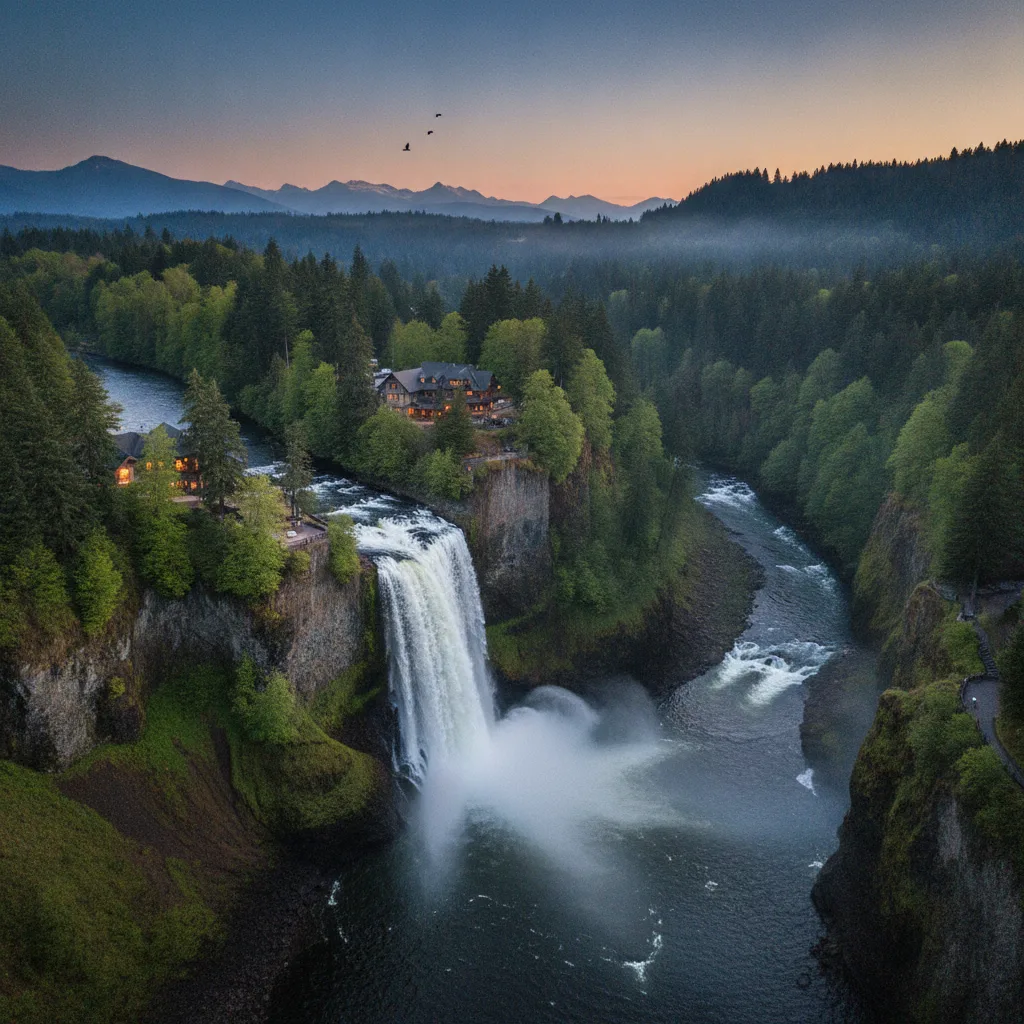
Snoqualmie Falls Travel Guide — Washington
For those seeking a truly iconic Pacific Northwest experience, our team at Roam States can confidently say that a visit to Snoqualmie Falls Washington is an absolute essential. This dramatic 268-foot waterfall, famously featured in the television series Twin Peaks, is more than just a scenic stop; it's a powerful natural wonder that captivates over 1.5 million visitors annually. We've compiled this comprehensive guide to help you plan an unforgettable trip, from navigating the trails to discovering the best local secrets.
Why Visit Snoqualmie Falls
Snoqualmie Falls isn't just a waterfall; it's a spectacle of nature's raw power and beauty, deeply woven into the cultural fabric of Washington State. Cascading 268 feet over granite cliffs, it's more than twice the height of Niagara Falls, offering a truly breathtaking display that humbles visitors with its sheer scale and the thunderous roar of its waters. The falls hold profound sacred significance for the Snoqualmie Tribe, who regard the Snoqualmie River as the source of life. Beyond its natural grandeur, the site gained global recognition as a prominent filming location for David Lynch's cult classic TV series, Twin Peaks, with the adjacent Salish Lodge & Spa serving as the iconic Great Northern Hotel. This blend of natural wonder, cultural heritage, and pop culture fame makes Snoqualmie Falls a uniquely compelling destination in the Pacific Northwest.
Our team believes that the accessibility of Snoqualmie Falls is a major draw. You don't need to be an experienced hiker to appreciate its majesty; multiple viewing platforms, including wheelchair-accessible upper observation decks, offer stunning panoramas. Whether you're seeking a quick, awe-inspiring stop or a deeper exploration of the surrounding trails and the charming town of Snoqualmie, this destination offers a rewarding experience for every traveler.
Who It's Best For
Snoqualmie Falls truly offers something for everyone, making it an ideal destination for a wide range of travelers. Families with children will appreciate the ease of access to the main viewing areas and the relatively short, interpretive trails that can be enjoyed by all ages. The refreshing mist and the sheer power of the falls are sure to leave a lasting impression on young and old alike.
For nature enthusiasts and photographers, the falls provide endless opportunities for stunning shots, especially during the spring snowmelt when the water flow is at its peak, or in autumn when the surrounding foliage bursts with color. History buffs and pop culture aficionados will delight in the connection to the Snoqualmie Tribe and the Twin Peaks legacy, with the Salish Lodge offering a tangible link to the show's mystique.
Even those looking for a peaceful escape will find solace in the natural beauty and the tranquil forest paths. It's a perfect day trip from Seattle, offering a refreshing contrast to city life without requiring extensive travel or strenuous activity. Whether you're traveling solo, as a couple, or with a group, Snoqualmie Falls delivers a memorable Pacific Northwest experience.
Getting There & Parking
Understanding how to get to Snoqualmie Falls and where to park is key to a smooth visit. The falls are conveniently located just about 30 minutes east of Seattle, making it an easy day trip from the city. From Seattle, we recommend taking I-90 East to Exit 25 (Snoqualmie Parkway). Follow the signs to Snoqualmie Parkway, then turn left on WA-18E, and left again on Railroad Ave. The entrance to the falls will be on your left.
When it comes to parking at Snoqualmie Falls, visitors have a few options. There is a main parking lot directly off the rim, which typically has a fee of around $6 or $7 for a two-hour period, with an additional $5 for each extra hour. This fee can be paid at self-serve kiosks near the Visitor Center. Alternatively, a larger, free parking lot is available across the road, connected to the park by an overhead bridge. This free lot is also ADA accessible. On busy days, especially weekends, parking can fill up quickly, so arriving early is advisable.
For those looking to access the lower viewpoint directly by car, you can drive a few miles down the road from the main lot, turn left on Fish Hatchery Road, and follow it to the lower plaza parking lot. Free valet parking is also available for guests and customers of the Salish Lodge & Spa. We always recommend checking current conditions and parking availability before your visit.
Top Things to Do
There are many memorable things to do at Snoqualmie Falls, ensuring a rich experience beyond just viewing the cascade. Our team suggests dedicating at least a couple of hours to fully appreciate the area. The primary draw, of course, is witnessing the majestic 268-foot (or 270-foot, depending on the source) waterfall from multiple vantage points.
- Upper Observation Decks: These accessible platforms offer panoramic views of the falls plunging into the Snoqualmie River below. The main viewing areas are generally wheelchair accessible with ramps.
- Hike the Snoqualmie Falls Trail: For a more immersive experience, take the trail down to the lower observation deck. This trail is approximately 1.4 to 1.5 miles round trip with an elevation change of about 100-200 feet, featuring switchbacks through a lush forest. It's considered a moderate hike, but the ascent back up can be strenuous. The lower viewpoint offers an up-close perspective, allowing you to feel the mist and thunderous sound of the water.
- Visit the Salish Lodge & Spa: Perched atop the falls, the historic Salish Lodge & Spa offers unparalleled views, fine dining, and a luxurious spa experience. Even if you're not staying, you can enjoy a meal or coffee with a view.
- Explore the Gift Shop: Located near the upper observation decks, the gift shop offers souvenirs, snacks, and local products, including the famous Salish Lodge oatmeal.
- Discover the Snoqualmie Falls Hydroelectric Museum: Learn about the history and operation of the hydroelectric power plant, which has been harnessing the falls' power for over a century.
- Wander through Downtown Snoqualmie: Just a mile away (a paved walk), historic downtown Snoqualmie offers charming shops, cafes, and the Northwest Railway Museum.
These things to do at Snoqualmie Falls provide a comprehensive and engaging visit for all interests.
Best Time to Visit
Choosing the best time to visit Snoqualmie Falls can significantly impact your experience. Our team has found that each season offers a distinct perspective of this natural wonder.
- Spring (April – May): This is often cited as the best time to visit if your goal is to see Snoqualmie Falls at its most powerful. The snowmelt from the mountains, combined with spring rains, results in maximum water flow, creating a truly impressive and misty cascade. You'll also encounter fewer crowds than in summer.
- Summer (June – August): While beautiful and offering warm, dry weather, summer is peak season, meaning larger crowds. The falls still flow strongly, and the longer daylight hours allow for extended exploration.
- Autumn (September – October): Fall is a "hidden gem" season. The weather is crisp, and the surrounding foliage transforms into stunning shades of gold and red, providing a picturesque backdrop for the falls. Crowds are typically smaller than in summer.
- Winter (November – March): Winter brings cold weather and the possibility of snow and ice, offering a dramatic, serene, and often less crowded experience. The falls can be breathtaking with a dusting of snow, and the water flow remains robust.
For those looking to avoid crowds, weekday mornings or late afternoons are generally the best times, regardless of the season. The park and viewing areas are open from dawn until dusk year-round.
Where to Stay Nearby
For an unparalleled experience, the historic Salish Lodge & Spa is undeniably the premier choice. Perched directly above Snoqualmie Falls, it offers luxurious accommodations with breathtaking views of the cascade or the lush Pacific Northwest landscape. Guests can indulge in an award-winning spa, locally-sourced cuisine, and the unique ambiance of a property made famous by Twin Peaks.
Beyond the Salish Lodge, the charming town of Snoqualmie and nearby North Bend offer a variety of lodging options to suit different budgets and preferences. You'll find a selection of hotels, inns, and vacation rentals that provide a comfortable base for exploring the falls and the surrounding Snoqualmie Valley. Consider options in Issaquah as well, which is a short drive away and offers more chain hotel choices like Homewood Suites by Hilton and Hilton Garden Inn.
For those who prefer a more rustic experience, there are also camping opportunities in the vicinity, which we'll delve into further below. Regardless of your choice, staying nearby allows for easy access to the falls, especially during less crowded times of day.
Sample 2-Day Itinerary
To truly immerse yourselves in the beauty of Snoqualmie Falls and its surroundings, our team recommends a leisurely two-day itinerary:
Day 1: Falls Immersion & Local Charm
- Morning (9:00 AM - 12:00 PM): Snoqualmie Falls Exploration
Arrive early to beat the crowds. Start at the upper observation decks to take in the iconic views of Snoqualmie Falls Washington. Spend time at the various viewpoints, capturing photos and soaking in the powerful atmosphere. Afterwards, embark on the Snoqualmie Falls hiking trail down to the lower observation deck for an up-close experience with the mist and roar of the water. This trail is a moderate 1.4-mile round trip, offering stunning forest scenery.
- Lunch (12:00 PM - 1:30 PM): Riverside Dining or Local Bites
Enjoy lunch at the Salish Lodge & Spa's Dining Room for exquisite Pacific Northwest cuisine with unparalleled falls views, or head into historic downtown Snoqualmie for a more casual meal at one of the local cafes or restaurants.
- Afternoon (1:30 PM - 4:00 PM): Downtown Snoqualmie & Railway History
Stroll through downtown Snoqualmie, exploring unique shops and galleries. Visit the Northwest Railway Museum to learn about the region's rich railroad history and even take a scenic train ride if available.
- Late Afternoon (4:00 PM - 6:00 PM): Relaxation or Scenic Drive
Return to your accommodation for some relaxation, or take a scenic drive through the Snoqualmie Valley, perhaps stopping at a local farm stand or winery.
- Evening: Dinner & Stargazing
Enjoy dinner at another local restaurant in Snoqualmie or North Bend. If the skies are clear, consider some stargazing – the area's rural setting offers excellent visibility.
Day 2: Nature & Adventure
- Morning (9:00 AM - 1:00 PM): Broader Pacific Northwest Exploration
Venture beyond Snoqualmie. Consider a visit to nearby Mount Rainier National Park (a longer drive, but well worth it for its majestic beauty) or explore other hiking opportunities in the surrounding Mount Baker-Snoqualmie National Forest. The Rattlesnake Ledge trail in North Bend offers panoramic views after a moderate hike.
- Lunch (1:00 PM - 2:30 PM): Picnic or North Bend Fare
Pack a picnic to enjoy amidst nature, or grab a bite in North Bend, a town with its own charm and proximity to more outdoor adventures.
- Afternoon (2:30 PM - 5:00 PM): Seattle City Highlights (Optional)
If you're heading back to Seattle, consider stopping at a few city highlights like Pike Place Market for its vibrant atmosphere and fresh seafood, or the iconic Space Needle for unparalleled city views. These are excellent ways to round out your Pacific Northwest adventure, linking the natural beauty of the falls with the urban pulse of Washington's largest city. For more ideas across the state, visit our Best Places in Washington guide.
Snoqualmie Falls Hiking Trails
Exploring the Snoqualmie Falls hiking trails offers a deeper connection to this iconic natural landmark. While the primary attraction is the waterfall itself, the surrounding park and forest provide several pathways for walkers and hikers of varying abilities.
The most popular and accessible of the Snoqualmie Falls hiking trails is the interpretive trail that descends from the upper observation area to the lower observation deck. This trail is approximately 0.7 miles (1.1 km) one-way, making it a round trip of just under 1.5 miles (2.4 km). It's considered a moderate difficulty due to a steep section on the return climb, with an elevation change of about 100-200 feet. Along the way, interpretive signs provide insights into the falls' natural history and the hydroelectric plant. Dogs on a leash are welcome on this trail.
Beyond the main falls trail, the broader Snoqualmie Forest and nearby areas offer additional hiking opportunities. The Snoqualmie Falls Forest Theater property, for instance, has several trails, including a Lower Trail that ends at the base of the falls (though parts are on Puget Sound Energy property and can be steep and challenging), and an Overlook Trail for a short, easy uphill walk with a distant view. The King County Trail, a paved path along an old railroad, also runs south of the Forest Theater property, offering an easy ride.
For more extensive hiking, nearby areas like Rattlesnake Ledge and Twin Falls State Park provide additional options with varying difficulty levels and stunning views. When exploring any of the Snoqualmie Falls hiking trails, we advise wearing appropriate footwear and being prepared for potentially muddy or wet conditions, especially on unpaved paths.
Snoqualmie Falls Camping
While direct Snoqualmie Falls camping at the immediate falls park is not available, the surrounding Snoqualmie Valley and Mount Baker-Snoqualmie National Forest offer numerous options for those looking to extend their stay under the stars. We've explored the area and found several excellent choices for Snoqualmie Falls camping, ranging from developed campgrounds to more rustic experiences.
One popular option is Denny Creek Campground, located further up the Snoqualmie River. This Forest Service campground offers sites beneath a forest canopy, with some along Lodge Creek. Reservations are highly recommended, especially during peak season. Another nearby choice is the Middle Fork Campground, also along the scenic Snoqualmie River, which serves as a popular base for hiking and fishing.
For those seeking a more private or unique Snoqualmie Falls camping experience, several Hipcamp and private woodland retreats are available minutes from Snoqualmie. These can offer amenities like shared outdoor kitchens, compost toilets, and private tent sites or yurts. Some sites, like those at the Snoqualmie Falls Forest Theater, offer primitive camping for members, with access to restrooms and hot showers.
RV camping is also available at various campgrounds in the wider area, including Tinkham Campground and Tolt MacDonald Park. When planning your Snoqualmie Falls camping trip, always check for current fire bans, reservation requirements, and facility availability, as many local campgrounds close during the snowy winter months.
Is It Worth Visiting?
Our expert verdict is a resounding "Yes!" If you're wondering, "is Snoqualmie Falls worth visiting?" our team wholeheartedly affirms that it is. This natural wonder offers a truly breathtaking experience that combines natural grandeur with historical and cultural significance.
Expert Verdict: Snoqualmie Falls is an essential Pacific Northwest destination. Its dramatic beauty, accessibility, and unique connection to both indigenous culture and pop culture make it a standout attraction. We consider it a must-see for anyone exploring Washington State.
The sheer power of the 268-foot cascade, the refreshing mist, and the lush surrounding forest create an unforgettable sensory experience. The fact that it's easily accessible from Seattle, with wheelchair-friendly viewing platforms, means that almost anyone can enjoy its splendor. Whether you spend a quick hour at the viewpoints or dedicate half a day to hiking the trails and exploring the historic town, the impact of Snoqualmie Falls is profound.
For fans of Twin Peaks, the pilgrimage to the falls and the Salish Lodge & Spa offers a unique opportunity to step into the world of the show. For nature lovers, it's a powerful reminder of the Pacific Northwest's stunning landscapes. Ultimately, the question of "is Snoqualmie Falls worth visiting" is answered by the millions who return year after year, drawn by its enduring appeal and majestic beauty. We encourage you to experience it for yourselves.
Frequently Asked Questions
What are some things to do in Snoqualmie beyond the falls?
Beyond the majestic falls, Snoqualmie offers a charming array of activities. You can explore historic downtown Snoqualmie, which features the Northwest Railway Museum and scenic train rides. The town also has unique boutiques, art cafes, and vintage shops. For outdoor enthusiasts, the surrounding area boasts additional hiking trails like Rattlesnake Ledge and Twin Falls State Park, as well as opportunities for mountain biking and river activities on the Snoqualmie River.
Is Snoqualmie Falls suitable for visiting with kids?
Absolutely! Snoqualmie Falls is a fantastic destination for families with kids. The upper observation decks are easily accessible, even with strollers, and the views are sure to captivate young imaginations. The interpretive trail down to the lower viewpoint is considered family-friendly, though the return ascent can be steep for very young children or those with limited mobility. Leashed pets are also welcome, adding to the family-friendly atmosphere. The nearby town of Snoqualmie also has parks with splash pads during summer, making it a great overall family outing.
What are some essential Snoqualmie Falls tips for visitors?
Our top Snoqualmie Falls tips include arriving early, especially on weekends or during peak season, to secure parking and avoid crowds. Wear comfortable shoes if you plan to hike the trail to the lower viewpoint, as it involves a steep climb back up. Bring layers, as the weather in the Pacific Northwest can change quickly. Don't forget your camera for incredible photo opportunities, particularly during autumn or spring. Consider dining at the Salish Lodge & Spa for a meal with a view, and explore downtown Snoqualmie for local charm. Leashed dogs are welcome in the park and on trails.
What should I know about Snoqualmie Falls parking?
Snoqualmie Falls parking offers both paid and free options. The main lot near the upper observation decks typically charges a fee, around $6-$7 for two hours, with additional hourly fees. A larger, free parking lot is available across the road, connected by an overhead bridge, and is ADA accessible. On busy days, both lots can fill up quickly, so early arrival is recommended. There's also a separate lower parking lot for direct access to the lower viewpoint, which usually requires a fee of $7. Free valet parking is available for Salish Lodge & Spa guests and customers.
What is the best time to visit Snoqualmie Falls?
The best time to visit Snoqualmie Falls largely depends on your preferences. For the most dramatic water flow, visit in spring (April-May) when snowmelt and rainfall are at their peak. Autumn (September-October) offers stunning fall foliage and fewer crowds. Summer (June-August) provides warm weather but also the largest crowds. Weekday mornings or late afternoons are generally best for avoiding crowds year-round.
What are Snoqualmie Falls hours and fees?
Snoqualmie Falls is open year-round, from dawn until dusk, and admission to the park and viewing areas is free. While there is no entrance fee for the falls themselves, parking in the main upper lot typically incurs a fee of approximately $6-$7 for two hours, with an additional $5 per hour. A free parking lot is available across the road, and the lower parking lot has a fee of $7. The upper observation decks are generally open during daylight hours, but the lower observation deck and restrooms may have closures, so it's wise to check the official website before visiting.
We hope this guide inspires your journey to Snoqualmie Falls, Washington. This truly is a gem of the Pacific Northwest, promising awe and wonder with every visit.
Last updated: 2026-07-08 by the Roam States team.