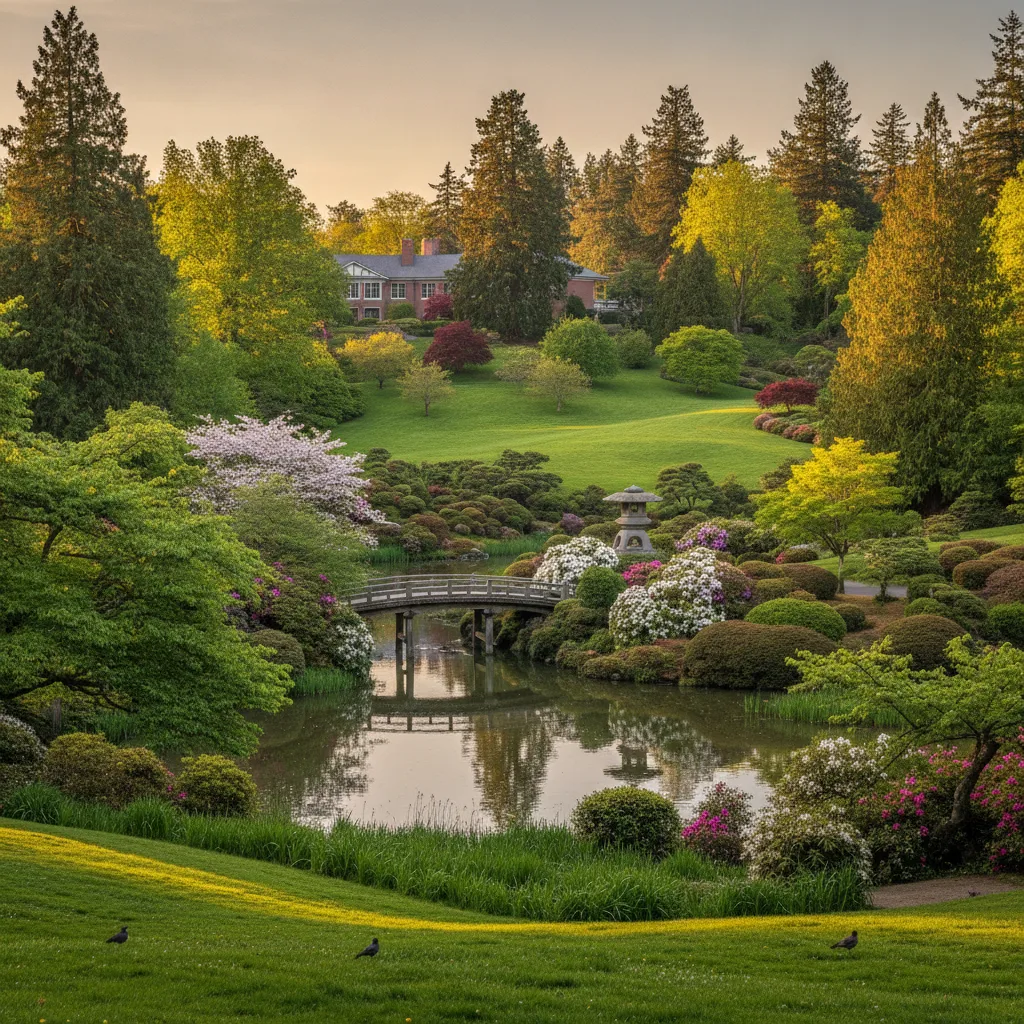
Washington Park Arboretum Travel Guide — Washington
Our Washington Park Arboretum guide covers practical planning for Washington Park Arboretum Washington — best time to visit, getting there, and what to do on the ground.
As the Roam States editorial team, we’ve explored countless green spaces across the United States, but few offer the unique blend of horticultural excellence, ecological diversity, and urban accessibility quite like the Washington Park Arboretum Washington. Jointly managed by the University of Washington Botanic Gardens and the City of Seattle, this 230-acre living museum is a testament to the Pacific Northwest's natural beauty and a global showcase of plant life. It’s more than just a park; it's a vital research center, a peaceful escape, and a dynamic landscape that changes with every season.
Why Visit Washington Park Arboretum
Visiting the Washington Park Arboretum offers an unparalleled opportunity to immerse yourself in a world-class botanical collection without leaving the city. We find that its sheer diversity is its greatest draw, featuring plants from around the globe, many of which are rarely seen elsewhere in North America. From the vibrant spring blooms of Azalea Way to the serene beauty of the Seattle Japanese Garden, there’s always something new to discover. It’s a place where you can witness cutting-edge botanical research in action, learn about conservation efforts, or simply enjoy a quiet stroll amidst towering trees and tranquil waterways.
Beyond its aesthetic appeal, the Arboretum serves as an important educational and scientific resource. Our team appreciates how it fosters a deeper connection to the natural world, providing a peaceful retreat from Seattle's urban bustle. It’s a place for contemplation, learning, and rejuvenation, making it a truly enriching experience for any traveler.
Who It's Best For
The Washington Park Arboretum truly offers something for everyone. We recommend it for:
- **Nature Enthusiasts and Gardeners:** With one of North America's most diverse plant collections, it's a paradise for those who appreciate horticulture and botany.
- **Families with Children:** Expansive open spaces, gentle trails, and the opportunity to spot local wildlife make it an excellent spot for family outings and nature exploration. The UW Botanic Gardens also offers summer camps for various age groups, focusing on nature and STEM-based themes.
- **Hikers and Walkers:** Miles of well-maintained trails cater to all fitness levels, from leisurely strolls to more vigorous hikes.
- **Photographers:** The ever-changing landscape, from seasonal blooms to unique architectural elements within the Japanese Garden, provides endless photographic opportunities.
- **Birdwatchers:** The wetlands and diverse habitats, particularly around Foster Island, attract a wide array of bird species, including herons, ducks, and bald eagles.
- **Those Seeking Tranquility:** Despite its urban location, the Arboretum offers numerous quiet corners for reflection and relaxation.
Getting There & Parking
Understanding how to get to Washington Park Arboretum is crucial for a smooth visit. The Arboretum is conveniently located in Seattle, just east of the University of Washington campus. Our team finds that while driving offers flexibility, public transportation is a viable and often less stressful option, especially on busy weekends.
By Car & Parking
If you're driving, the Washington Park Arboretum is accessible from both I-5 and SR-520. From I-5, take the NE 45th Street exit and drive east. From SR-520, take the Montlake Boulevard E exit. Ample parking is generally available across the Arboretum. However, it's important to note that as of July 1, 2026, many parking lots, including those off 41st Street near the Center for Urban Horticulture, have transitioned to a paid system. Visitors can enjoy the first two hours of parking for free, with a daily maximum of $5. Parking is free all day on Sundays and after noon on Saturdays. You will need to register your vehicle at an onsite kiosk or via the PayByPhone app, even for the free parking period. Accessible parking is available at the Graham Visitors Center. Arboretum Drive E is generally closed to public traffic but open for those with limited mobility, with several parking lots along the drive.
By Public Transportation
For those wondering how to get to Washington Park Arboretum without a car, Seattle's King County Metro bus system provides several options. Bus routes 11, 43, 48, and 556 run near the Arboretum. Route 11 stops on Madison Street, from where you can walk north into the Arboretum. Routes 43 and 48 serve stops along 24th Ave E, near the McGraw Street stop. The University of Washington Link Light Rail station is also a convenient option, located about 1.1 to 1.2 miles away, approximately a 25-minute walk from the Arboretum. We recommend using Metro's Trip Planner for the most current route information.
Top Things to Do
When planning your visit, you'll find a wealth of things to do at Washington Park Arboretum. Our team suggests dedicating ample time to explore its diverse offerings:
- **Explore the Seattle Japanese Garden:** This 3.5-acre urban sanctuary is one of the most celebrated Japanese gardens outside of Japan, offering winding gravel paths, stone benches, and a traditional teahouse. Please note that the Seattle Japanese Garden is undergoing a major restoration project and will be closed from June 22 to July 27, 2026. It will reopen on July 28, 2026, though the North Section will remain closed through November 2026. Admission is $10 for adults (18-64), with discounts for youth, seniors, students, military, and adaptive visitors, and free for children 0-5 and adaptive assistants. Free admission is offered on the first Thursday of each month.
- **Stroll along Azalea Way:** This iconic 3/4-mile path bursts with color in spring, showcasing a stunning collection of azaleas, rhododendrons, and other flowering shrubs. It's a truly spectacular sight and one of our favorite things to do at Washington Park Arboretum during peak bloom.
- **Discover the Pacific Connections Garden:** This unique garden highlights plant collections from countries bordering the Pacific Ocean, like China, Australia, and New Zealand. The new Pacific Pathway, the first phase of the China Forest, is designed to be an accessible trail weaving through existing and new plantings.
- **Wander through the Joseph A. Witt Winter Garden:** Even in colder months, this garden offers a delightful experience with plants chosen for their winter blooms, colorful bark, fragrance, and unique textures.
- **Birdwatch at Foster Island:** The marshy edges around Foster Island are a prime spot for birdwatching, where you might see herons, ducks, and bald eagles. The Arboretum Waterfront Trail, with its floating boardwalks, offers excellent views of Union Bay and Lake Washington.
- **Visit the Graham Visitors Center:** This is a great starting point for your visit, offering maps, information, and a gift shop. Restrooms are also available here.
- **Take a Guided Tour:** The UW Botanic Gardens offers free monthly walking tours on the first Thursday of each month (January-November) from 11:30 AM to 1 PM, focusing on seasonal topics. Paid walking tours are also available, costing $20 for the first ticket and $15 for additional tickets.
Best Time to Visit
The Washington Park Arboretum is a year-round destination, but each season offers a distinct experience:
- **Spring (March-May):** This is arguably the most popular time, as Azalea Way, rhododendrons, magnolias, and cherry trees burst into spectacular bloom. The Japanese Garden is also vibrant with spring colors.
- **Summer (June-August):** The Arboretum remains lush and green, with Stewartia and hydrangea blooming. It's a great time for walking the trails and enjoying the cooler shade of the tree collections. Note the Seattle Japanese Garden closure from June 22 - July 27, 2026.
- **Autumn (September-November):** The Woodland Garden and Japanese Garden showcase stunning fall foliage with Japanese maples, oaks, and sour gums turning brilliant shades of red, orange, and gold.
- **Winter (December-February):** While many gardens are dormant, the Joseph A. Witt Winter Garden truly shines, offering fragrant blooms, colorful bark, and unique textures. The evergreen collections also provide year-round interest.
We recommend visiting on a weekday if possible to avoid larger crowds, especially during peak bloom seasons or on sunny weekends.
Where to Stay Nearby
Finding suitable Washington Park Arboretum lodging is easy, with numerous options ranging from budget-friendly to luxurious, all within a short distance of the Arboretum and downtown Seattle. Our team suggests considering hotels in the University District or downtown Seattle for convenient access to both the Arboretum and other city attractions.
- **University District:** This neighborhood offers a vibrant atmosphere and is very close to the Arboretum. The Residence Inn by Marriott Seattle University District and Staypineapple, Watertown Hotel, University District Seattle are highly-rated options that provide comfortable Washington Park Arboretum lodging.
- **Downtown Seattle:** For those who want to be closer to major attractions like Pike Place Market and the Space Needle, downtown Seattle offers a wide array of hotels. Options like the Hyatt Regency Seattle (approximately 2 miles from the Arboretum) and the Mediterranean Inn (about 3 miles away) are excellent choices. Many downtown hotels also provide easy access to public transport that connects to the Arboretum.
When selecting your Washington Park Arboretum lodging, consider factors like proximity to public transport, amenities, and whether you plan to explore other Seattle highlights. For a broader look at accommodations in the state, consult our guide to Best Places in Washington.
Sample 2-Day Itinerary
To help you make the most of your visit, we’ve crafted a sample 2-day itinerary focusing on the Washington Park Arboretum and nearby attractions:
Day 1: Arboretum Immersion
- **Morning (9:00 AM - 12:00 PM):** Begin your day at the Graham Visitors Center to pick up a map and get current information on what’s blooming. Explore Azalea Way, especially stunning in spring, and then venture into the Joseph A. Witt Winter Garden.
- **Lunch (12:00 PM - 1:00 PM):** Enjoy a picnic lunch amidst the greenery or grab a bite at a nearby cafe in the Montlake or Madison Park neighborhoods.
- **Afternoon (1:00 PM - 4:00 PM):** Immerse yourself in the tranquility of the Seattle Japanese Garden (remember to check for 2026 closures and book your admission in advance). Afterward, explore the Pacific Connections Garden, admiring its diverse global plant collections.
- **Late Afternoon (4:00 PM - 5:30 PM):** Take a leisurely walk along the Arboretum Waterfront Trail, enjoying views of Union Bay and keeping an eye out for local wildlife on Foster Island.
- **Evening:** Head back to your lodging or explore dining options in the University District.
Day 2: Seattle Highlights & Nature
- **Morning (9:00 AM - 1:00 PM):** Experience some of Seattle's iconic attractions. We recommend an early start at Pike Place Market for breakfast and exploring the stalls, followed by a visit to the Space Needle and Chihuly Garden and Glass.
- **Lunch (1:00 PM - 2:00 PM):** Enjoy lunch in downtown Seattle or near the Seattle Center.
- **Afternoon (2:00 PM - 5:00 PM):** Depending on your interests, you could visit the Museum of Pop Culture (MoPOP) or the Seattle Aquarium. Alternatively, for more nature, consider a kayaking or paddleboarding excursion on Lake Union.
- **Evening:** Indulge in Seattle's vibrant culinary scene. For those interested in extended nature trips, consider planning a day trip to Mount Rainier National Park or Olympic National Park, easily accessible from Seattle.
Is It Worth Visiting?
Absolutely, the Washington Park Arboretum is unequivocally worth visiting. Our team confidently asserts that it stands out as one of Seattle's premier attractions, offering a unique blend of natural beauty, horticultural significance, and peaceful respite. For anyone seeking a break from the urban landscape, or a deeper connection with the botanical world, the Washington Park Arboretum provides an enriching and memorable experience.
The sheer scale and diversity of its plant collections, combined with the accessibility of its trails and the serene atmosphere, make it a destination that appeals to a broad audience. From the vibrant seasonal displays to the quiet contemplation offered by the Japanese Garden, there's a profound sense of discovery here. We believe that whether you have an hour or a full day, the Washington Park Arboretum is worth visiting for its educational value, recreational opportunities, and sheer aesthetic pleasure.
Washington Park Arboretum Hiking Trails
The Washington Park Arboretum is a hiker's paradise, offering miles of well-maintained trails suitable for all ages and abilities. Our team has explored these paths extensively and can attest to the diverse scenery you'll encounter. The Arboretum's 230 acres are crisscrossed with routes winding through forests, wetlands, and themed gardens.
- **Arboretum Loop Trail:** This popular 2-mile, bike-and-pedestrian path is an excellent way to see many of the Arboretum's highlights, including the Magnolia Collection and the Pacific Connections Garden. It's accessible from the Graham Visitors Center and offers a combination of paved and compacted gravel surfaces.
- **Azalea Way:** A central, 3/4-mile path famous for its spectacular spring blooms, Azalea Way is a must-walk. It forms part of longer loops and is a relatively flat, easy stroll.
- **Arboretum Waterfront Trail:** This 1.2-mile path is a gem, featuring floating boardwalks that connect Foster Island and Marsh Island to the mainland. It offers stunning views of Union Bay and Lake Washington and is ideal for nature observation, particularly birdwatching.
- **Pinetum and Conifer Collections Loop Trail:** For a shorter, easy 0.5-mile walk focused on conifers, this loop is a great choice, with access points along 26th Ave E or E Lynn Street.
- **Pacific Connections Trail:** Located within the Pacific Connections Garden, this accessible trail weaves through diverse plant collections.
We recommend picking up a trail map at the Graham Visitors Center or downloading one from the UW Botanic Gardens website to plan your route. Many of the Washington Park Arboretum hiking trails are accessible, combining paved sections with compacted gravel, ensuring that visitors with varying mobility can enjoy the natural beauty.
Frequently Asked Questions
Washington Park Arboretum camping
While the Washington Park Arboretum itself does not offer public camping facilities, the University of Washington Botanic Gardens does host popular summer day camps for children and teens within the Arboretum. These camps, including Fir Camp (ages 6-8), Cedar Camp (ages 9-11), and Hemlock Camp (ages 12-14), focus on nature, STEM, and outdoor exploration. The lottery for 2026 summer camp sessions is already closed, but waitlists may be available. For traditional camping, visitors would need to look outside the city, perhaps at nearby state parks or national forests, or consider a trip to Mount Rainier National Park or Olympic National Park.
Things to do in Seattle
Seattle offers a wealth of activities beyond the Arboretum. Our team suggests visiting iconic landmarks like the Space Needle, exploring the bustling Pike Place Market, and marveling at the glass artistry at Chihuly Garden and Glass. Other popular attractions include the Museum of Pop Culture (MoPOP), the Seattle Aquarium, and taking a ferry ride across Puget Sound. For outdoor enthusiasts, kayaking on Lake Union or day trips to Mount Rainier National Park and the San Juan Islands are highly recommended.
Washington Park Arboretum with kids
The Washington Park Arboretum is an excellent destination for families with kids. We find that children enjoy the wide-open spaces for running and playing, the gentle walking trails, and the opportunity to spot wildlife, especially birds around Foster Island. The Seattle Japanese Garden, with its tranquil ponds and unique architecture, can also be a captivating experience for older children. The Arboretum also hosts various youth programs and summer camps focused on nature education. Remember to check the Seattle Japanese Garden's 2026 closure dates before your visit.
Best hotels near Washington Park Arboretum
For the best hotels near Washington Park Arboretum, we recommend looking at options in the University District or downtown Seattle. The Hyatt Regency Seattle, located about 2 miles away, offers a luxurious stay, while the Mediterranean Inn, approximately 3 miles distant, caters to both business and leisure travelers. Other highly-rated options in the University District include the Residence Inn by Marriott Seattle University District and Staypineapple hotels, which are very close to the Arboretum. Many hotels offer amenities like free Wi-Fi and breakfast, and provide easy access to public transport to the Arboretum and other Seattle attractions.
Washington Park Arboretum tips
Our top tips for visiting the Washington Park Arboretum include wearing comfortable walking shoes, as the park is best explored on foot. Bring a water bottle and snacks, especially if you plan a longer visit, as food options within the Arboretum are limited. We also recommend checking the official UW Botanic Gardens and Seattle Japanese Garden websites for current hours, seasonal highlights, and any specific closures or events, especially regarding the Japanese Garden's 2026 restoration. If driving, be aware of the new paid parking system (first two hours free, then $5 daily maximum) and remember to register your vehicle. Consider visiting on a weekday to avoid crowds, and bring binoculars for birdwatching around Foster Island.
Where to stay near Washington Park Arboretum
When considering where to stay near Washington Park Arboretum, we suggest focusing on the University District or downtown Seattle. The University District provides close proximity and a lively atmosphere, with hotels like the Residence Inn by Marriott Seattle University District being a great choice. Downtown Seattle offers a wider range of accommodations, including upscale options like the Hyatt Regency Seattle, and excellent access to public transportation for exploring the rest of the city. Both areas offer diverse dining and entertainment options, ensuring a comfortable and convenient base for your Arboretum adventure.
The Washington Park Arboretum Washington is a truly special place, offering a serene escape and a rich educational experience for all who visit. We hope our guide helps you plan an unforgettable trip to this botanical gem.
Last updated: 2026-07-08 by the Roam States team.