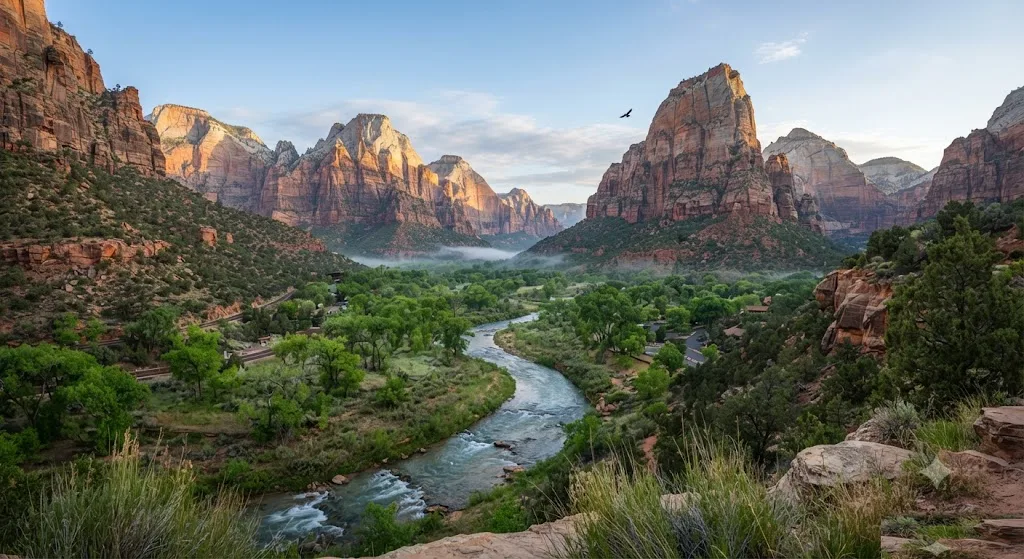
Zion National Park Travel Guide — Utah
Welcome to our comprehensive guide for visiting Zion National Park Utah, a place where towering sandstone cliffs meet the Virgin River, creating a landscape of unparalleled beauty. As the Roam States editorial team, we’ve explored every corner of this iconic park to bring you confident, specific advice that cuts through the generic travel fluff. Zion isn't just a destination; it's an experience that will challenge your perceptions of natural grandeur.
Why Visit Zion National Park
Zion National Park stands as a monumental testament to the raw power of geological forces, offering a dramatic contrast to many other national parks. Unlike parks that require extensive treks to reach their dramatic features, Zion often places you directly in the heart of its grandeur. Imagine stepping off a shuttle and immediately being surrounded by 2,000-foot sandstone walls, with the Virgin River carving its path beside you. This accessibility is both a blessing and a challenge, drawing millions of visitors each year who seek to witness its breathtaking canyons, verdant hanging gardens, and iconic rock formations.
We believe Zion is a must-see for anyone venturing through the American Southwest. Its unique slot canyons, like The Narrows, and the challenging ascent to Angels Landing, offer adventures found almost nowhere else. Beyond the adrenaline-pumping trails, the park provides serene riverside walks, opportunities for wildlife viewing, and a deep sense of connection to nature. It’s a place where the scale of the landscape truly puts things into perspective, leaving a lasting impression on all who visit.
Who It's Best For
Zion National Park caters to a diverse range of travelers, but it particularly shines for active adventurers and families with a love for the outdoors. If you thrive on challenging hikes, canyoneering, or simply exploring stunning natural beauty on foot, Zion is your playground. The park offers world-class hiking trails that range from easy, paved strolls to strenuous, permit-required climbs.
For families, Zion National Park with kids can be an incredibly rewarding experience, provided you plan smart. We recommend starting early to avoid crowds and heat, taking frequent breaks, and focusing on shorter, kid-friendly trails like the Pa'rus Trail, Lower Emerald Pools Trail, and Riverside Walk. The Junior Ranger program is also a fantastic way to engage younger visitors, allowing them to earn a badge by completing activities and attending ranger-led programs. While some trails have drop-offs, many sections are equipped with railings, making them safer for families.
Couples seeking romantic getaways will find solace in Zion's stunning vistas and the peaceful ambiance of its less-trafficked areas, particularly during the shoulder seasons. Photographers will be in paradise, with light constantly shifting across the canyon walls, offering endless opportunities for breathtaking shots. Even those looking for a more relaxed experience can enjoy scenic drives (during the off-season), short walks, and the amenities of Zion Lodge or the nearby town of Springdale.
Getting There & Parking
How to Get There
Zion National Park is located in southwestern Utah, with its main entrance (South Entrance) situated in the town of Springdale. Most visitors arrive by car, often as part of a larger road trip through Utah's national parks. The nearest major airports are McCarran International Airport (LAS) in Las Vegas, Nevada (approximately 2.5-3 hours drive), and Salt Lake City International Airport (SLC) in Salt Lake City, Utah (approximately 4.5-5 hours drive). From these airports, you can rent a car and drive to Springdale.
The park is accessible via State Route 9, known as the Zion-Mount Carmel Highway, which connects the South Entrance in Springdale to the East Entrance. Another less-trafficked section of the park, Kolob Canyons, is located off I-15 near Cedar City, about an hour's drive from the main canyon. This section offers a different, quieter experience and is accessible year-round by personal vehicle.
Beginning June 7, 2026, there are new vehicle restrictions on the Zion-Mt. Carmel Highway between Canyon Junction and the East Entrance. Vehicles exceeding 7'10" wide, 11'4" tall, 35'9" long, or 50,000 lbs will no longer be able to drive this stretch, as the $15 escort permit system is being eliminated. This means many RVs and oversized vehicles will need to take a longer detour via Sheep Bridge Road, adding approximately 40 minutes to their journey.
Zion National Park Parking
Parking inside Zion National Park, particularly at the Zion Canyon Visitor Center, is extremely limited and fills up very early, often by 8-9 AM during peak seasons (March through November). We cannot stress this enough: if you plan to arrive after 8 AM during shuttle season, assume the park's main lot will be full. When this happens, visitors should park in the town of Springdale and utilize the free Springdale shuttle system to reach the park's pedestrian entrance.
The Springdale town shuttle runs along Zion Park Boulevard and drops visitors directly at the pedestrian park entrance, effectively solving the parking problem for those staying in town. This free shuttle service operates every 10 to 15 minutes during its season, making it a convenient option. The Zion Canyon Line, which operates inside the park, also runs every 5 to 10 minutes from the Visitor Center, taking about 45 minutes one way through the 7.7-mile route with 9 stops.
A new development for 2026 is the Zion Gateway Park & Ride, launching March 1, 2026, in the Town of Virgin, in partnership with Zion White Bison Resort and SunTran. This offers another park-and-ride option for visitors to access Zion National Park.
Top Things to Do
Zion National Park offers an incredible array of activities, ensuring there's always something to captivate every visitor. Our team has curated the best things to do at Zion National Park, from iconic hikes to scenic drives and unique experiences.
- Ride the Zion Canyon Shuttle: For most of the year (typically March through November, plus holiday service in late December/early January), private vehicles are prohibited on the scenic drive into Zion Canyon. The free Zion Canyon Shuttle is your primary mode of transport, offering access to all the major trailheads and viewpoints. Shuttles run frequently, every 5-10 minutes, making it easy to hop on and off. This is one of the essential things to do at Zion National Park to truly experience the main canyon.
- Hike Angels Landing (with a permit): This iconic and strenuous hike offers unparalleled views of Zion Canyon. However, a permit is required to hike the chains section beyond Scout Lookout. Permits are distributed via a lottery system on Recreation.gov, with both seasonal and day-before lotteries available. Trail maintenance is scheduled for April 20-23, 2026, during which no permits will be issued. Hiking to Scout Lookout itself does not require a permit and still offers significant canyon views.
- Wade through The Narrows: A world-renowned slot canyon hike, The Narrows involves wading, walking, and sometimes swimming in the Virgin River between towering canyon walls. Hiking bottom-up from the Temple of Sinawava (Shuttle Stop 9) does not require a permit for the initial sections, but venturing past Big Springs requires a wilderness permit. Top-down hikes always require a permit. This adventure is best undertaken when water levels are low and temperatures are warm, typically June through September. Always check flash flood potential forecasts before entering.
- Explore the Emerald Pools Trail: This popular trail system offers lush hanging gardens and waterfalls. The Lower Emerald Pools Trail is an easy, paved path, suitable for families, leading to small waterfalls and shady spots.
- Stroll the Riverside Walk: A paved, mostly flat, and stroller-friendly path that follows the Virgin River, ending at the start of The Narrows. It's perfect for all ages and offers beautiful canyon views with opportunities to dip feet in the river.
- Drive the Zion-Mount Carmel Highway: While the main canyon is shuttle-only for much of the year, the Zion-Mount Carmel Highway (SR-9) remains open to personal vehicles year-round, connecting the South and East entrances. This scenic drive includes the famous Zion-Mount Carmel Tunnel and offers access to trails like the Canyon Overlook Trail. Be mindful of the new vehicle restrictions for 2026.
- Visit Kolob Canyons: For a different perspective and fewer crowds, explore the Kolob Canyons section of the park. Located off I-15, it features a scenic drive and several hiking trails, including Taylor Creek Middle Fork.
- Enjoy Ranger-led Programs: The park offers various ranger-led programs, especially during summer, which are excellent for learning about Zion's geology, wildlife, and history, particularly for families with children.
Best Time to Visit
Choosing the best time to visit Zion National Park largely depends on your priorities regarding weather, crowds, and specific activities. We've found that each season offers a distinct experience.
- Spring (March-May): This is a highly recommended shoulder season. Temperatures are pleasant, ranging from the mid-60s to low 80s, ideal for hiking. Spring also brings snowmelt, creating numerous temporary waterfalls and vibrant wildflowers. However, March can be busy due to spring break, and The Narrows may be closed due to high water levels from snowmelt, sometimes well into June.
- Summer (June-August): Summer offers the longest daylight hours and the warmest temperatures, making The Narrows particularly appealing as water levels drop and the river is warmer. However, temperatures regularly exceed 100°F in the canyon, crowds are at their peak, and parking fills very early. Monsoon season (July-September) brings a risk of flash floods, which can close slot canyons even with clear skies overhead. If visiting in summer, we advise starting hikes by 6 AM and carrying ample water.
- Fall (September-November): Many regulars consider fall the best all-around time to visit Zion National Park. After Labor Day, crowds begin to thin, and temperatures become comfortable, typically in the 60-75°F range. Late October brings stunning fall foliage along the Virgin River, adding a beautiful layer of color to the red rock landscape. The Narrows is usually still open during this time.
- Winter (December-February): Winter is Zion's quietest season, offering solitude and a unique, snow-dusted landscape. A major perk is that personal vehicles are allowed to drive the Zion Canyon Scenic Drive when the shuttle system is not operating (typically November 29 through March 6, with holiday service in late December/early January). While temperatures are cold and some higher trails may have ice or snow, the winter light on the canyon walls is spectacular. Microspikes are recommended for icy sections.
Where to Stay Nearby
Finding the right accommodation can significantly enhance your Zion experience. We've outlined the best options both inside and just outside Zion National Park Utah.
- Inside the Park: Zion Lodge
The only lodging option actually within Zion National Park is Zion Lodge. It's centrally located in Zion Canyon, offering unparalleled views and immediate access to trailheads. The lodge provides hotel rooms, suites, and historic cabins with gas fireplaces. It also features the only restaurant and gift shop inside the park. Staying here allows for early morning and late-night access to the canyon when crowds are minimal. Reservations are highly coveted and should be made far in advance. - Springdale, Utah: The Gateway Town
Springdale is the closest town to Zion's South Entrance, just 2.3 miles away. Most hotels in Springdale are within walking distance of a free town shuttle stop, which takes you directly to the park entrance. This is an excellent option for convenience, with a wide range of lodging, dining, and gear rental services.- Upscale Options: Cliffrose Springdale (Curio Collection by Hilton) offers a beautiful riverside location and is walkable to the park. Desert Pearl Inn provides large suites, some with river views, and a great pool, making it suitable for families.
- Mid-Range & Value: Bumbleberry Inn is known for its large rooms and free breakfast vouchers. Driftwood Lodge and SpringHill Suites by Marriott also offer reliable stays with amenities like outdoor pools.
- Cabins: Zion Canyon Cabins, just outside the South Entrance, offer a cozy bed-and-breakfast style experience.
- Beyond Springdale: More Affordable Options
If you're looking for more budget-friendly accommodations or a different kind of experience, consider towns slightly further afield:- Virgin (15-20 minutes west): This small town often hosts glamping options like Under Canvas Zion and Zion Wildflower Resort, offering unique stays in safari tents or cabins.
- La Verkin and Hurricane (30-45 minutes west): These towns offer cheaper hotels, such as La Quinta Inn & Suites, which provides good value with breakfast and a pool.
- Orderville (45-60 minutes east): On the park's east side, Zion Ponderosa Ranch Resort offers rustic cabin suites and a variety of activities, often at a lower price point, though it requires a scenic drive through the park to reach the main canyon. They are offering a "Bonus Night" deal for 2026, where booking three nights gets you a fourth free (with some blackout dates).
Sample 2-Day Itinerary
To help you make the most of your visit to Zion National Park, we’ve crafted a sample 2-day itinerary focusing on key experiences and efficient travel within the park.
Day 1: Iconic Hikes & Canyon Views
- Morning (Early Start is Key!): Arrive at the Zion Canyon Visitor Center early, ideally before 7 AM during shuttle season, to secure parking if you're driving in, or take the Springdale shuttle to the park entrance. Board the Zion Canyon Shuttle at Stop 1.
- Hike Angels Landing (or Scout Lookout): Take the shuttle to The Grotto (Stop 6). If you secured an Angels Landing permit, embark on this challenging and rewarding hike. If not, hike to Scout Lookout for incredible panoramic views without the permit requirement. This will take 3-5 hours depending on your pace.
- Lunch: Grab a casual lunch at Zion Lodge (Shuttle Stop 5) or bring a packed lunch to enjoy at a scenic spot.
- Afternoon: Emerald Pools Trail: From Zion Lodge, access the Lower Emerald Pools Trail. This easy, paved loop offers lush scenery, waterfalls, and shady alcoves. Consider extending to the Middle and Upper Pools for a longer hike.
- Late Afternoon/Evening: Pa'rus Trail & Sunset: Take the shuttle back towards the Visitor Center and walk a portion of the Pa'rus Trail (Shuttle Stop 3 to 2, or from the Visitor Center). This paved, multi-use trail follows the Virgin River and offers beautiful views, especially as the sun begins to set. Enjoy dinner in Springdale.
Day 2: Water Adventures & Scenic Drives
- Morning: The Narrows (Bottom-Up): Take the shuttle to the Temple of Sinawava (Stop 9), the last stop in the main canyon. Embark on the Riverside Walk, a paved path that leads to the start of The Narrows. From here, you can wade upstream into the Virgin River as far as you're comfortable without a permit (past Big Springs requires a permit). Rent appropriate gear (canyoneering shoes, walking stick) in Springdale beforehand. Plan for 3-6 hours.
- Lunch: Pack a waterproof lunch to enjoy in The Narrows, or return to Springdale for a meal.
- Afternoon: Canyon Overlook Trail & Zion-Mount Carmel Highway: Retrieve your car (or take the Springdale shuttle back to your lodging). Drive east on the Zion-Mount Carmel Highway (SR-9). Park at the Canyon Overlook Trailhead (parking is limited, go early if possible) and enjoy the moderate 1-mile round-trip hike to a spectacular viewpoint overlooking Pine Creek Canyon and the main Zion Canyon. Continue driving through the iconic Zion-Mount Carmel Tunnel and along the scenic highway towards the East Entrance for more stunning views, keeping the 2026 vehicle restrictions in mind.
- Evening: Stargazing: Zion National Park is a designated International Dark Sky Park. Find a spot away from Springdale's lights, such as along the Kolob Terrace Road or near the East Entrance, to enjoy incredible stargazing.
Last updated: 2026-07-08 by the Roam States team.