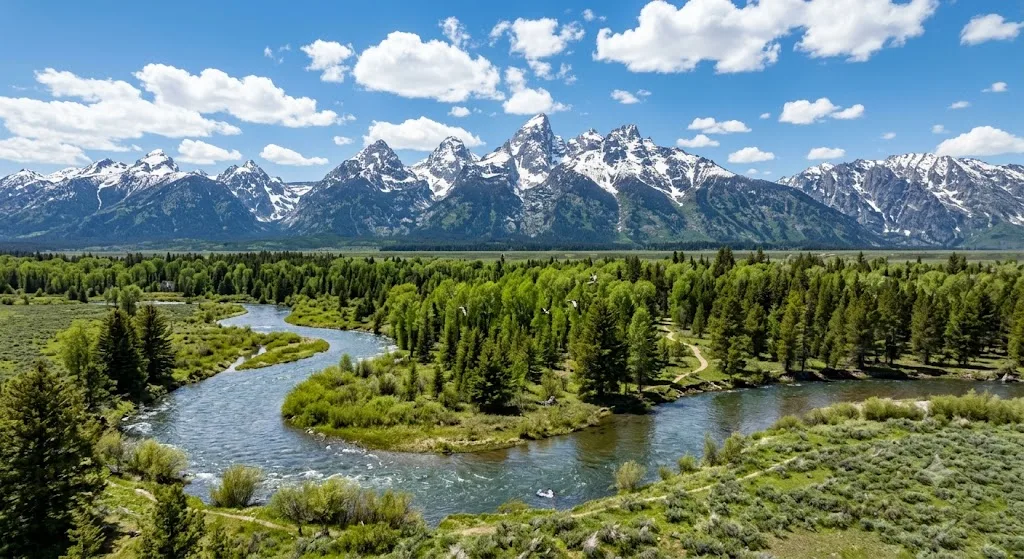
Grand Teton National Park Travel Guide — Wyoming
For those seeking an authentic encounter with the American West, a visit to Grand Teton National Park Wyoming offers an unparalleled experience. Our team at Roam States has compiled this comprehensive guide to help you navigate the towering peaks, pristine lakes, and abundant wildlife of this iconic destination. We cut through the noise to provide confident, specific advice, ensuring your trip is nothing short of spectacular.
Why Visit Grand Teton National Park
Grand Teton National Park is a landscape of dramatic contrasts, where the jagged, snow-capped peaks of the Teton Range rise abruptly from the flat expanse of Jackson Hole. It’s a place that captivates with its sheer geological grandeur and vibrant ecosystems. We believe it stands out for its accessibility to stunning alpine scenery, offering a more intimate connection with the mountains compared to some larger, more sprawling national parks. Here, you can witness abundant wildlife—including bison, moose, elk, and bears—against a backdrop of some of North America's most photographed mountains. The park's relatively compact size means you can experience a wide range of activities and viewpoints without extensive travel between major attractions. It's a testament to generations of stewardship, preserving a valley rich with natural beauty and historical significance.
Who It's Best For
Grand Teton National Park truly offers something for everyone, making it an ideal destination for a diverse range of travelers. It's particularly well-suited for outdoor enthusiasts, from casual sightseers to avid hikers and climbers. Families with children will find numerous accessible trails and engaging ranger programs, including the Junior Ranger program. Wildlife photographers and nature lovers will be rewarded with exceptional opportunities to capture iconic Western species in their natural habitat. Those seeking tranquility and breathtaking natural beauty will find solace in its pristine lakes and quiet trails. While summer brings the most activity, shoulder seasons like early fall offer a more serene experience with fewer crowds and vibrant autumn colors.
How to Get There
Grand Teton National Park is conveniently located in close proximity to Jackson Hole, Wyoming, serving as a primary gateway for many visitors. The closest major airport is Jackson Hole Airport (JAC), which is uniquely situated within the park itself. From there, you can rent a car directly or arrange for shuttle services to your lodging. The park has three main entrance stations: Moose, Moran, and Granite Canyon.
Driving & Entrances
Most visitors arrive by car, and the park is easily accessible via major highways. U.S. Highways 26, 89, and 191 run concurrently through the park, providing scenic drives and access to various points of interest. The Teton Park Road, which connects Moose to Jenny Lake and Signal Mountain, is a popular scenic byway, though it typically closes to vehicles from November 1 to April 30 each year due to winter conditions. During this closure, it's often open for bicycles, walkers, skiers, and snowshoers. For easiest access to the northern part of the park, including Colter Bay, we recommend entering through the Moran Entrance Station.
Parking in Grand Teton National Park
Parking can be a significant consideration, especially during the peak summer months. Popular trailheads and viewpoints, such as Jenny Lake, Taggart Lake, and String Lake, often fill up by mid-morning. We strongly advise arriving early in the day, ideally before 8 AM, to secure a spot at these sought-after locations. Construction projects are underway in 2026, which may impact parking and cause delays in certain areas. For example, visitors should expect delays near the Moose Entrance Station due to initial construction for a roundabout, and the Laurance S. Rockefeller Preserve Center parking lot may have wait times of 30-90 minutes at peak. Always check current conditions and alerts on the official National Park Service website before your visit.
Top Things to Do
With its majestic mountains and pristine wilderness, there are countless things to do at Grand Teton National Park. Whether you're seeking adventure or tranquil contemplation, the park delivers. Our team recommends prioritizing these experiences to make the most of your visit.
Scenic Drives & Photography
The park's scenic drives offer unparalleled opportunities for photography and wildlife viewing. The 42-mile (68 km) scenic loop combines Teton Park Road and Highway 89/191, providing continuous vistas of the Teton Range. Don't miss the iconic views from Oxbow Bend, especially at sunrise or sunset, where the Tetons reflect perfectly in the Snake River. Mormon Row Historic District, with its historic barns set against the backdrop of the mountains, is another must-see for photographers. Schwabacher Landing is also a prime spot for both photography and wildlife observation.
Wildlife Viewing
Grand Teton National Park is a haven for wildlife. We recommend early morning or late evening excursions for the best chances to spot bison, elk, moose, pronghorn, and even bears. The National Elk Refuge, just outside the park near Jackson, is home to thousands of elk, particularly in winter. Remember to maintain safe distances—at least 100 yards from bears and wolves, and 25 yards from other wildlife—and never feed animals.
Boating & Water Activities
The park's numerous lakes offer fantastic opportunities for water-based recreation. Jenny Lake is popular for scenic boat shuttles that can take you across the lake, providing access to hiking trails like Hidden Falls and Inspiration Point. Kayak and canoe rentals are available at Colter Bay Village and Signal Mountain Marina on Jackson Lake, allowing you to explore the calm waters and enjoy stunning views. Scenic float trips on the Snake River are also a popular way to experience the park's beauty and spot wildlife from a different perspective.
Grand Teton National Park Hiking Trails
Hiking is undeniably one of the top things to do at Grand Teton National Park, with a vast network of trails catering to all skill levels. From leisurely lakeside strolls to challenging alpine ascents, the Grand Teton National Park hiking trails offer breathtaking scenery and opportunities for solitude. We always recommend planning your route, carrying plenty of water, and being prepared for varying weather conditions.
Popular Day Hikes
- Jenny Lake Loop Trail: This popular 7.1-mile (11.4 km) loop offers stunning views of the Tetons and the lake. A shorter option involves taking the Jenny Lake boat shuttle across the lake to access Hidden Falls and Inspiration Point, turning it into a much more manageable 1-mile (1.6 km) round trip with a boat ride.
- String Lake Loop Trail: At around 4.4 miles (7.1 km), this relatively flat and family-friendly trail offers gorgeous close-up views of the Tetons and the lake, and is a popular spot for swimming and paddleboarding.
- Taggart Lake Trail: This 3-mile (4.8 km) round trip hike leads to a beautiful lake with reflections of the mountains. Note that a northern segment of the Taggart Lake Trail is closed through November 15, 2026, for rehabilitation, requiring a longer, steeper alternate route to access the lake.
- Moose Ponds Loop: An easy 3-mile loop through meadows, offering excellent chances to spot moose.
- Phelps Lake Loop: A moderate 4.3-mile trail with significant elevation gain, providing sweeping views of Phelps Lake. The "Jumping Rock" at Phelps Lake is a favorite for those seeking a refreshing dip.
Always be bear aware when exploring Grand Teton National Park hiking trails. Carry bear spray, travel in groups, and make noise. You can find detailed trail conditions and safety information on the National Park Service website.
Grand Teton National Park Camping
Experiencing the tranquility of the Tetons under a blanket of stars is an unforgettable part of any trip, and Grand Teton National Park camping options cater to various preferences. All campgrounds in Grand Teton National Park are now reservation-only and can be booked on a six-month rolling basis via Recreation.gov. We strongly encourage planning and booking early, especially for popular sites, as they can fill up within minutes of becoming available during peak season.
Frontcountry Campgrounds (Reservation Only)
- Colter Bay Campground: This is the largest campground in the park, offering 338 individual campsites, 12 group sites, 10 hiker-bicycler sites, and 13 electric-only ADA-accessible sites. It's located on the shore of Jackson Lake, close to Colter Bay Village's amenities. It is typically open from mid-May to late-September.
- Jenny Lake Campground: A smaller, tent-only campground with 49 sites, Jenny Lake is highly sought after due to its prime location at the base of the Tetons. It typically opens in early May.
- Gros Ventre Campground: Often the first to open in spring (around late April) and the last to close in fall (mid-October), Gros Ventre offers a more open, sagebrush setting and is known for wildlife viewing, particularly moose.
- Signal Mountain Campground: Located on the shores of Jackson Lake, this campground offers beautiful lake and mountain views. It typically opens in early May.
- Lizard Creek Campground: A more rustic and secluded option on the northern end of Jackson Lake, typically opening in mid-June.
- Headwaters Lodge & Cabins at Flagg Ranch: Situated between Grand Teton and Yellowstone National Parks, this offers a mix of cabins and campsites, typically opening in early June.
Backcountry Camping
For those seeking a more rugged experience, backcountry camping permits are required for overnight trips. While an advanced lottery for permits opens in January, approximately two-thirds of the park's backcountry sites are held for walk-up permits, available at ranger stations the day before your planned hike. Flexibility with your itinerary can increase your chances of securing a spot.
Best Time to Visit
The best time to visit Grand Teton National Park largely depends on your desired activities and tolerance for crowds. The park is open 24 hours a day, year-round, but facility and road access vary significantly by season.
Summer (June - August)
Summer is peak season, offering the warmest weather, longest sunny days, and full access to all park roads, campgrounds, visitor centers, and high-country trails. This is ideal for hiking, boating, and all recreational activities. However, expect significant crowds, especially at popular spots like Jenny Lake and String Lake, and parking lots can fill early. Lodging and camping reservations should be made 6-12 months in advance.
Fall (September - October)
Many visitors consider September the best time to visit Grand Teton National Park. Crowds begin to thin after Labor Day, the air is crisp, and the aspen trees turn a brilliant gold. This is also prime time for wildlife viewing, particularly the elk rut, and offers excellent photography opportunities. Most park lodges and campgrounds remain open through mid-October.
Spring (May - early June)
Spring is a shoulder season, offering fewer crowds and the chance to see wildflowers and baby wildlife. The Teton Park Road typically opens to vehicles around May 1. However, weather can be unpredictable, with slushy trails and some facilities still closed.
Winter (November - April)
Grand Teton transforms into a snowy wonderland in winter, offering solitude and opportunities for cross-country skiing and snowshoeing. Most roads, all campgrounds, and many visitor facilities are closed or have reduced hours. This is a different experience, primarily for winter sports enthusiasts.
Where to Stay Nearby
Choosing where to stay near Grand Teton National Park can significantly impact your experience. Options range from rustic cabins within the park to more extensive amenities in the nearby town of Jackson.
Inside Grand Teton National Park
Staying within the park offers unparalleled access to trails, scenic overlooks, and wildlife viewing, minimizing commute times. Lodging reservations are available on a 12-month rolling basis and fill up quickly, especially for peak summer dates. Options include:
- Jackson Lake Lodge: A historic, full-service lodge with stunning views of Jackson Lake and the Tetons. It offers lodge rooms, cottages, dining, and various activities.
- Jenny Lake Lodge: A more secluded and elegant AAA 4-Diamond property offering rustic luxury cabins, fine dining, and included activities like horseback riding.
- Colter Bay Village: Offers authentic homestead log cabins, tent cabins, and an RV park, with amenities like a marina, general store, and restaurants.
- Signal Mountain Lodge: Located on the shores of Jackson Lake, offering lodge rooms and cabins.
- Headwaters Lodge & Cabins at Flagg Ranch: Situated at the northern end of the park, close to Yellowstone.
Outside the Park
The town of Jackson, Wyoming, located just south of the park, is a popular base for visitors. It offers a wider range of hotels, B&Bs, restaurants, and shops, though it adds a 40-60 minute drive to most park attractions. Jackson Hole is a vibrant destination in itself, with plenty of things to do. Teton Village, at the base of Jackson Hole Mountain Resort, is another option, offering lodging and direct access to the resort's summer activities and hiking trails. For those exploring more of Wyoming, consider combining your trip with a visit to other incredible places in Wyoming, such as Yellowstone National Park, which is directly north of Grand Teton, or Bridger-Teton National Forest, which borders the park.
Sample 2-Day Itinerary
To help you maximize your time, our team has crafted a sample 2-day itinerary for Grand Teton National Park, focusing on key highlights and experiences.
Day 1: Iconic Views & Lake Exploration
- Morning (Sunrise): Start your day early at Oxbow Bend or Schwabacher Landing for breathtaking sunrise views and potential wildlife sightings.
- Late Morning: Head to Mormon Row Historic District to photograph the iconic barns against the Teton backdrop.
- Lunch: Enjoy a picnic lunch with a view at one of the park's designated picnic areas or grab a bite at Colter Bay Village.
- Afternoon: Explore the Jenny Lake area. Take the scenic boat shuttle across Jenny Lake to hike to Hidden Falls and Inspiration Point. Alternatively, walk a portion of the String Lake Loop Trail and enjoy swimming or paddleboarding at String Lake.
- Evening: Enjoy dinner at one of the park lodges, such as Jackson Lake Lodge, or head into Jackson for more dining options.
Day 2: Southern Peaks & Wildlife
- Morning: Hike the Taggart Lake Trail (being mindful of any 2026 construction detours).
- Late Morning: Drive the Moose-Wilson Road (be aware of potential 2026 construction delays and closures between May 1 – June 19 and September 8 – November 15, with delays expected June 20 – September 7). This road is excellent for wildlife viewing, especially moose.
- Lunch: Pack a picnic or find a casual meal near the Moose Entrance.
- Afternoon: Visit the Craig Thomas Discovery and Visitor Center near Moose to learn more about the park's geology and wildlife. Consider a scenic float trip on the Snake River for a different perspective of the Tetons and wildlife.
- Evening: Explore the town of Jackson, browse its art galleries, or enjoy a classic Western dinner. For a unique experience, consider visiting the National Museum of Wildlife Art.
Is It Worth Visiting?
Absolutely, Grand Teton National Park is worth visiting. We confidently assert that its dramatic mountain scenery, abundant wildlife, and diverse recreational opportunities make it one of the most compelling national parks in the United States. Unlike some parks that require extensive driving to reach viewpoints, Grand Teton offers immediate, jaw-dropping vistas from many points along its main roads. The sheer scale of the Teton Range, coupled with the serene beauty of its lakes and rivers, creates a truly awe-inspiring experience. Whether you're an avid hiker, a wildlife enthusiast, a photographer, or simply someone looking to immerse themselves in stunning natural beauty, Grand Teton National Park delivers. It’s a place where memories are made, and the raw power of nature is on full display. We particularly recommend it for those who appreciate dramatic landscapes and an active outdoor experience.
Last updated: 2026-07-12 by the Roam States team.