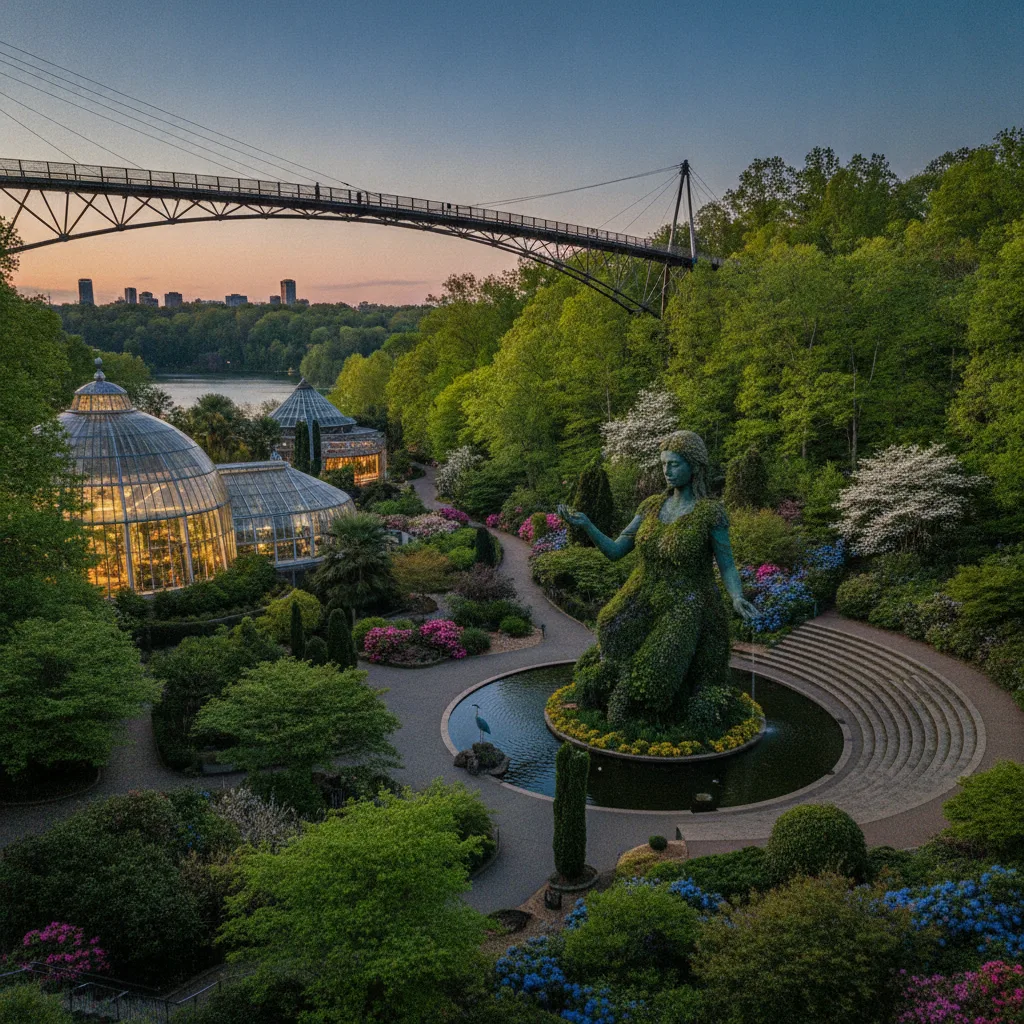
Atlanta Botanical Garden Travel Guide — Georgia
Welcome to our comprehensive guide to the Atlanta Botanical Garden Georgia. As the Visit America editorial team, we pride ourselves on delivering confident, specific, and never generic insights to help you plan unforgettable journeys across the United States. This urban oasis in the heart of Atlanta offers a remarkable escape, showcasing diverse plant collections, stunning exhibitions, and a commitment to conservation that makes it a true gem of the Southeast. We've meticulously researched every detail to ensure your visit is seamless and enriching.
Why Visit Atlanta Botanical Garden
For those seeking a vibrant natural escape within a bustling metropolis, the Atlanta Botanical Garden is an absolute must-see. We consider it one of the nation's premier botanical gardens, consistently lauded for its innovative displays and extensive collections. Celebrating its 50th anniversary in 2026, the Garden has evolved into a dynamic living museum where horticulture, art, and education converge. It's a place where you can wander through serene woodlands, explore rare tropical plants, and marvel at monumental art installations, all within a stone's throw of Midtown Atlanta. The Garden's dedication to showcasing the beauty and diversity of the plant kingdom, alongside its commitment to conservation, makes it a truly inspiring destination. Whether you're a seasoned horticulturist or simply looking for a peaceful retreat, the Atlanta Botanical Garden offers an experience that rejuvenates the spirit and ignites curiosity.
Who It's Best For
The Atlanta Botanical Garden genuinely offers something for everyone, making it an ideal destination for a wide array of travelers. Families will find endless opportunities for engagement, particularly in the award-winning Children's Garden, which we'll detail further below. Couples seeking a romantic outing will appreciate the tranquil paths, stunning floral displays, and intimate nooks perfect for quiet conversation. Solo adventurers can find solace and inspiration amidst the diverse plant collections and peaceful environments. Art enthusiasts will be captivated by the Garden's ongoing exhibitions, which frequently feature large-scale sculptures and installations integrated beautifully with the natural landscape, such as the "Niki in the Garden" exhibition running from May 9 to September 6, 2026. Photographers will discover countless picturesque scenes, from the delicate blooms of the orchids to the dramatic vistas from the Canopy Walk. Even those with limited mobility will find the Garden accessible, with paths designed to accommodate both heels and wheels. Essentially, if you appreciate beauty, nature, and a well-curated experience, the Atlanta Botanical Garden is for you.
Getting There & Parking
Understanding how to get to Atlanta Botanical Garden and where to park is key to a stress-free visit. The Garden is conveniently located adjacent to Piedmont Park in Midtown Atlanta, at 1345 Piedmont Ave NE, Atlanta, GA 30309.
By Car & Parking
For those driving, on-site parking is available in the SAGE Parking Facility. Garden guests should enter via the Piedmont Avenue entrance and park on Levels 4, 5, and 6. It's important to note that Piedmont Park visitors use Levels 1, 2, and 3 via the Monroe Drive entrance, and the facility is monitored to ensure visitors park on the appropriate levels, with violations risking booting or towing. The SAGE Parking Facility is card-only, accepting no cash. Parking rates typically range from $5 to $15, though during popular events like Garden Lights, a flat rate of $15 per vehicle may apply, and multi-visit parking passes are not accepted during these times. There is no free parking directly near the Atlanta Botanical Garden.
By Public Transportation
Atlanta's MARTA transit system provides an excellent alternative for how to get to Atlanta Botanical Garden. The NextGen Bus Route 7 stops at the Monroe Drive Entrance, and can be boarded at the King-Memorial, Lindbergh, and West End train stations. Additionally, Bus #27 stops at the main entrance at 1345 Piedmont Avenue and can be boarded at either Midtown or Lindbergh train stations. The closest MARTA rail stations are Arts Center Station (approximately 0.7 miles west) and Midtown Station (approximately 0.9 miles southwest).
By Rideshare & Walking
Rideshare services are a convenient option, dropping you directly at the Garden entrance. For those staying nearby or exploring Piedmont Park, walking to the Garden is also a pleasant option, as it sits directly beside the park.
Top Things to Do
When considering things to do at Atlanta Botanical Garden, the sheer variety of experiences can be overwhelming. Our team has curated a list of highlights to ensure you make the most of your visit to this magnificent destination. Beyond the Garden, we'll also touch upon other things to do in Atlanta to round out your trip.
Explore the Iconic Plant Collections
- Fuqua Orchid Center: This nationally renowned center houses a breathtaking collection of high-elevation orchids, some never before grown in the Southeast, alongside tropical and desert plants. The Orchid Center transforms into a gallery-like space, dazzling with color and fragrance, especially during exhibitions like "Orchid Daze: Living Canvas".
- Dorothy Chapman Fuqua Conservatory: Step into a world of rare and endangered tropical and desert plants within this stunning glasshouse. It's a fantastic place to see diverse ecosystems under one roof.
- Kendeda Canopy Walk: Experience the Storza Woods from a unique perspective on this 600-foot-long, 40-foot-high elevated walkway. It offers majestic views of one of Atlanta's few mature hardwood forests and the city skyline beyond. It's particularly enchanting to stroll with a specialty cocktail during evening events.
- Children's Garden: A paradise for younger visitors, this award-winning garden features a splash pad, a carnivorous plant bog, a building play area, a water "painting" wall, and a large treehouse with bridges, climbing nets, and slides. Kids can also enjoy feeding frogs in the Fuqua Conservatory lobby on Saturdays and learning about honeybees.
- Edible Garden: Discover a vibrant array of seasonal fruits, vegetables, and herbs. It's an educational and engaging space to learn about where our food comes from and even identify different herb scents at the Herb Wall.
- Rose Garden & Skyline Garden: Immerse yourself in fragrant blooms in the Rose Garden, or enjoy the artistic displays in the Skyline Garden, which often features "floating islands" of bulbs during spring events.
Engage with Art and Exhibitions
The Garden frequently hosts spectacular exhibitions, blending art with nature. In 2026, the "Niki in the Garden" exhibition, featuring monumental sculptures by artist Niki de Saint Phalle, is running from May 9 to September 6. These installations provide unique photo opportunities and add another layer of wonder to your visit.
Attend Special Events and Programs
The Atlanta Botanical Garden offers a robust calendar of events year-round. From "Garden Lights, Holiday Nights" in winter to "Atlanta Blooms!" in spring, there's always something special happening. Look out for "Twilight in the Garden" on Thursdays from March 12 to April 9, 2026, offering specialty cocktails, live music, and lawn games as the sun sets. Weekly programs like "Shows for Seedlings," "Storybook Time," and "Drop-In Kids Gardening Activity" cater to families. Guided tours with docents are also available Tuesday through Friday, free with Garden admission.
Dining at the Garden
The Garden offers excellent dining options, including Longleaf, a full-service restaurant, and the Quick Café for grab-and-go items. Reservations are recommended for Longleaf, and Garden admission is required to dine. During special events, additional food and beverage options, including cash bars, may be available.
Beyond the Garden: Things to Do in Atlanta
Atlanta is a city rich with attractions, and many are easily combined with a visit to the Garden. We highly recommend exploring Piedmont Park, right next door, for more green space and recreation. For history buffs, the Martin Luther King Jr. National Historical Park is an essential stop, offering profound insights into the Civil Rights Movement. Art lovers should visit the High Museum of Art, part of the Woodruff Arts Center. Other top attractions include the Georgia Aquarium, World of Coca-Cola, and the National Center for Civil and Human Rights. For a different kind of outdoor adventure, consider Stone Mountain Park, a short drive from the city. For those venturing further into Georgia, consider a trip to the Savannah Historic District for its charming squares and rich history.
Best Time to Visit
Deciding the best time to visit Atlanta Botanical Garden largely depends on what you hope to see and experience, as the Garden offers a distinct charm in every season.
- Spring (March-May): We believe spring is one of the most popular and visually spectacular times to visit. The "Atlanta Blooms!" event ushers in a magical season with tulips, daffodils, hyacinths, crocuses, and other perennial bulbs creating a riot of color along the pathways and in the Southern Seasons Garden Promenade. The weather is typically comfortable, making it ideal for extended strolls.
- Summer (June-August): Summer brings lush greenery and vibrant displays, along with popular evening events like "Cocktails in the Garden" and "Niki in the Garden" exhibitions. While it can be warm, the shade of Storza Woods and the indoor conservatories offer respite. The Children's Garden splash pad is also a hit during hot days.
- Fall (September-November): As temperatures cool, the Garden transforms with autumnal hues. Fall offers comfortable weather and colorful displays, making it another excellent time for a visit.
- Winter (December-February): Winter is popular for the annual "Garden Lights, Holiday Nights" event, which transforms the Garden into a dazzling wonderland of lights. While many outdoor plants are dormant, the Fuqua Orchid Center and Conservatory remain vibrant, offering a warm escape.
Ultimately, there's no single "peak" time, as different plants and flowers bloom at various points throughout the year, offering a continually changing experience. We recommend checking the Garden's calendar for specific events and bloom schedules to align with your interests.
Where to Stay Nearby
Given the Atlanta Botanical Garden's prime Midtown location, there are numerous excellent accommodation options to suit every budget and preference. We recommend staying in Midtown for convenient access to the Garden and other major attractions.
- Luxury Options: For a truly indulgent experience, consider the Four Seasons Hotel Atlanta or the Loews Atlanta Hotel, both offering upscale amenities and within a short distance of the Garden. The W Atlanta Midtown is another stylish choice, often praised for its convenient location.
- Mid-Range & Boutique Hotels: The Starling Atlanta Midtown, Curio Collection by Hilton, and the Canopy by Hilton Atlanta Midtown are highly-rated options known for their design and proximity. The Residence Inn by Marriott Atlanta Midtown/Peachtree at 17th offers apartment-style accommodations, ideal for longer stays or families. The Moxy Atlanta Midtown is a vibrant, modern choice.
- Budget-Friendly Stays: While true budget options directly adjacent to the Garden are limited, hotels slightly further out like the Hilton Garden Inn Atlanta Midtown or Hampton Inn & Suites Atlanta Midtown can offer good value without sacrificing too much convenience. Public transport can easily connect you to the Garden from these locations.
Many hotels in Midtown are within walking distance or a short rideshare from the Garden, making it easy to enjoy both the natural beauty and the vibrant city life.
Sample 2-Day Itinerary
To help you maximize your visit to the Atlanta Botanical Garden and explore the best of Atlanta, our team has crafted a sample two-day itinerary.
Day 1: Garden Immersion & Midtown Exploration
- Morning (9:00 AM - 1:00 PM): Atlanta Botanical Garden Georgia Deep Dive
- Start your day early at the Atlanta Botanical Garden Georgia to enjoy the freshest air and fewer crowds. Dedicate ample time to explore the Fuqua Orchid Center and Conservatory, marveling at the diverse plant collections.
- Walk the Kendeda Canopy Walk for stunning views of Storza Woods and the Atlanta skyline.
- If visiting with kids, spend time in the Children's Garden, allowing them to engage with the interactive exhibits and play areas.
- Enjoy a leisurely lunch at Longleaf, the Garden's full-service restaurant, or grab a quick bite at the Quick Café.
- Afternoon (1:00 PM - 5:00 PM): Piedmont Park & High Museum of Art
- Exit the Garden and stroll into adjacent Piedmont Park. Enjoy the green spaces, perhaps rent a bike, or simply relax by the lake.
- Walk or take a short rideshare to the High Museum of Art, the leading art museum in the Southeast, for an afternoon of cultural enrichment.
- Evening (5:00 PM onwards): Midtown Dining & Entertainment
- Dine in Midtown, which boasts a plethora of restaurants ranging from casual to upscale.
- Catch a show at the Alliance Theatre or the Atlanta Symphony Hall, both part of the Woodruff Arts Center.
Day 2: History, Culture & Downtown Highlights
- Morning (9:00 AM - 1:00 PM): Civil Rights History & Aquarium Wonders
- Begin your day with a profound visit to the Martin Luther King Jr. National Historical Park. Explore his birth home, Ebenezer Baptist Church, and The King Center.
- Head downtown to the Georgia Aquarium, one of the largest aquariums in the world, for an immersive experience with marine life.
- Afternoon (1:00 PM - 5:00 PM): World of Coca-Cola & Centennial Olympic Park
- Adjacent to the Aquarium, explore the World of Coca-Cola, an interactive museum dedicated to the iconic beverage.
- Spend some time relaxing in Centennial Olympic Park, the legacy of the 1996 Olympic Games, and consider a ride on SkyView Atlanta for panoramic city views.
- Evening (5:00 PM onwards): Southern Flavors & Departure Prep
- Enjoy a farewell dinner, perhaps sampling some classic Southern cuisine in a different Atlanta neighborhood like Inman Park or Old Fourth Ward.
- Depending on your departure schedule, you might catch a final show or simply enjoy a relaxing evening.
This itinerary offers a blend of natural beauty, cultural immersion, and urban exploration, ensuring a memorable trip to Atlanta and the Atlanta Botanical Garden.
FAQ Longtails
Atlanta Botanical Garden tips
Our top tips for visiting the Atlanta Botanical Garden include arriving early, especially on weekends, to avoid crowds. Wear comfortable walking shoes, as you'll be covering a lot of ground. Check the Garden's website for current exhibitions and events, as these change seasonally and can greatly enhance your visit. Consider purchasing tickets online in advance, which is often recommended, especially for weekends and peak seasons. Remember that the Garden and its parking facility are card-only, so no cash is accepted. Bring a water bottle, especially during warmer months, and be prepared for varied weather conditions. Don't forget your camera – the Garden is incredibly photogenic!
Atlanta Botanical Garden parking
Parking for the Atlanta Botanical Garden is available in the SAGE Parking Facility. Garden guests should use the Piedmont Avenue entrance and park on Levels 4, 5, and 6. It's important to note that Piedmont Park visitors use Levels 1, 2, and 3 via the Monroe Drive entrance, and parking on the incorrect level can result in your vehicle being booted or towed. The facility is card-only, and cash is not accepted. Parking rates typically range from $5 to $15, but can be a flat $15 during special events like Garden Lights, when multi-visit passes are not valid. There is no free parking near the Garden. Members can purchase multi-visit parking passes, but these do not guarantee a space and are not valid during all special events.
best time to visit Atlanta Botanical Garden
The best time to visit the Atlanta Botanical Garden depends on your interests. Spring (March-May) is highly popular for the "Atlanta Blooms!" event, showcasing vibrant tulips and other seasonal flowers. Summer (June-August) offers lush greenery and evening events, while fall (September-November) provides comfortable weather and changing foliage. Winter (December-February) is famous for the "Garden Lights, Holiday Nights" display. The Garden is closed on Mondays, except for specific holidays like Memorial Day or Labor Day in 2026. We recommend checking the Garden's seasonal event calendar to align your visit with specific blooms or exhibitions you wish to see.
Atlanta Botanical Garden hours and fees
As of 2026, the Atlanta Botanical Garden is generally open Tuesday through Sunday, from 9 a.m. to 9 p.m.. However, hours can vary seasonally and for special programming, so it's always best to check their official website for the most current schedule. The Garden is typically closed on Mondays, with exceptions for certain holidays such as April 6, May 25, September 7, and October 12 in 2026. Admission fees for daytime entry are approximately $26.95 for adults and $23.95 for children aged 3-12, with children under 3 admitted free. Members enjoy complimentary unlimited daytime entry. A $5 processing fee applies to all online or phone ticket orders, and tickets are date-specific and non-refundable, though "FLEX Tickets" can be purchased for rescheduling flexibility.
Atlanta Botanical Garden travel guide
This comprehensive travel guide, crafted by the Visit America editorial team, aims to provide all the essential information for planning your trip to the Atlanta Botanical Garden. We've covered why to visit, who it's best for, detailed directions and parking information, top things to see and do, the best times to visit, nearby accommodation options, and a sample two-day itinerary. Our goal is to offer confident, specific, and accurate information, verified with 2026 facts, to ensure you have an exceptional experience at this urban oasis in Georgia. For more detailed planning, we encourage you to explore other destinations in Georgia, such as Cumberland Island or the Golden Isles.
Atlanta Botanical Garden itinerary
A focused itinerary for the Atlanta Botanical Garden could involve dedicating a full morning to the Garden's highlights. Start with the Fuqua Orchid Center and Conservatory, then ascend the Kendeda Canopy Walk for panoramic views. Explore the themed outdoor gardens like the Edible Garden and Rose Garden. If visiting with children, allow ample time for the Children's Garden. Enjoy lunch at the Garden's Longleaf restaurant or Quick Café. In the afternoon, you could extend your visit with a docent-led tour (available Tuesday-Friday) or attend a specific program or exhibition. For a more relaxed pace, consider splitting your visit over two shorter sessions, perhaps returning for an evening event like "Twilight in the Garden" (Thursdays in spring 2026).
We hope this guide inspires your visit to the Atlanta Botanical Garden Georgia. It's a destination that truly exemplifies the beauty and diversity of the natural world, offering a peaceful and enriching experience in the heart of the city.
Last updated: 2026-07-05 by the Visit America team.