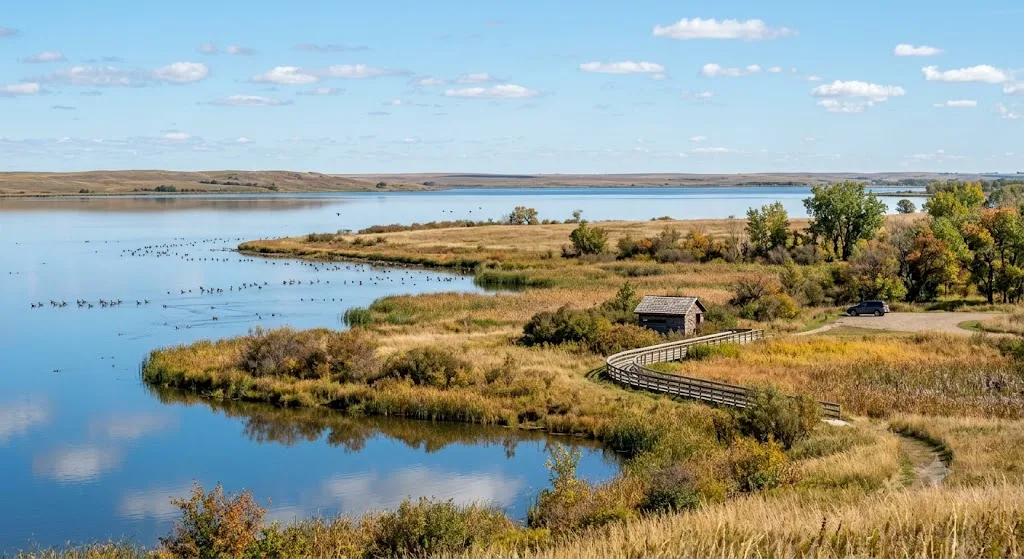
Our Audubon National Wildlife Refuge guide covers practical planning for Audubon National Wildlife Refuge North Dakota — best time to visit, getting there, and what to do on the ground.
As the Roam States editorial team, we've explored countless natural havens across the United States, and few offer the serene beauty and abundant wildlife viewing opportunities quite like the Audubon National Wildlife Refuge North Dakota. This crucial refuge, a sprawling landscape of prairie potholes, grasslands, and the shimmering waters of Lake Audubon, serves as a vital sanctuary for migratory birds and year-round residents alike. Whether you're a dedicated birder, a nature photographer, or simply seeking a tranquil escape into North Dakota's wild heart, our team is confident you'll find an enriching experience here.
Why Visit Audubon National Wildlife Refuge
For those questioning, "is Audubon National Wildlife Refuge worth visiting?", our answer is an unequivocal yes. This 14,739-acre refuge, managed by the U.S. Fish and Wildlife Service, is a cornerstone of the Prairie Pothole Region, often dubbed the "Duck Factory of North America." It provides essential breeding habitat for over half of the continent's waterfowl and serves as a critical stopover point for hundreds of other migratory bird species along the Central Flyway.
The sheer diversity of life here is astounding. Over 246 bird species have been documented, alongside 34 mammal species, 5 reptile species, 4 amphibian species, and 37 fish species. Imagine spotting sandhill cranes gracefully wading through wetlands, blue-winged teal darting across the water, or a majestic bald eagle soaring overhead. Beyond the avian spectacle, you might encounter white-tailed deer, coyotes, red foxes, and sharp-tailed grouse. It's an immersive experience in a truly wild landscape, offering a profound connection to nature that is increasingly rare. If you're looking for an authentic North Dakota wildlife experience, then Audubon National Wildlife Refuge is worth visiting for its unparalleled biodiversity and tranquil setting.
Who It's Best For
Audubon National Wildlife Refuge is a destination that truly caters to a diverse array of visitors. Our team finds it particularly ideal for:
- Birdwatchers: With over 246 bird species recorded, including significant migratory populations and breeding waterfowl, this refuge is a premier birding hotspot. Bring your binoculars and a field guide; you'll be adding to your life list in no time.
- Nature Photographers: The diverse habitats, from expansive prairie grasslands to serene wetlands and the shores of Lake Audubon, offer endless opportunities for stunning landscape and wildlife photography. Early mornings and late evenings are particularly rewarding for capturing wildlife in soft, natural light.
- Hikers and Walkers: With a range of trails, from easy, paved loops to longer, unpaved routes, there's something for every fitness level. It's a fantastic way to immerse yourself in the prairie environment.
- Families: The auto tour allows for wildlife viewing from the comfort of your vehicle, perfect for younger children or those with mobility limitations. The visitor center also offers educational exhibits.
- Peace Seekers: If you're looking to disconnect from the hustle and bustle and reconnect with nature, the refuge offers profound tranquility and wide-open spaces.
- Outdoor Enthusiasts: Beyond birding and hiking, the refuge permits activities like hunting (deer, late-season upland bird) and ice fishing in designated areas and seasons, adhering to specific regulations.
Getting There & Parking
Knowing how to get to Audubon National Wildlife Refuge is straightforward, yet planning your route is key, especially given North Dakota's expansive landscapes. The refuge is centrally located in the state, making it accessible from several major cities.
The Audubon National Wildlife Refuge office and visitor center are situated approximately 3 miles north and 1 mile east of Coleharbor, North Dakota, directly off U.S. Highway 83. This highway is a primary north-south route through central North Dakota.
- From Minot: Minot is about 45-50 minutes north of the refuge. Take US-83 South towards Coleharbor.
- From Bismarck: Bismarck is approximately 65 miles south of the refuge. Take US-83 North towards Coleharbor.
- From Fargo: Fargo is considerably further east. While a precise driving distance to Coleharbor wasn't directly available in our searches, based on the distance from Fargo to Bismarck (approximately 189 miles straight line), we estimate the drive from Fargo to Audubon National Wildlife Refuge North Dakota to be around 3.5 to 4 hours.
Upon arrival, you'll find a designated visitor parking area at the office and visitor center. Additionally, pull-offs and parking areas are available along the auto tour route and at various trailheads, providing convenient access to different parts of the refuge. We recommend checking the refuge's official website or contacting the visitor center for any specific parking instructions or seasonal closures, especially during winter months when snow accumulation can affect accessibility. The good news is, there are no entrance fees to access Audubon National Wildlife Refuge, making it an accessible destination for all travelers.
Top Things to Do
When planning your visit, you'll discover a wealth of things to do at Audubon National Wildlife Refuge, all centered around immersing yourself in the natural world. Our team highlights these key activities:
Auto Tour Route
One of the most popular things to do at Audubon National Wildlife Refuge is to experience the scenic auto tour route. This 8 to 8.5-mile gravel route begins near the visitor center and winds along the picturesque south shoreline of Lake Audubon. It offers an excellent way to get an overview of the refuge's diverse habitats—lake views, prairie wetlands, and grasslands—all from the comfort of your vehicle. Keep your eyes peeled for a variety of birds, mammals like white-tailed deer, and even the occasional moose. Interpretive signs along the route correspond with a brochure available at the visitor center, enhancing your understanding of the wildlife and ecosystems you're observing.
Audubon National Wildlife Refuge Hiking Trails
For those who prefer to explore on foot, the Audubon National Wildlife Refuge hiking trails offer intimate encounters with the prairie landscape. We highly recommend these options:
- Prairie Nature Trail: This one-mile, self-guided trail starts on the north side of the visitor center. It features a half-mile paved, ADA-compliant loop, with an additional half-mile gravel extension. The trail meanders through prairie grasslands, planted trees, and along wetlands, providing excellent opportunities to observe native plants, birds, and other animals. It's open year-round, though heavy snow can make it challenging in winter.
- North Country National Scenic Trail: A significant portion of this immense national trail, approximately 12 to 13 miles, traverses Audubon National Wildlife Refuge. This unpaved, mowed prairie trail offers fantastic views of the prairie, wetlands, and the south shore of Lake Audubon. It's open year-round and is a great option for longer hikes, with various access points. We advise checking the North Country Trail's official webpage for maps and guidelines before embarking on a longer trek.
These Audubon National Wildlife Refuge hiking trails are perfect for getting up close with the refuge's flora and fauna.
Wildlife Viewing & Photography
As an essential stop on the Central Flyway, wildlife viewing is paramount here. Spring and fall migrations are peak times to observe vast concentrations of ducks, geese, sandhill cranes, and shorebirds. Early mornings and evenings typically offer the best opportunities for spotting wildlife. A wildlife checklist is available at the visitor center to help you identify species. For photographers, a dedicated photography blind is available on a quiet bay of Lake Audubon, providing excellent chances to capture waterfowl and shorebirds.
Hunting & Fishing
For those interested in regulated outdoor sports, the refuge allows hunting for deer (archery, rifle, and muzzleloader) and a late-season upland bird hunt for grouse, partridge, and pheasant. Special regulations apply, and hunting waterfowl or other species is prohibited. Ice fishing is also permitted on Lake Audubon when the ice covers the water, with walleye, yellow perch, and northern pike being popular catches. Open-water fishing on the refuge portion of Lake Audubon is not allowed. Detailed information and maps for hunting and ice fishing are available at the visitor center.
Best Time to Visit
Choosing the best time to visit Audubon National Wildlife Refuge largely depends on your primary interest, though each season offers unique experiences. We've broken it down for optimal planning:
- Spring (April-May): This is arguably the most spectacular time for birdwatching. Thousands of migratory birds, including ducks, geese, and sandhill cranes, pass through the refuge on their journey north. The prairie also comes alive with early wildflowers.
- Summer (June-August): While migration slows, summer is ideal for observing breeding birds, their young, and a vibrant display of prairie wildflowers. The weather is generally warm and pleasant, making it excellent for hiking and driving tours.
- Fall (September-October): Another peak migration period, offering a chance to witness the southbound journey of countless birds. The changing colors of the prairie grasses add another layer of beauty to the landscape. Late-season hunting also begins in the fall.
- Winter (November-March): While colder, winter provides a stark beauty and opportunities for ice fishing on Lake Audubon. Hardy resident wildlife like white-tailed deer and sharp-tailed grouse are more easily spotted against the snow. Trails remain open but may be challenging due to snow.
Generally, the best weather in North Dakota for outdoor activities is between May and September. For prime wildlife viewing, especially birds, early mornings and evenings are consistently the most rewarding, regardless of the season.
Where to Stay Nearby
While Audubon National Wildlife Refuge itself does not offer overnight lodging, there are several charming towns and cities nearby that provide a range of accommodations to suit every traveler's needs. When considering Audubon National Wildlife Refuge lodging, you'll find options from cozy motels to vacation rentals.
- Coleharbor, ND: As the closest town, Coleharbor offers limited but convenient options. You might find a few local motels or vacation rentals, perfect for a quick overnight stay.
- Garrison, ND: Located about 9 miles from the refuge, Garrison is a charming city known for its outdoor scenery and offers several lodging choices, including motels and vacation rentals. The Garrison Motel is one option.
- Underwood, ND: Another nearby town, Underwood provides options like the Dakota Rose Inn and Underwood Inn, offering essential comforts and free Wi-Fi.
- Riverdale, ND: Situated near Lake Sakakawea State Park, Riverdale boasts the Riverdale Inn, which offers complimentary WiFi and daily housekeeping. Vacation rentals are also available here.
- Washburn, ND: Further south, Washburn offers additional lodging choices, including the Scotwood Motel By OYO.
- Minot, ND: Approximately 45-50 minutes north of the refuge, Minot is a larger city with a wider selection of hotels, including well-known chains like Motel 6 and Country Inn & Suites. This is a good base if you prefer more amenities and dining options.
- Bismarck, ND: About an hour's drive south, the state capital, Bismarck, provides the most extensive range of hotels, from budget-friendly to more upscale options.
For those seeking a more immersive experience, vacation rentals such as houses and cabins are frequently available near Lake Sakakawea, which borders the refuge. These can be ideal for families or groups. When planning your Audubon National Wildlife Refuge lodging, we recommend booking in advance, especially during peak migration seasons.
Sample 2-Day Itinerary
To help you maximize your visit to Audubon National Wildlife Refuge North Dakota, our team has crafted a sample two-day itinerary, focusing on diverse experiences and wildlife encounters:
Day 1: Arrival, Auto Tour & Prairie Exploration
- Morning (Arrival & Visitor Center): Arrive at Audubon National Wildlife Refuge. Start your day at the visitor center, open Monday through Friday from 8:00 AM to 4:30 PM (except Federal holidays). Pick up an auto tour brochure and a wildlife checklist. Explore the exhibits on wetland and grassland habitats, migratory birds, and the refuge's history.
- Late Morning (Auto Tour): Embark on the 8 to 8.5-mile South Shore Auto Tour Route. Drive slowly, utilizing pull-offs to observe wildlife like waterfowl, deer, and various prairie birds. Refer to your brochure for interpretive information at numbered stops.
- Lunch: Pack a picnic to enjoy at one of the scenic overlooks along the auto tour, or head to a nearby town like Coleharbor or Garrison for a local bite.
- Afternoon (Prairie Nature Trail): Take a leisurely stroll on the Prairie Nature Trail, a one-mile self-guided loop near the visitor center. Enjoy the paved and gravel sections, keeping an eye out for wildflowers, insects, and smaller birds in the prairie and wetland areas.
- Late Afternoon/Evening (Photography & Sunset): Return to a quiet bay on Lake Audubon, perhaps utilizing the photography blind, to capture the evening light and observe waterfowl. Stay for a beautiful North Dakota sunset over the lake.
- Dinner & Overnight: Head to your chosen lodging in Coleharbor, Garrison, or Underwood.
Day 2: Hiking, Birding & Local Exploration
- Early Morning (North Country Trail Hike): Start your day early with a longer hike on a segment of the North Country National Scenic Trail within the refuge. Choose a section that interests you, perhaps near the main entrance or along the south side of Lake Audubon, to experience the expansive prairie and wetlands on foot. This is an excellent time for serious birding.
- Late Morning (More Birding/Wildlife Observation): Revisit a favorite spot from yesterday or explore a new area of the refuge for additional birding and wildlife observation. Consider areas with dense wetland habitats for shorebirds and diverse waterfowl.
- Lunch: Enjoy another packed lunch amidst nature or explore dining options in a slightly larger town like Riverdale.
- Afternoon (Nearby Attractions or Seasonal Activities): Depending on the season and your interests:
- Spring/Fall: Focus intensely on migratory bird hotspots.
- Summer: Look for breeding bird activity and vibrant prairie wildflowers.
- Winter: If conditions allow, try ice fishing on Lake Audubon (ensure you have the necessary permits and knowledge of regulations).
- Year-Round: Consider a visit to nearby Fort Stevenson State Park on Lake Sakakawea for more outdoor recreation, or explore the Lewis and Clark Interpretive Center in Washburn for historical context.
- Departure: Begin your journey home, carrying memories of the diverse wildlife and tranquil beauty of Audubon National Wildlife Refuge.
For those looking to extend their North Dakota adventure, consider combining your visit with other incredible destinations. Head west to explore the unique badlands and rich history of Theodore Roosevelt National Park, or embark on a whimsical journey along the Enchanted Highway. For more ideas and to plan a broader trip, explore our comprehensive guide to the Best Places in North Dakota.
Audubon National Wildlife Refuge camping
While direct camping within the Audubon National Wildlife Refuge is generally not permitted to protect wildlife habitats, there are excellent camping opportunities available nearby. The Recreation.gov website lists options for reserving camping and activities associated with the wider Audubon National Wildlife Refuge Complex. Additionally, you can find campgrounds and cozy cabins near Lake Sakakawea, which borders the refuge, offering a chance to fully immerse yourself in the serene surroundings. Nearby Fort Stevenson State Park is a popular choice for camping with amenities.
things to do in Coleharbor
Coleharbor, as the closest town to the refuge, primarily serves as a gateway to Audubon National Wildlife Refuge. While it's a small community, you'll find essential services like gas and a small store. The main "things to do in Coleharbor" revolve around its proximity to the refuge and Lake Sakakawea. It's a convenient spot to grab supplies, find a quick meal, or base yourself for early morning wildlife viewing at the refuge. For more extensive dining or shopping, nearby towns like Garrison or Underwood offer additional options.
Audubon National Wildlife Refuge with kids
Visiting Audubon National Wildlife Refuge with kids can be a fantastic educational and engaging experience. We recommend starting at the visitor center, where interactive exhibits can introduce them to the local wildlife and habitats. The auto tour route is perfect for younger children, allowing them to spot animals from the car. The paved section of the Prairie Nature Trail is an easy walk for little legs, and spotting birds, deer, or even a coyote can be incredibly exciting. Pack binoculars for each child, encourage them to identify species using a checklist, and make it a game to see who can spot the most diverse wildlife. Remember to bring snacks, water, and prepare for changing weather conditions.
best hotels near Audubon National Wildlife Refuge
When searching for the best hotels near Audubon National Wildlife Refuge, you'll typically look to the surrounding towns. In Coleharbor itself, options are limited to local motels and vacation rentals. Moving slightly further out, towns like Garrison, Underwood, and Riverdale offer more choices. The Riverdale Inn, Dakota Rose Inn, and Underwood Inn are frequently mentioned for their amenities and proximity. For a wider selection of hotels and amenities, including national chains, Minot (approx. 45-50 minutes north) and Bismarck (approx. 65 miles south) provide the most comprehensive lodging options.
Audubon National Wildlife Refuge tips
To make the most of your visit to Audubon National Wildlife Refuge, our team offers these essential tips:
- Visit During Migration: Spring (April-May) and Fall (September-October) are prime times for birdwatching, with thousands of migratory birds passing through.
- Go Early or Late: Wildlife is most active during early mornings and late evenings.
- Bring Binoculars & Camera: These are indispensable for wildlife viewing and photography.
- Dress in Layers: North Dakota weather can change rapidly.
- Check for Closures: Some areas may be closed seasonally for wildlife protection or due to weather. Contact the visitor center for current conditions.
- Stay on Designated Paths: This protects both you and the wildlife. Vehicles must stay on designated roads.
- Pets on Leash: If you bring pets, they must be leashed or contained in a vehicle.
- Pack Essentials: Bring water, snacks, sunscreen, insect repellent, and a map.
- Leave No Trace: Pack out all litter and do not disturb plants, animals, or artifacts.
where to stay near Audubon National Wildlife Refuge
When planning where to stay near Audubon National Wildlife Refuge, your best bet is to look at the small towns immediately surrounding the refuge or slightly larger cities within an hour's drive. Coleharbor, Garrison, Underwood, and Riverdale are the closest options, offering local motels and vacation rentals. For a broader selection of accommodations, including chain hotels, restaurants, and other amenities, Minot to the north or Bismarck to the south are excellent choices. Many visitors also opt for vacation homes or cabins near Lake Sakakawea for a more secluded, nature-focused stay.
The Audubon National Wildlife Refuge North Dakota is a truly special place, a testament to the enduring beauty and ecological importance of North Dakota's prairie pothole region. Our team believes that a visit here offers a unique opportunity to connect with nature, observe an incredible array of wildlife, and experience the quiet grandeur of the American plains. We encourage you to plan your trip, embrace the wild, and discover the profound serenity that awaits.
Last updated: 2026-07-08 by the Roam States team.