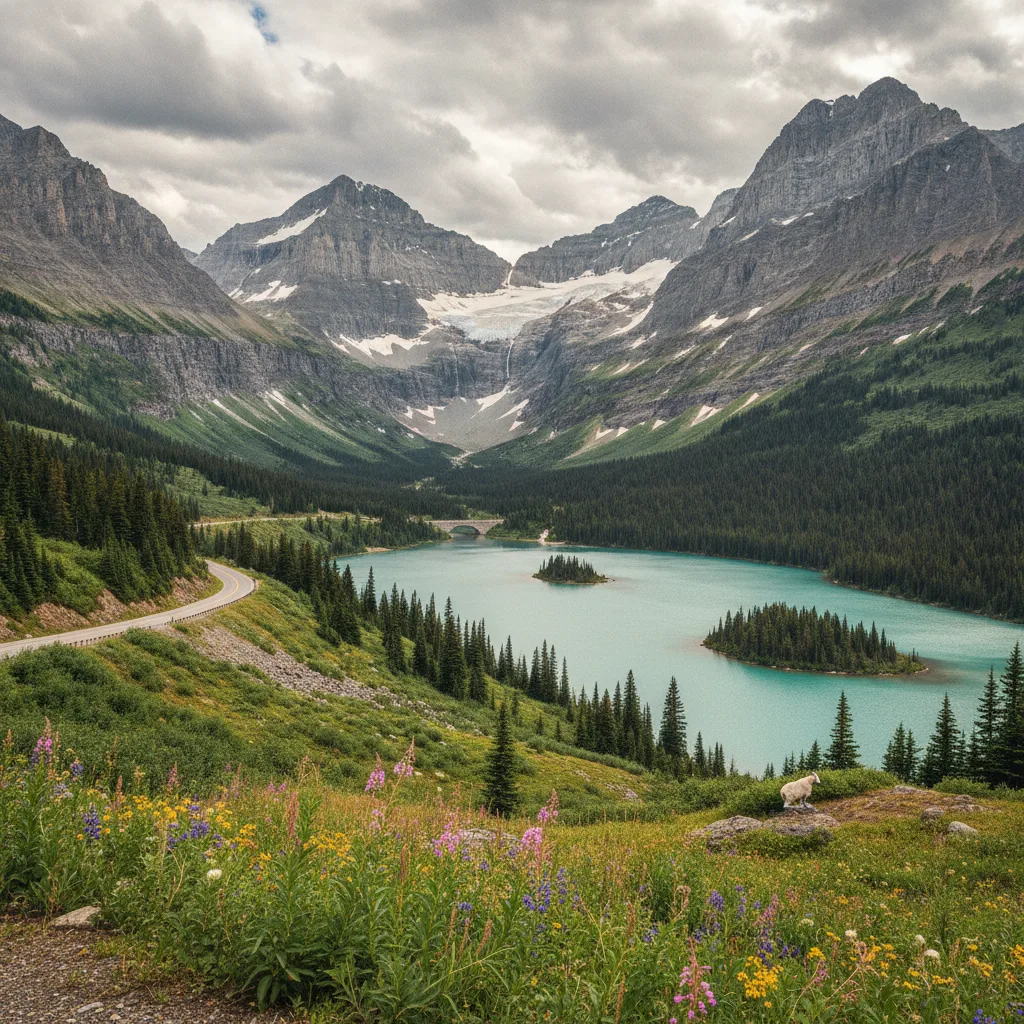
Glacier National Park Travel Guide — Montana
Welcome to our comprehensive guide to Glacier National Park Montana. Our team at Roam States is dedicated to providing you with confident, specific, and accurate information to plan your unforgettable journey to this iconic "Crown of the Continent." Forget the generic travel fluff; we're here to equip you with the essential 2026 facts, from updated park access to the best trails, ensuring your trip is as seamless as it is spectacular. We've meticulously researched the latest regulations, hours, fees, and reservation systems so you can focus on the breathtaking landscapes and abundant wildlife that await.
Why Visit Glacier National Park
Glacier National Park is a place of unparalleled natural beauty, offering a dramatic landscape of towering, glacially carved peaks, pristine alpine lakes, and verdant forests. For those wondering is Glacier National Park worth visiting, our unequivocal answer is yes. This is a destination that truly lives up to its moniker, the "Crown of the Continent," boasting over a million acres of wilderness and more than 700 miles of hiking trails. The park's iconic Going-to-the-Sun Road, a marvel of engineering, winds through some of the most spectacular scenery in North America, connecting the east and west sides of the park. Beyond the majestic scenery, Glacier is a haven for diverse wildlife, including grizzly bears, bighorn sheep, and mountain goats. The opportunity to witness these creatures in their natural habitat, alongside the serene beauty of the landscape, makes a visit here an incredibly rewarding experience. Whether you're seeking challenging backcountry adventures or scenic drives with plenty of photo opportunities, the sheer scale and grandeur of Glacier National Park offer something for every nature enthusiast. The park's commitment to preserving its unique ecosystem ensures that every visit feels like a step into a truly wild and untamed world. If you're seeking an immersive experience in one of America's most stunning natural treasures, then asking is Glacier National Park worth visiting will quickly be answered by the awe-inspiring vistas at every turn.
Who It's Best For
Glacier National Park appeals to a wide array of travelers, but it particularly shines for outdoor adventurers, nature photographers, and families seeking a memorable wilderness experience. Hikers of all skill levels will find a trail to suit their abilities, from accessible boardwalk paths to strenuous multi-day treks. Wildlife enthusiasts will be captivated by the chance to spot diverse species in their natural environment. The park is also ideal for road-trippers, with the Going-to-the-Sun Road offering an unforgettable scenic drive. Families with children will appreciate the Junior Ranger program and the numerous shorter, interpretive trails that introduce younger visitors to the park's natural wonders. While some areas can be challenging, many viewpoints and shorter walks are easily accessible, making it suitable for those with varying mobility. However, those looking for extensive nightlife or urban amenities will find the park's focus firmly on its natural environment and outdoor activities. It's a destination for those who appreciate raw, untamed landscapes and are prepared to embrace the rugged beauty of the Montana wilderness.
Getting There & Parking
Reaching Glacier National Park involves planning, but the journey is well worth the effort. The park is located in Northwest Montana, with major gateways being the towns of West Glacier and St. Mary. The closest airports are Glacier Park International Airport (FCA) in Kalispell, about 30 miles west of the West Entrance, and Missoula International Airport (MSO), roughly 150 miles south. From these airports, you can rent a car, which our team highly recommends for maximum flexibility in exploring the region and understanding how to get to Glacier National Park. For those planning a broader adventure, consider integrating Glacier into a larger USA Road Trip Planner itinerary, perhaps combining it with a visit to Yellowstone National Park (North) or Grand Teton National Park (Wyoming).
In 2026, a significant change for visitors is that Glacier National Park has suspended its vehicle reservation system for all areas, including the renowned Going-to-the-Sun Road, Many Glacier, Two Medicine, and the North Fork. This means you can drive your personal vehicle into the park at any time without an advance reservation. However, a valid park entrance pass is still required. Standard entrance fees for a 7-day vehicle permit are $35 during the summer season (May 1 – October 31) and $25 during the winter season (November 1 – April 30). Non-U.S. residents aged 16 and older will incur an additional $100 per-person fee, unless they hold a Non-Resident Annual Pass, which costs $250 and covers the entrance fee for everyone in their vehicle. We advise checking the official National Park Service website for the most up-to-date fee information before your visit nps.gov/glac.
While vehicle reservations are no longer required, the park will manage congestion through temporary closures if areas like Many Glacier or the North Fork reach capacity. Our team suggests arriving early, ideally before 6:00 AM, or later in the afternoon, after 4:00 PM, to avoid potential gate closures during peak summer months.
Parking, especially at popular spots, requires careful planning. Beginning July 1, 2026, parking at Logan Pass will be limited to a maximum of three hours, enforced 24 hours a day through Labor Day, September 7, 2026. This limit is designed to increase turnover and allow more visitors to experience the area. Three hours is generally sufficient for a short visit to the Logan Pass Visitor Center, an interpretive program, or a hike to the Hidden Lake Overlook. For longer hikes, such as the Highline Trail, visitors are encouraged to use the park's shuttle system. Overnight parking is not permitted at Logan Pass, with exceptions for permitted backcountry users and guests of Granite Park Chalet.
The Going-to-the-Sun Road shuttle system will operate as a reservation-only express service in 2026, launching on July 1, 2026. Shuttle tickets are required for all riders aged 2 and older and must be purchased in advance through Recreation.gov for a $1 processing fee. Tickets are released in two windows: a portion 60 days in advance (beginning May 2, 2026, at 8 AM MDT on a rolling basis) and the remaining tickets at 7 PM MDT for next-day entry (beginning June 30, 2026). West side routes depart from Apgar Transit Center and Lake McDonald Lodge, while east side routes depart from St. Mary Visitor Center and Rising Sun. Note that Avalanche Lake and Trail of the Cedars will not be accessible by park shuttle in 2026. This new shuttle system is tailored for those seeking longer experiences in the alpine areas of Going-to-the-Sun Road. Remember, missing the last shuttle means no other public transportation is available to return to your vehicle. Understanding how to get to Glacier National Park and navigate its internal systems is key to a smooth visit.
Top Things to Do
When considering things to do at Glacier National Park, the options are as vast as the landscape itself. Our team recommends focusing on key experiences that highlight the park's unique character.
Drive the Going-to-the-Sun Road
This iconic 50-mile road is a must-do. It traverses the park, offering breathtaking views, engineering marvels, and access to numerous trailheads and viewpoints. The full length of Going-to-the-Sun Road opened to motor vehicles for the 2026 summer season on June 22, 2026. Vehicles longer than 21 feet or wider than 8 feet are prohibited between Avalanche Creek and Rising Sun. Be prepared for stunning overlooks like the "Weeping Wall" and the Continental Divide at Logan Pass.
Explore Logan Pass
As the highest point accessible by vehicle on Going-to-the-Sun Road, Logan Pass is a hub for activity. Here, you'll find the Logan Pass Visitor Center (open daily from opening day through September 7, 9 AM to 7 PM, then 9 AM to 4 PM until September 27), interpretive exhibits, and trailheads for some of the park's most famous hikes. Remember the three-hour parking limit for private vehicles from July 1 through September 7, 2026.
Experience Lake McDonald
On the west side of the park, Lake McDonald is the largest lake in Glacier, known for its colorful pebbles and serene waters. Enjoy scenic boat tours, kayaking, or simply relax on its shores. The Apgar Visitor Center, located near the foot of Lake McDonald, is open daily from late April through October, 8 AM to 4:30 PM.
Discover Many Glacier Valley
Often called the "Switzerland of North America," Many Glacier offers some of the park's most dramatic scenery, abundant wildlife viewing opportunities, and access to spectacular hikes like Grinnell Glacier and Iceberg Lake. While vehicle reservations are not required for Many Glacier in 2026, be aware that park rangers may temporarily divert vehicles if the area reaches capacity.
Glacier National Park Hiking Trails
Hiking is truly one of the quintessential things to do at Glacier National Park. With over 700 miles of trails, the park caters to every level of hiker.
- Hidden Lake Overlook Trail (Logan Pass): A relatively easy and highly rewarding 2.7-mile roundtrip hike on a boardwalk that leads to a stunning overlook of Hidden Lake. This is one of the trails suitable for the 3-hour parking limit at Logan Pass.
- Highline Trail (Logan Pass): For more adventurous hikers, the Highline Trail offers incredible alpine views along a ledge carved into the Garden Wall. This trail is longer and often requires shuttle use due to the Logan Pass parking restrictions. Always check the park's trail status page for current conditions, as snow can delay openings.
- Grinnell Glacier Trail (Many Glacier): A strenuous but immensely rewarding hike that takes you to a pristine glacier lake and offers close-up views of Grinnell Glacier.
- Trail of the Cedars & Avalanche Lake (Lake McDonald): An accessible boardwalk trail through old-growth cedars, leading to the beautiful Avalanche Lake. Note that Avalanche Lake and Trail of the Cedars will not be accessible by park shuttle in 2026.
When planning your Glacier National Park hiking trails adventures, always carry bear spray and know how to use it, as bears are active in the park. Check the National Park Service website for current trail conditions and closures before heading out. Generally, frontcountry trails are open by mid-June, and backcountry trails are open by mid to late July.
Wildlife Viewing
Glacier is home to an incredible array of wildlife. Keep an eye out for mountain goats and bighorn sheep near Logan Pass, elk and moose in the Many Glacier and Two Medicine valleys, and various bird species throughout the park. Always maintain a safe and respectful distance from all wildlife.
Ranger-Led Programs
Participate in a ranger-led program to deepen your understanding of the park's ecology, geology, and history. Check schedules at visitor centers upon arrival.
Best Time to Visit
The best time to visit Glacier National Park Montana largely depends on what you want to experience. The peak season, and arguably the most popular, is from early July through early September. During this window, the Going-to-the-Sun Road is typically fully open, offering access to Logan Pass and its high-elevation trails. Most visitor services, lodging, and ranger programs are also fully operational. However, this is also when the park experiences its largest crowds, and parking can be challenging, especially with the new 3-hour limit at Logan Pass starting July 1, 2026.
For those seeking to avoid the busiest crowds while still enjoying much of what the park offers, late June or early September can be excellent choices. In late June, the Going-to-the-Sun Road usually opens fully (it opened June 22, 2026, this year), and the wildflowers are often at their peak. Early September brings cooler temperatures, changing fall colors, and fewer visitors, though some services may begin to scale back after Labor Day. Always check the park's current conditions page for road status, as snow can impact high-elevation access well into summer.
Spring (May to early June) and Fall (late September to October) offer a more tranquil experience with fewer crowds. However, many facilities and roads, particularly the higher sections of Going-to-the-Sun Road, may be closed due to snow and ice. This can be an excellent time for hiking and biking on sections of Going-to-the-Sun Road before it fully opens to vehicles. Winter (November to April) transforms the park into a snowy wonderland, ideal for cross-country skiing and snowshoeing, though most services are closed, and access is very limited. Primitive camping is available year-round at Apgar and St. Mary Campgrounds.
Where to Stay Nearby
Accommodations in and around Glacier National Park Montana range from historic lodges to modern hotels and various camping options. Our team recommends booking well in advance, especially for peak season visits.
Inside the Park
Historic lodges like Many Glacier Hotel, Lake McDonald Lodge, and the Village Inn at Apgar offer unparalleled access and immersive experiences. These fill up quickly, often a year or more in advance. For 2026, some lodging dates include St. Mary Village Lodging (May 29 – Oct 5), Glacier Park Lodge (May 29 – Sept 21), and Motel Lake McDonald (May 22 – Sept 27).
Outside the Park
The gateway communities provide a broader range of lodging options.
- West Glacier: Closest to the park's main entrance, offering hotels, motels, cabins, and vacation rentals. It's a convenient base for exploring the west side of the park.
- St. Mary: Located at the east entrance, providing easy access to the east side of Going-to-the-Sun Road and the Many Glacier and Two Medicine valleys.
- Whitefish: A vibrant resort town about an hour's drive from the West Entrance, offering a wider selection of dining, shopping, and upscale accommodations. Consider pairing your Glacier trip with a stay at Whitefish Mountain Resort.
- Columbia Falls: A smaller town near West Glacier with more affordable lodging options.
Glacier National Park Camping
Camping is a fantastic way to experience the park's natural beauty. A majority of Glacier's campgrounds require a reservation, which must be booked in advance on Recreation.gov. Reservation campgrounds include Avalanche, Apgar, Fish Creek, Many Glacier, St. Mary, Sprague Creek, and Two Medicine. Some sites are available a few days in advance, while others open a few months out. We strongly recommend reserving a site before arriving, as cell service is unreliable within the park. Camping fees typically range from $15 to $30 per night during the summer season.
Several smaller campgrounds operate on a first-come, first-served basis, including Bowman Lake, Cut Bank, Kintla Lake, Logging Creek, Quartz Creek, and Rising Sun. For these, instructions for securing a site are available at the campground entrances. Hiker/biker campsites are also available at many campgrounds for those arriving by foot or bicycle, requiring registration via the Scan & Pay feature on the Recreation.gov app. For wilderness camping, advance reservations are available through a lottery system on Recreation.gov, with applications typically accepted in March for a chance to secure an itinerary.
Sample 2-Day Itinerary
To maximize your time in Glacier National Park Montana, our team has crafted a sample two-day itinerary focused on experiencing the highlights.
Day 1: West Side Wonders & Going-to-the-Sun Road
- Morning (Early Start Recommended): Enter the park via the West Entrance. Head directly to Apgar Village. Enjoy breakfast at one of the cafes or pack a picnic. Consider renting a kayak or paddleboard for Lake McDonald or taking a scenic boat tour.
- Late Morning/Afternoon: Begin your drive along the Going-to-the-Sun Road. Stop at popular viewpoints like the Lake McDonald Lodge, Sacred Dancing Cascade, and the "Weeping Wall."
- Mid-Afternoon: Arrive at Logan Pass. Utilize the 3-hour parking limit (effective July 1 - Sept 7, 2026) to visit the Logan Pass Visitor Center and hike the Hidden Lake Overlook Trail. If you plan a longer hike like the Highline Trail, ensure you have a shuttle ticket reserved.
- Evening: Continue your drive down the east side of Going-to-the-Sun Road to St. Mary. Check into your accommodation in St. Mary or East Glacier. Enjoy dinner with views of St. Mary Lake.
Day 2: East Side Exploration & Hiking
- Morning (Early Start Recommended): Head to Many Glacier Valley. This area is a prime spot for wildlife viewing and offers some of the park's most rewarding hikes.
- Late Morning/Afternoon: Embark on a hike. Options include the Grinnell Glacier Trail (strenuous), Iceberg Lake Trail (moderate), or a shorter walk around Swiftcurrent Lake. Remember to carry bear spray.
- Late Afternoon: Explore Two Medicine Valley, another serene area on the east side, offering boat tours, fishing, and additional hiking opportunities.
- Evening: Enjoy a final dinner in one of the gateway communities. Reflect on the stunning landscapes and incredible experiences of Glacier National Park.
This itinerary is a suggestion; feel free to adjust it based on your interests, fitness level, and the latest park conditions. Always check the official NPS website for real-time updates on road closures, trail conditions, and shuttle schedules.
FAQ
What are some other things to do in Northwest Montana?
Beyond Glacier National Park, Northwest Montana offers a wealth of attractions. Our team recommends exploring Flathead Lake, the largest freshwater lake west of the Mississippi, perfect for boating, fishing, and swimming. The charming town of Whitefish, home to Whitefish Mountain Resort, provides year-round recreation, from skiing in winter to mountain biking and zip-lining in summer. You could also visit the Conrad Mansion Museum in Kalispell for a glimpse into historic Montana. For more ideas, check out our guide to Best places in Montana.
Is Glacier National Park good for kids?
Absolutely! Glacier National Park is an excellent destination for families with children. The park offers numerous accessible trails, like the Trail of the Cedars, which are perfect for little legs. Kids can also participate in the Junior Ranger program, earning badges by completing activity booklets. Boat tours on Lake McDonald and Many Glacier provide relaxing ways to see the scenery, and wildlife viewing is often a highlight for all ages. Remember to plan for varying weather, carry plenty of snacks and water, and always keep an eye on children, especially near water and trails.
What are some essential Glacier National Park tips?
Our top tips for visiting Glacier National Park include planning ahead, even though vehicle reservations are suspended for 2026. Arrive at popular areas like Logan Pass and Many Glacier early in the morning (before 6 AM) or late in the afternoon (after 4 PM) to avoid crowds and potential temporary closures. Carry bear spray and know how to use it, as wildlife is abundant. Book any in-park lodging or shuttle tickets well in advance. Be prepared for rapidly changing weather conditions, even in summer. Pack layers, rain gear, and plenty of water and snacks. Finally, respect wildlife by maintaining a safe distance and never feeding animals.
What should I know about Glacier National Park parking?
For 2026, the most important parking update is the new three-hour limit at Logan Pass, which is in effect from July 1 through September 7. This limit applies to all private vehicles and is strictly enforced to encourage turnover. For longer hikes originating at Logan Pass, such as the Highline Trail, we recommend using the ticketed shuttle service. Parking lots in popular areas like Many Glacier and Two Medicine can still fill quickly, leading to temporary closures, so an early start is always beneficial. Always park in designated spaces only.
What is the best time to visit Glacier National Park?
The best time to visit Glacier National Park is typically from early July to early September. During this period, the iconic Going-to-the-Sun Road is fully open, providing access to all major attractions and high-elevation hiking trails like those at Logan Pass. While this is peak season with the largest crowds, it offers the most complete park experience. For fewer crowds, consider late June or early September, but be aware that some facilities or higher elevation roads might still be impacted by snow.
What are Glacier National Park hours and fees?
Glacier National Park is open year-round, but many visitor facilities and roads are seasonal due to snow and avalanche risk, typically closing from October to May. The full Going-to-the-Sun Road usually opens in late June or early July (it opened June 22, 2026, this year). Entrance fees for 2026 include a $35 7-day vehicle permit during the summer season (May 1 – October 31) and $25 during the winter season (November 1 – April 30). Non-U.S. residents aged 16 and over will pay an additional $100 per-person fee, unless they have a $250 Non-Resident Annual Pass. Shuttle tickets for Logan Pass are $1 per person and must be reserved in advance. Always check the official NPS website for the most current operating hours and fee information.
Our team believes that Glacier National Park offers an unparalleled wilderness experience, a true jewel in the American West. With careful planning and an understanding of the 2026 park regulations, your visit to this magnificent landscape will be nothing short of extraordinary. We encourage you to embrace the wild, prepare for adventure, and immerse yourself in the natural grandeur that defines Glacier National Park Montana.
Last updated: 2026-07-12 by the Roam States team.