Avalanche Lake Trail Travel Guide — Montana
Our Avalanche Lake Trail guide covers practical planning for Avalanche Lake Trail Montana — best time to visit, getting there, and what to do on the ground.
As the independent US travel authority at Roam States, our team has explored countless trails, but few capture the essence of Glacier National Park quite like the Avalanche Lake Trail. This popular hiking trail, leading to a picturesque lake fed by stunning waterfalls, offers a moderate challenge and breathtaking scenery that makes it a must-do for hikers visiting Glacier National Park in 2026. From the moment you step onto the Trail of the Cedars boardwalk to the serene shores of Avalanche Lake, you'll understand why this destination is a perennial favorite.
Why Visit Avalanche Lake Trail
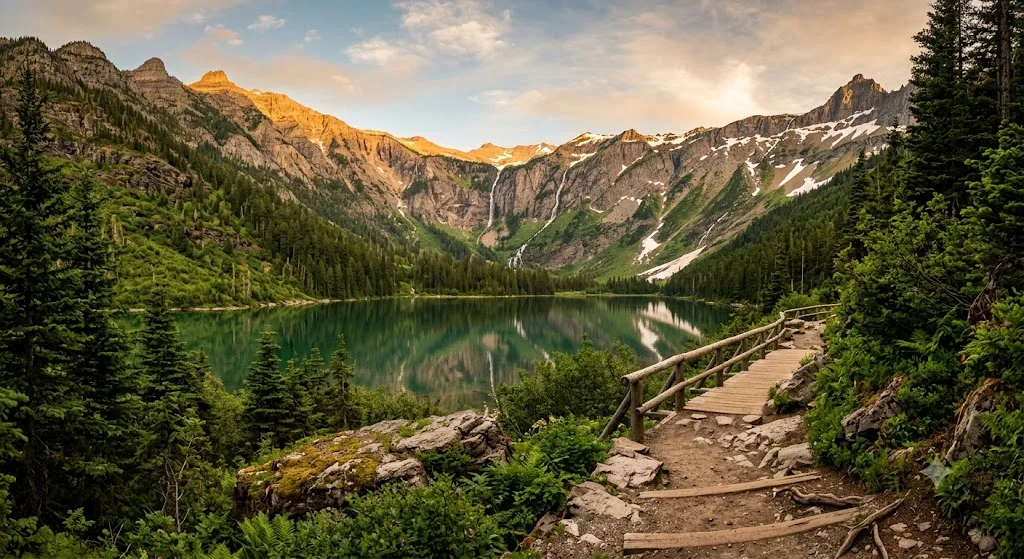
We consistently recommend the Avalanche Lake Trail for its unparalleled natural beauty and accessibility. The trail offers a captivating journey through an old-growth cedar and hemlock forest, where the air is cool and the light filters through ancient canopies. As you hike, you'll follow the vibrant turquoise waters of Avalanche Creek, carving its way through a scenic gorge. The grand finale is Avalanche Lake itself, nestled within a glacial cirque, with multiple waterfalls cascading down sheer cliffs into its pristine waters. The experience is dramatic in any weather, with misty days amplifying the waterfalls into an extraordinary spectacle. It's a truly rewarding hike, delivering maximum impact for a moderate effort, making it ideal for those who want to experience the heart of Glacier National Park without embarking on an all-day epic.
Who It's Best For
The Avalanche Lake Trail is remarkably versatile, making it suitable for a wide range of visitors. It's an excellent choice for families with children who are accustomed to hiking, as the roughly 4.5 to 6-mile round trip (depending on how far you explore the lake's edge) offers a manageable challenge. The initial section, the Trail of the Cedars, is a flat, stroller-friendly boardwalk, perfect for younger children or those seeking an easier stroll. Experienced hikers will appreciate the consistent uphill ascent and the stunning payoff, while beginners will find it a rewarding introduction to the park's more challenging trails. We also find it perfect for photographers, nature enthusiasts, and anyone looking for a quintessential Glacier National Park experience that combines forest, creek, and alpine lake scenery.
Getting There & Parking
To experience the Avalanche Lake Trail, you'll head to the west side of Glacier National Park, approximately 16 miles from the West Glacier entrance station along the iconic Going-to-the-Sun Road. For 2026, a significant change is that vehicle reservations are *not* required to enter Glacier National Park, including for the Going-to-the-Sun Road. This is a welcome return to more spontaneous access for many visitors. However, you will still need a park entrance pass, which costs between $20-$35 for a standard 7-day vehicle permit, or $70 for a Glacier Annual Pass for US residents. Non-US residents aged 16 and over will incur an additional $100 surcharge unless they purchase a $250 Non-Resident Annual Pass.
Parking for the Avalanche Lake Trail is available at the Avalanche Creek Picnic Area. Our team strongly advises arriving early, especially during the peak summer season (July and August), as the parking lot fills up quickly, often before 8:00 a.m. If you arrive later, you might find yourself circling for a spot, which can cut into your hiking time. While the park has suspended the vehicle reservation system, they will manage congestion by temporarily diverting vehicles or closing access to areas if parking lots reach capacity.
For 2026, it's crucial to note that the Avalanche Lake and Trail of the Cedars will *not* be accessible by the park shuttle system. The new ticketed express shuttle system for 2026 is specifically designed for Logan Pass, providing direct service from Apgar Transit Center or Lake McDonald Lodge (west side) and St. Mary Visitor Center or Rising Sun (east side) to Logan Pass. This means if you plan to hike the Avalanche Lake Trail, driving and parking your private vehicle at the trailhead is your primary option. Plan your arrival time accordingly to secure a spot and avoid disappointment. For those asking "how to get to Avalanche Lake Trail", driving your own vehicle and arriving early is the key in 2026.
Top Things to Do
The Avalanche Lake Trail offers a rich tapestry of experiences beyond just reaching the lake. Here are the top things to do at Avalanche Lake Trail:
- Hike the Trail of the Cedars: Your journey begins on the paved, wheelchair-accessible Trail of the Cedars boardwalk loop. This 0.9-mile section winds through an ancient forest of towering red cedars and western hemlocks, offering a cool, shaded, and intensely photogenic environment. It's a fantastic warm-up and a beautiful experience in itself.
- Follow Avalanche Creek: After branching off from the Trail of the Cedars, the Avalanche Lake Trail follows Avalanche Creek. The creek's vivid turquoise waters rush through a dramatic gorge, offering numerous viewpoints and photo opportunities. We love pausing here to admire the power and beauty of the glacial meltwater.
- Reach Avalanche Lake: The primary goal for many, Avalanche Lake is truly spectacular. Sitting at the base of Avalanche Basin, it's surrounded by sheer cliffs and fed by multiple waterfalls, some of which are meltwater from the Sperry Glacier. The area around the foot of the lake can get crowded, but the views are absolutely worth it.
- Explore the Lake Shore: For a bit more solitude and different perspectives, we recommend following the trail along the west side of the lake to its head. Here, several inlet streams flow into the lake, and Heavens Peak dominates the view to the north. This extended walk adds to the overall distance but provides a more immersive experience of the lake's serene beauty.
- Photography: From the moss-covered trees of the Trail of the Cedars to the cascading waterfalls into Avalanche Lake, every turn offers a postcard-worthy shot. The dramatic scenery, especially on misty or overcast days when the waterfalls are intensified, makes it a photographer's dream. These are just some of the incredible things to do at Avalanche Lake Trail.
Best Time to Visit
Our team agrees that the best time to visit Avalanche Lake Trail is generally from late spring through early fall, typically May through September. However, each season offers a slightly different experience:
- Early Summer (June): This is an excellent time to visit, as the snow has usually melted enough for the trail to be fully open, and the waterfalls are often at their most powerful due to spring runoff. Crowds are typically lighter than in July and August.
- Mid-Summer (July & August): These are the most popular months, offering the warmest weather and full accessibility. However, expect significant crowds, especially at the trailhead and the lake. Arriving before 8:00 a.m. is essential to secure parking.
- Late Summer/Early Fall (September): This is often our favorite time. The crowds begin to thin, the weather remains pleasant, and the changing autumn colors can add another layer of beauty to the landscape.
The Going-to-the-Sun Road, which provides access to the trailhead, usually opens in its entirety in late June or early July, weather permitting. Always check the official Glacier National Park website for current conditions and any potential closures due to weather or wildlife before your visit.
Where to Stay Nearby
When planning your trip to the Avalanche Lake Trail, securing comfortable lodging is key. We recommend staying on the west side of Glacier National Park for the most convenient access. Here are some excellent Avalanche Lake Trail lodging options:
- Inside Glacier National Park:
- Lake McDonald Lodge: Located directly on the shores of Lake McDonald, about 10 miles from the west entrance, this historic lodge offers easy access to the Avalanche Lake Trail and other west-side attractions.
- Village Inn at Apgar: Situated just 2 miles inside the west entrance on Lake McDonald's shore, it's a highly accessible option with motel rooms and cabins.
- Apgar Village Lodge & Cabins: Also at the foot of Lake McDonald, offering rooms and cabins in an old-growth forest setting.
- Motel Lake McDonald: Adjacent to Lake McDonald Lodge, offering budget-friendly lodging with great access to the Avalanche Lake trailhead.
- Outside Glacier National Park (West Side):
- West Glacier: Just outside the park's west entrance, you'll find options like West Glacier Cabins and West Glacier RV Park, offering convenient access. The Belton Chalet, a historic lodge, is also in West Glacier.
- Columbia Falls: About 25 minutes from the Apgar Visitor Center, Columbia Falls offers more modern hotels such as Cedar Creek Lodge and Wonderstone at Glacier.
- Whitefish: A larger town about 40-50 minutes from the Apgar Visitor Center, Whitefish provides a wider range of accommodations, including Grouse Mountain Lodge, and a vibrant dining scene.
For those interested in Avalanche Lake Trail lodging, booking well in advance is always advised, especially for in-park options, as they fill up quickly.
Sample 2-Day Itinerary
Our team has crafted a sample 2-day itinerary to help you make the most of your visit to the Avalanche Lake Trail and the surrounding area:
Day 1: Avalanche Lake & Lake McDonald Exploration
- Morning (Early!): Arrive at the Avalanche Creek Picnic Area parking lot by 7:00 AM to secure a parking spot. Embark on the Avalanche Lake Trail. Take your time enjoying the Trail of the Cedars, the turquoise Avalanche Creek, and the stunning views at Avalanche Lake. Consider hiking along the west side of the lake for more solitude.
- Lunch: Pack a picnic lunch to enjoy by Avalanche Lake or at the Avalanche Creek Picnic Area.
- Afternoon: Head to Lake McDonald. Rent a small boat or kayak from Apgar or Lake McDonald Lodge to explore the lake's clear waters and colorful rocks. Alternatively, enjoy a leisurely stroll along the shore or visit the Apgar Visitor Center.
- Evening: Have dinner at Lake McDonald Lodge or in Apgar Village. Enjoy stargazing – Glacier National Park is a designated International Dark Sky Park.
Day 2: Going-to-the-Sun Road & Beyond
- Morning: Drive a portion of the Going-to-the-Sun Road. While the Avalanche Lake Trail isn't on the shuttle route, you can still experience other parts of this scenic drive. Consider driving towards Logan Pass for incredible alpine views. Remember, parking at Logan Pass has a 3-hour limit from July 1 through September 7, 2026. If you plan a longer hike from Logan Pass (like Hidden Lake Overlook), you'll need to use the ticketed shuttle system.
- Lunch: Grab a bite at a cafe or restaurant along the Going-to-the-Sun Road or in St. Mary Village if you venture to the east side.
- Afternoon: Depending on your interests and location, consider visiting another area of the park. Perhaps a shorter hike in the Lake McDonald Valley or exploring the shops and galleries in West Glacier. For those with more time, consider a drive north to Flathead Lake for an afternoon of relaxation.
- Evening: Enjoy a farewell dinner in West Glacier, Columbia Falls, or Whitefish, reflecting on your incredible Glacier National Park adventure.
Frequently Asked Questions
Avalanche Lake Trail camping
The closest and most convenient camping for the Avalanche Lake Trail is at Avalanche Campground, located directly on Going-to-the-Sun Road. This campground is surrounded by old-growth cedars and serves as a base for both the Trail of the Cedars and the Avalanche Lake Trail. In 2026, all 87 sites at Avalanche Campground require advance reservations through Recreation.gov, opening on a 6-month rolling basis. Sites accommodate both tent and RV campers, though vehicle restrictions apply on parts of Going-to-the-Sun Road for larger rigs.
things to do in Glacier National Park
Beyond the Avalanche Lake Trail, Glacier National Park offers a wealth of activities. Our team recommends driving the entire Going-to-the-Sun Road for unparalleled scenic vistas, hiking to Hidden Lake Overlook from Logan Pass (via the ticketed shuttle if you plan a longer stay than 3 hours), or exploring the Many Glacier area for stunning lake and mountain views and the opportunity to spot wildlife. Other popular things to do in Montana's Glacier National Park include boat tours on Lake McDonald or Swiftcurrent Lake, whitewater rafting on the Flathead River, and ranger-led programs. Don't forget to visit the iconic Glacier National Park lodges like Many Glacier Hotel or Lake McDonald Lodge. For those exploring further afield, Yellowstone National Park (North) is a fantastic extension to any Montana trip.
Avalanche Lake Trail with kids
The Avalanche Lake Trail is generally considered kid-friendly, especially for families with children who are comfortable with moderate hikes. The initial section, the Trail of the Cedars, is a flat, boardwalk loop that is even stroller-friendly. The full trail to Avalanche Lake is about 4.5 to 6 miles round trip with some elevation gain, which can be challenging for very young children but rewarding for those with stamina. We advise packing plenty of water, snacks, and layers, as weather can change quickly. Keep children close, especially near rushing water.
best hotels near Avalanche Lake Trail
The best hotels near Avalanche Lake Trail are primarily located on the west side of Glacier National Park or in nearby gateway towns. Inside the park, top choices include Lake McDonald Lodge, Village Inn at Apgar, and Apgar Village Lodge, all offering direct access to Lake McDonald and proximity to the trailhead. Outside the park, but still very convenient, are options in West Glacier like West Glacier Cabins and Belton Chalet. For a wider range of amenities and dining, Columbia Falls (e.g., Cedar Creek Lodge) and Whitefish (e.g., Grouse Mountain Lodge) provide excellent choices within a short drive.
Avalanche Lake Trail tips
Our top Avalanche Lake Trail tips for a smooth and enjoyable hike include:
- Arrive Early: Aim to be at the trailhead parking lot by 7:00 AM, especially during summer, to secure a spot.
- Check Conditions: Always verify trail status and weather forecasts on the official NPS website before heading out.
- Pack Essentials: Bring plenty of water, snacks, bear spray, sun protection, and layers of clothing, as mountain weather is unpredictable.
- Footwear: Wear sturdy hiking shoes with good traction, as the trail can be wet and muddy in spots.
- Stay on Trail: Help protect the fragile ecosystem by remaining on marked trails.
- Bear Aware: Glacier is bear country. Make noise on the trail and carry bear spray.
where to stay near Avalanche Lake Trail
For those wondering "where to stay near Avalanche Lake Trail," we recommend focusing on accommodations in the Lake McDonald area within Glacier National Park, such as Lake McDonald Lodge or Village Inn at Apgar. These provide the quickest access to the trailhead. Alternatively, the towns of West Glacier, Columbia Falls, and Whitefish, located just outside the park's west entrance, offer a variety of hotels, cabins, and vacation rentals. The Avalanche Campground is also an excellent option for those seeking a camping experience right at the trailhead.
The Avalanche Lake Trail is a truly iconic Glacier National Park experience, and with these 2026 insights, our team is confident you'll have an unforgettable adventure. Its moderate difficulty, combined with the stunning payoff of a pristine glacial lake and cascading waterfalls, makes it a highlight for any visitor to this magnificent Montana wilderness. Plan ahead, arrive early, and prepare to be amazed by the raw beauty of the Crown of the Continent.
Last updated: 2026-07-07 by the Roam States team.