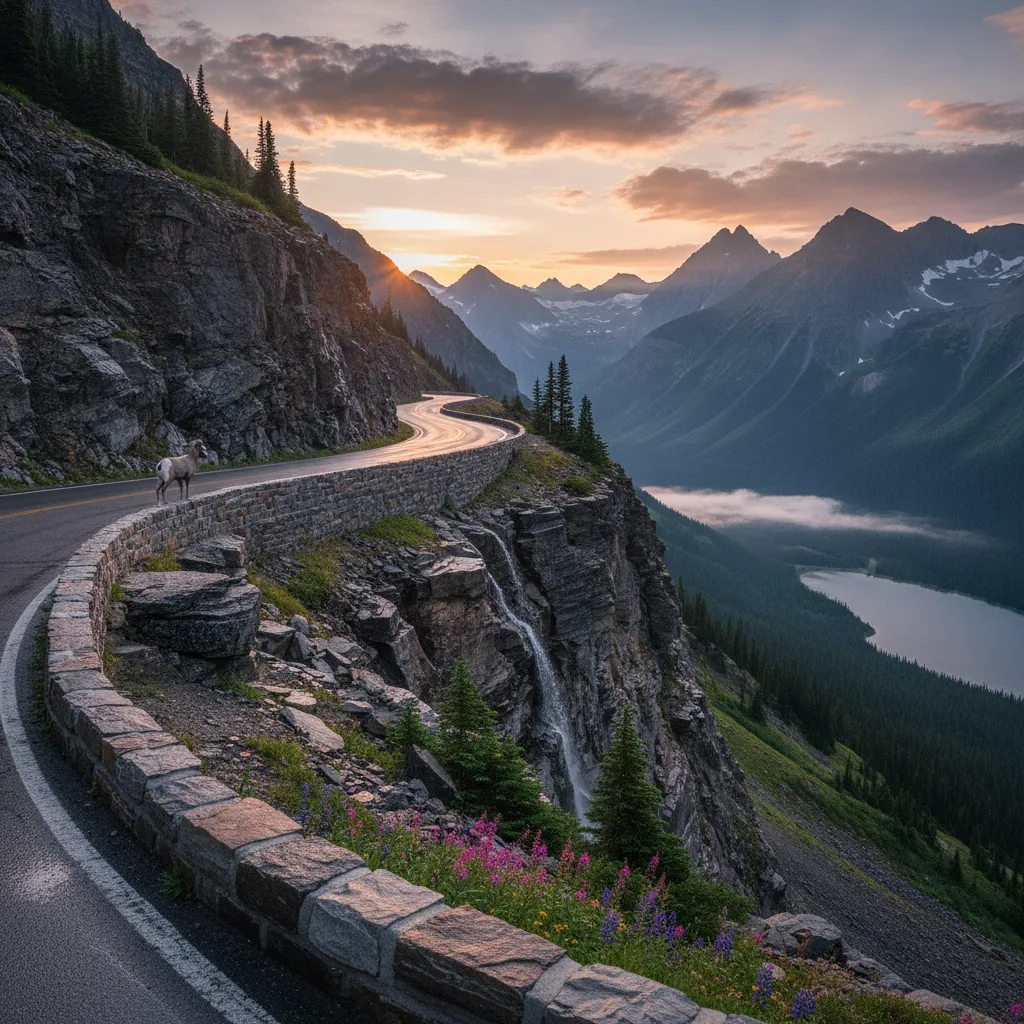
Going-to-the-Sun Road Travel Guide — Montana
For any serious traveler seeking the heart of the American West, experiencing the Going-to-the-Sun Road Montana is not just a suggestion—it's an imperative. This engineering marvel, a National Historic Landmark, carves its way through the rugged landscape of Glacier National Park, spanning the Continental Divide and offering unparalleled motorized access to some of the most breathtaking scenery in the United States. Our team at Roam States has compiled this comprehensive guide to ensure your journey along this iconic route is as seamless and spectacular as the views themselves.
Why Visit Going-to-the-Sun Road
The Going-to-the-Sun Road is more than just a thoroughfare; it's an experience that defines a trip to Glacier National Park. We recommend it for its sheer audacity in construction, its continuous parade of turquoise lakes, towering peaks, and cascading waterfalls, all visible from your vehicle. It’s a 50-mile journey that transports you through the heart of the Rockies, offering a concentrated dose of Montana’s wild beauty.
This road is crucial for motorized park access, connecting the park's west and east sides and cresting at Logan Pass, the highest point accessible by vehicle in Glacier National Park at 6,646 feet. Along the way, numerous scenic pullouts invite you to pause, absorb the grandeur, and capture unforgettable photographs. Even for those who prefer not to hike extensively, the road provides an immersive nature experience, allowing you to witness glaciers, wildlife, and vibrant alpine meadows from the comfort of your car.
Who It's Best For
The Going-to-the-Sun Road caters to a wide array of visitors, making it an ideal destination for various travel styles:
- Scenic Drivers & Photographers: With its constant dramatic vistas, the road is a dream for anyone who loves a scenic drive and capturing stunning landscapes.
- Families with Young Children: The accessibility by car means even the youngest travelers can enjoy Glacier's beauty without strenuous hiking. Many pullouts offer easy stops for stretching legs and taking in views.
- First-Time Glacier National Park Visitors: It provides an excellent overview of the park's diverse ecosystems and iconic features, serving as a perfect introduction before delving into specific trails or areas.
- Outdoor Enthusiasts (with a plan): While the drive itself is the main attraction, many popular trailheads are located directly off the road, making it a gateway for hikers, from easy strolls to challenging alpine treks. However, be aware of parking limitations for longer hikes.
- Those Seeking Accessibility: For individuals with mobility challenges, the Going-to-the-Sun Road offers unparalleled access to high-alpine scenery that might otherwise be out of reach.
Whether you're embarking on a larger USA road trip or focusing solely on the wonders of Montana, this road is a centerpiece that should not be missed.
Getting There & Parking
Understanding how to get to Going-to-the-Sun Road and navigating parking is key to a smooth visit. The road stretches approximately 50 miles, connecting West Glacier and St. Mary. Most travelers begin their journey from the West Glacier entrance gate.
Vehicle Reservations (2026 Update)
For the 2026 summer season, Glacier National Park has suspended the vehicle reservation system for Going-to-the-Sun Road and other popular areas like Many Glacier, North Fork, and Two Medicine. This means you can drive into the park at any time your chosen entrance is open without needing an advance reservation. However, an entrance pass is still required to enter Glacier National Park. These can be purchased in advance or at the park's entry kiosks.
While vehicle reservations are not required, be aware that the park anticipates heavy traffic. Rangers may implement temporary closures if specific valleys or parking lots become gridlocked to manage congestion. We recommend entering the park before 6:00 AM or after 4:00 PM to potentially avoid these temporary gate closures.
Parking at Logan Pass (2026 Update)
A significant change for 2026 is the implementation of a three-hour parking limit at Logan Pass, effective July 1st (weather permitting). This measure aims to increase parking turnover, allowing more visitors to experience the visitor center, join ranger-led activities, and visit the bookstore. Three hours is generally sufficient for shorter visits, including a walk to the Hidden Lake Overlook. Overnight parking is not permitted at Logan Pass, except for visitors with a valid backcountry permit or registered guests of Granite Park Chalet.
For those planning longer hikes from Logan Pass, such as the Highline Trail, using the park's shuttle system is highly recommended, as the three-hour parking limit will not accommodate these longer excursions.
Going-to-the-Sun Road Shuttle (2026 Update)
Glacier National Park is piloting a ticketed-only shuttle system to Logan Pass for the 2026 summer season, operating from July through September (weather permitting). These express shuttles are designed primarily for visitors planning longer alpine hikes. Shuttle tickets are required to board and are available on a first-come, first-served basis through Recreation.gov for a $1 processing fee per ticket.
Tickets are released in two booking windows: a portion 60 days in advance starting May 2, 2026, at 8 a.m. MDT on a rolling basis, and the remaining tickets released at 7 p.m. MDT for next-day entry, beginning June 30, 2026.
The express shuttles will run non-stop routes to Logan Pass from Apgar Visitor Center and Lake McDonald Lodge on the west side, and from St. Mary Visitor Center and Rising Sun on the east side. Notably, in 2026, the Logan Pass shuttles will not stop at Avalanche Lake or the Trail of the Cedars, meaning these popular spots are only accessible by private vehicle.
Vehicles longer than 21 feet or wider than 8 feet (including mirrors) are prohibited on sections of the road between Avalanche Creek and Rising Sun. Vehicles over 10 feet in height may also encounter difficulty driving west from Logan Pass to The Loop due to rock overhangs.
Top Things to Do
The Going-to-the-Sun Road Montana is a destination in itself, but it also serves as a launchpad for incredible experiences. Here are our top recommendations for things to do at Going-to-the-Sun Road and things to do in Glacier NP:
Scenic Driving & Photography
Simply driving the 50-mile road is an unparalleled experience. We encourage you to take your time, utilizing the numerous pullouts to soak in the views of Lake McDonald, the Garden Wall, and the glacial valleys. Sunrise and sunset offer particularly magical lighting for photographers. Keep an eye out for wildlife such as mountain goats and bighorn sheep, especially in the higher elevations.
Hiking
Glacier National Park is a hiker's paradise, and many iconic trails are accessible from the Going-to-the-Sun Road:
- Hidden Lake Overlook Trail: Starting from Logan Pass, this easy out-and-back trail is a popular spot to see wildflowers and wildlife, leading to stunning views of Hidden Lake. It's achievable within the three-hour Logan Pass parking limit.
- Highline Trail: Also beginning at Logan Pass, this iconic trail offers breathtaking views along the Garden Wall. Due to its length, it's best accessed via the park shuttle, as it will exceed the three-hour parking limit.
- Trail of the Cedars & Avalanche Lake: These popular, relatively easy trails are located on the west side of the road. Note that in 2026, these trails are not accessible by the park shuttle, so you will need to drive and find parking.
- St. Mary & Virginia Falls: On the east side, these trails offer beautiful waterfall views.
Always check the National Park Service website for current trail conditions and closures, as snow can persist on high-elevation trails well into summer.
Visitor Centers
Stop at the Apgar Visitor Center (west side) or St. Mary Visitor Center (east side) for maps, ranger programs, and up-to-date information. The Logan Pass Visitor Center, perched atop the Continental Divide, offers public restrooms, drinking water, and a short boardwalk for scenic strolls.
Boat Tours & Water Activities
Lake McDonald, the largest lake in Glacier National Park, offers opportunities for boat tours, kayaking, and paddleboarding. The historic Lake McDonald Lodge, a charming 1913 log building, is a worthwhile stop on the west side.
Wildlife Viewing
The Going-to-the-Sun Road is prime territory for spotting wildlife. Keep your eyes peeled for mountain goats and bighorn sheep at higher elevations, especially around Logan Pass. Bears, both black and grizzly, are also present throughout the park, so always carry bear spray and know how to use it.
Best Time to Visit
The full opening of the Going-to-the-Sun Road is highly dependent on weather and snow conditions, but generally, the best time to visit and experience the entire road is from late June through September.
- July and August: These are the warmest months, with most roads and hiking trails fully accessible, and wildflowers blooming at Logan Pass. This is also the busiest time, so expect crowds and parking challenges.
- Late June: If you visit just after the full road opens, you might encounter lingering snowfields, but typically with fewer crowds than peak summer. For 2026, the full length of Going-to-the-Sun Road opened to motorized vehicles on Monday, June 22.
- September: This month offers a quieter experience with significantly fewer crowds, cooler temperatures, and active wildlife. The larch trees begin to turn golden, creating spectacular fall colors. Some park services may start to scale back by mid-fall.
The lower sections of the Going-to-the-Sun Road, near West Glacier and St. Mary, typically open in mid-April and remain accessible year-round, weather permitting. The alpine section around Logan Pass usually closes for winter in October or November, depending on snowfall.
Where to Stay Nearby
Finding the right accommodation can enhance your Glacier National Park experience. Here are some of our recommended areas:
- West Glacier: Located right at the west entrance of the park, West Glacier offers a variety of lodging options, from hotels and motels to cabins and vacation rentals. It's a convenient base for exploring the west side of Going-to-the-Sun Road and accessing Lake McDonald.
- St. Mary: Situated at the east entrance, St. Mary provides direct access to the eastern side of Going-to-the-Sun Road and is a great starting point for exploring Many Glacier and Two Medicine areas. Lodging here often includes lodges and campgrounds.
- Whitefish: A vibrant resort town about an hour's drive from the West Glacier entrance, Whitefish offers a wider range of dining, shopping, and upscale lodging, including options like Grouse Mountain Lodge which is open year-round. It's also home to Whitefish Mountain Resort.
- Kalispell: As the largest city in the Flathead Valley, Kalispell is about a 45-minute drive from the West Glacier entrance and provides numerous hotel chains, restaurants, and amenities.
- East Glacier Park Village: Located south of the St. Mary entrance, this village offers a historic lodge and other accommodations, providing a quieter alternative to the busier west side.
For those looking to explore more of Montana's diverse offerings, consider extending your trip to destinations like Bighorn Canyon or the scenic Beartooth Highway.
Sample 2-Day Itinerary
To help you make the most of your visit to the Going-to-the-Sun Road, we've crafted a sample 2-day itinerary:
Day 1: West Side Wonders & Logan Pass
- Morning: Start early from West Glacier. Drive the Going-to-the-Sun Road along Lake McDonald, stopping at scenic pullouts. Consider a short walk along the shores of Lake McDonald or visit the historic Lake McDonald Lodge.
- Late Morning/Early Afternoon: Continue towards Logan Pass. If you plan a longer hike like the Highline Trail, ensure you have a shuttle reservation. For a shorter visit, hike the Hidden Lake Overlook trail from Logan Pass (within the 3-hour parking limit). Explore the Logan Pass Visitor Center.
- Afternoon: Descend from Logan Pass towards the east side, taking in the dramatic views of the "Big Drift" (massive snow accumulations) and the numerous waterfalls.
- Evening: Arrive in St. Mary or East Glacier Park Village for dinner and overnight stay.
Day 2: East Side Exploration & Return
- Morning: Explore the east side of Glacier National Park. From St. Mary, you can access areas like Many Glacier (check for temporary closures due to congestion) or Two Medicine (note that Two Medicine Campground is closed in 2026 due to construction, and the North Shore Trailhead requires a reroute with a water crossing). Consider a hike to St. Mary Falls and Virginia Falls.
- Late Morning/Early Afternoon: Begin your return journey on the Going-to-the-Sun Road, driving from St. Mary back towards West Glacier. This allows you to experience the road's viewpoints from a different perspective.
- Afternoon: Stop at any overlooks or short trails you missed on Day 1. Consider a visit to the Apgar Village area for souvenirs or a final view of Lake McDonald.
- Evening: Depart from West Glacier or settle into your accommodation in a nearby town like Whitefish.
Last updated: 2026-07-12 by the Roam States team.
Going-to-the-Sun Road Travel Guide — Montana
For any serious traveler seeking the heart of the American West, experiencing the Going-to-the-Sun Road Montana is not just a suggestion—it's an imperative. This engineering marvel, a National Historic Landmark, carves its way through the rugged landscape of Glacier National Park, spanning the Continental Divide and offering unparalleled motorized access to some of the most breathtaking scenery in the United States. Our team at Roam States has compiled this comprehensive guide to ensure your journey along this iconic route is as seamless and spectacular as the views themselves.
Why Visit Going-to-the-Sun Road
The Going-to-the-Sun Road is more than just a thoroughfare; it's an experience that defines a trip to Glacier National Park. We recommend it for its sheer audacity in construction, its continuous parade of turquoise lakes, towering peaks, and cascading waterfalls, all visible from your vehicle. It’s a 50-mile journey that transports you through the heart of the Rockies, offering a concentrated dose of Montana’s wild beauty.
This road is crucial for motorized park access, connecting the park's west and east sides and cresting at Logan Pass, the highest point accessible by vehicle in Glacier National Park at 6,646 feet. Along the way, numerous scenic pullouts invite you to pause, absorb the grandeur, and capture unforgettable photographs. Even for those who prefer not to hike extensively, the road provides an immersive nature experience, allowing you to witness glaciers, wildlife, and vibrant alpine meadows from the comfort of your car.
Who It's Best For
The Going-to-the-Sun Road caters to a wide array of visitors, making it an ideal destination for various travel styles:
- Scenic Drivers & Photographers: With its constant dramatic vistas, the road is a dream for anyone who loves a scenic drive and capturing stunning landscapes.
- Families with Young Children: The accessibility by car means even the youngest travelers can enjoy Glacier's beauty without strenuous hiking. Many pullouts offer easy stops for stretching legs and taking in views.
- First-Time Glacier National Park Visitors: It provides an excellent overview of the park's diverse ecosystems and iconic features, serving as a perfect introduction before delving into specific trails or areas.
- Outdoor Enthusiasts (with a plan): While the drive itself is the main attraction, many popular trailheads are located directly off the road, making it a gateway for hikers, from easy strolls to challenging alpine treks. However, be aware of parking limitations for longer hikes.
- Those Seeking Accessibility: For individuals with mobility challenges, the Going-to-the-Sun Road offers unparalleled access to high-alpine scenery that might otherwise be out of reach.
Whether you're embarking on a larger USA road trip or focusing solely on the wonders of Montana, this road is a centerpiece that should not be missed.
Getting There & Parking
Understanding how to get to Going-to-the-Sun Road and navigating parking is key to a smooth visit. The road stretches approximately 50 miles, connecting West Glacier and St. Mary. Most travelers begin their journey from the West Glacier entrance gate.
Vehicle Reservations (2026 Update)
For the 2026 summer season, Glacier National Park has suspended the vehicle reservation system for Going-to-the-Sun Road and other popular areas like Many Glacier, North Fork, and Two Medicine. This means you can drive into the park at any time your chosen entrance is open without needing an advance reservation. However, an entrance pass is still required to enter Glacier National Park. These can be purchased in advance or at the park's entry kiosks.
While vehicle reservations are not required, be aware that the park anticipates heavy traffic. Rangers may implement temporary closures if specific valleys or parking lots become gridlocked to manage congestion. We recommend entering the park before 6:00 AM or after 4:00 PM to potentially avoid these temporary gate closures.
Parking at Logan Pass (2026 Update)
A significant change for 2026 is the implementation of a three-hour parking limit at Logan Pass, effective July 1st (weather permitting). This measure aims to increase parking turnover, allowing more visitors to experience the visitor center, join ranger-led activities, and visit the bookstore. Three hours is generally sufficient for shorter visits, including a walk to the Hidden Lake Overlook. Overnight parking is not permitted at Logan Pass, except for visitors with a valid backcountry permit or registered guests of Granite Park Chalet.
For those planning longer hikes from Logan Pass, such as the Highline Trail, using the park's shuttle system is highly recommended, as the three-hour parking limit will not accommodate these longer excursions.
Going-to-the-Sun Road Shuttle (2026 Update)
Glacier National Park is piloting a ticketed-only shuttle system to Logan Pass for the 2026 summer season, operating from July through September (weather permitting). These express shuttles are designed primarily for visitors planning longer alpine hikes. Shuttle tickets are required to board and are available on a first-come, first-served basis through Recreation.gov for a $1 processing fee per ticket.
Tickets are released in two booking windows: a portion 60 days in advance starting May 2, 2026, at 8 a.m. MDT on a rolling basis, and the remaining tickets released at 7 p.m. MDT for next-day entry, beginning June 30, 2026.
The express shuttles will run non-stop routes to Logan Pass from Apgar Visitor Center and Lake McDonald Lodge on the west side, and from St. Mary Visitor Center and Rising Sun on the east side. Notably, in 2026, the Logan Pass shuttles will not stop at Avalanche Lake or the Trail of the Cedars, meaning these popular spots are only accessible by private vehicle.
Vehicles longer than 21 feet or wider than 8 feet (including mirrors) are prohibited on sections of the road between Avalanche Creek and Rising Sun. Vehicles over 10 feet in height may also encounter difficulty driving west from Logan Pass to The Loop due to rock overhangs.
Top Things to Do
The Going-to-the-Sun Road Montana is a destination in itself, but it also serves as a launchpad for incredible experiences. Here are our top recommendations for things to do at Going-to-the-Sun Road and things to do in Glacier NP:
Scenic Driving & Photography
Simply driving the 50-mile road is an unparalleled experience. We encourage you to take your time, utilizing the numerous pullouts to soak in the views of Lake McDonald, the Garden Wall, and the glacial valleys. Sunrise and sunset offer particularly magical lighting for photographers. Keep an eye out for wildlife such as mountain goats and bighorn sheep, especially in the higher elevations.
Hiking
Glacier National Park is a hiker's paradise, and many iconic trails are accessible from the Going-to-the-Sun Road:
- Hidden Lake Overlook Trail: Starting from Logan Pass, this easy out-and-back trail is a popular spot to see wildflowers and wildlife, leading to stunning views of Hidden Lake. It's achievable within the three-hour Logan Pass parking limit.
- Highline Trail: Also beginning at Logan Pass, this iconic trail offers breathtaking views along the Garden Wall. Due to its length, it's best accessed via the park shuttle, as it will exceed the three-hour parking limit.
- Trail of the Cedars & Avalanche Lake: These popular, relatively easy trails are located on the west side of the road. Note that in 2026, these trails are not accessible by the park shuttle, so you will need to drive and find parking.
- St. Mary & Virginia Falls: On the east side, these trails offer beautiful waterfall views.
Always check the National Park Service website for current trail conditions and closures, as snow can persist on high-elevation trails well into summer.
Visitor Centers
Stop at the Apgar Visitor Center (west side) or St. Mary Visitor Center (east side) for maps, ranger programs, and up-to-date information. The Logan Pass Visitor Center, perched atop the Continental Divide, offers public restrooms, drinking water, and a short boardwalk for scenic strolls.
Boat Tours & Water Activities
Lake McDonald, the largest lake in Glacier National Park, offers opportunities for boat tours, kayaking, and paddleboarding. The historic Lake McDonald Lodge, a charming 1913 log building, is a worthwhile stop on the west side.
Wildlife Viewing
The Going-to-the-Sun Road is prime territory for spotting wildlife. Keep your eyes peeled for mountain goats and bighorn sheep at higher elevations, especially around Logan Pass. Bears, both black and grizzly, are also present throughout the park, so always carry bear spray and know how to use it.
Best Time to Visit
The full opening of the Going-to-the-Sun Road is highly dependent on weather and snow conditions, but generally, the best time to visit and experience the entire road is from late June through September.
- July and August: These are the warmest months, with most roads and hiking trails fully accessible, and wildflowers blooming at Logan Pass. This is also the busiest time, so expect crowds and parking challenges.
- Late June: If you visit just after the full road opens, you might encounter lingering snowfields, but typically with fewer crowds than peak summer. For 2026, the full length of