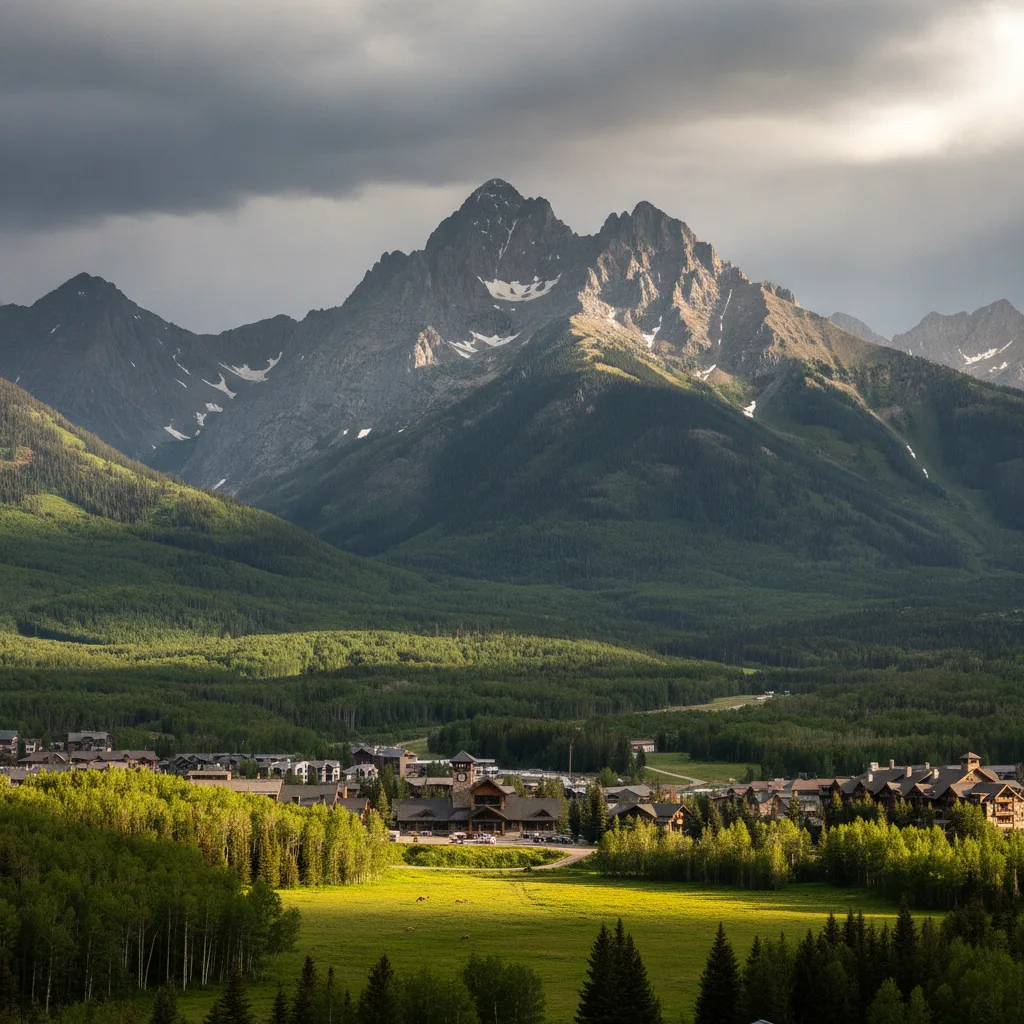
For those seeking an unparalleled mountain escape, Big Sky Resort Montana stands as a premier destination, offering a vast playground for adventure seekers and nature enthusiasts alike. Our team at Roam States has meticulously compiled this guide to ensure your trip to this iconic Montana resort is nothing short of extraordinary, from navigating its expansive terrain to discovering its hidden gems. We cut through the generic travel fluff to bring you confident, specific insights for planning your ideal Big Sky experience.
Why Visit Big Sky Resort
Big Sky Resort Montana is renowned for its "Biggest Skiing in America" moniker, boasting an impressive 5,850 acres of skiable terrain and a vertical drop of 4,350 feet. This vastness ensures that even on peak days, the mountain rarely feels crowded, allowing for ample space to carve turns and explore. Beyond the sheer scale, the resort is celebrated for its consistent and abundant snowfall, averaging 400 inches annually, which translates to exceptional powder days throughout the winter season.
But Big Sky is far more than just a winter wonderland. When the snow melts, the resort transforms into a vibrant summer destination, offering a diverse array of activities against a backdrop of stunning Rocky Mountain scenery. From lift-serviced mountain biking and scenic tram rides to world-class golf and ziplining, Big Sky provides year-round adventure. The natural beauty of the surrounding Greater Yellowstone Ecosystem is a constant draw, offering opportunities for wildlife viewing, fly fishing in blue-ribbon trout streams, and exploring pristine wilderness areas. Whether you're chasing adrenaline or seeking serene natural beauty, Big Sky Resort Montana delivers an authentic and unforgettable mountain experience.
Who It's Best For
Big Sky Resort caters to a remarkably broad spectrum of travelers, making it an ideal choice for various groups. **Families** will find a wealth of activities tailored for all ages, from beginner ski lessons and gentle slopes in winter to family-friendly hiking trails and ziplining adventures in summer. The resort’s commitment to providing diverse terrain ensures that children and adults alike can find appropriate challenges and fun.
**Adventure enthusiasts**, particularly skiers and snowboarders, will revel in Big Sky's extensive expert and advanced terrain, including the legendary Lone Peak Tram which provides access to some of the most challenging runs in North America. In summer, the lift-serviced mountain biking trails range from beginner-friendly flow to expert tech trails, while whitewater rafting and rock climbing offer additional thrills.
**Nature lovers and outdoor adventurers** will appreciate the resort's proximity to the /destinations/yellowstone-national-park-north-montana and the vast opportunities for hiking, wildlife viewing, and fly fishing. Even those seeking a more relaxed escape will find solace in the scenic beauty, with options for guided scenic lift rides, leisurely golf rounds on an Arnold Palmer-designed course, or simply enjoying the breathtaking mountain vistas from a cozy lodge. The uncrowded trails and peaceful atmosphere during the shoulder seasons also appeal to those seeking solitude and a deeper connection with nature.
Getting There & Parking
Navigating your way to Big Sky Resort Montana is straightforward, though planning ahead, especially during peak seasons, is always recommended. The most convenient airport for visitors is **Bozeman Yellowstone International Airport (BZN)**, located approximately one hour north of Big Sky. BZN offers direct flights from numerous cities across the country, making it a well-connected gateway to the region.
From the airport, you have several options for how to get to Big Sky Resort. Rental cars are readily available at BZN, and our team highly recommends securing an all-wheel or four-wheel drive vehicle if you plan to visit during winter months (November through May) due to potential snowy and icy road conditions on Highway 191 and MT-64 (Big Sky Resort Road). The drive itself is a scenic 45-mile journey south on Highway 191 through the picturesque Gallatin Canyon, before turning onto MT-64 for the final nine-mile ascent to the mountain villages.
For those who prefer not to drive, various shuttle services operate between BZN and Big Sky. It's crucial to book these in advance, as ride-sharing apps like Uber and Lyft are not reliably available in the Big Sky area. The Skyline Bus also offers a budget-friendly option between Bozeman and Big Sky's Town Center for a nominal fee, with the journey taking about an hour and a half.
Once you arrive at Big Sky Resort, parking is generally plentiful, with most lots being free. In winter, further Mountain Village parking lots are serviced by shuttles that run frequently between 8 AM and 6 PM, picking up and dropping off outside the Exchange building. However, be aware that parking can fill up quickly, especially on weekends, holidays, and powder days, so checking the resort's parking page for real-time status updates is advisable. If you're staying in Mountain Village or near Town Center, a rental car might not be necessary, as the Skyline Bus and on-demand shuttle services can facilitate getting around.
Top Things to Do
Whether you visit in winter or summer, there are abundant things to do at Big Sky Resort, ensuring every day is packed with adventure and unique experiences. Our team has highlighted some of the must-try activities:
Winter Activities
- **Skiing and Snowboarding:** With 5,850 acres of terrain, Big Sky offers endless runs for all skill levels, from gentle groomers to challenging expert descents accessed by the Lone Peak Tram. The resort boasts 38 lifts, including high-speed heated chairlifts, ensuring minimal wait times.
- **Kircliff:** Perched at 11,166 feet, Kircliff is a two-story glass observation deck offering breathtaking 360-degree views of the surrounding mountains. It's accessible by gondola and tram, providing a spectacular high-alpine experience without needing to ski.
- **Nordic Skiing:** Explore over 80 kilometers of nationally ranked cross-country and Nordic skiing trails at the Lone Mountain Ranch and the Big Sky Nordic Center & Golf Course. Lessons and rentals are available for all skill levels.
- **Enchanted Forest:** A family-friendly winter trail illuminated with thousands of lights, offering a magical evening stroll through the trees.
- **Snowshoe Tours:** Guided snowshoe tours allow you to meander through the serene meadows and forests surrounding Lone Mountain, offering a peaceful way to experience the winter landscape.
- **Dinner Experiences:** Enjoy unique dining experiences, some accessible by horse-drawn sleigh or snowcat, for an unforgettable evening under the stars.
- **Yellowstone in Winter:** Take a guided snowcoach or snowmobile tour into nearby /destinations/yellowstone-national-park-north-montana for a unique winter wildlife viewing experience, spotting bison, elk, and wolves.
Summer Activities
- **Mountain Biking:** Big Sky offers extensive lift-serviced and cross-country mountain biking trails, catering to all abilities from beginner-friendly flow to expert technical terrain. Lifts for biking operate daily from 10 AM to 5 PM on Ramcharger 8 and Explorer Gondola, with extended sunset hours on Fridays through Sundays starting July 3, 2026, from 5 PM to 7 PM.
- **Scenic Lift Rides:** Take a guided scenic lift ride on the Explorer Gondola, Ramcharger 8, or the Lone Peak Tram for unparalleled views and learn about the local flora, fauna, and geology. Scenic lift rides run daily from 9 AM to 4:45 PM, with sunset hours on Fridays through Sundays from July 3 to September 13, 2026, extending to 7:45 PM.
- **Kircliff:** The glass observatory at 11,166 feet is also a prime summer attraction, providing stunning panoramic views. Tickets to Kircliff are $67 for adults aged 18-69 and include access to the Explorer Gondola, Lone Peak Tram, and Ramcharger 8 for scenic rides.
- **Ziplining:** Experience scenic and adrenaline-fueled zipline tours through the Greater Yellowstone Ecosystem.
- **Golf:** Play a round on the award-winning, Arnold Palmer-designed public golf course amidst the stunning mountain backdrop. The Big Sky Resort Golf Course closes for the summer 2026 season on Sunday, September 27.
- **Whitewater Rafting & Fly Fishing:** Explore the rivers of Big Sky, Montana, with guided whitewater rafting trips or fly fishing excursions on blue-ribbon trout streams like the Gallatin, Madison, and Yellowstone Rivers.
- **Archery:** A family-friendly archery range with Lone Peak as a backdrop offers a fun and engaging activity.
- **Big Sky Farmers Market:** Held every Wednesday from 5-8 PM, June 4th to September 24th, 2026, in Big Sky Town Center, featuring local produce, art, and more.
- **Music in the Mountains:** Enjoy free outdoor concerts on Thursdays from June 25th to September 3rd, 2026, at Big Sky Town Center, with music starting at 6:30 PM.
Best Time to Visit
Determining the best time to visit Big Sky Resort depends entirely on your preferred activities, as the resort offers distinct experiences across its seasons. Our team breaks down the optimal times:
Winter (December - April)
For skiing and snowboarding, the prime season generally runs from December through April. Big Sky Resort typically opens the day before Thanksgiving and closes near the end of April.
- **Peak Snow & Crowds (January - March):** January and February often bring the deepest base depths and most frequent snowstorms, making them ideal for powder hounds. March is historically the snowiest month and peak season, offering legendary snowstorms, warmer temperatures, and long "bluebird" powder days. However, these months, especially around holidays (Christmas, New Year's, Presidents' Day, and March school breaks), also see the largest crowds.
- **Quieter Periods & Deals (Early December & April):** If you prefer fewer crowds and potentially better deals on lodging and lift tickets, early December (before the holiday rush) and April are excellent choices. April, often referred to as Big Sky's "secret season," offers milder temperatures, continued plentiful snowfall, and most terrain still open for spring skiing. The resort's daily operations for winter 2026 run through April 12, shifting to bonus weekend operations (Fridays, Saturdays, and Sundays) from April 17-26, with the official closing weekend being April 24-26, 2026.
Summer (June - September)
Big Sky's summer season officially begins in June and runs through September, offering a vibrant array of outdoor activities. Big Sky Resort's lifts are open for summer activities from June 13 to September 13, 2026.
- **Early Summer (June):** This is an amazing month to visit if you want to avoid the peak summer crowds. The days are longer, the hillsides turn green, and wildlife is abundant. You'll find better rates for lodging and activities, and the hiking and biking trails are generally dry and open.
- **Peak Summer (July - August):** July and August are the warmest and sunniest months, with the town bustling with weekly music events (like Music in the Mountains), farmers markets, and festivities such as the Big Sky PBR (Professional Bull Riding). This is ideal for hiking, mountain biking, whitewater rafting, and fly fishing.
- **Fall/Shoulder Season (September - Early October):** Fall is often described as an "understated season" and one of Montana's best-kept secrets. The summer crowds thin out, the aspen and cottonwood trees turn brilliant gold, and the crisp air is perfect for peaceful hikes and wildlife watching. Fishing remains phenomenal, and it's an excellent time for solitude before winter arrives.
Where to Stay Nearby
Big Sky offers a range of lodging options to suit different preferences and budgets, primarily concentrated in three distinct areas: the Mountain, the Meadow, and the Canyon.
- **Mountain Village:** This is the heart of Big Sky Resort, offering ski-in/ski-out access during winter and direct access to summer lifts and activities. Here you'll find a variety of accommodations, including the Huntley Lodge and Shoshone Condominium Hotel, which offer convenient access to resort amenities, fitness facilities, pools, and hot tubs. The Montage and One&Only also provide luxurious slope-side options. Staying here is ideal for those prioritizing immediate access to the slopes or summer mountain adventures.
- **Meadow Village & Town Center:** Located a few miles down the road from the Mountain Village, the Meadow Village and Town Center offer a more relaxed, community-focused atmosphere. This area is home to a wider array of shops, restaurants, the Big Sky Golf Course, an ice rink, and the Big Sky Events Arena. The Wilson Hotel is a popular choice in this area, offering comfortable stays with easy access to local amenities. Many vacation rentals are also available here, providing more space and flexibility. The free Skyline Bus connects the Meadow Village and Mountain Village, making it easy to get around without a car.
- **The Canyon:** Following Highway 191 along the Gallatin River, the Canyon area offers a more secluded experience, with beautiful guest ranches and private vacation rentals. This location is perfect for those interested in whitewater rafting, fly fishing, and scenic drives, providing a tranquil base while still being within a reasonable driving distance to the resort and Town Center.
Regardless of where you choose to stay, booking lodging well in advance, especially during peak winter and summer months, is highly recommended to secure the best rates and availability.
Sample 2-Day Itinerary
To help you make the most of your visit to Big Sky Resort Montana, our team has crafted a sample 2-day itinerary, adaptable for both winter and summer adventurers.
Winter Itinerary
Day 1: Embrace the Slopes & Mountain Village Charm
- **Morning (9:00 AM - 12:00 PM):** Start your day by hitting the slopes. If you're a beginner, consider booking a lesson with the Mountain Sports School to get acquainted with the terrain. Experienced skiers can head straight for Andesite Mountain for long groomers or challenge themselves on the vast terrain accessed by the Swift Current and Challenger lifts. Remember to purchase lift tickets in advance for the best rates.
- **Lunch (12:00 PM - 1:00 PM):** Grab a quick and satisfying lunch at one of the on-mountain restaurants, such as Everett's 8800, known for its views.
- **Afternoon (1:00 PM - 4:00 PM):** Continue exploring the diverse ski terrain. For a unique experience, take the Lone Peak Tram up to Kircliff for unparalleled 360-degree views from 11,166 feet.
- **Evening (4:00 PM onwards):** Enjoy après-ski in the Mountain Village. Many establishments offer happy hour specials. Afterward, explore the quaint shops or relax in your lodge's hot tub. For dinner, make reservations at a Mountain Village restaurant like Michelangelo's or The Cabin.
Day 2: Nordic Trails & Yellowstone Exploration
- **Morning (9:00 AM - 12:00 PM):** Dedicate your morning to Nordic skiing at the Big Sky Nordic Center & Golf Course in Meadow Village. With 80 kilometers of groomed trails, it's a fantastic way to experience the winter landscape at a different pace.
- **Lunch (12:00 PM - 1:00 PM):** Head to the Meadow Village for lunch. You might find a local brewery like Lone Peak Brewery or Beehive Basin Brewery for a casual meal.
- **Afternoon (1:00 PM - 4:00 PM):** Embark on a winter adventure to nearby /destinations/yellowstone-national-park-north-montana. While vehicle access to the West Yellowstone Entrance is closed in winter, guided snowcoach or snowmobile tours offer an incredible opportunity to see the park's geothermal features and abundant wildlife, including bison and elk, in a serene, snow-covered setting.
- **Evening (4:00 PM onwards):** Return to Big Sky for some relaxation. Consider a guided snowshoe tour to enjoy the quiet beauty of the forest at dusk. Conclude your day with a unique dinner experience, perhaps one involving a sleigh or snowcat ride.
Summer Itinerary
Day 1: Mountain Adventures & Scenic Views
- **Morning (9:00 AM - 12:00 PM):** Start with a thrilling mountain biking session. Rent equipment and hit the lift-serviced trails, which range from easy to expert. Lifts for biking are open from 10 AM to 5 PM daily.
- **Lunch (12:00 PM - 1:00 PM):** Enjoy lunch at a casual spot in the Mountain Village.
- **Afternoon (1:00 PM - 4:00 PM):** Take a scenic lift ride on the Explorer Gondola and Lone Peak Tram to Kircliff, the glass observation deck at 11,166 feet, for breathtaking panoramic views. Scenic rides operate from 9 AM to 4:45 PM.
- **Evening (4:00 PM onwards):** Explore the Big Sky Town Center. On Wednesdays, you can enjoy the Big Sky Farmers Market (5-8 PM, June 4th-September 24th, 2026). On Thursdays, catch a free "Music in the Mountains" concert (starting 6:30 PM, June 25th-September 3rd, 2026). Enjoy dinner at one of the many restaurants in Town Center.
Day 2: Water Adventures & Hiking Trails
- **Morning (9:00 AM - 12:00 PM):** Embark on a whitewater rafting adventure on the Gallatin River, offering a mix of exciting rapids and scenic floats. Alternatively, try fly fishing on one of the region's renowned trout streams.
- **Lunch (12:00 PM - 1:00 PM):** Pack a picnic to enjoy by the river or grab a bite in the Canyon area.
- **Afternoon (1:00 PM - 4:00 PM):** Explore Big Sky Resort hiking trails. For an easy, family-friendly option, we recommend the Ousel Falls Trail, a 1.6-mile round trip leading to a beautiful waterfall. For a moderate challenge, consider the Beehive Basin Trail No. 40, a 7.1-mile out-and-back trail featuring a glacial lake. Remember to check trail conditions, especially in spring.
- **Evening (4:00 PM onwards):** Relax and rejuvenate at the Solace Spa & Recovery Lounge. For dinner, explore the diverse culinary scene in Big Sky, perhaps trying a restaurant with outdoor seating to enjoy the mild summer evenings.
Big Sky Resort Hiking Trails
The Big Sky area is a hiker's paradise, offering a diverse network of trails ranging from gentle riverside strolls to strenuous alpine climbs. Our team recommends exploring these Big Sky Resort hiking trails and nearby paths:
- **Ousel Falls Trail:** A must-see in Big Sky's Town Center, this 1.6-mile round-trip trail is easy and accessible for all ages and even strollers/wheelchairs. It meanders along the forks of the Gallatin River to a beautiful waterfall, making it an excellent choice for a hot summer day due to its tree-shaded canyon.
- **Beehive Basin Trail No. 40:** This popular 7.1-mile moderately trafficked out-and-back trail offers a classic Montana alpine experience, leading through diverse terrain to a stunning glacial lake. It's best hiked in July and August when the snow has fully melted, and it's known for its amazing variety of wildflowers.
- **Lava Lake Trail:** Located off Highway 191, this moderate trail climbs steadily along a creek, culminating at a beautiful alpine lake. It's a rewarding hike, and anglers might want to bring their rods as rainbow trout are plentiful in the lake.
- **Lone Mountain Trail:** For expert hikers seeking a significant challenge, the strenuous out-and-back hike to the top of Lone Mountain takes you through forests and up rocky avalanche paths to Lone Peak. The alpine section involves 3-point scrambles and steep ridgeline hiking, and it's recommended to start early in clear weather.
- **Big Sky Resort On-Mountain Trails:** The resort itself offers several marked Big Sky Resort hiking trails accessible via lifts in summer. These include:
- **Cirque Loop:** A 0.5-mile wheelchair-accessible route through the Bowl from the Explorer Gondola, offering high alpine beauty for all abilities.
- **Huckleberry:** A 1.4-mile easy out-and-back from Mountain Village, or a warm-up for longer hikes.
- **Thimbleberry:** A 1.8-mile one-way trail climbing through pine and spruce forest to the top of Ramcharger 8, which can be combined with a scenic lift ride.
- **Andesite Scenic Overlook:** A short 0.4-mile round-trip walk to the top of Andesite Mountain for views of the Gallatin Range, Lone Mountain, and Beehive Basin.
- **Storm Castle Peak:** For a challenging spring hike, Storm Castle Peak offers sweeping views and a solid workout, with south-facing slopes that shed snow more quickly.
- **Deer Creek Trail:** A difficult 5.9-mile route through the rugged Lee Metcalf Wilderness with substantial elevation gain.
When planning your Big Sky Resort hiking trails adventures, always be aware of potential wildlife, especially bears, and carry bear spray. Check trail conditions, particularly in spring and early summer, as higher elevation trails may still have snow and mud. For more detailed information and maps, consult the Big Sky Resort Summer Trail Map or the local visitor information center.
Big Sky Resort Camping
While Big Sky Resort itself does not offer dedicated camping facilities directly on its property, the surrounding region provides numerous opportunities for Big Sky Resort camping, allowing you to immerse yourself in Montana's stunning natural landscapes. The area is nestled within the vast Custer Gallatin National Forest and is in close proximity to /destinations/yellowstone-national-park-north-montana, offering a variety of campgrounds ranging from developed sites to dispersed camping options.
For those seeking developed campgrounds, several options can be found along Highway 191, which runs through the Gallatin Canyon between Bozeman and West Yellowstone. These campgrounds typically offer amenities such as picnic tables, fire rings, and vault toilets, with some providing potable water. Reservations are often recommended, especially during the peak summer months (July and August), and can usually be made through the National Forest Service website (NPS.gov) or Recreation.gov.
Dispersed camping, also known as boondocking, is permitted in many areas of the Custer Gallatin National Forest, offering a more primitive and secluded experience. This option requires campers to be self-sufficient, as there are no amenities provided. It's crucial to understand and adhere to Leave No Trace principles, practice proper food storage to avoid attracting wildlife (especially bears), and be aware of any fire restrictions in place. Always check with the local Forest Service office for current regulations, road conditions, and any area closures before attempting dispersed Big Sky Resort camping.
Additionally, some private campgrounds and RV parks are located in the broader Big Sky area, particularly around the Meadow Village and along the route to West Yellowstone. These often provide more amenities, including full hookups for RVs, showers, and laundry facilities. While not directly at the resort, these options offer convenient access to Big Sky's attractions while providing a comfortable base for your outdoor adventures.
Our team recommends planning your Big Sky Resort camping trip well in advance, especially if you're visiting during the busy summer season. Always come prepared for varying weather conditions and be mindful of the wilderness environment you'll be enjoying. For more information on camping in Montana, visit the official state tourism website: Visit Montana.
Is It Worth Visiting?
Without a doubt, our team confidently asserts that Big Sky Resort Montana is absolutely worth visiting. This destination consistently delivers on its promise of "The Biggest Skiing in America" during winter and transforms into an equally impressive outdoor playground in summer. The sheer scale of the terrain, combined with the stunning natural beauty of the surrounding Greater Yellowstone Ecosystem, creates an experience that few other resorts can match.
For winter enthusiasts, the vast, uncrowded slopes and consistent snowfall provide an unparalleled skiing and snowboarding experience, catering to all skill levels. The opportunity to ride the Lone Peak Tram and experience the high-alpine environment is a bucket-list item for many. In summer, the array of activities—from lift-serviced mountain biking and ziplining to world-class hiking and fly fishing—ensures that every day can be a new adventure. The addition of attractions like Kircliff, the glass observatory, further enhances the year-round appeal.
Beyond the activities, the destination offers a genuine Montana charm, with a welcoming community and a focus on outdoor living. While it provides modern amenities and luxurious accommodations, it retains an authentic, unpretentious atmosphere. The proximity to /destinations/yellowstone-national-park-north-montana also adds significant value, allowing visitors to combine a resort experience with exploration of one of the nation's most iconic national parks. Whether you're seeking adrenaline-pumping adventures, serene natural beauty, or a family-friendly getaway, Big Sky Resort delivers a memorable and high-quality travel experience. So, is Big Sky Resort worth visiting? Our resounding answer is yes.
Last updated: 2026-07-12 by the Roam States team.