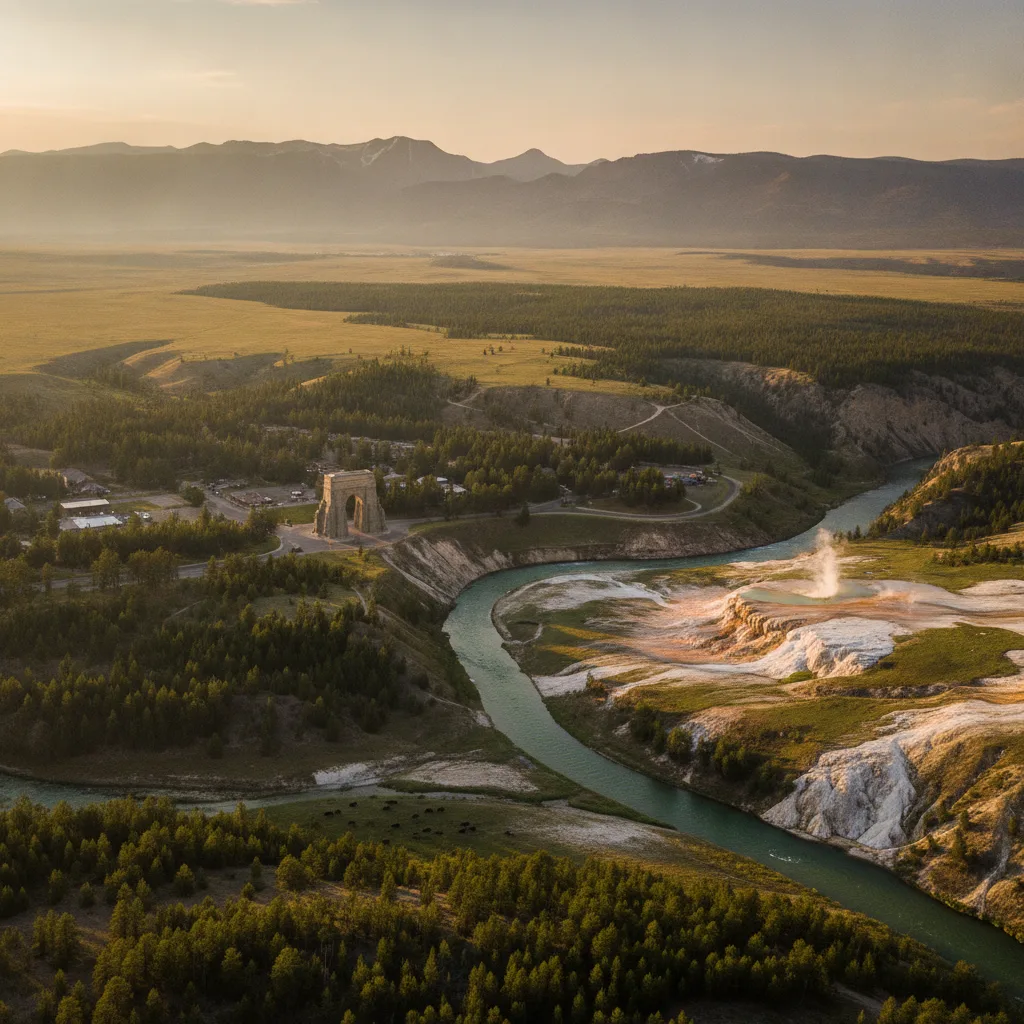
Welcome to our definitive guide to Yellowstone National Park (North) Montana, crafted by the Roam States editorial team. We cut through the noise to bring you confident, specific insights for planning an unforgettable journey to this iconic region. While Yellowstone is vast, we focus on the northern section, accessible via Gardiner, Montana, offering a distinct and often overlooked experience.
Why Visit Yellowstone National Park (North)
Yellowstone National Park (North) offers a unique gateway into the world's first national park, distinct from its more crowded southern and western counterparts. This region, anchored by the charming town of Gardiner, Montana, provides year-round access and a different rhythm to your adventure. We find that visitors to the North Entrance are often seeking a deeper connection with the park's wildlife, geological wonders, and rich history, all with a slightly less frenetic pace than the central geyser basins. From the steaming terraces of Mammoth Hot Springs to the wildlife-rich Lamar Valley, the northern range is a prime location for spotting bison, elk, and even wolves. The dramatic landscapes here, carved by the Yellowstone River, offer stunning vistas and a sense of rugged wilderness that truly embodies the spirit of Montana.
Who It's Best For
The northern section of Yellowstone National Park is ideal for a diverse range of travelers. It's particularly well-suited for wildlife enthusiasts, as the Lamar Valley is often dubbed "America's Serengeti" for its abundant animal sightings, especially during dawn and dusk. Families with a keen interest in nature and history will appreciate the educational opportunities at Mammoth Hot Springs and the Albright Visitor Center. Those seeking a more relaxed pace, or visiting during the shoulder seasons and winter, will find the year-round accessibility of the North Entrance a significant advantage. It's also perfect for photographers drawn to dramatic landscapes and wildlife, and for anyone who prefers to experience Yellowstone's grandeur away from the peak summer crowds. If you're looking to combine your national park adventure with a taste of authentic Montana charm, Gardiner and the surrounding Paradise Valley offer an excellent base.
How to Get There
Accessing Yellowstone National Park (North) is straightforward, with Gardiner, Montana, serving as the primary gateway. The North Entrance is unique as it's the only park entrance open to wheeled vehicles year-round, weather permitting.
For those flying in, Bozeman Yellowstone International Airport (BZN) is the closest major airport, approximately 90 minutes north of Gardiner. From Bozeman, you'll take Highway 89 South, a scenic drive that winds through Paradise Valley and along the Yellowstone River, leading directly to Gardiner and the iconic Roosevelt Arch, which marks the North Entrance of the park.
While the North Entrance is always open, it's crucial to check road conditions, especially during the spring and fall shoulder seasons, as weather can cause temporary closures. You can call (307) 344-2117 for recorded road information or sign up for text alerts.
Getting There & Parking
Once you've arrived in Gardiner, the North Entrance to Yellowstone National Park (North) is just a stone's throw away. The road from Gardiner through Mammoth Hot Springs to Cooke City, Montana, via Tower Junction, is the only park road typically open year-round to regular traffic. This means you can always reach the heart of the northern range, including Mammoth Hot Springs and the Lamar Valley, by car.
Parking at major attractions within Yellowstone National Park (North) can be a challenge, particularly during peak summer months when daily visitor counts can exceed 30,000. We strongly advise arriving at popular thermal areas and trailheads before 9:00 AM or after 5:00 PM to secure a spot and avoid the heaviest congestion. Mammoth Hot Springs has ample parking near the terraces and visitor center. In the Lamar Valley, roadside pullouts are common for wildlife viewing, but always ensure your vehicle is completely off the main road to avoid impeding traffic and for safety. There are no vehicle reservations required for entry into Yellowstone National Park in 2026, but this means crowds are unmanaged, so strategic timing is key.
Be aware of ongoing road construction in 2026. The Gardiner River High Bridge near the North Entrance and the Yellowstone River Bridge near Tower Junction may experience delays of up to 15-30 minutes through late October 2026. Always check the latest park alerts for real-time updates on road conditions and potential closures before heading out.
Top Things to Do
When considering things to do at Yellowstone National Park (North), our team focuses on experiences that highlight the unique character of this region. The northern range offers a blend of geological wonders, abundant wildlife, and historical significance that sets it apart.
- Explore Mammoth Hot Springs: This is a must-see for anyone visiting Yellowstone National Park (North). The dramatic, ever-changing travertine terraces, formed by hot, mineral-rich water, are unlike anything else in the park. We recommend exploring both the Upper and Lower Terraces via the boardwalks.
- Wildlife Watching in Lamar Valley: Often called "America's Serengeti," the Lamar Valley is arguably the best place for wildlife viewing in the entire park. Early mornings and late evenings offer the highest chances of spotting bison, elk, pronghorn, bears, and even wolves. Bring binoculars and a spotting scope for the best experience. This is one of the premier things to do at Yellowstone National Park (North) for nature photographers.
- Visit the Roosevelt Arch: Located at the North Entrance in Gardiner, this historic stone arch is a landmark in itself and a great photo opportunity, signifying the original entrance to the park.
- Discover Fort Yellowstone: Near Mammoth Hot Springs, this historic district served as the headquarters for the U.S. Army when they administered the park. The buildings offer a glimpse into the park's early history.
- Soak in Boiling River (currently closed, check NPS for updates): While not always open due to water levels, the Boiling River, where a hot spring meets the cold Gardiner River, was historically a popular spot for a natural soak. Always check current conditions and closures with the NPS before planning a visit.
- Drive the Blacktail Plateau Drive: This scenic, one-way gravel road offers a quieter alternative to the main park road and excellent opportunities for wildlife viewing and photography.
- Hike to Trout Lake: A relatively easy 1.2-mile loop, this trail leads to a picturesque mountain lake where you might spot otters, ospreys, and even bears.
These things to do at Yellowstone National Park (North) provide a comprehensive experience, from geological marvels to incredible wildlife encounters.
Yellowstone National Park (North) hiking trails
For those eager to lace up their boots, Yellowstone National Park (North) hiking trails offer a diverse range of experiences, from gentle boardwalk strolls to challenging backcountry treks. We prioritize trails that showcase the unique features of the northern range.
- Mammoth Hot Springs Terraces Trails: These boardwalk trails are a must for all visitors. They are relatively easy and offer close-up views of the vibrant, ever-changing travertine formations. The Lower Terraces and Upper Terraces each have distinct loops, providing hours of exploration.
- Bunsen Peak Trail: A moderate 4.6-mile round-trip hike, Bunsen Peak offers panoramic views of Yellowstone's Northern Range, including the Gallatin Range, Mammoth Hot Springs, and the Yellowstone River valley. The trailhead is located southwest of Mammoth's terraces. It's a rewarding climb with stunning vistas at the summit.
- Beaver Ponds Loop Trail: Starting near Mammoth Hot Springs, this moderate 5-mile loop winds through forests and sage meadows, offering excellent opportunities for wildlife viewing, particularly beavers, hence the name. It's often less crowded than other trails, providing a sense of backcountry solitude on a shorter hike.
- Trout Lake Trail: An easy 1.2-mile walk, this trail ascends through a Douglas fir forest to the beautiful Trout Lake, a prime spot for observing otters, ospreys, and other wildlife.
- Lost Lake Trail: This accessible trail near Roosevelt Lodge is a good option for families and offers a chance to see a tranquil lake environment.
When exploring Yellowstone National Park (North) hiking trails, always be prepared for changing weather conditions, carry bear spray, and make noise on the trails to avoid surprising wildlife. Check with a ranger station for current trail conditions and any closures due to bear activity or other hazards. No permit is required for day hiking.
Yellowstone National Park (North) camping
For a truly immersive experience, Yellowstone National Park (North) camping offers a direct connection to the park's natural beauty. Our team understands the appeal of waking up surrounded by wilderness, and the northern range provides several excellent options.
For the 2026 season, all campsites in Yellowstone National Park require advanced reservations, with the exception of Mammoth Campground, which offers first-come, first-served sites from October 15 to April 1. Reservations can be made online or by phone through Recreation.gov (877-444-6777) or Yellowstone National Park Lodges (307-344-7311). It's highly recommended to book months in advance due to the park's popularity.
The primary campground in the northern section is Mammoth Campground, located just five miles south of the North Entrance in Gardiner. It is the only campground open year-round, requiring reservations from April 17 to October 15, 2026. Mammoth offers 85 campsites, including ADA accessible sites, with most being pull-through. While it doesn't offer full hookups, it provides a convenient base for exploring Mammoth Hot Springs and the Lamar Valley.
Other campgrounds that might be considered for their proximity to the northern range, though not strictly in the "North" area, include Indian Creek Campground and Slough Creek Campground, which are reservable through Recreation.gov. Note that Norris and Pebble Creek campgrounds are closed for the 2026 season.
When planning your Yellowstone National Park (North) camping trip, remember that most campgrounds with amenities like flush toilets and laundry facilities range from $38 to $45 per night (plus taxes). Hiker/bicyclist sites are available for $10 per night. Always check the maximum RV length for specific sites if you're bringing a larger vehicle. Group campsites are also available at Bridge Bay, Grant Village, and Madison campgrounds, requiring advance reservations and ranging from $165 to $475 per night depending on group size.
Best Time to Visit
Determining the best time to visit Yellowstone National Park (North) largely depends on your priorities, as each season offers a dramatically different experience. Our team has observed distinct advantages and challenges throughout the year.
- Summer (June-August): This is the peak season, offering the most stable weather and complete park accessibility. All roads and facilities are typically open, and the long daylight hours allow for extensive exploration. However, summer also brings intense crowding, requiring strategic planning to navigate effectively, with wait times at major attractions potentially exceeding two hours. Parking at popular thermal areas fills by 9 AM.
- Fall (September-October): We consider September the optimal month for visiting Yellowstone in 2026, offering a strong combination of favorable conditions. The weather remains pleasant, with daytime temperatures ranging from 60-75°F, and visitor numbers drop by approximately 40% compared to peak summer. Wildlife activity increases as animals prepare for winter, creating exceptional viewing opportunities, especially for the elk rut. Fall foliage also provides spectacular photography opportunities.
- Spring (April-May): Spring delivers exceptional wildlife watching during "baby season" and the lowest accommodation prices. Waterfalls are at their fullest volume. However, weather remains unpredictable, and many interior roads may still be closed due to snow, opening in phases between mid-April and late May. The North Entrance, however, is open year-round.
- Winter (December-March): For those seeking solitude and a unique, snow-covered wonderland, winter is an extraordinary time to visit. Most interior roads are closed to wheeled vehicles, requiring specialized access via guided snowmobile or snowcoach tours. This dramatically limits visitor numbers and provides incredible opportunities for wildlife viewing, particularly wolves in the Lamar Valley, and experiencing the steaming thermal features against a snowy backdrop. The road from Gardiner to Cooke City remains open to cars year-round.
For a first trip, we often recommend September. If you can only visit in July or August, plan to explore popular spots before 9 AM and after 5 PM to avoid the heaviest congestion.
Where to Stay Nearby
Choosing where to stay is a crucial part of planning your visit to Yellowstone National Park (North). Our team emphasizes the benefits of staying in or near Gardiner, Montana, the primary gateway to the park's northern section.
In Gardiner, Montana: As the year-round gateway to Yellowstone's North Entrance, Gardiner offers a range of lodging options, from hotels and motels to cabins and vacation rentals. Staying here provides immediate access to the park and its northern attractions like Mammoth Hot Springs and the Lamar Valley. Gardiner itself is a lively western town with restaurants, shops, and outfitters offering activities like whitewater rafting on the Yellowstone River and horseback riding. It's an excellent base for exploring the northern range without long daily drives.
Inside Yellowstone National Park: For the most immersive experience, consider staying at the Mammoth Hot Springs Hotel & Cabins, which is open through winter. Staying within the park allows for early morning and late evening access to wildlife viewing and thermal features, often before or after the main crowds arrive. However, in-park lodging books up very quickly—reservations open up to 13 months in advance.
Other Nearby Montana Towns:
- Livingston: Located about an hour north of Gardiner, Livingston is a larger historic town with more dining and lodging choices. It offers a vibrant arts scene and is a good option if you prefer a town with more amenities and are willing to drive a bit further to the park.
- Emigrant: South of Livingston and closer to Gardiner, Emigrant is home to Chico Hot Springs Resort, a popular destination for soaking in natural mineral hot springs, dining, and spa services. This can be a great option for a more resort-style stay with easy access to the park.
For those looking to extend their Montana adventure, consider exploring other incredible destinations. Glacier National Park, with its stunning mountain scenery, is a significant drive north but can be combined with a Yellowstone trip for an epic Montana experience. For winter sports enthusiasts, Big Sky Resort offers world-class skiing and is located west of Bozeman. We encourage you to explore all the best places in Montana to round out your trip.
Sample 2-Day Itinerary
To help you make the most of your visit to Yellowstone National Park (North) Montana, our team has crafted a sample 2-day itinerary focusing on the unique highlights of this region. This itinerary assumes you are based in or around Gardiner.
Day 1: Mammoth's Terraces and Lamar Valley Wildlife
- Morning (Sunrise - 11:00 AM): Lamar Valley Wildlife Safari
Start your day early, ideally before sunrise, and head directly to the Lamar Valley. This is prime time for spotting wildlife, including bison, elk, pronghorn, and potentially wolves or bears. Drive slowly, use pullouts for viewing, and bring binoculars. Pack a thermos of coffee and some breakfast snacks to enjoy amidst the incredible scenery.
- Late Morning (11:00 AM - 1:00 PM): Tower-Roosevelt and Petrified Tree
After your wildlife drive, head towards Tower-Roosevelt. Explore the area around Tower Fall, a dramatic 132-foot waterfall. If time and interest allow, a short walk to the Petrified Tree offers a unique geological insight.
- Lunch (1:00 PM - 2:00 PM): Picnic or Roosevelt Lodge Dining
Enjoy a picnic lunch at one of the scenic spots in the Tower-Roosevelt area, or grab a meal at the historic Roosevelt Lodge Dining Room (seasonal operation, check 2026 dates).
- Afternoon (2:00 PM - 5:00 PM): Mammoth Hot Springs Exploration
Drive to Mammoth Hot Springs. Spend the afternoon exploring the colorful and intricate travertine terraces. Walk the boardwalks of both the Upper and Lower Terraces, marveling at the active hot springs and the unique formations. Visit the Albright Visitor Center to learn more about the park's history and geology.
- Evening: Dinner in Gardiner & Stargazing
Return to Gardiner for dinner at one of the local restaurants. After dark, head just outside of town or find a pullout within the park for incredible stargazing opportunities, far from city lights.
Day 2: Hiking, History, and Hot Springs (Outside the Park)
- Morning (8:00 AM - 12:00 PM): Northern Range Hike
Choose one of the excellent Yellowstone National Park (North) hiking trails. We suggest the Bunsen Peak Trail for panoramic views (moderate, 4.6 miles round-trip), or the Beaver Ponds Loop for wildlife spotting (moderate, 5 miles). Always carry bear spray and check trail conditions.
- Lunch (12:00 PM - 1:00 PM): Picnic or Quick Bite
Pack a picnic to enjoy on the trail or grab a quick bite in Mammoth Hot Springs or Gardiner.
- Afternoon (1:00 PM - 4:00 PM): Gardiner Exploration & Local Hot Springs
Spend the afternoon exploring the town of Gardiner. Visit the Roosevelt Arch for photos and browse local shops. Consider a relaxing soak at one of the nearby natural hot springs outside the park, such as Yellowstone Hot Springs or Chico Hot Springs, both about 45 minutes from the North Entrance.
- Late Afternoon (4:00 PM - 6:00 PM): Scenic Drive or Yellowstone River Activity
Enjoy a scenic drive along the Yellowstone River or consider an activity like a guided scenic float trip on the river (seasonal).
- Evening: Farewell Dinner
Savor a final dinner in Gardiner, reflecting on your Yellowstone adventure.
This itinerary provides a solid framework, but we encourage flexibility. Yellowstone's magic often lies in unexpected wildlife sightings or spontaneous detours. Remember that drive times within the park can be longer than anticipated, especially with wildlife jams, so always build in extra time.
Is It Worth Visiting?
Our resounding answer is yes, Yellowstone National Park (North) is absolutely worth visiting. For many travelers, the northern section of Yellowstone offers an experience that is both quintessential Yellowstone and uniquely its own. We find that the year-round accessibility of the North Entrance, coupled with the incredible concentration of wildlife in the Lamar Valley, makes it an unparalleled destination for nature lovers and photographers alike.
Beyond the famous geysers of the park's interior, the northern range boasts the mesmerizing travertine terraces of Mammoth Hot Springs, a geological marvel that constantly changes and impresses. The historical significance of Fort Yellowstone and the iconic Roosevelt Arch add layers of cultural depth to the natural wonders. If you're pondering, "is Yellowstone National Park (North) worth visiting," consider that it provides a more intimate encounter with the park's wild heart, often with fewer crowds than the central geyser basins, especially during the shoulder seasons. The charm of Gardiner, Montana, as a gateway town, further enhances the appeal, offering authentic local experiences right outside the park boundaries. For those seeking an authentic national park adventure focused on wildlife, geology, and a touch of history, we confidently assert that Yellowstone National Park (North) is worth visiting and will leave you with lasting memories.
Our Expert Verdict
Yellowstone National Park (North) is more than just an entrance; it's a destination in itself. We've found that focusing on this region allows for a deeper, more rewarding exploration of Yellowstone's unique blend of geothermal activity, abundant wildlife, and rich history. From the year-round accessibility and the wildlife spectacle of Lamar Valley to the otherworldly beauty of Mammoth Hot Springs, the northern range offers an authentic and unforgettable national park experience. It's a place where the wild truly thrives, and where every turn in the road can bring a breathtaking discovery. Don't just visit Yellowstone; immerse yourself in the untamed grandeur of its northern heart.
Frequently Asked Questions About Yellowstone National Park (North)
What are the best things to do in Gardiner?
Gardiner, Montana, serves as the vibrant gateway to Yellowstone National Park (North) and offers plenty to do. Our top recommendations include whitewater rafting or scenic float trips on the Yellowstone River, soaking in the natural mineral pools at Yellowstone Hot Springs or Chico Hot Springs (located a short drive away), exploring local shops and eateries, and visiting the historic Roosevelt Arch. It's also an excellent base for booking guided wildlife tours into the Lamar Valley.
How is Yellowstone National Park (North) with kids?
Yellowstone National Park (North) is fantastic for kids! The boardwalks at Mammoth Hot Springs are easy for strollers and offer captivating geological features. The Lamar Valley is a natural playground for wildlife viewing, which thrills children of all ages. Kids can also participate in the Junior Ranger program, earning a badge by completing activity booklets available at visitor centers. We recommend planning shorter drives and incorporating activities like picnicking and short, easy walks to keep little ones engaged.
What are some Yellowstone National Park (North) tips?
Our top tips for visiting Yellowstone National Park (North) include: starting your days early, especially for wildlife viewing in Lamar Valley, to beat crowds and catch animals at their most active; always carrying bear spray, particularly on hiking trails; dressing in layers as weather can change rapidly; and making lodging and camping reservations well in advance (up to 13 months for in-park lodging). Also, be sure to check current road conditions and potential construction delays, as these can impact travel times.
What's the parking situation at Yellowstone National Park (North)?
Parking at Yellowstone National Park (North) can be competitive, especially at popular spots like Mammoth Hot Springs and along the Lamar Valley during peak season. We advise arriving early in the morning (before 9 AM) or later in the afternoon (after 5 PM) to find available spots. Always use designated parking areas and pullouts, ensuring your vehicle is completely off the main road when stopping for wildlife viewing. No vehicle reservations are required for entry in 2026, but this means you should plan for crowds.
What is the best time to visit Yellowstone National Park (North)?
We believe the best time to visit Yellowstone National Park (North) is in September. This month offers a fantastic balance of pleasant weather, reduced crowds (about 40% fewer than summer), and increased wildlife activity as animals prepare for winter. Spring (April-May) is excellent for baby animal sightings, while winter offers a serene, snow-covered landscape with unique opportunities for wolf viewing in Lamar Valley. Summer (June-August) provides full accessibility but comes with the largest crowds.
What are the Yellowstone National Park (North) hours and fees?
Yellowstone National Park is open 24 hours a day, 365 days a year. The North Entrance from Gardiner, Montana, is the only entrance open to wheeled vehicles year-round. As of 2026, the entrance fee for a private vehicle is $35, valid for seven days and covering all passengers. Individuals on foot or bicycle pay $20, and motorcycles cost $30. Notably, starting January 1, 2026, non-U.S. residents aged 16 and older will incur an additional $100 surcharge per person, unless admitted with an Annual or America the Beautiful Pass.
Last updated: 2026-07-05 by the Roam States team.