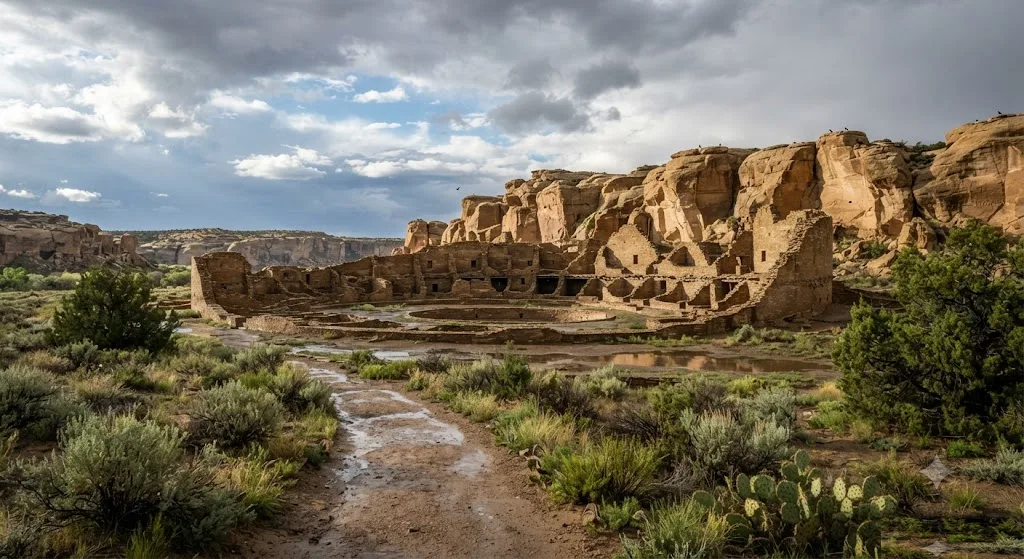
Our team at Roam States has ventured deep into the heart of the American Southwest to bring you the definitive guide to Chaco Culture National Historical Park New Mexico. This isn't your average roadside attraction; it's a profound journey into the past, a place where ancient masonry structures stand as silent testaments to a sophisticated ancestral Puebloan civilization and their remarkable understanding of the cosmos. Prepare for an immersive experience that transcends typical tourism, demanding thoughtful exploration and rewarding visitors with unparalleled insights into a culture that flourished a millennium ago.
Why Visit Chaco Culture National Historical Park
Chaco Culture National Historical Park is a UNESCO World Heritage Site, recognized globally for its exceptional cultural significance. We believe it's an essential stop for anyone seeking to understand the rich history of the ancestral Puebloans, often referred to as Anasazi, and their monumental achievements. Between 850 and 1250 A.D., Chaco Canyon was a thriving regional center, a hub of ceremony, commerce, and complex community life unlike anything else in the American Southwest.
What truly sets Chaco apart are the "great houses"—massive, multi-story architectural complexes built with incredible precision and engineering. These structures, like the iconic Pueblo Bonito, contained hundreds of rooms and dozens of kivas (ceremonial chambers), some rising four stories high. The scale and sophistication of these buildings are astounding, especially considering they were constructed without modern tools. Furthermore, many of these great houses were meticulously aligned with solar, lunar, and cardinal directions, showcasing the Chacoans' advanced astronomical knowledge.
Beyond the impressive architecture, Chaco was the center of a vast trading network, with archaeological evidence revealing exotic items from as far away as Central America, including macaw feathers, copper bells, and cacao residue in ceremonial vessels. An extensive system of engineered roads connected Chaco Canyon to over 150 other great houses throughout the San Juan Basin, reinforcing its role as a central economic and political power. Visiting Chaco offers a rare opportunity to witness this unparalleled cultural landscape and connect with the enduring legacy of its inhabitants, whose descendants are today's Pueblo people.
Who It's Best For
Chaco Culture National Historical Park is ideal for history buffs, archaeology enthusiasts, and anyone with a deep appreciation for ancient cultures and astronomical alignments. If you're drawn to places that spark wonder and encourage contemplation, this park is for you. It's particularly rewarding for those who enjoy self-guided exploration, as the majority of the park's cultural sites are designed for visitors to wander and discover at their own pace.
Photographers will find endless opportunities to capture the dramatic desert landscapes and the intricate details of the ancient masonry. Stargazers, in particular, will be captivated; Chaco was designated an International Dark Sky Park in 2013, offering some of the best night sky viewing in the U.S. Our team highly recommends it for those seeking a profound and reflective travel experience, far from the crowds of more commercialized destinations. However, it's important to note that Chaco is remote and has limited services, so visitors should be prepared for a self-sufficient adventure.
Getting There & Parking
Understanding how to get to Chaco Culture National Historical Park is crucial, as its remote location is part of its allure but also its challenge. The park is situated in northwestern New Mexico, and while it feels worlds away, it is accessible, primarily via unpaved roads. We always advise checking current road conditions before you depart, especially after rain or snow, as they can become impassable.
The recommended route to Chaco Culture National Historical Park is from the north, turning off US Highway 550 at County Road 7900 (at mile 112.5), approximately 3 miles southeast of Nageezi and 50 miles west of Cuba. This route, clearly signed, involves about 5 miles of paved road (CR 7900) followed by 16 miles of mostly unpaved road (CR 7950) to the park boundary. Expect washboard, potholes, and graded sections on the dirt roads, so a high-clearance vehicle is recommended, and driving slowly is essential.
There are also southern access routes from I-40 near Grants and Crownpoint, but these typically involve longer stretches of rough dirt roads and are generally not recommended for RVs or trailers. Regardless of your approach, call the park at 505-786-7014, ext. 221, for the latest road conditions before leaving paved highways.
Once you arrive, parking is available at the Visitor Center and at designated areas along the 9-mile Canyon Loop Drive, which accesses the major Chacoan sites. From these parking lots, it's typically a short walk to the ruins. Handicap parking is available at every entrance to the sites. Remember, there are no services like gasoline, food, or auto repair within the park, so arrive with a full tank and all necessary supplies.
Top Things to Do
There are many incredible things to do at Chaco Culture National Historical Park, offering a blend of historical exploration, natural beauty, and celestial wonder. Our team suggests starting your visit at the Chaco Canyon Visitor Center. It’s an excellent place to gather information, explore museum exhibits detailing ancestral Puebloan life, and watch a film about the park's rich history. You can also purchase self-guided trail guides for the major sites, which are highly recommended as the ruins themselves lack interpretive signs.
The primary attraction for many are the six major Chacoan sites located along the 9-mile Canyon Loop Drive: Una Vida, Hungo Pavi, Pueblo Bonito, Chetro Ketl, Pueblo del Arroyo, and Casa Rinconada. We recommend focusing your energy on Pueblo Bonito, the largest and most famous of the great houses, which you can explore both from within and from an impressive overlook. Other top things to do at Chaco Culture National Historical Park include:
- **Guided Tours:** Park rangers offer guided tours that provide valuable insights into the history, architecture, and cultural significance of the ancient ruins.
- **Bicycling:** The Canyon Loop Drive is a nearly level, paved road that is excellent for biking, allowing you to explore the sites at your own pace. Bike racks are available at the visitor center and major parking areas.
- **Stargazing:** As an International Dark Sky Park, Chaco offers phenomenal stargazing opportunities. Ranger-led night sky programs, including lectures and telescope viewings, are available from April through October, particularly on Fridays and Saturdays.
- **Junior Ranger Program:** Children can earn a Junior Ranger Badge by completing activities in a booklet, making it an engaging experience for younger visitors.
Remember, the park has minimal shade and is at a high elevation (around 6,200 feet), so always carry plenty of water, wear sun protection, and take your time to acclimate.
Chaco Culture National Historical Park Hiking Trails
Exploring the Chaco Culture National Historical Park hiking trails is one of the most rewarding ways to experience the vastness and intricate connections of this ancient landscape. While pets are not permitted on the front country trails around the main loop road, they are allowed on backcountry trails if kept on a leash no longer than 6 feet. All backcountry trails require you to sign in at the trailhead. A comprehensive trail guide booklet is available for purchase at the visitor center for $3.00.
Here are some of the most notable Chaco Culture National Historical Park hiking trails:
- Pueblo Alto Trail: This 5.5-mile (8.9 km) loop is arguably the most popular backcountry trail, offering spectacular mesa-top aerial views of Pueblo Bonito, Chetro Ketl, and Kin Kletso. It's rated moderate-strenuous and includes ancient stairways and roads. Allow ample time, as it includes a small scramble up stone staircases.
- Peñasco Blanco Trail: The longest backcountry hike at 7.5 miles (12 km) round-trip, this easy-to-moderate trail leads to remote Chacoan sites, passing rock art and the "Supernova" pictograph site. Be aware of potential flash floods during monsoon season, which can make crossing Chaco Wash hazardous.
- Wijiji Trail: This 3.8-mile (6.1 km) round-trip, easy hike takes you to Wijiji, a late-period Chaco great house, and an alcove with pictographs and petroglyphs. It's a great option for those seeking a less crowded experience.
- South Mesa (Tsin Kletzin) Trail: This moderate 3.9-mile (6.3 km) to 4.9-mile (7.2 km) loop climbs to a high point on the South Mesa to visit the Tsin Kletzin great house, offering far-reaching vistas.
- Una Vida Trail: An easy 0.8-mile (1.1 km) loop near the Visitor Center, this trail visits the Una Vida great house and offers an optional spur path to small petroglyph panels.
Remember that trails are not handicap accessible, though some paths around the main sites are packed dirt and rock, and some sections may be manageable with assistance. Always carry plenty of water, wear appropriate footwear, and be prepared for sun exposure and sudden weather changes.
Best Time to Visit
Our team agrees that the best time to visit Chaco Culture National Historical Park is during the spring (March-April) and fall (September-October) months. These seasons offer the most moderate temperatures, making hiking and exploring the ruins much more comfortable. Spring can bring unpredictable weather and strong winds, but often provides pleasant conditions. Fall, particularly September and October, is frequently cited as ideal, with warm days and cool nights.
Summer (May-August) can be challenging, with highs often in the 80s to mid-90s Fahrenheit (mid-20s to mid-30s Celsius). This period also marks the "monsoon season" from July to September, bringing dramatic thunderstorms, heavy localized downpours, and the risk of flash floods, which can make dirt roads impassable. If you plan a summer visit, be prepared for heat, carry extra water, and monitor weather forecasts closely.
Winter (November-February) offers a stark beauty and fewer crowds, but temperatures can drop well below freezing, especially at night. Snowfall is possible but usually melts within a few days. If you're visiting in winter, prepare for cold temperatures and potential road closures due to snow or ice.
For stargazing, late spring to early fall are ideal, with September being a particularly excellent month due to the annual Astronomy Festival and spectacular night sky views.
Where to Stay Nearby
Given the remote nature of Chaco Culture National Historical Park, lodging options directly adjacent to the park are extremely limited. There are no hotels, motels, or commercial lodging services within the park itself. The only option for staying within the park boundaries is Gallo Campground, which we cover in detail below.
If you prefer traditional lodging, you'll need to look to nearby towns. The closest major population centers with a variety of accommodations are:
- Farmington, New Mexico: Approximately 61-74 miles away, about a 1.5-hour drive.
- Bloomfield, New Mexico: About 61 miles away, also roughly a 1.5-hour drive.
- Aztec, New Mexico: Around 69 miles away, a 1.5-hour drive.
- Cuba, New Mexico: Approximately 69 miles away, a 1.5-hour drive.
- Gallup, New Mexico: About 94 miles away, a 2.5-hour drive.
- Grants, New Mexico: Around 82 miles away, a 2-hour drive.
For those flying into the region, Albuquerque International Sunport (ABQ) is a popular choice, though it's about 151 miles (3 hours) from Chaco via Highway 550. Santa Fe is even further, at 178 miles (3 hours). When planning your visit, factor in the driving time from your chosen lodging to the park, especially considering the unpaved sections of road. We recommend booking accommodations in advance, particularly during peak seasons, as options can be scarce in these smaller towns.
Is It Worth Visiting?
We unequivocally say, "Yes, Chaco Culture National Historical Park is absolutely worth visiting!" While the journey to get there can be a bit rugged, involving unpaved roads and a commitment to self-sufficiency, the rewards are immense. This remote New Mexico experience offers a profound connection to an ancient civilization that few places in the world can match.
The sheer scale and architectural sophistication of the great houses, particularly Pueblo Bonito, are breathtaking. Walking through these monumental structures, you gain an immediate appreciation for the engineering prowess and organizational capabilities of the ancestral Puebloans. The astronomical alignments embedded within the architecture further deepen the sense of wonder, highlighting a culture deeply connected to the cosmos. For those who question, "is Chaco Culture National Historical Park worth visiting," we emphasize that it's not just a collection of ruins; it's a living landscape imbued with historical and spiritual significance.
Beyond the archaeological marvels, Chaco's designation as an International Dark Sky Park provides an unparalleled opportunity for stargazing, allowing visitors to experience the night sky much as the Chacoans did centuries ago. The solitude and quiet of the canyon, far from urban light pollution and noise, enhance this spiritual connection. While it requires planning and preparation due to its limited services and challenging access roads, the unique, immersive, and educational experience offered by Chaco Culture National Historical Park makes it an unforgettable destination and truly worth the effort.
Chaco Culture National Historical Park Camping
For a truly immersive experience, our team highly recommends Chaco Culture National Historical Park camping at Gallo Campground, the only campground located within the park boundaries. Situated just one mile east of the Visitor Center, Gallo Campground offers a rugged environment surrounded by petroglyphs, a small cliff dwelling, and a high desert landscape. Some campsites even offer views of Fajada Butte.
As of 2026, Gallo Campground has 29 individual campsites with picnic tables and fire grates (you must bring your own firewood or charcoal, as gathering wood is prohibited and none is available in the park). RVs are allowed in many sites, but there are no hookups, and trailers over 35 feet long are not permitted. Some sites (20, 21, 23, 24, and 25) and a nearby trail to a cliff dwelling remain permanently closed due to a rockfall that occurred in July 2023.
We strongly recommend making reservations for Chaco Culture National Historical Park camping on Recreation.gov to ensure you have a spot, especially during peak season. Unreserved campsites are available on a first-come, first-served basis. Two group campsites, accommodating 10-30 people each, are also available by reservation. The campground has restrooms with flush toilets and running water (non-potable at some facilities, potable water at the visitor center). Note that campground restrooms are closed from the day after Veterans Day through the end of February, with PortaPottys available during this time. Campsite #11 is wheelchair accessible. Individual campsites cost $20.00 per night, with a discounted rate of $10.00 for Interagency Senior or Access pass holders.
Beyond the park, limited rustic camping options exist, such as Horse-Thief Campground along County Road 7950 and Angel Peak Scenic Area Campground (free, BLM-run) about 39 miles north of Chaco.
Sample 2-Day Itinerary
To truly appreciate the depth and breadth of Chaco Culture National Historical Park, we recommend a two-day visit. This allows for thorough exploration of the major sites, time for hiking, and the unforgettable experience of stargazing.
Day 1: Arrival & Core Canyon Exploration
- Morning (Arrival & Visitor Center): Arrive at Chaco Culture National Historical Park, preferably via the northern route (CR 7900/7950). Head directly to the Visitor Center (open 9:00 AM - 5:00 PM daily). Collect maps and purchase self-guided trail brochures. Watch the park film and explore the exhibits to gain context for your visit. Refill your water bottles here, as it's the primary source of potable water.
- Late Morning (Una Vida & Hungo Pavi): Drive the Canyon Loop Road. Your first stops will be Una Vida, an easy 0.8-mile loop near the visitor center, and Hungo Pavi, strategically located near natural drainages and easily accessible from its parking area.
- Afternoon (Pueblo Bonito & Chetro Ketl): Dedicate significant time to Pueblo Bonito, the park's most iconic great house. Explore its vast complex of rooms and kivas. Afterward, visit Chetro Ketl, located nearby, and consider walking the Petroglyph Trail between the two sites.
- Late Afternoon (Casa Rinconada): Drive to Casa Rinconada, famous for its large, isolated great kiva. Take the short walk to explore this unique ceremonial structure.
- Evening (Camping & Stargazing): Check into Gallo Campground. Prepare dinner. As twilight deepens, find a spot away from campfires to enjoy the phenomenal dark skies. If available, attend a ranger-led night sky program.
Day 2: Backcountry Hiking & Further Exploration
- Morning (Pueblo Alto Trail): Start early with a hike on the Pueblo Alto Trail (5.5-mile loop, moderate-strenuous). This trail offers breathtaking aerial views of Pueblo Bonito and the canyon, providing a different perspective on the Chacoan world. Remember to sign in at the trailhead.
- Late Morning (Pueblo del Arroyo): After your hike, visit Pueblo del Arroyo, a great house situated across from Pueblo Bonito. It's a shorter, easier loop.
- Afternoon (Wijiji Trail or Peñasco Blanco Trail): Choose another backcountry trail based on your energy and interest. The Wijiji Trail (3.8-mile round-trip, easy) offers a pleasant walk to a great house and rock art. For a longer, more challenging hike with remote sites and pictographs, consider the Peñasco Blanco Trail (7.5-mile round-trip, moderate).
- Late Afternoon (Final Views & Departure): Enjoy a final drive along the Canyon Loop, perhaps stopping at a scenic overlook for Fajada Butte. Begin your journey out of the park, allowing ample time for the unpaved roads before sunset.
This itinerary is flexible; adjust it based on your interests, physical fitness, and the park's current conditions. Always carry plenty of water and snacks, wear sun protection, and be prepared for changing weather conditions.
Frequently Asked Questions
What are some other things to do in the San Juan Basin?
The San Juan Basin, where Chaco Culture National Historical Park is located, is rich with cultural and natural attractions. Beyond Chaco, you can explore other ancestral Puebloan sites like Aztec Ruins National Monument and Salmon Ruins to the north, which were connected to Chaco by ancient roads. For outdoor enthusiasts, the Bisti/De-Na-Zin Wilderness offers otherworldly badlands landscapes for hiking and photography. Navajo Lake State Park provides opportunities for boating, fishing, and camping. Farmington, the nearest major city, offers additional amenities and serves as a gateway to these regional attractions. While in New Mexico, consider visiting other incredible destinations like Carlsbad Caverns National Park, White Sands National Park, or delving into the vibrant arts and culture of Santa Fe Plaza and Taos Pueblo. For more New Mexico adventures, check out our guide to the Best places in New Mexico.
Is Chaco Culture National Historical Park good for kids?
Chaco Culture National Historical Park can be a fantastic and educational experience for kids, especially those with an interest in history and archaeology. The Junior Ranger program offers an engaging way for children to learn about the park and earn a badge. Exploring the massive ruins like Pueblo Bonito can feel like an adventure, sparking imagination about ancient civilizations. However, parents should be aware that there is very little shade, and the high desert environment can be challenging for young children, especially in summer. Bring plenty of water, snacks, and sun protection. While most main sites are easily accessible from parking areas, some backcountry hiking trails might be too strenuous for very young children. The park's remote location also means limited services, so come prepared with everything your family might need.
What are some essential Chaco Culture National Historical Park tips?
Our top Chaco Culture National Historical Park tips for a successful visit include:
- Check Road Conditions: Always call the park (505-786-7014, ext. 221) or check their website for current road conditions before you go, especially after rain or snow. The unpaved access roads can become impassable.
- High-Clearance Vehicle: A high-clearance vehicle is recommended for navigating the unpaved roads, particularly the northern route.
- Pack Essentials: There are no food, gas, or lodging services within the park. Bring all your food, plenty of water (potable water available at the visitor center), a full tank of gas, and any other supplies you'll need.
- Sun Protection: Chaco is at a high elevation (6,200 feet) with minimal shade. Wear a wide-brimmed hat, sunglasses, sunscreen, and protective clothing.
- Dress in Layers: Temperatures can fluctuate dramatically, even within a single day. Be prepared for heat, cold, wind, and rain.
- Altitude Awareness: Take it easy, drink plenty of water, and avoid overexertion, especially if you're coming from a lower elevation.
- Get Trail Guides: Purchase self-guided trail guides at the visitor center; the ruins lack interpretive signage.
- Reservations for Camping: If planning to camp at Gallo Campground, make reservations well in advance on Recreation.gov.
- Respect the Site: Chaco is a sacred place to many Indigenous peoples and a UNESCO World Heritage Site. Stay on marked trails, do not disturb artifacts, and leave no trace.
Is there ample parking at Chaco Culture National Historical Park?
Yes, there is parking available at the Chaco Culture National Historical Park Visitor Center and at each of the major Chacoan sites along the 9-mile Canyon Loop Drive. From the parking areas, it's typically a short walk to explore the ruins. Handicap parking is available at the entrance to each site. While the park is remote and sees fewer visitors than many other national parks (around 50,000 annually), our team has found that parking is generally sufficient, even during busier times. However, during special events like the Astronomy Festival or solstices, it's always wise to arrive early.
What is the best time to visit Chaco Culture National Historical Park?
The best time to visit Chaco Culture National Historical Park is during the spring (March-April) and fall (September-October). These seasons offer the most pleasant temperatures for exploring the outdoor sites and hiking. Fall, in particular, is often highlighted for its warm days and cool nights, making it ideal. Summer can be very hot with monsoon thunderstorms, and winter can be quite cold, though both seasons offer unique experiences for those prepared for the conditions. For stargazing, late spring through early fall, especially September during the Astronomy Festival, is highly recommended.
What are the Chaco Culture National Historical Park hours and fees?
As of 2026, the Chaco Culture National Historical Park hours and fees are as follows:
- Loop Road & Archaeological Sites:
- May 1 - October 31: 7:00 AM to 9:00 PM, with the entrance gate closing at 8:30 PM. All visitors must vacate by 9:00 PM.
- March 1 - April 30: 7:00 AM to 7:00 PM, with the entrance gate closing at 6:30 PM. All visitors must vacate by 7:00 PM.
- November 1 - February 28: 7:00 AM to 5:00 PM, with the entrance gate closing at 4:30 PM.
- Visitor Center: Open daily from 9:00 AM to 5:00 PM.
- Closures: All park facilities are closed on Thanksgiving, Christmas, and New Year's Day. The Gallo Campground is closed the day prior to these holidays.
- Entrance Fees (as of 2026):
- Vehicle Entrance Fee: $25.00 for 7 days.
- Motorcycle Entrance Fee: $20.00 for 7 days.
- Individual Entrance Fee (per person, walking or bicycling): $15.00 for 7 days.
- America the Beautiful Passes are accepted.
- **Cashless Entry Only:** Entrance fees must be paid with credit or debit cards. Cash is only accepted for bookstore purchases.
- Camping Fees (Gallo Campground):
- Individual Campsite: $20.00 per night.
- Campers with Interagency Senior or Access passes pay $10.00 per night.
- Group Campsites: Available by reservation.
- Reservations are recommended and can be made on Recreation.gov at least 1 day in advance.
- Free Entrance Days (2026): The National Park Service offers several fee-free days throughout the year, including Presidents Day (Feb 16), Memorial Day (May 25), Flag Day (June 14), Independence Day weekend (July 3-5), 110th Birthday of the NPS (Aug 25), Constitution Day (Sept 17), Theodore Roosevelt's birthday (Oct 27), and Veterans Day (Nov 11).
Chaco Culture National Historical Park is more than just a destination; it's an experience that resonates deeply with the spirit of discovery and respect for ancient civilizations. Our team at Roam States urges you to prepare thoroughly, embrace the journey, and allow yourself to be captivated by the profound history and celestial wonders of this extraordinary place in New Mexico. It's a journey you won't soon forget.
Last updated: 2026-07-08 by the Roam States team.