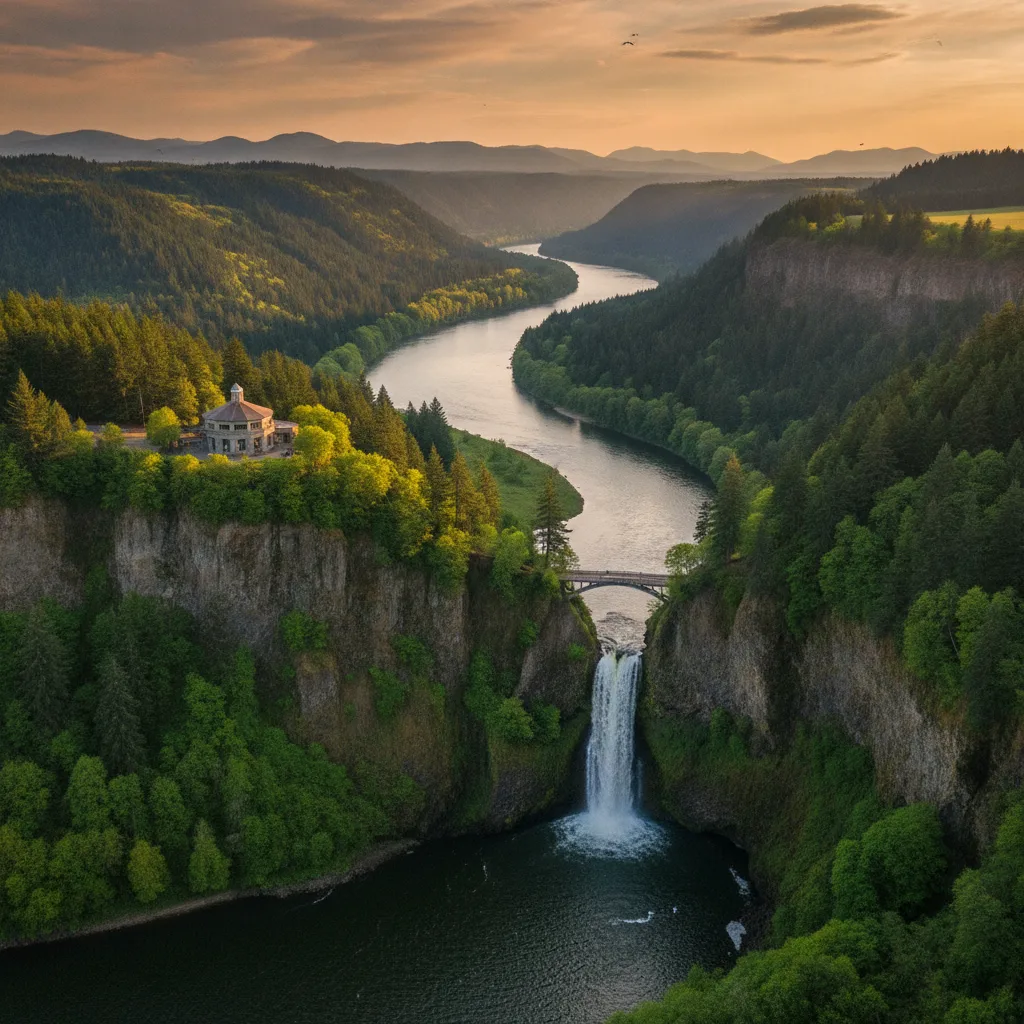
Our Columbia River Gorge National Scenic Area guide covers practical planning for Columbia River Gorge National Scenic Area Washington — best time to visit, getting there, and what to do on the ground.
Columbia River Gorge National Scenic Area Travel Guide — Washington
The Columbia River Gorge National Scenic Area Washington is a truly spectacular natural wonder, a dramatic river canyon carved by the mighty Columbia River, forming a breathtaking border between Washington and Oregon. This 80-mile-long canyon, up to 4,000 feet deep, meanders past towering cliffs, verdant forests, and high desert landscapes, offering an unparalleled feast for the senses. We've spent countless hours exploring both sides of the Gorge, but our team at Roam States is here to guide you through the unique treasures awaiting on the Washington side. From stunning waterfalls and exhilarating hiking trails to world-class windsurfing, the Washington side of the Gorge promises adventure and awe-inspiring beauty around every bend.
Why Visit Columbia River Gorge National Scenic Area
We believe the Columbia River Gorge National Scenic Area offers a unique blend of natural grandeur and recreational opportunities that few other destinations can match. The sheer scale of the canyon, carved over millions of years by glacial floods, is humbling. On the Washington side, you'll find a distinct character, often less crowded than its Oregon counterpart, yet equally rich in dramatic landscapes and outdoor pursuits. It's a place where lush conifer forests in the west transition to arid grasslands in the east, creating incredible biodiversity and a constantly changing scenic backdrop.
For outdoor enthusiasts, the Gorge is a playground. Imagine hiking to the top of an ancient volcano core like Beacon Rock, or chasing waterfalls that tumble hundreds of feet into mossy canyons. The consistent winds funneling through the Gorge make it a mecca for windsurfing and kiteboarding, particularly in the eastern sections. Beyond the adrenaline-pumping activities, the Washington side offers serene hot springs, charming small towns like Stevenson and Carson, and opportunities for stargazing under exceptionally dark skies. It's a destination that truly caters to a wide range of interests, from avid adventurers to those simply seeking natural beauty and tranquility.
Who It's Best For
The Columbia River Gorge National Scenic Area is ideal for a diverse array of travelers. Our team finds it particularly suited for:
- **Outdoor Adventurers:** With countless hiking trails, rock climbing opportunities, windsurfing, and kayaking, those seeking an active vacation will be in their element.
- **Nature Photographers:** The dramatic landscapes, abundant waterfalls, and diverse flora and fauna provide endless opportunities for capturing stunning images.
- **Families:** Many trails are family-friendly, and attractions like the Goldendale Observatory offer engaging experiences for all ages. Short waterfall hikes, fruit farms, and parks are also great for kids.
- **Couples:** Romantic viewpoints, cozy cabins, and opportunities for shared outdoor experiences make it a fantastic destination for a getaway.
- **Road Trippers:** Highway 14 on the Washington side offers one of the most scenic drives in the country, with numerous pull-offs and attractions along the way.
Whether you're looking for an adrenaline rush or a peaceful escape into nature, the Columbia River Gorge National Scenic Area Washington delivers. It's a destination that rewards exploration and offers a chance to reconnect with the wild beauty of the Pacific Northwest.
Getting There & Parking
Reaching the Columbia River Gorge National Scenic Area is straightforward, whether you're coming from nearby cities or flying in. For most visitors, driving offers the most flexibility to explore the numerous viewpoints and trailheads. The Gorge is located about an hour east of Portland, Oregon, and can be accessed via a scenic drive along I-84 (on the Oregon side) or Washington State Route 14 (on the Washington side).
From Portland, Oregon
If you're starting from Portland, the quickest way to reach the Gorge is typically via I-84 East. The drive takes approximately 45-60 minutes without stops. However, for a more scenic experience, we recommend taking sections of the Historic Columbia River Highway (US 30), which parallels I-84 and offers slower access to many waterfalls and overlooks. Be aware that sections of the Historic Highway can be closed seasonally for landslides, so always check conditions before departing. You can also take a train from Portland to Bingen-White Salmon Amtrak, which takes about 1 hour and 40 minutes and costs between $22 and $50. Bus service is also available, taking approximately 2 hours and 6 minutes with transfers.
From Seattle, Washington
From Seattle, the drive to the Washington side of the Columbia River Gorge National Scenic Area is approximately 3 hours and 36 minutes, covering about 204 miles. We suggest taking I-5 South to Tacoma, then connecting to routes that lead to State Route 14 East, which runs along the Washington side of the Gorge. Alternatively, you can take a train from Seattle to Bingen-White Salmon Amtrak, which takes around 5 hours and 15 minutes and costs $70-$150. Bus services are also available, with journeys taking around 6 hours and 5 minutes and costing $26-$55.
Parking and Permits (2026 Facts)
Parking in popular areas of the Columbia River Gorge National Scenic Area, especially on weekends and during peak season, can be challenging. We strongly advise arriving early, particularly for popular trailheads. Here are some key 2026 facts regarding parking and permits:
- **Multnomah Falls (Oregon Side):** A timed-use permit is required to access Multnomah Falls from Exit 31 off of Highway 84 between May 22, 2026, and September 7, 2026, daily from 9 a.m. to 6 p.m.. These permits can be reserved on Recreation.gov for a $2.00 transaction fee and are released in two waves: 14 days and 2 days in advance of the arrival date. A timed-use permit does not guarantee parking, so checking the Oregon Department of Transportation's TripCheck webpage for real-time parking capacity at Exit 31 is crucial. Limited free same-day permits may be available at the Gateway to the Gorge Visitor Center in Troutdale and the Cascade Locks Historical Museum. Parking at the lot across from Multnomah Falls Lodge on the Historic Highway has a year-round fee.
- **Washington Discover Pass / Northwest Forest Pass:** A Washington Discover Pass or a Northwest Forest Pass is required at many trailheads on the Washington side. For example, parking at the middle, lower, or upper Lewis River Falls parking lots now requires *both* a parking permit and a Northwest Forest Pass. The Northwest Forest Parking Pass is required year-round.
- **Dog Mountain:** A seasonal permit is required for individual hikers on Dog Mountain on Saturdays and Sundays from mid-April to mid-June during peak wildflower season, in addition to the Northwest Forest Parking Pass.
- **Lewis River:** A permit is also needed for hiking on the Lewis River trails.
- **Goldendale Observatory:** Reservations are required for programs at the Goldendale Observatory, and a Discover Pass is needed for both the observatory and Brooks Memorial State Park.
- **Sno-Park Permits:** Sno-park permits are required for sno-parks and ski resorts in Washington and Oregon during winter months.
We highly recommend checking the USDA Forest Service website for the Columbia River Gorge National Scenic Area for the most up-to-date information on permits, fees, and any closures before your visit.
Top Things to Do
When you visit the Columbia River Gorge National Scenic Area, especially on the Washington side, you'll discover a wealth of activities. Our team has curated a list of top things to do at Columbia River Gorge National Scenic Area, ensuring you experience the best of this stunning region. These things to do in Southern Washington truly highlight the diverse beauty and adventure available.
Chase Waterfalls and Hike Iconic Trails
The Gorge is renowned for its incredible concentration of waterfalls, and the Washington side holds some true gems. While Multnomah Falls is on the Oregon side (and requires a timed-use permit during peak season in 2026), Washington offers its own spectacular cascades:
- **Panther Creek Falls:** Tucked away and feeling wonderfully remote, this waterfall fans out dramatically.
- **Falls Creek Falls:** Not far from Panther Creek, this three-tier cascade is another hidden gem.
- **Hardy Falls and Rodney Falls (Beacon Rock State Park):** A relatively easy 2.5-mile roundtrip hike within Beacon Rock State Park leads to these beautiful falls, making it a great choice for families.
- **Cape Horn Falls, Upper Rock Creek Falls, and Dog Creek Falls:** These are other notable cascades on the Washington side, with Upper Rock Creek Falls and Dog Creek Falls being very accessible, often within 0.1 miles of parking.
Beyond waterfalls, the hiking opportunities are endless:
- **Beacon Rock:** Hike the switchback trail to the top of this 848-foot basalt monolith, the core of an ancient volcano, for splendid views of the Columbia River Gorge.
- **Dog Mountain:** A challenging 6-mile hike with 2,900 feet of elevation gain, Dog Mountain is legendary for its stunning gorge views and vibrant wildflower displays in late spring and early summer. Remember, a seasonal permit is required on weekends and Memorial Day during peak wildflower season in addition to the Northwest Forest Parking Pass.
- **Cape Horn Trail:** This trail offers cliffside views of the Columbia River and surrounding islands, transitioning from peaceful forests to exposed ridgelines. The upper plateau provides quiet mountain vistas.
- **Lewis River Falls:** Located in the Gifford Pinchot National Forest, these falls (Lower, Middle, and Upper) offer a different feel from the main Gorge corridor and are worth exploring. Note that parking here requires both a parking permit and a Northwest Forest Pass.
Scenic Drives and Viewpoints
Driving State Route 14 on the Washington side is an experience in itself, offering continuous panoramic views. We recommend these viewpoints:
- **Cape Horn Lookout:** Offers some of the finest perspectives of the Columbia River and its islands.
- **Maryhill Stonehenge:** A replica of Stonehenge, this World War I monument near the Maryhill Museum of Art offers a unique stop and overlooks the drier, eastern landscape of the Gorge.
- **Goldendale Observatory:** On top of a hill, this observatory houses one of the nation's largest public telescopes, offering year-round programming (reservations required) and excellent stargazing opportunities. A Discover Pass is needed.
- **McClellan Viewpoint:** If you're heading towards Mount St. Helens via the Carson route, look for this viewpoint for an outstanding distant view of the mountain.
Windsurfing and Kiteboarding
The Columbia River Gorge is world-renowned for its consistent winds, making it a premier destination for windsurfing and kiteboarding. Hood River (on the Oregon side, but easily accessible) is often considered the capital, but the entire Gorge offers excellent conditions for these thrilling water sports.
Relax in Hot Springs
The Washington side of the Gorge offers several spots to unwind in natural mineral hot springs. Carson Hot Springs Spa provides a historic experience with mineral water pumped into antique clawfoot tubs. For a more modern, nature-immersed experience, TenZen Springs & Cabins, which opened in 2022, features cabins with wooden two-person tubs fed by hot spring water. Bonneville Hot Springs Resort & Spa is another option that has been recently refurbished.
Explore Charming Towns
Don't miss the opportunity to explore the quaint towns along the Washington side:
- **Stevenson:** This historical town is home to the Columbia Gorge Interpretive Center Museum, offers hiking and biking, and features local breweries like Walking Man Brewery.
- **Carson:** Known for its breathtaking mountain vistas, waterfalls, and rejuvenating hot springs, Carson offers a tranquil escape.
Best Time to Visit
The Columbia River Gorge National Scenic Area is a year-round destination, but the "best" time to visit largely depends on your interests. Our team has found distinct advantages to each season:
- **Spring (April-May):** This is a magical time for wildflowers, especially on trails like Dog Mountain, Coyote Wall, and Catherine Creek. Waterfalls are often at their most powerful due to snowmelt. Temperatures are mild, but rain is common. Be aware that seasonal permits are required for Dog Mountain on weekends during peak wildflower season.
- **Summer (June-August):** Summer offers the warmest and driest weather, making it ideal for hiking, water sports, and exploring. However, it's also the busiest season, meaning more crowds and potential parking challenges. Timed-use permits are required for Multnomah Falls (Oregon side) from late May through early September. This is also peak season for u-pick operations and lavender fields on the Hood River Fruit Loop.
- **Fall (September-October):** The Gorge transforms with stunning fall foliage, particularly vibrant in late September and October. Crowds begin to thin, and the weather remains pleasant for hiking. It's an excellent time for photography.
- **Winter (November-March):** While some higher elevation trails may be inaccessible due to snow and ice, winter offers a dramatic, serene beauty. Waterfalls are often at their fullest, and you might experience misty, atmospheric views. It's a quieter time to visit, perfect for those seeking solitude. Sno-park permits are required for designated sno-parks.
For windsurfing and kiteboarding, the consistent winds are strongest during the warmer months, making summer and early fall popular for these activities. Ultimately, we recommend considering your primary activities when choosing your travel dates to the Columbia River Gorge National Scenic Area.
Where to Stay Nearby
Finding the right Columbia River Gorge National Scenic Area lodging is key to a memorable trip. While many visitors stay in Hood River, Oregon, the Washington side offers excellent options, particularly in the towns of Stevenson and Carson, providing a fantastic base for exploring the Gorge. Our team has identified several top choices:
- **Skamania Lodge (Stevenson, WA):** This 3.5-star resort is a popular choice, offering a unique blend of golf, spa experiences, and breathtaking views of the Columbia River. It's pet-friendly and features multiple restaurants, an indoor pool, and even glamping units or treehouses for an immersive nature stay.
- **Carson Hot Springs Resort (Carson, WA):** If you're looking to unwind, this resort features mineral hot springs water pumped into antique clawfoot tubs. It's a budget-friendly option and often praised for its unique spa experience.
- **Carson Ridge Luxury Cabins (Carson, WA):** These private, highly-rated cabins offer a luxurious and secluded experience, often featuring in-room spa services and outdoor soaking tubs.
- **Backwoods Cabins (Carson, WA):** Tucked away in the woods, these private cabins are just a short walk from Backwoods Brewing's flagship pub.
- **Hotel Stevenson (Stevenson, WA):** A pet-friendly hotel offering free WiFi and parking, conveniently located in downtown Stevenson.
- **Bonneville Hot Springs Resort & Spa (North Bonneville, WA):** Recently refurbished, this resort offers a full-service spa, indoor pool, and children's pool, and is pet-friendly.
- **The Return at Artbliss (Stevenson, WA):** Enjoy cozy, art-themed cottages with river views and fully equipped kitchenettes in downtown Stevenson.
- **Under Canvas Columbia River Gorge (White Salmon, WA):** For a glamping experience, this option offers stargazing tents and views of Mount Hood.
Beyond these specific Columbia River Gorge National Scenic Area lodging options, you'll also find vacation rentals and smaller inns throughout Stevenson and Carson, many offering free parking and amenities like breakfast. When planning your stay, we recommend checking current availability and booking in advance, especially during peak seasons.
Sample 2-Day Itinerary
To help you make the most of your visit to the Columbia River Gorge National Scenic Area Washington, our team has crafted a sample 2-day itinerary focusing on the Washington side's unique attractions. This itinerary balances iconic sights with opportunities for outdoor adventure and relaxation.
Day 1: Waterfalls, Heights, and History
Morning: Beacon Rock State Park & Waterfalls
- Start your day early at **Beacon Rock State Park**. Hike the switchback trail to the summit of Beacon Rock, an 848-foot basalt monolith, for unparalleled panoramic views of the Columbia River Gorge. The hike is relatively easy but offers a great workout with a rewarding vista.
- After descending, explore the park's other trails, including the 2.5-mile roundtrip hike to **Hardy Falls and Rodney Falls**, a family-friendly option.
Midday: Stevenson & Columbia Gorge Interpretive Center
- Head east to the charming town of **Stevenson**. Grab lunch at one of the local eateries.
- Immerse yourself in the region's natural and cultural history at the **Columbia Gorge Interpretive Center Museum**. We find it provides excellent context for the landscapes you're exploring.
Afternoon: Cape Horn Lookout & Scenic Drive
- Drive west from Stevenson on scenic Highway 14 to the **Cape Horn Lookout**. This viewpoint offers some of the finest cliffside perspectives of the Columbia River and surrounding islands.
- Continue your scenic drive along Highway 14, enjoying the views and stopping at any pull-offs that catch your eye.
Evening: Dinner in Stevenson
- Return to Stevenson for dinner. Consider trying a local brew at **Walking Man Brewery**.
- Check into your chosen Columbia River Gorge National Scenic Area lodging in Stevenson or nearby Carson.
Day 2: Hot Springs, Wildflowers (Seasonal), and Stargazing
Morning: Carson Hot Springs or Dog Mountain Hike
- Option A (Relaxation): Head to **Carson Hot Springs Resort** for a relaxing soak in their historic mineral baths. It's a unique way to unwind and rejuvenate.
- Option B (Adventure - Seasonal): If visiting in late spring/early summer and you have a permit, tackle the challenging but rewarding hike up **Dog Mountain**. The wildflower displays are legendary, and the views of Mount Hood and Mount St. Helens are spectacular on a clear day. Remember to secure your permit in advance for weekend visits during peak season.
Midday: Exploring Carson & Gifford Pinchot National Forest
- Enjoy lunch in Carson.
- Spend the afternoon exploring more of the **Gifford Pinchot National Forest**, which is right on the Washington side of the Gorge. You could seek out **Panther Creek Falls** or **Falls Creek Falls** for a different waterfall experience. Note that parking at Lewis River Falls in this forest requires both a parking permit and a Northwest Forest Pass.
Late Afternoon: Maryhill & Stonehenge
- Drive east towards **Maryhill** to visit the intriguing **Stonehenge replica**, a World War I memorial with a unique backstory and views of the drier eastern Gorge landscape.
- Consider a stop at the nearby Maryhill Museum of Art if time allows.
Evening: Goldendale Observatory (Stargazing)
- Head to the **Goldendale Observatory** for an evening of stargazing. Reservations are required for their programs, and a Discover Pass is needed for access. It's a phenomenal way to end your trip, gazing at the vast Pacific Northwest night sky.
This itinerary provides a solid framework, but feel free to adjust it based on your interests and the time of year you visit! For more ideas on exploring Washington, check out our guide to Best places in Washington, including Pike Place Market and Mount Rainier National Park.
Last updated: 2026-07-08 by the Roam States team.