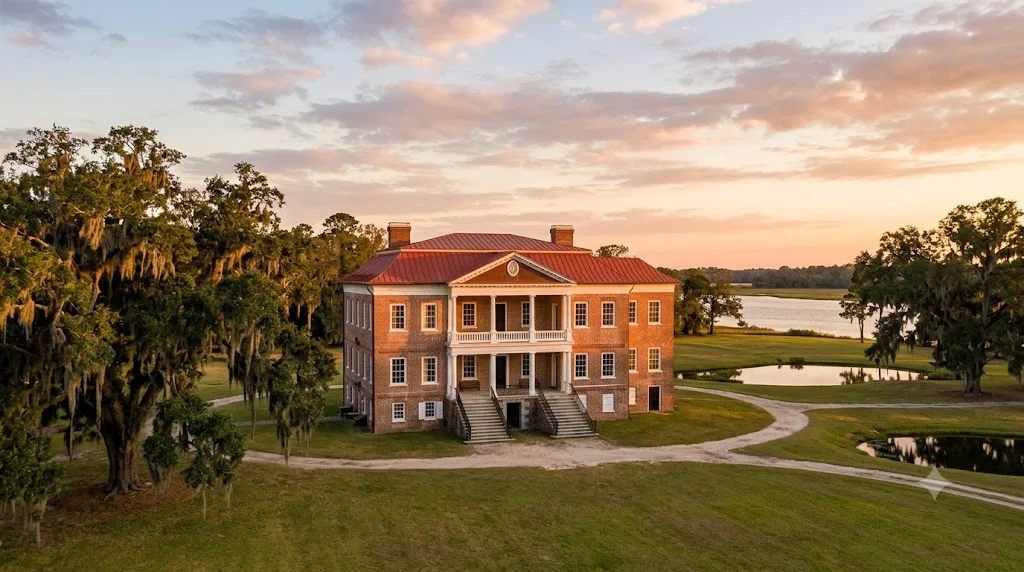
Our Drayton Hall guide covers practical planning for Drayton Hall South Carolina — best time to visit, getting there, and what to do on the ground. As independent US travel authorities, our team at Roam States is dedicated to providing you with confident, specific insights, steering clear of generic travel fluff. We've personally delved into the heart of this historic site to bring you the most accurate and helpful information for your 2026 trip. Drayton Hall stands as a profound testament to America's past, offering an unparalleled glimpse into 18th-century life and architecture, preserved without modern restoration. We believe it's an essential stop for anyone seeking an authentic connection to Lowcountry history.
Why Visit Drayton Hall
Stepping onto the grounds of Drayton Hall is like stepping back in time, a truly unique experience that sets it apart from other historic sites in the region. What makes Drayton Hall so compelling is its unwavering commitment to preservation, not restoration. Unlike many other plantation homes that have been meticulously restored to a specific period, Drayton Hall has been carefully stabilized and maintained in its original, unrestored state since its construction in 1738. This means that every creak in the floorboards, every faded paint layer, and every mark on the walls tells a continuous story of over 280 years of history, untouched by modern interpretations.
We find this approach profoundly impactful. It allows visitors to witness the authentic evolution of a significant American structure, observing the layers of history that have accumulated through seven generations of the Drayton family, two major wars (Revolutionary and Civil), and numerous natural disasters like earthquakes and hurricanes. You're not just seeing a recreation; you're seeing the genuine article, complete with its imperfections and the patina of time. This preservation philosophy offers a rare and honest perspective on the past, allowing for deeper reflection on the lives of all who lived and worked on the property, both free and enslaved. It’s a powerful educational experience that fosters a more nuanced understanding of American heritage, particularly the complex history of the Lowcountry.
Beyond the main house, the 125-acre estate itself is a living museum. It features the largest documented African American cemetery in North America, offering a solemn and vital space for remembrance and learning about the enslaved people who contributed to the plantation's existence. Active archaeological digs continually uncover new insights, providing ongoing discoveries that enrich the narrative of Drayton Hall. For those passionate about history, architecture, or simply seeking a profound cultural experience, Drayton Hall offers an authentic and irreplaceable journey into America's past.
Who It's Best For
Our team believes Drayton Hall appeals to a diverse range of visitors, each seeking a different facet of its profound history. It's an absolute must for **history enthusiasts and architectural aficionados**. If you appreciate the intricate details of 18th-century Palladian architecture and the rare opportunity to see a structure preserved rather than restored, Drayton Hall will captivate you. Scholars and serious students of American history, particularly those interested in the colonial period, the antebellum South, and the legacies of slavery, will find the site's authentic presentation invaluable.
**Families with older children and teenagers** will also find Drayton Hall to be a compelling educational experience. While younger children are welcome, the interpretive tours and exhibits are best appreciated by those who can engage with complex historical narratives. The site's focus on the lives of both the Drayton family and the enslaved people offers important lessons in American social history. Drayton Hall offers programs like "Family Fridays" and "Family Day" (check their calendar for 2026 dates) which include story time, crafts, games, and scavenger hunts designed to engage young learners with the landscape. However, for the main house tour, strollers are not permitted inside, and we recommend keeping young visitors by your side.
**Those seeking a reflective and contemplative experience** will also find solace here. The expansive grounds, the ancient live oaks, and the serene African American cemetery provide ample space for quiet contemplation and understanding. It's a place that encourages visitors to think deeply about the past and its enduring impact. If you prefer an experience that challenges you to consider history in its raw, unpolished form, rather than a romanticized version, Drayton Hall is an ideal destination. It's also suitable for **nature lovers and photographers**, with beautiful landscapes and unique architectural backdrops for stunning imagery.
Getting There & Parking
Understanding how to get to Drayton Hall is key to a smooth visit. Drayton Hall is conveniently located just a short drive from downtown Charleston, making it an easy addition to any Lowcountry itinerary. The estate is situated on Ashley River Road, approximately 13 to 15 miles northwest of the city center. Depending on traffic, the drive typically takes around 25-30 minutes. We always recommend allowing extra time for travel, especially during peak tourist seasons, to ensure you arrive comfortably before your scheduled tour time.
For visitors driving from downtown Charleston, you'll generally take US-17 South, then turn right onto SC-61 North (Ashley River Road). Drayton Hall will be on your left. The address for your GPS is 3380 Ashley River Road, Charleston, SC 29414. If you're coming from other parts of South Carolina, SC-61 is a scenic route that connects several historic plantations along the Ashley River.
Regarding Drayton Hall parking, we have excellent news: parking is always free at Drayton Hall. There are ample parking spaces available for cars, and motorcoach parking is also provided, making it accessible for tour groups. Once you arrive, you'll find the visitor center and main entrance clearly marked. We advise arriving at least 25 minutes prior to your preferred tour start time to allow for ticket transactions, restroom breaks, and checking in at The Shop at Drayton Hall.
While public transportation options are limited for reaching Drayton Hall directly, several tour companies in Charleston offer excursions that include transportation to the plantation, often packaged with other nearby attractions like Magnolia Plantation and Gardens or Middleton Place. These can be a great option if you prefer not to drive. However, if you have your own vehicle, the straightforward drive and free parking make it very accessible.
Top Things to Do
When planning your visit, you'll find a wealth of things to do at Drayton Hall that immerse you in its rich history and unique preservation philosophy. Our team recommends allocating at least 2-3 hours to fully experience the estate, though many visitors find themselves lingering longer.
The centerpiece of any visit is undoubtedly the **Interpreter-Led House Tour**. These hour-long tours guide you through the cellar, first, and second floors of the main house, offering deep insights into its architecture, the lives of the Drayton family, and the enslaved individuals who built and maintained the estate. Our guides are exceptionally knowledgeable, bringing the history to life with compelling narratives and answering questions about the unrestored nature of the home. You'll gain a profound appreciation for how the house has survived through centuries, retaining its original integrity.
After the house tour, explore the grounds with the **Self-Guided Landscape Audio Tour, "Within the Garden: Exploring Outside the Main House."** This 45-minute tour allows you to wander at your own pace through the 125 acres, discovering the historic lawns, gardens, and significant features like the 18th-century live oaks and the clear view to the Ashley River, all planned over 285 years ago. It's a peaceful and informative way to understand the broader context of the plantation.
A visit to the **African American Cemetery** is a profoundly moving experience. As the largest documented African American cemetery in North America, it serves as a sacred space for reflection and a vital reminder of the enslaved community at Drayton Hall. We encourage all visitors to take the time to pay their respects here.
Don't miss the **Stephen & Laura Gates Gallery** and the **Caretaker's House Exhibit in the Richard and Jill Almeida Gallery**. These spaces house original Drayton family furniture, porcelains, archaeological discoveries, and archival materials, many of which are on public display for the first time. The exhibits provide crucial context and personal stories that complement the house tour. You can also visit the **Stephen J. Wood Conservation Laboratory** to learn about the ongoing preservation efforts that keep Drayton Hall intact.
For those interested in the ongoing work of uncovering history, Drayton Hall is also an **active archaeological site**. You might even catch a glimpse of archaeologists at work, unearthing artifacts that span centuries, including those from earlier Native American settlers and West African ceramic crafts. Finally, a stop at **The Shop at Drayton Hall** is a must. It offers a curated selection of books, locally sourced treats, and historically-inspired gifts, making it an excellent place to find a unique souvenir while supporting the preservation efforts.
These things to do at Drayton Hall provide a comprehensive and deeply engaging experience, offering a window into a pivotal period of American history.
Best Time to Visit
Choosing the best time to visit Drayton Hall can significantly enhance your experience. Our team generally recommends visiting during the **spring (March to May)** or **fall (September to November)**. During these seasons, the Lowcountry weather is typically mild and pleasant, with comfortable temperatures and lower humidity, making it ideal for exploring both the unrestored house and the expansive grounds. The gardens are particularly beautiful in spring when many plants are in bloom, and the fall foliage adds a lovely backdrop to the historic estate.
**Winter (December to February)** can also be a good option, especially if you prefer fewer crowds. Temperatures are cooler, though still generally mild compared to many other parts of the country. Keep in mind that the main house at Drayton Hall is unrestored and not modernized, meaning there is no heating or air-conditioning to regulate indoor temperatures. Dressing in layers is always a good idea, regardless of the season.
We advise caution when planning a summer visit **(June to August)**. Charleston summers are known for their intense heat and high humidity, which can make extended outdoor exploration uncomfortable. Insect repellent is highly recommended during these months. If summer is your only option, we suggest visiting first thing in the morning when temperatures are cooler and crowds are typically lighter.
Weekdays are generally less crowded than weekends, offering a more serene experience. Drayton Hall is open Wednesday through Monday from 9:00 am to 4:30 pm, with the front gate closing at 3:00 pm. It is closed on Tuesdays. Guided house tours are offered hourly from 10:00 am to 3:00 pm. Arriving early in the day, especially on a weekday, will give you the best chance for a peaceful and immersive visit. Be sure to check their official website for any special events or holiday closures, such as their closure on July 4th, 2026.
Where to Stay Nearby
Finding suitable Drayton Hall lodging is crucial for a comfortable trip. While Drayton Hall itself does not offer on-site accommodations, there are numerous excellent options nearby, catering to various preferences and budgets. Given its location about 13-15 miles northwest of downtown Charleston, you have a few primary areas to consider for Drayton Hall lodging.
Many visitors choose to stay in **Downtown Charleston**. This historic district offers a wide array of boutique hotels, charming inns, and luxury accommodations. Staying downtown provides easy access to Charleston's renowned dining, shopping, and other historic attractions like Charleston Historic District, and it's a manageable drive to Drayton Hall. Hotels such as The Vendue, The Dewberry Charleston, and Hampton Inn Charleston-Historic District are popular choices, though they are further from Drayton Hall.
For closer proximity to Drayton Hall and other Ashley River plantations, the **West Ashley** area is a practical choice. This suburban district offers a good selection of mid-range hotels, extended-stay suites, and more budget-friendly options. Hotels like Home2 Suites by Hilton West Ashley Charleston, TownePlace Suites by Marriott West Ashley Charleston, and Holiday Inn Riverview West Ashley Charleston are often recommended. These properties provide a convenient base for exploring the plantations while still being within a reasonable drive of downtown Charleston's amenities.
Another area to consider is near the **Charleston Airport/Convention Center** in North Charleston. This area, while a bit further north than West Ashley, still offers good access to Drayton Hall and typically features a range of hotels, including brands like Hyatt Place, Drury Plaza Hotel, and Hampton Inn. These tend to be good options for travelers arriving by air or those looking for slightly more affordable rates compared to downtown.
If you're looking for a truly immersive plantation experience, consider staying at **The Inn at Middleton Place**, located just a short drive from Drayton Hall. This unique lodging offers a tranquil setting amidst America's oldest landscaped gardens. While not directly Drayton Hall lodging, it provides a complementary historical ambiance.
When making your choice, consider your priorities: do you want to be close to Drayton Hall and the other plantations, or do you prefer to be in the heart of downtown Charleston's vibrant scene? Both offer distinct advantages, and our team has found that either option can make for a fantastic trip to South Carolina.
Sample 2-Day Itinerary
To help you maximize your visit to Drayton Hall and the surrounding Charleston area, our team has crafted a sample 2-day itinerary. This plan balances historical immersion with opportunities to explore the vibrant culture of the Lowcountry, ensuring you get a comprehensive experience.
Day 1: Immerse in Plantation History
- **Morning (9:00 AM - 1:00 PM): Drayton Hall Experience.** Begin your day early at Drayton Hall South Carolina. Arrive by 9:00 AM to allow ample time for parking and ticket purchase. Take the 10:00 AM interpreter-led house tour, which lasts about an hour. Afterward, spend time exploring the Stephen & Laura Gates Gallery, the Caretaker's House, and the Stephen J. Wood Conservation Laboratory. Dedicate a solemn moment at the African American Cemetery. Conclude your visit with the self-guided landscape audio tour, taking in the ancient oaks and river views.
- **Lunch (1:00 PM - 2:00 PM): Picnic on the Grounds or Nearby.** Drayton Hall has picnic tables available if you'd like to bring your own lunch. Alternatively, there are casual dining options a short drive away in the West Ashley area.
- **Afternoon (2:00 PM - 5:00 PM): Middleton Place.** Just a few miles down Ashley River Road from Drayton Hall is Middleton Place. This National Historic Landmark boasts America's oldest landscaped gardens. Explore the stunning terraced gardens, visit the stable yards, and learn about the lives of the Middleton family and the enslaved people. Consider purchasing a combination ticket for Drayton Hall and Middleton Place to save money.
- **Evening (6:00 PM onwards): Dinner in West Ashley.** Enjoy a relaxed dinner in West Ashley. This area offers a variety of restaurants, from local seafood joints to casual eateries, providing a convenient dining option before heading back to your lodging.
Day 2: Historic Charleston & Harbor Views
- **Morning (9:00 AM - 12:00 PM): Historic Charleston Exploration.** Head into downtown Charleston. Start with a stroll through the iconic Charleston Historic District. Walk along Rainbow Row, admire the antebellum mansions on the Battery, and visit White Point Garden. Consider a historic walking tour or a carriage ride to get an overview of the city's rich past.
- **Lunch (12:00 PM - 1:00 PM): Charleston City Market.** Grab lunch at the Historic Charleston City Market, where you can also browse local crafts and souvenirs. Alternatively, explore the diverse culinary scene of downtown Charleston.
- **Afternoon (1:00 PM - 4:00 PM): Fort Sumter National Monument.** From Liberty Square, take a ferry ride to Fort Sumter National Monument, the site where the first shots of the Civil War were fired. The ferry ride itself offers beautiful views of Charleston Harbor. Allow approximately 2.5-3 hours for the round trip and exploration of the fort.
- **Late Afternoon (4:00 PM - 6:00 PM): Waterfront Park and Pineapple Fountain.** Return to the peninsula and unwind at Waterfront Park. Enjoy the iconic Pineapple Fountain and the harbor views. It's a perfect spot for a leisurely walk or simply relaxing on a bench.
- **Evening (6:00 PM onwards): Dinner and Nightlife in Downtown Charleston.** Indulge in Charleston's renowned culinary scene. From upscale dining to cozy bistros, there's something for every palate. Afterward, explore the city's vibrant nightlife or catch a live music performance.
This itinerary offers a balanced and enriching experience, combining the deep historical insights of Drayton Hall with the charm and attractions of Charleston. Remember to check hours and make reservations for tours and popular restaurants in advance, especially during busy seasons.
Last updated: 2026-07-08 by the Roam States team.