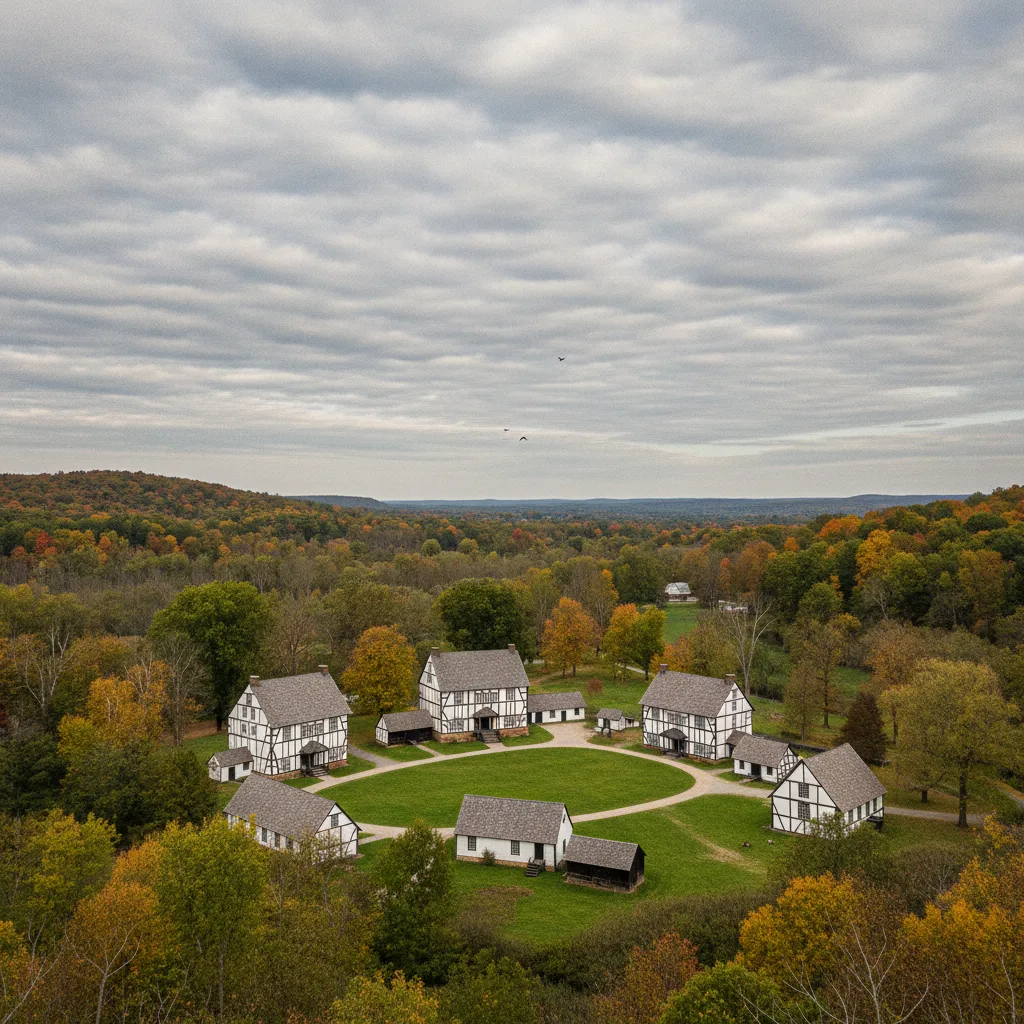
Ephrata Cloister Travel Guide — Pennsylvania
Our Ephrata Cloister guide covers practical planning for Ephrata Cloister Pennsylvania — best time to visit, getting there, and what to do on the ground.
For those seeking a journey into a truly unique chapter of American history, the Ephrata Cloister Pennsylvania stands as an unparalleled destination. Nestled in the heart of Lancaster County, this National Historic Landmark preserves the remnants of an 18th-century German religious community. Our team has explored its hallowed grounds, and we can confidently say that a visit here offers far more than just a walk through old buildings; it's an immersive experience into a profound and ascetic lifestyle that shaped a distinct cultural legacy in colonial America.
Why Visit Ephrata Cloister
Stepping onto the grounds of Ephrata Cloister is like entering a time capsule. This isn't your typical historical site; it's a testament to a radical experiment in communal living and spiritual devotion that flourished in the Pennsylvania wilderness. Founded in 1732 by German immigrant Conrad Beissel, the Cloister was home to celibate Brothers and Sisters, alongside a married congregation, who sought a deeper spiritual union with God, believing the Second Coming was imminent.
What makes Ephrata Cloister so compelling is its distinct identity. The community was known for its rigorous self-discipline, communal work, and adherence to strict daily schedules of worship and prayer. Members adopted a sparse diet, often just one vegetarian meal a day, and famously slept on narrow 15-inch-wide wooden benches with wooden blocks for pillows, rising in the middle of the night for prayer. They wore distinctive white robes, symbolizing their heavenly marriages and celibate vows. This austere lifestyle fostered an environment of intense creativity and intellectual pursuit.
The Cloister became a hub of significant cultural achievements. It housed the second German printing press in the American colonies, producing a vast array of religious texts, hymnals, and intricate illuminated manuscripts. Their most monumental publication was the 1,500-page Martyrs Mirror, the largest book printed in colonial America, a testament to their dedication and skill. Beyond printing, the community excelled in music, composing over a thousand original a cappella hymns, with the first credited female composers in North America emerging from the Solitary Sisters. They also developed a unique German calligraphic art form known as Frakturschriften, considered the first of its kind produced in America.
During the American Revolution, this pacifist community faced a profound challenge when their sacred grounds were transformed into a military hospital for hundreds of wounded Continental soldiers after the Battle of Brandywine in 1777. The selfless care provided by the Cloister members, despite their pacifist beliefs, led to a devastating typhus outbreak within the community, claiming the lives of many celibates. This tragic sacrifice cemented their place in the broader narrative of American independence, transforming the site into a monument of wartime compassion. The Cloister's printing press was even used by the Continental Congress to print currency during the British occupation of Philadelphia.
Today, the well-preserved buildings, gardens, and artifacts offer a captivating window into this past. It's a place where you can truly connect with the stories of devotion, artistry, and sacrifice that define this extraordinary community. For a deeper dive into Pennsylvania's rich history, consider exploring other significant sites like Independence National Historical Park or Gettysburg National Military Park.
Who It's Best For
Ephrata Cloister appeals to a diverse range of visitors, though certain interests will find it particularly rewarding. History buffs, especially those fascinated by colonial American religious movements, communal societies, or the Revolutionary War, will be enthralled by the depth of stories and preserved artifacts. The site offers a nuanced understanding of early American religious pluralism and the sacrifices made during pivotal historical moments.
Architecture enthusiasts will appreciate the unique Germanic-style log, stone, and half-timbered buildings, which showcase rare construction techniques for America. Art and music lovers will find inspiration in the community's rich legacy of Fraktur art and original a cappella compositions. Educators and students will discover a living classroom, providing tangible examples of 18th-century life, printing, and spiritual practices.
Families with older children (ages 12 and up) will likely find the guided tours and historical narratives engaging, especially during special events that bring history to life. Younger children might find the historical interpretation less captivating, though the open grounds and unique buildings can still spark curiosity. Those seeking a peaceful, reflective experience away from bustling tourist hubs will also appreciate the serene beauty of the Cloister's 28-acre landscaped setting.
Getting There & Parking
Reaching Ephrata Cloister is straightforward, as it's conveniently located in Lancaster County, Pennsylvania. The address is 632 West Main Street, Ephrata, PA 17522.
If you're driving, which is the most common way to get to Ephrata Cloister, the site is easily accessible from major routes. From Philadelphia, it's about a 1.5-hour drive west. From Harrisburg, it's approximately 45 minutes east. We recommend using GPS navigation to guide you directly to the site.
When it comes to parking, visitors will find ample free off-street parking available on-site. This includes space for motorcoaches, making it convenient for group tours. During special events, on-site parking is often first-come, first-served, and additional parking may be available at the Ephrata Senior High School and the Ephrata Business Center. For most regular visits, you shouldn't have any trouble finding a spot directly at the Cloister. This ease of access makes planning your trip to Ephrata Cloister simple and stress-free.
Top Things to Do
A visit to Ephrata Cloister offers a rich array of experiences, allowing you to delve deep into the community's history and unique way of life. Beyond the Cloister itself, the surrounding town of Ephrata also provides charming activities to round out your trip.
At Ephrata Cloister:
- Take a Guided Tour: This is unequivocally the best way to experience the Cloister. Guided tours, lasting about 1 hour and 15 minutes, provide invaluable insights into the ideas, lifestyle, and achievements of this early American community. Our knowledgeable guides lead you through the two most significant original buildings: the Sisters' House (Saron) and the Meetinghouse (Saal), whose interiors are exclusively accessible on guided tours. Regular guided tours are available Wednesday through Saturday at 10:00 AM, 11:30 AM, 1:00 PM, and 2:15 PM, and on Sundays at 1:00 PM and 2:15 PM.
- Explore the Buildings and Grounds: Even without a guided tour, you can explore nine self-guided buildings and the 28-acre grounds at your own pace. Admire the distinctive German colonial and monastic architecture, including Fachwerkhäuser (half-timbered structures) and log buildings with unique construction techniques. The site also features an orientation video in the Visitor Center that provides an excellent overview.
- Discover the Printing Press: The Cloister's printing establishment was groundbreaking. Visit the Printing Office, one of the oldest structures on the property, to learn about how they produced religious texts, hymnals, and the monumental Martyrs Mirror. Keep an eye out for demonstrations of colonial-era printing.
- Experience Special Events: The Ephrata Cloister regularly hosts special programs that bring history to life. For example, "Ephrata Cloister 1776: An America250 Celebration" on Saturday, June 27, 2026, will feature performances, family-friendly activities, demonstrations, and music, focusing on the Cloister's role as a Revolutionary War hospital. Charter Day on Sunday, March 8, 2026, offers free admission and live demonstrations of printing, doctoring, spinning, and weaving. Lantern Tours, offered in late December and early January (e.g., December 26-27, 2025, and January 2-3, 2026), provide an immersive, student-led theatrical program exploring the Cloister's history by lantern light. Check their official website for the most up-to-date calendar of events.
- Visit the Museum Store: Before you leave, browse The Museum Store for books, prints, handmade crafts, and fine gifts, many inspired by the Cloister's unique artistic traditions like Fraktur.
Things to Do in Ephrata (Beyond the Cloister):
While the Cloister is the main draw, the charming town of Ephrata offers additional attractions and activities to enrich your visit:
- Ephrata Performing Arts Center: Catch a show at this nonprofit theater, known for its diverse 2026 season.
- Eicher Arts Center: Explore local arts and culture at this community hub.
- Historical Society of the Cocalico Valley: Delve deeper into local history with exhibits housed in an 1868-69 Victorian mansion and extensive archives.
- Explore Local Markets and Eateries: Sample local flavors at places like The Village Farm Market, Reiff's Farm Market, or Tin Roof Cafe 'n Sweets. Black Forest Brewery and Gus's Keystone Family Restaurant are also popular dining options.
- Attend Community Events: Ephrata hosts various local events, such as "First Saturday" celebrations in the summer, featuring live music, craft vendors, and food. The Servant Stage also performs at the Cloister's amphitheater, with a preview performance of "Joseph and the Amazing Technicolor Dreamcoat" scheduled for July 29, 2026.
Whether you're exploring the ascetic life of the Brothers and Sisters or enjoying the modern charm of the town, there are plenty of things to do at Ephrata Cloister and things to do in Ephrata to fill your itinerary.
Best Time to Visit
Choosing the best time to visit Ephrata Cloister can significantly enhance your experience. While the site is open year-round (with some holiday closures), certain seasons and special events offer unique opportunities.
- Spring (April to May): Spring brings pleasant weather, making it ideal for exploring the outdoor grounds and gardens. The fresh foliage adds to the serene atmosphere. Crowds are generally moderate, allowing for a more intimate experience.
- Summer (June to August): Summer is popular, especially for families. The Cloister often hosts outdoor performances and events during this time. For instance, "Ephrata Cloister 1776: An America250 Celebration" is scheduled for Saturday, June 27, 2026, offering a lively historical immersion. Servant Stage also has performances in July and August. Be prepared for warmer temperatures and potentially larger crowds, especially on weekends and during special programs.
- Fall (September to October): Fall is arguably one of the most picturesque times to visit, with vibrant foliage transforming the landscape. The crisp air is perfect for walking the grounds. The Cloister has historically held an annual apple dumpling sale in October. This season often brings comfortable temperatures and moderate crowds.
- Winter (November to March): While colder, winter offers a quieter, more contemplative experience. The "Lantern Tours," held in late December and early January (e.g., December 26-27, 2025, and January 2-3, 2026), are a truly magical way to see the Cloister by night, exploring its history with student-led theatrical programs. "Charter Day" on Sunday, March 8, 2026, offers free admission and special demonstrations, making it an excellent winter option. The annual Winter History Class also runs from January to February. Just be sure to check for holiday closures, such as New Year's Day, Martin Luther King, Jr. Day, President's Day, Thanksgiving, and Christmas.
Ultimately, the best time depends on your priorities. For comfortable weather and fewer crowds, spring and fall are excellent. For lively historical re-enactments and family activities, summer is ideal. For a unique, atmospheric experience, consider the winter Lantern Tours or Charter Day. Always check the official Ephrata Cloister website for specific event dates and hours before planning your visit, as schedules can change.
Where to Stay Nearby
Finding comfortable Ephrata Cloister lodging is essential for a relaxing visit. While Ephrata itself is a smaller town, it offers several charming options, and its proximity to larger cities like Lancaster provides even more choices. Our team recommends considering these options for your stay:
- In Ephrata:
- Twin Pine Manor Bed & Breakfast: For a romantic countryside retreat, this spacious mansion offers nine luxurious guest rooms, each with Jacuzzi tubs and fireplaces. It's a highly-rated option for those seeking a charming and intimate experience.
- The Executive Suites and Venue: This hotel in Ephrata offers free WiFi and free parking. Reviews highlight comfortable beds and elegant decor, with some suites featuring full kitchens.
- Home2 Suites by Hilton Ephrata: A business-friendly hotel praised for its free breakfast, free WiFi, and helpful staff. It provides modern amenities and a convenient location.
- Hampton Inn & Suites – Ephrata and Tru by Hilton Denver, PA: These are other reliable chain hotel options mentioned as sponsors of the Cloister, indicating their presence in the local area.
- Historic Smithton Inn/Weathered Vineyards Ephrata: Another sponsor of the Cloister, this inn offers a unique, historic lodging experience, often combined with a winery.
- Near Ephrata (Lancaster County):
- If you prefer a wider selection of hotels or want to be closer to other Lancaster County attractions, the city of Lancaster is just a short drive away. Options like the Eden Resort and Suites, BW Premier Collection, Courtyard Lancaster, and Lancaster Marriott at Penn Square are well-regarded. These offer more extensive amenities, including pools and multiple dining options.
- Many visitors also enjoy staying in the heart of Pennsylvania Dutch Amish Country for a unique rural experience, with numerous bed and breakfasts scattered throughout the region.
When planning your Ephrata Cloister lodging, we advise booking in advance, especially if your visit coincides with popular events or peak seasons, to ensure you secure your preferred accommodations.
Sample 2-Day Itinerary
To fully immerse yourself in the history of Ephrata Cloister and explore the surrounding area, we recommend a two-day itinerary. This allows for a comprehensive visit to the Cloister and time to discover other local gems.
Day 1: Immerse in the Ephrata Cloister
- Morning (9:00 AM - 1:00 PM): Arrive at Ephrata Cloister shortly after opening. Head to the Visitor Center to watch the orientation video, then join one of the guided tours (e.g., the 10:00 AM or 11:30 AM tour). This will provide essential context and access to the interiors of the Sisters' House and Meetinghouse. Allow ample time for the tour and to explore the self-guided buildings and grounds, including the Printing Office and the Mount Zion cemetery.
- Lunch (1:00 PM - 2:00 PM): Enjoy a casual lunch at a local Ephrata eatery. Options like Tin Roof Cafe 'n Sweets for a light meal or Gus's Keystone Family Restaurant for a more hearty American fare are good choices.
- Afternoon (2:00 PM - 5:00 PM): Revisit any areas of the Cloister you'd like to explore further, or delve into the local history at the Historical Society of the Cocalico Valley. Alternatively, explore Ephrata's unique architecture beyond the Cloister, such as the Beaux-Arts style Ephrata National Bank building.
- Evening: Enjoy dinner at a local restaurant in Ephrata. Consider Black Forest Brewery for craft beer and pub fare, or explore other dining options. If there's an evening performance at the Ephrata Performing Arts Center, this would be an excellent time to experience the local culture.
Day 2: Explore Ephrata and Beyond
- Morning (9:00 AM - 12:00 PM): Start your day by experiencing more of what Ephrata offers. Visit the Eicher Arts Center for local art, or browse the fresh produce and baked goods at The Village Farm Market or Reiff's Farm Market. Depending on the season, you might catch a "First Saturday" event or a "Concerts by the Creek" performance.
- Lunch (12:00 PM - 1:00 PM): Grab a quick bite in Ephrata before heading out for the afternoon.
- Afternoon (1:00 PM - 5:00 PM): Expand your exploration into broader Pennsylvania.
- Option A (History Focus): Head east towards Philadelphia to visit Independence National Historical Park, home to the Liberty Bell and Independence Hall.
- Option B (Family Fun): If traveling with kids, consider a visit to Hershey Park, about an hour's drive west, for a day of rides and chocolate-themed fun.
- Option C (Nature & Outdoors): Drive north to explore the Middle Creek Wildlife Management Area for birdwatching and scenic trails.
- Evening: Enjoy a final dinner in Ephrata or the surrounding Lancaster County area, perhaps trying a different local spot.
Is It Worth Visiting?
Our team unequivocally believes that Ephrata Cloister is worth visiting. This National Historic Landmark offers a rare and profound glimpse into an 18th-century religious community that was truly unique in colonial America. It's not just a collection of old buildings; it's a place where history comes alive through compelling stories of faith, discipline, artistic expression, and profound sacrifice.
The Cloister's distinct Germanic architecture, its pioneering printing press that produced the largest book in colonial America, and its rich musical and artistic heritage are all testaments to the ingenuity and devotion of its members. Furthermore, its unexpected role as a Revolutionary War hospital adds a layer of poignant human compassion to its narrative.
For anyone interested in American history, religious studies, architecture, or simply a unique cultural experience, Ephrata Cloister provides an enriching and memorable journey. The guided tours are informative and engaging, and the special events offer dynamic ways to connect with the past. While it may not have the widespread recognition of some larger historical sites, its singular story and well-preserved grounds make the question "is Ephrata Cloister worth visiting" an easy one to answer with a resounding yes. We encourage all travelers to plan your US trip to include this remarkable Pennsylvania gem, alongside other notable destinations in Pennsylvania.
Frequently Asked Questions
Ephrata Cloister with kids
Visiting Ephrata Cloister with kids can be an educational experience, though it's generally best suited for older children (ages 12 and up) who can engage with historical narratives. Special events like "Ephrata Cloister 1776: An America250 Celebration" on June 27, 2026, often include family-friendly activities and demonstrations that can be more captivating for younger visitors. Younger children might find the guided tours less engaging due to their duration and focus on detailed history. However, the open grounds and unique architecture can still spark curiosity. We recommend checking the events calendar for programs specifically designed for families.
Best hotels near Ephrata Cloister
Some of the best hotels near Ephrata Cloister include Twin Pine Manor Bed & Breakfast for a romantic stay, and modern options like The Executive Suites and Venue and Home2 Suites by Hilton Ephrata for convenience and amenities. Other nearby choices include Hampton Inn & Suites – Ephrata, Historic Smithton Inn/Weathered Vineyards Ephrata, and Tru by Hilton Denver, PA. For a wider selection, the city of Lancaster, a short drive away, offers numerous well-regarded hotels.
Ephrata Cloister tips
Our top tips for visiting Ephrata Cloister include: definitely opt for a guided tour to gain access to key buildings and deeper insights; check the official website for special events like Lantern Tours or Charter Day, as these can offer unique experiences; wear comfortable shoes as you'll be walking about two city blocks; and consider visiting in spring or fall for pleasant weather and moderate crowds. If you're a group of 10 or more, remember to make reservations at least two weeks in advance.
Where to stay near Ephrata Cloister
For those wondering where to stay near Ephrata Cloister, the town of Ephrata offers several convenient options such as Twin Pine Manor Bed & Breakfast, The Executive Suites and Venue, and Home2 Suites by Hilton Ephrata. You can also find lodging in the surrounding Lancaster County area, including nearby towns or the city of Lancaster, which provides a broader range of hotels and amenities within a short driving distance.
Ephrata Cloister parking
Ephrata Cloister offers ample free off-street parking for visitors, including space for motorcoaches. For most regular visits, you'll find convenient parking directly on-site. During larger special events, on-site parking may be first-come, first-served, with additional parking available at the Ephrata Senior High School and the Ephrata Business Center.
Best time to visit Ephrata Cloister
The best time to visit Ephrata Cloister depends on your preferences. Spring and fall offer pleasant weather and moderate crowds, ideal for exploring the grounds. Summer brings special events and lively programs, though with warmer temperatures and potentially more visitors. Winter provides a quieter, more atmospheric experience, especially during the unique Lantern Tours in late December and early January, or for free admission on Charter Day in early March. Always check the official calendar for specific events and hours.
Last updated: 2026-07-08 by the Roam States team.