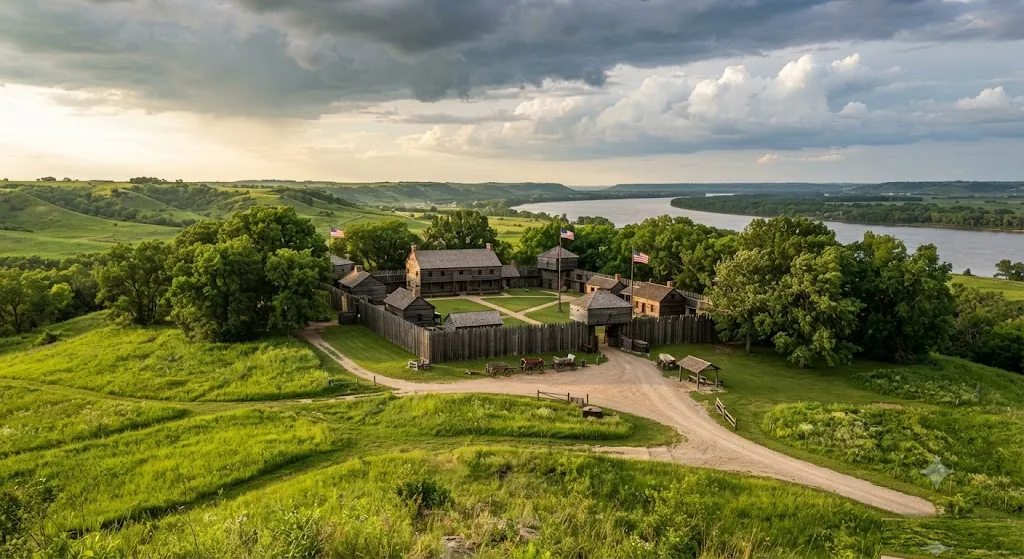
Our Fort Atkinson State Historical Park guide covers practical planning for Fort Atkinson State Historical Park Nebraska — best time to visit, getting there, and what to do on the ground.
For those drawn to the echoes of America's westward expansion, a visit to Fort Atkinson State Historical Park Nebraska is a journey back in time. Our team at Roam States has compiled this comprehensive guide to ensure your trip to this pivotal frontier outpost is as enriching and seamless as possible. As the first U.S. military post west of the Missouri River, Fort Atkinson offers a tangible glimpse into frontier life and military history through its meticulously reconstructed structures and engaging living history events. We'll cover everything from why you should visit, who it's best for, practical travel logistics, top activities, and where to stay, all verified with up-to-date 2026 facts.
Why Visit Fort Atkinson State Historical Park
Fort Atkinson State Historical Park stands as a testament to a crucial period in American history, marking the nation's early efforts to establish a presence in the vast lands west of the Missouri River. Established in 1820, following the recommendation of the Lewis and Clark Expedition, it was a significant military outpost until its abandonment in 1827. At its peak, this large garrison housed nearly a quarter of the standing U.S. Army, playing a vital role in protecting the burgeoning western fur trade and maintaining peaceful relations with Native American tribes.
What truly sets Fort Atkinson apart is its commitment to historical accuracy and immersive experiences. The extensive reconstruction efforts, spanning two decades, have brought much of the original fort back to life, including barracks, an armorer's shop, a council house, and the Sutler Store. Visitors can walk the same bluffs where Meriwether Lewis and William Clark first encountered the Missouri-Otoe Nation in 1804, a site they aptly named "Council Bluff".
Beyond the impressive physical structures, the park's vibrant living history events are a primary draw. These reenactments, scheduled periodically throughout the warmer months, feature volunteers dressed in period-appropriate reproduction uniforms, demonstrating military drills and the daily life of early American soldiers and civilians. You might witness blacksmiths, coopers, tinsmiths, spinners, and weavers plying their trades, offering a dynamic and educational experience that transcends static museum displays. It's an unparalleled opportunity to connect with the past and understand the challenges and triumphs of frontier life.
Who It's Best For
Fort Atkinson State Historical Park is a destination that appeals to a diverse range of travelers. We recommend it highly for:
- History Enthusiasts: Anyone with a keen interest in early American military history, the Lewis and Clark Expedition, westward expansion, and frontier life will find the park's detailed reconstructions and interpretive displays deeply engaging. The park is a National Historic Landmark and a premier archeological treasure, offering insights into topics like diet, architecture, and weaponry through recovered artifacts.
- Families with Children: The living history events are particularly captivating for younger visitors, bringing history to life in an interactive and memorable way. Children aged 4-12 have a reduced admission fee to the visitor center, and those under 3 are free. The park also offers walking trails and picnic areas for family outings.
- Outdoor Adventurers: While primarily historical, the park grounds offer a scenic backdrop for leisurely walks. With two miles of trails, picnic tables, and grills, it's a pleasant spot for those who enjoy combining historical exploration with light outdoor activity.
- Educators and Students: The park provides an excellent educational resource for understanding the complexities of early 19th-century America, including military strategy, Native American relations, and the challenges of establishing a remote outpost. Field trips are welcomed for children of any age.
Getting There & Parking
Understanding how to get to Fort Atkinson State Historical Park and where to park is essential for a smooth visit. The park is conveniently located just east of Fort Calhoun, Nebraska, at 201 S 7th St, Fort Calhoun, NE 68023. It's approximately a 20-mile drive north of downtown Omaha, making it an accessible day trip from the metropolitan area.
If you're driving, we recommend using a GPS to navigate to the park's address. The park is situated about one mile east of US Highway 75 at the intersection of 7th and Madison Streets. For those wondering how to get to Fort Atkinson State Historical Park by car, follow US-75 N from Omaha, then take the appropriate exit or turn towards Fort Calhoun. The drive is straightforward and well-signposted.
Regarding parking, facilities are available on-site, including near the excavation areas. It's crucial to remember that a valid Nebraska state park entry permit is required for all motor vehicles entering the park grounds, year-round. Daily permits cost $6 for vehicles registered in Nebraska and $12 for out-of-state vehicles. Annual permits are also available and can be purchased wherever hunting and fishing permits are sold, at Commission offices, staffed state park areas, or online at OutdoorNebraska.gov. We advise purchasing your permit in advance or upon arrival to avoid any delays.
Top Things to Do
There are numerous things to do at Fort Atkinson State Historical Park, offering a blend of historical immersion and outdoor enjoyment. Our team highlights the following must-do activities:
- Explore the Reconstructed Fort: Wander through the reconstructed barracks, officers' quarters, armorer's shop, and Sutler Store. These buildings provide a tangible sense of the fort's scale and the daily lives of its inhabitants.
- Experience Living History Events: These are arguably the most compelling things to do at Fort Atkinson State Historical Park. Held on the first weekend of each month from May through October, these events feature reenactors portraying soldiers, artisans, and civilians of the 1820s. You can observe black powder demonstrations, witness blacksmiths and tinsmiths at work, and learn about period crafts like spinning and weaving. Specific dates for 2026 include May 2-3, June 6-7, July 4-5, August 1-2, September 5-6, and October 3-4. A special candlelight tour is also held in November.
- Visit the Harold W. Andersen Visitor Center: This center serves as an excellent starting point for your visit. It's staffed with park interpreters and features displays of artifacts recovered during archaeological excavations, offering deeper insights into the fort's history and the lives of those who lived there. The Visitor Center requires a separate admission fee of $2 for adults (13+) and $1 for children (4-12).
- Walk the "Council Bluff": This historically significant site is where the Lewis and Clark Expedition held its first formal meeting with western tribes in 1804. The park grounds offer scenic views and a chance to reflect on this pivotal moment in American history.
- Hike the Trails: The park features two miles of trails, perfect for a leisurely stroll or a short hike, offering a different perspective of the historical grounds and the surrounding natural beauty.
- Enjoy a Picnic: With picnic tables and grills available, the park is an ideal spot for a relaxing outdoor meal amidst historical surroundings.
Best Time to Visit
To truly maximize your experience at Fort Atkinson State Historical Park, timing your visit is key. We find that the warmer months, particularly from late spring through early autumn (May to October), offer the best conditions for exploring the park's outdoor attractions and experiencing its signature living history events.
- Peak Season (May-October): This is when the park truly comes alive with its renowned living history demonstrations, usually held on the first weekend of each month. The weather is generally pleasant for walking around the fort and enjoying the outdoor trails. However, summer months (July and August) can be hot, so we recommend visiting in the mornings or late afternoons and staying hydrated.
- Shoulder Seasons (May-June, September-October): These periods offer a fantastic balance of comfortable temperatures and the opportunity to witness living history events without the larger crowds sometimes seen in mid-summer. Late spring (May to early June) is particularly pleasant before the peak summer heat.
- Off-Season (November-April): While the park grounds remain open year-round from 8 a.m. to 4 p.m. (September-April), the Harold W. Andersen Visitor Center typically has reduced hours or closures during the off-season, and living history events are less frequent, with the exception of the annual candlelight tour in November. If you prefer a quieter visit and are primarily interested in the fort's static displays and walking the grounds, the off-season can still be rewarding, but you'll miss the immersive reenactments.
We strongly advise checking the Fort Atkinson State Historical Park's official website or calling their visitor center at (402) 468-5611 for the most current schedule of living history events and visitor center hours, especially if you plan to visit outside of the Memorial Day to Labor Day timeframe.
Where to Stay Nearby
When planning your visit to Fort Atkinson State Historical Park, finding convenient and comfortable Fort Atkinson State Historical Park lodging is crucial. While the park itself does not offer overnight accommodations, several excellent options are available in nearby towns, primarily Fort Calhoun, Blair, and the greater Omaha area.
Fort Calhoun, the immediate neighboring town, offers a small-town experience with a few local lodging choices. For a wider selection and more amenities, we recommend looking into hotels in Blair, which is a short drive north, or Omaha, approximately 20 miles south.
Here are some recommended Fort Atkinson State Historical Park lodging options:
- Fort Calhoun Inn: For those who prefer to stay as close as possible to the park, the Fort Calhoun Inn offers convenient, local accommodation.
- Blair, Nebraska: Located about 15 minutes north of the park, Blair offers a few chain hotels. Options like the Super 8 by Wyndham Blair and Rodeway Inn Blair provide reliable and budget-friendly choices. These are good bases for exploring the park and the surrounding Washington County.
- Omaha, Nebraska: As a larger city, Omaha provides the most extensive range of lodging, from budget-friendly motels to upscale hotels. Many of these are within a reasonable driving distance of Fort Atkinson. Popular choices include the Holiday Inn Express & Suites Cherry by IHG and Fairfield Inn & Suites Omaha Northwest, both offering excellent amenities and guest ratings. For families or those seeking more space, vacation homes in Omaha with amenities like hot tubs are also available. If you're looking for pet-friendly Fort Atkinson State Historical Park lodging, some Omaha hotels like La Quinta Inn by Wyndham Omaha West accommodate pets, though specific restrictions and fees may apply.
We advise booking your Fort Atkinson State Historical Park lodging in advance, especially if your visit coincides with one of the popular living history weekends, as accommodations in smaller towns can fill up quickly.
Sample 2-Day Itinerary
To help you make the most of your trip, our team has crafted a sample 2-day itinerary for exploring Fort Atkinson State Historical Park and its surroundings:
Day 1: Immersion in Frontier History
- Morning (9:00 AM - 1:00 PM): Fort Atkinson Exploration
- Arrive at Fort Atkinson State Historical Park (ensure you have your Nebraska State Park entry permit).
- Start at the Harold W. Andersen Visitor Center to pay the admission fee ($2 for adults, $1 for children) and gain an overview of the fort's history through exhibits and interpretive displays.
- Spend the rest of the morning exploring the reconstructed fort structures, including the barracks, armorer's shop, council house, and Sutler Store.
- If your visit aligns with a living history weekend (first weekend of May-October in 2026), immerse yourself in the reenactments, demonstrations, and interactions with period-dressed volunteers.
- Lunch (1:00 PM - 2:00 PM): Picnic or Local Fare
- Enjoy a picnic lunch at one of the park's designated picnic areas.
- Alternatively, head into Fort Calhoun for a casual meal at a local spot like The Rustic or The Longhorn.
- Afternoon (2:00 PM - 5:00 PM): Trails and Reflection
- Take a leisurely walk along the park's two miles of trails, enjoying the natural setting and views of the Missouri River.
- Visit the "First Council Sculpture" which commemorates the historic meeting between Lewis and Clark and the Otoe-Missouri tribe.
- Allow time for quiet reflection on the historical significance of the site.
- Evening: Dinner and Relaxation
- Dine in Fort Calhoun or drive to nearby Blair or Omaha for more restaurant options.
- Check into your chosen accommodation.
Day 2: Local History & Nearby Attractions
- Morning (9:00 AM - 12:00 PM): Fort Calhoun & Washington County Museum
- Explore the charming town of Fort Calhoun.
- Visit the Washington County Museum, which is Nebraska's oldest county museum and offers exhibits on local history, including the Lewis and Clark expedition and Fort Atkinson. It's located just blocks from Fort Atkinson and offers interactive activities, including learning some Otoe words.
- Lunch (12:00 PM - 1:00 PM): Local Eateries
- Grab lunch at a local restaurant in Fort Calhoun.
- Afternoon (1:00 PM - 5:00 PM): Choose Your Adventure
- Option A (Nature & Wildlife): Head to DeSoto National Wildlife Refuge, just a short drive from Fort Calhoun, known for its migratory bird populations and the Bertrand Steamboat Museum.
- Option B (More History): Explore other historical sites along the Lewis & Clark State Scenic ByWay on Highway 75. Consider a visit to /destinations/boys-town-nebraska for another unique historical perspective.
- Option C (Omaha Exploration): If you're staying in Omaha, spend the afternoon exploring attractions like the /destinations/omaha-s-henry-doorly-zoo-nebraska, /destinations/joslyn-art-museum-nebraska, or the historic /destinations/old-market-district-nebraska.
- Evening: Departure or Extended Stay
- Begin your journey home or continue exploring the best places in Nebraska. Consider extending your trip to visit other unique Nebraska destinations like Ashfall Fossil Beds or Carhenge.
Fort Atkinson State Historical Park Hiking Trails
For visitors who enjoy combining historical exploration with a breath of fresh air, the Fort Atkinson State Historical Park hiking trails offer a pleasant diversion. The park grounds encompass two miles of trails, providing a gentle and accessible way to experience the natural landscape surrounding this historic site.
These Fort Atkinson State Historical Park hiking trails are generally easy, making them suitable for families and individuals seeking a leisurely stroll rather than a strenuous trek. As you walk, you'll gain different perspectives of the reconstructed fort and the scenic "Council Bluff" area, where the Lewis and Clark Expedition once met with Native American tribes. The trails are well-maintained and offer opportunities for observing local flora and fauna, especially during the spring and fall seasons. Along the Fort Atkinson State Historical Park hiking trails, you'll also find picnic tables and grills, allowing you to extend your outdoor experience with a meal amidst the historical ambiance. We recommend comfortable walking shoes, water, and sun protection, particularly during warmer months.
Is It Worth Visiting?
Our team unequivocally believes that Fort Atkinson State Historical Park is worth visiting for anyone with an interest in American history, frontier life, or the Lewis and Clark Expedition. This isn't just another historical marker; it's a meticulously reconstructed site that brings a pivotal era to life.
The dedication to historical accuracy in the fort's reconstruction, combined with the engaging living history events, creates an immersive experience that is both educational and entertaining. Where else can you witness blacksmiths practicing their trade, soldiers demonstrating drills, and learn about the daily routines of early 19th-century military life in such an authentic setting? The park's role as the first U.S. military post west of the Missouri River and the site of the first formal council between the U.S. government and western tribes underscores its profound significance.
Beyond the historical aspects, the park offers a pleasant outdoor environment with walking trails and picnic areas. For families, it's an excellent opportunity for children to learn history in a hands-on, memorable way. Is Fort Atkinson State Historical Park worth visiting? Absolutely. It provides a unique and valuable window into the past, offering insights that are hard to glean from textbooks alone. We highly recommend adding it to your plan your US trip itinerary, especially if you're exploring the Great Plains region or embarking on a USA road trip planner adventure.
How to Get There
Understanding how to get to Fort Atkinson State Historical Park is straightforward, as it's located in eastern Nebraska, easily accessible from major routes. The park's address is 201 S 7th St, Fort Calhoun, NE 68023.
For most visitors, the primary mode of transport will be by car. If you're coming from Omaha, Nebraska, the park is approximately 20 miles north, typically a 30-minute drive. You'll generally take US-75 North. The park is situated about a mile east of US Highway 75 at the intersection of 7th and Madison Streets in Fort Calhoun. We recommend using a GPS for precise directions, but the route is generally well-marked.
For those traveling from further afield, Omaha's Eppley Airfield (OMA) is the closest major airport. From there, you can rent a car and follow the directions north to Fort Calhoun. Public transportation options directly to the park are limited, so having your own vehicle is highly recommended to fully explore the park and surrounding areas. Remember that a Nebraska state park entry permit is required for vehicle entry to the park grounds. Knowing how to get to Fort Atkinson State Historical Park in advance will help ensure a smooth arrival.
Fort Atkinson State Historical Park camping
Fort Atkinson State Historical Park itself does not offer camping facilities. However, there are several camping areas in the surrounding region that provide various features and amenities for overnight stays. For camping reservations at other Nebraska State Parks, you can visit OutdoorNebraska.gov or call the Reservation Call Center at 1-844-NEPARKS (1-844-637-2757).
things to do in Fort Calhoun
Beyond Fort Atkinson State Historical Park, Fort Calhoun offers several local attractions. We recommend visiting the Washington County Museum, which is Nebraska's oldest county museum and provides insights into local history and the Lewis and Clark Expedition. You can also explore the Boyer Chute National Wildlife Refuge or DeSoto National Wildlife Refuge for nature and wildlife viewing. The town also has local bars and grill-type restaurants like The Rustic and The Longhorn for dining.
Fort Atkinson State Historical Park with kids
Fort Atkinson State Historical Park is an excellent destination for families with kids. The living history events, featuring reenactors demonstrating military drills and frontier crafts, are particularly engaging for children. The reconstructed fort structures provide a hands-on learning environment, and the two miles of walking trails offer space for kids to explore. The Harold W. Andersen Visitor Center has exhibits that appeal to various ages, and admission is reduced for children 4-12, with those under 3 entering free.
best hotels near Fort Atkinson State Historical Park
The best hotels near Fort Atkinson State Historical Park are primarily found in nearby Blair and Omaha. In Blair, options include the Super 8 by Wyndham Blair and Rodeway Inn Blair. For a wider selection, Omaha offers numerous hotels such as the Holiday Inn Express & Suites Cherry by IHG and Fairfield Inn & Suites Omaha Northwest, which are well-regarded for their amenities and guest ratings. We recommend checking current availability and reviews on travel sites for the best fit for your trip.
Fort Atkinson State Historical Park tips
Our top tips for visiting Fort Atkinson State Historical Park include:
- Check Event Schedules: Prioritize visiting during a living history weekend (first weekend of May-October) for the most immersive experience.
- Purchase a Park Permit: A Nebraska state park entry permit is required for your vehicle; buy it in advance or upon arrival.
- Wear Comfortable Shoes: You'll be doing a fair amount of walking around the fort and on the trails.
- Bring Water and Snacks: Especially during warmer months, stay hydrated. Picnic facilities are available.
- Allow Ample Time: Don't rush your visit. Give yourself at least 3-4 hours to explore the fort, visitor center, and some trails.
- Call Ahead for Visitor Center Hours: Hours can vary seasonally, so confirm before you go, particularly outside of peak summer.
- Consider Nearby Attractions: Combine your visit with the Washington County Museum or DeSoto National Wildlife Refuge.
- Dogs are Allowed: Dogs are welcome on a 6-foot leash or less, and owners must clean up after them.
where to stay near Fort Atkinson State Historical Park
When considering where to stay near Fort Atkinson State Historical Park, your best options are Fort Calhoun for immediate proximity, or the larger towns of Blair and Omaha for more amenities and choices. Fort Calhoun offers local lodging like the Fort Calhoun Inn. Blair, a short drive away, has budget-friendly chain hotels such as Super 8 by Wyndham Blair. Omaha, about 20 miles south, provides the widest range of accommodations, from family-friendly hotels like Holiday Inn Express & Suites Cherry by IHG to vacation rentals.
Our team at Roam States is confident that Fort Atkinson State Historical Park offers a truly exceptional historical experience. Its commitment to bringing the past to life through reconstructed structures and dynamic living history events makes it a standout destination in Nebraska. We encourage all travelers to explore this significant piece of American frontier history.
Last updated: 2026-07-13 by the Roam States team.