Fort Union Trading Post National Historic Site Travel Guide — North Dakota
Our Fort Union Trading Post National Historic Site guide covers practical planning for Fort Union Trading Post National Historic Site North Dakota — best time to visit, getting there, and what to do on the ground.
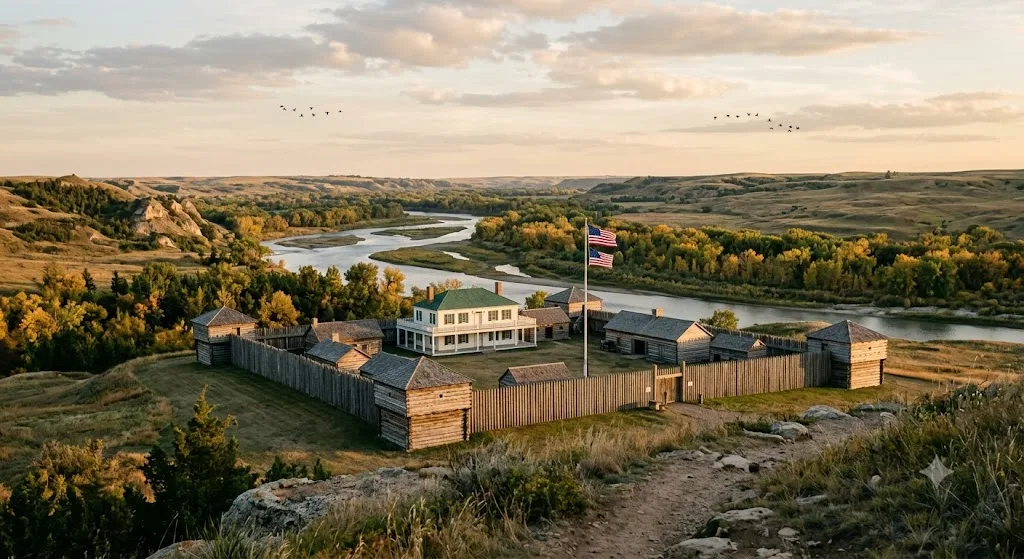
Step back in time to the most important fur trade post on the upper Missouri River between 1828 and 1867. The reconstructed fort allows visitors to learn about trade and cultural exchange, offering a unique glimpse into a pivotal era of American history. Fort Union Trading Post National Historic Site North Dakota, situated near the confluence of the Missouri and Yellowstone rivers, served as a peaceful hub where various Native American tribes, including the Assiniboine, Crow, Cree, Ojibway, Blackfeet, and Hidatsa, exchanged buffalo robes and other furs for goods from around the world. Our team at Roam States has compiled this comprehensive guide to help you plan an unforgettable journey to this significant historical landmark.
Why Visit Fort Union Trading Post National Historic Site
Fort Union Trading Post National Historic Site offers a compelling journey into a period of remarkable cultural exchange and economic significance in the American West. From 1828 to 1867, this was the premier fur trading post on the Upper Missouri River, a bustling hub where Native American tribes and American Fur Company traders met to exchange goods. Unlike many frontier outposts, Fort Union was largely a place of peaceful coexistence, fostering mutual benefit through commerce and cultural understanding for nearly four decades.
When you visit, you'll explore a meticulously reconstructed fort that stands on the original foundations, offering a tangible connection to the past. The Bourgeois House, once the lavish residence of the post manager, now serves as the visitor center, housing exhibits that detail the fort's history and the lives of those who lived and worked here. Walking the grounds, you can imagine the vibrant trade, the diverse languages, and the unique blend of cultures that defined this frontier outpost. It’s an opportunity to understand the intricate relationships between the American Fur Company and the Northern Plains Indian Tribes, a story often overlooked in broader narratives of westward expansion. The site also preserves the natural beauty of the confluence of the Missouri and Yellowstone Rivers, a landscape that has witnessed centuries of human history.
Who It's Best For
Fort Union Trading Post National Historic Site is an ideal destination for a wide range of travelers. History buffs will be particularly captivated by the detailed reconstructions and exhibits that bring the fur trade era to life. Those interested in Native American history and culture will appreciate the focus on the peaceful trade and interactions between various tribes and the American Fur Company.
Families with children will find the site engaging, especially during special events like the annual Rendezvous, which features living history demonstrations and hands-on activities. Educators and students will discover a rich outdoor classroom, offering insights into economics, anthropology, and American expansion. Even casual travelers looking for a unique stop on a USA road trip will find the fort's story compelling and its setting picturesque. The site is also excellent for photographers, with its striking architecture against the vast North Dakota landscape. If you appreciate places where history is not just told but felt, then Fort Union Trading Post National Historic Site is for you.
Getting There & Parking
Getting to Fort Union Trading Post National Historic Site is straightforward, though it requires a bit of driving into the scenic, expansive landscape of western North Dakota. The site is conveniently located near the Montana-North Dakota state line, approximately 25 miles southwest of Williston, North Dakota. If you're coming from Sidney, Montana, the fort is about 25 miles to the northeast.
For those flying in, commercial flights and rental cars are available at airports in both Williston, ND (Williston Basin International Airport - XWA) and Sidney, MT. Amtrak passenger train service is also available in Williston, ND, with rental cars typically accessible there. The physical address for your GPS is 15550 Highway 1804, Williston, ND 58801.
When it comes to parking, visitors will be pleased to know that ample parking is available on-site, and perhaps best of all, parking is free. There is a picnic shelter located in the lower parking lot, offering a convenient spot for a meal before or after your visit. Our team recommends checking the official National Park Service website for any potential temporary closures or updates related to parking, though major repairs are usually announced in advance. For example, in previous years, the site has temporarily closed for parking lot repairs, redirecting visitors to the Missouri-Yellowstone Confluence Interpretive Center for temporary operations.
Understanding how to get to Fort Union Trading Post National Historic Site is key to a smooth trip. We suggest combining your visit with other nearby attractions, such as the Missouri-Yellowstone Confluence Interpretive Center and Fort Buford State Historic Site, both just a few miles away and easily accessible from Fort Union. This allows for a comprehensive exploration of the region's rich history. Remember, while Fort Union Trading Post National Historic Site is free to enter, some other NPS sites might have fees, so it's always good to check if you plan to visit multiple parks.
Top Things to Do
There's a wealth of history and natural beauty to uncover when exploring the Fort Union Trading Post National Historic Site. Our team recommends dedicating ample time to fully immerse yourself in the experience. Here are some of the top things to do at Fort Union Trading Post National Historic Site:
- Explore the Reconstructed Fort: The centerpiece of the site is the meticulously reconstructed fort, built atop the original foundations. Wander through the Bourgeois House, which serves as the visitor center, and imagine the lives of the post managers. Discover the trade room, the clerk's office (open seasonally), and other buildings that illustrate daily life and commerce during the fur trade era.
- Visit the Museum and Park Store: Inside the Bourgeois House, you'll find a museum with exhibits showcasing artifacts recovered during archaeological excavations, detailing Fort Union's history. The park's store offers Native American-made items, reproduction fur trade goods, books, and other merchandise, providing unique souvenirs and further learning opportunities.
- Attend the Annual Fort Union Rendezvous: If your visit aligns with the third full weekend of June, you're in for a treat. The Fort Union Rendezvous is the site's biggest annual event, a vibrant 19th-century fur trade fair that brings the fort to life with reenactments, artisan demonstrations (blacksmithing, pottery, frontier cooking), traditional music, and historical vendors. Admission and parking for this event are free.
- Walk the Bodmer Trail: For those who appreciate both history and nature, the Bodmer Trail offers a scenic hike that provides a historical view of Fort Union, mirroring the perspective captured by artist Karl Bodmer in 1833. It's a great way to see the surrounding landscape and understand the fort's strategic location.
- Enjoy Outdoor Exhibits: Beyond the fort walls, outdoor exhibits provide additional context and information about the trading post and its relationship with the Northern Plains Indian Tribes.
- Experience Ranger-Led Programs: During warmer months, the site often hosts ranger-led programs that offer deeper insights into the fort's history, the fur trade, and the cultures involved. Check the official NPS website for a schedule of events and programs.
- Take a Selfie at the State Line Marker: A fun, quick stop between the parking areas is the state line marker, where you can snap a photo straddling the North Dakota and Montana border.
These things to do at Fort Union Trading Post National Historic Site ensure a comprehensive and enriching visit, allowing you to connect with a significant chapter of American history.
Best Time to Visit
Choosing the best time to visit Fort Union Trading Post National Historic Site can significantly enhance your experience. Our team generally recommends the warmer months, from late spring through early fall, for the most comfortable weather and a full range of activities.
- Spring (April - May): As temperatures rise to the 60s and 70s, spring offers a refreshing experience of the American Frontier. The landscape begins to green, and it's a pleasant time for outdoor exploration before the peak summer heat.
- Summer (June - August): Summer is arguably the most popular time to visit, bringing warm temperatures (70s-80s°F) and plenty of sunshine. The highlight of the summer is the annual Fort Union Rendezvous, held on the third full weekend of June (June 18-21, 2026). This vibrant 19th-century fur trade fair features period arts, crafts, music, living history demonstrations, and reenactments, making it an unforgettable experience for all ages. The Bourgeois House Visitor Center is open daily from 9:00 AM to 5:00 PM CDT, and during the Rendezvous, special event hours apply.
- Autumn (September - October): Fall brings mild temperatures, typically in the 50s and 60s, and often crisp air, making it an ideal time for exploring the fort and its trails. The Indian Arts Festival, usually held the first weekend in August, showcases Native American crafts and music, extending the cultural offerings into the early fall.
- Winter (November - March): While the fort remains open year-round, winter visits offer a serene and tranquil experience, with temperatures often below 34°F. The landscape is transformed by snow, offering a unique, quiet beauty. The Bourgeois House Visitor Center operates on winter hours, typically Wednesday through Sunday from 9:00 AM to 5:00 PM Central Time, and is closed on Mondays and Tuesdays. The site is also closed on Thanksgiving, Christmas, and New Year's Day. Be prepared for cold weather and potential road closures due to snow.
Regardless of when you visit, we recommend checking the official National Park Service website for Fort Union Trading Post National Historic Site (nps.gov/fous) for the most up-to-date operating hours, any potential closures, and event schedules for 2026.
Where to Stay Nearby
While there is no public camping or overnight parking available directly at Fort Union Trading Post National Historic Site, visitors have several excellent options for Fort Union Trading Post National Historic Site lodging in nearby communities. Our team recommends planning and booking your accommodations in advance, especially during peak season or special events like the Rendezvous, as oil activity in the region can sometimes lead to high demand for hotels and RV spots.
The closest lodging option is in Fairview, Montana, about 15 miles southwest of Fort Union, which has one hotel, the Fairview Inn. However, for a wider selection of services and amenities, your best bets for Fort Union Trading Post National Historic Site lodging are Williston, North Dakota, and Sidney, Montana, both approximately 30 miles from the historic site.
Williston, North Dakota: As a larger hub, Williston offers a broader range of hotels, from budget-friendly to more upscale options. Some highly-rated choices include:
- Best Western Plus Williston Hotel & Suites
- Four Points by Sheraton Williston
- Grand Williston Hotel & Conference Center
- Microtel Inn & Suites by Wyndham Williston
- Holiday Inn Express Hotel & Suites Williston
- MainStay Suites Williston
- Candlewood Suites Williston
- Fairbridge Inn & Suites Williston Near Airport
Many of these hotels offer amenities such as free WiFi, complimentary breakfast, and fitness centers. Williston also provides a greater selection of restaurants and services, making it a convenient base for exploring the region.
Sidney, Montana: Located to the southwest of Fort Union, Sidney also offers several lodging choices. Options include:
- Holiday Inn Express Hotel & Suites Sidney by IHG
- Candlewood Suites Sidney by IHG
- MainStay Suites Sidney - Medical Center
- Wingate by Wyndham Sidney
For those interested in camping, primitive camping is available at Fort Buford State Historic Site, located just two miles east of Fort Union. This option is typically available from April to October, and campers must check in at the Missouri Yellowstone Confluence Interpretive Center. Additionally, Theodore Roosevelt National Park offers camping, with its North Unit approximately an hour south of Fort Union.
Sample 2-Day Itinerary
To truly appreciate the history and natural beauty surrounding Fort Union Trading Post National Historic Site, we recommend a two-day itinerary, allowing for immersive exploration without feeling rushed. This plan also incorporates nearby historical sites and the amenities of Williston, North Dakota.
Day 1: Fort Union Immersion
- Morning (9:00 AM - 1:00 PM): Fort Union Trading Post National Historic Site
- Arrive at Fort Union Trading Post National Historic Site. Parking is free.
- Begin your visit at the Bourgeois House Visitor Center. Allow ample time to explore the museum exhibits, which provide crucial context about the fur trade, the American Fur Company, and the Native American tribes involved.
- Take a self-guided tour of the reconstructed fort. Imagine the bustling trade and daily life within its walls. Don't miss the trade room and clerk's office (seasonal).
- Walk the Bodmer Trail for scenic views of the fort and the Missouri River confluence.
- Browse the park store for unique souvenirs, books, and Native American crafts.
- Lunch (1:00 PM - 2:00 PM): Picnic at the Fort or Drive to Nearby Confluence
- Enjoy a picnic at the picnic shelter in the lower parking lot of Fort Union. Alternatively, head towards the Missouri-Yellowstone Confluence Interpretive Center for lunch options.
- Afternoon (2:00 PM - 5:00 PM): Missouri-Yellowstone Confluence Interpretive Center & Fort Buford State Historic Site
- Drive a short distance to the Missouri-Yellowstone Confluence Interpretive Center, where the two mighty rivers meet. This center offers further exhibits on the Lewis and Clark Expedition and the natural history of the confluence.
- Continue to Fort Buford State Historic Site, just two miles east of Fort Union. Explore the remaining military buildings, including the stone powder magazine and a museum in an original soldiers' quarters, offering a contrast to the trading post.
- Evening: Dinner & Check-in in Williston
- Head to Williston, North Dakota (approx. 30 miles northeast) for dinner and check into your chosen Fort Union Trading Post National Historic Site lodging.
Day 2: Williston Exploration & Regional History
- Morning (9:00 AM - 12:00 PM): Williston Area Recreation Center or James Memorial Art Center
- Start your day with some active fun at the Williston Area Recreation Center (ARC), featuring an indoor water park, golf simulator, and more. This is a great option, especially if traveling with kids.
- Alternatively, for a cultural experience, visit the James Memorial Art Center, which showcases local and regional art.
- Lunch (12:00 PM - 1:00 PM): Local Williston Eatery
- Enjoy lunch at one of Williston's local restaurants.
- Afternoon (1:00 PM - 5:00 PM): Frontier Museum or Lewis & Clark State Park
- Delve deeper into local history at The Frontier Museum in Williston.
- Or, if you prefer outdoor activities, head to Lewis and Clark State Park for boating, fishing, or simply enjoying the scenery along Lake Sakakawea.
- Evening: Dinner & Departure or Relax in Williston
- Enjoy a final dinner in Williston before heading home or settling in for another night.
This itinerary provides a blend of historical immersion, outdoor enjoyment, and local culture, ensuring a fulfilling visit to Fort Union Trading Post National Historic Site and the surrounding area. For more ideas on exploring the region, consider our guides to Best places in North Dakota, Chateau de Mores, or the Dakota Territory Air Museum.
Is It Worth Visiting?
Our team unequivocally believes that Fort Union Trading Post National Historic Site is worth visiting. This isn't just another historical marker; it's a meticulously reconstructed window into a unique and often overlooked period of American history. The site preserves the legacy of the most important fur trade post on the Upper Missouri River from 1828 to 1867, a place where diverse cultures converged in peaceful exchange.
What makes it particularly compelling is the story of cooperation and mutual benefit between the American Fur Company and various Northern Plains Indian Tribes. In an era often defined by conflict, Fort Union stands as a testament to a time when two civilizations found common ground through commerce. The reconstructed fort, with its Bourgeois House and exhibits, offers a tangible connection to this past, allowing visitors to visualize the bustling trade and daily life. Furthermore, the annual Fort Union Rendezvous in June is a premier living history event that truly brings the site to life, making it an exceptional experience for families and history enthusiasts alike.
Beyond the historical significance, the natural setting at the confluence of the Missouri and Yellowstone rivers is stunning. The fact that admission and parking are free only adds to its value, making it an accessible and enriching destination. For those asking, "Is Fort Union Trading Post National Historic Site worth visiting?", our answer is a resounding yes. It offers a powerful narrative, engaging exhibits, and a beautiful natural backdrop that combine to create a truly memorable travel experience in North Dakota.
Top Things to Do in Williston
While Fort Union Trading Post National Historic Site is the primary draw, the nearby city of Williston, North Dakota, serves as an excellent base for exploration, offering a variety of attractions and amenities. Our team recommends these top things to do in Williston to complement your historical journey:
- Williston Area Recreation Center (ARC): This expansive facility is a year-round attraction, perfect for families and active travelers. It features an indoor water park, a "flowrider" wave simulator, a golf simulator, racquetball courts, a weight room, and spinning classes.
- Missouri-Yellowstone Confluence Interpretive Center: Located just a short drive from Williston and Fort Union, this center sits at the historic meeting point of the Missouri and Yellowstone Rivers. It provides fascinating insights into the Lewis and Clark Expedition and the natural and cultural history of the confluence area.
- Fort Buford State Historic Site: Adjacent to the Interpretive Center, Fort Buford was a significant military post established after the fur trade era. You can explore its remaining structures and museum, offering a different perspective on frontier life.
- The Frontier Museum: Dive deeper into local and regional history with exhibits covering pioneer life, agriculture, and the development of western North Dakota.
- James Memorial Art Center: Housed in a historic building, this center showcases local and regional artistic talent through various exhibitions and events.
- Lewis and Clark State Park: Situated on the shores of Lake Sakakawea, this state park offers opportunities for boating, fishing, camping, and hiking, providing a natural escape.
- Harmon Park: A local favorite, this park offers green space for relaxation and recreation.
- Shopping and Dining: Williston offers a selection of local shops and restaurants, from casual diners to more established eateries, providing all the necessary amenities for your stay.
These things to do in Williston ensure that your visit to the region is well-rounded, blending historical exploration with recreational activities and local culture. For more ideas on what to do in the greater North Dakota area, check out our guide to Devils Lake.
Fort Union Trading Post National Historic Site with kids
Fort Union Trading Post National Historic Site is an excellent destination for families with children. The reconstructed fort itself is a giant outdoor classroom, allowing kids to visually grasp what a 19th-century trading post looked like. They can explore the buildings, imagine the lives of traders and Native Americans, and learn about a pivotal era in American history in a hands-on way. The annual Fort Union Rendezvous in June is a particularly fantastic event for children, featuring living history demonstrations, reenactments, artisan crafts, and a dedicated "Kids Day" on June 18, 2026, with interactive activities. The open spaces around the fort provide room for children to move, and the Bourgeois House Visitor Center offers educational exhibits and the Junior Ranger program, which is always a hit with younger visitors. Our team recommends engaging them with questions about what life was like without modern technology and encouraging them to look for details that bring history to life.
Best hotels near Fort Union Trading Post National Historic Site
The best hotels near Fort Union Trading Post National Historic Site are primarily found in Williston, North Dakota, and Sidney, Montana, both about 30 miles away. In Williston, top-rated options include the Best Western Plus Williston Hotel & Suites, Four Points by Sheraton Williston, and the Grand Williston Hotel & Conference Center, all offering comfortable stays with various amenities. Sidney, MT, provides choices like the Holiday Inn Express Hotel & Suites Sidney and the Wingate by Wyndham Sidney. We advise booking ahead, especially during peak travel seasons, due to regional demand.
Fort Union Trading Post National Historic Site tips
Our top tips for visiting Fort Union Trading Post National Historic Site include checking the official National Park Service website for the most current operating hours and any special event schedules, particularly the annual Rendezvous in June. Plan to spend at least 2-3 hours exploring the fort and visitor center. Wear comfortable shoes, as you'll be walking on uneven terrain. Bring water and snacks, as on-site food options are limited to vending machines, though a picnic shelter is available. Don't forget your camera for the picturesque views and the state line marker. Finally, combine your visit with nearby Fort Buford State Historic Site and the Missouri-Yellowstone Confluence Interpretive Center for a more complete historical experience.
Where to stay near Fort Union Trading Post National Historic Site
For accommodations near Fort Union Trading Post National Historic Site, your primary options are in Williston, North Dakota, and Sidney, Montana. Williston, approximately 30 miles northeast, offers a broader selection of hotels such as the Best Western Plus Williston Hotel & Suites, Four Points by Sheraton Williston, and the Grand Williston Hotel & Conference Center. Sidney, Montana, also about 30 miles southwest, has hotels like the Holiday Inn Express Hotel & Suites Sidney. For those seeking a more rustic experience, primitive camping is available at Fort Buford State Historic Site, just two miles east of Fort Union, during the warmer months.
Fort Union Trading Post National Historic Site parking
Parking at Fort Union Trading Post National Historic Site is readily available and free for all visitors. There is a designated parking lot, and a picnic shelter is conveniently located in the lower parking area. Our team recommends checking the official National Park Service website for any temporary parking advisories or closures, though these are typically announced in advance. The site is accessible, with wheelchair-accessible restrooms and seating available.
Best time to visit Fort Union Trading Post National Historic Site
The best time to visit Fort Union Trading Post National Historic Site is during the warmer months, from late spring (April-May) through early fall (September-October). These seasons offer comfortable temperatures for exploring the outdoor fort and trails. The absolute peak time is during the annual Fort Union Rendezvous, held on the third full weekend of June (June 18-21, 2026), which features vibrant living history events, reenactments, and artisan demonstrations. While the site is open year-round, winter visits can be very cold, though they offer a serene, snowy landscape for those prepared for the weather.
Fort Union Trading Post National Historic Site offers a profound journey into a significant chapter of American history, showcasing a unique era of peaceful trade and cultural exchange. We encourage all travelers to experience this remarkable site and explore the rich heritage of North Dakota. For more inspiration for your next adventure, explore our Plan Your US Trip guide.
Last updated: 2026-07-14 by the Roam States team.