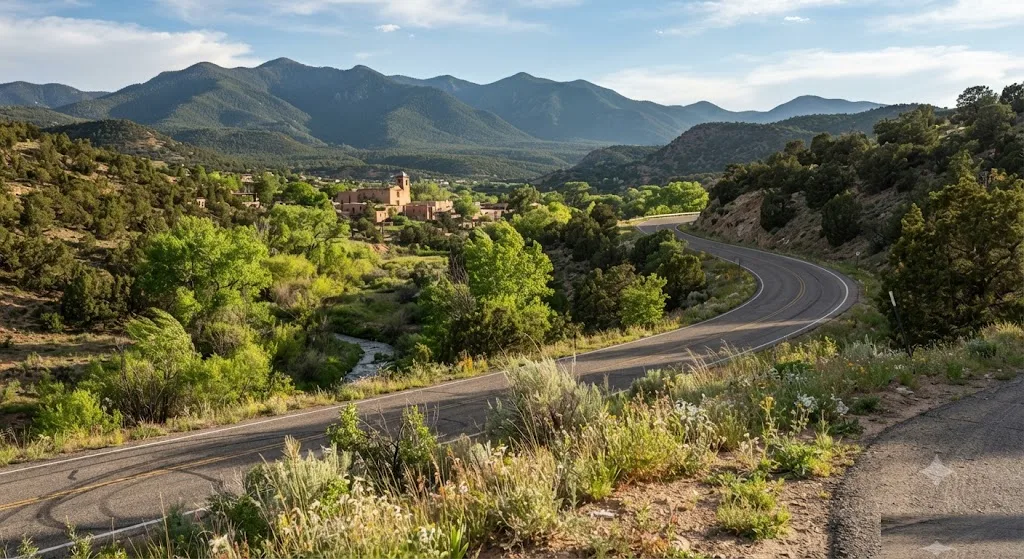
Our High Road to Taos Scenic Byway guide covers practical planning for High Road to Taos Scenic Byway New Mexico — best time to visit, getting there, and what to do on the ground.
As the Roam States editorial team, we've explored countless routes across the US, but few capture the essence of a region quite like the High Road to Taos Scenic Byway New Mexico. This isn't just a drive; it's a journey through centuries of history, art, and culture, winding through traditional Spanish villages, historic adobe churches, and breathtaking high-desert and mountain landscapes. We consider it an essential New Mexico experience, a picturesque alternative route between the artistic hub of Santa Fe and the spiritual haven of Taos.
Why Visit High Road to Taos Scenic Byway
The High Road to Taos Scenic Byway is a testament to the enduring spirit of Northern New Mexico. This 105-mile (170 km) route, while traversable in about 2.5 hours without stops, truly demands a full day or even a multi-day exploration to appreciate its depth. It's a living museum, showcasing a unique blend of Native American and Spanish Colonial heritage still vibrant in its communities today.
What sets this byway apart is its authenticity. You won't find major chain stores or fast-food restaurants here. Instead, you'll encounter generations-old weaving traditions, local art galleries housed in adobe buildings, and centuries-old churches that stand as silent sentinels to a rich past. The landscape itself transforms dramatically, from the scrubby piñon and juniper of the high desert to the alpine forests of the Sangre de Cristo Mountains, offering panoramic views that are simply unforgettable.
For those seeking a deeper connection to the American Southwest, beyond the typical tourist traps, the High Road to Taos Scenic Byway offers an unparalleled opportunity to immerse yourselves in a culture that has carefully preserved its traditions amidst stunning natural beauty. It's an experience that stays with you long after the drive is over.
Who It's Best For
The High Road to Taos Scenic Byway caters to a diverse range of travelers, but it particularly resonates with those who appreciate cultural immersion, scenic beauty, and a slower pace of travel. If you're an art enthusiast, you'll be captivated by the numerous artist studios and galleries in villages like Chimayó, Truchas, and Peñasco. History buffs will revel in the well-preserved Spanish Colonial churches and the stories of resilient communities. Photographers will find endless inspiration in the adobe architecture, dramatic landscapes, and vibrant local life.
Nature lovers will appreciate the transition from high desert to mountain terrain, with opportunities for wildlife spotting and enjoying the crisp mountain air, especially as you drive through Carson National Forest. Families can also enjoy the route, though some cultural sites require quiet respect. Kids often love the Rio Grande Gorge Bridge viewpoint and the guided tours at Taos Pueblo. Ultimately, it's best for anyone looking to step off the beaten path and discover the heart and soul of Northern New Mexico.
Getting There & Parking
Understanding how to get to High Road to Taos Scenic Byway is straightforward, whether you're starting from Santa Fe or Taos. The byway itself is a loop, but most travelers experience it as a one-way trip between the two larger cities, often taking the "Low Road" (US-68) for the return journey for a change of scenery and a faster route.
From Santa Fe:
To begin your journey on the High Road to Taos Scenic Byway from Santa Fe, head north on US-84/285. In Española, you'll turn onto NM-76, which is the official start of the High Road. This route will lead you directly into the first significant village, Chimayó. The drive from Santa Fe to the start of the High Road is approximately 30 minutes.
From Taos:
If you're starting from Taos, the byway typically begins by heading south on US-68 to Ranchos de Taos, then taking NM-518 east, followed by NM-75 west to Peñasco, and finally NM-76 south through Truchas, Las Trampas, Cordova, and Chimayó. This allows you to experience the villages in a different order.
Parking:
Parking along the High Road to Taos Scenic Byway is generally available and free at most of the key stops, particularly at churches and art galleries in the smaller villages. These are often small, informal lots or roadside pull-offs. For popular sites like El Santuario de Chimayó and the San Francisco de Asís Church in Ranchos de Taos, you'll find designated parking areas. We recommend arriving earlier in the day, especially during peak season (late summer to early fall), to ensure easier parking access at the most popular attractions. As of 2026, we haven't found any specific fees for parking at the major attractions along the byway. However, always keep an eye out for any posted signs regarding parking restrictions or small, privately-run lots that may charge a minimal fee.
Top Things to Do
The High Road to Taos Scenic Byway is brimming with unique experiences, offering a wealth of things to do at High Road to Taos Scenic Byway. Our team suggests dedicating ample time to truly savor each stop. Here are some of the top things to do in Northern New Mexico along this iconic route:
- El Santuario de Chimayó: This historic adobe church, often called "The Lourdes of America," is a significant pilgrimage site. Visitors come from all over to collect "holy dirt" from a small pit inside the chapel, believed to have healing powers. The grounds are peaceful, with beautiful Spanish Colonial architecture and gardens. Allow at least an hour here to explore the chapel, the "el pocito" (the healing dirt pit), and the surrounding area. There are no entrance fees, and it typically operates during daylight hours, though specific 2026 hours should be verified locally upon arrival.
- Chimayó Weaving Shops: The village of Chimayó is renowned for its generations-old weaving tradition. Stop at shops like Ortega's Weaving Shop to see intricate hand-woven textiles and perhaps purchase a unique souvenir. These shops usually open mid-morning and close in the late afternoon.
- San José de Gracia Church in Las Trampas: This National Historic Site is one of the best-preserved examples of Spanish Colonial architecture in New Mexico, dating back to 1760. It's still an active parish, so visitors should be respectful, especially during weekend services. Photography inside the church is generally not permitted.
- Truchas: Perched on a mesa with stunning views of the 13,101-foot Truchas Peak, this artist community is roughly the halfway point of the byway. Explore the numerous galleries and studios that dot the village. Truchas was founded in 1754 and still adheres to original Spanish bylaws, meaning cars often share the road with livestock.
- Carson National Forest: As you continue your journey, the byway passes through the beautiful Carson National Forest. This area offers a dramatic shift in scenery, with tall ponderosa pines and fragrant junipers. Pull off at viewpoints, such as the Pueblo Peak Viewpoint, for expansive vistas that contrast sharply with the desert landscapes you've left behind.
- Picuris Pueblo: A historic pueblo nestled in the Sangre de Cristo Mountains, Picuris Pueblo is known for its mica-infused pottery and ancient adobe church. If your timing is right in the summer, you might catch the Country Arts and Crafts Fair, offering unique pottery, jewelry, and other art forms. Check their official website for 2026 operating hours and any potential entrance fees or cultural etiquette guidelines.
- San Francisco de Asís Church in Ranchos de Taos: Just before reaching Taos, this iconic church is one of the most photographed and painted churches in New Mexico, famously captured by artists like Georgia O'Keeffe and photographers like Ansel Adams. Its massive adobe walls are a marvel of Spanish Colonial architecture. Explore the galleries and shops around the plaza.
- Talpa's Nuestra Señora de San Juan de los Lagos del Rio Chiquito: In the small town of Talpa, you'll find this charming church, built in 1828. It's a beautiful stop for quiet reflection and appreciation of its historical significance.
- Dixon & Embudo: These villages along the Rio Grande are known for their fruit-growing communities and roadside stands offering fresh seasonal produce. Dixon also hosts the Casa de Piedra Cooperative, a great stop for local art and studio tours.
These things to do at High Road to Taos Scenic Byway provide a rich tapestry of experiences, making the drive much more than just a means to an end.
Best Time to Visit
Determining the best time to visit High Road to Taos Scenic Byway largely depends on what kind of experience you're seeking. Our team has found that each season offers a distinct charm, but some periods are undeniably more popular and provide optimal conditions.
- Spring (April-May): As the snow melts from the higher elevations, spring brings milder temperatures and blooming wildflowers. The trees begin to leaf out, offering fresh green hues. This is a great time to avoid the summer crowds and enjoy comfortable driving weather.
- Summer (June-August): Summer is popular for its warm temperatures, typically ranging from 70-85°F during the day, though evenings can cool down quickly. The landscape is lush, and all attractions are generally open. However, it's also peak tourist season, so expect more visitors and potentially higher lodging prices. Occasional summer thunderstorms can occur, usually in the late afternoon.
- Fall (September-October): We consider late summer to early fall, particularly September and October, to be the ideal time for a High Road adventure. The weather is usually mild and pleasant, and the aspens and cottonwoods in Carson National Forest transform into a spectacular display of golden and yellow foliage, creating breathtaking photo opportunities. The annual High Road Art Tour, held during the last two full weekends of September, is a major highlight, with many artists opening their studios. This period offers the quintessential "High Road" experience.
- Winter (November-March): While the High Road to Taos is rideable year-round, winter brings snow and ice, especially at elevations above 7,500 feet. If you're comfortable driving in snowy conditions, the snow-capped peaks and quiet villages offer a serene and beautiful, albeit chilly, experience. Four-wheel drive or chains may be required for certain sections during heavy snowfall. Many smaller galleries and shops might have reduced hours or be closed during the off-season.
For the best balance of weather, accessibility, and vibrant cultural activity, we highly recommend visiting in the fall. However, if avoiding crowds is a priority, late spring or early summer can also be excellent choices.
Where to Stay Nearby
Finding the right High Road to Taos Scenic Byway lodging is crucial for a comfortable and enriching trip. While the byway itself passes through small villages with limited options, the nearby cities of Santa Fe and Taos offer a wide array of accommodations. For a more intimate experience, consider staying in one of the smaller towns along or just off the byway.
Santa Fe Lodging:
As the starting or end point for many High Road trips, Santa Fe offers a diverse range of hotels, from luxury resorts to charming boutique inns. Many travelers choose to base themselves here and take a day trip along the byway. Popular options for 2026 include:
- La Fonda on the Plaza: A historic hotel right on the Santa Fe Plaza, offering a blend of Southwest charm and modern luxury.
- Inn and Spa at Loretto: Known for its stunning architecture inspired by the Taos Pueblo and its luxurious spa services.
- Drury Plaza Hotel in Santa Fe: Offers a great location, friendly staff, and amenities like free breakfast.
- Rosewood Inn of the Anasazi: A cozy retreat with a fireplace in each room, steps from Santa Fe Plaza.
- The Inn of the Five Graces: A highly-rated luxury 5-star resort and spa in the historic district, offering artisan design and world-class hospitality.
- Hilton Santa Fe Buffalo Thunder: Located about 15 miles north of Santa Fe, this resort offers spacious rooms, a spa, golf, and spectacular mountain views, making it convenient to the start of the High Road.
Santa Fe also has numerous other hotels and boutique options.
Taos Lodging:
At the northern end of the byway, Taos provides a vibrant atmosphere with a focus on art and Native American culture. Many travelers choose to spend a night or two here. Our recommendations for High Road to Taos Scenic Byway lodging in Taos for 2026 include:
- The Historic Taos Inn: A beloved landmark in Taos Plaza, known for its historic charm and central location.
- El Monte Sagrado Living Resort & Spa: A luxurious retreat offering a full-service spa, indoor pool, and a serene atmosphere.
- Sagebrush Inn & Suites: A historic Taos hotel offering a peaceful escape with sunset views, an outdoor pool, and hot tub, located about 1 mile from Ranchos de Taos.
- Hotel La Fonda de Taos: Located in Taos Plaza, offering charming Southwest details.
- Taos Lodging Casitas: Offers unique casitas with traditional adobe architecture and modern amenities, including full kitchens and an outdoor hot tub, just a short walk from the Historic Taos Plaza.
- Hotel Don Fernando de Taos, Tapestry Collection by Hilton: A 3.5-star hotel offering ski shuttle access and various outdoor activities.
For budget-conscious travelers, options like Super 8 by Wyndham Taos and Taos Motor Lodge are available.
Lodging Along the Byway (Chimayó, Truchas, Peñasco, Ranchos de Taos):
While fewer, these smaller villages offer unique, often more rustic, and authentic experiences:
- Casa Escondida Bed & Breakfast (Chimayó): An intimate adobe inn offering views of the Sangre de Cristo range and charming rooms, conveniently located in Chimayó. It offers free parking and WiFi.
- Truchas Peaks Place (Truchas): While primarily a venue for retreats and events, it offers ten bedroom suites for a secluded stay amidst the Truchas Peaks Mountains.
- Vacation Rentals: Many of these villages, including Truchas and Peñasco, offer vacation homes and casitas for rent, providing a more local experience. For example, a remodeled 150-year-old adobe in Truchas offers free WiFi, a garden, and laundry facilities.
- Adobe and Pines Inn Bed and Breakfast (Ranchos de Taos): Nestled among beautiful gardens, this charming inn offers individually decorated rooms and complimentary breakfast.
When considering High Road to Taos Scenic Byway lodging, we recommend booking in advance, especially during the popular fall season, as options in the smaller villages are limited and can fill up quickly.
Sample 2-Day Itinerary
To truly savor the High Road to Taos Scenic Byway, our team recommends a leisurely two-day journey. This allows for deeper exploration, more relaxed stops, and the opportunity to stay overnight in or near one of the charming villages.
Day 1: Santa Fe to Truchas/Peñasco Area
- Morning (Santa Fe to Chimayó): Start your day early from Santa Fe, heading north on US-84/285 and then onto NM-76. Your first major stop is the historic village of Chimayó. Dedicate ample time to visit El Santuario de Chimayó, exploring the chapel, the "el pocito," and the peaceful grounds. Afterwards, browse the renowned Chimayó weaving shops, such as Ortega's, to witness centuries-old craftsmanship.
- Lunch (Chimayó): Enjoy a traditional New Mexican lunch in Chimayó. Rancho de Chimayó Restaurante is a highly-regarded option, known for its authentic cuisine in an old hacienda setting.
- Afternoon (Las Trampas & Truchas): Continue north on NM-76 to Las Trampas. Spend time admiring the San José de Gracia Church, a pristine example of Spanish Colonial architecture. Then, proceed to Truchas, a captivating artist community situated on a mesa. Explore the local art galleries and studios, taking in the panoramic views of Truchas Peak.
- Evening (Truchas/Peñasco): For your overnight stay, consider a charming vacation rental or a local B&B in Truchas or Peñasco for an authentic village experience. Alternatively, the nearby Hilton Santa Fe Buffalo Thunder offers a more resort-style stay closer to the start of the High Road. Enjoy a quiet evening under the stars, away from city lights.
Day 2: Truchas/Peñasco to Taos
- Morning (Carson National Forest & Picuris Pueblo): From Truchas or Peñasco, continue your journey through the scenic Carson National Forest. Take advantage of the pull-offs for photo opportunities of the changing landscapes. Next, visit Picuris Pueblo, exploring its ancient adobe church and perhaps finding unique mica-infused pottery. Check their schedule for any cultural events or craft fairs.
- Lunch (Dixon/Embudo or En Route): Depending on your pace, you might stop in the Rio Grande valley villages of Dixon or Embudo for fresh produce from roadside stands (seasonal) or a casual meal. Alternatively, pack a picnic to enjoy amidst the scenic beauty.
- Afternoon (Ranchos de Taos & Arrival in Taos): Your final major stop before Taos is Ranchos de Taos. Here, the iconic San Francisco de Asís Church awaits – a must-see for its historical significance and artistic inspiration. Explore the small plaza and nearby galleries. From Ranchos de Taos, it's a short drive to the town of Taos.
- Evening (Taos): Check into your chosen lodging in Taos. Spend your evening exploring the historic Taos Plaza, dining at one of Taos's many excellent restaurants, and perhaps visiting the Taos Pueblo (check hours and reservation requirements, as it's a separate destination).
This itinerary offers a comprehensive yet relaxed way to experience the High Road to Taos Scenic Byway, allowing you to absorb its unique culture, history, and natural beauty without feeling rushed.
Last updated: 2026-07-08 by the Roam States team.