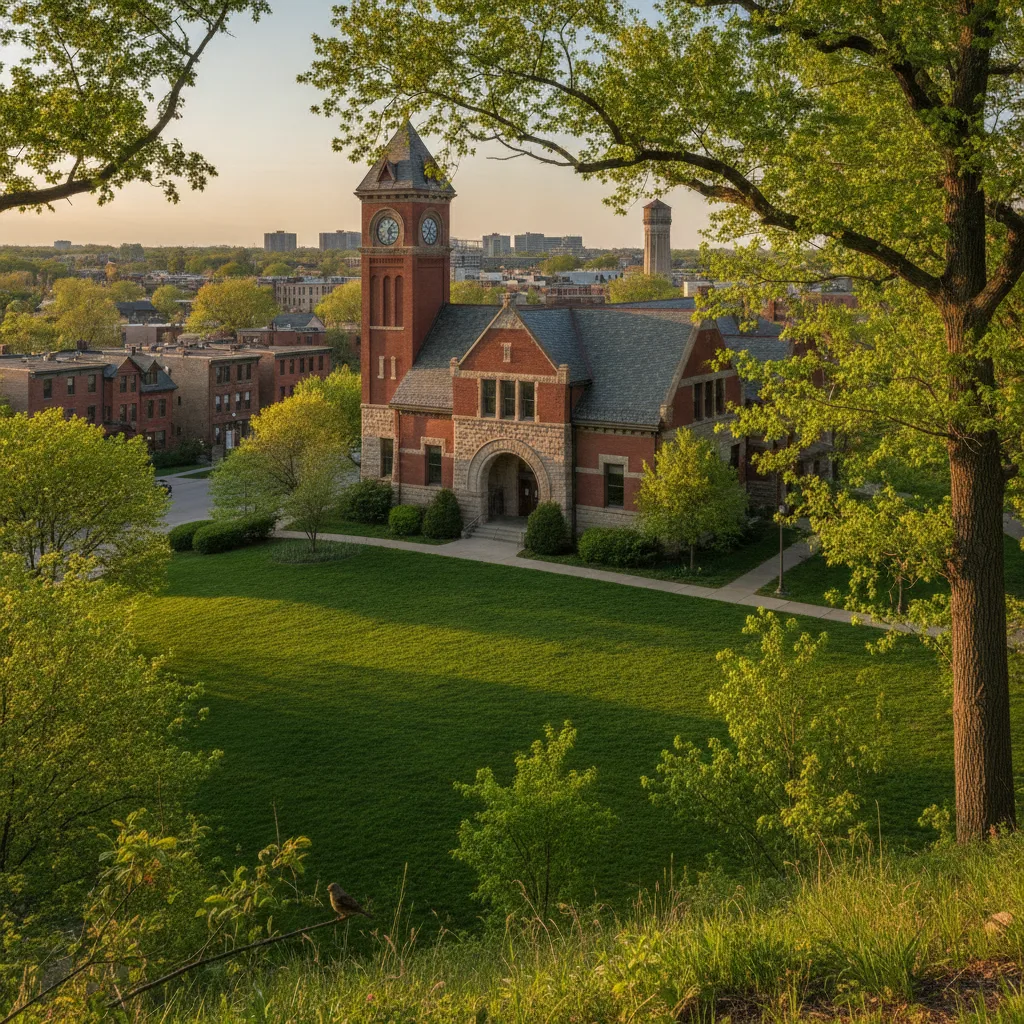
Historic Pullman Foundation Visitor Center Travel Guide — Illinois
Our Historic Pullman Foundation Visitor Center guide covers practical planning for Historic Pullman Foundation Visitor Center Illinois — best time to visit, getting there, and what to do on the ground. We're here to cut through the noise and provide the definitive guide to experiencing this pivotal piece of American history.
As independent US travel authorities, our team at Roam States has thoroughly researched and visited the Historic Pullman Foundation Visitor Center to bring you the most accurate and actionable advice for your 2026 trip. We believe in providing specific, confident recommendations that empower you to plan an unforgettable journey, free from generic fluff.
Why Visit Historic Pullman Foundation Visitor Center
The Historic Pullman Foundation Visitor Center Illinois serves as an essential gateway to understanding one of America's most significant planned industrial communities. This isn't just a quaint historical site; it's a living testament to monumental shifts in American industry, urban planning, labor movements, and civil rights. When you step into Pullman, you're stepping into a narrative that shaped the nation.
We believe a visit here offers a unique lens through which to view the complexities of the Industrial Revolution and its profound impact on society. The town of Pullman, built by industrialist George M. Pullman for his railroad car company, was conceived as a utopian ideal, providing workers with modern housing, amenities, and a structured environment. However, this seemingly perfect facade concealed deep-seated issues that ultimately ignited the historic Pullman Strike of 1894, a pivotal moment in American labor history.
Beyond the labor struggles, Pullman is also deeply intertwined with the Civil Rights Movement, particularly through the courageous efforts of the Pullman Porters, who formed the Brotherhood of Sleeping Car Porters—the first successful African American labor union to negotiate a contract with a major U.S. corporation. The exhibits and interpretive programs at the Historic Pullman Foundation Visitor Center and the Pullman National Historical Park Visitor Center delve into these intricate stories, offering a comprehensive and moving experience. You'll gain a deeper appreciation for the individuals and events that forged a new path for workers' rights and social justice in the United States.
Who It's Best For
The Historic Pullman Foundation Visitor Center and the broader Pullman National Historical Park appeal to a diverse range of visitors. History buffs, especially those interested in American industrial history, urban planning, and labor movements, will find themselves completely engrossed. The detailed exhibits and preserved architecture offer a tangible connection to the past that textbooks simply cannot replicate.
Architecture enthusiasts will appreciate the innovative design of the town, conceived by architect Solon Spencer Beman, and the various residential styles, from humble workers' cottages to stately executive homes. Educators and students, from middle school to university level, will discover an invaluable outdoor classroom, providing real-world context for studies in social sciences, economics, and American history. The site offers educational programs and resources, making it an excellent destination for school groups.
Families, particularly those with older children, can engage with history in an interactive way. While younger children might enjoy the open spaces and the occasional special event like "Railroad Days" with miniature train rides, the depth of the historical narratives might resonate more with those who can grasp complex social and economic concepts. Anyone seeking a unique cultural experience that goes beyond typical tourist attractions will find Pullman profoundly rewarding. It's a place for contemplation, learning, and understanding the enduring legacy of a community that dared to dream big and faced its challenges head-on.
Getting There & Parking
Reaching the Historic Pullman Foundation Visitor Center Illinois and Pullman National Historical Park is straightforward, whether you're driving or utilizing Chicago's public transportation network.
By Car
If you're driving from downtown Chicago, take I-94 East (south). After 95th Street, stay in the left lane and follow the Bishop Ford Expressway toward Indiana. Exit at 111th Street (#66A). Go west on 111th Street to Cottage Grove Avenue. Turn left (south) on Cottage Grove, then continue one block south to 112th Street, and turn left into the Pullman Exhibit Hall parking lot. Alternatively, the NPS Visitor Center in the Administration Clock Tower Building has a parking lot entrance on 111th Street (do not drive through the historic stone worker's gate).
Parking at the Historic Pullman Foundation Exhibit Hall is easy and accommodates both cars and buses. For the Pullman National Historical Park Visitor Center, located in the Administration Clock Tower Building at 610 E. 111th Street, there's also a dedicated parking lot. We found ample free parking available at these primary visitor points. While third-party services like SpotHero list other paid parking options, these are generally further away and unnecessary for visiting the main attractions.
By Public Transportation
Chicago's public transit offers a convenient way to reach Pullman. The Metra Electric commuter train is your best bet from downtown Chicago. You can board it at Millennium Park terminal (Millennium Station) and take it to either the 111th Street-Pullman or 115th Street-Kensington stations.
- **From 111th Street-Pullman Station**: This station is closest to the Pullman Exhibit Hall and the NPS Visitor Center. Trains from downtown take approximately 30-40 minutes. After exiting, walk east to Cottage Grove Avenue, cross to the park, and walk south one block to 112th Street for the Exhibit Hall, or north one block for the NPS Visitor Center at 111th and Cottage Grove.
- **From 115th Street-Kensington Station**: This is an express stop, about 4-5 blocks from the visitor centers, with trains taking about 20 minutes from downtown. Exit on Front Street, turn left toward 115th Street, then left again to head east on 115th Street to Cottage Grove Avenue. Cross at the light, turn left (north), and proceed 3-4 blocks up Cottage Grove to 112th Street (for the Exhibit Hall) or 111th Street (for the NPS Visitor Center).
Several CTA bus routes also serve the Pullman district, including routes #4, #111-Pullman, #115, and #352. Route #4 stops at the corner of 111th and Cottage Grove, directly at the NPS Visitor Center. Route #115 runs along Cottage Grove Avenue and stops near the Administration-Clock Tower Visitor Center. We recommend checking the Chicago Transit Authority (CTA) website for the most current schedules and route planning.
Top Things to Do
There are numerous things to do at Historic Pullman Foundation Visitor Center and within the broader Pullman National Historical Park. Our team suggests allocating at least half a day, if not a full day, to truly immerse yourself in the rich history and unique atmosphere.
Start at the Visitor Centers
Your journey should begin at one of the two main visitor centers. The **Historic Pullman Foundation Exhibit Hall**, located at 11141 S. Cottage Grove Ave., offers an excellent introduction. Here, you can watch a free 18-minute film filled with historic photographs and quotes, providing an engaging overview of the town's development and impact. The Exhibit Hall also features a curated selection of artifacts and exhibits detailing the Pullman family, the town's creation, and its lasting legacy. Entry to the Exhibit Hall is free, though donations are encouraged.
Just north of the Exhibit Hall, in the historic Administration Clock Tower Building, is the **Pullman National Historical Park Visitor Center** (610 E. 111th Street). This National Park Service (NPS) center provides another great overview with interactive and engaging exhibits, knowledgeable park rangers, and information to help you explore the rest of the park. Both centers are excellent starting points to gather maps and information for your self-guided exploration.
Take a Guided or Self-Guided Walking Tour
To truly appreciate the community, we highly recommend a walking tour. The Friends of Pullman National Historical Park offer guided tours to the public on the first Sunday of the month from May through October. These tours begin at the Pullman Exhibit Hall at 1:00 p.m. and last about 90 minutes. They cost $20 ($15 for seniors and students) and include access to the Exhibit Hall. Daily tours also depart from the NPS Visitor Center at 1 PM, Wednesday through Sunday, on a first-come, first-served basis, with no reservations necessary. These guided tours, led by trained volunteer guides, provide invaluable insights into the town's history, architecture, and current community.
For those who prefer to explore at their own pace, self-guided tours are also an excellent option. You can pick up a "Pullman On Foot Map" or a walking tour brochure from the Exhibit Hall volunteers to orient yourself and highlight key sites. Stroll through the residential streets, observing the various housing types and imagining life in this unique community. This is one of the essential things to do at Historic Pullman Foundation Visitor Center and the surrounding area.
Explore Key Historic Buildings
As you walk, you'll encounter several significant structures:
- **Hotel Florence**: Named after George Pullman's oldest daughter, this opulent hotel was built in 1881 to accommodate company representatives and railroad executives. While it's no longer a functioning hotel, its exterior is a stunning example of 19th-century architecture, and during special events like the House Tour, parts of the interior may be open to visitors.
- **Greenstone Church**: This impressive church, built with green serpentine stone, is another architectural highlight. Its interior is often included in guided tours, offering a glimpse into the community's spiritual life.
- **Market Square**: Once the commercial heart of Pullman, this area housed shops and services for the residents.
- **National A. Philip Randolph Pullman Porter Museum**: This museum, located at 10406 S. Maryland Street, honors the legacy of the Pullman Porters and their crucial role in the labor and civil rights movements. As of 2026, the museum's interior is currently under construction, but the exterior can still be viewed.
Attend Special Events
Check the events calendar for special happenings that can enhance your visit. Two major annual events stand out:
- **Pullman Railroad Days**: Scheduled for July 25-26, 2026, this family-friendly celebration commemorates 100 years of electrified rail and innovation in Chicago. It features historic Pullman railcars, miniature train rides, live music, interactive demonstrations, a STEAM Fair, and more. Tickets are $26 for the event. Free parking is available for this event.
- **Historic Pullman House Tour**: The 53rd annual House Tour is set for October 10-11, 2026. This is a rare opportunity to step inside privately owned historic homes in Pullman, offering a unique perspective on 19th-century living and how these homes blend historical charm with modern sensibilities. Discounted tickets can often be purchased in advance.
Best Time to Visit
Choosing the best time to visit the Historic Pullman Foundation Visitor Center Illinois largely depends on your priorities: weather, crowds, or special events.
From a weather perspective, **spring (April-May) and fall (September-October)** offer the most pleasant conditions for walking tours. The temperatures are mild, and the foliage in the fall can be particularly beautiful. Summer (June-August) can be hot and humid, but it's also when many special events take place.
Regarding crowds, the visitor centers are open Wednesday through Sunday from 10 AM to 4 PM, and closed on Mondays and Tuesdays. Weekdays (Wednesday-Friday) typically see fewer visitors than weekends, offering a more serene experience. If you prefer a quieter visit to explore the exhibits and walk the streets, a weekday is ideal. However, if you're keen on participating in a guided tour, these are offered daily at 1 PM from the NPS Visitor Center (Wednesday-Sunday) and on the first Sunday of the month from May to October from the Historic Pullman Foundation Exhibit Hall.
For those interested in unique experiences, planning your visit around one of Pullman's signature events is highly recommended. The **Pullman Railroad Days** in late July (July 25-26, 2026) is a fantastic opportunity for families and train enthusiasts to see historic railcars and enjoy various activities. The **Historic Pullman House Tour** in early October (October 10-11, 2026) provides exclusive access to private residences, offering an unparalleled glimpse into the town's domestic history. Keep in mind that these events will draw larger crowds, so plan accordingly.
The park is closed on major holidays such as Thanksgiving Day (November 26, 2026), Christmas Day (December 25, 2026), and New Year's Day (January 1, 2027), so avoid these dates. Ultimately, the best time to visit depends on what you hope to gain from your experience, but we find that a pleasant spring or fall weekday offers a wonderful balance of good weather and manageable crowds.
Where to Stay Nearby
While the Pullman neighborhood itself is a historic residential area, dedicated Historic Pullman Foundation Visitor Center lodging options within the immediate district are limited. The Hotel Florence, a historic landmark, is not currently functioning as a hotel but is a part of the historical park. Therefore, we recommend looking for accommodations in the surrounding South Side Chicago neighborhoods or, for a more extensive selection, in downtown Chicago.
South Side Chicago Options
For visitors who prefer to stay closer to the Pullman area, there are several hotels within a reasonable driving distance. These often provide more budget-friendly options compared to downtown Chicago and can be convenient for accessing the site directly. Our research indicates options like Motel 6 - Chicago, IL, and Admiral Motel By Oyo Chicago I-94 are among the best-rated and more affordable choices. Other nearby hotels include Hilton Chicago/Oak Lawn, DoubleTree by Hilton Hotel Chicago - Alsip, WoodSpring Suites Chicago Midway, Baymont by Wyndham Chicago/Alsip, and Sleep Inn Midway Airport. The Admiral Motel By Oyo Chicago I-94 is noted for having parking available, which can be a significant plus for those driving.
These hotels offer practical Historic Pullman Foundation Visitor Center lodging for those primarily focused on exploring the historical park and its immediate surroundings. They provide a comfortable base without the hustle and bustle of the city center.
Downtown Chicago Options
Many visitors choose to combine a trip to Pullman with a broader Chicago experience. Staying in downtown Chicago offers a vast array of hotels, from luxury to budget-friendly, and provides easy access to other major attractions and dining. From downtown, you can easily reach Pullman via the Metra Electric Line, as detailed in our "Getting There & Parking" section.
Popular downtown hotels that are well-regarded include Hyatt Regency Chicago, L7 Chicago by LOTTE, LondonHouse Chicago, Curio Collection by Hilton, Sheraton Grand Chicago Riverwalk, and Swissotel - Chicago. While these are further from Pullman, they offer the advantage of being centrally located for exploring the wider city. We often recommend this approach for travelers who want to experience both the historical depth of Pullman and the vibrant energy of Chicago's core.
When selecting your Historic Pullman Foundation Visitor Center lodging, consider your itinerary. If Pullman is your primary focus, a South Side hotel might be more efficient. If it's one stop on a broader Chicago adventure, a downtown hotel could be more appealing, leveraging the city's excellent public transport to reach the historical park.
Sample 2-Day Itinerary
To help you maximize your visit, we've crafted a sample 2-day itinerary that balances a deep dive into Pullman's history with exploration of other notable Illinois attractions. This plan assumes you're staying in or around Chicago.
Day 1: Immerse Yourself in Pullman's History
Morning (9:30 AM - 12:30 PM): Arrival and Visitor Centers
- Arrive at the Pullman National Historical Park. We recommend starting at the **Historic Pullman Foundation Exhibit Hall** (11141 S. Cottage Grove Ave.) to watch the introductory film and explore the exhibits on the Pullman family and the town's development.
- Next, walk a short distance to the **Pullman National Historical Park Visitor Center** (610 E. 111th Street, in the Administration Clock Tower Building). Here, you can gather maps, speak with park rangers, and explore more interactive exhibits that delve into the labor and civil rights history of Pullman.
Lunch (12:30 PM - 1:30 PM): Local Eats
- Grab a casual lunch at a local eatery in the Pullman area. Ask the visitor center staff for current recommendations.
Afternoon (1:30 PM - 5:00 PM): Guided Tour & Exploration
- Join the 1:00 PM daily guided tour departing from the NPS Visitor Center (Wednesday-Sunday) to gain in-depth knowledge from a park ranger. Alternatively, if it's the first Sunday of the month (May-October), take the 1:00 PM guided tour from the Historic Pullman Foundation Exhibit Hall.
- After your tour, spend time exploring the exterior of key historic buildings such as the Hotel Florence and Greenstone Church. Walk through the residential streets to appreciate the unique architecture and urban planning of this model community.
- If time permits, visit the exterior of the National A. Philip Randolph Pullman Porter Museum to learn about the significant contributions of the Pullman Porters.
Evening: Dinner & Relaxation
- Head back to your lodging. Enjoy dinner at a restaurant in the South Side or, if staying downtown, explore Chicago's diverse culinary scene.
Day 2: Chicago City Highlights or Illinois State Park Adventure
Option A: Chicago City Highlights
- Morning (9:30 AM - 1:00 PM): Art and Architecture
Take the Metra Electric Line back downtown. Immerse yourself in art at The Art Institute of Chicago, home to an incredible collection spanning centuries and continents. - Lunch (1:00 PM - 2:00 PM): Millennium Park
Enjoy lunch near Millennium Park. - Afternoon (2:00 PM - 5:00 PM): Iconic Landmarks
Explore Millennium Park & The Bean, iconic symbols of modern Chicago. Stroll through the park, admire the public art, and take memorable photos. - Evening: Dinner & Entertainment
Dine in one of Chicago's vibrant neighborhoods and consider catching a show or enjoying the city's nightlife.
Option B: Illinois State Park Adventure
- Full Day: Starved Rock State Park
For those who prefer nature and outdoor activities, consider a day trip to Starved Rock State Park, located about 1.5 to 2 hours southwest of Chicago. This park offers stunning canyons, waterfalls (seasonal), and miles of hiking trails. It's a beautiful contrast to the urban and industrial history of Pullman. Remember to check trail conditions and plan your route in advance.
This itinerary provides a framework, but feel free to customize it based on your interests. Remember, Illinois offers a wealth of experiences, from the historical depths of Pullman to the cultural vibrancy of Chicago and the natural beauty of its state parks. For more ideas across the state, explore our guide to Best places in Illinois.
Last updated: 2026-07-06 by the Roam States team.