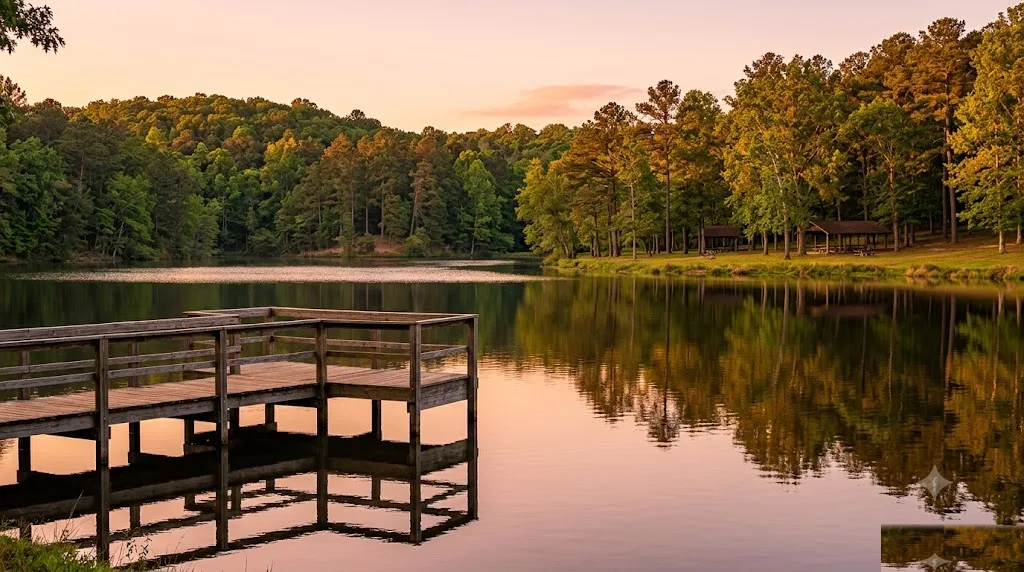
Our Holly Springs National Forest guide covers practical planning for Holly Springs National Forest Mississippi — best time to visit, getting there, and what to do on the ground. We've compiled the essential 2026 facts on hours, fees, closures, parking, and reservations to ensure your trip is seamless and unforgettable.
Why Visit Holly Springs National Forest
We've explored countless natural spaces across the US, and we can confidently say that Holly Springs National Forest Mississippi offers a unique blend of tranquility and outdoor adventure that truly sets it apart. Spanning approximately 155,000 acres across northern Mississippi, this national forest is a vital natural resource, established in 1936 on what was once abandoned agricultural land. Today, it stands as a testament to successful conservation, boasting diverse landscapes of upland hardwoods, pine forests, and unique bottomlands.
For those seeking respite from the hustle and bustle, the forest provides a peaceful environment with sparkling small lakes and a healthy, robust ecosystem that supports a variety of wildlife. Our team particularly appreciates the efforts made here to restore short-leaf pine ecosystems and encourage native communities. It's a place where you can genuinely connect with nature, whether you're observing migratory birds, enjoying the seasonal beauty of dogwoods in spring, or admiring the vivid fall foliage.
Beyond its natural beauty, Holly Springs National Forest Mississippi offers extensive opportunities for recreation, including hiking, camping, hunting, and fishing. It's a destination that invites exploration and provides a refreshing escape into the southern wilderness.
Who It's Best For
Our team believes Holly Springs National Forest is an ideal destination for a wide range of visitors, from solo adventurers to families looking for an outdoor escape. It's particularly well-suited for:
- Outdoor Enthusiasts: With abundant opportunities for hiking, fishing, hunting, and camping, those who love to immerse themselves in nature will find plenty to do. The diverse landscapes cater to various outdoor pursuits.
- Families: The forest offers accessible trails, picnic areas, and campgrounds like Chewalla Lake Recreation Area with amenities such as swimming beaches and playgrounds, making it a great spot for family outings.
- Anglers and Hunters: The numerous lakes are stocked with largemouth bass, bluegill, crappie, and catfish, providing excellent fishing opportunities. Hunters will find robust populations of white-tailed deer, fox squirrels, raccoons, and wild turkeys, with specific seasons and regulations outlined by the Mississippi Department of Wildlife, Fisheries, and Parks.
- Bird Watchers and Wildlife Observers: The varied habitats, including bottomland hardwoods and wetlands, attract both resident and migratory wildlife, making it a prime location for bird watching and wildlife photography.
- Those Seeking Tranquility: Areas like Puskus Lake Recreation Area offer a more remote and quiet camping experience, perfect for those looking to truly get away from crowds and enjoy pure nature.
If you're looking for a destination where you can engage with nature, pursue outdoor hobbies, or simply relax in a serene environment, Holly Springs National Forest will exceed your expectations.
Getting There & Parking
Navigating to Holly Springs National Forest is generally straightforward, as it's located in northern Mississippi and is accessible via several major and smaller roads. The forest is divided into two main sections, with the larger unit situated just outside the city of Holly Springs. The district ranger station, however, is headquartered in Oxford, Mississippi, home to the University of Mississippi.
How to get to Holly Springs National Forest:
- By Car: The forest is approximately an hour's drive from Memphis, Tennessee. Towns like Oxford, Holly Springs, and Potts Camp are nearby and serve as good points for stocking up on supplies. You'll find yourself driving through scenic landscapes of farmlands and pinelands. While major roads lead to the general area, some smaller, remote roads within the forest may require slower driving, especially if you're in a larger vehicle or towing a trailer.
- Address for Ranger District Office: For official inquiries or maps, the Holly Springs Ranger District office is located at 1000 Front Street, Oxford, MS 38655. Their operating hours are 7:30 a.m. to 4 p.m., Monday through Friday, and they are closed on federal holidays.
Parking:
Parking is generally available at designated recreation areas and trailheads throughout Holly Springs National Forest. For instance, Chewalla Lake Recreation Area offers parking for day-use visitors and campers. Puskus Lake Recreation Area also has designated parking, though it's a more primitive site.
It's important to note that some recreation areas within the National Forests in Mississippi may charge day-use fees. For example, Chewalla Lake Recreation Area typically charges $5 per vehicle for day use, while Puskus Lake charges $3 per day. These fees are usually collected via a self-pay station, so we recommend having exact currency (cash or check) ready, as no attendant is typically on duty. The America the Beautiful pass is honored, offering half-price discounts for Senior and Access Pass holders on day-use fees. Keep in mind that fee waivers on certain federal holidays generally do not include camping fees or boat launch fees.
Motor Vehicle Use Maps (MVUMs) are reissued annually and are crucial for understanding where motorized vehicles are permitted. You can find these maps on the Forest Service website, and while digital maps were previously available via the Avenza Map app, the Forest Service will no longer be updating or adding new digital maps to that store starting April 2026. We advise checking the official Forest Service website for the most current maps and visitor guides before your trip.
Top Things to Do
When planning your visit to Holly Springs National Forest, you'll find a wealth of activities that cater to every outdoor interest. Our team has highlighted the top things to do at Holly Springs National Forest to help you make the most of your adventure.
Holly Springs National Forest Hiking Trails
The forest offers a variety of hiking trails that allow you to explore its diverse landscapes up close. Two prominent Holly Springs National Forest hiking trails are:
- Baker's Pond Trail: This easy, one-mile in-and-out trail takes you through forests planted by the Civilian Conservation Corps (CCC) to Baker's Pond, the source of the Wolf River. It's a tranquil walk perfect for a quick immersion in nature.
- Chewalla Lake Recreation Area Trail: A 2.3-mile trail around the 260-acre Chewalla Lake, this path offers scenic views and passes a reconstructed Choctaw burial mound, adding a touch of history to your hike. The lake itself is a no-wake lake, making it ideal for peaceful walks along the shore.
- North Cypress Non-Motorized Trail: This three-mile loop is open to hikers, mountain bikers, and horseback riders. Marked by white blazes, it winds through a lush green forest, with a particularly scenic stretch crossing the earthen dam of North Cypress Lake, offering excellent bird-watching opportunities. Be prepared for muddy sections, especially after rain, and note that some parts follow old, unpaved roads.
- Puskus Lake Trail: A one-mile hiking trail is available at Puskus Lake Recreation Area, offering a quiet environment for a stroll around the 96-acre lake.
Remember to check the current conditions, as some areas, like Chewalla Lake Recreation Area, have experienced temporary closures due to winter storm damage.
Camping & Picnicking
Camping in Holly Springs National Forest provides an immersive experience in nature. The primary developed campgrounds are:
- Chewalla Lake Recreation Area: This popular spot offers sites for both RV and tent camping. RV sites come with electric and water hookups, and facilities include flush toilets, showers, drinking water, a swimming beach, a boat ramp, an accessible fishing pier, and a playground. Each site is equipped with a picnic table and campfire ring. Chewalla Lake Recreation Area is a fee area, with day use costing $5 per vehicle and camping ranging from $7 (without hookup) to $20 (with electric hookup) per night. While it's open 24 hours during the season and doesn't close on major holidays, reservations are not offered through Recreation.gov, and sites are often first-come, first-served.
- Puskus Lake Recreation Area: For a more rustic and quiet experience, Puskus Lake offers 19 primitive campsites with grills and picnic tables. Vault toilets are available, but there are no electric hookups, running water, or showers, making it ideal for those seeking a backcountry feel. Puskus Lake is also a fee area, with a self-pay station at the entrance. It operates year-round unless weather conditions necessitate closure.
Picnic areas are abundant, especially at Chewalla Lake and Puskus Lake, providing perfect spots for a meal amidst nature.
Fishing & Boating
The numerous lakes and ponds within Holly Springs National Forest are a haven for anglers. Chewalla Lake (260 acres) and Puskus Lake (96 acres) are well-stocked with largemouth bass, bluegill, crappie, and catfish. Puskus Lake is also home to the rare alligator gar. Both lakes offer boat ramps and fishing piers. Chewalla Lake is a no-wake lake, perfect for canoeing and kayaking. If you prefer shore fishing, the Little Tallahatchie River and Tippah River are also options. A valid Mississippi fishing license is required.
Hunting
Holly Springs National Forest is a popular destination for hunting, with diverse game species including white-tailed deer, fox squirrels, raccoons, and wild turkeys. Hunters must adhere to Mississippi Department of Wildlife, Fisheries, and Parks regulations, including specific season dates and bag limits for different units. For example, deer seasons in the North Central Deer Management Unit, which includes parts of Holly Springs National Forest, have specific dates for archery, primitive weapon, and gun seasons, with varying regulations for bucks and antlerless deer. A new Wild Turkey Stamp is required for the 2026 spring turkey season. We advise checking the MDWFP website for the most up-to-date information on licenses, permits, seasons, and bag limits.
Wildlife Viewing & Photography
The forest's healthy ecosystem and varied habitats make it an excellent spot for wildlife viewing. Keep an eye out for white-tailed deer, various squirrel species, raccoons, and wild turkeys. Birdwatchers will appreciate the resident and migratory bird populations, especially in the bottomland hardwoods and wetlands. The North Cypress Non-Motorized Trail, in particular, offers good opportunities for bird watching, with sightings of indigo buntings reported.
Best Time to Visit
Our team at Roam States has found that the best time to visit Holly Springs National Forest largely depends on your desired activities and tolerance for weather conditions. The forest is open year-round, offering distinct experiences in each season.
- Spring (March to May): We consider spring one of the most beautiful times to visit. The forest comes alive with blooming dogwoods and other wildflowers, creating a vibrant display. Temperatures are generally mild and pleasant, making it ideal for hiking, bird watching, and camping. However, be aware that some trails can be muddy after spring rains.
- Summer (June to August): Summer offers warm temperatures and opportunities for water activities like swimming, canoeing, and kayaking in lakes like Chewalla Lake. Fishing is also popular. However, summer in Mississippi can bring high heat and humidity, with heat index values potentially reaching 107-110°F, so we strongly advise staying hydrated and taking precautions against heat illnesses. The wild magnolia and grape-scented kudzu are in bloom, adding to the forest's allure.
- Fall (September to November): Fall is another prime season, especially for hikers and those who appreciate scenic beauty. The vivid fall foliage transforms the landscape into a tapestry of colors. Temperatures are cooler and more comfortable for outdoor activities. This is also a significant time for hunting seasons, so visitors should be aware of hunting schedules and wear blaze orange if hiking during these periods.
- Winter (December to February): While winters can be chilly, the forest remains open and offers a quieter, more contemplative experience. It's a good time for solitude, and certain hunting seasons extend into winter. However, some recreation areas, like Chewalla Lake and Puskus Lake, have experienced temporary closures due to winter storm damage, so it's crucial to check current conditions before planning a winter trip.
Overall, for comfortable outdoor activities and vibrant natural beauty, we recommend spring and fall. If water activities are your priority, summer is suitable, provided you prepare for the heat. Always check the latest weather forecasts and any forest alerts before your visit.
Where to Stay Nearby
While Holly Springs National Forest offers excellent camping, our team recognizes that not everyone prefers roughing it. Fortunately, there are several towns nearby that provide comfortable Holly Springs National Forest lodging options, from charming inns to budget-friendly hotels. The closest major towns include Holly Springs, Oxford, and Potts Camp.
Holly Springs National Forest Lodging Options:
- In Holly Springs: The city of Holly Springs itself offers a variety of accommodations. For a unique, historic experience, consider The Wynne House Inn, a highly-rated bed and breakfast in the downtown historic district that provides a complimentary full breakfast and free WiFi. Other options include the Quality Inn Holly Springs South and Americas Best Value Inn Holly Springs, which offer essential amenities like free WiFi and parking, and are conveniently located near local attractions. The OYO Hotel Holly Springs MS is another budget-friendly choice. For a more private stay, there are also charming cottages and B&Bs like Court Square Inn Bed & Breakfast, The Hummingbird Cottage, and Cozy Hawk.
- In Oxford: Approximately 30-40 minutes south of Holly Springs, Oxford is a larger city known for the University of Mississippi (Ole Miss) and offers more diverse lodging and dining options. Hotels like Graduate by Hilton Oxford and The Inn at Ole Miss are popular choices. The Holly Springs Ranger District office is also located in Oxford.
- In Potts Camp: This smaller town is located within the Holly Springs National Forest and might offer more secluded, local lodging options, though choices may be more limited than in Holly Springs or Oxford.
- Near Memphis, Tennessee: If you're flying into Memphis or prefer to stay in a larger metropolitan area, it's about an hour's drive to the national forest. You'll find a full spectrum of hotels there, including options like Hyatt Place Memphis/Germantown or Comfort Inn & Suites Memphis Germantown, which are highly rated.
When selecting your Holly Springs National Forest lodging, we recommend considering the proximity to the specific areas of the forest you plan to explore, as well as the amenities that best suit your travel style. Many hotels offer complimentary breakfast and free parking, which can add value to your stay.
Sample 2-Day Itinerary
To help you plan an unforgettable trip, our team has crafted a sample 2-day itinerary for Holly Springs National Forest, balancing active exploration with relaxation. This itinerary assumes you're staying in or near Holly Springs.
Day 1: Lake Exploration & Hiking
- Morning (8:00 AM - 12:00 PM): Chewalla Lake Recreation Area
- Start your day at Chewalla Lake. We recommend arriving early to enjoy the tranquility.
- Hike the 2.3-mile Chewalla Lake Recreation Area Trail, taking in the scenic views and visiting the reconstructed Choctaw burial mound.
- Enjoy swimming at the sandy beach or rent a canoe/kayak to paddle on the no-wake lake.
- Lunch (12:00 PM - 1:00 PM): Picnic by the Lake
- Pack a picnic lunch to enjoy at one of Chewalla Lake's many picnic units.
- Afternoon (1:00 PM - 5:00 PM): Baker's Pond & Local Exploration
- Head to Baker's Pond for a shorter, easy 1-mile hike through CCC-planted forests.
- Spend some time in the nearby town of Holly Springs. Explore the historic downtown area, known for its antebellum homes and charming shops. Consider visiting the Ida B. Wells-Barnett Museum or the Marshall County Historical Museum.
- Evening (6:00 PM onwards): Dinner & Relaxation
- Enjoy dinner at a local restaurant in Holly Springs. Phillips Grocery is famous for its burgers.
- Return to your Holly Springs National Forest lodging for a restful evening.
Day 2: Rustic Retreat & Wildlife
- Morning (8:00 AM - 12:00 PM): Puskus Lake Recreation Area
- Drive to Puskus Lake for a more secluded experience. Note that this area is more primitive, so bring your own water and supplies.
- Hike the 1-mile trail around the 96-acre lake.
- Try your hand at fishing for largemouth bass, bluegill, or even alligator gar.
- Lunch (12:00 PM - 1:00 PM): Packed Lunch in Nature
- Enjoy a packed lunch at one of the picnic sites at Puskus Lake, soaking in the quiet environment.
- Afternoon (1:00 PM - 5:00 PM): North Cypress Trail or Optional Activity
- For more hiking, explore the North Cypress Non-Motorized Trail, a 3-mile loop offering opportunities for bird watching and scenic views across North Cypress Lake.
- Alternatively, if visiting during hunting season (and with appropriate licenses and safety gear), you could engage in hunting in designated areas (always check current regulations and wear blaze orange).
- Evening (6:00 PM onwards): Farewell Dinner & Reflection
- Head back to Holly Springs or Oxford for a final dinner.
- Reflect on the natural beauty and diverse experiences offered by Holly Springs National Forest Mississippi.
This itinerary is flexible and can be adjusted based on your interests and the current conditions of the forest. Always remember to check for any alerts or closures before heading out. For more adventures in the state, explore our guide to the Best places in Mississippi.
Is It Worth Visiting?
Our editorial team emphatically believes that Holly Springs National Forest is worth visiting. While it may not have the towering peaks or dramatic canyons of some larger national parks, its charm lies in its accessible natural beauty and the extensive opportunities it provides for genuine outdoor engagement. For us, the value of Holly Springs National Forest comes from its serene lakes, diverse forests, and the chance to reconnect with nature without the overwhelming crowds often found in more famous destinations.
The forest offers a rich tapestry of activities—from peaceful hikes along the Chewalla Lake Recreation Area Trail to the rustic solitude of Puskus Lake camping. Anglers will find abundant fishing, and hunters can pursue various game species within regulated seasons. It’s a place where you can witness the successful restoration of once-depleted farmlands into thriving ecosystems, supporting a wide array of wildlife.
Moreover, the proximity to charming historic towns like Holly Springs, with its antebellum homes and museums, adds a cultural dimension to your outdoor adventure. Whether you're seeking active recreation or quiet contemplation, Holly Springs National Forest delivers an authentic Mississippi experience that is truly worth visiting.
FAQ
Holly Springs National Forest camping
Holly Springs National Forest offers two main developed camping areas: Chewalla Lake Recreation Area and Puskus Lake Recreation Area. Chewalla Lake provides RV and tent sites with electric and water hookups, flush toilets, showers, and a swimming beach. It's a fee area, with day use costing $5 per vehicle and camping ranging from $7 to $20 per night, and operates on a first-come, first-served basis as reservations are not available through Recreation.gov. Puskus Lake offers a more primitive experience with 19 campsites, vault toilets, but no hookups or potable water, and also operates on a first-come, first-served basis with a self-pay fee station. Both are generally open year-round unless weather conditions, such as winter storm damage, necessitate temporary closures.
Things to do in Holly Springs
Beyond the national forest, the city of Holly Springs offers a rich historical and cultural experience. You can explore its historic downtown, known for its numerous antebellum homes, many of which are open to the public during the Annual Pilgrimage in April. Other attractions include the Ida B. Wells-Barnett Museum, the Marshall County Historical Museum, and the Strawberry Plains Audubon Center. The city also hosts events like the Audubon Hummingbird Migration Celebration and the Kudzu Festival. For golf enthusiasts, Kirkwood National Golf Club is nearby.
Holly Springs National Forest with kids
Holly Springs National Forest is a fantastic destination for families with kids. Chewalla Lake Recreation Area is particularly well-suited, offering a sandy swimming beach, a playground, and easy walking trails like the Chewalla Lake Recreation Area Trail. Kids can enjoy fishing in the stocked lakes, wildlife viewing, and picnicking. The easy Baker's Pond Trail is also suitable for younger hikers. We recommend preparing for outdoor conditions, bringing plenty of water, and checking for any alerts or closures, especially regarding swimming areas.
Best hotels near Holly Springs National Forest
For the best hotels near Holly Springs National Forest, we recommend looking in the city of Holly Springs or nearby Oxford. In Holly Springs, The Wynne House Inn is highly rated for its historic charm and amenities. Other good options include the Quality Inn Holly Springs South and Americas Best Value Inn Holly Springs for more budget-friendly stays. Oxford, a short drive away, offers a wider selection of hotels, including the Graduate by Hilton Oxford and The Inn at Ole Miss.
Holly Springs National Forest tips
Our top tips for visiting Holly Springs National Forest include: always checking the official U.S. Forest Service website for current alerts, closures (like the temporary closure of Chewalla Lake due to storm damage), and fee information before your trip. Bring exact change for self-pay fee stations at recreation areas like Chewalla and Puskus Lakes. Carry plenty of water, especially during summer months when heat advisories are common. If hiking during hunting seasons, wear blaze orange and be aware of hunting schedules. Download Motor Vehicle Use Maps (MVUMs) in advance, as digital map updates to third-party apps may be limited after April 2026.
Where to stay near Holly Springs National Forest
The primary places to stay near Holly Springs National Forest are the city of Holly Springs itself, offering hotels like The Wynne House Inn, Quality Inn Holly Springs South, and Americas Best Value Inn Holly Springs. Oxford, Mississippi, located further south, provides more extensive lodging options, including the Graduate by Hilton Oxford and The Inn at Ole Miss. For those seeking an immersive experience, primitive camping is available at Puskus Lake Recreation Area, and more developed camping with hookups can be found at Chewalla Lake Recreation Area, though the latter has seen temporary closures.
We hope this comprehensive guide helps you plan an enriching and memorable visit to Holly Springs National Forest Mississippi. Whether you’re drawn by the serene lakes, the extensive hiking trails, or the rich wildlife, this natural treasure in northern Mississippi promises an authentic outdoor experience. We encourage you to embrace the tranquility and diverse opportunities that await within its beautiful landscapes.
Last updated: 2026-07-06 by the Roam States team.