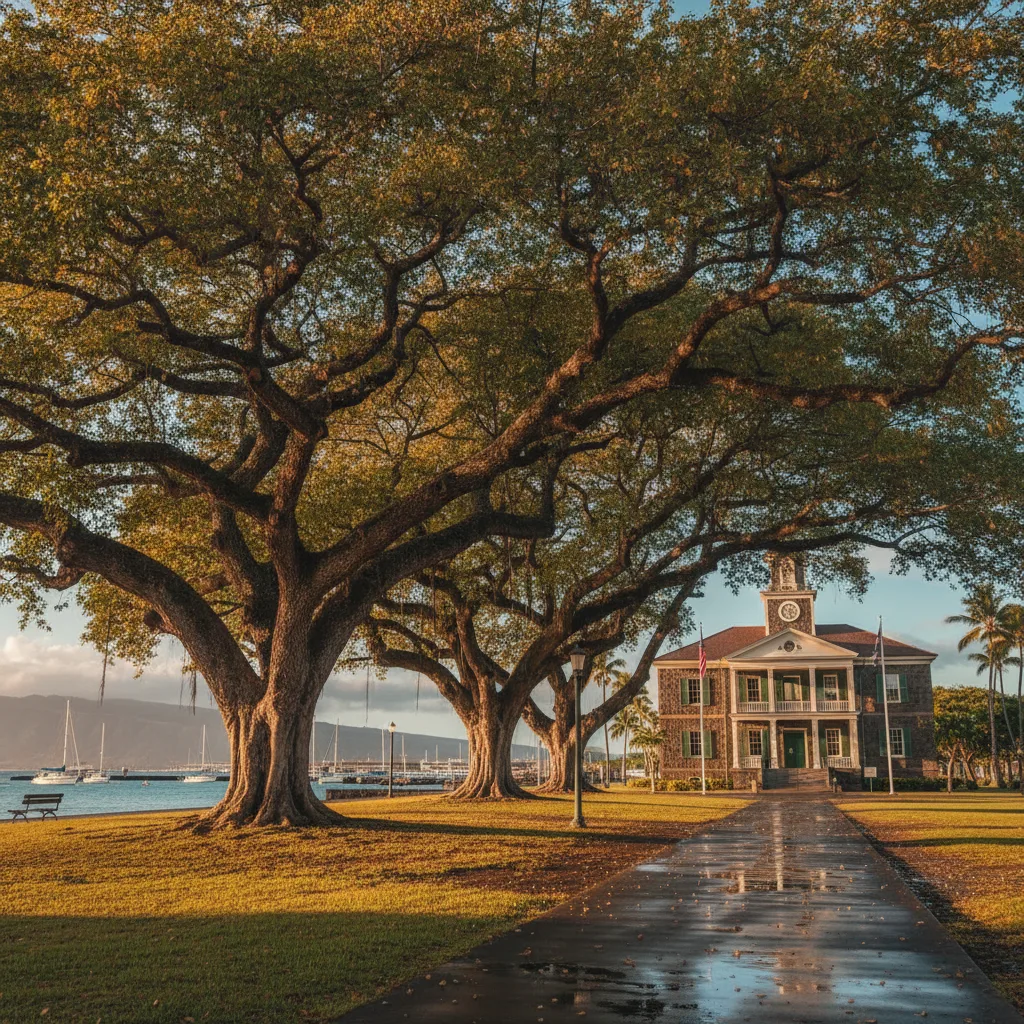
Our Lahaina Banyan Court Park guide covers practical planning for Lahaina Banyan Court Park Hawaii — best time to visit, getting there, and what to do on the ground. As independent US travel authorities, our team at Roam States understands that visiting Lahaina in 2026 requires a nuanced approach. The devastating wildfires of 2023 profoundly impacted this historic town, and while recovery is ongoing, the iconic Banyan Court Park remains a powerful symbol of resilience. We're here to help you navigate your trip with care and respect, ensuring you have the most accurate and up-to-date information for a meaningful experience.
Why Visit Lahaina Banyan Court Park
Even with its current limitations, visiting Lahaina Banyan Court Park offers a unique and deeply moving experience. Planted in 1873, this magnificent banyan tree is one of the largest in the United States, its sprawling canopy providing extensive shade and a central gathering spot for generations. While the park itself is currently closed to direct public access as of July 2026, the tree survived the 2023 wildfires and is undergoing intensive care and rehabilitation by arborists. The sight of its charred but recovering branches, already showing new green growth, serves as a powerful symbol of hope and the enduring spirit of Lahaina.
For those wondering if Lahaina Banyan Court Park is worth visiting, we affirm that it absolutely is, albeit with adjusted expectations. The banyan tree has long been the heart of Lahaina's historic district, witnessing centuries of Hawaiian history, from its days as a whaling port to its role as the capital of the Hawaiian Kingdom. Its continued presence, even in recovery, makes it a poignant landmark. Observing it from a respectful distance, such as from a harbor tour, allows visitors to connect with Lahaina's past and its ongoing journey of healing. This is not just a visit to a park; it's an opportunity to bear witness to history and support a community rebuilding with immense courage.
Who It's Best For
A trip to Lahaina Banyan Court Park and the surrounding areas in 2026 is best suited for respectful travelers who appreciate history, natural wonders, and cultural sensitivity. It's ideal for:
- **History Buffs:** Those interested in Hawaii's rich past, particularly its whaling era and royal history, will find Lahaina's narrative compelling, even as many historic sites remain closed for rebuilding.
- **Nature Enthusiasts:** While direct access to the tree is restricted, the sheer scale of the banyan tree and its remarkable resilience make it a captivating natural spectacle, especially for those who understand the long-term commitment to its recovery.
- **Supportive Travelers:** Visitors who wish to contribute positively to Lahaina's recovery by patronizing open businesses in the accessible parts of town and respecting the ongoing rebuilding efforts.
- **Families with Older Children:** While the park itself isn't a playground, older children can learn about the tree's significance and the town's history. Younger children might find the current limitations less engaging.
- **Photographers:** The banyan tree, even in its current state, offers powerful photographic opportunities, capturing both its majesty and the story of its endurance.
This destination is less suited for those seeking a typical bustling tourist experience with immediate access to all attractions. Patience and an understanding of the recovery context are key to a fulfilling visit.
Getting There & Parking
Navigating to Lahaina and finding parking requires careful planning in 2026 due to the ongoing recovery efforts. To get to Lahaina Banyan Court Park, you'll typically approach via the Honoapiʻilani Highway (HI-30). From Kahului, the drive is less than 25 miles and takes approximately 45 minutes by car. Public buses, known as the Lahaina Islander, also service this route. The Lahaina Bypass (Highway 3000) can take you around much of the fire-damaged area, connecting back to the Honoapiʻilani Highway at the major shopping centers on the north side of town.
As of July 2026, large portions of historic Front Street, including the immediate area around Lahaina Banyan Court Park, remain an active construction and rebuild zone and are closed to general public visitor access. If you are wondering how to get to Lahaina Banyan Court Park, please note that direct access to the park on foot is currently not permitted. However, Lahaina Harbor has reopened for limited commercial operations, and tour companies departing from the harbor can provide directions on how to enter Lahaina and where you are allowed to drive.
For parking, limited public street parking may be available on Front, Hotel, and Canal Streets in the accessible areas of Lahaina. Free, though highly sought-after, parking can sometimes be found at the corner of Front Street and Prison Street. More parking spaces, albeit costly, are available at the Outlets of Maui. It is crucial to respect all barricades and signage, as large areas are still reserved for residents and ongoing rebuilding. Street parking along Front Street is still prohibited in many areas. We strongly advise checking the latest updates from Maui County and MauiRecovers.com before your visit, as access rules and parking availability can change.
Top Things to Do
When considering things to do at Lahaina Banyan Court Park, it's essential to understand the current situation. As of July 2026, Lahaina Banyan Court Park is closed to public entry while arborists continue to nurse the fire-damaged banyan tree back to health. This means traditional activities like strolling under its canopy or relaxing in its shade are not possible at this time. However, the tree can be clearly seen from Lahaina Harbor tour boats, with many operators including it as a point of interest. Booking a harbor tour is currently the best way to view this iconic landmark and appreciate its resilience.
Beyond the immediate vicinity of the closed park, there are still many things to do in Lahaina, Maui, particularly in the areas that were less affected by the fires or have made significant strides in reopening. The Lahaina Harbor itself is operating under restricted conditions, open from 8 AM to 6 PM, offering various ocean activities. You can embark on snorkel cruises, sunset sails, or seasonal whale watching tours (December through April) from here. Tour guests are often met at designated lots and escorted to the harbor, as booking facilities are not available directly at the harbor. We recommend reserving your spot online or through your hotel concierge in advance.
While you won't find extensive Lahaina Banyan Court Park hiking trails within the park itself, as it's a compact urban park centered around the tree, you can explore other open areas of Lahaina. The north end of Front Street, along with the Lahaina Cannery Mall and Lahaina Gateway shopping centers, are open and thriving. Here, you'll find a variety of shops, restaurants, and grocery stores. Restaurants like Star Noodle, Aloha Mixed Plate, Honu Seafood, Mala Ocean Tavern, and Coco Deck Kitchen + Bar are open and welcoming visitors, directly supporting the local economy. The Old Lahaina Luau, which survived the fires, is also operating nightly and typically books out in advance. For those interested in walking, the accessible sections of Front Street and the areas around the shopping centers offer pleasant strolls, though traditional Lahaina Banyan Court Park hiking trails are not a feature of this urban setting.
We encourage visitors to patronize these open businesses and attractions respectfully. Remember that large areas of the historic commercial core remain behind construction fencing, and it's vital to respect all barriers and signage.
Best Time to Visit
Choosing the best time to visit Lahaina, and specifically to appreciate the Lahaina Banyan Court Park from a distance, involves considering both Maui's general climate and the ongoing recovery efforts. Maui enjoys a tropical climate year-round, with warm temperatures and gentle trade winds. Generally, the shoulder seasons of April-May and September-November offer pleasant weather, fewer crowds, and potentially better deals on accommodations and flights.
However, in 2026, the context of Lahaina's recovery adds another layer to this decision. While the town is actively rebuilding, and parts are open, visitors should be prepared for signs of construction and ongoing recovery efforts, particularly in the historic core. Visiting during the less crowded shoulder seasons might allow for a more contemplative experience of the town's resilience and provide more opportunities to engage with local businesses without overwhelming the still-recovering infrastructure.
Winter (December-March) is peak whale-watching season, and Lahaina Harbor is a primary departure point for these tours. If seeing humpback whales is a priority, this would be an excellent time to visit, allowing you to combine a whale-watching excursion with a view of the banyan tree from the water. Summer (June-August) is generally the busiest time for tourism, with more families traveling, which could mean more traffic and demand on local services in the open areas of West Maui. Regardless of the season, we advise checking local news and official Maui County and MauiRecovers.com updates for the latest information on access and conditions before your trip.
Where to Stay Nearby
Given that Lahaina Banyan Court Park is currently closed to direct public access and the historic core of Lahaina is still largely a rebuilding zone, our team recommends staying in the nearby areas of West Maui that have fully reopened and are welcoming visitors. These include Kā'anapali, Honokōwai, Nāpili, and Kapalua. These communities offer a wide range of Lahaina Banyan Court Park lodging options, from luxury resorts to more budget-friendly condos and vacation rentals, all within a short drive of Lahaina.
- Kā'anapali: Just a few miles north of Lahaina, Kā'anapali is renowned for its beautiful beach, Black Rock, and a vibrant resort area with numerous hotels, shops, and restaurants. It offers a more traditional resort experience with easy access to ocean activities.
- Honokōwai & Nāpili: These areas further north provide a mix of condominium rentals and smaller resorts, often favored by families and those seeking a slightly quieter atmosphere than Kā'anapali, but still with excellent beach access.
- Kapalua: At the northernmost tip of West Maui, Kapalua is known for its upscale resorts, championship golf courses, and stunning natural beauty, including pristine beaches and coastal trails. It's a more secluded and luxurious option.
While some accommodations within Lahaina itself, such as Lahaina Shores Condominium Complex and the Old Lahaina Luau, survived the fires and are operating, inventory for Lahaina Banyan Court Park lodging is shrinking in the immediate area, and prices are climbing. We strongly advise booking vacation rentals and hotels in West Maui early, especially if you have specific preferences. Staying in these neighboring communities allows you to support the broader West Maui economy while respectfully visiting Lahaina's open areas and observing the Banyan Tree from a distance. For more comprehensive planning, consider exploring our guide to Best Places in Hawaii.
Sample 2-Day Itinerary
This itinerary is designed to give you a meaningful experience in West Maui, incorporating a respectful visit to Lahaina and its iconic banyan tree, while focusing on areas that are open and welcoming visitors in 2026. Remember to check local conditions and business hours before your trip.
Day 1: Exploring Open Lahaina & Coastal Beauty
- Morning (8:00 AM - 12:00 PM): Lahaina's Open Heart & Banyan Tree View Start your day with breakfast at one of the reopened restaurants on the north end of Front Street, such as Star Noodle or Aloha Mixed Plate. Afterward, head to Lahaina Harbor. While Lahaina Banyan Court Park is closed, you can book a morning harbor tour (reservations highly recommended) that will offer clear views of the recovering banyan tree from the water. These tours often provide historical context and allow you to appreciate the tree's scale and significance.
- Lunch (12:00 PM - 1:30 PM): Casual Bites & Local Shopping Grab a casual lunch at one of the eateries in the Lahaina Cannery Mall or Lahaina Gateway shopping centers. These areas are fully open and offer a variety of options. Spend some time browsing the shops, which include local boutiques and larger retailers, directly supporting the local economy.
- Afternoon (1:30 PM - 5:00 PM): Kā'anapali Beach & Cliff Diving Ceremony Drive north to Kā'anapali Beach, just a short distance away. Spend the afternoon relaxing on the golden sands, swimming, or snorkeling around Black Rock. In the late afternoon, find a spot on Kā'anapali Beach to witness the daily cliff diving ceremony at Black Rock, a tradition honoring Maui's chiefs.
- Evening (6:00 PM onwards): Old Lahaina Luau Experience an authentic Hawaiian luau at the Old Lahaina Luau, which survived the fires and is operating nightly. This popular event books out well in advance, so secure your reservations early. It's a fantastic way to enjoy traditional Hawaiian food, music, and dance.
Day 2: West Maui Adventures & Scenic Drives
- Morning (8:00 AM - 12:00 PM): Snorkel or Explore Further North Depending on your preference, either book a morning snorkel tour departing from Lahaina Harbor or Ma'alaea Harbor to explore Maui's vibrant underwater world, or continue north to explore the quieter beaches of Nāpili or Kapalua. The pristine waters of Kapalua Bay are perfect for a calm swim or snorkeling.
- Lunch (12:00 PM - 1:30 PM): Coastal Dining with a View Enjoy lunch at a restaurant with ocean views in Nāpili or Kapalua, savoring fresh local cuisine.
- Afternoon (1:30 PM - 5:00 PM): Scenic Drive & Art Exploration Take a scenic drive along the coastal road north of Kapalua, offering breathtaking views of the Pacific and rugged coastline. Alternatively, if you're interested in art, check for any open galleries or art shows in the Lahaina Cannery Mall area. While many historic galleries on Front Street remain closed, local artists continue to showcase their work.
- Evening (6:00 PM onwards): Sunset Dinner in West Maui Conclude your trip with a memorable sunset dinner at one of the many excellent restaurants in Kā'anapali, Honokōwai, or Kapalua. Many offer stunning oceanfront dining experiences.
For those looking to extend their Hawaiian adventure, consider exploring other incredible destinations like Hawaii Volcanoes National Park on the Big Island or the historic Pearl Harbor & USS Arizona Memorial on O'ahu.
Last updated: 2026-07-06 by the Roam States team.