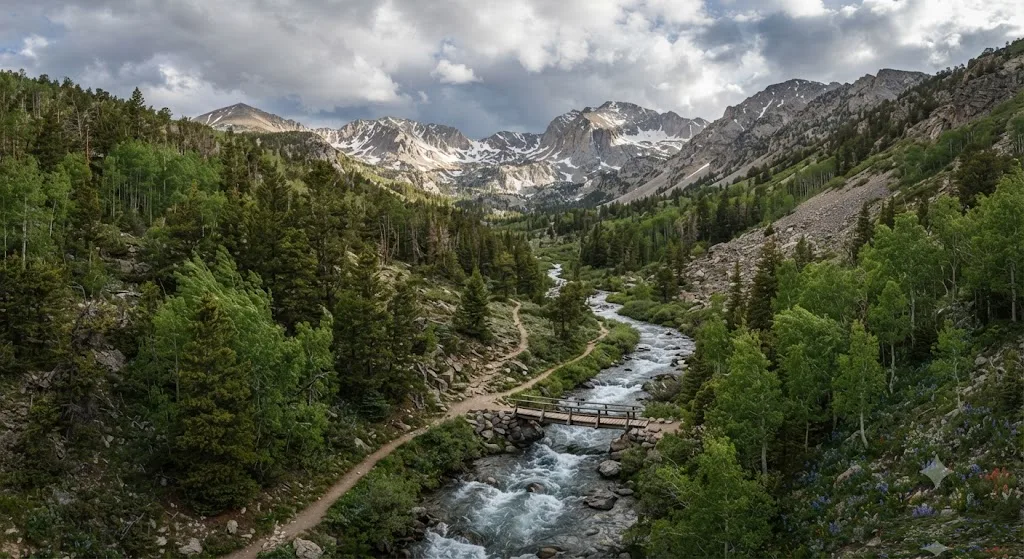
Our Lehman Creek Trail guide covers practical planning for Lehman Creek Trail Nevada — best time to visit, getting there, and what to do on the ground. We're here to cut through the noise and provide the definitive guide to this exceptional Great Basin National Park gem. As the Roam States editorial team, we've explored the Silver State's hidden corners to bring you an independent, expert perspective on Nevada's most captivating natural experiences.
Is It Worth Visiting?
Absolutely, is Lehman Creek Trail worth visiting? Our unequivocal answer is yes. This scenic hiking trail in Great Basin National Park is a standout, offering a refreshing contrast to Nevada's more arid landscapes. We find it to be a quintessential Great Basin experience, winding alongside the clear, flowing waters of Lehman Creek. The trail immerses you in diverse plant life, from lush aspen groves to fragrant pine forests, providing a vibrant ecosystem that thrives even in the high desert. It's a prime location for spotting local wildlife, from mule deer to various bird species, making every turn a potential discovery. The serene sounds of the creek and the towering peaks above create an atmosphere of tranquility that's increasingly rare.
For those seeking genuine connection with nature, away from the crowds, Lehman Creek Trail delivers. It's a testament to the unexpected beauty found within the Great Basin, offering a peaceful escape and a chance to truly appreciate the park's natural grandeur. If you're looking for an authentic Nevada outdoor adventure, our team highly recommends adding this trail to your itinerary.
Who It's Best For
The Lehman Creek Trail is ideal for a wide range of outdoor enthusiasts, though its challenging sections mean it's not a casual stroll. It's particularly well-suited for:
- Experienced Hikers: With a 2,050-foot elevation gain over 3 miles one-way, this trail is considered challenging. Those looking for a good workout and rewarding views will find it satisfying.
- Nature Photographers: The diverse flora, clear creek, and potential for wildlife sightings (including cutthroat trout in the creek) offer endless photographic opportunities.
- Wildlife Spotters: The varied habitats along the creek attract a range of animals, making it an excellent spot for observing Nevada's native fauna.
- Families with Older Children: While younger children might find the full length challenging, older, active kids will enjoy the adventure and the natural beauty.
- Campers: The trail is easily accessible from the Upper Lehman Creek Campground, making it convenient for those staying overnight in the park.
It's less suited for those seeking a flat, easy walk or those with very young children or mobility limitations, as the elevation gain and uneven terrain require a reasonable level of fitness.
How to Get There & Parking
Understanding how to get to Lehman Creek Trail is straightforward, though Great Basin National Park itself is quite remote. The park is located in eastern Nevada, with the closest major cities being Salt Lake City (approximately 3.5 hours away) and Las Vegas (about 4.5 hours away).
The trailhead for Lehman Creek Trail is situated within the Upper Lehman Creek Campground. To reach it, you'll take Nevada State Route 488, which leads directly into Great Basin National Park. Follow signs for the Lehman Caves Visitor Center, and then continue on the Wheeler Peak Scenic Drive. The Upper Lehman Creek Campground is located about 3 miles up the Wheeler Peak Scenic Drive from the NV 488 turn-off.
Parking at Lehman Creek Trail
Parking for the Lehman Creek Trail is available at the Upper Lehman Creek Campground. Our team notes that parking can be limited, especially during peak season, so we recommend arriving early to secure a spot. Always adhere to all posted parking and driving regulations within the campground and park to avoid citations. While Great Basin National Park is open 24 hours a day, year-round, for hiking and camping, visitor centers have specific operating hours.
Top Things to Do
Beyond simply hiking the main path, there are many things to do at Lehman Creek Trail and in its immediate vicinity that make a visit here truly memorable. This area serves as an excellent base for exploring some of Great Basin National Park's most iconic features.
Exploring Lehman Creek Trail Hiking Trails
The primary attraction, of course, is the Lehman Creek Trail hiking trails themselves. This challenging 3-mile (one-way) trail climbs through diverse habitats, including aspen stands and sub-alpine meadows, with a significant elevation gain of 2,050 feet. It's a fantastic way to experience the park's ecological diversity firsthand. In winter, this trailhead also provides access to the alpine lakes and bristlecone areas, offering a unique snowshoeing or cross-country skiing experience. For those looking for a shorter, easier stroll, the Mountain View Nature Trail, a 0.3-mile loop through pinyon/juniper forest, is located behind the Lehman Caves Visitor Center. It's a great way to stretch your legs before or after a cave tour.
Lehman Caves Tours
No visit to this part of Great Basin National Park is complete without exploring the spectacular Lehman Caves. These ancient limestone caverns are filled with unique speleothems, including stalactites, stalagmites, and rare cave shields. As of 2026, public tours of Lehman Caves have resumed, with some tours available by advance reservation and others sold on a first-come, first-served basis at the Lehman Caves Visitor Center. Our team strongly advises making reservations well in advance, especially during summer and holiday weekends, as tours often sell out quickly. The park has been undergoing electrical system upgrades, so it's always wise to check the official park website for the most current tour schedules and availability.
Stargazing and Astronomy Programs
Great Basin National Park boasts some of the darkest night skies in the contiguous United States. After a day on the Lehman Creek Trail Nevada, we highly recommend staying for an evening astronomy program. The park typically offers these programs starting Memorial Day weekend, often near the Lehman Caves Visitor Center. It's an unparalleled opportunity to witness the Milky Way and countless stars in a truly pristine environment. Check the park's calendar for specific dates and times.
Picnicking and Wildlife Viewing
The areas around Lehman Creek and the campgrounds offer excellent spots for a leisurely picnic amidst nature. Keep an eye out for mule deer, jackrabbits, various bird species, and even the occasional bobcat or mountain lion. Remember to maintain a safe distance and never feed wildlife.
Best Time to Visit
The optimal time to experience the Lehman Creek Trail Nevada and Great Basin National Park largely depends on your desired activities and tolerance for weather conditions. Our team generally recommends late spring through early fall for the most accessible and enjoyable experience.
- Late Spring (May to early June): This is an excellent time to visit as temperatures are mild, wildflowers begin to bloom, and the crowds are typically smaller than in mid-summer. Most park roads, including the Wheeler Peak Scenic Drive, are usually open by Memorial Day weekend. Lehman Caves tours also resume full operation around this time.
- Summer (June to August): Summer is the most popular time to visit, with warm days and cool nights. All facilities and trails are generally open. However, afternoon thunderstorms can be common in July and August, especially at higher elevations, so we advise hiking earlier in the day. Reservations for campgrounds and cave tours are essential during these months.
- Early Fall (September to October): Fall offers crisp air, fewer crowds, and the possibility of vibrant autumn colors, particularly in the aspen groves along Lehman Creek. Temperatures remain pleasant for hiking. Some higher elevation campgrounds and roads may begin to close due due to winter weather as early as September.
- Winter (November to April): While the park grounds are open year-round, winter access is limited. Many roads, including parts of the Wheeler Peak Scenic Drive, close due to snow. Lower Lehman Creek Campground is the only developed campground open year-round. Lehman Caves tours are typically suspended during winter for maintenance, as was the case from October 2025 through Spring 2026 for electrical upgrades. However, winter offers unique opportunities for snowshoeing and cross-country skiing, with the Lehman Creek Trailhead serving as a popular access point for winter recreation.
Where to Stay Nearby
When planning your trip to the Lehman Creek Trail Nevada, understanding your lodging options is key. There is no NPS-managed lodging directly within Great Basin National Park itself. However, several excellent choices for Lehman Creek Trail lodging can be found in the nearby towns, offering a range of experiences from rustic to more comfortable.
Campgrounds Within Great Basin National Park
For those who prefer to immerse themselves fully in nature, camping is the most direct option. Great Basin National Park offers five developed campgrounds: Upper Lehman Creek, Lower Lehman Creek, Baker Creek, Grey Cliffs, and Wheeler Peak. Each developed campground provides vault toilets, picnic tables, and campfire grills.
- Upper Lehman Creek Campground: Located at 7,750 feet, this campground offers 23 sites and is a short drive from the high alpine trails. It's the most convenient for accessing the Lehman Creek Trail. For 2026, sites 1-17 are reservable up to six months in advance for stays between April 10 and September 30. Sites 18-24 are reservable up to 14 days in advance for stays between May 4 and September 30.
- Lower Lehman Creek Campground: Open year-round, this campground has nine sites, some of which are pull-through for RVs (up to 40 feet). During peak season (May 22 - September 7, 2026), reservations are required through Recreation.gov.
- Other Developed Campgrounds: Baker Creek, Grey Cliffs, and Wheeler Peak campgrounds are also available seasonally, with reservations required during peak season. Note that water is generally not available at campgrounds, but can be filled at the Lehman Caves Visitor Center. Developed campsites cost $20 per night, with a 50% discount for Senior/Access Pass holders.
Reservations for developed campgrounds can be made on Recreation.gov, with booking windows varying from 1 day to 6 months in advance, depending on the campground and site. Primitive, free campsites are also available along Snake Creek, operating on a first-come, first-served basis, but offer no potable water.
Hotels and Motels in Baker, Nevada
The small town of Baker, Nevada, located just outside the park entrance, offers limited but convenient lodging options. These often get booked quickly, especially during peak season.
- The Whispering Elms Motel & RV Park: Offers clean, well-equipped rooms and is a local favorite.
- The Border Inn Casino: Situated right on the Nevada/Utah border, it provides air-conditioned rooms, a restaurant, and a gas station.
- Hidden Canyon Retreat: Located a few miles across the Utah border, this retreat offers rooms and cabins, though cell service and Wi-Fi can be limited. Hotel-style rooms for 2026 run approximately $175 - $254 per night, with cabins at $79 per night.
You can find options for hotels near Great Basin National Park Visitor Center, with prices starting around $232 as of June 2026.
Hotels in Ely, Nevada
About an hour's drive from the park, Ely is a larger town offering more consistent lodging choices, including several chain hotels and historic establishments.
- Hotel Nevada & Gambling Hall: A historic landmark with a casino, fitness center, and bar.
- Holiday Inn Express & Suites - Ely by IHG: Offers modern amenities, including a fitness center and shared lounge.
- La Quinta by Wyndham Ely: A popular choice with complimentary hot breakfast, a pool, and a gym.
We advise making lodging reservations months ahead of your actual stay, especially if visiting during peak season, as options can be limited in this remote region.
Sample 2-Day Itinerary
To help you maximize your visit to the Lehman Creek Trail Nevada and Great Basin National Park, our team has crafted a sample 2-day itinerary. This plan balances hiking, exploration, and the park's unique attractions, ensuring you get a comprehensive experience.
Day 1: Arrival, Caves, and Creek Exploration
- Morning (Arrival & Lehman Caves): Arrive in Great Basin National Park. Head straight to the Lehman Caves Visitor Center (open 8:00 AM–5:00 PM) to check in for your pre-booked Lehman Caves tour. We highly recommend booking your tour 30 days in advance on Recreation.gov, as walk-up tickets often sell out quickly. Allow 30-90 minutes for the tour, depending on the option chosen.
- Lunch: Enjoy a picnic lunch near the Lehman Caves Visitor Center or at your campground. Remember that potable water is available at the visitor center, as it's not typically found in campgrounds.
- Afternoon (Lehman Creek Trail): Embark on the Lehman Creek Trail. Access the trailhead from the Upper Lehman Creek Campground. Dedicate 3-5 hours for this challenging 3-mile (one-way) hike, allowing for stops to appreciate the diverse plant life and search for wildlife.
- Evening (Dinner & Stargazing): Have dinner at your campground or in Baker. If visiting during summer, attend one of the park's astronomy programs, which typically begin around 8:30 PM. Great Basin's dark skies are a highlight, so even without a formal program, take time to stargaze.
Day 2: High Peaks, Bristlecones, and Scenic Drives
- Morning (Wheeler Peak Scenic Drive & Bristlecone Pines): Start your day early with a drive up the stunning Wheeler Peak Scenic Drive. This paved 12-mile road gains 4,000 feet in elevation, offering incredible views. Drive to the end of the road at the Bristlecone trailhead. From here, hike the Bristlecone Interpretive Trail (1.4 miles each way) to see the ancient bristlecone pines, some of the oldest living organisms on Earth.
- Lunch: Pack a lunch to enjoy at one of the scenic overlooks or picnic areas along the Wheeler Peak Scenic Drive, such as Mather Overlook.
- Afternoon (Alpine Lakes or Wheeler Peak Summit): Depending on your energy and ambition, choose one of these options:
- Alpine Lakes Loop Trail: A 2.7-mile loop from the Bristlecone Parking Lot, offering views of Stella and Teresa Lakes and the high peaks.
- Wheeler Peak Summit Trail: For experienced and well-prepared hikers, this strenuous 4.3-mile (each way) hike leads to Nevada's second-tallest peak at 13,063 feet, offering panoramic views. Allow ample time and be prepared for changing weather conditions at high altitudes.
- Evening (Departure or Relax): Enjoy a final dinner in Baker or Ely before heading home. Alternatively, if staying another night, relax at your campground or lodging, perhaps enjoying one last evening of stargazing.
This itinerary provides a robust exploration of the park, linking key attractions like Lehman Caves and the high alpine regions with the beauty of the Lehman Creek Trail. Remember to check current park conditions, road closures, and tour availability before your visit, especially for 2026. You can find more information about planning your US trip on our Plan Your US Trip page.
Best Places in Nevada: Explore Beyond Great Basin
While Great Basin National Park offers an unparalleled escape into nature, Nevada is a state of incredible diversity. After experiencing the serene beauty of the Lehman Creek Trail, consider extending your adventure to other iconic destinations. From the dazzling lights of The Las Vegas Strip to the engineering marvel of the Hoover Dam, Nevada promises a unique blend of natural wonders and vibrant city life.
Last updated: 2026-07-08 by the Roam States team.