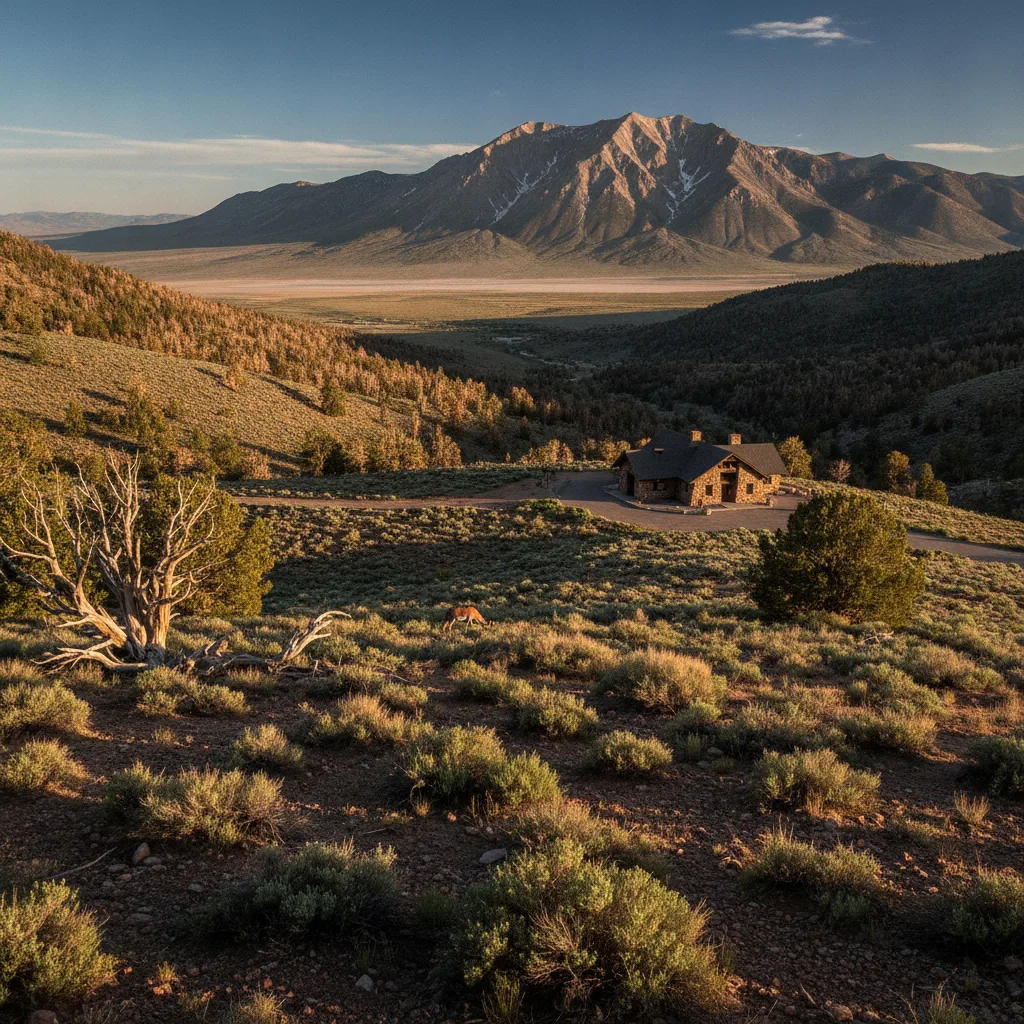
Great Basin National Park Travel Guide — Nevada
Our team at Roam States is dedicated to bringing you the most accurate and inspiring travel guides for destinations across the US. This guide focuses on Great Basin National Park Nevada, a true gem in the Silver State that often flies under the radar. We've compiled essential 2026 facts and insider tips to help you plan an unforgettable journey into this high-desert wonderland.
Why Visit Great Basin National Park
If you've ever wondered, "is Great Basin National Park worth visiting?" our answer is an emphatic yes. This remote park offers a stark contrast to the glitz of Las Vegas, inviting visitors to immerse themselves in a landscape of ancient bristlecone pines, subterranean wonders, and some of the darkest night skies in the Lower 48. It's a place where you can truly disconnect and reconnect with nature, far from the crowds that often characterize more famous national parks.
Great Basin National Park protects over 77,000 acres of diverse ecosystems, ranging from sagebrush valleys to glacier-carved mountain peaks, including Wheeler Peak, Nevada's second-highest summit at 13,063 feet. The park's unique "sky island" effect means you can experience massive elevation shifts and wild weather variations within a single day, moving from a scorching desert environment to a freezing alpine one. Beyond the dramatic topography, the park is home to the mysterious Lehman Caves, a complex system of limestone caverns that have captivated explorers for over a century. For those seeking solitude and unparalleled natural beauty, is Great Basin National Park worth visiting? Absolutely. It’s a destination that promises unique experiences and breathtaking vistas.
Who It's Best For
Great Basin National Park caters to a diverse range of travelers, though its remote nature means it particularly appeals to those seeking adventure and tranquility. It's an ideal destination for hikers of all skill levels, from families looking for easy, accessible paths to experienced mountaineers aiming for a strenuous summit. Stargazers will find themselves in paradise, as the park boasts some of the darkest night skies in the continental U.S., offering incredible views of the Milky Way.
Nature enthusiasts will appreciate the chance to explore ancient bristlecone pine forests, witness alpine lakes, and discover diverse wildlife. Backpackers can tackle challenging multi-day loops, while those seeking a more relaxed experience can enjoy scenic drives and shorter interpretive trails. The park is also fantastic for families, with ranger programs and cave tours providing educational and engaging activities for all ages. However, due to the high altitude and potential for rapid weather changes, visitors should be prepared for varying conditions and plan accordingly.
Getting There & Parking
Great Basin National Park is located in east-central Nevada, just five miles from the small town of Baker, near the Utah border. Its remote location means that "how to get to Great Basin National Park" often involves a scenic drive. The closest commercial airport is Cedar City Regional Airport (CDC) in Utah, about 142 miles away, offering Delta Connection service. Many visitors also fly into Harry Reid International Airport (LAS) in Las Vegas, Nevada, which is approximately 286 miles south of the park, or Salt Lake City International Airport (SLC), 234 miles east. From these airports, a rental car is essential, as there is no public transportation to or within the park.
If you're driving, from U.S. Highway 6 & 50, turn south on Nevada State Highway 487 and travel five miles to Baker, NV. In Baker, turn west on Highway 488 and continue five miles to the park. When considering how to get to Great Basin National Park, remember to fuel up before arriving, as the nearest gas station is about five miles north of the park on Highway 6, at the Nevada/Utah border.
Parking is available at visitor centers, trailheads, and campgrounds, as well as at various pull-outs along the Wheeler Peak Scenic Drive. During busy summer months, parking can be limited, so we recommend arriving early in the day, especially on weekends. The Wheeler Peak Scenic Drive has strict vehicle length restrictions; vehicles over 24 feet in length are not allowed beyond the Upper Lehman Creek Campground due to sharp curves and steep grades. Vehicles shorter than 24 feet towing a trailer (also under 24 feet) are permitted but should proceed with caution.
Top Things to Do
Great Basin National Park offers a wealth of activities, making it easy to find things to do at Great Basin National Park for every interest. Our team recommends focusing on these key experiences:
- Tour Lehman Caves: This is a must-do. Lehman Caves is the longest cave system in Nevada, offering ranger-guided tours year-round (except Thanksgiving, Christmas, and New Year's Day). As of early July 2026, full tours are expected to resume in late summer after an electrical upgrade project. Reservations are highly recommended and can be made up to 30 days in advance via Recreation.gov, as tours often sell out. Walk-up tickets are sometimes available but are not guaranteed and often sell out quickly. Current offerings include 30-minute Gothic Palace Lantern Tours, with full tours resuming later in the summer.
- Drive the Wheeler Peak Scenic Drive: This 12-mile paved road ascends over 4,000 feet to nearly 10,000 feet in elevation, offering breathtaking views and access to higher-elevation hiking trails. It's typically open from late May to late October, depending on snow conditions. Remember the vehicle length restrictions mentioned earlier.
- Stargazing: Great Basin National Park boasts a Bortle 1-1.5 sky, making it one of the darkest places in the contiguous United States for stargazing. The park offers astronomy programs, typically beginning Memorial Day weekend. We recommend bringing warm layers and a red-light headlamp for the best experience.
- Explore Ancient Bristlecone Pines: Hike to groves of these ancient trees, some thousands of years old, which are among the oldest living organisms on Earth. The Bristlecone Pine Trail is a popular choice, often combined with the Alpine Lakes Loop.
- Hiking to Alpine Lakes and Wheeler Peak: There are numerous Great Basin National Park hiking trails. The Alpine Lakes Loop Trail is an easy 1.1-mile path leading to picturesque Stella Lake and Teresa Lake. For a more strenuous adventure, the Wheeler Peak summit hike is an 8-mile round trip with significant elevation gain, leading to the park's highest point. Other Great Basin National Park hiking trails include the Baker Creek Loop, a 3.5-mile easy trail, and the Lehman Creek Trail. High-altitude hiking requires respect; allow at least one full day to acclimatize before attempting the Wheeler Peak summit.
These are just some of the things to do at Great Basin National Park. For those interested in more rugged experiences, consider backpacking the Baker/Johnson loop or the South Fork Baker/Timber Creek loop.
Best Time to Visit
The best time to visit Great Basin National Park is generally from May through September, when the entire park, including higher elevations and the Wheeler Peak Scenic Drive, is most accessible. During these months, daytime highs range from 28°C to 32°C in June and July, with cooler overnight lows. Early summer (May-June) offers snow-capped summits, flowing streams, and blooming wildflowers.
June through September is considered the main season, with the bristlecone forest accessible from late May and alpine meadows peaking in July-August. However, afternoon thunderstorms are common in July and August, so plan summit hikes for mornings. The shoulder seasons of May and September offer a good balance of pleasant weather and fewer crowds. While the park is open year-round, winter brings snow, closing the Wheeler Peak Scenic Drive to vehicles, though it becomes accessible for skiing and snowshoeing. Lehman Caves tours run year-round, except for major holidays.
Where to Stay Nearby
Given the park's remote location, lodging options directly adjacent to Great Basin National Park are limited. The small town of Baker, Nevada, just five miles from the park entrance, offers a few local lodging options like the Stargazer Inn. For a wider selection, the larger town of Ely, Nevada, is about an hour's drive north on Highway 50.
However, for a truly immersive experience, Great Basin National Park camping is highly recommended. The park offers both developed and primitive campgrounds. All developed campgrounds require reservations, which can be made via Recreation.gov.
Great Basin National Park camping options include:
- Lower Lehman Creek Campground: Open year-round, with nine sites (one ADA accessible). RV/vehicle-trailer maximum length is 40 feet. Reservations are required during peak season (May 22-September 7, 2026) and can be made up to four days in advance. Outside peak season, sites are first-come, first-served. Sites are $20 per night.
- Upper Lehman Creek Campground: Open from mid-April through October (May 22-September 7, 2026). Offers 23 sites (one RV-only), including two ADA accessible sites. RV/trailers up to 40 feet are allowed in some lower loop sites, but no RVs or trailers are allowed on the upper loop. Reservations are required and can be made up to six months in advance for some sites, or 14 days in advance for others. Sites are $20 per night.
- Wheeler Peak Campground: Located just below 10,000 feet, offering 36 sites. RV/vehicle-trailer maximum length is 24 feet. Open typically late May through early July, closing with winter weather. Reservations are required up to 30 days in advance. Sites are $20 per night.
- Baker Creek Campground: Offers 37 sites (one RV-only; four tent-only), including two ADA accessible sites. Open May to October. Reservations are required up to one day in advance. Sites are $20 per night.
- Grey Cliffs Campground: Offers 13 sites. Open Memorial Day to Labor Day. Reservations are required up to six months in advance for some sites. Group camping is available here for $30 per night, limited to 16 campers. RVs and trailers are not allowed due to narrow, one-way dirt roads.
- Snake Creek Campground: Offers 12 sites. Open year-round but may close in winter due to snow. RVs, trailers, and other large vehicles over 30 feet are not allowed on this road.
All campgrounds have vault toilets and picnic tables, but water is generally unavailable in campgrounds; it can be obtained at the Lehman Caves Visitor Center year-round and at the dump station in summer and fall. Park operations have become cashless, so campground fees can only be paid via Recreation.gov. Senior and Access Pass holders are eligible for a 50% discount on camping fees. For those seeking primitive options, backcountry camping regulations apply in designated areas.
Sample 2-Day Itinerary
To truly experience the diverse offerings of Great Basin National Park, our team recommends a minimum of two days. This allows for acclimatization to the high altitude and a thorough exploration of both the subterranean and alpine environments.
Day 1: Underground Wonders & Scenic Heights
- Morning (9:00 AM - 12:00 PM): Lehman Caves Tour & Visitor Center. Start your day with a pre-booked tour of Lehman Caves. We recommend securing your reservations months in advance on Recreation.gov. As of early July 2026, 30-minute Gothic Palace Lantern Tours are available, with full tours resuming in late summer after electrical upgrades. After your tour, explore the exhibits at the Lehman Caves Visitor Center, which focus on caves and night skies.
- Lunch (12:00 PM - 1:00 PM): Picnic with a View. Grab a packed lunch and find a scenic spot near the Lehman Caves Visitor Center or along the lower portion of the Wheeler Peak Scenic Drive.
- Afternoon (1:00 PM - 5:00 PM): Wheeler Peak Scenic Drive & Alpine Lakes. Drive the impressive Wheeler Peak Scenic Drive, gaining over 4,000 feet in elevation. Stop at overlooks like Mather Overlook and Wheeler Peak Overlook for panoramic views. Continue to the end of the paved road and embark on the easy Alpine Lakes Loop Trail (1.1 miles) to Stella Lake and Teresa Lake.
- Evening (5:00 PM onwards): Dinner & Stargazing. Head back to Baker for dinner or prepare a meal at your campsite. As darkness falls, find a spot away from any artificial light to experience Great Basin's world-class dark skies. The park often hosts astronomy programs; check the schedule at the visitor center.
Day 2: Ancient Trees & High-Altitude Hiking
- Morning (8:00 AM - 1:00 PM): Bristlecone Pine & Glacier Hike. Dedicate your second day to high-altitude hiking. Drive back up the Wheeler Peak Scenic Drive to the Bristlecone trailhead. Hike the Bristlecone Pine Trail to witness the ancient trees, then continue on the Bristlecone/Glacier Trail to see Nevada's only glacier. This is a moderate to strenuous hike, so bring plenty of water, snacks, and layers, and be mindful of altitude sickness.
- Lunch (1:00 PM - 2:00 PM): Trailside Refreshment. Enjoy a packed lunch amidst the alpine scenery.
- Afternoon (2:00 PM - 5:00 PM): Lower Elevation Exploration or Wheeler Peak Summit Attempt. Depending on your energy levels and experience, you have options. For a more relaxed afternoon, explore some of the lower elevation Great Basin National Park hiking trails, such as the Baker Creek Loop. Alternatively, if you're an experienced hiker and have acclimatized, you could embark on the strenuous Wheeler Peak Summit Trail (8 miles round trip). Remember to start this hike early in the morning to avoid afternoon thunderstorms.
- Evening: Departure or Extended Stay. After a full two days, you'll have experienced the highlights of Great Basin National Park. Consider linking this trip with other Nevada adventures, such as exploring Cathedral Gorge State Park or the vibrant attractions of Las Vegas like the Bellagio Fountains and the Fremont Street Experience. For more Nevada inspiration, visit our Best places in Nevada guide.
Last updated: 2026-07-13 by the Roam States team.