Our Manistee River Trail guide covers practical planning for Manistee River Trail Michigan — best time to visit, getting there, and what to do on the ground.
As seasoned explorers of the Great Lakes State, our team at Roam States can confidently say that the Manistee River Trail Michigan is a true gem, a testament to the raw, untamed beauty that defines this corner of the Midwest. We’ve hiked its ridges, crossed its iconic suspension bridge, and spent countless hours absorbing the tranquil sounds of the Manistee River as it carves its path through the lush Huron-Manistee National Forest. This isn't just another walk in the woods; it's an immersive journey into one of Michigan's most beloved natural landscapes, offering a perfect blend of challenging terrain, breathtaking vistas, and peaceful solitude. Whether you're a seasoned backpacker or a day-hiker looking for an unforgettable experience, we’ve compiled everything you need to know to make your trip to the Manistee River Trail truly exceptional.
Why Visit Manistee River Trail
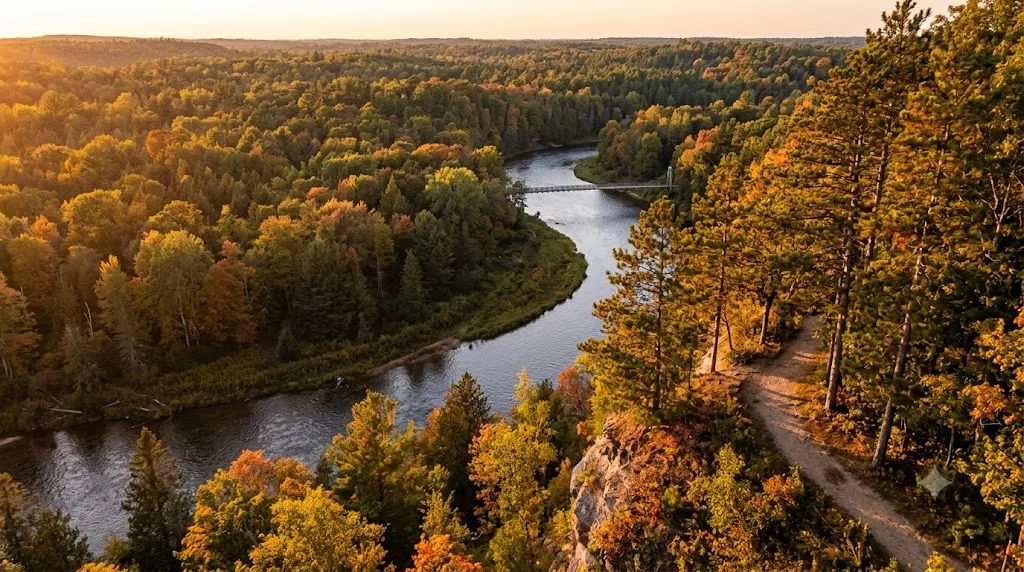
The Manistee River Trail offers an unparalleled opportunity to connect with Michigan's natural splendor. We find its allure lies in its diverse landscapes, from towering pines and dense hardwoods to the dramatic bluffs overlooking the winding Manistee River. The trail is particularly famous for its spectacular views, especially from the high vantage points that provide sweeping panoramas of the river valley. It’s a place where the air smells of pine and damp earth, where the only sounds are the rustling leaves and the distant rush of water. For us, it’s a refreshing escape from the everyday, a chance to recharge amidst some of the most serene scenery Michigan has to offer. Beyond the sheer beauty, the trail provides a satisfying physical challenge, making it a rewarding experience for hikers of various skill levels.
Who It's Best For
We believe the Manistee River Trail caters to a wide array of outdoor enthusiasts. It’s ideal for avid hikers and backpackers seeking a moderate to challenging multi-day trek, especially when combined with a portion of the North Country National Scenic Trail for a longer loop. Day-trippers looking for a substantial hike with incredible views will also find it immensely satisfying, particularly the section leading to the suspension bridge. Families with older children who are accustomed to longer walks will appreciate the adventure, though younger children might find the full loop a bit strenuous. Photographers will be in paradise, with countless opportunities for landscape shots, especially during the vibrant fall foliage season. Anglers will also find appeal, as the Manistee River is renowned for its fishing. Ultimately, if you appreciate stunning natural scenery, a good workout, and a chance to disconnect, this trail is for you.
How to Get There
Accessing the Manistee River Trail is straightforward, though a bit of planning is required for parking. When considering how to get to Manistee River Trail, the primary access points are located within the Huron-Manistee National Forest. The most popular trailhead for the Manistee River Trail is at the Red Bridge River Access Site, which is also where the iconic suspension bridge is located. Another common starting point is the Seaton Creek Campground. Both sites offer parking facilities, which are essential for those planning a day hike or an overnight backpacking trip.
To reach the Red Bridge River Access Site, you'll typically navigate via forest roads. From the town of Manistee, head east on M-55, then follow signs for the national forest and the specific access points. We always recommend downloading offline maps or bringing a physical map, as cell service can be spotty in this remote area. For those wondering how to get to Manistee River Trail, precise GPS coordinates for the trailheads are invaluable. The Red Bridge trailhead is often cited as a key starting point for the 23-mile loop that includes a section of the North Country National Scenic Trail.
Parking and Fees
Parking at both the Red Bridge River Access Site and Seaton Creek Campground is available. As of 2026, a Recreation Fee Pass may be required for parking at some Huron-Manistee National Forest sites, including these trailheads. We advise checking the official USDA Forest Service website for the Huron-Manistee National Forest for the most up-to-date information on fees and pass requirements before your visit. Typically, a day pass or an annual pass like the "Adventure Pass" might be necessary. We have not encountered any reservation requirements for parking spots themselves, but it's always wise to arrive early, especially on weekends and during peak seasons, as parking lots can fill up quickly. There are no specific "hours" for the trail itself, as it's accessible 24/7, but parking lot gates, if present, would align with typical dawn-to-dusk park hours, though this is less common for national forest trailheads. We haven't found any specific closures planned for 2026, but always check the Forest Service alerts page for unexpected closures due to weather or maintenance.
Top Things to Do
When planning your adventure, you'll find plenty of things to do at Manistee River Trail that go beyond just hiking. The primary draw, of course, is traversing the trail itself, which offers a variety of experiences. We love the challenge of the elevation changes and the reward of the panoramic views. The trail is particularly famous for its dramatic bluffs overlooking the Manistee River, providing stunning photo opportunities at every turn. One of the absolute must-do things to do at Manistee River Trail is to cross the iconic 240-foot suspension bridge, which connects the Manistee River Trail with the North Country National Scenic Trail, forming a popular 23-mile loop.
Beyond hiking, the Manistee River offers excellent opportunities for kayaking and canoeing. Many visitors enjoy paddling sections of the river, sometimes even coordinating a shuttle to combine a river trip with a hike. Fishing is also a popular activity, with the Manistee River known for its salmon and steelhead runs, particularly in the spring and fall. For those interested in a more relaxed pace, several designated campsites along the trail provide a chance to spend a night under the stars, listening to the sounds of the forest. Wildlife viewing is also a highlight; keep an eye out for deer, various bird species, and perhaps even a black bear. In winter, the trail transforms into a serene wonderland, suitable for snowshoeing or cross-country skiing, though conditions can be challenging.
Manistee River Trail Hiking Trails
The core experience of visiting this area revolves around the Manistee River Trail hiking trails. The main Manistee River Trail is approximately 10.5 miles long, running along the eastern bank of the Manistee River. However, its true fame comes from its connection to the North Country National Scenic Trail (NCT) via the iconic suspension bridge, allowing for a magnificent 23-mile loop. This loop is arguably one of the best backpacking experiences in Michigan, and it's what most people refer to when discussing the Manistee River Trail hiking trails.
Starting from the Red Bridge River Access Site, hikers can choose to go north or south. We often recommend starting north on the Manistee River Trail, enjoying the scenic bluffs and river views, before crossing the suspension bridge and returning south on the NCT. The NCT portion of the loop is generally less strenuous, following an old logging road for much of the way, making for a pleasant return journey. Along both segments of the Manistee River Trail hiking trails, you'll find numerous primitive campsites, many with fire rings and direct river access, perfect for an overnight stay. The trail itself is well-maintained, though some sections can be rugged with roots and rocks, and there are significant elevation changes, particularly on the Manistee River Trail side, offering a good workout. Always carry enough water, as reliable sources are limited to the river itself, which requires filtration.
Best Time to Visit
Our team has experienced the Manistee River Trail in every season, and we can confidently say each offers a unique charm. However, the best time to visit largely depends on your preferences and what you hope to experience.
- Spring (April-May): As the snow melts and the forest awakens, spring brings vibrant green foliage and blooming wildflowers. The river flows strong, and fishing for steelhead is excellent. However, trails can be muddy, and biting insects begin to emerge.
- Summer (June-August): This is the most popular time, offering warm weather perfect for hiking, camping, and water activities. The forest is lush and full, and the river is ideal for swimming or paddling. Expect more crowds, especially on weekends, and be prepared for mosquitoes and other insects. Reservations for established campgrounds are highly recommended.
- Fall (September-October): Our personal favorite time to visit. The fall foliage along the Manistee River is absolutely spectacular, transforming the landscape into a riot of reds, oranges, and yellows. The cooler temperatures are ideal for hiking, and insect activity diminishes significantly. This is a peak season, so expect more visitors and plan accordingly for lodging and parking.
- Winter (November-March): For the adventurous and solitude-seeking, winter offers a stark, beautiful experience. Snowshoeing and cross-country skiing are popular, and the trail takes on a serene, quiet atmosphere. Be prepared for cold temperatures, deep snow, and potentially challenging conditions. Services in nearby towns may be limited.
We generally recommend late spring or early fall for the most comfortable hiking conditions and stunning scenery, balancing pleasant weather with fewer crowds than mid-summer.
Manistee River Trail Lodging: Where to Stay Nearby
While many visitors opt for primitive camping along the trail, there are also excellent Manistee River Trail lodging options nearby for those who prefer a roof over their heads. The closest established campground is Seaton Creek Campground, located directly on the loop, offering basic amenities. For a more developed camping experience, the Hodenpyl Dam Pond Campground is another option in the immediate vicinity, offering more facilities.
If you're looking for traditional Manistee River Trail lodging, the charming town of Manistee, approximately 30-40 minutes drive west, is your best bet. Here, you’ll find a range of hotels, motels, and bed and breakfasts. Options vary from historic inns to modern chain hotels. We often recommend looking for accommodations along the Manistee River or near Lake Michigan for scenic views and easy access to local amenities. Further afield, but still within a reasonable drive, are towns like Cadillac to the east and Traverse City to the north, offering a broader selection of upscale hotels, resorts, and vacation rentals. These towns also provide more dining and entertainment options after a long day on the trail. For a truly unique Michigan experience, consider extending your trip to explore other destinations like Mackinac Island or the stunning Pictured Rocks National Lakeshore.
Sample 2-Day Itinerary
For those looking to fully immerse themselves in the Manistee River Trail experience, we've crafted a sample 2-day itinerary, focusing on the popular 23-mile loop.
Day 1: Red Bridge to Suspension Bridge and Beyond
- Morning (8:00 AM): Arrive at the Red Bridge River Access Site parking lot. Ensure your gear is packed, water bottles are filled, and you have a map. Begin your hike heading north on the Manistee River Trail.
- Late Morning/Early Afternoon (8:30 AM - 1:00 PM): Enjoy the challenging but rewarding climb along the bluffs, taking in the panoramic views of the Manistee River. Stop for photos at various overlooks.
- Lunch (1:00 PM - 2:00 PM): Reach the iconic 240-foot suspension bridge. Cross it and find a scenic spot on the North Country Trail side for a packed lunch.
- Afternoon (2:00 PM - 5:00 PM): Continue hiking south on the North Country National Scenic Trail. This section is generally flatter and follows old logging roads. Keep an eye out for designated primitive campsites along the river.
- Evening (5:00 PM onwards): Set up camp at one of the many primitive sites. Enjoy a well-deserved dinner, build a small campfire (if permitted and safe), and relax under the stars.
Day 2: Return Journey and Departure
- Morning (8:00 AM): Wake up with the sunrise, enjoy a trail breakfast, and pack up your campsite, ensuring you leave no trace.
- Late Morning (9:00 AM - 12:00 PM): Continue your hike south on the North Country Trail, making your way back towards the Red Bridge. The trail offers a different perspective on the river and forest.
- Lunch (12:00 PM - 1:00 PM): Arrive back at the Red Bridge River Access Site. Enjoy a final packed lunch or head into the nearby town of Wellston for a quick bite.
- Afternoon: Depart from the Manistee River Trail, perhaps stopping in Manistee for a celebratory meal or to explore the charming downtown. If time allows, consider a visit to Sleeping Bear Dunes National Lakeshore, a few hours north, for another iconic Michigan experience.
Is It Worth Visiting?
From our perspective, the question "is Manistee River Trail worth visiting?" is an emphatic yes. This trail offers one of Michigan's most rewarding and scenic hiking experiences. The combination of challenging terrain, breathtaking river views, and the unique experience of crossing the suspension bridge makes it stand out among other trails in the state. We believe that for anyone seeking an authentic immersion into Michigan's natural beauty, the answer to "is Manistee River Trail worth visiting?" is a resounding affirmation. It provides a sense of accomplishment for hikers, stunning photographic opportunities, and a peaceful escape from the hustle and bustle of daily life.
Whether you're tackling the full 23-mile loop or just enjoying a day hike to the suspension bridge, the Manistee River Trail delivers an unforgettable adventure. Its accessibility, combined with the feeling of being truly out in the wilderness, makes it a prime destination for both seasoned backpackers and those looking to experience a significant, scenic hike. We often recommend it as a highlight for anyone exploring the best places in Michigan, alongside other natural wonders like Tahquamenon Falls and cultural institutions such as The Henry Ford Museum of American Innovation.
Last updated: 2026-07-06 by the Roam States team.