Sleeping Bear Dunes National Lakeshore Travel Guide — Michigan
Welcome to our comprehensive guide to Sleeping Bear Dunes National Lakeshore Michigan. Our team at Roam States is dedicated to bringing you the most accurate and actionable travel advice, ensuring your visit to this spectacular corner of Michigan is unforgettable. We cut through the generic travel fluff to deliver confident, specific recommendations for experiencing the massive dunes and panoramic lake views that define this iconic destination.
Why Visit Sleeping Bear Dunes National Lakeshore
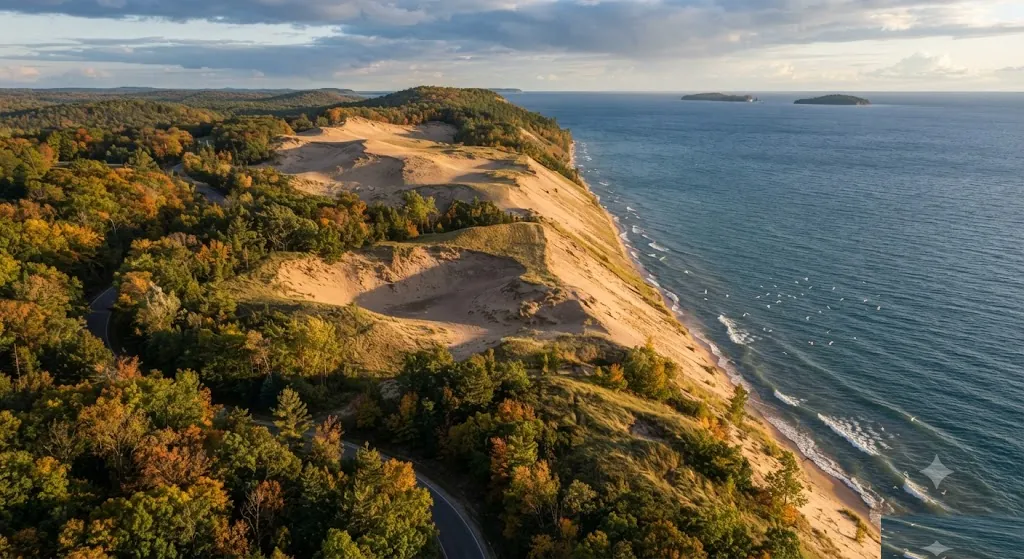
Sleeping Bear Dunes National Lakeshore is more than just a beautiful stretch of coastline; it's a dynamic landscape sculpted by glaciers and wind, offering unparalleled natural beauty and a wealth of outdoor activities. We believe it stands out as a premier destination for its towering sand dunes, pristine Lake Michigan beaches, and lush forests. The sheer scale of the dunes, some rising hundreds of feet above the lake, creates a dramatic backdrop for adventure and relaxation alike. Beyond the iconic dunes, the Lakeshore preserves historic villages, offers serene inland lakes, and provides habitats for diverse wildlife, making it a truly multifaceted experience for any traveler.
Who It's Best For
Sleeping Bear Dunes National Lakeshore caters to a wide array of visitors, making it an ideal destination for many. We find it particularly suited for:
- **Families with Children:** The Dune Climb offers a thrilling, natural playground, and many beaches provide safe, shallow waters for younger visitors.
- **Outdoor Enthusiasts:** Hikers, bikers, paddlers, and swimmers will find endless opportunities to explore. The diverse terrain, from sandy trails to dense forests, challenges and rewards.
- **Nature Photographers:** The dramatic landscapes, stunning sunsets over Lake Michigan, and unique flora and fauna provide incredible photographic opportunities.
- **History Buffs:** The Glen Haven Historic Village and Port Oneida Rural Historic District offer a glimpse into the region's past, with preserved buildings and maritime history.
- **Relaxation Seekers:** For those simply looking to unwind, the quiet beaches and scenic overlooks provide peaceful spots to soak in the beauty of the Great Lakes.
How to Get There
Understanding how to get to Sleeping Bear Dunes National Lakeshore is key to planning your trip. The Lakeshore is located in the northwestern Lower Peninsula of Michigan, primarily in Benzie and Leelanau counties. The nearest major cities are Traverse City (about 30 miles east) and Grand Rapids (about 150 miles south).
- By Car: Most visitors arrive by car, as this provides the most flexibility for exploring the expansive Lakeshore. The primary visitor center, Philip A. Hart Visitor Center, is located in Empire, Michigan, on M-72 just east of M-22.
- Nearest Airports: Cherry Capital Airport (TVC) in Traverse City is the closest airport, offering regional flights. Larger international airports include Gerald R. Ford International Airport (GRR) in Grand Rapids or Detroit Metropolitan Wayne County Airport (DTW) in Detroit, requiring a longer drive.
Parking: Parking is available at all major attractions and trailheads throughout the park. During peak season (summer), popular spots like the Dune Climb and Pierce Stocking Scenic Drive can fill up quickly. We recommend arriving early, especially on weekends, to secure a spot. Overflow parking is available at the Platte River Picnic Area for Platte River Campground visitors. An entrance pass is required to park and access the Lakeshore.
Top Things to Do
When considering things to do at Sleeping Bear Dunes National Lakeshore, the options are as vast as the landscape itself. Our team has curated the essential experiences to ensure you make the most of your visit.
- Conquer the Dune Climb: This iconic activity involves scaling a massive sand dune, offering a challenging workout and rewarding views of Glen Lake from the top. The Dune Climb is open 24 hours a day, year-round. For those with extra energy, the strenuous 3.5-mile round-trip hike to Lake Michigan from the top of the Dune Climb takes approximately 3-4 hours.
- Drive the Pierce Stocking Scenic Drive: This 7.4-mile paved loop offers breathtaking overlooks of Lake Michigan, the Glen Lakes, and the dunes. There are twelve informational stops, including the famous Lake Michigan Overlook. The drive is generally open to vehicles seasonally, from late May until late October, but is accessible for hiking and walk-in recreation during vehicle closures. As of July 2026, the drive is open on Saturdays and Sundays, but closed Monday through Friday for construction of a new entrance booth.
- Explore Glen Haven Historic Village: Step back in time at this preserved 19th-century logging village. Visit the general store, blacksmith shop, and the Cannery Boathouse Museum.
- Relax on the Beaches: The Lakeshore boasts miles of pristine Lake Michigan shoreline. Popular spots include Platte River Point, Empire Beach, and North Bar Lake. Be aware that stable flies can be a nuisance on Lake Michigan beaches during warm, calm, onshore winds, especially in July.
- Visit the Philip A. Hart Visitor Center: Located in Empire, this is an excellent starting point for any trip. You'll find maps, brochures, interpretive displays, and knowledgeable rangers to help plan your adventure. The center is open year-round, typically from 8:00 AM to 6:00 PM from Memorial Day to Labor Day, and 8:30 AM to 4:00 PM between Labor Day and Memorial Day, except for major holidays.
These things to do at Sleeping Bear Dunes National Lakeshore offer a diverse range of experiences, from active pursuits to cultural immersion.
Sleeping Bear Dunes National Lakeshore Hiking Trails
For those eager to explore on foot, the Sleeping Bear Dunes National Lakeshore hiking trails provide an intimate connection with the diverse ecosystems. We highly recommend hitting the trails to truly appreciate the park's natural beauty.
- Empire Bluff Trail: A moderate 1.5-mile loop trail offering stunning panoramic views of Lake Michigan and the coastline from a high bluff.
- Pyramid Point Trail: This trail offers several loop options, ranging from easy to moderate, with spectacular views of Lake Michigan and the Manitou Islands.
- Cottonwood Trail: Located off the Pierce Stocking Scenic Drive, this 1.5-mile loop winds through active dune environments, showcasing the unique ecology of the sand dunes.
- Sleeping Bear Heritage Trail: This paved, non-motorized multi-use trail spans over 20 miles, connecting popular areas like the Dune Climb, Glen Haven, and Empire. It's perfect for walking, running, or biking, and portions are groomed for skiing in winter. Track chairs and wheelchair bikes are available for free reservation to make parts of this trail accessible.
- Port Oneida Trails: Explore a network of trails through the historic Port Oneida Rural Historic District, winding past preserved farmsteads and offering glimpses into the area's agricultural past.
These Sleeping Bear Dunes National Lakeshore hiking trails offer something for every skill level, from casual strolls to challenging climbs, each promising unique vistas and natural encounters.
Sleeping Bear Dunes National Lakeshore Camping
Experiencing the Lakeshore overnight through Sleeping Bear Dunes National Lakeshore camping is an excellent way to immerse yourself in nature. We advise making reservations well in advance, especially for peak season visits.
- Platte River Campground: Located in the southern district, this year-round campground offers sites with electrical hookups, flush toilets, and easy access to the Platte River for paddling. Reservations for individual sites can be made up to six months in advance.
- D.H. Day Campground: Situated in the northern district, this rustic, wooded campground is popular for its proximity to the Dune Climb, Pierce Stocking Scenic Drive, and Glen Haven. It offers basic amenities and is open seasonally, typically from May 15 to October 15, with reservations available up to six months in advance.
- Backcountry Camping: For a more rugged experience, backcountry camping is available on the Manitou Islands and in designated areas on the mainland. Permits are required. Note that in 2026, both North and South Manitou Islands have limited visitor access due to major construction projects, and the Manitou Island Transit Ferry will not operate.
- Group Camping: Both Platte River and D.H. Day Campgrounds offer group sites suitable for 7-25 people. Reservations for group sites can be made up to one year in advance.
Remember that camping fees are separate from the park entrance fee, and America the Beautiful Pass holders receive a 50% discount on camping fees (excluding electrical hookup and group site fees). When planning your Sleeping Bear Dunes National Lakeshore camping trip, visit Recreation.gov to check availability and make reservations.
Best Time to Visit
The best time to visit Sleeping Bear Dunes National Lakeshore largely depends on your priorities. Each season offers a distinct experience, and we've broken down what to expect:
- Summer (June-August): This is peak season, with warm weather perfect for swimming, sunbathing, and all outdoor activities. Expect larger crowds, especially at popular spots like the Dune Climb and Pierce Stocking Scenic Drive. Reservations for camping and lodging are essential.
- Fall (September-October): Our team considers fall an ideal time to visit. The crowds thin, the weather remains pleasant for hiking, and the autumn foliage provides a spectacular display of colors. Pierce Stocking Scenic Drive is particularly beautiful during this time.
- Spring (April-May): Spring brings blooming wildflowers and fewer visitors. While the weather can be unpredictable, it's a great time for hiking and enjoying the tranquility before the summer rush. Some facilities may still be operating on reduced hours.
- Winter (November-March): For a serene, snowy escape, winter offers opportunities for cross-country skiing, snowshoeing, and stargazing. Many roads, including Pierce Stocking Scenic Drive, close to vehicles but remain open for foot traffic.
Where to Stay Nearby
While camping within the Lakeshore is a popular choice, several charming towns near Sleeping Bear Dunes National Lakeshore offer a variety of lodging options:
- Empire: Home to the Philip A. Hart Visitor Center, Empire offers convenient access to the central part of the Lakeshore. You'll find a few motels, vacation rentals, and local eateries.
- Glen Arbor: A quaint resort town known for its boutiques, art galleries, and restaurants. It's a popular base for visitors, with a range of lodging from cozy inns to luxury resorts like The Homestead.
- Leland: Located north of the Lakeshore, Leland is famous for Fishtown, a historic fishing village with unique shops and dining. It offers a picturesque setting with various accommodation types.
- Frankfort: To the south, Frankfort is a lovely harbor town with a beautiful beach, lighthouse, and a relaxed atmosphere. It provides a good selection of hotels and vacation rentals.
- Traverse City: About a 45-minute drive east, Traverse City offers the widest range of hotels, restaurants, and entertainment options, making it a good choice if you prefer a more urban base with day trips to the dunes. Consider exploring other Michigan gems like Belle Isle Park or the Detroit Institute of Arts if basing yourself in a larger city.
For additional ideas on places to stay and things to do across the state, be sure to check out our guide to the Best places in Michigan.
Sample 2-Day Itinerary
To help you make the most of your visit to Sleeping Bear Dunes National Lakeshore Michigan, our team has crafted a sample 2-day itinerary:
Day 1: Dune Adventures & Scenic Views
- Morning (8:00 AM): Start your day early at the Philip A. Hart Visitor Center in Empire to pick up maps and get current conditions.
- Late Morning (9:30 AM): Head to the Dune Climb. Spend 1-2 hours scaling the dune and enjoying the views of Glen Lake. For the adventurous, embark on the strenuous hike towards Lake Michigan.
- Lunch (1:00 PM): Enjoy a picnic at the base of the Dune Climb or grab a casual bite in nearby Glen Arbor.
- Afternoon (2:30 PM): Drive the Pierce Stocking Scenic Drive. Allow 2-3 hours to stop at the various overlooks, including the iconic Lake Michigan Overlook. Remember that as of July 2026, the drive is open on weekends only.
- Evening (6:00 PM): Explore Glen Haven Historic Village, then find a spot on a Lake Michigan beach to watch the sunset.
Day 2: Trails, History & Relaxation
- Morning (9:00 AM): Choose one of the many Sleeping Bear Dunes National Lakeshore hiking trails. We recommend the Empire Bluff Trail for its rewarding views or a section of the Sleeping Bear Heritage Trail for a leisurely walk or bike ride.
- Lunch (12:30 PM): Have lunch in Empire or Frankfort, depending on your morning activity.
- Afternoon (2:00 PM): Visit the Port Oneida Rural Historic District for a self-guided driving or walking tour of the historic farms.
- Late Afternoon (4:00 PM): Relax at a less-crowded beach, such as Platte River Point, or enjoy some paddling on one of the inland lakes.
- Evening (6:30 PM): Enjoy a final dinner at a local restaurant. For a taste of Michigan's vibrant culinary scene, consider places like Eastern Market if you're venturing towards Detroit.
Is It Worth Visiting?
Absolutely, is Sleeping Bear Dunes National Lakeshore worth visiting? Our unequivocal answer is yes. This national treasure offers a unique blend of geological wonders, pristine natural environments, and rich cultural history that captivates every visitor. The sheer scale of the dunes, the clarity of Lake Michigan's waters, and the tranquility of its forests create an experience unlike any other in the Midwest.
From the exhilarating challenge of the Dune Climb to the serene beauty of a sunset over Lake Michigan, the Lakeshore provides memorable moments for families, adventurers, and those seeking peaceful reflection. The investment of time and travel to reach this destination is richly rewarded with breathtaking vistas and a profound connection to nature. We confidently assert that is Sleeping Bear Dunes National Lakeshore worth visiting for anyone seeking an authentic and inspiring American travel experience. It's a testament to Michigan's natural splendor and a highlight of any USA road trip planner.
Last updated: 2026-07-13 by the Roam States team.