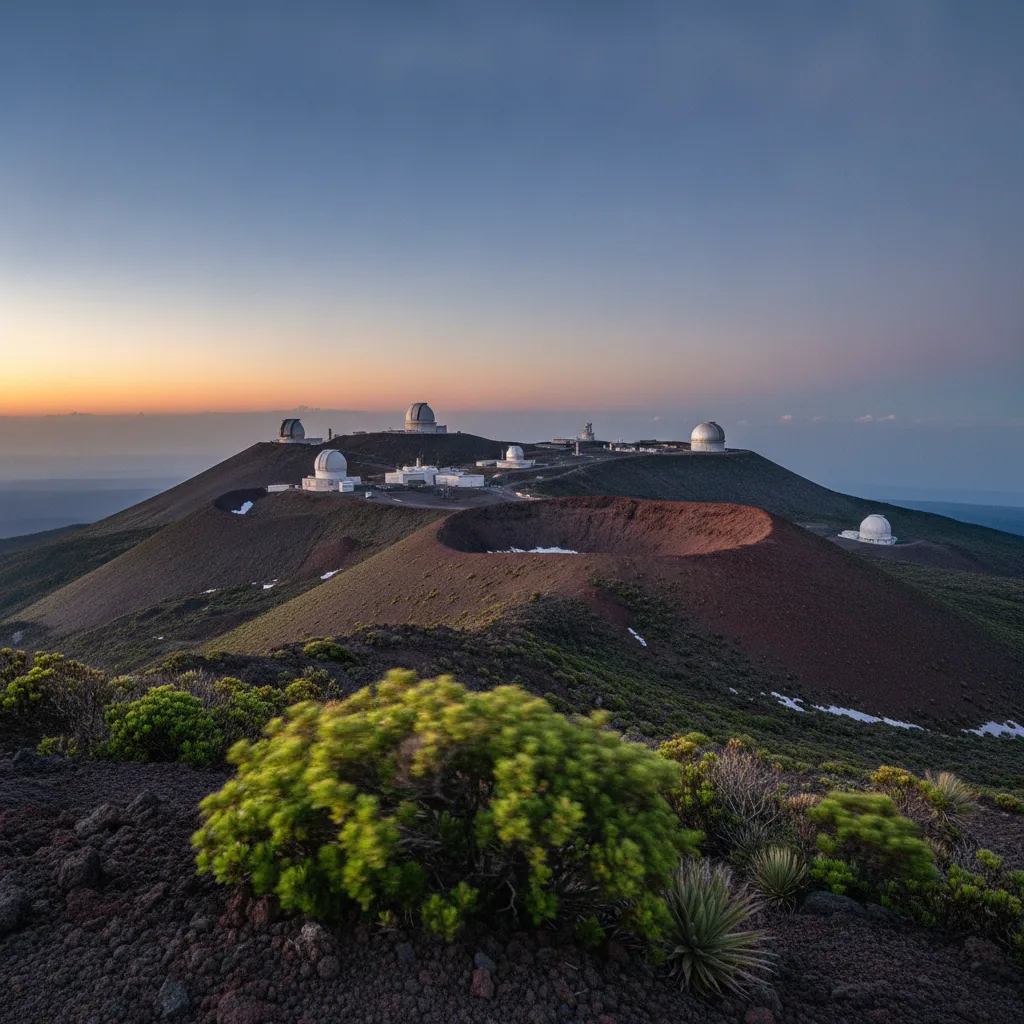
We understand that for many, the Big Island of Hawaii conjures images of pristine beaches and lush rainforests. But for those in the know, the true magic lies far above the clouds, on the majestic slopes and summit of Mauna Kea. This dormant volcano, the tallest mountain in Hawaii and, when measured from its base on the ocean floor, technically the tallest mountain on Earth, offers an otherworldly experience unlike any other. Mauna Kea Summit Hawaii is a destination that promises breathtaking sunsets, unparalleled stargazing, and a profound connection to both scientific discovery and ancient Hawaiian culture.
Why Visit Mauna Kea Summit
For our team, the allure of Mauna Kea Summit is multifaceted, drawing us to its heights for reasons both scientific and spiritual. First and foremost are the astronomical wonders. At 13,796 feet (4,205 meters) above sea level, Mauna Kea sits above 40% of Earth's atmosphere and almost all of its water vapor, creating some of the clearest, darkest skies on the planet. This makes it an unrivaled location for stargazing and home to thirteen world-class observatories. Witnessing the Milky Way as a river of light, or seeing Jupiter's bands and Saturn's rings through a powerful telescope, is an experience that truly recalibrates your relationship with the night sky.
Beyond the celestial, the sheer natural beauty is reason enough to make the ascent. The panoramic views from the summit, especially at sunset, are nothing short of spectacular. You'll watch the sun dip below a sea of clouds, painting the sky in an explosion of color, with the peaks of other volcanoes and the futuristic observatories framing the scene. It's a surreal landscape that feels more like another planet than a tropical island.
Equally compelling is the deep cultural significance of Mauna Kea. To Native Hawaiians, Mauna Kea is a sacred place, considered the "wao akua" or "realm of the gods". It is seen as the "piko," or umbilical cord, connecting the Creator to the people of Hawaiʻi, a place of spiritual power and ancestral reverence. Ancient Hawaiians made pilgrimages to its slopes, leaving offerings and performing ceremonies. Visitors are encouraged to approach Mauna Kea with respect, recognizing its spiritual importance and staying on designated paths. This blend of natural grandeur, scientific marvel, and profound cultural heritage makes Mauna Kea Summit an essential and deeply rewarding destination.
Who It's Best For
Mauna Kea Summit caters to a diverse range of travelers, though it's certainly not a one-size-fits-all destination. We find it's particularly ideal for:
- Astronomy Enthusiasts and Stargazers: This is arguably the ultimate destination for anyone fascinated by the cosmos. Whether you're bringing your own telescope or joining a guided tour with professional equipment, the clarity of the night sky here is unparalleled. The Maunakea Visitor Information Station (VIS) is specifically designed as a primary stargazing spot, offering free public programs and volunteer astronomers.
- Adventure Seekers: The journey to the summit, especially for those who choose to self-drive in a 4WD vehicle, is an adventure in itself. The steep, unpaved roads and the challenge of the altitude appeal to those looking for a unique and exhilarating experience.
- Photographers: From the dramatic sunsets above the clouds to the sweeping vistas of the observatories and the incredible starscapes, Mauna Kea offers endless opportunities for stunning photography.
- Culture and History Buffs: Understanding the profound cultural significance of Mauna Kea to Native Hawaiians adds a rich layer to the visit. Respecting the sacred nature of the mountain and its ancient sites provides a deeper appreciation of the destination.
- Those Seeking a Unique Natural Phenomenon: Watching the sunset from above the clouds is a truly rare and memorable event that draws many to Mauna Kea.
However, it's crucial to note that due to the extreme altitude (13,796 feet / 4,205 meters), Mauna Kea Summit is NOT recommended for children under 16, pregnant women, individuals with heart or respiratory conditions, or anyone who has been scuba diving within 24 hours. The oxygen level at the summit is approximately 40% lower than at sea level, and altitude sickness is a serious risk. Acclimatization at the Visitor Information Station (VIS) at 9,200 feet (2,804 meters) for at least 30 minutes is mandatory for all visitors planning to ascend higher.
Getting There & Parking
Understanding how to get to Mauna Kea Summit is crucial for a safe and enjoyable visit. The journey begins on the Daniel K. Inouye Highway (often still called Saddle Road, Route 200), which traverses the Big Island. From this highway, you'll turn onto Mauna Kea Access Road.
Driving Yourself:
The Mauna Kea Access Road is paved for the first six miles, leading directly to the Maunakea Visitor Information Station (VIS) at 9,200 feet (2,804 meters). Any standard vehicle can reach the VIS, and no reservations are needed for this portion of the trip. The VIS is open daily, generally from 9 a.m. to 9 p.m., though hours can change, so we always recommend checking the official VIS page before you go.
However, the road conditions change significantly beyond the VIS. To reach the actual summit, a 4-wheel drive (4WD) vehicle in good condition is absolutely required. The road from the VIS to the summit is steep, unpaved, and can be gravelly. This 4WD requirement is for safety reasons, primarily to prevent brake overheating on the steep descent.
Here's a critical piece of advice from our team: most national rental car companies prohibit taking their vehicles above the VIS, and doing so will void your insurance coverage. If you plan to self-drive to the summit, you'll need to rent from a local Big Island agency that specifically permits summit travel, or arrange a vehicle through a peer-to-peer service that allows it. These options often cost more and require advance booking. It's also recommended to have at least half a tank of gas before proceeding to the summit, as there are no fuel stations available.
The summit area itself is closed to visitors from 30 minutes after sunset to 30 minutes before sunrise. Visitors wishing to stargaze after sunset must descend to a lower elevation, typically around the VIS or designated stargazing areas.
Guided Tours:
For most visitors, a guided tour is the easiest and safest option for reaching the Mauna Kea Summit and experiencing stargazing. Tour operators handle the 4WD transportation, provide warm clothing (like arctic parkas and gloves), offer dinner or snacks, and have knowledgeable guides who provide context on astronomy and Hawaiian culture. Tours typically last 7.5 to 9 hours and cost between $230 and $330 per adult. Popular and well-regarded tour companies include Hawaii Forest & Trail, Mauna Kea Summit Adventures, and Hawaiian Eyes Tours. We highly recommend booking these tours well in advance, especially during peak season.
Parking:
At the Maunakea Visitor Information Station, there is parking available for over 100 vehicles in safe, designated areas. However, parking at the VIS can fill up quickly, especially around sunset, so arriving early is advisable. For those on guided tours, specific pickup and drop-off points are arranged, often at shopping centers or hotels in Kona or Waikoloa, or directly at the VIS for east-side visitors. Mauna Kea Summit Adventures, for example, has special permission for their customers to park in a "Lower Dirt Parking Lot" 100 yards below the visitor center.
Top Things to Do
When planning your visit, you'll find there are incredible things to do at Mauna Kea Summit and its surrounding areas. Our team has curated the essential experiences to ensure you make the most of this extraordinary destination.
Witness a Mauna Kea Sunset Above the Clouds
This is arguably the most iconic experience at Mauna Kea. Driving to the summit (via 4WD or tour) to watch the sunset is a truly breathtaking event. As the sun dips below the cloud layer, the sky transforms into a canvas of vibrant colors, a spectacle unlike any other on Earth. The observatories silhouetted against the fiery sky provide an unforgettable photographic opportunity. Remember, the summit is closed 30 minutes after sunset, so plan your descent accordingly.
Stargazing at the Visitor Information Station (VIS)
While the summit offers incredible views, the Maunakea Visitor Information Station (VIS) at 9,200 feet is actually the primary public stargazing location. The air here is still incredibly clear, and the reduced altitude compared to the summit makes for better naked-eye stargazing and a more comfortable experience for many. The VIS hosts free, reservation-only stargazing events with telescopes and staff twice a month, which fill up quickly. On other nights, staff may offer informal, laser-guided tours of the sky. Even without a formal program, the naked-eye views of the Milky Way from this elevation are astounding. This is one of the essential things to do at Mauna Kea Summit, even if you don't go all the way to the top.
Explore the Maunakea Observatories
The summit of Mauna Kea is home to a collection of world-class astronomical observatories, representing a significant hub for scientific discovery. While the observatories themselves are generally not open to the public for interior tours, their futuristic domes against the stark volcanic landscape are a sight to behold. You can drive up to view them from the outside, appreciating the scale of these scientific marvels. For Hawaiʻi residents, the Kama'āina Observatory Experience offers a free monthly opportunity to visit the summit and see the telescopes.
Hike the Mauna Kea Trail
For the truly adventurous, the Mauna Kea Trail offers a challenging six-mile trek from the Visitor Information Station to the summit. This hike can take eight hours or more, depending on your fitness level, and requires significant preparation due to the altitude and rugged terrain. If you choose this option, ensure you have ample time to complete the journey and descend before nightfall.
Respect Cultural Sites
Mauna Kea is deeply sacred to Native Hawaiians, considered a "realm of the gods" and a place of spiritual connection. Throughout the mountain, you'll find numerous archaeological sites, including ancient burial sites, shrines, and rock stackings (ahu) that hold significant cultural meaning. Our team emphasizes the importance of respecting these sites by staying on designated paths, refraining from moving or removing anything, and keeping noise levels down.
Things to Do in Big Island Beyond Mauna Kea
While Mauna Kea Summit is a highlight, the Big Island offers a wealth of other attractions. We highly recommend exploring Hawaii Volcanoes National Park, where you can witness active volcanoes, hike through lava tubes, and explore dramatic landscapes. Other popular things to do in Big Island include snorkeling with manta rays in Kona, visiting coffee farms, exploring black sand beaches like Punaluʻu, and chasing waterfalls like Rainbow Falls and Akaka Falls. For more ideas, check out our comprehensive guide to Best places in Hawaii.
Best Time to Visit
Choosing the best time to visit Mauna Kea Summit can significantly impact your experience, as conditions vary greatly throughout the year and even within a single day. Our team has gathered the latest insights to help you plan.
For Stargazing:
Mauna Kea offers exceptional stargazing year-round due to its high elevation, dry air, and minimal light pollution. However, optimal conditions are typically during new moon weeks when there's no moonlight to compete with the stars. The Milky Way core is most visible from April through October. While winter months (November-February) can offer clearer summit conditions, they also bring colder temperatures and a higher chance of snow and ice, which can lead to road closures. April, May, and October are often cited as the best months for clearest skies.
For Sunset Views:
Any clear day offers a spectacular sunset from Mauna Kea. Most visitors aim to be at the summit for sunset to witness the sun dipping below the clouds. However, remember that the summit closes 30 minutes after sunset, so you'll need to begin your descent promptly. Early morning visits for sunrise can offer an equally stunning spectacle with fewer crowds, and the road to the summit opens 30 minutes before sunrise.
Weather Considerations (July 2026 Forecast):
Mauna Kea creates its own unique weather system, which can be dramatically different from coastal conditions. While it might be 85°F at sea level, the summit can be 40-50 degrees colder, even in summer. Temperatures at the summit can range from 45°F to 65°F in July, with moderate to high precipitation due to afternoon storms. Winds can be highly variable, from calm to over 40 mph. Snow is possible between October and April, with winter months (December-February) having the highest probability. Road closures due to snow, ice, or high winds are common in winter, so always check the Mauna Kea Weather Center website for current road conditions before heading up.
Our advice: Dress in many layers, including a heavy jacket, hat, gloves, and warm socks, regardless of the season. The air is thin and dry, which amplifies the cold.
Where to Stay Nearby
While there are no public accommodations directly on Mauna Kea itself, the Big Island offers a variety of lodging options that serve as excellent bases for your summit adventure. Our team recommends considering locations that balance accessibility to Mauna Kea with other island attractions.
Hilo (East Side):
Hilo is generally the closest major town to the Mauna Kea Access Road, making it a convenient option, especially for those planning an early morning ascent or a late night descent after stargazing. It's approximately a 1-hour and 10-minute drive from Hilo to the Maunakea Visitor Information Station. Hilo offers a more local, rainforest-lush vibe with a range of hotels, guesthouses, and vacation rentals. It's also a great base for exploring Hawaii Volcanoes National Park, waterfalls, and the vibrant Hilo Farmers Market.
Kona and Waikoloa (West Side):
The Kona and Waikoloa areas on the west side of the island are popular tourist hubs, known for their sunny weather, resorts, beaches, and dining options. While further from Mauna Kea (approximately 1 to 1.5 hours drive to the Access Road, depending on your exact location), many Mauna Kea tours offer pickups from hotels in these areas. Staying here allows you to combine your Mauna Kea experience with activities like manta ray night snorkels, coffee farm tours, and relaxing on white sand beaches.
Waimea (Upcountry):
Situated in the cooler, greener upcountry region, Waimea offers a charming, paniolo (Hawaiian cowboy) town atmosphere. It's roughly an hour's drive to Mauna Kea and provides a good middle-ground location if you want to explore both the east and west sides of the island. Accommodations here tend to be more boutique hotels and vacation rentals, offering a quieter escape.
Volcano Village:
For those primarily interested in volcanic activity and a more rustic, nature-immersed experience, Volcano Village, located just outside Hawaii Volcanoes National Park, is an excellent choice. While a bit further from Mauna Kea, it provides a unique base with cozy cabins and guesthouses, allowing for easy access to Kilauea's wonders. This is a great option if you plan to dedicate significant time to the national park before heading to Mauna Kea.
When choosing your accommodation, consider your overall itinerary and how much driving you're comfortable with. Many visitors opt for a split stay, spending a few nights on the Hilo side for Mauna Kea and the volcano, and then moving to the Kona/Waikoloa side for beaches and western Big Island activities.
Sample 2-Day Itinerary
To truly experience the magic of Mauna Kea Summit and its surrounding wonders, we've crafted a sample 2-day itinerary. This plan balances adventure, acclimatization, and cultural immersion, ensuring you get the most out of your visit to Mauna Kea Summit Hawaii.
Day 1: Acclimatization & Stargazing
-
Morning (9:00 AM - 12:00 PM): Arrival and East Side Exploration
Arrive in Hilo (ITO) and pick up your rental car (ensure it's a 4WD if you plan to self-drive to the summit). Spend the morning exploring Hilo's lush attractions. Visit Rainbow Falls and Akaka Falls, or wander through the vibrant Hilo Farmers Market. This helps you ease into the island's pace and stay at lower elevations for acclimatization.
-
Lunch (12:00 PM - 1:00 PM): Local Hilo Fare
Enjoy lunch at a local eatery in Hilo, perhaps trying some Hawaiian plate lunch specialties.
-
Afternoon (1:00 PM - 4:00 PM): Drive to Maunakea Visitor Information Station (VIS) & Acclimatization
Begin your drive up Mauna Kea Access Road from the Daniel K. Inouye Highway. Remember to fill your gas tank in Hilo, as there are no services on Saddle Road. Drive directly to the Maunakea Visitor Information Station (VIS) at 9,200 feet (2,804 meters). Spend at least 30 minutes, ideally an hour, at the VIS to acclimatize to the altitude. Explore the gift shop, educational displays, and use the restrooms. This stop is crucial for preventing altitude sickness.
-
Late Afternoon/Evening (4:00 PM - 9:00 PM): Mauna Kea Sunset & Stargazing
If you've booked a guided tour, your tour operator will pick you up from a designated location and take you to the summit for sunset, then to a lower elevation for stargazing. If self-driving with a permitted 4WD, proceed to the summit about 15-30 minutes before sunset to secure a viewing spot. Witness the breathtaking sunset above the clouds. After sunset, if self-driving, you MUST descend from the summit to the VIS area for public stargazing, as the summit closes 30 minutes after sunset. Enjoy the unparalleled views of the night sky, whether through telescopes at a VIS program (if pre-booked) or simply with your naked eye. Dress warmly in layers, as temperatures drop significantly after dark.
-
Night: Return to Hilo or nearby accommodation
After your stargazing experience, descend carefully. The drive back to Hilo or your accommodation will be in the dark, so drive slowly and be mindful of other vehicles.
Day 2: Big Island Exploration & Cultural Immersion
-
Morning (8:00 AM - 12:00 PM): Hawaii Volcanoes National Park
Dedicate your morning to exploring Hawaii Volcanoes National Park, a UNESCO World Heritage site. Drive the Crater Rim Drive, hike through the Thurston Lava Tube, and look for steam vents. Check the current conditions for any active lava flows or visible glow at Halema'uma'u Crater. This provides a stark contrast to the alpine environment of Mauna Kea.
-
Lunch (12:00 PM - 1:00 PM): Near Volcano Village
Enjoy lunch at one of the charming cafes or restaurants in Volcano Village.
-
Afternoon (1:00 PM - 5:00 PM): Punaluʻu Black Sand Beach & Kona Coffee Country
Head south to Punaluʻu Black Sand Beach, famous for its unique dark sands and often frequented by Hawaiian green sea turtles (honu). Remember to observe wildlife from a respectful distance. Continue your drive towards the Kona side of the island. In Kona's famed coffee country, consider a visit to a coffee farm to sample fresh, locally grown coffee.
-
Evening: Dinner & Relaxation in Kona/Waikoloa
Settle into your accommodation in Kona or Waikoloa. Enjoy a well-deserved dinner at one of the many restaurants, reflecting on your incredible journey from the depths of volcanic craters to the celestial heights of Mauna Kea Summit Hawaii. For more Big Island activities, consider a Pearl Harbor & USS Arizona Memorial day trip if flying to Oahu, or plan future visits to places like the Na Pali Coast on Kauai or Haleakala National Park on Maui.
Last updated: 2026-07-05 by the Visit America team.