Our National Museum of Nuclear Science & History guide covers practical planning for National Museum of Nuclear Science & History New Mexico — best time to visit, getting there, and what to do on the ground.
For those seeking a profound journey through one of humanity's most transformative scientific and historical periods, the National Museum of Nuclear Science & History New Mexico offers an unparalleled experience. We, the Roam States editorial team, consider this museum an essential stop for any traveler interested in the Atomic Age, from the groundbreaking Manhattan Project to the diverse and often surprising peaceful applications of nuclear technology. This isn't just a collection of artifacts; it's an engaging, thought-provoking exploration of a complex and significant scientific topic, presented with clarity and depth.
Why Visit National Museum of Nuclear Science & History
The National Museum of Nuclear Science & History serves as America's official resource for nuclear history and science, congressionally chartered and a Smithsonian Affiliate. Our team believes it offers a unique perspective on a pivotal era that shaped the modern world. Here, you'll delve into the origins of atomic theory, trace the development of the atomic bomb, and understand the geopolitical complexities of World War II and the Cold War. But it's not all about warfare; the museum also extensively covers the peaceful uses of nuclear technology, including advancements in nuclear medicine and energy.
What truly sets this museum apart is its ability to make such a weighty subject accessible and engaging. The exhibits provide an objective, accessible window into the past, present, and future of nuclear science, allowing visitors to learn, imagine, think, and draw their own conclusions. It's a place where history meets science in an unforgettable journey, making it a must-see for anyone curious about the true story behind the atomic age.
Who It's Best For
This museum caters to a surprisingly broad audience. History buffs, particularly those fascinated by World War II, the Cold War, and the scientific breakthroughs of the 20th century, will find themselves engrossed for hours. Fans of the "Oppenheimer" movie will appreciate the real-life context and artifacts related to the Manhattan Project. Science enthusiasts, from budding physicists to seasoned researchers, will marvel at the detailed explanations of atomic theory, radiation, and nuclear energy.
Families with children will also find plenty to engage with. Exhibits like "Little Albert's Lab" offer hands-on science activities designed for young, inquisitive minds, where kids can explore physics concepts and even interact with a child-size Albert Einstein robot. The vast outdoor Heritage Park, with its impressive collection of planes, rockets, and missiles, is a huge draw for all ages. Our team has observed that both adults and children alike are fascinated by this important part of New Mexico's history.
Getting There & Parking
The National Museum of Nuclear Science & History is conveniently located in the southeastern part of Albuquerque, making it relatively easy to reach. Its address is 601 Eubank Blvd SE, Albuquerque, NM 87123. If you're driving, which we recommend for flexibility, the museum is just six blocks south of Central Avenue and easily accessible from Interstate 40 via exit 165. The drive from downtown Albuquerque or the international airport typically takes between 20 and 30 minutes, depending on traffic.
When it comes to parking, you'll be pleased to know there's a spacious parking lot right next to the museum, designed for visitor convenience. For those with RVs or oversized vehicles, an dedicated row on the north edge of the lot is available, wide enough for easy maneuvering. We suggest arriving before 10:00 AM for the best chance at a shady spot, especially during warmer months, as the desert sun can be intense. Security is present, with roving patrols and a guard, and the area is considered safe for parking, even with luggage hidden in your vehicle.
For those wondering how to get to National Museum of Nuclear Science & History using public transportation, options are available, though they require a bit more planning. City bus routes pass near the museum, with the nearest bus stop within walking distance of the entrance. The 222 bus runs hourly from downtown, stopping at the base museum entrance road, from which it's about a 10-minute walk. While public transit is an option, a rental car or rideshare service generally offers a more direct and comfortable experience, especially given the museum's location.
Top Things to Do
Exploring the National Museum of Nuclear Science & History is an immersive journey, with both indoor galleries and a sprawling outdoor park. Here are some of the top things to do at National Museum of Nuclear Science & History:
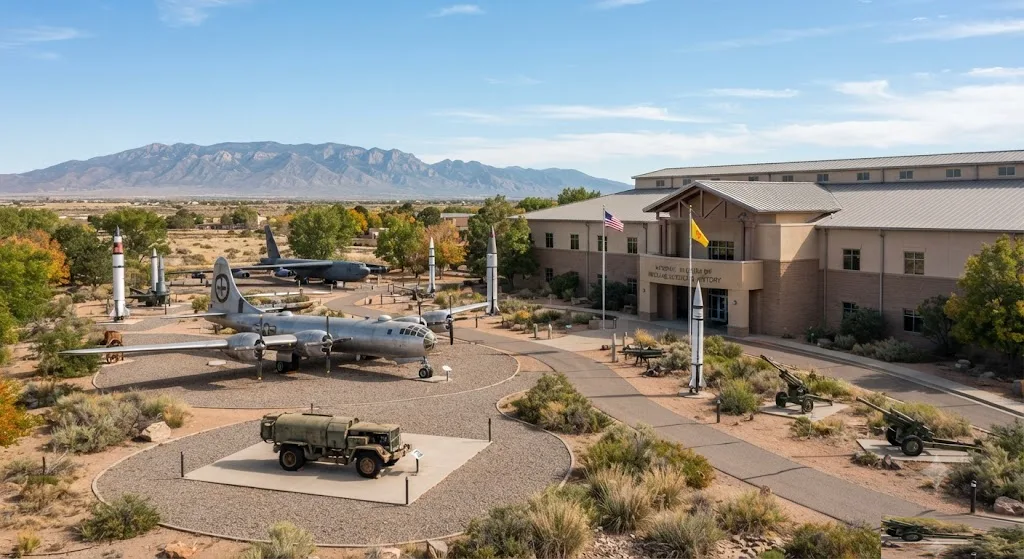
- Heritage Park Outdoor Exhibit: This nine-acre outdoor area is a major highlight, featuring an impressive collection of planes, rockets, missiles, cannons, and even a nuclear submarine sail. You'll see iconic aircraft like the B-29 Superfortress (complete with a Fat Man bomb casing replica), a B-52B Stratofortress, and an F-16 Fighting Falcon. We recommend visiting this section in the morning to avoid the midday heat, as the metal artifacts can get quite hot. The sheer scale of these Cold War giants is truly awe-inspiring.
- Indoor Exhibits: The main museum building houses numerous permanent and changing exhibits that delve into various aspects of the Atomic Age. Key exhibits include "Critical Assembly, the Secrets of Los Alamos 1944," which recreates the laboratory environment where the first atomic bomb was assembled. "Hiroshima and Nagasaki" offers a poignant tribute to the human impact of atomic weapons. You'll also find exhibits on the "Pioneers of the Atom," the "Cold War," "Nuclear Medicine," and "Energy Encounter," showcasing the diverse applications of nuclear science.
- Little Albert's Lab: Perfect for younger visitors, this interactive area offers hands-on science activities. Kids can experiment with magnets, pendulums, and even see radiation trails in cloud chambers during scheduled demonstrations. These demos run hourly but can fill up quickly, so grab a schedule upon entry.
- Museum Artifact Center (MAC): This recently expanded area houses a significant portion of the museum's Nuclear Defense Heritage Collection, offering a rare look at the engineering and technology that defined global history for nearly a century. Access to the MAC is typically an add-on ticket to general admission.
- Special Exhibits and Events: The museum regularly hosts special exhibits and events, such as "Science on Tap" evenings for adults, and summer break camps for kids. Check their website for the latest happenings during your visit. For example, in July 2026, they are hosting "Science on Tap: U-2 Dragon Lady: 70 Years at 70,000 feet".
Beyond the museum itself, there are many things to do in Albuquerque. Consider visiting other notable attractions like the Anderson Abruzzo Albuquerque International Balloon Museum, which offers free admission on Sundays from 9 a.m. to 1 p.m. and the first Friday of every month. Old Town Albuquerque provides a historic charm with shops and dining, and nearby museums like the New Mexico Museum of Natural History and Science or the Albuquerque Museum offer additional cultural enrichment. For outdoor enthusiasts, the city boasts fantastic trails and open space preserves for hiking and biking. A combo ticket with the nearby Albuquerque Museum can sometimes save money, offering a thought-provoking contrast between nuclear science and regional art.
Best Time to Visit
The National Museum of Nuclear Science & History is open daily from 8:00 AM to 5:00 PM, year-round, closing only on New Year's Day, Easter, Thanksgiving, and Christmas Day. This consistent schedule provides ample opportunity to visit whenever your travel plans allow.
However, based on our experience, the best time to visit often depends on your priorities. To beat both the heat and potential crowds, especially in the outdoor Heritage Park, we strongly recommend visiting in the morning, ideally right when the museum opens. The New Mexico sun can be intense, and the metal exhibits in the outdoor park can get quite hot by midday. Photography also tends to be better with the eastern light on the aircraft in the mornings.
Spring and fall generally offer the most pleasant weather in Albuquerque, with mild temperatures perfect for exploring both indoor and outdoor exhibits. Summer can be very hot, making early morning visits even more crucial. Winter visits are generally comfortable indoors, and the outdoor park can be enjoyed without the intense heat, though it might be cooler and windier.
Weekdays typically see fewer crowds than weekends, especially outside of school holiday periods. If you're planning a visit with school-aged children, consider timing your visit around the 2 PM Little Albert's Lab session, when school groups might have thinned out.
Where to Stay Nearby
When planning your visit, finding suitable National Museum of Nuclear Science & History lodging is key to a comfortable trip. The museum is located in the southeastern part of Albuquerque, offering a variety of hotel options within a few miles. We recommend looking for accommodations along the I-40 corridor, particularly exits near Eubank Boulevard, for convenient access.
Several hotels are located within a short driving distance. The Holiday Inn Express & Suites Albuquerque East by IHG is a solid choice, located just 1.1 miles away. Other nearby options include SureStay by Best Western Albuquerque East I-40, Econo Lodge Inn & Suites Albuquerque East I-40 Eubank Exit, Days Inn by Wyndham East Albuquerque, and Travelodge by Wyndham Albuquerque East, all within 1.5 miles of the museum. These properties offer practical and comfortable stays, often with amenities like complimentary breakfast and pools.
For those seeking slightly more upscale National Museum of Nuclear Science & History lodging, or options closer to other Albuquerque attractions, consider hotels in the Uptown area or near the University of New Mexico. Homewood Suites by Hilton Albuquerque Uptown and SpringHill Suites by Marriott Albuquerque University Area are well-regarded and offer good amenities, though they are a bit further from the museum.
If you're traveling with an RV, some RV parks are also available in the wider Albuquerque area, such as Mountain View Inn & RV Park, which is about 1.7 miles from the museum. Many hotels in Albuquerque are also pet-friendly, so be sure to check with your chosen accommodation if you're bringing a furry companion.
Sample 2-Day Itinerary
To fully appreciate the National Museum of Nuclear Science & History and explore some of Albuquerque's other unique offerings, we've crafted a sample 2-day itinerary:
Day 1: The Atomic Age Deep Dive
- Morning (8:00 AM - 1:00 PM): Begin your day early at the National Museum of Nuclear Science & History. Arrive right at opening to take advantage of cooler temperatures for exploring Heritage Park. Spend ample time marveling at the B-29 Superfortress, missiles, and other large artifacts. Afterward, move indoors to delve into the exhibits on the Manhattan Project, the Cold War, and the peaceful applications of nuclear technology. Don't miss "Critical Assembly" and "Hiroshima and Nagasaki".
- Lunch (1:00 PM - 2:00 PM): Grab a casual lunch at a nearby eatery. There are several fast-casual options along Eubank Blvd or Central Ave.
- Afternoon (2:00 PM - 5:00 PM): Return to the museum for any exhibits you missed or to revisit favorites. If traveling with kids, catch a "Little Albert's Lab" demonstration. Consider adding on the Museum Artifact Center (MAC) experience if time allows.
- Evening: Enjoy dinner at a local Albuquerque restaurant. Explore the vibrant Nob Hill area for diverse dining options or head to Old Town for a historic atmosphere.
Day 2: Albuquerque's Diverse Charms
- Morning (9:00 AM - 12:00 PM): Explore another facet of New Mexico's rich culture. We suggest a visit to the Indian Pueblo Cultural Center to learn about the history and traditions of New Mexico's 19 Pueblos. Alternatively, head to the New Mexico Museum of Natural History and Science for dinosaur exhibits and a planetarium.
- Lunch (12:00 PM - 1:00 PM): Have lunch in Old Town Albuquerque, enjoying the historic ambiance.
- Afternoon (1:00 PM - 5:00 PM): Choose your adventure. For art lovers, Meow Wolf in Santa Fe (about an hour's drive) offers an immersive, otherworldly art experience. Closer to Albuquerque, the Anderson Abruzzo Albuquerque International Balloon Museum is a fascinating stop, especially if you're intrigued by the city's hot air balloon culture. Alternatively, take a scenic drive up the Sandia Peak Tramway for breathtaking views of the city and surrounding landscape.
- Evening: Consider a unique experience like a "Science on Tap" event at the Nuclear Museum if one is scheduled, or enjoy a sunset hot air balloon ride (reservations essential) for an unforgettable view of the high desert.
While in New Mexico, we highly recommend extending your trip to explore other incredible destinations. Head south to witness the stunning white gypsum dunes of White Sands National Park or descend into the magnificent underground chambers of Carlsbad Caverns National Park. Further north, immerse yourself in the ancient history of Taos Pueblo or soak in the artistic and cultural vibrancy of Santa Fe Plaza. For a comprehensive guide to the state's highlights, be sure to check out our Best places in New Mexico guide.
Last updated: 2026-07-08 by the Roam States team.