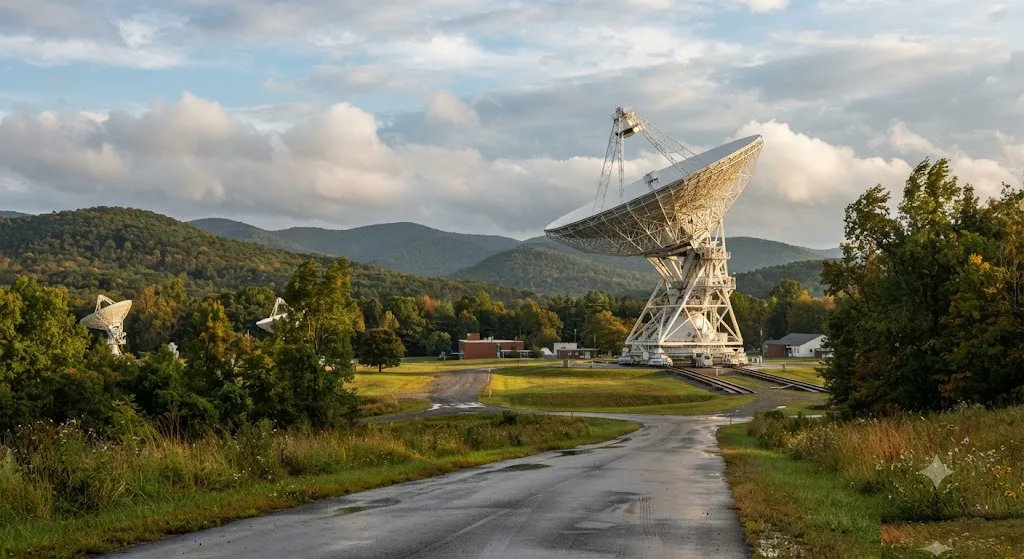
Our National Radio Astronomy Observatory (Green Bank) guide covers practical planning for National Radio Astronomy Observatory (Green Bank) West Virginia — best time to visit, getting there, and what to do on the ground.
Tucked away in the serene Allegheny Mountains of West Virginia, the National Radio Astronomy Observatory (Green Bank) is a truly unique destination. It's not just home to the world's largest fully steerable radio telescope, the Robert C. Byrd Green Bank Telescope (GBT), but it also sits at the heart of the National Radio Quiet Zone (NRQZ), a vast area where radio transmissions are legally restricted to protect the observatory's incredibly sensitive instruments. This means a visit here offers a rare chance to truly disconnect and immerse yourself in the wonders of the universe, free from the constant hum of modern electronics. Our team at Roam States has explored this fascinating scientific outpost to bring you an independent guide to planning your trip to National Radio Astronomy Observatory (Green Bank) West Virginia.
Why Visit National Radio Astronomy Observatory (Green Bank)
Visiting the National Radio Astronomy Observatory (Green Bank) is an experience unlike any other in the United States. It's a place where groundbreaking science happens daily, utilizing the sheer scale and precision of the Green Bank Telescope to peer into the furthest reaches of space. The GBT itself is a marvel of engineering, standing at an imposing 485 feet tall with a 2-acre wide parabolic dish, capable of capturing faint radio signals from deep space. Just seeing this colossal instrument up close is a powerful experience that highlights humanity's relentless pursuit of knowledge.
Beyond the impressive technology, the observatory offers a profound opportunity to understand the unique challenges and methods of radio astronomy. We find that the educational aspect here is exceptional, designed to engage visitors of all ages in the science behind the discoveries. The surrounding National Radio Quiet Zone, spanning approximately 13,000 square miles, enforces strict regulations on electronic devices, creating an environment of unparalleled tranquility. This quietude isn't just for the telescopes; it extends to the entire area, offering a genuine escape from digital noise. For those wondering, "is National Radio Astronomy Observatory (Green Bank) worth visiting?", we confidently say yes. It’s a chance to witness cutting-edge research, learn about the cosmos, and experience a rare pocket of true silence in our increasingly connected world. The combination of scientific wonder and serene natural beauty makes it a truly rewarding journey.
Who It's Best For
The National Radio Astronomy Observatory (Green Bank) appeals to a diverse range of travelers, making it a surprisingly versatile destination. We believe it's particularly well-suited for:
- **Science and Astronomy Enthusiasts:** This is an obvious fit. Anyone with a keen interest in space, physics, or engineering will be captivated by the GBT and the detailed explanations of radio astronomy.
- **Families with Curious Kids:** The Science Center's interactive exhibits and the guided bus tours are designed to make complex scientific concepts accessible and exciting for younger visitors. It's an educational trip that feels like an adventure.
- **Digital Detox Seekers:** For those yearning to truly unplug, the National Radio Quiet Zone offers an unparalleled opportunity. With no cell service and restrictions on Wi-Fi and many electronic devices, it’s a forced but welcome digital detox.
- **Nature Lovers and Outdoor Enthusiasts:** Located in the heart of the Monongahela National Forest, the observatory grounds and surrounding area offer beautiful scenery, hiking, and biking opportunities. The quiet environment enhances the natural experience.
- **Road Trippers Looking for Something Unique:** If you're exploring West Virginia's scenic byways, the observatory provides a fascinating and unexpected stop that breaks away from typical tourist attractions. It’s a truly memorable detour on any West Virginia adventure.
While the highly technical nature might seem daunting to some, the Green Bank Observatory staff excels at making the science engaging for a general audience. We recommend it for anyone seeking an enriching and unique travel experience.
Getting There & Parking
Reaching the National Radio Astronomy Observatory (Green Bank) requires a bit of planning, primarily due to its location within the National Radio Quiet Zone. We strongly advise against relying solely on GPS on your mobile device as cell service is non-existent in the immediate area, and GPS might route you onto less-than-ideal back roads. Instead, download maps or print directions before you set out.
The observatory's address is 155 Observatory Rd, Green Bank, WV 24944. Green Bank is situated in Pocahontas County, West Virginia, roughly 50 miles south of Elkins, WV, and about 60 miles north of White Sulphur Springs, WV.
For those flying, several regional airports serve the area, though a rental car will be necessary for the final leg of your journey. Common options include Pittsburgh International Airport (PIT), Charlottesville/Albemarle Airport (CHO), Washington Dulles International Airport (IAD), Roanoke (VA), or Charleston (WV). The observatory website provides detailed driving directions from these major airports. We've found Charlottesville (CHO) to be a convenient option, and the observatory can sometimes arrange a driver for pickup from select airports or train stations for a fee. Limited Amtrak service is available to Charlottesville and White Sulphur Springs, WV.
When it comes to parking at National Radio Astronomy Observatory (Green Bank), you'll find ample on-site parking available for visitors. There are even a limited number of Level 1 EV charging stations available, with passes costing $3 per day, which can be acquired at the Galaxy Gift Shop in the Science Center. Remember that upon arrival, you'll need to power off any wireless devices that are not medically essential to prevent interference with the telescopes.
Top Things to Do
There's a surprising array of things to do at National Radio Astronomy Observatory (Green Bank), offering a blend of education, exploration, and serene natural beauty. Our team recommends dedicating at least half a day, if not more, to fully appreciate the offerings.
- **Explore the Green Bank Science Center & Exhibit Hall (Free Admission):** Your journey begins here. The Science Center is the hub for visitors, featuring the "Catching the Wave" Exhibit Hall. Admission to the Science Center and its interactive exhibits is free. We found the exhibits excellent for understanding the basics of radio astronomy, how the GBT works, and the universe's secrets it helps unveil. It's a fantastic starting point for all ages.
- **Take a Guided Bus Tour of the Observatory Grounds:** This is undoubtedly one of the top things to do at National Radio Astronomy Observatory (Green Bank). For $10 per person (ages 6+), this hour-long, family-friendly tour includes a presentation and a bus ride through the restricted "Quiet Zone" to get an up-close look at the various telescopes, including the colossal GBT. Tours are offered on open days at 10:00 AM, 12:00 PM, 2:00 PM, and 4:00 PM, subject to availability. We highly recommend purchasing tickets in advance, especially during busy seasons, as tours can sell out. Veterans and active-duty service members receive free admission.
- **Experience a High Tech Tour:** For those aged 16 and up seeking a deeper dive, the High Tech Tour is a must. Offered on the second Thursday of every month, this 1.5-hour tour costs $25 per person and provides a behind-the-scenes look at the electronics lab, telescope receivers, and even the GBT control room. Advance reservations are required, and a clearance check (requiring a Visitor Registration Form 72 hours in advance) is necessary due to access to restricted laboratory spaces.
- **Join a SETI Tour:** Celebrate Green Bank's historic role in the Search for Extraterrestrial Intelligence. These seasonal tours, offered on select Fridays from 1:00 PM to 3:45 PM for $40 per person, take you inside the control rooms of historic telescopes like the 85-foot telescope used for Project Ozma and the 140-foot telescope from Project Phoenix. You'll also get a peek into the GBT control room and engage in a conversation with a staff astronomer about current SETI projects. This tour is for ages 12 and up, requires advance reservations, and has a maximum of 22 participants.
- **Hike or Bike the Observatory Grounds (Self-Guided & Free):** Beyond the tours, the observatory grounds are open to the public from dawn to dusk for self-guided exploration. We enjoyed walking or biking the paved roads, which offer excellent views of the telescopes and the surrounding Monongahela National Forest. Just remember to stay on paved roads, avoid going underneath telescopes, and return to the main campus by dark.
- **Dine at the Starlight Café:** Located within the Science Center, the Starlight Café offers freshly prepared food, snacks, and scenic views. It’s a convenient spot for a meal or a coffee break.
- **Shop at the Galaxy Gift Shop:** Pick up astronomy-themed souvenirs, educational toys, and West Virginia-made goods. Educators receive a 10% discount in person.
- **Attend Special Events:** Keep an eye on the Green Bank Observatory's event calendar for star parties, workshops, and the annual Open House. The Open House is a free, fun-filled day with family activities and behind-the-scenes tours.
When considering things to do in Green Bank beyond the observatory, the area offers plenty for nature and history enthusiasts. The Greenbrier River Trail, a 78-mile rail trail, is excellent for biking and hiking. You can also visit the nearby Cass Scenic Railroad State Park, just 10 minutes away, for a steam-powered train ride through the mountains. Snowshoe Mountain Resort, about 30 minutes away, offers year-round recreation, from skiing and snowboarding in winter to mountain biking and zip-lining in warmer months. For a truly unique experience, consider hiking to the Thorny Mountain Fire Tower in Seneca State Forest, which offers incredible views. These nearby attractions complement a visit to the National Radio Astronomy Observatory (Green Bank) perfectly.
Best Time to Visit
The best time to visit the National Radio Astronomy Observatory (Green Bank) largely depends on your priorities, but we've found that each season offers its own unique advantages.
- **Summer (June 1 – August 14):** This is peak season, and for good reason. The Green Bank Science Center and Galaxy Gift Shop are open seven days a week from 9:30 AM to 5:30 PM, with guided tours offered at 10:00 AM, 12:00 PM, 2:00 PM, and 4:00 PM. The weather is generally warm and pleasant, ideal for outdoor activities like hiking and biking the observatory grounds. Many special events, including the Green Bank Star Quest (a star party in late July), often take place during the summer. However, it's also the busiest time, so expect more visitors and book tours in advance.
- **Fall (September – October):** We consider fall to be an exceptional time to visit. The cooler temperatures are perfect for exploring, and the vibrant autumn foliage of the Allegheny Mountains provides a stunning backdrop to the telescopes. Crowds tend to thin out after the summer rush, offering a more tranquil experience. The Science Center operates on school-year hours (Thursday-Monday, 9:30 AM - 5:30 PM).
- **Spring (April – May):** Similar to fall, spring brings milder weather and blooming landscapes. It's a great time to visit before the summer crowds arrive. Check the observatory's calendar for any special spring events. The Science Center also follows school-year hours during this period.
- **Winter (November – March):** While the landscape is starker and some outdoor activities might be limited by snow, a winter visit can be incredibly peaceful. The observatory's imposing structures against a snowy backdrop offer a dramatic visual. Be sure to check the Science Center's school-year hours (Thursday-Monday, 9:30 AM - 5:30 PM) and any holiday closures. Some specialized tours, like the High Tech Tours, are offered year-round on the second Thursday of each month.
Regardless of the season, we recommend checking the Green Bank Observatory's official website for the most up-to-date hours, tour schedules, and any potential closures or special events for 2026. Keep in mind that the National Radio Quiet Zone means no cell service, so plan accordingly with printed maps and downloaded information.
Where to Stay Nearby
Finding National Radio Astronomy Observatory (Green Bank) lodging requires a slightly different approach than typical tourist destinations, given the restrictions of the National Radio Quiet Zone. While you won't find major hotel chains directly adjacent to the observatory, several charming and comfortable options are available in the surrounding towns and within the observatory grounds itself for specific visitors.
For most public visitors, nearby towns like Dunmore, Cass, Marlinton, and Snowshoe offer the best choices for National Radio Astronomy Observatory (Green Bank) lodging. Many of these are within a reasonable driving distance, allowing you to experience the quiet zone during the day and return to more conventional amenities in the evening.
- **Cabins and Vacation Rentals:** We've found that cabins and vacation homes are a popular and excellent choice in this scenic region. Options like "2 Mi to Green Bank Observatory! Mtn-View Cabin" in Dunmore, just 1.5 miles from the GBT, offer comfortable living with amenities like free Wi-Fi (likely outside the strictest quiet zone) and air-conditioning. Other cabins closer to Snowshoe Mountain Resort (about 3-5 miles from the GBT) also provide excellent bases for exploration. These often provide a more secluded and authentic mountain experience.
- **Hotels and Motels in Nearby Towns:**
- **Marlinton:** Located about 17.9 miles from the observatory, Marlinton offers budget-friendly options like the Marlinton Motor Inn, which includes amenities like an outdoor pool and is pet-friendly.
- **Snowshoe:** Approximately 8.7 miles from the GBT, Snowshoe is a larger resort area with more extensive lodging options, including the Corduroy Inn and Lodge, Trademark Collection by Wyndham, and various other hotels, cabins, and resorts. This is a great choice if you plan to combine your observatory visit with skiing or mountain biking.
- **Hot Springs, VA:** About 29.9 miles away, Hot Springs offers more upscale options, including The Omni Homestead Resort, a 4.5-star resort with golf, skiing, hot springs, and a lazy river. This is a good option if you're looking for luxury and don't mind a slightly longer drive.
- **On-Site Observatory Lodging (Limited Availability):** The Green Bank Observatory itself provides housing, primarily for individuals and groups participating in organized activities, scientific meetings, workshops, or overnight educational programs. This includes:
- **Residence Hall:** Hotel-style rooms with twin or queen beds, workspace, TV, mini-fridge, and high-speed internet (likely in designated Zone 2 areas where some electronics are permitted).
- **Dormitory/Bunkhouse:** Accommodates up to 60 people in dormitory-style rooms, often used by student groups. Reservations for the bunkhouse must be made at least 30 days in advance and require a deposit.
- **Apartments and Houses:** Fully furnished options with kitchens and living areas, available occasionally for astronomers or long-term visitors.
It's crucial to remember that while some nearby accommodations might offer Wi-Fi, cell service and wireless internet are generally not available directly at the Green Bank Observatory facility, and wireless devices are prohibited on site. Always check the specific location of your lodging relative to the most restrictive zones if digital connectivity is a concern. We recommend booking your National Radio Astronomy Observatory (Green Bank) lodging well in advance, especially during peak seasons.
Sample 2-Day Itinerary
To fully appreciate the National Radio Astronomy Observatory (Green Bank) and its unique surroundings, we recommend a two-day itinerary. This allows for in-depth exploration without feeling rushed, and also provides time to enjoy some of the other attractions in this beautiful part of West Virginia.
Day 1: Immersion in Radio Astronomy
- Morning (9:00 AM - 12:00 PM): Arrival and Science Center Exploration
- Arrive at the Green Bank Observatory. Ensure all non-essential electronic devices are powered off and stored away before entering the main observatory grounds.
- Head straight to the Green Bank Science Center. Admission to the Exhibit Hall is free, and we recommend spending a good amount of time exploring the interactive displays to understand radio astronomy and the significance of the Quiet Zone.
- Purchase tickets for an afternoon Guided Bus Tour (if not already booked online).
- Lunch (12:00 PM - 1:00 PM): Starlight Café
- Enjoy a casual lunch at the Starlight Café within the Science Center, offering convenient and freshly prepared options.
- Afternoon (1:00 PM - 3:00 PM): Guided Bus Tour & Gift Shop
- Embark on the Guided Bus Tour (e.g., the 2:00 PM tour). This hour-long tour takes you behind the gates into the restricted zone for an up-close look at the Green Bank Telescope and other instruments. It’s a highlight of any visit.
- After the tour, browse the Galaxy Gift Shop for souvenirs, books, and educational items.
- Late Afternoon (3:00 PM - 5:00 PM): Self-Guided Exploration & Quiet Time
- Take advantage of the free self-guided walking or biking opportunities on the observatory grounds. Enjoy the tranquility and unique atmosphere of the National Radio Quiet Zone. Remember to stay on paved roads.
- Evening: Dinner & Stargazing
- Head to your chosen lodging in a nearby town like Marlinton or Snowshoe, or a secluded cabin.
- Enjoy dinner. Given the dark skies of the Quiet Zone, spend the evening stargazing. This area offers some of the best night sky views on the East Coast.
Day 2: Local Exploration & Natural Beauty
- Morning (9:00 AM - 1:00 PM): Cass Scenic Railroad State Park
- Drive to Cass Scenic Railroad State Park, just 10 minutes from Green Bank. Take a historic steam-powered train ride, immersing yourself in the region's logging history and enjoying the scenic mountain views. This is a fantastic West Virginia experience.
- Explore the historic town of Cass, visiting the company store and other preserved buildings.
- Lunch (1:00 PM - 2:00 PM): Local Eatery
- Grab lunch in Cass or Marlinton.
- Afternoon (2:00 PM - 5:00 PM): Choose Your Adventure
- Option A (Adventure): If you’re visiting during ski season, head to Snowshoe Mountain Resort for skiing or snowboarding (about 30 minutes from Green Bank). In warmer months, explore its mountain biking trails or scenic gondola rides.
- Option B (Nature): Hike a portion of the Greenbrier River Trail, a beautiful rail trail perfect for walking or biking.
- Option C (Scenic Views): Drive towards Seneca Rocks (about an hour north) for iconic rock formations and breathtaking vistas, or explore nearby Blackwater Falls State Park.
- Evening: Departure or Extended Stay
- Depart for home, or if time allows, consider extending your trip to explore more of West Virginia's natural wonders, perhaps heading south to New River Gorge National Park or east to Harpers Ferry National Historical Park. Don't forget to check out the historic Greenbrier Resort for a touch of luxury.
Our team at Roam States believes a visit to the National Radio Astronomy Observatory (Green Bank) is a truly unparalleled experience. It’s a rare blend of cutting-edge science, historical significance, and profound tranquility. The sheer scale of the Green Bank Telescope is awe-inspiring, and the opportunity to learn about radio astronomy in such a unique, interference-free environment is something you simply can't find elsewhere. Whether you're a science buff, a family seeking an educational adventure, or simply someone looking to unplug and reconnect with the natural world, Green Bank delivers. We highly recommend adding this West Virginia gem to your travel plans for an unforgettable journey into the quiet heart of discovery.
Frequently Asked Questions about National Radio Astronomy Observatory (Green Bank)
National Radio Astronomy Observatory (Green Bank) with kids
The National Radio Astronomy Observatory (Green Bank) is an excellent destination for families with children. The Science Center offers free admission and features interactive exhibits designed to engage young minds with the wonders of radio astronomy. The Guided Bus Tour ($10/person, ages 6+) is family-friendly and provides an exciting up-close view of the telescopes. Children aged 5 and under are free for the bus tour. The self-guided walking and biking trails on the grounds also offer a fun way for kids to explore and burn off energy in a safe, quiet environment. Just remember to prepare them for the lack of cell service and the need to turn off electronic devices while on site.
best hotels near National Radio Astronomy Observatory (Green Bank)
While there are no large chain hotels directly in Green Bank, the best hotels near National Radio Astronomy Observatory (Green Bank) are typically found in nearby towns or as charming vacation rentals. Popular options include cabins and vacation homes in Dunmore, some as close as 1.5 miles from the observatory. For more amenities, consider hotels or resorts in Snowshoe, approximately 8.7 miles away, such as the Corduroy Inn and Lodge. Marlinton, about 17.9 miles distant, offers budget-friendly motels like the Marlinton Motor Inn. For a luxury experience, The Omni Homestead Resort in Hot Springs, VA, is about 30 miles away. On-site lodging at the observatory is generally reserved for those participating in scientific or educational programs.
National Radio Astronomy Observatory (Green Bank) tips
Our top tips for visiting the National Radio Astronomy Observatory (Green Bank) include: 1. **Plan Ahead for Connectivity:** There is no cell service or Wi-Fi on the observatory grounds or in much of the surrounding Quiet Zone. Download maps, print directions, and inform others of your limited connectivity. 2. **Power Down Electronics:** Be prepared to turn off all wireless devices and most other electronics (including digital cameras in some areas) upon arrival to prevent interference with the telescopes. Film cameras are permitted. 3. **Book Tours in Advance:** Especially for the Guided Bus Tours, High Tech Tours, or SETI Tours, reservations are highly recommended, particularly during peak season, as they can sell out. 4. **Allow Ample Time:** We recommend at least half a day for the Science Center and a guided tour, and more if you plan to explore the grounds or nearby attractions. 5. **Dress for the Outdoors:** Wear comfortable shoes for walking and layers, as mountain weather can change quickly.
where to stay near National Radio Astronomy Observatory (Green Bank)
When deciding where to stay near National Radio Astronomy Observatory (Green Bank), you have several options depending on your preference for seclusion and amenities. Many visitors opt for vacation rentals and cabins in the immediate vicinity, offering a quiet, immersive experience. Towns like Dunmore, Cass, and Marlinton provide more traditional lodging, including motels and inns, within a 20-mile radius. Snowshoe Mountain Resort, a bit further but still convenient, offers a wider range of hotels and resort amenities, especially if you're interested in combining your visit with outdoor sports. On-site lodging at the observatory is typically reserved for those involved in official programs.
National Radio Astronomy Observatory (Green Bank) parking
Parking at the National Radio Astronomy Observatory (Green Bank) is readily available on site for visitors. You'll find designated parking areas near the Science Center. For those with electric vehicles, a limited number of Level 1 EV charging stations are available, with a daily pass costing $3, obtainable at the Galaxy Gift Shop. Upon arrival, remember that all non-essential electronic devices must be powered off to comply with the National Radio Quiet Zone regulations and protect the sensitive telescopes.
best time to visit National Radio Astronomy Observatory (Green Bank)
The best time to visit the National Radio Astronomy Observatory (Green Bank) depends on your interests. Summer (June-August) offers the longest hours and most frequent tours, along with warm weather for outdoor activities, though it's the busiest season. Fall (September-October) is highly recommended for its stunning foliage and cooler temperatures, often with fewer crowds. Spring (April-May) also provides pleasant weather before the summer rush. While winter (November-March) can be quiet and scenic, some outdoor activities may be limited by snow, and the Science Center operates on reduced hours. Always check the observatory's official website for current operating hours and event schedules for 2026.
Last updated: 2026-07-08 by the Roam States team.