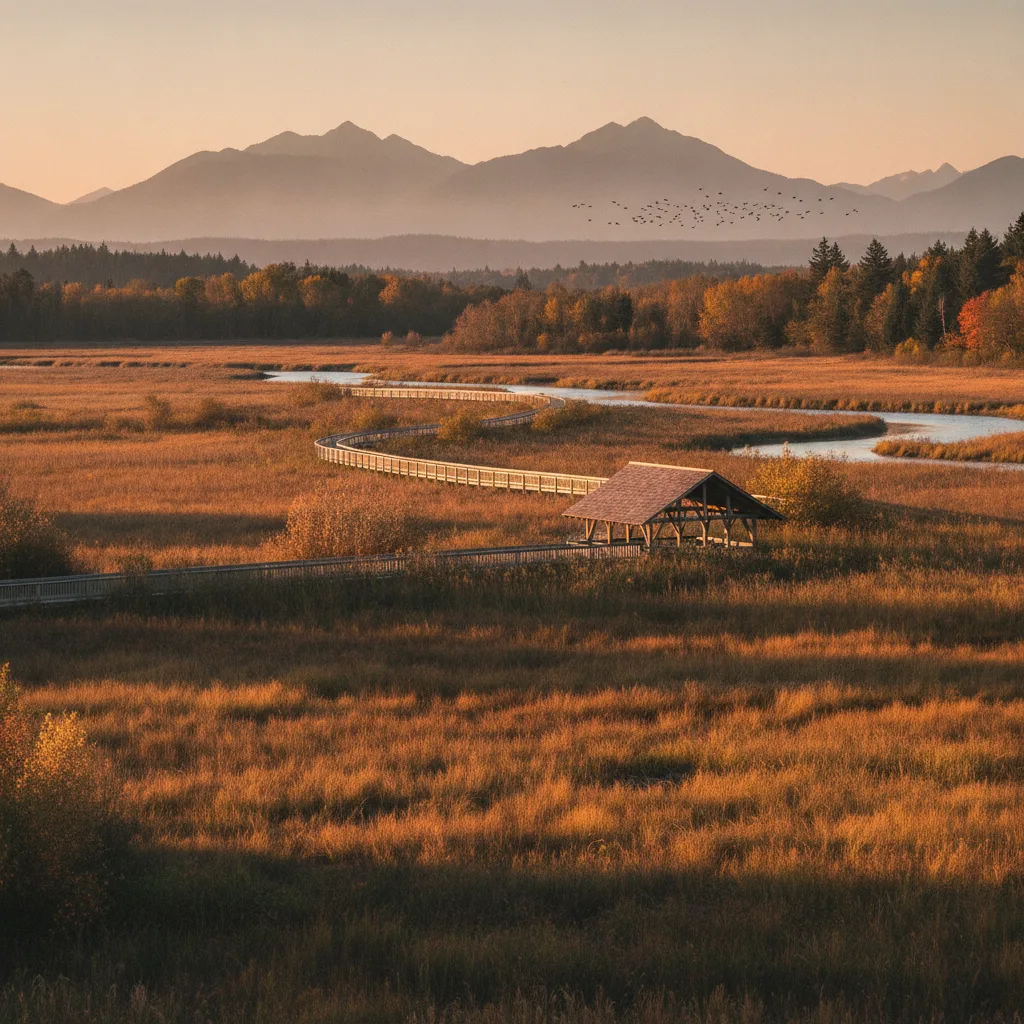
Nisqually National Wildlife Refuge Travel Guide — Washington
Our Nisqually National Wildlife Refuge guide covers practical planning for Nisqually National Wildlife Refuge Washington — best time to visit, getting there, and what to do on the ground.
Why Visit Nisqually National Wildlife Refuge
For those seeking an authentic encounter with the Pacific Northwest's natural splendor, the Billy Frank Jr. Nisqually National Wildlife Refuge offers an unparalleled experience. This sanctuary, located where the Nisqually River meets the saltwater of South Puget Sound, protects a vital estuary habitat, serving as a critical haven for migratory birds and a diverse array of other wildlife. Our team considers it one of the best places in Washington for wildlife observation and nature photography.
The refuge is celebrated for its biologically rich and diverse delta, which supports a mosaic of habitats including salt marshes, freshwater wetlands, riparian forests, and grasslands. This unique ecosystem attracts over 275 migratory bird species, making it a premier birdwatching destination along the Pacific Flyway. Beyond the avian spectacle, visitors can often spot salmon, harbor seals, and various amphibians and fish within the sloughs and mudflats. The refuge's commitment to conservation is evident in its history, established in 1974 and later undergoing a significant estuary restoration project in 2009, which reconnected 762 acres with the tides of Puget Sound—the largest such project in the Pacific Northwest. We believe that experiencing this thriving, protected environment offers a profound connection to the region's ecological importance.
Who It's Best For
The Nisqually National Wildlife Refuge is ideal for a specific type of traveler, one who prioritizes quiet observation and a deep appreciation for nature. It's particularly well-suited for:
- **Birdwatchers:** With hundreds of bird species, including bald eagles, great blue herons, and various waterfowl, the refuge is a paradise for bird enthusiasts. Bring your binoculars and spotting scopes for optimal viewing.
- **Nature Photographers:** The diverse landscapes, changing tides, and abundant wildlife provide endless opportunities for stunning shots. The boardwalks offer unique vantage points over the estuary.
- **Hikers and Walkers:** Those who enjoy leisurely, flat walks will appreciate the refuge's well-maintained trails and boardwalks. It's an excellent spot for a "good, long walk" to clear your head and immerse yourself in natural surroundings.
- **Families with Older Children:** While not a playground, the refuge offers an educational and engaging outdoor experience for children interested in wildlife and ecosystems. We recommend preparing younger visitors for a quiet, observational visit.
- **Anyone Seeking Tranquility:** The refuge's rules against jogging, recreational wheels, and pets are designed to minimize disturbance to wildlife, creating a peaceful environment for all visitors. It's a perfect escape from urban noise.
However, it's important to note who the refuge is *not* best for. If you're looking for strenuous hikes, mountain biking, or a place to bring your pets (other than service animals), this isn't the destination. The focus here is on quiet, wildlife-dependent recreation.
Getting There & Parking
Navigating to the Billy Frank Jr. Nisqually National Wildlife Refuge is straightforward, thanks to its convenient location just off Interstate 5. The refuge is situated approximately 8 miles northeast of Olympia, Washington, at 100 Brown Farm Road, Olympia, WA 98516.
How to Get There
- **From the Southbound I-5:** Take Exit 114. Turn right at the traffic light, proceed under I-5, and then make another right turn into the Refuge entrance.
- **From the Northbound I-5:** Take Exit 114. Turn left at the stop sign, go under I-5, and then make a right turn into the Refuge entrance.
The refuge is well-signed from the interstate, making it difficult to miss. The vista opens up, revealing the estuary leading to South Puget Sound on the north side of the highway.
Parking
Once you've turned into the refuge, follow the entrance road to the two designated public parking lots. Our team found that there are approximately 100 parking spots available. It's crucial to remember that overnight parking is strictly prohibited at the refuge. Also, pets are not allowed in the parking areas or left in vehicles, as the refuge aims to minimize disturbance to wildlife.
Top Things to Do
The Nisqually National Wildlife Refuge offers a variety of immersive activities centered around wildlife observation and nature appreciation. Our team recommends planning at least two hours, and ideally half a day, to fully experience the refuge's offerings.
Wildlife Viewing and Birdwatching
The primary draw of the Nisqually National Wildlife Refuge Washington is its incredible wildlife. With over 275 species of migratory birds, it's a prime location for birdwatching year-round. Visitors can expect to see a wide array of waterfowl, shorebirds, raptors, and songbirds, including Cackling Geese, American Wigeons, Bald Eagles, Great Blue Herons, and various gulls and swallows. The changing tides significantly impact wildlife viewing, transforming mudflats into feeding grounds as the water rises. Beyond birds, keep an eye out for harbor seals, salmon, and other estuarine creatures. We recommend bringing binoculars for the best experience.
Nisqually National Wildlife Refuge Hiking Trails
The refuge boasts approximately 4 miles of trails, offering excellent opportunities for gentle hikes and nature walks. The trails are designed to guide visitors through diverse habitats while minimizing disturbance to wildlife.
- Nisqually Estuary Boardwalk Trail: This is the crown jewel of the refuge, extending one mile over the estuary and providing elevated perspectives of the habitats below. The full round-trip experience from the visitor center is about 4 to 5 miles. A portion of this trail is subject to seasonal closure during waterfowl hunting season, typically from early October to late January, to provide an undisturbed area for birds.
- Twin Barns Loop Trail: An accessible, flat one-mile loop trail that offers views of the Nisqually River, wetlands, riparian habitat, and the historic twin barns. This trail is open year-round.
- Brown Farm Dike Trail: This 5.5-mile trail allows visitors to view six distinct habitat types, separating saltwater from freshwater areas.
Most of the trails are on boardwalks and are wheelchair accessible, making the Nisqually National Wildlife Refuge hiking trails enjoyable for a wide range of visitors. Remember, only walking is permitted on the trails; jogging, bicycles, and scooters are prohibited.
Visitor Center and Guided Programs
The Norm Dicks Visitor Center is an excellent starting point for any visit. It offers exhibits that provide an overview of the Nisqually River Delta, its wildlife, and habitats. Volunteers are often on hand to provide updated wildlife sightings and help plan your visit. The visitor center is open Wednesday through Sunday from 9 a.m. to 4 p.m..
The refuge also hosts various guided walks and birding events throughout the year. As of 2026, these include Wednesday Birding walks, Saturday Nature Walks, Thursday Nature Walks (focusing on the Twin Barns Loop Trail), Sunday Nature Walks, and special Birding After Work events. These programs are a fantastic way to learn more from knowledgeable volunteers.
Best Time to Visit
The Nisqually National Wildlife Refuge is open year-round from sunrise to sunset, offering different experiences with each season and tidal stage. However, our team has identified specific periods that might enhance your visit:
- **Fall and Spring Migrations:** These are arguably the best times for birdwatching, as hundreds of migratory species use the refuge as a staging area, sanctuary, and stopover along the Pacific Flyway. The sheer volume and diversity of birds during these seasons are truly spectacular.
- **Winter:** While colder, winter brings a different set of waterfowl and raptors. It's an excellent time to spot species that winter in the Puget Sound area. Be aware that a portion of the Nisqually Estuary Boardwalk Trail is typically closed from early October to late January for waterfowl hunting season, though the main refuge trails remain open.
- **Summer:** Summer offers longer daylight hours and generally pleasant weather for walking the trails. While migratory bird numbers might be lower than in peak migration, resident species are active, and the lush greenery provides a beautiful backdrop. Guided plant walks are also offered during the summer.
Regardless of the season, checking the tide charts before your visit can significantly impact your experience. High tide often brings wildlife closer to the boardwalks, while low tide reveals vast mudflats, which are crucial feeding grounds for shorebirds. The refuge website (part of the National Park Service system, www.nps.gov, or the official U.S. Fish & Wildlife Service site) is an excellent resource for current conditions and event schedules.
Where to Stay Nearby
While camping is not permitted within the Nisqually National Wildlife Refuge itself, there are numerous lodging options in the surrounding areas, primarily in Olympia and Lacey, Washington. Our team recommends these nearby towns for convenient access to the refuge and other regional attractions.
Nisqually National Wildlife Refuge Lodging Options:
- **Olympia, Washington:** As the state capital, Olympia offers a wide range of hotels, from budget-friendly to more upscale options. It's approximately 8 miles from the refuge. Many hotels in Olympia provide easy access to I-5, making the commute to the refuge simple. Popular choices include the Courtyard By Marriott Olympia, DoubleTree by Hilton Olympia Downtown Capitol District, and Hilton Garden Inn Olympia, all of which have received excellent reviews.
- **Lacey, Washington:** Located just east of Olympia, Lacey is another excellent choice for Nisqually National Wildlife Refuge lodging. It offers a variety of hotels, often at competitive prices, and is also conveniently located off I-5. Options like La Quinta Inn by Wyndham Olympia - Lacey, Best Western Plus Lacey Inn & Suites, and Hampton Inn & Suites Olympia Lacey are well-regarded.
- **Dupont, Washington:** Slightly further north, Dupont provides additional lodging choices, particularly beneficial if you're traveling from Tacoma or Seattle. Hotels here include FairBridge Inn & Suites Dupont, Best Western Liberty Inn DuPont JBLM, and Home2Suites by Hilton Dupont.
When selecting your Nisqually National Wildlife Refuge lodging, consider amenities like complimentary breakfast, indoor pools, and proximity to dining options. We advise booking in advance, especially during peak seasons, to secure your preferred accommodation.
Sample 2-Day Itinerary
To fully appreciate the Nisqually National Wildlife Refuge and its surroundings, our team suggests a two-day itinerary that balances wildlife immersion with exploration of nearby attractions.
Day 1: Nisqually National Wildlife Refuge Immersion
- Morning (9:00 AM - 1:00 PM): Refuge Exploration. Arrive at the Billy Frank Jr. Nisqually National Wildlife Refuge shortly after the Norm Dicks Visitor Center opens at 9 a.m.. Begin your visit at the center to gather information and check recent wildlife sightings. Then, embark on the Nisqually Estuary Boardwalk Trail, combining it with the Twin Barns Loop Trail for a comprehensive 4-5 mile walk. Dedicate ample time for birdwatching and nature photography.
- Lunch (1:00 PM - 2:00 PM): Picnic or Local Eatery. Pack a picnic to enjoy at one of the refuge's designated picnic areas, or head to a local eatery in nearby Olympia for a casual meal.
- Afternoon (2:00 PM - 5:00 PM): Deeper Dive into the Refuge. Explore other sections of the refuge, such as the Brown Farm Dike Trail, which offers different habitat views. Alternatively, join a scheduled guided walk if one aligns with your visit (check the refuge's events calendar for 2026 listings).
- Evening: Dinner in Olympia. Enjoy dinner at one of Olympia's acclaimed waterfront restaurants or explore the diverse culinary scene downtown.
Day 2: Olympia Exploration & Nature Nearby
- Morning (9:00 AM - 12:00 PM): Olympia's Highlights. Start your day by exploring Olympia. Visit the Washington State Capitol for a free guided tour. Stroll along Percival Landing, a mile-long boardwalk with views of the Capitol and Olympic Mountains. If it's a market day (Thursday-Sunday), explore the Olympia Farmers Market.
- Lunch (12:00 PM - 1:00 PM): Downtown Olympia. Grab lunch at a cafe or restaurant in downtown Olympia.
- Afternoon (1:00 PM - 4:00 PM): Tumwater Falls Park or Bloedel Reserve. Choose between two distinct natural experiences:
- Tumwater Falls Park: Just a short drive from downtown Olympia, this park features three cascading waterfalls and scenic walking paths.
- Bloedel Reserve: For a different kind of nature experience, consider a day trip to Bloedel Reserve on Bainbridge Island, known for its meticulously curated gardens and tranquil landscapes. This would require a ferry ride, so plan accordingly.
- Late Afternoon/Evening: Departure or Extended Stay. Depending on your travel plans, you can begin your journey home or enjoy another evening in Olympia. For those interested in art and culture, consider visiting Chihuly Garden and Glass in Seattle on your way back north. If you're heading further into Washington, Deception Pass State Park offers stunning coastal scenery. For more ideas, consult our Plan Your US Trip guide or our USA Road Trip Planner. For comprehensive state information, visit State of Washington Tourism.
Last updated: 2026-07-13 by the Roam States team.