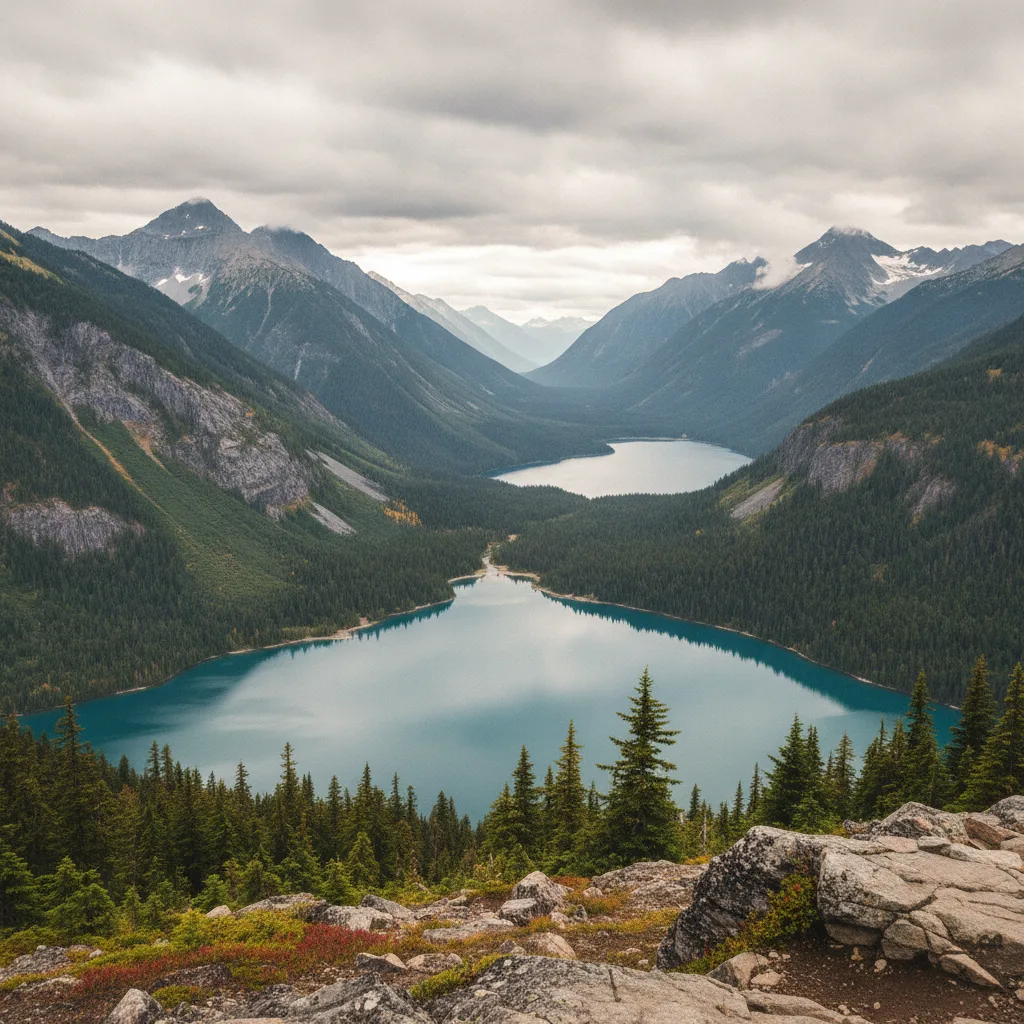
Welcome to our comprehensive guide to North Cascades National Park Washington, a truly wild and untamed corner of the Pacific Northwest. Our team at Roam States has explored countless national parks, and we can confidently say that the North Cascades stand apart. This rugged, isolated wilderness boasts the highest concentration of glaciers in the contiguous United States, offering a landscape of breathtaking peaks, turquoise alpine lakes, and dense, ancient forests. Unlike some of its more famous counterparts, North Cascades National Park Washington offers a profound sense of solitude and a genuine backcountry experience for those willing to venture off the beaten path. We're here to help you navigate this magnificent region, ensuring your trip is as rewarding as the views themselves.
Why Visit North Cascades National Park
If you're seeking a national park experience that emphasizes raw, untamed beauty over paved attractions and bustling crowds, North Cascades National Park is your destination. Often dubbed the "American Alps," this park is a geological marvel, home to over 300 glaciers, more than any other park in the Lower 48. The sheer scale of the glaciated peaks, some rising over 9,000 feet, is awe-inspiring.
Beyond the dramatic geology, the park offers an incredible diversity of ecosystems. From the lush, old-growth forests of the western slopes, fed by abundant rainfall, to the drier, Ponderosa pine forests on the eastern side, the landscapes shift dramatically as you traverse the North Cascades Highway. This ecological richness supports a wide array of wildlife, including black bears, mountain goats, and various bird species, making it a prime location for wildlife viewing for the patient observer.
What truly sets North Cascades apart is its relative solitude. While other Washington giants like Mount Rainier and Olympic National Park draw millions, North Cascades sees a fraction of the visitors, offering a more peaceful and immersive wilderness experience. It's a place where you can truly disconnect, challenge yourself on demanding trails, or simply soak in the panoramic vistas without feeling rushed.
Who It's Best For
North Cascades National Park is ideal for adventurous souls and those who prioritize rugged wilderness over developed amenities. It’s a paradise for serious hikers, backpackers, and climbers who are prepared for challenging terrain and variable weather. The park's extensive trail network, ranging from moderate day hikes to strenuous multi-day expeditions, caters to those with good fitness levels and a desire to explore deep into the backcountry.
While the park is primarily geared towards experienced outdoor enthusiasts, it also offers rewarding experiences for families and less strenuous travelers. Scenic drives along the North Cascades Highway (SR 20) provide access to stunning overlooks like Diablo Lake and Washington Pass, making it accessible for those who prefer roadside views or shorter, easier walks. However, visitors should be prepared for limited cell service and sparse amenities within the park complex. If you're looking for a national park where the journey is as much a part of the adventure as the destination, and you appreciate raw, untouched nature, then North Cascades National Park is for you.
Getting There & Parking
Understanding how to get to North Cascades National Park is crucial for planning your trip, as accessibility is largely dictated by the seasonal closure of State Route 20 (SR 20), also known as the North Cascades Highway. Most visitors arrive by car, and primary access to North Cascades National Park and Ross Lake National Recreation Area is via this scenic corridor. From the west, you'll typically take Interstate 5 to Exit 230 at Burlington, then connect to SR 20. From the east, SR 20 intersects with U.S. Route 97 at Okanogan and State Route 153 at Twisp.
The North Cascades Highway typically closes due to snow and avalanche hazards from late November/early December through April or early May, with some high-elevation sections remaining snow-covered until July. In 2026, due to December 2025 floods and a March rockslide, emergency repairs on SR 20 caused a delayed full reopening. The highway fully reopened on Sunday, June 14, 2026, between Ross Dam Trailhead and Porcupine Creek, after extensive repair work. Always check the Washington State Department of Transportation (WSDOT) Real Time Map for current road conditions before you head out.
For those wondering how to get to North Cascades National Park without a personal vehicle, public transportation options are extremely limited. Amtrak offers train service to Mount Vernon (via Amtrak Cascades) or Seattle (via Empire Builder), but you'll need to arrange further transportation, such as a rental car or bus, to reach the park from there. Greyhound also serves nearby communities like Mount Vernon and Bellingham. For the remote Stehekin area, accessible only by boat, floatplane, or hiking, the Lady of the Lake ferry provides service from Chelan.
Regarding parking, there is no federal entrance fee for North Cascades National Park, meaning you won't pay for parking at trailheads directly on National Park Service lands. However, a Northwest Forest Pass or America the Beautiful Pass is required at many trailheads on adjacent U.S. Forest Service lands that lead into the national park. Parking at popular trailheads can be limited, especially during peak season, so arriving early is highly recommended. Cell service is unreliable or nonexistent throughout much of the park, so downloading offline maps in advance is a smart move.
Top Things to Do
When planning your visit, you'll find an abundance of things to do at North Cascades National Park, whether you're seeking panoramic views, challenging hikes, or serene moments by an alpine lake. Our team recommends focusing on these key experiences to truly capture the essence of the "American Alps."
- Scenic Drives and Overlooks: The North Cascades Highway (SR 20) is the backbone of the park, offering spectacular views right from your car. Don't miss the iconic Diablo Lake Overlook, famous for its milky turquoise waters, a result of glacial rock flour. Further east, the Washington Pass Overlook provides dramatic summit views of jagged peaks. Other notable stops include Gorge Creek Falls and Ross Lake Overlook.
- Boating and Kayaking on Alpine Lakes: Experiencing the park from its stunning waters is one of the best things to do at North Cascades National Park. Diablo Lake, Ross Lake, and Gorge Lake offer opportunities for kayaking, canoeing, and small motorized boats. Ross Lake, in particular, is popular for boat-in camping and exploring by water taxi.
- Visit Stehekin: This charming, remote community at the head of Lake Chelan is a unique experience. Accessible only by passenger ferry, floatplane, or hiking, Stehekin offers a slower pace of life, with opportunities for camping, biking, and exploring the valley.
- North Cascades Institute: Located on Diablo Lake, this environmental learning center offers educational programs and opportunities to connect with the park's natural and cultural history.
- Wildlife Viewing: Keep an eye out for diverse wildlife, including black bears, deer, mountain goats, and a variety of bird species, especially in alpine meadows and along quiet trails.
- Stargazing: With minimal light pollution, North Cascades National Park offers incredible opportunities for stargazing on clear nights.
These things to do at North Cascades National Park provide a blend of accessibility and adventure, ensuring a memorable visit for all types of travelers.
Best Time to Visit
Choosing the best time to visit North Cascades National Park largely depends on what you want to experience, as the park's accessibility and activities are heavily influenced by seasonal weather. Our team generally recommends late spring through early fall, specifically July through September, as the optimal window for most visitors.
During July and August, you'll find the best weather for hiking, camping, and exploring the park's stunning alpine scenery, with daytime highs around 14-15°C. This is when most high-elevation trails are snow-free, and the North Cascades Highway (SR 20) is fully open, allowing complete traverse of the park. However, this is also peak season, so expect higher prices and more crowds at popular spots.
The shoulder seasons of June and September offer a fantastic alternative. In June, snow begins to melt, wildflowers bloom, and while some higher trails might still have lingering snow, you'll encounter fewer crowds and potentially better prices. Early September is often considered the best overall time for first-time visitors, providing a mix of open road access, melted-out trails, cooler nights, fewer bugs, and a slightly calmer atmosphere after Labor Day. Fall (September-October) is particularly beautiful, with the western larch trees turning golden, creating a spectacular backdrop for hikes like the Maple Pass Loop.
It's crucial to remember that Highway 20 typically closes from late fall (around October/November) through April or early May due to heavy snow and avalanche hazards, making winter access limited to specific areas and specialized activities like ski mountaineering. Always check current road and trail conditions with the National Park Service and WSDOT before your trip, especially if visiting in the spring or late fall.
Where to Stay Nearby
Given the rugged nature of North Cascades National Park, lodging options within the park boundaries are extremely limited, primarily consisting of campgrounds and the remote North Cascades Lodge at Stehekin (accessible by ferry). Therefore, most visitors choose to stay in gateway communities outside the park.
On the western side of the park, towns like **Marblemount** and **Newhalem** serve as the closest hubs. Marblemount offers a few basic services, including gas and the Wilderness Information Center for permits. Newhalem, a small company town, has the Skagit Information Center and some short interpretive trails. These towns are ideal for accessing the western trailheads and scenic viewpoints along SR 20.
Further west along I-5, larger towns like **Sedro-Woolley** and **Burlington** provide more extensive lodging, dining, and supply options before you head into the mountains. These are good bases if you plan to make day trips into the park.
On the eastern side of the park, the charming towns of **Winthrop** and **Mazama** in the Methow Valley offer a distinctly different, more developed experience. These towns are known for their Western-themed architecture, cross-country skiing in winter, and a wider range of accommodations, from inns and cabins to vacation rentals. They are excellent bases for exploring the eastern side of SR 20, including trails around Washington Pass and the iconic Maple Pass Loop. **Twisp** is another option in the Methow Valley with services.
For a truly unique experience, consider staying in **Stehekin**, located at the head of Lake Chelan. This car-free community offers a lodge, cabins, and campgrounds, providing a tranquil escape. Access is via the Lady of the Lake ferry from Chelan, which itself is a popular resort town with various lodging options on the eastern side of the Cascades.
When planning your trip, remember that services within the park are sparse, so stock up on gas, food, and other essentials in these gateway communities.
Sample 2-Day Itinerary
To truly experience the diverse landscapes of North Cascades National Park, we recommend at least two full days, focusing on a mix of scenic drives and invigorating hikes. This sample itinerary assumes you're traveling along the North Cascades Highway (SR 20) during its open season (typically late May to mid-October).
Day 1: Western Wonders & Iconic Views
- Morning (West Side Exploration): Start your day early from a western gateway town like Marblemount. Head east on SR 20. Your first stop should be the North Cascades Visitor Center in Newhalem to gather maps and current conditions. Take a short, easy walk on the Trail of the Cedars, an interpretive loop through old-growth forest.
- Late Morning (Gorge & Diablo Lakes): Continue east to the Gorge Creek Falls Viewpoint for views of the Skagit River gorge. Next, prepare for the breathtaking Diablo Lake Overlook. Spend time soaking in the famous turquoise waters, a quintessential North Cascades photo op. Consider renting a kayak or canoe on Diablo Lake for a unique perspective.
- Afternoon (Ross Lake & Easy Hike): Drive a bit further to the Ross Lake Overlook for another stunning vista. If time and energy permit, hike the moderate Thunder Knob Trail (3.6 miles roundtrip, 635 ft elevation gain) for excellent views over Diablo Lake. Alternatively, the Happy Creek Forest Walk is a shorter, easier option.
- Evening: Head back to a campground on the western side (e.g., Newhalem Creek, Colonial Creek) or a lodge in Marblemount for the night.
Day 2: Alpine Majesty & Eastern Expanses
- Morning (High Alpine Hikes): Begin your day early, driving further east on SR 20 towards the higher elevations. This is where you'll find some of the most rewarding North Cascades National Park hiking trails. Choose one of the premier hikes:
- Maple Pass Loop: (7.2 miles roundtrip, 2,000 ft elevation gain, moderate to challenging) Widely considered the park's premier hike, offering vast views of jagged peaks, glacial valleys, and deep blue lakes. In early fall, golden larches make this hike exceptionally popular.
- Blue Lake Trail: (4.4 miles roundtrip, 900 ft elevation gain, moderate) A fantastic shorter alpine hike with a high reward-to-effort ratio, leading to a gorgeous alpine lake backed by stunning peaks.
- Cascade Pass Trail (with optional Sahale Arm): (7.4 miles roundtrip to Cascade Pass, 11.7 miles to Sahale Glacier, challenging) A classic North Cascades trail offering panoramic views of glaciers and peaks.
- Lunch (Washington Pass): After your hike, drive to the Washington Pass Overlook for a final, dramatic alpine vista before descending into the drier eastern slopes.
- Afternoon (Eastern Side Charm): Continue east on SR 20 into the Methow Valley. Explore the charming Western-themed town of Winthrop, perhaps grabbing a bite to eat or browsing the shops.
- Evening: Depart from Winthrop, or stay overnight in Winthrop or Mazama to enjoy the eastern side's amenities.
This itinerary provides a solid introduction to North Cascades National Park, balancing iconic viewpoints with memorable hiking experiences. Remember to pack layers, plenty of water, and consult current conditions before embarking on any trail.
North Cascades National Park Hiking Trails
The North Cascades National Park hiking trails are truly the heart of the park, offering unparalleled access to its rugged alpine wilderness. Our team considers this region a hiker's paradise, with options ranging from easy interpretive walks to strenuous climbs that reward with expansive glacier views. When exploring North Cascades National Park hiking trails, be prepared for significant elevation gains and variable weather, even in summer.
Some of the most popular North Cascades National Park hiking trails include:
- Maple Pass Loop: This 7.2-mile moderate-to-challenging loop is often cited as the premier hike in the North Cascades. It ascends steadily through forests before opening into alpine terrain, offering vast views of jagged peaks, glacial valleys, and deep blue lakes. In autumn, the golden larches around the pass make it one of Washington's most photographed hikes.
- Blue Lake Trail: A shorter, yet incredibly rewarding 4.4-mile moderate hike, the Blue Lake Trail leads through forest to a stunning alpine lake backed by dramatic peaks. It's considered one of the best family-friendly hikes in the park for those ready for a longer day.
- Cascade Pass Trail & Sahale Arm: This classic trail climbs through switchbacks to open alpine slopes, providing broad scenery of surrounding glaciers and peaks. Many hikers continue to Sahale Arm for even grander mountain vistas. The full Sahale Glacier via Cascade/Sahale Arm Trail is an 11.7-mile challenging route.
- Hidden Lake Lookout Trail: A more demanding hike, this trail climbs steeply to a historic fire lookout perched above Hidden Lake, offering sweeping alpine views of jagged peaks and glaciers. You can even stay overnight in the lookout on a first-come, first-served basis.
- Thunder Creek Trail: This hike takes you along Thunder Creek through lush old-growth forest to a wooden bridge, with options for longer backpacking trips.
- Trail of the Cedars: For an easier, family-friendly option, the Trail of the Cedars is a short, accessible interpretive walk near the North Cascades Visitor Center, perfect for experiencing the park's old-growth forest.
Remember that many of these North Cascades National Park hiking trails, especially at higher elevations, may remain snow-covered until July, even after the North Cascades Highway reopens. Always check current trail conditions and weather forecasts before heading out.
North Cascades National Park Camping
For many, North Cascades National Park camping is the quintessential way to experience this rugged wilderness. Our team agrees that spending a night under the starry sky, surrounded by the sounds of nature, offers an unparalleled connection to the park. There are various North Cascades National Park camping options, including drive-in, boat-in, and hike-in campgrounds.
All drive-in campgrounds along State Route 20 operate on a reservation system through Recreation.gov during the operational season, which typically runs from mid-May to early September. In 2026, campgrounds opened for the season on May 18. It's highly advisable to make reservations as early as possible, as popular sites fill up quickly. Some sites may be released six months in advance, while others are available seven days prior. Outside the operational season, some campgrounds, like Goodell Creek, may be open year-round on a first-come, first-served basis, often without water or trash services and no fees.
Key drive-in North Cascades National Park camping options include:
- Newhalem Creek Campground: Offering 107 sites (13 tent-only) and two group sites, this comfortable campground is near Newhalem, the Visitor Center, and the Skagit River. Standard sites are $24 per night, and group sites are $75 per night. It's open May 18–September 6, 2026, with drinking water, dump station, trash, and flush toilets available seasonally.
- Colonial Creek North & South Campgrounds: Located on Diablo Lake, these campgrounds offer numerous sites (North has 37, South has 93) and are surrounded by old-growth forest. Standard sites are $24 per night, open May 18-September 6, 2026. Vault toilets are available year-round, with flush toilets and water seasonally.
- Goodell Creek Campground: Open year-round, this campground offers 19 sites for $20 per night during the peak season (May 18–September 6, 2026). Sites 1-13 are reservable 6 months in advance, and sites 14-19 are available 7 days in advance. It’s situated in a lush forest on the banks of the Skagit River.
- Gorge Lake Campground: This campground is located on Gorge Lake and is listed at $20 per night. However, it remains closed until further notice due to debris flow and flooding hazards following the 2023 Sourdough Fire.
For backcountry adventures, wilderness permits are required year-round for North Cascades National Park camping in the backcountry. Reservations for backcountry permits are processed through Recreation.gov and require approval from wilderness rangers. An early-access lottery is available, followed by a general on-sale period. Approximately 40% of sites are available as walk-up permits. Backcountry permit fees are $10 per person (youth 15 and under are free) plus a $6 non-refundable reservation fee. Remember that services are limited in all campgrounds; bring your own firewood, and be aware that cell service is often nonexistent.
Is It Worth Visiting?
The question of "is North Cascades National Park worth visiting?" is one we get often, and our answer is an unequivocal yes, especially for those seeking a truly wild and immersive experience. While it may not have the iconic, easily accessible landmarks of some other national parks, its unique character and breathtaking beauty make it an exceptional destination.
What makes North Cascades National Park worth visiting is its unparalleled concentration of glaciers, earning it the moniker "American Alps". The dramatic, jagged peaks, carved by these glaciers, create a landscape that feels both ancient and alive. The vibrant turquoise lakes, fed by glacial meltwater, are a sight to behold and offer stunning photographic opportunities.
Furthermore, North Cascades National Park offers a profound sense of solitude that is increasingly rare in popular national parks. It receives a fraction of the visitors compared to Mount Rainier or Olympic National Park, meaning you're more likely to find peace and quiet on its extensive network of trails. This makes it an ideal destination for those who wish to disconnect and truly immerse themselves in nature. The park is also one of the few national parks with no entrance fee, making it an accessible option for many travelers.
However, it's important to set expectations. Is North Cascades National Park worth visiting for everyone? Perhaps not for those who prefer highly developed parks with abundant amenities, paved viewpoints at every turn, or extensive public transportation within the park. This is a park for adventurers, for hikers, for those who appreciate the raw power of nature and are prepared for limited services and challenging conditions. If that sounds like you, then the North Cascades will undoubtedly be an unforgettable and deeply rewarding destination.
FAQ Longtails
What are the best things to do in Northern WA?
Northern Washington offers a wealth of activities beyond North Cascades National Park. We highly recommend exploring the vibrant city of Seattle, home to iconic attractions like Pike Place Market, the Space Needle, and Chihuly Garden and Glass. For more natural beauty, consider visiting Mount Rainier National Park or Olympic National Park for their diverse landscapes and extensive hiking opportunities. The San Juan Islands offer a charming coastal escape with whale watching and island hopping. Don't forget to explore the broader Best places in Washington for a comprehensive list of experiences.
Is North Cascades National Park suitable for visiting with kids?
North Cascades National Park can be suitable for visiting with kids, especially if you focus on accessible attractions and shorter, family-friendly trails. Our team suggests starting at the North Cascades Visitor Center in Newhalem, where kids can learn about the park. Easy hikes like the Trail of the Cedars, Ladder Creek Falls, and Cutthroat Lake are great options with minimal elevation gain. The Diablo Lake Overlook provides a stunning view without any hiking. Older children with more stamina might enjoy the Blue Lake Trail. When planning, remember that cell service is limited, and amenities are sparse, so come prepared with snacks, water, and entertainment.
What are some essential North Cascades National Park tips?
Our top North Cascades National Park tips include: always check the Washington State Department of Transportation (WSDOT) for current SR 20 road conditions before you go, as the highway closes seasonally due to snow. Download offline maps, as cell service is extremely limited. Pack layers, as weather can change rapidly, and bring full waterproof gear, especially on the western slopes. There is no entrance fee, but a Northwest Forest Pass may be required for some adjacent US Forest Service trailheads. Make camping reservations well in advance, particularly during peak season. Finally, be prepared for limited food, gas, and lodging within the park complex itself.
What should I know about North Cascades National Park parking?
North Cascades National Park parking is generally free at trailheads located on National Park Service lands, as there is no entrance fee for the park itself. However, for many trailheads on adjacent U.S. Forest Service lands that lead into the park, a Northwest Forest Pass or an America the Beautiful Pass is required. Parking lots at popular trailheads, especially for hikes like Maple Pass Loop and Cascade Pass, can fill up quickly during peak season, so we advise arriving early in the morning. Some forest roads leading to trailheads can be rough and require high-clearance vehicles. Always be aware of signage and park only in designated areas.
What is the best time to visit North Cascades National Park?
The best time to visit North Cascades National Park is typically from July through September. During these months, the North Cascades Highway (SR 20) is fully open, and most high-elevation hiking trails are free of snow, offering the best conditions for exploring. Early September is often highlighted as an excellent period, providing good weather, fewer bugs, and slightly less crowded trails after the peak summer rush. While May and June can be beautiful with wildflowers and melting snow, some higher trails may still be inaccessible. The highway closes seasonally from late fall through mid-spring due to snow.
What are the North Cascades National Park hours and fees?
North Cascades National Park Service Complex is open year-round, but access is heavily restricted in winter due to snow closures on State Route 20 (North Cascades Highway). The North Cascades Visitor Center in Newhalem is open daily from May 18 - September 27, 2026, from 9 AM to 5 PM. The Wilderness Information Center in Marblemount is open daily from May 15 - October 10, 2026, from 7-11:30 AM and 12:30-4 PM.
Regarding fees, there is no entrance fee to North Cascades National Park, making it one of the few national parks that does not charge for entry. However, camping fees apply for drive-in campgrounds (e.g., Newhalem Creek, Colonial Creek are $24/night; Goodell Creek is $20/night). Backcountry camping requires a permit, which costs $10 per person (free for youth 15 and under) plus a $6 non-refundable reservation fee. Additionally, a Northwest Forest Pass or America the Beautiful Pass may be required for parking at some U.S. Forest Service trailheads adjacent to the park.
Our team at Roam States wholeheartedly recommends North Cascades National Park for travelers seeking an authentic wilderness experience. Its unparalleled glaciated peaks, pristine alpine lakes, and extensive trail system offer a profound sense of adventure and solitude. While it demands careful planning due to its remote nature and seasonal accessibility, the rewards—from breathtaking scenic drives to challenging, deeply rewarding hikes—are immense. We believe this park represents the very best of Washington's wild heart, a place where you can truly connect with the raw beauty of the American Alps. Plan your trip, embrace the ruggedness, and prepare to be awe-struck by North Cascades National Park.
Last updated: 2026-07-08 by the Roam States team.