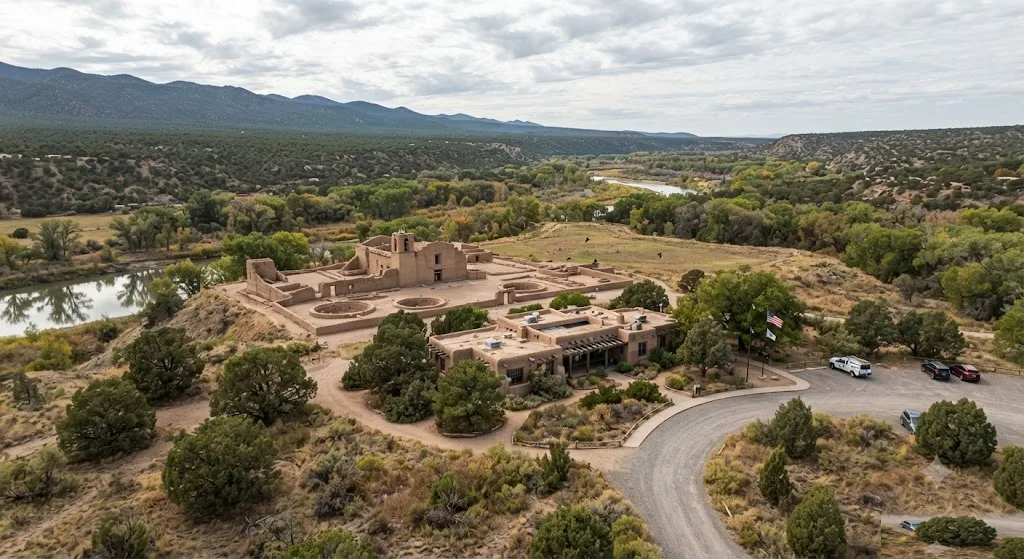
Pecos National Historical Park Travel Guide — New Mexico
Our team at Roam States has explored countless corners of the American West, and we can confidently say that Pecos National Historical Park New Mexico stands out as a truly unique destination. This isn't just another historical site; it's a profound journey through time, interpreting the complex cultural exchange and conflict between ancient pueblos, Spanish missions, and Civil War forces. We've compiled this comprehensive guide to help you navigate its rich history and stunning landscapes, ensuring your visit is as insightful and rewarding as possible.
Why Visit Pecos National Historical Park
Pecos National Historical Park offers a multi-layered historical experience unlike any other. For over 12,000 years, this geographic corridor, known as Glorieta Pass, has served as a vital channel for hunters, gatherers, traders, conquerors, and settlers alike. We find the park's ability to weave together such disparate narratives – from the thriving Pecos Pueblo to the imposing Spanish missions, the pivotal Civil War Battle of Glorieta Pass, and even 20th-century ranching history – truly compelling.
At its heart, the park preserves the remains of Pecos Pueblo, or Cicuye Pueblo, a once-powerful Native American community that flourished as a major trade center between the Plains Indians and the Rio Grande Pueblos. Here, you can trace the footsteps of its inhabitants, marvel at their inventive architecture, and explore the remnants of their elaborate religious life, including subterranean kivas. The park also vividly recounts the arrival of the Spanish, their efforts to establish missions, and the subsequent Pueblo Revolt of 1680, a powerful assertion of Indigenous sovereignty.
Beyond the ancient pueblo, Pecos National Historical Park also protects the site of the Battle of Glorieta Pass, a decisive Union victory in March 1862 that thwarted Confederate plans to control the Southwest during the Civil War. This rich tapestry of human endeavor and conflict, set against a backdrop of piñon and juniper woodlands and the Sangre de Cristo Mountains, makes Pecos an essential stop for anyone seeking to understand the deep history of New Mexico.
Who It's Best For
Pecos National Historical Park is an ideal destination for history buffs, cultural enthusiasts, and anyone with a keen interest in the American Southwest. If you appreciate delving into the intricate layers of human history, from ancient civilizations to pivotal military conflicts, you'll find this park incredibly rewarding. It's particularly well-suited for:
- History Enthusiasts: Those fascinated by Native American history, Spanish colonial influence, the Santa Fe Trail, and the Civil War will find a wealth of interpretive information and tangible ruins to explore.
- Families with Curious Kids: The park offers a Junior Ranger program, making learning engaging for younger visitors. The Ancestral Sites Trail is an easy, family-friendly hike that brings history to life.
- Hikers and Nature Lovers: With several miles of trails, including easy strolls and more strenuous treks, visitors can enjoy the stunning views of Glorieta Mesa and the Sangre de Cristo Mountains. Birding and fishing (with a permit) are also popular activities.
- Photographers and Artists: The dramatic landscapes, ancient ruins, and historic architecture provide endless opportunities for capturing unique and evocative images.
- Travelers Seeking Authenticity: If you prefer independent, meaningful exploration over crowded tourist traps, Pecos offers a more secluded and reflective experience, especially during the off-season.
We believe that anyone looking for an enriching and educational travel experience in New Mexico will find Pecos National Historical Park to be a truly captivating and accessible destination, especially since there is no entrance fee.
How to Get There
Reaching Pecos National Historical Park is straightforward, as it's conveniently located just a short drive from Santa Fe. We recommend making Santa Fe your base for exploring this region of New Mexico, as it offers a wide range of accommodations and dining options. The park is situated approximately 25 miles southeast of Santa Fe, off Interstate 25.
Driving Directions:
- From I-25 North (e.g., from Santa Fe): Take Exit 299 for Pecos-Glorieta. Turn east onto NM 50 towards Pecos, then take NM 63 south for about two miles to the park entrance.
- From I-25 South (e.g., from Albuquerque): Take Exit 307 for Rowe. Turn north onto NM 63 and drive approximately five miles to the park entrance.
For GPS navigation, our team suggests using the address "1 Peach Drive, Pecos, NM 87552".
Parking:
Ample parking is available at the E.E. Fogelson Visitor Center, which serves as the primary starting point for most park activities. From here, you can access the museum, bookstore, and the popular Ancestral Sites Trail. Parking for other trails, such as the Glorieta Battlefield Trail and the South Pasture Loop Trail, is also clearly marked, though some may require a short drive from the visitor center. There are no specific fees associated with parking at Pecos National Historical Park.
Top Things to Do
Exploring Pecos National Historical Park offers a wide array of activities that immerse you in centuries of history and breathtaking natural beauty. Our team found that a combination of self-guided exploration and ranger-led programs provides the most comprehensive experience of the many things to do at Pecos National Historical Park.
- Start at the E.E. Fogelson Visitor Center: This is your essential first stop. Here, you can view an excellent museum with exhibits covering the region's history, archaeology, and contemporary connections. We recommend watching the 12-minute introductory film and picking up a self-guided tour booklet for the Ancestral Sites Trail. The Western National Parks store is also located here.
- Hike the Ancestral Sites Trail: This 1.25-mile (2 km) roundtrip loop begins directly behind the visitor center and is an easy hike. It leads you through the ruins of Pecos Pueblo, the impressive 17th-century Spanish Mission Church, and two restored kivas. Interpretive signs along the way provide valuable historical context. Allow at least an hour for this main loop trail.
- Explore the Trading Post: Originally built as a stop along the Santa Fe Trail in the 1850s, the Trading Post has a rich history, even serving as a Union hospital during the Civil War. Today, it houses exhibits about ranching in New Mexico, the Civil War, and Westward Expansion.
- Join a Ranger-Led Program: For a deeper dive, consider one of the free ranger-led tours offered regularly, especially during the summer and winter months. These can include the Ancestral Sites Tour, Civil War Walking Tour, or the Forked Lightning Ranch Caravan Tour. Most do not require reservations, but it's always wise to check the park's calendar.
- Experience the Glorieta Pass Battlefield: While some areas of the battlefield are only accessible via ranger-guided tours, the Glorieta Battlefield Trail is a 2.25-mile (3.6 km) loop that offers a moderately strenuous hike through key historical sites. This trail provides detailed insights into the Civil War battle that took place here.
- Go Fishing on the Pecos River: The park offers a recreational fishing program along three miles of the Pecos River. The 2026 season runs from July 1 to October 31, and fishing is permitted seven days a week. Reservations are required and can be made up to 30 days in advance via Recreation.gov. Note that a valid New Mexico fishing license is required, and the use of live or dead organic baits is prohibited.
- Earn a Junior Ranger Badge: Kids can pick up a Junior Ranger booklet at the visitor center and complete activities to earn their badge, making their visit interactive and educational.
These things to do at Pecos National Historical Park provide a comprehensive and engaging experience for visitors of all ages and interests.
Pecos National Historical Park Hiking Trails
The Pecos National Historical Park hiking trails offer diverse opportunities to explore the park's natural beauty and historical significance on foot. Our team highly recommends dedicating time to these trails, as they are central to understanding the park's layered past. Trail guides are available for purchase at the visitor center. Remember that pets on a leash are allowed on most trails, except for the South Pasture Loop Trail.
- Ancestral Sites Trail: As mentioned, this is the park's most popular and accessible trail. It's an easy 1.25-mile (2 km) roundtrip loop starting behind the visitor center. This gravel/dirt path with an approximate 80-foot elevation change takes you directly through the Pecos Pueblo ruins and past the Spanish mission church. You'll also get to descend into two restored kivas and enjoy views of Glorieta Mesa and the Sangre de Cristo Mountains.
- Glorieta Battlefield Trail: For those seeking a more challenging and historically immersive hike, this 2.25-mile (3.6 km) roundtrip loop is considered moderately strenuous with a 500-foot elevation change. The trailhead is about a 7.5-mile drive from the visitor center, and you'll need to check in at the visitor center for access information, as it's behind a locked gate. The trail winds through a forested area, featuring wayside signs that detail the Civil War Battle of Glorieta Pass.
- South Pasture Loop Trail: This trail offers an easy to moderate 3.8-mile (6.12 km) roundtrip loop, with about a 100-foot elevation change. It follows an old ranching road through pastures, offering expansive views of the Pecos River, Glorieta Mesa, and the Sangre de Cristo Mountains. You'll pass through groves of cottonwoods along the Pecos River. The trailhead is located 0.7 miles south of the Trading Post, which is 0.75 miles south of the main park gate on Highway 63. Note that pets are not allowed on this specific trail.
When embarking on any of the Pecos National Historical Park hiking trails, we advise bringing plenty of water, wearing sun protection, and checking weather conditions, especially during summer monsoon season or winter snowfall. The park is at nearly 7,000 feet elevation, so be mindful of the altitude.
Best Time to Visit
Choosing the best time to visit Pecos National Historical Park can significantly enhance your experience. Our team has found that the park offers unique advantages across different seasons, but some stand out for overall comfort and activity.
- Autumn (Early September to Mid-October): We consider autumn to be arguably the best time to visit. Temperatures are pleasantly warm, typically around 70°F during the day, with cool nights. The chance to witness fall foliage against the backdrop of blue skies is a major draw.
- Spring (March to Mid-May): Spring offers variable weather, with the potential for warm, sunny days around 70°F, but also the possibility of colder temperatures and even snow. Layered clothing is essential. This season can also be less crowded.
- Summer (Late May through June, then July to Late September): Summers start warm and dry, with temperatures ranging from 80°F to 100°F, making sun protection and hydration crucial. From July through late September, the region experiences monsoon rains, which can bring unpredictable and sometimes dangerous thunderstorms. While this can cool things down, hikers should be cautious of lightning and thunder. Ranger-led tours are regularly held during the summer.
- Winter (November through March): Winter offers a more secluded park experience, with daytime highs near freezing (30-40°F) and nighttime temperatures dropping into the teens. Snowfall is common. While cold, it can provide a beautiful, tranquil setting for exploration. Check road conditions and park closures if visiting during this time. January is noted as the least popular travel time, potentially offering lower flight and lodging costs.
The park is open year-round, closing only on Thanksgiving Day, Christmas Day, and New Year's Day. The park hours are generally 8:00 AM to 4:30 PM daily. The visitor center has slightly different hours, typically 8:30 AM to 4:00 PM in summer and 9:00 AM to 4:00 PM in winter. We always recommend checking the official NPS website for the most current operating hours before your visit.
Where to Stay Nearby
While Pecos National Historical Park itself does not offer overnight lodging or camping, there are excellent options in nearby towns that provide a comfortable base for your exploration. Our team suggests focusing your search on Santa Fe, which is just a 35-minute drive away, or smaller communities for a more rustic experience.
Santa Fe, New Mexico:
As the state capital, Santa Fe offers the widest range of accommodations, from luxury resorts to charming boutique inns and budget-friendly hotels. It's also home to a vibrant culinary scene, art galleries, and numerous attractions like the Santa Fe Plaza and Meow Wolf, making it an ideal hub for a multi-day New Mexico adventure. Popular hotels near Pecos National Historical Park in Santa Fe include:
- The Rass Mandal Residence
- Quail Run
- Pecos Trail Inn
- La Posada de Santa Fe, A Tribute Portfolio Resort & Spa by Marriott
- Drury Plaza Hotel in Santa Fe
- El Sendero Inn, an Ascend Collection Hotel
- Inn and Spa at Loretto
- La Fonda on the Plaza
- Eldorado Hotel & Spa
Many of these offer amenities such as pools, gyms, and complimentary breakfast, providing a comfortable retreat after a day of historical exploration.
Other Nearby Towns:
For those seeking a quieter stay or closer proximity to the park, consider options in the town of Pecos itself or other small communities. While fewer traditional hotels exist directly in Pecos, you might find local inns or vacation rentals. The town of Las Vegas, New Mexico, about 24 miles away, also offers additional lodging choices.
No matter where you choose to stay, we recommend booking your accommodations in advance, especially during peak travel seasons, to secure the best rates and availability.
Pecos National Historical Park Camping
It's important to note that Pecos National Historical Park camping is not permitted anywhere within the park boundaries. However, if you're keen on experiencing the New Mexico outdoors under the stars, our team has identified several excellent camping options in the surrounding areas.
The good news is that the park is surrounded by natural beauty, and there are several state parks and national forests nearby that offer camping facilities:
- Santa Fe National Forest: This vast national forest, which borders the park, provides numerous camping opportunities, including developed campgrounds and dispersed camping. The Pecos Ranger Station is conveniently located less than a mile south of the town of Pecos on Highway 63. Popular campgrounds in the Santa Fe National Forest include Black Canyon Campground and Holy Ghost Campground. Dispersed camping is also available along the Pecos River area.
- Pecos Canyon State Park: Located about 15 miles up Highway 63, near Terrero and Cowles, Pecos Canyon State Park offers several campgrounds such as Bert Clancy, Jamie Koch, Mora, and Terrero. These provide a more rugged camping experience amidst stunning canyon scenery.
- KOA Campgrounds: For those seeking more amenities, several KOA campgrounds are within a reasonable driving distance, including Santa Fe KOA Holiday (9 miles away), Las Vegas, New Mexico KOA Journey (24 miles away), and Albuquerque North / Bernalillo KOA Journey (52 miles away). These often offer RV sites with full hookups, tent sites, and cabins, along with facilities like laundry and pools.
- Private Campgrounds and Hipcamps: You'll also find various private campgrounds and unique Hipcamp listings near Pecos, many offering a more secluded or specialized experience. Examples include Rincon Del Cielo, Agua de Vida, and Field Trip NM, some of which are located directly on the Pecos River with opportunities for fishing and hiking.
When planning your Pecos National Historical Park camping adventure, we advise checking reservation requirements and current conditions for your chosen campground. Bears are common in some areas, so proper food storage is essential. Additionally, always be aware of fire restrictions, as the region can be very dry.
Sample 2-Day Itinerary
To fully appreciate the depth and breadth of Pecos National Historical Park and its surroundings, we recommend a two-day visit. This allows for thorough exploration without feeling rushed, blending historical discovery with natural beauty.
Day 1: Ancient Pueblos and Spanish Missions
- Morning (8:00 AM - 12:00 PM): Park Immersion
- Arrive at Pecos National Historical Park promptly at opening. Head straight to the E.E. Fogelson Visitor Center. Watch the introductory film, explore the museum exhibits, and pick up your self-guided trail guide.
- Embark on the 1.25-mile Ancestral Sites Trail, which starts behind the visitor center. Spend ample time exploring the ruins of Pecos Pueblo, descending into the kivas, and marveling at the impressive Spanish Mission Church. The interpretive signs along the path will bring the history to life.
- Lunch (12:00 PM - 1:00 PM): Picnic with a View
- Enjoy a packed lunch at one of the shaded picnic tables near the visitor center. There are no food services within the park, so planning ahead is key.
- Afternoon (1:00 PM - 4:30 PM): Trading Post & Ranger Program
- Visit the historic Trading Post to learn about its role on the Santa Fe Trail and its connection to ranching and the Civil War.
- Check the park's calendar for any scheduled ranger-led programs or guided tours, such as the Ancestral Sites Tour or a Civil War Walking Tour. These free programs offer invaluable insights from knowledgeable park rangers.
- If time permits and you're interested in fishing, head to the Pecos River for a reserved fishing slot (remember to book in advance and have your NM fishing license!).
- Evening: Santa Fe Charm
- Drive back to Santa Fe (approx. 35 minutes). Enjoy dinner at one of the city's acclaimed restaurants and explore the Santa Fe Plaza or Canyon Road.
Day 2: Civil War History & Scenic Trails
- Morning (8:00 AM - 12:00 PM): Glorieta Battlefield Hike
- Start your day with a visit to the Glorieta Battlefield Trail. Drive to the trailhead (remember to get the gate code from the visitor center if required). This moderately strenuous 2.25-mile loop provides a detailed look into the pivotal Civil War battle.
- Lunch (12:00 PM - 1:00 PM): Local Eats or Packed Lunch
- Grab lunch in the nearby town of Pecos or enjoy another picnic in the park.
- Afternoon (1:00 PM - 4:30 PM): South Pasture Loop or Ranch Tour
- Opt for the easy to moderate South Pasture Loop Trail (3.8 miles) to enjoy expansive views of the Pecos River and surrounding mesas. This is a great way to experience the park's natural landscapes.
- Alternatively, if available and of interest, inquire about a ranger-led Forked Lightning Ranch Caravan Tour to explore the historic ranchland.
- Evening: New Mexico Exploration
- Depending on your interests, you could head north to explore Taos Pueblo, or south towards Albuquerque for further adventures. Consider a visit to other incredible places in New Mexico like Carlsbad Caverns National Park or White Sands National Park if your trip allows for more time.
Is It Worth Visiting?
From our extensive experience exploring national parks and historical sites across the United States, we can unequivocally state: yes, Pecos National Historical Park is worth visiting. This park isn't just a collection of ruins; it's a living narrative that encapsulates thousands of years of human endeavor, cultural collision, and resilience in the American Southwest.
What makes Pecos truly stand out is its ability to interpret such a diverse range of historical periods and events within a single, accessible location. Where else can you walk through the remains of a thriving ancestral pueblo, witness the imposing presence of a Spanish mission, and stand on a Civil War battlefield, all within a few hours? The park masterfully tells the story of the Pecos people, their sophisticated society, their interactions with Spanish colonizers, and their eventual migration. It also vividly portrays the strategic importance of Glorieta Pass during the Civil War, a battle that profoundly shaped the outcome of the conflict in the West.
Furthermore, the park is incredibly visitor-friendly. There's no entrance fee, making it an accessible option for all travelers. The main Ancestral Sites Trail is an easy, self-guided loop suitable for families and provides a rich educational experience. For those seeking more adventure, the additional hiking trails offer stunning natural beauty and deeper historical dives. The availability of ranger-led programs and a Junior Ranger program further enhances the educational value for all ages.
In our expert verdict, if you are planning a trip to New Mexico and have an interest in history, culture, or simply beautiful landscapes, Pecos National Historical Park should be at the top of your list. It's a place that fosters a profound connection to the past and offers a unique perspective on the forces that shaped this remarkable region. We believe that Pecos National Historical Park is worth visiting for its unparalleled historical depth, natural beauty, and engaging visitor experience.
FAQ
things to do in Pecos
There are many things to do in Pecos National Historical Park, including exploring the E.E. Fogelson Visitor Center and its museum, hiking the 1.25-mile Ancestral Sites Trail to see Pecos Pueblo ruins and the Spanish Mission Church, visiting the historic Trading Post, and joining ranger-led programs such as Civil War walking tours or Forked Lightning Ranch caravan tours. You can also hike the Glorieta Battlefield Trail or the South Pasture Loop Trail, and fish on the Pecos River with a reservation.
Pecos National Historical Park with kids
Pecos National Historical Park is an excellent destination for families with kids. The easy 1.25-mile Ancestral Sites Trail is perfect for all ages, allowing children to explore ancient pueblo ruins and a mission church. The park also offers a Junior Ranger program, providing an interactive and educational way for kids to learn about the park's history and earn a badge. Picnic areas are available for family meals.
Pecos National Historical Park tips
Our top tips for visiting Pecos National Historical Park include starting your visit at the E.E. Fogelson Visitor Center to gather information and view exhibits. Wear comfortable shoes for hiking, bring plenty of water, and apply sun protection, as the park is at nearly 7,000 feet elevation. Pack snacks or a picnic, as there are no food services in the park. Check the park's website for current hours, ranger programs, and any trail conditions or closures before your visit. Leashed pets are allowed on most trails, but not the South Pasture Loop.
Pecos National Historical Park parking
Parking at Pecos National Historical Park is free and readily available. There is ample parking at the E.E. Fogelson Visitor Center, which is the main entry point for the park and the Ancestral Sites Trail. Additional parking areas are provided for access to other trails, such as the Glorieta Battlefield Trail and the South Pasture Loop Trail.
best time to visit Pecos National Historical Park
The best time to visit Pecos National Historical Park is generally during the autumn months, from early September to mid-October, when temperatures are pleasant (around 70°F) and fall foliage adds to the scenic beauty. Spring (March to mid-May) is also a good option, though weather can be more unpredictable. While summer can be hot with monsoon rains, and winter can be cold with snow, both seasons offer unique, often less crowded, experiences.
Pecos National Historical Park hours and fees
Pecos National Historical Park is open daily from 8:00 AM to 4:30 PM, year-round, with the exceptions of Thanksgiving Day, Christmas Day, and New Year's Day when the park is closed. The E.E. Fogelson Visitor Center hours may vary slightly by season, typically 8:30 AM to 4:00 PM in summer and 9:00 AM to 4:00 PM in winter. There is no fee to enter Pecos National Historical Park.
As you plan your trip to the US, we encourage you to consider the profound historical narratives and stunning landscapes awaiting you at Pecos National Historical Park. It’s a place that resonates with the echoes of ancient civilizations, colonial encounters, and pivotal American conflicts, offering a truly enriching experience for every traveler. We’re confident that your visit will leave you with a deeper appreciation for the complex history of New Mexico and the American Southwest.
Last updated: 2026-07-08 by the Roam States team.