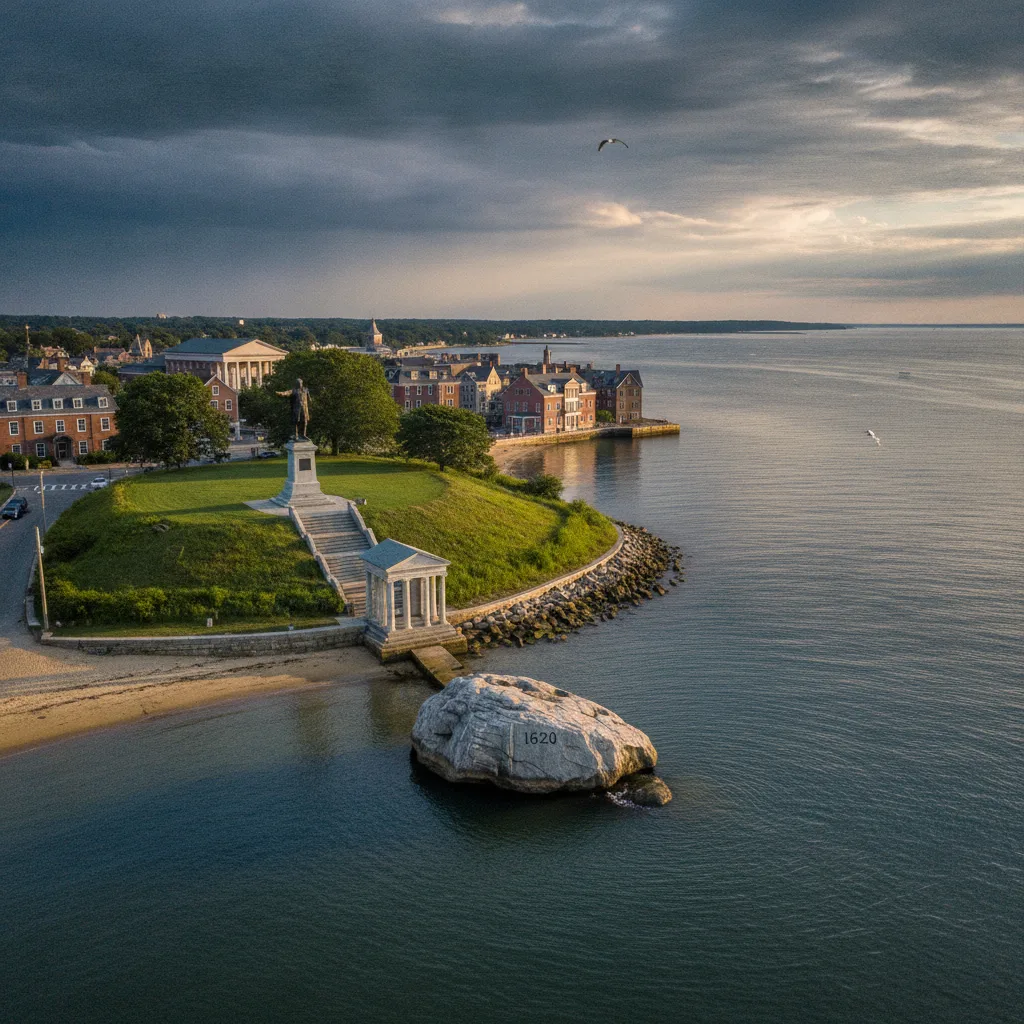
Our Plymouth Rock guide covers practical planning for Plymouth Rock Massachusetts — best time to visit, getting there, and what to do on the ground.
As the Roam States editorial team, we’re committed to providing you with independent, on-the-ground insights for your US travels. When it comes to iconic American landmarks, few hold the weight of history quite like Plymouth Rock. This isn't some generic tourist trap; it's a tangible link to the very beginnings of European settlement in North America, a place where the Mayflower Pilgrims are traditionally believed to have first stepped ashore in 1620. We've compiled this comprehensive guide to help you navigate your visit to Plymouth Rock Massachusetts, ensuring you experience the depth of its historical significance without the usual travel planning headaches.
Why Visit Plymouth Rock
Visiting Plymouth Rock is more than just seeing a boulder under a portico; it's about connecting with a foundational moment in American history. This prominent symbol marks the traditional landing place of the Mayflower Pilgrims in 1620, a pivotal event that shaped the course of the nation. While the rock itself might be smaller than some expect, its significance is immense, representing the perseverance and aspirations of early European settlers. It serves as a powerful reminder of the arduous journey undertaken by those seeking religious freedom and a new life.
Beyond the rock, the surrounding area of Plymouth is a living museum, offering a deeper dive into 17th-century life. You'll find yourself walking in the footsteps of history, surrounded by sites that tell the complex story of the Pilgrims and the Indigenous Wampanoag people. For us, it's about understanding the origins of American identity, the challenges faced, and the cultural exchanges that occurred. It's a place for reflection, education, and gaining a richer perspective on the nation's beginnings, far from any generic fluff you might find elsewhere.
Who It's Best For
Plymouth Rock and the surrounding historical sites in Plymouth are ideal for a diverse range of travelers, but it particularly resonates with history enthusiasts, families, and those seeking an educational and reflective journey. If you're someone who thrives on understanding the roots of American culture and enjoys immersive historical experiences, this destination is tailor-made for you.
- History Buffs: For those fascinated by early American history, the story of the Pilgrims, and the Wampanoag people, Plymouth offers an unparalleled opportunity to delve into primary sources and living history. The Pilgrim Hall Museum, for instance, houses an extraordinary collection of 17th-century artifacts, some even brought on the Mayflower itself.
- Families with School-Aged Children: Educational and engaging, the Plimoth Patuxet Museums (which includes the Mayflower II, Plimoth Grist Mill, and the Historic Patuxet Homesite and 17th-Century English Village) provide hands-on learning experiences that bring textbooks to life. Children aged 5-12 can explore these sites with discounted tickets. It's an excellent way to make history tangible and exciting for younger generations.
- Curious Travelers: If you appreciate destinations that offer more than just scenic views, Plymouth provides a rich cultural tapestry. The blend of historical interpretation, natural beauty along the waterfront, and opportunities for quiet contemplation makes it a rewarding visit.
- Day-Trippers from Boston or Cape Cod: Located less than an hour's drive south of Boston and 15 minutes north of Cape Cod, Plymouth is an accessible and enriching escape from city life or a perfect complement to a coastal getaway.
While solo travelers will find ample opportunities for quiet reflection, and couples can enjoy romantic strolls along the historic waterfront, the depth of interactive exhibits truly shines for families and groups eager to explore America's founding story together. It’s a destination that encourages engagement and offers something meaningful for all who visit.
Getting There & Parking
Understanding how to get to Plymouth Rock and where to park is crucial for a smooth visit. Plymouth is easily accessible by car, and there are also public transportation options, though they require a bit more planning. Our team recommends reviewing these details to avoid any last-minute stress.
By Car
Driving is often the most convenient way to reach Plymouth, especially if you plan to visit multiple sites beyond the immediate waterfront area. Plymouth is located on Route 3, approximately an hour south of Boston. Once you arrive in downtown Plymouth, finding parking near the waterfront, where Plymouth Rock Massachusetts is located, is your primary concern. The paid parking season in Plymouth runs from April 1st through November 30th, with an hourly rate of $2.00 at most meters and pay stations.
Plymouth Rock Parking
For Plymouth Rock parking, we recommend aiming for the public lots along the waterfront. There are several options, including metered street parking and multi-space pay stations. The lower level of the S. Russell Street parking deck is a 10-hour paid public parking facility, available seven days a week, with a rate of $1.00 per hour or $5.00 per day. You can pay for parking using single-space meters, multi-space pay stations, or the Passport Parking App. Handicapped placards allow free parking in any legal, unrestricted space, and time limits do not apply in non-HP designated spaces.
For longer stays or if you're exploring beyond the immediate waterfront, consider the Plymouth Park and Ride lot, which offers 200 open spaces and is open 24/7. It features overnight parking (at your own risk) and provides bus shelter and public phone facilities. This lot is serviced by Plymouth & Brockton Street Railway Co. for commuter bus service and Logan Express, as well as local bus service by the Greater Attleboro Taunton Regional Transit Authority (GATRA). Daily parking at the MBTA station in Plymouth is $2.00 on weekdays and weekends, with monthly passes available for $35.
By Public Transportation
While less direct than driving, it is possible to get to Plymouth Rock using public transport, particularly from Boston. The MBTA Commuter Rail Kingston Line connects Boston to Kingston, MA, which is a short distance from Plymouth. From the Kingston Commuter Rail Station, you can often find shuttle services into downtown Plymouth. For instance, Ride Circuit has previously offered free transportation between the Kingston Commuter Rail Station and the Plymouth Waterfront Visitor Center on Thursdays through Sundays during peak seasons. We advise checking the current schedules and availability of such services closer to your travel date, as these can change annually. The GATRA Dial-A-Ride service is also available for eligible seniors (60+) or persons with a disability who cannot access public transportation.
Remember that the Mayflower II, a key attraction, is located at State Pier in downtown Plymouth, approximately 2.5 miles north of the main Plimoth Patuxet Museum campus. The Plimoth Grist Mill is also located in downtown Plymouth, making the waterfront area a central hub for many historical sites.
Top Things to Do
When planning your visit, you'll find that the area around Plymouth Rock Massachusetts offers a wealth of historical and cultural experiences. We've curated a list of top things to do at Plymouth Rock and in the broader Plymouth area to ensure you make the most of your trip, moving beyond just a quick glance at the famous stone.
Experience Plymouth Rock Itself
Naturally, the first thing on your list should be Plymouth Rock. Housed within a grand granite portico on the waterfront, the rock is a powerful symbol. Take a moment to reflect on the journey of the Pilgrims and the significance of their landing. While there's no admission fee to see Plymouth Rock, it's best to visit during daylight hours.
Explore the Plimoth Patuxet Museums
This is where history truly comes alive. The Plimoth Patuxet Museums offer a comprehensive look at 17th-century life in the region through four immersive exhibits: the Historic Patuxet Homesite, the 17th-Century English Village, Mayflower II, and Plimoth Grist Mill. The museums are open daily from 9 a.m. to 5 p.m. through the Sunday following Thanksgiving Day, with the 2026 season having opened on March 14.
- Historic Patuxet Homesite: Engage with contemporary Wampanoag interpreters who share insights into their culture and history.
- 17th-Century English Village: Step back in time to 1627 and interact with costumed role-players portraying actual Plymouth colonists.
- Mayflower II: A full-scale reproduction of the ship that brought the Pilgrims to America. This national treasure is usually docked at State Pier in downtown Plymouth. In July 2026, the Mayflower II will be participating in Sail Boston from July 8–17, and will not be available for dockside visitation in Plymouth during this period. It is expected to reopen for regular visitation in Plymouth on Saturday, July 18. Admission to the Mayflower II costs $19 for adults and $13 for children aged 5-17.
- Plimoth Grist Mill: A working reproduction of the Pilgrims' original grain mill, located on Town Brook. Adult admission is $11, and children aged 5-17 are $8. You can often see the miller grinding cornmeal on Saturday afternoons.
Combination tickets are available, with a "Heritage Pass" for all three living history sites costing $46 for adults, $41.40 for seniors, and $29 for children. A "Combination Pass" for Plimoth Patuxet and Mayflower II is $44 for adults and $27 for children. Tickets purchased online are valid for the entire 2026 season.
Visit Pilgrim Hall Museum
Just a short walk from the waterfront, the Pilgrim Hall Museum is the oldest continuously operating public museum in the United States. It houses an extraordinary collection of 17th-century artifacts, including items that came on the Mayflower, illuminating the complex story of English colonists and Indigenous peoples. The museum is open Wednesdays through Sundays, 9:30 a.m. – 5 p.m., from April to early December, with last admission at 4:30 p.m.. Adult admission is $15, seniors (62+) are $12, students (over 18 with ID) are $12, and children (6-18) are $9. Children 5 and under are free, as are Plymouth residents and members of the Pilgrim Society. The museum also offers free public tours of Burial Hill on the first Saturday of each month (except January) at 1 p.m..
Stroll Through Brewster Gardens
Located along Town Brook, a short, beautiful walk from the Plimoth Grist Mill, Brewster Gardens offers a serene escape with picturesque landscaping and views of the brook. It’s a lovely spot for a leisurely walk and connects seamlessly to the Plymouth waterfront, Plymouth Rock, and Mayflower II.
Explore Burial Hill
Overlooking Plymouth Rock and the harbor, Burial Hill is the burial ground of many of the original Pilgrims and the site of their first fort. It offers panoramic views of the town and harbor, and free historical tours are offered on the first Saturday of each month (except January) at 1 p.m..
Enjoy the Waterfront and Downtown Plymouth
Beyond the historical sites, the Plymouth waterfront area boasts charming shops, diverse restaurants, and opportunities for whale watching tours. It’s a vibrant district perfect for exploring after a day of historical immersion. These things to do in Plymouth offer a blend of history, nature, and local culture.
Best Time to Visit
Choosing the best time to visit Plymouth Rock Massachusetts can significantly enhance your experience, balancing pleasant weather with crowd levels and attraction availability. Our team has analyzed the seasonal variations to help you plan your ideal trip.
Summer (June to August)
Pros: Summer is undoubtedly the most popular time to visit due to the warm weather, with average daily high temperatures above 72°F (22°C). July is the warmest month, averaging 80°F (27°C) highs and 63°F (17°C) lows. All attractions, including the Mayflower II and Plimoth Patuxet Museums, are fully operational and have extended hours. The waterfront is bustling with activity, including whale watching tours and outdoor dining. The best time of year for warm-weather activities is from mid-June to mid-September.
Cons: This is peak tourist season, meaning larger crowds and potentially higher prices for accommodations. Humidity can also make the heat feel more intense, particularly when temperatures climb above 25°C (77°F).
Fall (September to October)
Pros: Fall is arguably the best time to visit Plymouth. The weather remains pleasant, with September being the clearest month of the year on average. Temperatures are cooler and more comfortable, with October highs ranging from 66° to 75°F (19-24°C) and lows between 47° and 56°F (8-13°C). The crowds begin to thin out after Labor Day, offering a more relaxed experience. The fall foliage in Massachusetts is spectacular, adding a beautiful backdrop to your historical explorations. Most major attractions remain open through Thanksgiving.
Cons: As the season progresses into late October and November, some outdoor attractions may begin to reduce hours or close for the winter. The paid parking season extends until November 30th.
Spring (April to May)
Pros: Spring offers a refreshing experience with fewer crowds than summer and blooming gardens, like Brewster Gardens. The Plimoth Patuxet Museums typically open for their season in mid-March or early April. The Mayflower II usually returns to its berth in Plymouth Harbor in early May after winter maintenance. Temperatures are mild, though May can be the cloudiest month.
Cons: The weather can be unpredictable, with cooler temperatures and higher precipitation in March. Some attractions might still be on limited schedules in early spring, and the Mayflower II may not be available until May.
Winter (November to March)
Pros: For those seeking solitude and a truly quiet experience, winter offers the fewest crowds. The historical sites take on a stark, reflective beauty. Some indoor museums, like Pilgrim Hall Museum, remain open for part of the winter season.
Cons: Plymouth experiences significant snowfall, with February being the month with the most snow, averaging 6.3 inches. The cold season lasts from December 5 to March 18, with average daily high temperatures below 46°F (8°C). Many outdoor attractions, including Plimoth Patuxet Museums, typically close after Thanksgiving and reopen in the spring.
Our team generally recommends late spring (May) or early fall (September-October) for the best balance of weather, crowd levels, and full accessibility to all things to do in Plymouth.
Where to Stay Nearby
Finding comfortable and convenient Plymouth Rock lodging is key to a relaxing and enriching visit. While Plymouth offers a range of options, we’ve focused on locations that provide easy access to the historical sites and the charming downtown area. You won't find generic OTA fluff here, just our expert recommendations.
Downtown Plymouth & Waterfront
Staying in downtown Plymouth puts you within walking distance of Plymouth Rock, Mayflower II, Brewster Gardens, and numerous shops and restaurants. This area is ideal for travelers who want to immerse themselves in the historic atmosphere and enjoy evenings out without needing to drive. You'll find a mix of boutique hotels and charming inns here. This is our top pick for Plymouth Rock lodging due to its unparalleled convenience.
- Hotel 1620 Plymouth Harbor: Located directly on the waterfront, this hotel offers easy access to the main attractions and boasts harbor views. It's a solid choice for those prioritizing location.
- John Carver Inn & Spa: A short walk from the waterfront, this hotel offers a unique Pilgrim-themed indoor water park, making it an excellent option for families visiting Plymouth Rock with kids.
Near Plimoth Patuxet Museums
If your primary focus is the Plimoth Patuxet Museums (which is about 2.5 miles from downtown), staying slightly outside the immediate downtown area might offer different amenities or a quieter setting. However, you'll likely need a car or rely on ride-sharing services to get to the waterfront attractions. This area is good for those who prefer a more spread-out campus feel.
- Local Inns and B&Bs: There are several charming bed and breakfasts scattered throughout Plymouth, offering a more personalized and often historic lodging experience. These can be found a bit further from the immediate waterfront, providing a quieter retreat.
Budget-Friendly Options
For more budget-conscious travelers, chain hotels are available along Route 3, a short drive from downtown Plymouth. These typically offer standard amenities and ample parking, but you'll need to factor in transportation to the historical sites. While not directly "Plymouth Rock lodging," they are practical alternatives.
- Hotels along Route 3: Options like the Hampton Inn & Suites or Holiday Inn Express provide reliable and comfortable stays with easy highway access, often at a lower price point than waterfront properties.
When considering Plymouth Rock lodging, we always recommend booking in advance, especially during peak season (summer and early fall), as popular options fill up quickly. Regardless of where you choose to stay, Plymouth offers a welcoming base for exploring this pivotal piece of American history.
Sample 2-Day Itinerary
To truly absorb the rich history and charm of Plymouth, we recommend dedicating at least two days to your visit. This sample itinerary ensures you hit all the major highlights, from Plymouth Rock Massachusetts to the immersive living history museums, without feeling rushed.
Day 1: Pilgrim History & Waterfront Exploration
- Morning (9:00 AM - 12:00 PM): Plymouth Rock & Mayflower II
- Begin your day at the iconic Plymouth Rock, located beneath its protective portico on the waterfront. Take time to reflect on its historical significance. There is no admission fee to see Plymouth Rock.
- Just steps away, board the Mayflower II, the meticulously restored reproduction of the original Pilgrim ship. Explore the ship and interact with interpreters who bring the 17th-century voyage to life. Note: Mayflower II will be in Boston for Sail Boston from July 8–17, 2026, and will reopen in Plymouth on July 18. Adult admission is $19, children (5-17) are $13.
- Lunch (12:00 PM - 1:30 PM): Waterfront Dining
- Enjoy fresh seafood or classic American fare at one of the many restaurants lining the Plymouth waterfront.
- Afternoon (1:30 PM - 5:00 PM): Pilgrim Hall Museum & Burial Hill
- Walk a short distance to the Pilgrim Hall Museum, America's oldest continuously operating public museum. Delve into its extensive collection of Pilgrim artifacts and learn about their journey and early settlement. Adult admission is $15, seniors $12, and children $9.
- Afterward, ascend Burial Hill, the resting place of many early Pilgrims. Enjoy panoramic views of Plymouth Harbor and the town, and perhaps join a free historical tour if your visit aligns with the first Saturday of the month at 1 p.m..
- Evening: Stroll & Relax
- Take a leisurely stroll through Brewster Gardens along Town Brook, connecting the waterfront to the Plimoth Grist Mill.
- Enjoy dinner in downtown Plymouth, exploring the local shops and ambiance.
Day 2: Immersive 17th-Century Life & Local Charm
- Morning (9:00 AM - 1:00 PM): Plimoth Patuxet Museums (17th-Century English Village & Patuxet Homesite)
- Head to the main campus of Plimoth Patuxet Museums (located about 2.5 miles from downtown). Spend your morning exploring the 17th-Century English Village, where costumed interpreters portray the daily lives of the Pilgrims.
- Then, visit the Historic Patuxet Homesite to learn about the Wampanoag people's culture and history from contemporary Indigenous interpreters.
- Consider purchasing a "Heritage Pass" for $46 (adults) to cover all Plimoth Patuxet sites, including the Mayflower II and Plimoth Grist Mill, valid for two days.
- Lunch (1:00 PM - 2:00 PM): Museum Cafe or Local Eatery
- Grab a bite at the museum's Plentiful Cafe or venture to a nearby local restaurant.
- Afternoon (2:00 PM - 4:00 PM): Plimoth Grist Mill & Town Brook
- Visit the Plimoth Grist Mill, a working reproduction of the original mill, and learn about 17th-century milling techniques. Adult admission is $11, children (5-17) are $8.
- Enjoy the scenic walk along Town Brook, where you might even spot herring swimming upstream in the spring.
- Late Afternoon/Evening: Choice of Activity
- Option A (Nature): If weather permits, consider a visit to a local beach like Morton Park (daily parking fees apply, $20 weekdays, $25 weekends/holidays from May 23-Sept 7, 2026).
- Option B (Culture): Explore more of downtown Plymouth's art galleries or enjoy a local brewery or winery.
- Option C (Relaxation): Return to your Plymouth Rock lodging to relax before dinner.
This itinerary provides a solid framework, but feel free to adjust it based on your interests and pace. Remember to check specific operating hours and any reservation requirements for attractions, especially for 2026, as details can change.
Is It Worth Visiting?
From our perspective as independent US travel authorities, the question of "is Plymouth Rock worth visiting?" is a resounding yes, especially for those with an appreciation for American history and a desire to connect with foundational narratives. We understand that some might view a rock as just a rock, but the experience of visiting Plymouth Rock Massachusetts extends far beyond a simple geological formation.
What makes Plymouth Rock worth visiting is not merely the stone itself, but the entire ecosystem of historical sites and immersive experiences that surround it. The rock serves as a powerful focal point, a tangible link to the Mayflower Pilgrims' arrival in 1620. Standing before it, you can't help but feel the weight of centuries of history and the profound impact this event had on the continent. It’s a place for contemplation, allowing visitors to consider the diverse perspectives of both the English settlers and the Indigenous Wampanoag people.
The value of your visit is significantly amplified by exploring the nearby Plimoth Patuxet Museums, which offer a world-class living history experience. From the Mayflower II to the 17th-Century English Village and the Historic Patuxet Homesite, these attractions provide context and depth that bring the story to life. The Pilgrim Hall Museum further enriches this understanding with its invaluable collection of 17th-century artifacts. These combined experiences make Plymouth a truly enriching destination, offering a nuanced and engaging exploration of America's beginnings.
We believe that for families seeking educational travel, history enthusiasts, or anyone curious about the origins of the United States, Plymouth Rock is absolutely worth visiting. It's an opportunity to step out of the abstract pages of history books and into a place where those pivotal moments unfolded, fostering a deeper understanding of the nation's complex past. It's far from generic; it's specific, impactful, and deeply resonant.
FAQ
Plymouth Rock with kids
Visiting Plymouth Rock with kids is a fantastic educational experience, especially for school-aged children. The key is to make history interactive and engaging. The Plimoth Patuxet Museums are particularly well-suited for families, offering living history exhibits like the 17th-Century English Village and the Historic Patuxet Homesite where children can interact with costumed interpreters and learn about daily life in the 1600s. The Mayflower II allows kids to explore a replica of the Pilgrim ship, sparking their imagination about the transatlantic journey. Additionally, the John Carver Inn & Spa in downtown Plymouth features an indoor water park, providing a fun way to unwind after a day of historical exploration. Many local restaurants are also kid-friendly, and the waterfront offers space to run around. We recommend focusing on the immersive aspects and allowing children to ask questions and explore at their own pace.
Best hotels near Plymouth Rock
The best hotels near Plymouth Rock are those located in the downtown Plymouth waterfront area, offering unparalleled convenience for exploring the historical sites on foot. Our top recommendations for Plymouth Rock lodging include Hotel 1620 Plymouth Harbor, which provides direct access to the waterfront and many attractions. The John Carver Inn & Spa, while a short walk, is also an excellent choice, particularly for families due to its indoor water park. For a more intimate experience, charming local inns and bed and breakfasts are scattered throughout the historic district. Booking in advance is always advised, especially during peak travel seasons, to secure your preferred Plymouth Rock lodging.
Plymouth Rock tips
To make the most of your visit to Plymouth Rock Massachusetts, our team offers these practical tips: 1. **Visit Early or Late:** To avoid peak crowds, especially during summer, try to visit Plymouth Rock and the immediate waterfront area early in the morning or later in the afternoon. 2. **Wear Comfortable Shoes:** You'll be doing a lot of walking between sites like Plymouth Rock, Mayflower II, Pilgrim Hall Museum, and Brewster Gardens. 3. **Consider a Combination Ticket:** If you plan to visit multiple Plimoth Patuxet Museums sites (Mayflower II, Plimoth Grist Mill, 17th-Century English Village, Patuxet Homesite), a Heritage Pass or Combination Pass offers savings and is valid for two days. 4. **Check Mayflower II Schedule:** The Mayflower II occasionally travels for events, such as Sail Boston in July 2026, so verify its location before your visit. 5. **Parking:** Utilize the Passport Parking App for convenience, and be aware that paid parking season runs from April 1st through November 30th. 6. **Allow Ample Time:** Don't rush your visit; Plymouth has a lot to offer beyond just the rock itself. 7. **Engage with Interpreters:** At Plimoth Patuxet and Mayflower II, the historical interpreters are incredibly knowledgeable and enhance the experience significantly.
Where to stay near Plymouth Rock
When deciding where to stay near Plymouth Rock, the most convenient options are within walking distance of the downtown waterfront area. This puts you closest to Plymouth Rock, Mayflower II, Pilgrim Hall Museum, and a variety of dining and shopping experiences. Hotels like Hotel 1620 Plymouth Harbor offer excellent proximity. If you prefer a quieter setting or are traveling with a car, there are also comfortable chain hotels a short drive away along Route 3. For a more unique and personalized experience, consider one of Plymouth's charming bed and breakfasts. Ultimately, your choice of Plymouth Rock lodging will depend on your budget, preferred amenities, and how much you wish to rely on walking versus driving during your stay.
Plymouth Rock parking
Finding Plymouth Rock parking is manageable with a bit of planning. The downtown and waterfront areas of Plymouth have metered street parking and multi-space pay stations. The paid parking season runs from April 1st through November 30th, with an hourly rate of $2.00. We recommend using the Passport Parking App for easy payment. The lower level of the S. Russell Street parking deck offers 10-hour paid public parking at $1.00 per hour or $5.00 per day. Handicapped parking is free in any legal, unrestricted space, and time limits do not apply. For longer stays or if you're commuting from outside the immediate area, the Plymouth Park and Ride lot offers 200 spaces and is open 24/7.
Best time to visit Plymouth Rock
The best time to visit Plymouth Rock Massachusetts is during the shoulder seasons of late spring (May) or early fall (September-October). These periods offer a sweet spot of pleasant weather, fewer crowds compared to the peak summer months, and full availability of most attractions. In May, the Mayflower II typically returns to Plymouth, and all Plimoth Patuxet Museums sites are open. In September and October, you'll enjoy comfortable temperatures, beautiful fall foliage, and reduced crowds after the summer rush. While summer offers the warmest weather and all attractions are open, it also brings the largest crowds and higher prices. Winter sees the fewest visitors but many outdoor attractions are closed, and the weather is cold and snowy.
Conclusion
Our team at Roam States hopes this comprehensive guide empowers you to plan an unforgettable journey to Plymouth Rock Massachusetts. This historic destination offers a profound connection to America's past, far beyond what a simple glance at the rock might suggest. From the immersive living history of Plimoth Patuxet Museums to the quiet reflection offered by Burial Hill, Plymouth provides a unique opportunity to understand the complex tapestry of our nation's beginnings. We encourage you to delve into the stories, engage with the interpreters, and explore the charming waterfront. Whether you're a history enthusiast, a family seeking educational adventures, or simply a curious traveler, Plymouth is a destination that resonates deeply. Plan your trip, step back in time, and discover why this corner of Massachusetts remains an enduring symbol of American heritage. For more travel inspiration, explore our guides to other best places in Massachusetts, including The Freedom Trail in Boston, or coastal gems like Cape Cod National Seashore.
Last updated: 2026-07-06 by the Roam States team.