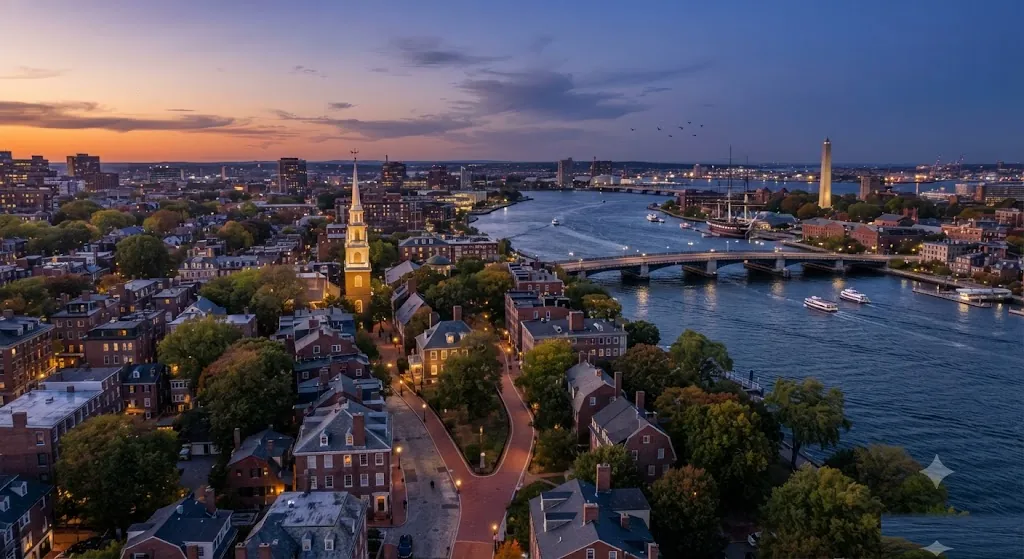
The Freedom Trail Travel Guide — Massachusetts
The Freedom Trail Massachusetts is more than just a walk; it's a profound journey through the very foundations of American liberty. This iconic 2.5-mile route, marked by a distinctive red brick line, seamlessly connects 16 historically significant sites, each playing a pivotal role in the birth of the United States. From the bustling streets of downtown Boston to the charming, historic neighborhoods of the North End and Charlestown, our team has walked every inch, delved into every story, and unearthed the essential details you need for an unforgettable exploration.
Why Visit The Freedom Trail
Visiting The Freedom Trail is an immersive experience that transports you directly into the heart of the American Revolution. It’s an unparalleled opportunity to walk in the footsteps of patriots like Paul Revere, Samuel Adams, and John Hancock, witnessing firsthand the places where pivotal decisions were made and defiant stands were taken. We believe it offers a tangible connection to history that no textbook or documentary can replicate. This isn't just about observing artifacts behind glass; it's about standing on the very ground where history unfolded.
Beyond its profound historical significance, The Freedom Trail offers a vibrant cultural experience. You'll traverse diverse Boston neighborhoods, from the financial district to the Italian-American enclave of the North End, and across the bridge to Charlestown. Each segment of the trail presents unique architecture, local eateries, and a distinct atmosphere, providing a broader understanding of Boston's character beyond its revolutionary past. It’s an ideal way to see a significant portion of the city's highlights in a structured, engaging manner.
For those interested in American history, political science, or simply a fascinating urban exploration, The Freedom Trail is a must-do. It serves as an educational cornerstone, offering insights into the struggles for independence, the principles upon which the nation was founded, and the enduring legacy of those who fought for freedom. Our team consistently ranks it as one of the top historical attractions in the entire country, a testament to its powerful narrative and well-preserved sites.
Who It's Best For
The Freedom Trail is remarkably versatile, appealing to a wide array of travelers. It's an absolute must for history buffs and anyone with an interest in early American history. The depth of information available at each site, whether through self-guided exploration or a guided tour, is truly exceptional. Educators and students will find it an invaluable living classroom, offering context and understanding that goes far beyond traditional learning methods.
Families with children, particularly those in elementary school and older, will discover an engaging and interactive way to learn about the past. Many sites offer kid-friendly exhibits and activities, and the sheer act of walking the red brick line itself can feel like a treasure hunt. Younger children might enjoy shorter segments, while older kids and teenagers will appreciate the stories of bravery and rebellion. We recommend pacing yourselves and focusing on key sites to avoid fatigue with younger travelers.
Beyond history enthusiasts, The Freedom Trail is perfect for active travelers who enjoy walking and exploring cities on foot. The 2.5-mile route is manageable for most fitness levels, and it’s an excellent way to get acquainted with Boston's layout and charm. Photographers will find endless opportunities for captivating shots, from colonial architecture to modern cityscapes. Even those simply looking for a unique and memorable way to spend a day in Boston will find themselves captivated by the trail's stories and sights.
However, it might not be ideal for those with significant mobility issues, as it involves a considerable amount of walking on various terrains, including cobblestones and uneven sidewalks. While much of the trail is accessible, some historic buildings may present challenges. For those seeking a purely relaxing, passive experience, the continuous movement and historical immersion might be more engaging than desired. For a more laid-back experience in Massachusetts, consider a trip to the Cape Cod National Seashore, or the charming islands of Martha's Vineyard or Nantucket.
Getting There & Parking
Understanding how to get to The Freedom Trail and navigating parking in Boston is crucial for a smooth visit. The trail officially begins at Boston Common, a central and easily accessible point in the city. Our preferred method of arrival is via Boston's excellent public transportation system, the "T." Several subway lines converge near Boston Common, making it incredibly convenient.
If you're wondering how to get to The Freedom Trail using the T, the Park Street station (Red and Green Lines) and Boylston station (Green Line) are directly adjacent to Boston Common. These stations provide direct access to the start of the trail, allowing you to begin your historical journey immediately. We highly recommend purchasing a CharlieCard or CharlieTicket for easy fare payment.
For those driving into the city, be prepared for urban traffic and relatively high parking costs. When considering The Freedom Trail parking, several garages are conveniently located near the start of the trail. The Boston Common Garage is perhaps the most convenient, situated directly underneath the Common itself. As of 2026, typical rates for the Boston Common Garage are around $12 for the first hour and up to $42 for 10-24 hours. Another option is the garage at 0 Post Office Square, which offers competitive daily rates, though it requires a slightly longer walk to the trail's starting point. We always advise checking current rates and availability online before your visit, as prices can fluctuate.
While street parking might seem appealing, it is often scarce, heavily restricted, and can be quite expensive. Our team strongly discourages relying on street parking for a full day of exploring The Freedom Trail. For visitors staying outside the city center, consider parking at a suburban MBTA station and taking the subway into Boston. This strategy can save both money and stress, making your arrival at The Freedom Trail much more enjoyable.
Top Things to Do
When it comes to things to do at The Freedom Trail, the sheer volume of history can be overwhelming. Our team recommends focusing on a few key sites if you're short on time, or dedicating a full day (or even two) to truly immerse yourself. Here are some of the top things to do along the trail:
- Boston Common: Begin your journey at America's oldest public park. Take a moment to appreciate its historical significance as a pasture, a camp for British troops, and a site for public hangings.
- Massachusetts State House: Admire the iconic golden dome of the State House, designed by Charles Bulfinch. While tours are available, even viewing it from the outside is impressive.
- Park Street Church: Known for its prominent spire, this church was where "My Country, 'Tis of Thee" was first sung publicly and where William Lloyd Garrison delivered his first anti-slavery speech.
- Granary Burying Ground: This historic cemetery is the final resting place for many Revolutionary War heroes, including Samuel Adams, John Hancock, and Paul Revere. It's a somber but essential stop.
- King's Chapel & Burying Ground: Boston's first Anglican church and its adjacent burying ground offer a glimpse into colonial religious life.
- Old South Meeting House: Step inside the gathering place where thousands of colonists met to protest British rule, famously leading to the Boston Tea Party.
- Old State House: This is the oldest public building in Boston and the site of the Boston Massacre. Stand on the balcony where the Declaration of Independence was first read to Bostonians.
- Faneuil Hall Marketplace: Known as the "Cradle of Liberty," Faneuil Hall was a meeting place for patriots. Today, it's also a bustling marketplace with shops and eateries. We highly recommend grabbing a bite here. As of 2026, Faneuil Hall Marketplace generally operates from 10:00 AM to 9:00 PM Monday through Saturday, and 11:00 AM to 7:00 PM on Sundays, though individual vendor hours may vary.
- Paul Revere House: The oldest house in downtown Boston, this is where Paul Revere lived when he made his famous ride. Tours offer a fascinating look into colonial domestic life. In 2026, the Paul Revere House is typically open daily from 10:00 AM to 5:00 PM, with admission fees around $6 for adults, $5 for seniors and students, and $2 for children aged 5-17.
- Old North Church: Famous for the "one if by land, and two if by sea" signal lanterns, this church played a crucial role in Revere's ride. It's a beautiful example of colonial architecture. As of 2026, the Old North Church and Historic Site is generally open from 10:00 AM to 5:00 PM daily, with a suggested donation for entry.
- USS Constitution & Museum: "Old Ironsides" is the oldest commissioned warship afloat in the world. Explore the ship and the adjacent museum to learn about its storied history. In 2026, the USS Constitution offers free tours, typically from 10:00 AM to 4:00 PM Tuesday through Sunday, though visitors should check the official Navy website for any security-related closures or changes. The USS Constitution Museum is generally open daily from 10:00 AM to 5:00 PM, with a suggested admission of $10-15 for adults.
- Bunker Hill Monument: Ascend the 294 steps of this granite obelisk for panoramic views of Boston and Charlestown. It commemorates the Battle of Bunker Hill. The monument grounds are open daily, and the lodge is open from 10:00 AM to 4:30 PM, but climbing the monument requires a free timed pass, which can be obtained at the lodge.
These things to do at The Freedom Trail represent the core experience. We encourage visitors to take their time at each site, read the interpretive panels, and consider a guided tour for deeper insights. Many of the sites are managed by the National Park Service, offering excellent educational resources. For a broader exploration of Massachusetts, consider our guide to the Best places in Massachusetts.
Best Time to Visit
Determining the best time to visit The Freedom Trail largely depends on your preferences for weather, crowd levels, and specific events. Our team has experienced the trail in all seasons, and each offers a distinct atmosphere.
Spring (April to June): We consider spring to be one of the best times to visit. The weather is generally mild and pleasant, with blooming flowers adding to the city's charm. Crowd levels are manageable, especially in April and May before the peak summer tourist season kicks in. Be prepared for occasional rain showers, but the crisp air makes for excellent walking conditions. Early June is particularly lovely before the heat and humidity of summer arrive.
Summer (July to August): Summer is the most popular time to visit, bringing warm temperatures and vibrant energy to Boston. However, it also means larger crowds, especially around major holidays like the Fourth of July. Humidity can be high, making the 2.5-mile walk more strenuous. If you visit in summer, we recommend starting your exploration early in the morning to beat both the heat and the largest crowds. Reservations for popular tours and attractions are highly recommended during this period.
Fall (September to October): Another prime season for visiting The Freedom Trail is autumn. The weather is typically cool and comfortable, perfect for walking, and the changing foliage in and around Boston adds a beautiful backdrop to the historic sites. Crowd levels begin to decrease after Labor Day, making for a more relaxed experience. Late September and early October offer the ideal combination of pleasant weather and fewer visitors.
Winter (November to March): Winter visits to The Freedom Trail can be a unique experience, particularly if you enjoy a quieter atmosphere and don't mind cold weather. Snow can transform the historic sites into picturesque scenes, but icy conditions can make walking challenging. Many indoor attractions remain open, but some outdoor components might be less enjoyable. We advise bundling up and checking weather forecasts if you plan a winter trip. Off-season travel often means lower accommodation prices and fewer queues, making it a good option for budget-conscious travelers.
Overall, for the most comfortable and enjoyable experience, our team recommends late spring or early fall as the best time to visit The Freedom Trail. You'll strike a good balance between pleasant weather, manageable crowds, and the full availability of all attractions.
Where to Stay Nearby
Choosing where to stay near The Freedom Trail can significantly enhance your visit, minimizing travel time and allowing for easy access to the trail's starting and ending points. Boston offers a diverse range of accommodations, from luxurious hotels to charming boutique inns and budget-friendly options. Our team has explored various neighborhoods, and here are our top recommendations:
- Downtown/Financial District: This area is incredibly convenient, placing you within walking distance of Boston Common and the initial sites of The Freedom Trail. You'll find a concentration of upscale hotels, business-oriented accommodations, and easy access to public transportation. It's a bustling area during the day and offers numerous dining options.
- Beacon Hill: For a more historic and picturesque experience, Beacon Hill is an excellent choice. This charming neighborhood, with its gas-lit streets and federal-style rowhouses, is adjacent to Boston Common. Accommodation here tends to be more boutique and luxurious, offering a quintessential Bostonian feel. It’s perfect for those who appreciate historic ambiance and quiet elegance.
- North End: If you want to be immersed in the vibrant Italian-American culture and be close to sites like the Paul Revere House and Old North Church, the North End is ideal. While hotel options are fewer here, you might find charming guesthouses or vacation rentals. It's a fantastic area for foodies, with countless authentic Italian restaurants.
- Waterfront: The Waterfront district offers modern hotels with stunning harbor views, placing you near the USS Constitution and the end of the trail, as well as attractions like the New England Aquarium. It’s a great option for those who enjoy a contemporary atmosphere and easy access to ferry services.
- Back Bay: A bit further from the immediate start of The Freedom Trail but still easily accessible by foot or T, Back Bay is known for its elegant architecture, high-end shopping on Newbury Street, and beautiful Copley Square. This area offers a wide range of hotels, from luxury to mid-range, and is a great base for exploring other parts of Boston, such as the Boston Public Library.
When selecting your accommodation, consider its proximity to a T station, as this will greatly simplify navigating the city and reaching The Freedom Trail. Booking well in advance, especially during peak season, is highly recommended to secure the best rates and locations.
Sample 2-Day Itinerary
While The Freedom Trail can be walked in a single, ambitious day, our team strongly recommends dedicating two days to truly savor each site and explore the surrounding neighborhoods. This allows for a more relaxed pace, deeper immersion, and time to enjoy Boston's other attractions. Here’s a sample 2-day itinerary:
Day 1: The Heart of the Revolution
- Morning (9:00 AM - 1:00 PM):
- Begin at Boston Common. Take a moment to absorb the history.
- Walk to the Massachusetts State House for exterior viewing.
- Visit Park Street Church and the Granary Burying Ground. Spend time reading the gravestones of patriots.
- Explore King's Chapel & Burying Ground.
- Tour the Old South Meeting House, imagining the fiery debates that took place here.
- Step inside the Old State House, focusing on the Boston Massacre site.
- Lunch (1:00 PM - 2:00 PM):
- Head to Faneuil Hall Marketplace. Grab lunch from one of the many food stalls and enjoy the lively atmosphere.
- Afternoon (2:00 PM - 5:00 PM):
- Explore Faneuil Hall itself, then browse the shops at Quincy Market.
- Walk through the historic Blackstone Block.
- Consider a guided tour of the Freedom Trail (many depart from near Faneuil Hall) for a different perspective.
- Evening:
- Dine in the North End, enjoying authentic Italian cuisine.
- Take a leisurely stroll through the North End's charming streets.
Day 2: North End & Charlestown Exploration
- Morning (9:30 AM - 1:00 PM):
- Return to the North End.
- Tour the Paul Revere House, gaining insight into colonial life.
- Visit the Old North Church, exploring its interior and the adjacent gift shop.
- Walk through Copp's Hill Burying Ground, offering views of the harbor and USS Constitution.
- Lunch (1:00 PM - 2:00 PM):
- Enjoy lunch in Charlestown, perhaps at a pub near the waterfront.
- Afternoon (2:00 PM - 5:00 PM):
- Cross the Charlestown Bridge to visit the USS Constitution. Take the free tour of "Old Ironsides" and explore the USS Constitution Museum.
- Conclude your Freedom Trail journey at the Bunker Hill Monument. Climb to the top for rewarding views (remember to get a timed pass).
- Evening:
- Return to your chosen neighborhood for dinner.
- Consider a sunset harbor cruise for a different perspective of Boston's skyline.
This itinerary provides a comprehensive overview of The Freedom Trail while allowing time to delve deeper into each site and experience the distinct character of Boston's historic neighborhoods. Remember to wear comfortable shoes!
Is It Worth Visiting?
Without a doubt, our team firmly believes that The Freedom Trail is worth visiting. It stands as one of America's most significant historical attractions, offering an unparalleled opportunity to connect with the nation's founding story. The immersive nature of walking the trail, physically moving from one pivotal site to the next, creates a powerful and memorable educational experience that transcends typical museum visits.
For anyone with even a passing interest in American history, the trail provides a tangible link to the past, bringing to life the struggles, sacrifices, and triumphs of the Revolutionary era. The sheer number of well-preserved sites, combined with excellent interpretive information, ensures that visitors gain a deep understanding of the events that shaped the United States. So, is The Freedom Trail worth visiting? Absolutely. It’s not just a walk; it’s a pilgrimage.
Furthermore, the trail offers more than just history. It’s an exceptional way to explore Boston itself, guiding you through diverse neighborhoods, past stunning architecture, and into the vibrant pulse of the city. You’ll experience the charm of Beacon Hill, the culinary delights of the North End, and the maritime heritage of Charlestown, all while tracing the path of revolution. It’s a fantastic way to orient yourself within Boston and discover its unique character.
While some might find the 2.5-mile walk lengthy, or the crowds during peak season a bit much, the rewards far outweigh any minor inconveniences. The sense of accomplishment, the knowledge gained, and the sheer beauty of Boston's historic districts make The Freedom Trail an essential experience for both domestic and international travelers. We consistently recommend it as a highlight of any trip to Massachusetts.
The Freedom Trail Hiking Trails
While not a traditional wilderness hiking experience, the term "The Freedom Trail hiking trails" aptly describes the extended walking journey through Boston's historic core. The entire 2.5-mile (4 km) route is essentially a series of urban hiking trails, connecting 16 distinct historical sites. Our team views it as an urban trek, offering a unique blend of physical activity and historical immersion.
The beauty of The Freedom Trail hiking trails is their accessibility and the constant visual stimulation. You're not just walking; you're constantly encountering new historical markers, architectural wonders, and vibrant city life. The path is predominantly paved, marked by a continuous red brick line on sidewalks, making navigation straightforward. However, be prepared for varied surfaces, including cobblestones in areas like the North End, which can be uneven underfoot.
For those seeking a more extended urban hiking experience, The Freedom Trail hiking trails can be combined with other walks in Boston. Consider detouring through the Boston Public Garden or along the Charles River Esplanade for a change of scenery. The entire trail, walked at a moderate pace with stops at each site, can take anywhere from 3 to 6 hours, depending on your level of interest and how many tours you join. We always recommend wearing comfortable, supportive walking shoes to ensure an enjoyable experience on The Freedom Trail hiking trails.
The Freedom Trail Camping
It's important to clarify that "The Freedom Trail camping" is not an option in the traditional sense, as the trail is located entirely within the urban environment of Boston. There are no campgrounds directly along the 2.5-mile historic route or within the city limits that would allow for tent or RV camping. Boston is a major metropolitan area, and overnight stays are restricted to hotels, guesthouses, and other established accommodations.
However, for travelers who prefer camping as part of a broader Massachusetts trip, there are state parks and private campgrounds located within a reasonable driving distance of Boston. These would require daily commuting into the city to access The Freedom Trail. For instance, Wompatuck State Park in Hingham, about an hour's drive south of Boston, offers camping facilities. Additionally, Myles Standish State Forest in Carver, roughly an hour's drive south, provides numerous campsites. These options allow visitors to combine an outdoor experience with their historical exploration of Boston.
If you're looking for The Freedom Trail camping alternatives that offer a more rustic feel while still being accessible to Boston, consider exploring options further afield in Massachusetts. For example, some campgrounds exist near the coast, which could be combined with a visit to the Cape Cod National Seashore. Our team advises against attempting any unauthorized camping in Boston; fines and legal issues can arise. For a true camping experience, plan to stay outside the city and commute in, ensuring you have reliable transportation for your daily excursions to The Freedom Trail.
Last updated: 2026-07-05 by the Visit America team.
The Freedom Trail Travel Guide — Massachusetts
The Freedom Trail Massachusetts is more than just a walk; it's a profound journey through the very foundations of American liberty. This iconic 2.5-mile route, marked by a distinctive red brick line, seamlessly connects 16 historically significant sites, each playing a pivotal role in the birth of the United States. From the bustling streets of downtown Boston to the charming, historic neighborhoods of the North End and Charlestown, our team has walked every inch, delved into every story, and unearthed the essential details you need for an unforgettable exploration.
Why Visit The Freedom Trail
Visiting The Freedom Trail is an immersive experience that transports you directly into the heart of the American Revolution. It’s an unparalleled opportunity to walk in the footsteps of patriots like Paul Revere, Samuel Adams, and John Hancock, witnessing firsthand the places where pivotal decisions were made and defiant stands were taken. We believe it offers a tangible connection to history that no textbook or documentary can replicate. This isn't just about observing artifacts behind glass; it's about standing on the very ground where history unfolded.
Beyond its profound historical significance, The Freedom Trail offers a vibrant cultural experience. You'll traverse diverse Boston neighborhoods, from the financial district to the Italian-American enclave of the North End, and across the bridge to Charlestown. Each segment of the trail presents unique architecture, local eateries, and a distinct atmosphere, providing a broader understanding of Boston's character beyond its revolutionary past. It’s an ideal way to see a significant portion of the city's highlights in a structured, engaging manner.
For those interested in American history, political science, or simply a fascinating urban exploration, The Freedom Trail is a must-do. It serves as an educational cornerstone, offering insights into the struggles for independence, the principles upon which the nation was founded, and the enduring legacy of those who fought for freedom. Our team consistently ranks it as one of the top historical attractions in the entire country, a testament to its powerful narrative and well-preserved sites.
Who It's Best For
The Freedom Trail is remarkably versatile, appealing to a wide array of travelers. It's an absolute must for history buffs and anyone with an interest in early American history. The depth of information available at each site, whether through self-guided exploration or a guided tour, is truly exceptional. Educators and students will find it an invaluable living classroom, offering context and understanding that goes far beyond traditional learning methods.
Families with children, particularly those in elementary school and older, will discover an engaging and interactive way to learn about the past. Many sites offer kid-friendly exhibits and activities, and the sheer act of walking the red brick line itself can feel like a treasure hunt. Younger children might enjoy shorter segments, while older kids and teenagers will appreciate the stories of bravery and rebellion. We recommend pacing yourselves and focusing on key sites to avoid fatigue with younger travelers.
Beyond history enthusiasts, The Freedom Trail is perfect for active travelers who enjoy walking and exploring cities on foot. The 2.5-mile route is manageable for most fitness levels, and it’s an excellent way to get acquainted with Boston's layout and charm. Photographers will find endless opportunities for captivating shots, from colonial architecture to modern cityscapes. Even those simply looking for a unique and memorable way to spend a day in Boston will find themselves captivated by the trail's stories and sights.
However, it might not be ideal for those with significant mobility issues, as it involves a considerable amount of walking on various terrains, including cobblestones and uneven sidewalks. While much of the trail is accessible, some historic buildings may present challenges. For those seeking a purely relaxing, passive experience, the continuous movement and historical immersion might be more engaging than desired. For a more laid-back experience in Massachusetts, consider a trip to the Cape Cod National Seashore, or the charming islands of Martha's Vineyard or Nantucket.
Getting There & Parking
Understanding how to get to The Freedom Trail and navigating parking in Boston is crucial for a smooth visit. The trail officially begins at Boston Common, a central and easily accessible point in the city. Our preferred method of arrival is via Boston's excellent public transportation system, the "T." Several subway lines converge near Boston Common, making it incredibly convenient.
If you're wondering how to get to The Freedom Trail using the T, the Park Street station (Red and Green Lines) and Boylston station (Green Line) are directly adjacent to Boston Common. These stations provide direct access to the start of the trail, allowing you to begin your historical journey immediately. We highly recommend purchasing a CharlieCard or CharlieTicket for easy fare payment.
For those driving into the city, be prepared for urban traffic and relatively high parking costs. When considering The Freedom Trail parking, several garages are conveniently located near the start of the trail. The Boston Common Parking Garage is perhaps the most convenient, situated directly underneath the Common itself. As of July 2026, typical rates for the Boston Common Parking Garage can range from $14.00 to $38.00 depending on the day, time, and duration of your stay. Another option is the garage at 1 Devonshire Pl, which offers competitive rates, though it requires a slightly longer walk to the trail's starting point. We always advise checking current rates and availability online before your visit, as prices can fluctuate.
While street parking might seem appealing, it is often scarce, heavily restricted, and can be quite expensive. Our team strongly discourages relying on street parking for a full day of exploring The Freedom Trail. For visitors staying outside the city center, consider parking at a suburban MBTA station and taking the subway or commuter rail into Boston. This strategy can save both money and stress, making your arrival at The Freedom Trail much more enjoyable.
Top Things to Do
When it comes to things to do at The Freedom Trail, the sheer volume of history can be overwhelming. Our team recommends focusing on a few key sites if you're short on time, or dedicating a full day (or even two) to truly immerse yourself. Here are some of the top things to do along the trail:
- Boston Common: Begin your journey at America's oldest public park. Take a moment to appreciate its historical significance as a pasture, a camp for British troops, and a site for public hangings.
- Massachusetts State House: Admire the iconic golden dome of the State House, designed by Charles Bulfinch. While tours are available, even viewing it from the outside is impressive.
- Park Street Church: Known for its prominent spire, this church was where "My Country, 'Tis of Thee" was first sung publicly and where William Lloyd Garrison delivered his first anti-slavery speech.
- Granary Burying Ground: This historic cemetery is the final resting place for many Revolutionary War heroes, including Samuel Adams, John Hancock, and Paul Revere. It's a somber but essential stop.
- King's Chapel & Burying Ground: Boston's first Anglican church and its adjacent burying ground offer a glimpse into colonial religious life.
- Old South Meeting House: Step inside the gathering place where thousands of colonists met to protest British rule, famously leading to the Boston Tea Party.
- Old State House: This is the oldest public building in Boston and the site of the Boston Massacre. Stand on the balcony where the Declaration of Independence was first read to Bostonians.
- Faneuil Hall Marketplace: Known as the "Cradle of Liberty," Faneuil Hall was a meeting place for patriots. Today, it's also a bustling marketplace with shops and eateries. We highly recommend grabbing a bite here. Faneuil Hall is typically open from 10:00 AM to 9:00 PM Monday through Saturday, and 11:00 AM to 7:00 PM on Sundays, though individual vendor hours may vary.
- Paul Revere House: The oldest house in downtown Boston, this is where Paul Revere lived when he made his famous ride. Tours offer a fascinating look into colonial domestic life. As of July 2026, the Paul Revere House is generally open daily from 10:00 AM to 5:15 PM from April 15 - October 31, and 10:00 AM to 4:15 PM from November 1 - April 14. Admission fees are around $6 for adults, $5 for seniors and college students, and $1 for children aged 5-17.
- Old North Church: Famous for the "one if by land, and two if by sea" signal lanterns, this church played a crucial role in Revere's ride. It's a beautiful example of colonial architecture. As of March 2026, the Old North Church and Historic Site is generally open from 10:00 AM to 5:00 PM, with a Discovery Pass available for $10 for adults and $5 for children aged 6-12.
- USS Constitution & Museum: "Old Ironsides" is the oldest commissioned warship afloat in the world. Explore the ship and the adjacent museum to learn about its storied history. In 2026, the USS Constitution offers free tours, typically from 10:00 AM to 4:00 PM Tuesday through Sunday, though visitors should check the official Navy website for any security-related closures or changes. The USS Constitution Museum is generally open daily from 10:00 AM to 5:00 PM, with a suggested admission of $10-15 for adults.
- Bunker Hill Monument: Ascend the 294 steps of this granite obelisk for panoramic views of Boston and Charlestown. It commemorates the Battle of Bunker Hill. The monument grounds are open daily, and the lodge is open from 10:00 AM to 5:00 PM, but climbing the monument requires a free timed pass, which can be obtained at the lodge. Only 25 people are allowed in the Monument at a time.
These things to do at The Freedom Trail represent the core experience. We encourage visitors to take their time at each site, read the interpretive panels, and consider a guided tour for deeper insights. Many of the sites are managed by the National Park Service, offering excellent educational resources. For a broader exploration of Massachusetts, consider our guide to the Best places in Massachusetts.
Best Time to Visit
Determining the best time to visit The Freedom Trail largely depends on your preferences for weather, crowd levels, and specific events. Our team has experienced the trail in all seasons, and each offers a distinct atmosphere.
Spring (April to June): We consider spring to be one of the best times to visit. The weather is generally mild and pleasant, with blooming flowers adding to the city's charm. Crowd levels are manageable, especially in April and May before the peak summer tourist season kicks in. Be prepared for occasional rain showers, but the crisp air makes for excellent walking conditions. Early June is particularly lovely before the heat and humidity of summer arrive.
Summer (July to August): Summer is the most popular time to visit, bringing warm temperatures and vibrant energy to Boston. However, it also means larger crowds, especially around major holidays like the Fourth of July. Humidity can be high, making the 2.5-mile walk more strenuous. If you visit in summer, we recommend starting your exploration early in the morning to beat both the heat and the largest crowds. Reservations for popular tours and attractions are highly recommended during this period.
Fall (September to October): Another prime season for visiting The Freedom Trail is autumn. The weather is typically cool and comfortable, perfect for walking, and the changing foliage in and around Boston adds a beautiful backdrop to the historic sites. Crowd levels begin to decrease after Labor Day, making for a more relaxed experience. Late September and early October offer the ideal combination of pleasant weather and fewer visitors.
Winter (November to March): Winter visits to The Freedom Trail can be a unique experience, particularly if you enjoy a quieter atmosphere and don't mind cold weather. Snow can transform the historic sites into picturesque scenes, but icy conditions can make walking challenging. Many indoor attractions remain open, but some outdoor components might be less enjoyable. We advise bundling up and checking weather forecasts if you plan a winter trip. Off-season travel often means lower accommodation prices and fewer queues, making it a good option for budget-conscious travelers.
Overall, for the most comfortable and enjoyable experience, our team recommends late spring or early fall as the best time to visit The Freedom Trail. You'll strike a good balance between pleasant weather, manageable crowds, and the full availability of all attractions.
Where to Stay Nearby
Choosing where to stay near The Freedom Trail can significantly enhance your visit, minimizing travel time and allowing for easy access to the trail's starting and ending points. Boston offers a diverse range of accommodations, from luxurious hotels to charming boutique inns and budget-friendly options. Our team has explored various neighborhoods, and here are our top recommendations:
- Downtown/Financial District: This area is incredibly convenient, placing you within walking distance of Boston Common and the initial sites of The Freedom Trail. You'll find a concentration of upscale hotels, business-oriented accommodations, and easy access to public transportation. The Omni Parker House and The Langham, Boston are notable options in this area. It's a bustling area during the day and offers numerous dining options.
- Beacon Hill: For a more historic and picturesque experience, Beacon Hill is an excellent choice. This charming neighborhood, with its gas-lit streets and federal-style rowhouses, is adjacent to Boston Common. Accommodation here tends to be more boutique and luxurious, offering a quintessential Bostonian feel. The Whitney Hotel Boston is a highly-rated option. It’s perfect for those who appreciate historic ambiance and quiet elegance.
- North End: If you want to be immersed in the vibrant Italian-American culture and be close to sites like the Paul Revere House and Old North Church, the North End is ideal. While hotel options are fewer here, you might find charming guesthouses or vacation rentals. It's a fantastic area for foodies, with countless authentic Italian restaurants.
- Waterfront: The Waterfront district offers modern hotels with stunning harbor views, placing you near the USS Constitution and the end of the trail, as well as attractions like the New England Aquarium. The Boston Harbor Hotel and Seaport Hotel Boston are popular choices here. It’s a great option for those who enjoy a contemporary atmosphere and easy access to ferry services.
- Back Bay: A bit further from the immediate start of The Freedom Trail but still easily accessible by foot or T, Back Bay is known for its elegant architecture, high-end shopping on Newbury Street, and beautiful Copley Square. This area offers a wide range of hotels, from luxury to mid-range, such as The Lenox or Hilton Boston Park Plaza. It is a great base for exploring other parts of Boston, such as the Boston Public Library.
When selecting your accommodation, consider its proximity to a T station, as this will greatly simplify navigating the city and reaching The Freedom Trail. Booking well in advance, especially during peak season, is highly recommended to secure the best rates and locations.
Sample 2-Day Itinerary
While The Freedom Trail can be walked in a single, ambitious day, our team strongly recommends dedicating two days to truly savor each site and explore the surrounding neighborhoods. This allows for a more relaxed pace, deeper immersion, and time to enjoy Boston's other attractions. Here’s a sample 2-day itinerary:
Day 1: The Heart of the Revolution
- Morning (9:00 AM - 1:00 PM):
- Begin at Boston Common. Take a moment to absorb the history.
- Walk to the Massachusetts State House for exterior viewing.
- Visit Park Street Church and the Granary Burying Ground. Spend time reading the gravestones of patriots.
- Explore King's Chapel & Burying Ground.
- Tour the Old South Meeting House, imagining the fiery debates that took place here.
- Step inside the Old State House, focusing on the Boston Massacre site.
- Lunch (1:00 PM - 2:00 PM):
- Head to Faneuil Hall Marketplace. Grab lunch from one of the many food stalls and enjoy the lively atmosphere.
- Afternoon (2:00 PM - 5:00 PM):
- Explore Faneuil Hall itself, then browse the shops at Quincy Market.
- Walk through the historic Blackstone Block.
- Consider a guided tour of the Freedom Trail (many depart from near Faneuil Hall) for a different perspective.
- Evening:
- Dine in the North End, enjoying authentic Italian cuisine.
- Take a leisurely stroll through the North End's charming streets.
Day 2: North End & Charlestown Exploration
- Morning (9:30 AM - 1:00 PM):
- Return to the North End.
- Tour the Paul Revere House, gaining insight into colonial life.
- Visit the Old North Church, exploring its interior and the adjacent gift shop.
- Walk through Copp's Hill Burying Ground, offering views of the harbor and USS Constitution.
- Lunch (1:00 PM - 2:00 PM):
- Enjoy lunch in Charlestown, perhaps at a pub near the waterfront.
- Afternoon (2:00 PM - 5:00 PM):
- Cross the Charlestown Bridge to visit the USS Constitution. Take the free tour of "Old Ironsides" and explore the USS Constitution Museum.
- Conclude your Freedom Trail journey at the Bunker Hill Monument. Climb to the top for rewarding views (remember to get a timed pass).
- Evening:
- Return to your chosen neighborhood for dinner.
- Consider a sunset harbor cruise for a different perspective of Boston's skyline.
This itinerary provides a comprehensive overview of The Freedom Trail while allowing time to delve deeper into each site and experience the distinct character of Boston's historic neighborhoods. Remember to wear comfortable shoes!
Is It Worth Visiting?
Without a doubt, our team firmly believes that The Freedom Trail is worth visiting. It stands as one of America's most significant historical attractions, offering an unparalleled opportunity to connect with the nation's founding story. The immersive nature of walking the trail, physically moving from one pivotal site to the next, creates a powerful and memorable educational experience that transcends typical museum visits.
For anyone with even a passing interest in American history, the trail provides a tangible link to the past, bringing to life the struggles, sacrifices, and triumphs of the Revolutionary era. The sheer number of well-preserved sites, combined with excellent interpretive information, ensures that visitors gain a deep understanding of the events that shaped the United States. So, is The Freedom Trail worth visiting? Absolutely. It’s not just a walk; it’s a pilgrimage.
Furthermore, the trail offers more than just history. It’s an exceptional way to explore Boston itself, guiding you through diverse neighborhoods, past stunning architecture, and into the vibrant pulse of the city. You’ll experience the charm of Beacon Hill, the culinary delights of the North End, and the maritime heritage of Charlestown, all while tracing the path of revolution. It’s a fantastic way to orient yourself within Boston and discover its unique character.
While some might find the 2.5-mile walk lengthy, or the crowds during peak season a bit much, the rewards far outweigh any minor inconveniences. The sense of accomplishment, the knowledge gained, and the sheer beauty of Boston's historic districts make The Freedom Trail an essential experience for both domestic and international travelers. We consistently recommend it as a highlight of any trip to Massachusetts.
The Freedom Trail Hiking Trails
While not a traditional wilderness hiking experience, the term "The Freedom Trail hiking trails" aptly describes the extended walking journey through Boston's historic core. The entire 2.5-mile (4 km) route is essentially a series of urban hiking trails, connecting 16 distinct historical sites. Our team views it as an urban trek, offering a unique blend of physical activity and historical immersion.
The beauty of The Freedom Trail hiking trails is their accessibility and the constant visual stimulation. You're not just walking; you're constantly encountering new historical markers, architectural wonders, and vibrant city life. The path is predominantly paved, marked by a continuous red brick line on sidewalks, making navigation straightforward. However, be prepared for varied surfaces, including cobblestones in areas like the North End, which can be uneven underfoot.
For those seeking a more extended urban hiking experience, The Freedom Trail hiking trails can be combined with other walks in Boston. Consider detouring through the Boston Public Garden or along the Charles River Esplanade for a change of scenery. The entire trail, walked at a moderate pace with stops at each site, can take anywhere from 2 to 12 hours, depending on your level of interest and how many tours you join. We always recommend wearing comfortable, supportive walking shoes to ensure an enjoyable experience on The Freedom Trail hiking trails.
The Freedom Trail Camping
It's important to clarify that "The Freedom Trail camping" is not an option in the traditional sense, as the trail is located entirely within the urban environment of Boston. There are no campgrounds directly along the 2.5-mile historic route or within the city limits that would allow for tent or RV camping. Boston is a major metropolitan area, and overnight stays are restricted to hotels, guesthouses, and other established accommodations.
However, for travelers who prefer camping as part of a broader Massachusetts trip, there are state parks and private campgrounds located within a reasonable driving distance of Boston. These would require daily commuting into the city to access The Freedom Trail. For instance, Wompatuck State Park in Hingham, about an hour's drive south of Boston, offers camping facilities and over 12 miles of scenic trails. Additionally, Myles Standish State Forest in Carver, roughly an hour's drive south, provides numerous campsites, including yurts, and is open from May through October. These options allow visitors to combine an outdoor experience with their historical exploration of Boston.
If you're looking for The Freedom Trail camping alternatives that offer a more rustic feel while still being accessible to Boston, consider exploring options further afield in Massachusetts. For example, some campgrounds exist near the coast, which could be combined with a visit to the Cape Cod National Seashore. Other nearby campgrounds include Boston/Cape Cod KOA Holiday in Middleboro and Pinewood Lodge Campground in Plymouth. Our team advises against attempting any unauthorized camping in Boston; fines and legal issues can arise. For a true camping experience, plan to stay outside the city and commute in, ensuring you have reliable transportation for your daily excursions to The Freedom Trail.
FAQ
What are the best things to do in Boston?
Beyond The Freedom Trail, Boston offers a wealth of attractions. Our team highly recommends exploring the charming streets of Beacon Hill, enjoying the vibrant atmosphere of Faneuil Hall Marketplace, and visiting the historic USS Constitution. For art and culture, the Museum of Fine Arts and the Isabella Stewart Gardner Museum are world-class. Sports enthusiasts can catch a Red Sox game at Fenway Park. Don't miss a stroll through the Boston Public Garden or a visit to the Boston Public Library. For a unique day trip, consider Salem, famous for its witch trials, or the academic hub of Harvard University/Cambridge.
Is The Freedom Trail good with kids?
Yes, The Freedom Trail can be a fantastic and educational experience for kids, especially those aged 8 and up. The visual nature of the red brick line and the distinct sites make it feel like an adventure. Many sites offer ranger programs or kid-friendly exhibits. We suggest pacing yourselves, focusing on key sites that might appeal most to children (like the USS Constitution or Paul Revere House), and incorporating breaks for snacks and play. Consider engaging them with a scavenger hunt or by having them collect stamps at various sites.
What are some essential The Freedom Trail tips?
Our top tips for visiting The Freedom Trail include: wear extremely comfortable walking shoes, as you'll be covering significant ground on varied surfaces. Start early in the day, especially during peak season, to avoid crowds and the hottest part of the day. Consider taking a guided tour for deeper historical insights, or download a self-guided audio tour from the National Park Service. Bring water and snacks, and plan for meal breaks, particularly in areas like Faneuil Hall or the North End. Finally, don't feel pressured to visit every single site; prioritize those that interest you most to avoid burnout.
Where is The Freedom Trail parking located?
The most convenient parking for The Freedom Trail is the Boston Common Parking Garage, located directly underneath Boston Common, which is the official start of the trail. Other nearby options include the garage at 1 Devonshire Pl and various private parking facilities in the Downtown Crossing or Financial District areas. We always recommend checking current rates and availability online before your visit, as Boston parking can be expensive and spots fill up quickly. Using public transportation (the "T") is often a more cost-effective and stress-free alternative.
What is the best time to visit The Freedom Trail?
The best time to visit The Freedom Trail is during the late spring (April-June) or early fall (September-October). During these seasons, the weather is typically mild and pleasant for walking, and the crowds are generally more manageable than in the peak summer months. Spring offers blooming flowers, while fall provides beautiful foliage. If visiting in summer, start early to beat the heat and crowds. Winter visits are possible for those who don't mind cold weather and enjoy a quieter atmosphere, though some outdoor elements may be less enjoyable.
What are The Freedom Trail hours and fees?
The Freedom Trail itself is a public walking path and is always open, 24/7, with no general admission fee. However, the 16 historic sites along the trail have individual operating hours and may charge admission fees. For example, in 2026, the Paul Revere House typically charges around $6 for adults, and the USS Constitution Museum has a suggested admission of $10-15. Many sites, like the Old North Church, suggest a donation or offer a Discovery Pass for $10 for adults. The USS Constitution itself offers free tours. We strongly advise checking the official websites of each specific site you plan to enter for their most current 2026 hours, fees, and any reservation requirements, as these can change. Guided tours of the trail also have separate fees.
Our team's expert verdict: The Freedom Trail is an indispensable experience for anyone visiting Boston. It’s a beautifully curated journey through American history, offering both profound educational value and a fantastic way to explore the city's diverse neighborhoods. Don't rush it; allow yourself ample time to absorb the stories and atmosphere. It's a true American treasure.
Last updated: 2026-07-05 by the Visit America team.