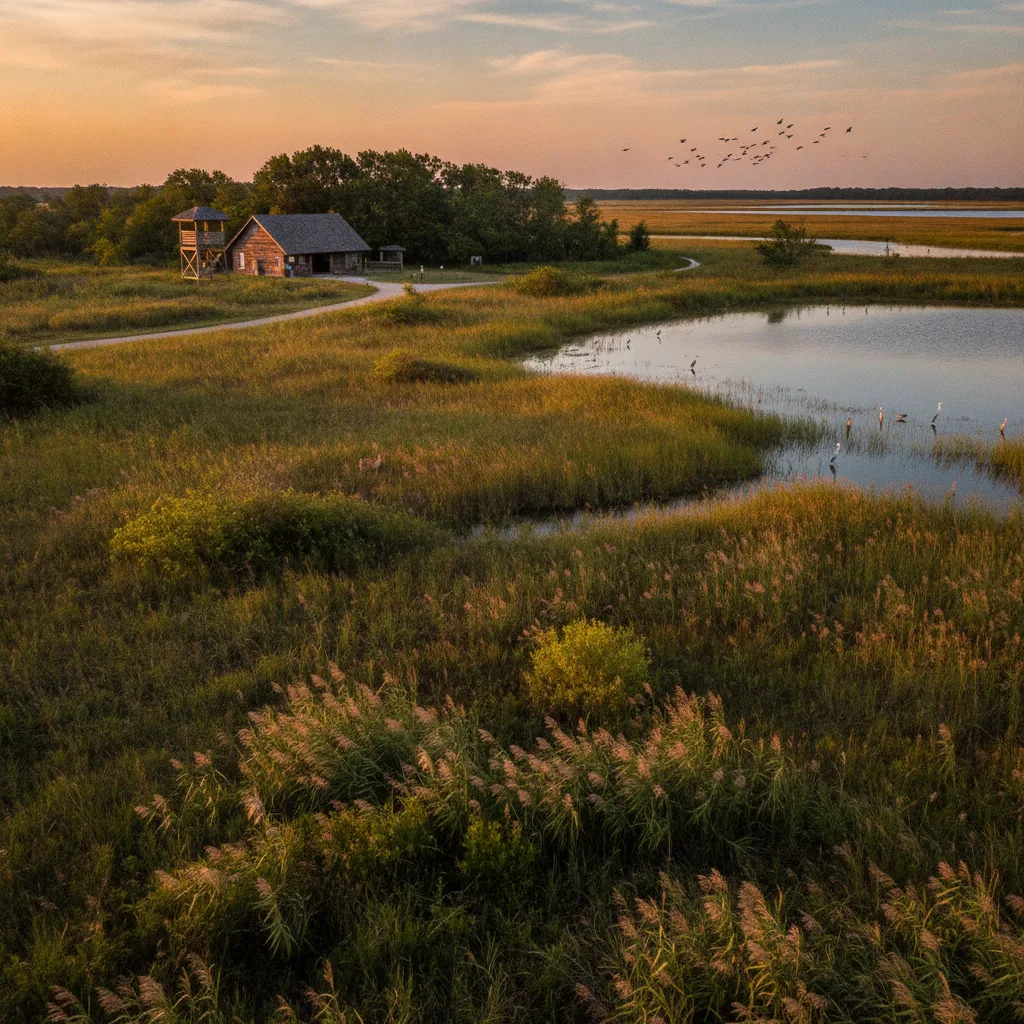
Prime Hook National Wildlife Refuge Travel Guide — Delaware
Our Prime Hook National Wildlife Refuge guide covers practical planning for Prime Hook National Wildlife Refuge Delaware — best time to visit, getting there, and what to do on the ground.
For those seeking an authentic connection with nature on the Delaware coast, Prime Hook National Wildlife Refuge Delaware stands as an unparalleled destination. This expansive refuge, established in 1963, safeguards over 10,000 acres of diverse habitats, including freshwater and brackish marshes, woodlands, and grasslands, all vital for a myriad of wildlife. Situated along the western Delaware Bay, it serves as a critical stopover for migratory birds along the Atlantic Flyway, offering a spectacular showcase of avian life throughout the year.
Why Visit Prime Hook National Wildlife Refuge
We recommend a visit to Prime Hook National Wildlife Refuge for its sheer biodiversity and the profound sense of tranquility it offers. This refuge is a haven for wildlife enthusiasts, photographers, and anyone looking to immerse themselves in a protected natural environment. Roughly 80% of the refuge comprises a mix of fresh and saltwater wetlands, stretching from Slaughter Beach to the Broadkill River, providing a rich tapestry of ecosystems to explore.
Here, you can witness the drama of nature unfold, from the subtle movements of marsh-dwelling creatures to the awe-inspiring spectacle of thousands of migratory birds. The refuge is home to an impressive array of species: over 300 types of birds, 50 species of fish, 45 species of reptiles and amphibians, and nearly 40 species of mammals. It's a place where you can truly unplug and reconnect with the natural world, observing everything from majestic bald eagles to the elusive Delmarva Peninsula fox squirrel.
Beyond wildlife observation, Prime Hook offers opportunities for fishing, canoeing, and hiking, making it a versatile destination for various outdoor pursuits. The commitment to conservation here is palpable, with ongoing efforts to protect federally threatened piping plovers and state endangered least terns, particularly on Fowler Beach. Visiting supports these vital conservation efforts, allowing you to be part of a larger mission to preserve these invaluable habitats for future generations.
Who It's Best For
Prime Hook National Wildlife Refuge caters to a wide range of visitors, though certain groups will find it particularly rewarding. It is an ideal destination for:
- Birdwatchers: With over 300 bird species recorded, including significant populations of migratory waterfowl and shorebirds, this refuge is a premier birding spot. Winter brings thousands of snow geese, creating a breathtaking display.
- Nature Photographers: The diverse landscapes and abundant wildlife offer endless photographic opportunities. Observation platforms and a dedicated photography blind trail provide excellent vantage points.
- Hikers and Walkers: With miles of trails ranging in difficulty, from accessible boardwalks to longer woodland paths, there's a route for every fitness level.
- Families with Children: The accessible trails, visitor center exhibits, and opportunities for wildlife spotting make it a great educational and engaging outing for kids. The "I Spy" game comes alive here.
- Paddlers and Anglers: Prime Hook Creek offers seven miles of canoeing and kayaking, while Fleetwood Pond provides fishing opportunities, including an accessible pier.
- Those Seeking Peace and Quiet: The refuge's expansive natural setting provides a serene escape from urban bustle, perfect for reflection and relaxation.
While hunters are permitted in designated areas during specific seasons with the proper permits, the refuge primarily serves as a sanctuary for wildlife observation and passive recreation.
Getting There & Parking
Reaching Prime Hook National Wildlife Refuge is straightforward, making it an accessible natural escape in southern Delaware. The refuge is located near Milton, Delaware, and is well-signposted from major routes.
For those traveling by car, the most common approach is from Route 1. We recommend taking Route 16 East towards Broadkill Beach for about 1.1 miles. Then, turn left onto Turkle Pond Road, and you will find the refuge office, visitor center, and the Friends Store shortly ahead on your left. The refuge lies within a two-hour drive of metropolitan areas like Baltimore, Maryland; Washington, D.C.; Wilmington, Delaware; and Philadelphia, Pennsylvania, and is approximately 22 miles southeast of Dover, Delaware's state capital.
GPS coordinates for the visitor center are approximately 38.82995180000000, -75.24835899999999.
When it comes to parking, visitors will find ample space available at various designated areas throughout the refuge, particularly near the visitor center and trailheads. There are no fees for parking at Prime Hook National Wildlife Refuge, which is a welcome bonus for travelers. We advise checking the refuge map upon arrival to locate the most convenient parking for your planned activities, whether you're heading to a specific trail or the visitor center. Motorized vehicles are restricted to entrance roads and designated parking areas, and bicycles are not permitted on the trails.
Top Things to Do
There are numerous things to do at Prime Hook National Wildlife Refuge, catering to a variety of interests, all centered around experiencing its rich natural environment. Our team finds that the best way to engage with this unique landscape is to embrace its core mission: wildlife conservation and observation.
- Wildlife Watching: This is arguably the primary draw. With over 300 bird species, 50 fish species, and dozens of mammal and amphibian species, the opportunities for spotting wildlife are abundant. Bring binoculars and a field guide to identify the diverse creatures, from wading birds in the marshes to deer and foxes in the uplands.
- Photography: The refuge is a globally renowned spot for nature photography. We recommend utilizing the photography blind trail, a 0.3-mile path leading to a fully enclosed blind, perfect for capturing images of birds and other animals in their natural habitat. The observation platforms also offer excellent photographic vantage points.
- Hiking and Walking: Explore the refuge's extensive trail system. We detail these further in the "Prime Hook National Wildlife Refuge Hiking Trails" section, but options range from short, accessible boardwalks to longer woodland and marsh trails.
- Paddling (Canoeing/Kayaking): Prime Hook Creek offers a seven-mile canoe trail, providing a unique perspective of the red maple swamps and cattail marshes. Note that the eastern portion of the canoe trail is heavily silted and not recommended for passage, so plan to go west from Foord's Landing for safety.
- Fishing: Anglers can try their luck in the refuge's ponds and Prime Hook Creek. Fleetwood Pond features a fishing pier that is accessible for visitors with disabilities. Common catches include crappie, pickerel, white perch, and largemouth bass.
- Scenic Driving: Four county roads bisect the refuge's marshes, offering opportunities for wildlife viewing from your vehicle. This is an excellent option for those with limited mobility or when you want to cover more ground.
- Visitor Center Exploration: The visitor center is open daily year-round from 9:00 AM to 4:00 PM (weather and volunteer dependent). It features educational displays, videos about the natural habitat, taxidermy mounts, and a gift shop operated by the Friends of Prime Hook National Wildlife Refuge. It's also wheelchair accessible.
- Attending Events: Keep an eye out for special events like the annual Horseshoe Crab Festival in May, which highlights outdoor recreation in Delaware.
These things to do at Prime Hook National Wildlife Refuge provide a comprehensive experience of this vital natural area.
Prime Hook National Wildlife Refuge Hiking Trails
Exploring the Prime Hook National Wildlife Refuge hiking trails is one of the most rewarding ways to experience the refuge's diverse ecosystems. Our team appreciates the variety of trails available, catering to different preferences and accessibility needs. The refuge offers approximately 6 to 7.5 miles of walking trails, winding through uplands, forested wetlands, freshwater marshes, and pine and hardwood forests.
Here are some of the key Prime Hook National Wildlife Refuge hiking trails:
- Boardwalk Trail: This 0.5-mile loop is wheelchair accessible and meanders through uplands, forested wetlands, and across 600 feet of freshwater marsh. It offers excellent opportunities for wildlife observation and photography, making it ideal for all visitors, including families with young children or those with mobility challenges.
- Dike Trail: Another accessible option, this 0.5-mile one-way trail leads to a wheelchair-accessible observation platform overlooking the marsh. It's a fantastic spot for birdwatching and offers a bench for resting along the way.
- Pine Grove Trail: This 0.8-mile loop winds through a beautiful pine and hardwood forest adjacent to Turkle and Fleetwood Ponds. It features a viewing platform that offers vistas of the marsh, providing a different ecological perspective.
- Black Farm Trail: A longer option at 1.6 miles, this trail meanders through wooded uplands next to agricultural lands and freshwater marshes, offering varied scenery and wildlife encounters.
- Photography Blind Trail: For serious photographers, this 0.3-mile trail leads to a fully enclosed blind, providing discreet opportunities to photograph wildlife. It's available on a first-come, first-serve basis.
- Blue Goose Trail: This trail ventures through fields and freshwater marsh, offering more opportunities for walkers to immerse themselves in the refuge's landscape.
When planning to explore the Prime Hook National Wildlife Refuge hiking trails, we advise picking up a map from the visitor center. While dogs are permitted on a short, handheld leash throughout most of the refuge, they are prohibited on Fowler Beach when it's open for walk-in access (outside of shorebird nesting season). Remember to bring water and insect repellent, especially during warmer months, as the marsh environment can attract mosquitoes, deer flies, and ticks. Poison ivy is also a potential hazard, so staying on marked trails is crucial.
Best Time to Visit
The best time to visit Prime Hook National Wildlife Refuge largely depends on your interests, as each season offers unique highlights. Our team has observed distinct advantages to visiting during different periods:
- Winter (December - February): This is the prime season for witnessing the spectacular snow goose migration. Thousands of snow geese blanket the wetlands and surrounding fields, creating an unforgettable sight. Other hardy waterfowl and bald eagles are also abundant. The crisp air often means fewer insects, though warm clothing is essential.
- Spring (March - May): Spring brings the return of many migratory songbirds and ospreys. Leopard and chorus frogs are in full voice, and spring wildflowers add vibrant color to the woodlands. May is particularly notable for the refuge's annual Horseshoe Crab Festival, a popular outdoor event. Shorebird concentrations peak in May.
- Summer (June - August): While beautiful, summer can be challenging due to mosquitoes and greenhead flies, which are at their worst from mid-June to mid-September. However, duck broods appear, terrapins lay eggs, and the first fawns are often seen. Late summer sees the return of shorebird migrants heading south. If visiting in summer, strong insect repellent is a must.
- Fall (September - November): This season offers another peak for migratory birds, with late migrating shorebirds and songbirds present. Canada geese begin arriving in October, with peak concentrations in November. The changing foliage adds a beautiful backdrop to wildlife viewing, and insect activity generally diminishes.
Overall, for birdwatching, we particularly recommend the winter for snow geese and spring/fall for diverse migratory species. For general outdoor enjoyment with fewer bugs, late fall and early spring are excellent choices. Always check the refuge's official website for specific event dates and any seasonal closures, such as Fowler Beach, which is closed for shorebird nesting from March 1st to October 1st.
Where to Stay Nearby
While there are no onsite accommodations within Prime Hook National Wildlife Refuge itself—camping is prohibited to protect the delicate ecosystem—our team recommends several charming towns nearby that offer a range of lodging options. These locations provide convenient access to the refuge while also offering their own unique attractions and amenities.
- Milton, Delaware: As the closest town to the refuge, Milton offers a quaint, small-town experience. You'll find a selection of bed and breakfasts and vacation rentals here. It’s an excellent base for those who prioritize proximity to Prime Hook National Wildlife Refuge lodging and a relaxed atmosphere. Milton is also home to Dogfish Head Craft Brewery, a popular destination for craft beer enthusiasts.
- Lewes, Delaware: Located about 30 minutes southeast of Prime Hook, Lewes is a historic town with a beautiful beach and a vibrant culinary scene. It offers a mix of boutique hotels, inns, and vacation rentals. We particularly enjoy Lewes for its blend of history, coastal charm, and easy access to both the refuge and other attractions like Cape Henlopen State Park.
- Rehoboth Beach, Delaware: For those seeking more amenities, dining, and entertainment options, Rehoboth Beach is a popular choice, also about a 30-minute drive from the refuge. This bustling coastal town boasts a famous boardwalk, diverse restaurants, and a wide array of hotels, motels, and vacation rentals. It’s an ideal spot if you want to combine your nature exploration with a classic beach vacation, perhaps including a visit to the Rehoboth Beach & Boardwalk.
- Other Nearby Options: Towns like Bethany Beach, home to the Bethany Beach & Boardwalk, offer additional coastal lodging choices, though they are a bit further south. For a more secluded experience, consider vacation rentals in the Broadkill Beach area, just a short drive from the refuge.
When searching for Prime Hook National Wildlife Refuge lodging, we advise booking in advance, especially during peak seasons like summer or major bird migration periods, as popular accommodations can fill up quickly. Many properties in these towns offer a comfortable retreat after a day of exploring the refuge's trails and wildlife. For a broader look at accommodations across the state, consult our guide to Best Places in Delaware.
Sample 2-Day Itinerary
To fully appreciate the diverse offerings of Prime Hook National Wildlife Refuge Delaware and its surroundings, we recommend a two-day itinerary. This allows ample time for wildlife observation, hiking, and exploring the local charm.
Day 1: Immersion in Prime Hook National Wildlife Refuge
- Morning (Sunrise - Noon): Arrive at Prime Hook National Wildlife Refuge early, ideally around sunrise, to experience the most active wildlife period. Head directly to the visitor center area. Pick up a refuge map and spend time exploring the accessible Boardwalk Trail (0.5-mile loop) and the Dike Trail (0.5-mile one-way) to the observation platform. These trails are excellent for birdwatching and offer wheelchair accessibility. Bring your camera for stunning morning light photography.
- Lunch (Noon - 1 PM): Enjoy a packed lunch at one of the refuge's picnic areas or head to a local eatery in nearby Milton for a casual meal.
- Afternoon (1 PM - 5 PM): Explore more of the Prime Hook National Wildlife Refuge hiking trails. We suggest the Pine Grove Trail (0.8-mile loop) for a walk through the forest and views of the ponds, or the Black Farm Trail (1.6 miles) for a longer trek through uplands and marshes. Alternatively, consider a scenic drive along the four county roads that traverse the refuge, offering different perspectives and opportunities for roadside wildlife viewing.
- Evening: Return to your chosen accommodation in Milton, Lewes, or Rehoboth Beach. Enjoy dinner at a local restaurant. If staying in Milton, you might explore the town's charming main street.
Day 2: Coastal Exploration & Further Wildlife Encounters
- Morning (Sunrise - Noon): Start your day with another visit to Prime Hook, focusing on an activity you enjoyed or one you missed. Perhaps try canoeing or kayaking on Prime Hook Creek (remember to head west from Foord's Landing due to silting) or fishing at Fleetwood Pond, which has an accessible pier. If it's winter, this is another chance to witness the snow goose migration.
- Lunch (Noon - 1 PM): Grab a quick bite in Milton or head towards the coast.
- Afternoon (1 PM - 5 PM): Transition to exploring the surrounding Delaware coast. We recommend a visit to Cape Henlopen State Park for its ocean beaches, historic lighthouse, and additional birding opportunities. Alternatively, explore the charming shops and historic sites of Lewes, or the lively boardwalk of Rehoboth Beach & Boardwalk. For a different kind of historical and educational experience, the Air Mobility Command Museum in Dover is about a 45-minute drive north and offers fascinating aviation history.
- Evening: Enjoy a farewell dinner at a coastal restaurant, perhaps sampling fresh local seafood. Reflect on the diverse natural beauty and recreational opportunities experienced during your visit to Prime Hook National Wildlife Refuge Delaware and the surrounding area.
Remember to check current refuge conditions, weather forecasts, and specific hours of operation for all attractions before your visit. For more planning resources, explore our Plan Your US Trip and USA Road Trip Planner guides.
Is It Worth Visiting?
When considering if Prime Hook National Wildlife Refuge is worth visiting, our team unequivocally says yes, especially for those who appreciate natural beauty, wildlife, and outdoor recreation away from crowded tourist hubs. This refuge offers a unique and valuable experience that stands apart from the typical beach vacation or urban exploration.
The primary draw that makes Prime Hook National Wildlife Refuge worth visiting is its exceptional wildlife. As a critical sanctuary along the Atlantic Flyway, it provides unparalleled opportunities for birdwatching, particularly during migratory seasons when thousands of snow geese, shorebirds, and songbirds pass through or reside here. The sheer scale of avian life is a spectacle in itself, offering a profound connection to nature's cycles. Beyond birds, the chance to spot deer, foxes, beavers, and even rare species like the Delmarva Peninsula fox squirrel adds to its appeal.
Furthermore, the refuge provides a variety of accessible activities without an entrance fee, making it an excellent value. The well-maintained hiking trails, including wheelchair-accessible options, cater to all ages and abilities, ensuring everyone can enjoy the marshland ecosystems. The opportunities for photography, paddling, and fishing further enhance the visitor experience.
While summer visits require preparation for mosquitoes, and public access to Fowler Beach is seasonally limited for nesting birds, these minor considerations are far outweighed by the refuge's natural splendor and its vital role in conservation. For anyone seeking a peaceful, educational, and genuinely wild experience in Delaware, Prime Hook National Wildlife Refuge is absolutely worth visiting. It's an "absolute gem of a place in Delaware," as many visitors attest.
How to Get There
Understanding how to get to Prime Hook National Wildlife Refuge is key to a smooth and enjoyable visit. The refuge is conveniently located in southern Delaware, making it an accessible day trip or a multi-day destination from various Mid-Atlantic cities.
The most common approach for visitors is by car. The refuge is situated off Route 1, a major north-south highway in Delaware. Our team recommends the following directions to the visitor center, which serves as a central point for information and many trailheads:
- From Route 1: Take the exit for Route 16 East towards Broadkill Beach.
- Continue on Route 16 East: Drive approximately 1.1 miles.
- Turn onto Turkle Pond Road: Turn left onto Turkle Pond Road.
- Arrive at the Refuge: The refuge office, visitor center, and the Friends Store will be just ahead on your left, about 1.6 miles down Turkle Pond Road.
For those using GPS, the coordinates for the visitor center are approximately 38.82995180000000, -75.24835899999999.
The refuge's central location means it is within a two-hour drive of major metropolitan areas such as Baltimore, Maryland; Washington, D.C.; Wilmington, Delaware; and Philadelphia, Pennsylvania. This makes it an ideal destination for a weekend getaway or a stop on a larger East Coast road trip. Signs will guide you to the main access points and the visitor center, making it generally easy to find. We always advise checking the official U.S. Fish & Wildlife Service website for Prime Hook National Wildlife Refuge (or National Park Service for general refuge information) for any current alerts or specific directions before you depart. Also, consider integrating a visit here with other nearby Delaware attractions like Bombay Hook National Wildlife Refuge, another excellent birding spot further north.
Frequently Asked Questions
Prime Hook National Wildlife Refuge camping
Camping is not permitted within Prime Hook National Wildlife Refuge. The refuge is managed for the conservation of fish, wildlife, and plant resources, and activities like camping are generally prohibited to protect the delicate habitats and species. Visitors seeking overnight accommodations should look to nearby towns such as Milton, Lewes, or Rehoboth Beach, which offer various hotels, inns, and vacation rentals.
things to do in Milton
Milton, Delaware, offers a charming small-town experience with several things to do, especially after exploring Prime Hook National Wildlife Refuge. We recommend visiting Dogfish Head Craft Brewery for tours and tastings. The town also features local shops, art galleries, and casual dining options. For outdoor enthusiasts, the Broadkill River runs through Milton, offering opportunities for kayaking and paddleboarding. The Milton Historical Society provides insights into the town's rich past.
Prime Hook National Wildlife Refuge with kids
Prime Hook National Wildlife Refuge is an excellent destination for families visiting with kids. The wheelchair-accessible Boardwalk Trail and Dike Trail are perfect for young children, offering easy walking and opportunities to spot birds and other wildlife. The visitor center features educational displays and videos that can engage children, and the "Friends Store" has a gift shop. Kids will enjoy playing "I Spy" for birds and other creatures. Remember to bring bug spray and water, especially during warmer months.
best hotels near Prime Hook National Wildlife Refuge
The best hotels near Prime Hook National Wildlife Refuge are found in the surrounding towns. In Milton, you'll find charming bed and breakfasts and vacation rentals for a quieter stay. For more options and amenities, we recommend hotels in Lewes, such as The Beacon Inn or Hotel Rodney, which offer a blend of historic charm and modern comfort. In Rehoboth Beach, popular choices include the Rehoboth Beach Plaza Hotel or The Bellmoor Inn and Spa, providing a wider range of services and proximity to the boardwalk and dining.
Prime Hook National Wildlife Refuge tips
Our top tips for visiting Prime Hook National Wildlife Refuge include: go early in the morning or late afternoon for peak wildlife activity; bring binoculars and a field guide for bird identification; wear comfortable walking shoes; and pack plenty of water and strong insect repellent, especially from late spring through early fall. Check the refuge's official website for current closures, such as Fowler Beach's seasonal nesting closure, and specific hunting dates. The visitor center is an excellent first stop for maps and current information.
where to stay near Prime Hook National Wildlife Refuge
When deciding where to stay near Prime Hook National Wildlife Refuge, we suggest considering your preferences for amenities and atmosphere. Milton, Delaware, offers the closest proximity and a quiet, small-town feel with local B&Bs. For a blend of history, dining, and coastal access, Lewes is an excellent choice. If you prefer a more bustling beach town with extensive dining, shopping, and entertainment options, Rehoboth Beach provides numerous hotels and vacation rentals. All these towns are within a reasonable driving distance of the refuge.
For more information on planning your trip to Delaware, visit Visit Delaware.
Last updated: 2026-07-12 by the Roam States team.