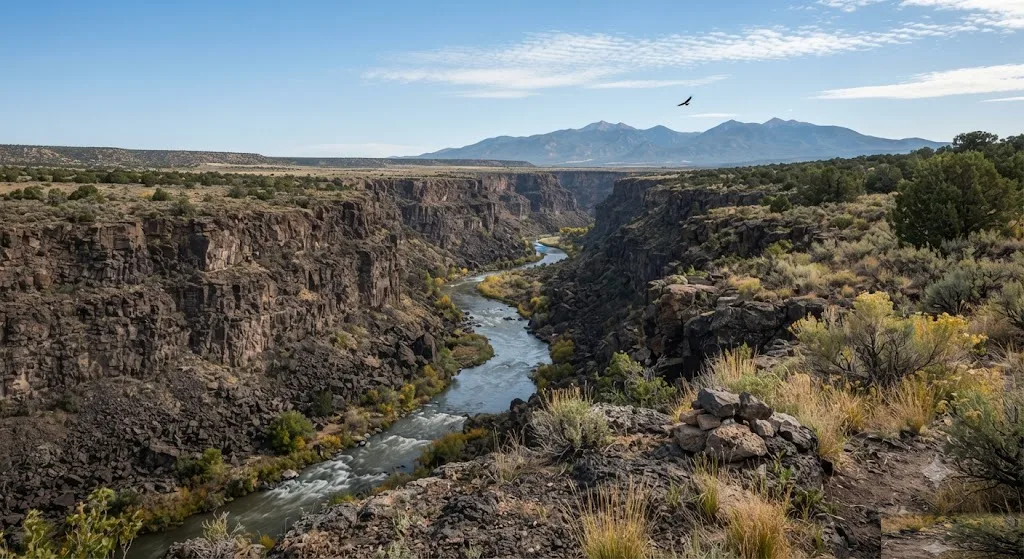
Rio Grande del Norte National Monument Travel Guide — New Mexico
Our Rio Grande del Norte National Monument guide covers practical planning for Rio Grande del Norte National Monument New Mexico — best time to visit, getting there, and what to do on the ground. We cut through the generic travel fluff to bring you the essential details for exploring this dramatic landscape, ensuring your trip is as epic as the gorge itself.
Why Visit Rio Grande del Norte National Monument
The Rio Grande del Norte National Monument New Mexico is a place of profound natural beauty and rugged grandeur, a landscape that truly captures the wild spirit of the American Southwest. Spanning approximately 243,000 acres, this monument protects a dramatic expanse of volcanic cones, vast sagebrush plains, and the breathtaking 800-foot-deep Rio Grande Gorge. We visit places like this for the sheer scale of the landscape and the raw, untamed wilderness it offers.
Here, the Rio Grande, designated a Wild and Scenic River, carves its way through layers of volcanic basalt, creating a dramatic chasm that contrasts sharply with the high desert plateau. Beyond the stunning geological features, the monument is a critical habitat for diverse wildlife, including bighorn sheep, elk, mule deer, and pronghorn, making it a prime destination for wildlife viewing. It's also a haven for outdoor enthusiasts, offering world-class opportunities for hiking, whitewater boating, fly fishing, and mountain biking.
For those seeking solitude and a deep connection with nature, the Rio Grande del Norte National Monument delivers. Its expansive views, ancient archaeological sites featuring petroglyphs, and the sheer power of the Rio Grande itself create an unforgettable experience. We find that the sense of untouched wilderness here is unparalleled, providing a true escape from the everyday.
Who It's Best For
This monument is ideal for adventurers, nature lovers, and anyone looking to immerse themselves in a high-desert landscape. If you thrive on outdoor activities like hiking, whitewater rafting, fishing, or mountain biking, you'll find an abundance of opportunities here. We particularly recommend it for those who appreciate dramatic scenery and seek a quieter, more reflective experience than some of the more heavily trafficked national parks.
Families with older children who enjoy active outdoor pursuits will find plenty to keep them engaged. Wildlife photographers and birdwatchers will be rewarded with chances to spot diverse species, from bighorn sheep to bald eagles. Even those who prefer scenic drives will appreciate the Wild Rivers Backcountry Byway and the views from the Rio Grande Gorge Bridge. However, visitors should be prepared for rugged terrain and limited services, as this is a true wilderness experience. If you're looking for luxury resorts and paved paths around every corner, this might not be your ideal destination.
Getting There & Parking
Knowing how to get to Rio Grande del Norte National Monument is key to a smooth trip. The monument is managed by the Bureau of Land Management (BLM) and is located in northern New Mexico, primarily accessible from towns like Taos and Questa.
There are two primary visitor centers: the Rio Grande Gorge Visitor Center near Pilar and the Wild Rivers Zimmerman Visitor Center near Questa.
- Rio Grande Gorge Visitor Center: Located at 2873 NM-68, Taos, NM 87571. To reach it from Taos Plaza, take New Mexico State Road 68 sixteen miles southwest to Pilar, then turn right onto New Mexico State Road 570 and drive about two miles. This visitor center is open from May 1 through October, seven days a week, 8:30 a.m. to 4:30 p.m. Winter hours are 10 a.m. to 2 p.m., seven days a week.
- Wild Rivers Zimmerman Visitor Center: Located at 1120 NM-378, Questa, NM. From Questa, go north on NM 522 and turn left onto State Road 378; the Visitor Center is about 17 miles from the turn-off. As of February 2025, the Wild Rivers Zimmerman Visitor Center is open 7 days a week from 10:00 a.m. to 3:00 p.m.
When considering how to get to Rio Grande del Norte National Monument, remember that many roads within the monument are unpaved and may require a high-clearance vehicle, especially after inclement weather. We always recommend checking current road conditions with the Taos Field Office (575-758-8851) or the visitor centers before venturing out.
Parking: Parking is generally available at visitor centers, recreation areas like Orilla Verde and Wild Rivers, and at trailheads. While there isn't a general entrance fee for the monument itself, day-use fees apply at developed recreation areas like Orilla Verde and Wild Rivers. As of 2026, day use is $3.00 per vehicle, and an annual pass is available for $20.00. Self-service pay stations are available, and visitors can also pay electronically using the Scan-and-Pay feature on the recreation.gov mobile app, which should be downloaded prior to arrival. America the Beautiful passes are accepted.
Top Things to Do
The Rio Grande del Norte National Monument offers a wealth of activities, making it a fantastic destination for outdoor enthusiasts. When planning things to do at Rio Grande del Norte National Monument, consider the season and your desired level of adventure.
- Whitewater Rafting and Kayaking: The Rio Grande Wild and Scenic River, flowing through the dramatic 800-foot deep Rio Grande Gorge, provides world-class whitewater rafting and kayaking opportunities. Guided trips are available, offering experiences from Class II to Class V rapids. The John Dunn Bridge Recreation Site is a popular launching point and one of the few river crossings, offering drivable access to the river. For those seeking a thrill, this is one of the premier things to do at Rio Grande del Norte National Monument.
- Hiking: With an extensive network of trails, the monument is a hiker's paradise. We detail specific Rio Grande del Norte National Monument hiking trails in the next section, but options range from easy rim walks to strenuous descents into the gorge.
- Fishing: The Rio Grande and its tributaries are renowned for trout fishing, attracting anglers from across the country. Healthy populations of rainbow and brown trout, as well as northern pike, make for excellent fishing.
- Wildlife Viewing: The diverse habitats support a rich array of wildlife. Keep an eye out for bighorn sheep, elk, mule deer, pronghorn, coyotes, and various bird species, including bald and golden eagles. La Junta Overlook and the Taos Valley Overlook are excellent spots for wildlife observation.
- Scenic Drives: Enjoy the stunning landscapes from your vehicle along the Wild Rivers Backcountry Byway, a 13-mile loop road that passes through the Wild Rivers Recreation Area. New Mexico Highway 570 and US Routes 64 and 285 also offer spectacular views. The Rio Grande Gorge Bridge, the seventh-highest bridge in the United States, provides a breathtaking vista of the gorge.
- Mountain Biking: The monument offers excellent mountain biking opportunities, particularly in areas like the Taos Valley Overlook, which features an interconnected system of easy to moderate trails. The Rift Valley Trail is a popular nine-mile loop.
- Camping: Several campgrounds are available within the monument, particularly in the Wild Rivers and Orilla Verde Recreation Areas. These range from developed sites to primitive backcountry options.
- Hot Springs: For a unique experience, seek out the Black Rock Hot Springs, an easy hike leading to natural, primitive mud-bottomed pools along the Rio Grande.
These are just some of the many things to do at Rio Grande del Norte National Monument. Whether you're seeking adventure or tranquility, this vast landscape provides ample opportunities for exploration and enjoyment.
Rio Grande del Norte National Monument Hiking Trails
The Rio Grande del Norte National Monument hiking trails offer a diverse range of experiences, from easy strolls along the rim to challenging descents into the gorge. We recommend sturdy footwear and plenty of water, especially for longer or more strenuous treks.
Here are some of the notable Rio Grande del Norte National Monument hiking trails:
- West Rim Trail: An easy 3.4-mile (5.4 km) trail that provides expansive views of the Rio Grande Gorge and the iconic Rio Grande Gorge Bridge. This trail is mostly flat and suitable for all skill levels, offering stunning vistas with minimal effort.
- Rift Valley Loop Trails: A captivating 3.9-mile (6.3 km) loop that traverses gentle ascents and rolling hills, providing panoramic views of the Sangre de Cristo Mountains and the Rio Grande Gorge. There are also longer, more difficult versions of the Rift Valley Trail, up to 11.6 miles, requiring good fitness.
- La Vista Verde Trail: Located in the Orilla Verde Recreation Area, this easy 2.4-mile (3.8 km) trail offers excellent views of the gorge and is particularly beautiful when wildflowers are in bloom. It's a fairly flat, sheltered valley walk where you might even spot unmarked petroglyphs.
- Big Arsenic Trail: This 1.3-mile (2.1 km) trail in the Wild Rivers Recreation Area leads down into the Rio Grande Gorge to the Big Arsenic Springs. While rated "easy" by some, we caution that the descent can be steep with loose rocks, requiring careful footing. The springs themselves are warmer than nearby Black Rock Hot Springs.
- La Junta Point Trail: At Wild Rivers, La Junta Point offers a dramatic, wheelchair-accessible vista of the confluence of the Rio Grande and Red River. Trails here lead down to the river, but be prepared for steep sections.
- Black Rock Hot Springs Trail: A short, easy 0.3-mile (0.5 km) hike leading to natural hot springs along the Rio Grande. The path can be rocky and uneven, with some bouldering sections, so sturdy footwear is advised.
- Bear Crossing Trail: Located in the Wild Rivers Recreation Area, this trail descends into the gorge. Many trails descending into the gorge are steep and strenuous, with elevation gains between 300-800 feet, often two miles or more roundtrip.
The BLM Taos Field Office offers free guided hikes throughout the summer, which can be a great way to learn about the monument's ecology and history. Always check with visitor centers for current trail conditions and any closures, especially during or after wet weather, as some roads and trails can become impassable.
Best Time to Visit
The Rio Grande del Norte National Monument offers distinct experiences throughout the year, but we generally recommend spring and fall for the most comfortable weather and ideal conditions for outdoor activities.
- Spring (April-May): Temperatures are pleasant, and wildflowers begin to bloom, adding vibrant color to the high desert landscape. This is an excellent time for hiking, mountain biking, and wildlife viewing before the intense summer heat sets in. River flows are often good for rafting as snowmelt increases.
- Summer (June-August): Summers can be hot, especially in the gorge. However, early mornings and late afternoons are still enjoyable for activities. Whitewater rafting is at its peak during summer, with thrilling rapids. Be aware of potential afternoon thunderstorms, which can make unpaved roads impassable when wet. Visitor centers typically operate extended hours during these months.
- Fall (September-October): The cooler temperatures and crisp air make fall another prime season for hiking, fishing, and scenic drives. The changing foliage along the river corridors adds an extra layer of beauty. Wildlife activity often increases as animals prepare for winter.
- Winter (November-March): While colder, winter offers a unique, serene beauty and opportunities for snowshoeing and cross-country skiing in higher elevations. Ice fishing is also popular on the area's lakes. Some facilities may have reduced hours, and certain roads might be closed due to snow. The monument is an important wintering area for many animals.
Ultimately, the best time to visit depends on your preferred activities. For river adventures, summer is excellent. For hiking and general exploration, spring and fall are hard to beat. We always advise checking the weather forecast and current conditions with the BLM Taos Field Office before your trip, regardless of the season.
Where to Stay Nearby
While the Rio Grande del Norte National Monument offers ample camping, many visitors prefer the comfort of a hotel or vacation rental in a nearby town. When considering Rio Grande del Norte National Monument lodging, you'll find options ranging from rustic to luxurious in the surrounding communities.
Questa: The village of Questa is a gateway community to the northern part of the monument, particularly the Wild Rivers Recreation Area. For Rio Grande del Norte National Monument lodging, Questa offers no-frills motels and plentiful RV and camping sites, maintaining a down-to-earth vibe. You won't find upscale resorts here, but rather clean, reasonably priced options. Some cabin rentals are also available in Questa.
Taos: Approximately 20-30 miles south of the monument, Taos is a larger town with a wider array of Rio Grande del Norte National Monument lodging options, from historic inns to boutique hotels and resorts. Taos offers more dining, shopping, and cultural attractions, making it a popular base for exploring the region, including the nearby Taos Pueblo. Popular choices include El Pueblo Lodge, El Monte Sagrado Living Resort & Spa, and The Historic Taos Inn.
Red River: Located about 15 miles east of Questa, Red River is a former mining town that offers family-friendly motels and vacation rentals, especially popular with those interested in skiing in winter or mountain activities in summer. Options like Alpine Lodge Red River and The Lodge at Red River are available.
Arroyo Hondo/Arroyo Seco: These smaller communities between Taos and Questa offer a more secluded experience, with vacation rentals and unique eco-lodges like Taos Goji Farm & Eco-Lodge Retreat.
Pilar/Embudo: Located at the southern end of the monument, near the Rio Grande Gorge Visitor Center and Orilla Verde Recreation Area, these villages offer a few vacation rentals and camping options right along the river.
When booking your Rio Grande del Norte National Monument lodging, we recommend considering your itinerary. If you plan to spend most of your time in the Wild Rivers area, Questa or Red River are convenient. For a blend of monument exploration and cultural experiences, Taos is an excellent choice. Always book accommodations in advance, especially during peak seasons.
Sample 2-Day Itinerary
To truly experience the diverse offerings of the Rio Grande del Norte National Monument, we suggest a two-day itinerary, allowing you to explore both the northern (Wild Rivers) and southern (Orilla Verde) sections.
Day 1: Wild Rivers Exploration & Gorge Views
- Morning (8:00 AM - 12:00 PM): Wild Rivers Recreation Area. Start your day at the Wild Rivers Zimmerman Visitor Center near Questa (open 10:00 a.m. to 3:00 p.m. daily as of February 2025) to pick up maps and get current conditions. Head to La Junta Point for a breathtaking, wheelchair-accessible overlook of the Rio Grande and Red River confluence. Then, embark on a hike. We recommend the Big Arsenic Trail (1.3 miles roundtrip) for a challenging descent into the gorge, or the West Rim Trail (3.4 miles) for expansive views without the steep climb.
- Lunch (12:00 PM - 1:00 PM): Picnic with a View. Pack a picnic to enjoy at one of the scenic picnic areas in the Wild Rivers Recreation Area.
- Afternoon (1:00 PM - 5:00 PM): Wild Rivers Backcountry Byway & Wildlife. Drive the Wild Rivers Backcountry Byway, a 13-mile loop offering stunning vistas and opportunities for wildlife spotting. Keep an eye out for bighorn sheep and elk. Consider a shorter, easier hike like the Vista Verde Trail (2.4 miles) for more rim views.
- Evening: Questa or Red River. Head to Questa for a casual dinner and to experience the small-town charm. Alternatively, drive to Red River (about 15 minutes east of Questa) for more dining options and a different mountain town atmosphere.
Day 2: Rio Grande Gorge & Southern Adventures
- Morning (8:30 AM - 12:30 PM): Rio Grande Gorge Bridge & West Rim Trail. Drive to the iconic Rio Grande Gorge Bridge on US-64. Walk across the bridge for incredible views into the 800-foot gorge. Afterwards, hike a section of the West Rim Trail, accessible from the south end of the bridge, offering more spectacular perspectives.
- Lunch (12:30 PM - 1:30 PM): Taos. Drive into Taos (about 10 miles from the bridge) for lunch. Explore the historic Taos Plaza and grab a bite at one of the many local restaurants.
- Afternoon (1:30 PM - 5:30 PM): Orilla Verde Recreation Area or Rafting.
- Option A (Relaxed): Visit the Rio Grande Gorge Visitor Center near Pilar (open 8:30 a.m. to 4:30 p.m. from May to October). Explore the Orilla Verde Recreation Area, known for its gentle hiking trails, picnicking spots, and river access for fishing.
- Option B (Adventure): Embark on a whitewater rafting trip on the Rio Grande. Many outfitters operate out of Taos or Pilar, offering half-day excursions through the gorge. Remember to book rafting trips in advance.
- Evening: Taos. Enjoy dinner in Taos, perhaps exploring some of the art galleries or enjoying the vibrant evening atmosphere. Consider an internal link here to our Best Places in New Mexico guide for more ideas on what to do in Taos.
This itinerary is a starting point; feel free to adjust based on your interests and fitness level. Remember that distances within the monument can be significant, and some roads are unpaved. Always carry plenty of water and snacks, and inform someone of your plans.
Last updated: 2026-07-08 by the Roam States team.