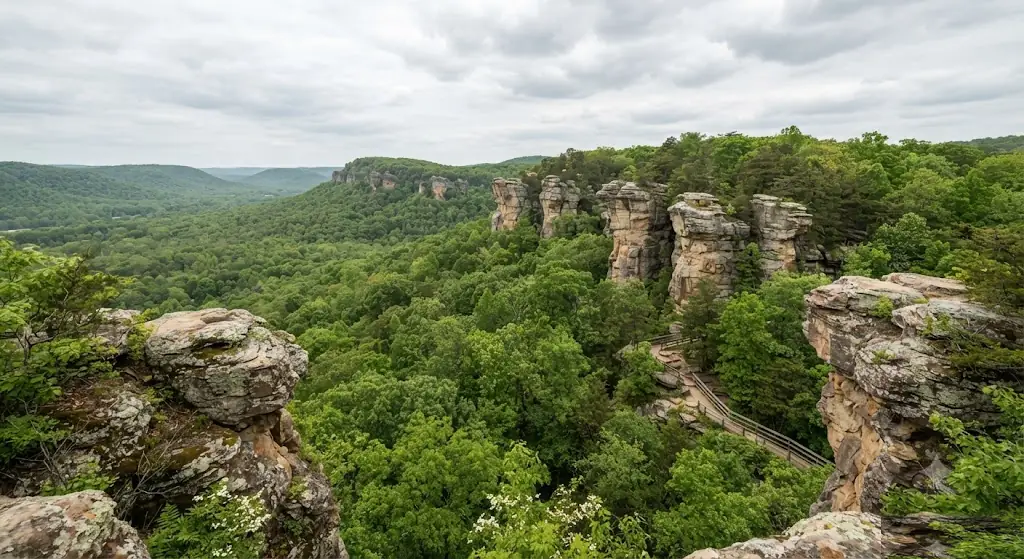
Welcome to our comprehensive guide to the Shawnee National Forest Illinois, a true gem nestled in the southernmost part of the state. Often defying the flatland stereotypes of Illinois, this expansive 289,000-acre forest offers a diverse landscape of rolling hills, dramatic bluffs, lush canyons, and unique geological formations, all situated between the mighty Ohio and Mississippi Rivers. Our team at Roam States is here to provide you with all the specific, verified details you need to plan an unforgettable adventure in this remarkable natural area.
Why Visit Shawnee National Forest
The Shawnee National Forest stands out as a premier outdoor destination, offering a stark contrast to the prairie landscapes typically associated with Illinois. We recommend visiting for its unparalleled natural beauty and the sheer variety of activities available. From ancient rock formations carved over 320 million years ago to serene wetlands teeming with wildlife, the forest provides a rich tapestry of ecosystems to explore. It's a place where history and nature intertwine, with remnants of Native American life and early settlements adding layers of cultural significance.
The forest's unique geology, including sandstone bluffs, canyons, and waterfalls, makes for breathtaking scenery and incredible photographic opportunities. Unlike much of Illinois, this southern tip escaped glaciation during the Ice Ages, preserving its rugged terrain and diverse plant life. We find that the Shawnee National Forest offers a peaceful retreat and an exhilarating playground for those seeking connection with the outdoors, far from the hustle and bustle of city life.
Who It's Best For
The Shawnee National Forest caters to a wide array of visitors, making it an ideal destination for various interests and skill levels. We believe it's particularly well-suited for:
- Outdoor Enthusiasts: Hikers, backpackers, rock climbers, and equestrians will find endless trails and unique geological features to challenge and inspire them.
- Families: With a multitude of kid-friendly hikes, opportunities for swimming, picnicking, and wildlife viewing, the forest provides an excellent environment for children to learn about and appreciate nature. Attractions like Cave-In-Rock State Park and Garden of the Gods offer engaging experiences for all ages.
- Nature Photographers: The dramatic landscapes, unique rock formations like Camel Rock and Devil's Smokestack, and vibrant seasonal foliage offer endless subjects for stunning photography.
- Wildlife Observers: The diverse habitats support a rich variety of animal life, including white-tailed deer, wild turkeys, and numerous bird species, making it a prime spot for birdwatching and wildlife viewing.
- Those Seeking Solitude: While popular areas can be busy, the vastness of the forest allows for quieter, more remote experiences, especially during off-peak seasons.
Whether you're looking for an adrenaline rush or a peaceful escape, the Shawnee National Forest offers something truly special.
Getting There & Parking
Accessing the Shawnee National Forest Illinois is relatively straightforward, as it's strategically located in Southern Illinois. We recommend planning your route in advance, as cell phone reception can be weak or non-existent in many parts of the forest.
The forest spans across several counties, with major entry points accessible via Interstates 57 and 24. It's approximately 320 miles south of Chicago, 120 miles southeast of St. Louis, and 60 miles southwest of Evansville, Indiana.
- From the North: Interstate 57 runs south from Chicago, leading directly towards the heart of the forest, about 25 miles from the Shawnee National Forest headquarters in Harrisburg.
- From the West: Visitors from St. Louis can take I-57 South.
- From the East: Those coming from Kentucky or Indiana can use I-24 West or I-64 West, connecting to state routes that lead into the forest.
Several ranger district offices can provide maps and local information: the Supervisor's Office in Harrisburg, the Hidden Springs Ranger District Office in Vienna, and the Mississippi Bluffs Ranger District Office in Jonesboro. We advise checking their operating hours if you plan to visit in person for assistance.
Regarding Shawnee National Forest parking, most popular trailheads and recreation areas, such as Garden of the Gods and Little Grand Canyon, offer dedicated parking lots. Parking is generally free at these sites. For instance, Garden of the Gods has easy parking available at its entrance. We always recommend arriving early, especially on weekends or during peak seasons, as parking lots for popular spots can fill up quickly.
There are no general entrance fees for the Shawnee National Forest itself. However, there are fees for staying in developed campgrounds and for accessing the beach and swimming area at Lake Glendale. In 2019, there was a proposal for a $5 per vehicle admission fee to certain locations with significant infrastructure needs, including Garden of the Gods, Little Grand Canyon, and Pounds Hollow beach, with an annual $30 pass also available. This proposal was still under consideration and would go into effect if approved by the U.S. Forest Service. We recommend checking the official Shawnee National Forest website (fs.usda.gov/shawnee) for the most current information on any potential fees or changes for 2026.
Top Things to Do
The Shawnee National Forest offers a wealth of activities, ensuring there's something for every type of adventurer. Our team has identified the top things to do at Shawnee National Forest to help you make the most of your visit.
Explore Geological Wonders
- Garden of the Gods Recreation Area: This is arguably the most famous and photographed location in the Shawnee National Forest, known for its extraordinary scenic beauty and unique sandstone rock formations like Camel Rock and Devil's Smokestack. The Observation Trail is a must-do, a 1/4-mile interpretive trail that offers panoramic views of the Shawnee Hills and Garden of the Gods Wilderness. The picnic area and Observation Trail are open daily from 6 a.m. to 10 p.m..
- Rim Rock National Recreation Trail: Designated a National Recreation Trail in 1980, Rim Rock offers a moderate 1.7-mile loop trail that explores a solitary knob, once home to a prehistoric Native American stone fort. Highlights include breathtaking overlooks of Pounds Hollow, a steep-walled canyon maze, and the historic Ox-Lot Cave, a pioneer-era livestock pen. The upper trail is a flagstone pathway, and while a staircase to the lower trail was previously closed, access to the lower area is available from the easternmost trail near the parking lot or from Pounds Hollow Recreation Area.
- Little Grand Canyon: This impressive box canyon, a National Natural Landmark since 1980, features a 3-mile loop trail that descends through a steep sandstone side canyon to a lush canyon floor. You'll encounter seasonal waterfalls, large sandstone overhangs, and towering trees, with expansive views of the Big Muddy River and Mississippi floodplain from the upper portions. The trail can be moderate to difficult, with slippery sections, especially after rain.
- Pomona Natural Bridge: Discover this natural stone arch tucked away in the forest. It's an incredible sight and offers a short, easy hike that's great for families.
- Burden Falls Wilderness: Home to one of Illinois' highest waterfalls, Burden Falls drops a total of about 100 feet in a series of cascades. The 3.5-mile Burden Falls Trail runs above the waterfall, and the area is known for its rugged beauty and unique plant life. We advise caution, as falls from the bluffs can be dangerous.
Outdoor Adventures
- Hiking: The Shawnee National Forest boasts an extensive network of trails, from easy interpretive loops to challenging multi-day backpacking routes like the 152-mile River to River Trail. We recommend consulting maps and preparing for varying terrain.
- Rock Climbing & Rappelling: With numerous unique rock formations, areas like Jackson Falls in the Hidden Springs Ranger District are popular for climbing and rappelling. Remember to bring your own equipment as rentals are not available.
- Horseback Riding: Many trails are open to equestrian use. Giant City Stables, near Carbondale, offers guided trail rides through the forest for ages 7 and up, with pony rides for younger children.
- Water Activities: Lakes and rivers within and around the forest offer opportunities for swimming, fishing, and kayaking. Pounds Hollow Recreation Area, near Rim Rock, allows swimming, fishing, or boating for free if you have your own equipment (a fishing license is required). Lake Glendale Recreation Center also features swimming, boating, and fishing.
- Ziplining: For an adrenaline rush, the Shawnee Bluffs Canopy Tour in Makanda offers a guided zipline adventure with 8 ziplines and 3 suspension bridges.
Historical and Cultural Sites
- Cave-In-Rock State Park: Situated high above the Ohio River, this park's namesake cave is a massive opening carved into limestone bluffs, with a fascinating history as a pirate hideout. It's a fun, self-guided exploration for families.
- Iron Furnace Historic Site: Explore the remnants of an old iron furnace, offering a glimpse into the region's industrial past.
When considering things to do at Shawnee National Forest, we encourage visitors to embrace the "Leave No Trace" principles to preserve its natural beauty for future generations.
Shawnee National Forest Hiking Trails
The Shawnee National Forest hiking trails are a highlight for many visitors, offering diverse terrain and stunning scenery. We've explored the options and compiled a list of must-experience trails, ranging from easy strolls to challenging backcountry adventures.
Popular & Accessible Trails
- Garden of the Gods Observation Trail: This is the most visited trail in the Shawnee National Forest and a perfect starting point, especially for first-time visitors or families. It's an easy, less than half-mile loop with minimal elevation, much of which is ADA-friendly. It leads to the iconic sandstone formations and panoramic overlooks. Plan for 1-2 hours to fully explore the area and take photos.
- Rim Rock National Recreation Trail: This moderate 1.7-mile loop trail is a favorite of our team. The upper trail is a flagstone pathway that meanders along the bluff's rim, offering scenic vistas and passing a prehistoric Native American stone wall. A descent into the "Fat Man's Misery" slot canyon and to the historic Ox-Lot Cave is a unique experience. The lower trail is about 0.7 miles out-and-back and can be accessed from the easternmost parking lot trail or from Pounds Hollow Recreation Area.
- Giant City Nature Trail (within Giant City State Park): Located near Giant City Lodge, this popular trail offers an easy 1-mile loop, perfect for families. The park itself is known for its stunning sandstone bluffs and dense forests.
- Pomona Natural Bridge Trail: A short, easy hike leads to a remarkable natural stone arch, making it a great family-friendly stop.
Challenging & Wilderness Trails
- Little Grand Canyon Trail: Rated moderate to difficult, this 3-mile loop trail involves a 365-foot climb from the canyon floor, offering panoramic views of the Big Muddy River and Mississippi floodplain. The descent into the canyon can be steep and slippery, especially when wet, with carved steps and handholds. It's dog-friendly, but dogs must be leashed.
- Burden Falls Trail: This 3.5-mile trail runs above the picturesque Burden Falls, one of Illinois' highest waterfalls. The area is rugged, with side trails branching deeper into the wilderness. We advise extreme caution near the bluffs and waterfalls due to the risk of serious injury from falls.
- River to River Trail: For seasoned hikers and backpackers, this extensive trail spans nearly 152 miles across the entire forest, from the Ohio River to the Mississippi River. It's a multi-day adventure that connects many of the forest's key attractions.
- Bell Smith Springs Trail System: This area offers a full day of exploration with multiple trails (Red, White, and Yellow trails are recommended, each a few miles long and moderately difficult), featuring natural arches, rock formations, and swimming holes popular in summer.
Important Hiking Tips
- Safety First: The majority of serious injuries and fatalities in the Shawnee National Forest are from falls off cliffs, bluffs, and waterfalls. We strongly advise using common sense and watching your step, especially in rugged areas.
- Be Prepared: Cell phone service is often unreliable. Always carry a map and compass (and know how to use them), plenty of water, and a first-aid kit.
- Wildlife: Be aware of venomous snakes (rattlesnakes, copperheads, water moccasins) that inhabit the area. Watch where you step and do not harass wildlife. Ticks and biting bugs are also present, so wear bug spray and check yourself after hikes.
- Trail Conditions: Trails can be muddy after rain, especially in areas with horseback riding. Some trails may be overgrown or slippery.
- Leave No Trace: Pack out all trash, including toilet paper and orange peels. Respect wildlife and leave what you find.
Exploring the Shawnee National Forest hiking trails is an incredibly rewarding experience, offering a chance to immerse ourselves in the unique natural beauty of Southern Illinois.
Best Time to Visit
Determining the best time to visit Shawnee National Forest depends largely on your preferred activities and tolerance for crowds and weather. Our team has evaluated the seasonal characteristics to help you plan your ideal trip.
- Spring (March-May): We consider spring one of the best times to visit. The forest awakens with blooming wildflowers, including rare orchids, and lush greenery. Waterfalls are often gushing due to spring rains, and birdwatching is excellent during migration season. Temperatures are generally mild, though early spring can be cooler, and rain can make trails muddy.
- Fall (September-November): Autumn is another prime season, offering stunning vibrant foliage as the leaves change color. Mid to late October is typically the best time to witness the peak fall colors. Cooler temperatures make for comfortable hiking and outdoor activities, and there are generally fewer bugs than in summer.
- Summer (June-August): Summer provides opportunities for camping, picnicking, and water activities like swimming, fishing, and kayaking in the lakes and rivers. However, Southern Illinois summers can be very hot and humid, with temperatures potentially exceeding 100 degrees Fahrenheit. We strongly recommend carrying extra water and using plenty of bug spray to combat ticks and other insects.
- Winter (December-February): For those seeking solitude and a unique perspective, winter can be a magical time. The cooler temperatures mean fewer bugs and snakes, and the bare trees allow for expansive views of bluffs and rock formations that are hidden by foliage in other seasons. Hiking is available year-round, and if you're lucky, you might see flowing or even frozen waterfalls. While temperatures can be very cold, and snow and ice are possible, many trails remain accessible, offering a peaceful and quiet experience.
For the most pleasant weather and stunning scenery, we lean towards spring and fall as the best times to visit Shawnee National Forest. However, each season offers its own distinct charm and activities.
Where to Stay Nearby
While the Shawnee National Forest itself offers camping, many visitors prefer to stay in nearby towns or cabins for more amenities. Our team recommends considering the following options for lodging near the forest:
- Campgrounds within Shawnee National Forest: For an immersive experience, we suggest staying in one of the forest's campgrounds. Sites are generally first-come, first-served, and there are self-pay stations at each entrance. Pharaoh Campground, near Garden of the Gods, is a popular choice due to its proximity to the scenic hiking trail. Campsites are typically around $10 per night for up to eight people and two vehicles, with some offering electricity. Lake Glendale Recreation Center also offers campsites with and without electricity, as well as showers and flush toilets. Dispersed camping is also permitted in many areas of the forest.
- Cabins and Lodges: Several private cabins and lodges are available in the surrounding areas, offering a comfortable retreat after a day of exploration. Willowbrook Cabins, for example, are located near many Shawnee sites like Burden Falls and Bell Smith Springs, offering amenities like Wi-Fi, cable, fire pits, and charcoal grills. The historic Giant City Lodge, within Giant City State Park, also offers cabins and a restaurant.
- Nearby Towns:
- Harrisburg, IL: Home to the Shawnee National Forest Supervisor's Office, Harrisburg offers basic services and is a good base for exploring the eastern side of the forest.
- Vienna, IL: Located near the Hidden Springs Ranger District Office, Vienna provides convenient access to central forest attractions.
- Jonesboro, IL: Situated near the Mississippi Bluffs Ranger District Office, Jonesboro is ideal for exploring the western parts of the forest.
- Carbondale, IL: A larger town, Carbondale offers more dining and lodging options and is a good hub for accessing the western and central portions of the forest, including Giant City State Park.
- Goreville, IL: A smaller town south of Carbondale, Goreville is close to Ferne Clyffe State Park and other forest areas.
- Murphysboro, IL: Located about 90 miles southeast of St. Louis, Murphysboro is a charming town that serves as a perfect base camp for exploring the outdoor offerings in the area, including Little Grand Canyon and Kinkaid Lake. It's also known for its barbecue scene and is part of the Shawnee Hills Wine Trail.
We advise booking accommodations in advance, especially during peak seasons, as options can fill up quickly. For a truly unique family experience, the Marion / Shawnee National Forest KOA, located on the Lake of Egypt, features a giant inflatable waterpark, making it a fun spot for those with kids.
Sample 2-Day Itinerary
To help you maximize your visit to the Shawnee National Forest Illinois, our team has crafted a sample 2-day itinerary, focusing on some of the most iconic and rewarding experiences the forest has to offer. This itinerary balances popular attractions with opportunities for adventure and relaxation.
Day 1: Eastern Shawnee Wonders
- Morning (8:00 AM - 12:00 PM): Garden of the Gods Recreation Area
- Start your day early at the renowned Garden of the Gods. We recommend hiking the Observation Trail, a short 1/4-mile loop that provides stunning panoramic views and a chance to explore unique sandstone formations like Camel Rock. Allow ample time for photography and soaking in the views.
- Parking: Easy parking is available at the entrance. The picnic area and Observation Trail are open from 6 a.m. to 10 p.m..
- Lunch (12:00 PM - 1:00 PM): Picnic at Garden of the Gods or nearby Outpost
- Enjoy a packed lunch at the picnic tables available at Garden of the Gods. Alternatively, grab an ice cream cone at the Garden of the Gods Outpost nearby.
- Afternoon (1:00 PM - 4:30 PM): Rim Rock National Recreation Trail & Pounds Hollow
- Head to Rim Rock, just a short drive from Garden of the Gods. We suggest hiking the moderate 1.7-mile loop, exploring the prehistoric stone fort remnants, the "Fat Man's Misery" slot canyon, and the historic Ox-Lot Cave.
- After your hike, if weather permits, cool off with a swim or relax at Pounds Hollow Recreation Area, which offers swimming, fishing, and boating (bring your own equipment).
- Evening (5:00 PM onwards): Dinner & Relaxation
- Dine in a nearby town like Harrisburg or Golconda, or enjoy a campfire meal if you're camping.
- Consider an evening stroll or stargazing, as the forest offers dark skies.
Day 2: Western & Central Forest Exploration
- Morning (8:30 AM - 12:30 PM): Little Grand Canyon
- Embark on the 3-mile loop trail at Little Grand Canyon. This moderate-to-difficult hike offers impressive geological features, seasonal waterfalls, and expansive views of the Big Muddy River and Mississippi floodplain. Be prepared for steep and potentially slippery sections.
- Parking: Facilities include parking, accessible restrooms, and a picnic area.
- Lunch (12:30 PM - 1:30 PM): Picnic or Local Eatery
- Enjoy a picnic lunch at the Little Grand Canyon trailhead or seek out a local eatery in Murphysboro, known for its barbecue.
- Afternoon (1:30 PM - 4:30 PM): Giant City State Park or Cave-In-Rock State Park
- Option A (Western Focus): Giant City State Park: Head to Giant City State Park, just south of Carbondale. Hike the easy 1-mile Giant City Nature Trail, explore the unique sandstone bluffs, or consider a horseback ride from Giant City Stables.
- Option B (Eastern Focus): Cave-In-Rock State Park: If you prefer to stay on the eastern side, visit Cave-In-Rock State Park. Explore the massive riverside cave, a historic pirate hideout, and enjoy views of the Ohio River. For an extra adventure, take the free ferry across to Kentucky.
- Late Afternoon/Evening: Departure or Extended Stay
- Conclude your Shawnee National Forest adventure or extend your stay to explore more areas like Burden Falls Wilderness or Bell Smith Springs.
This itinerary is a suggestion, and we encourage you to tailor it to your interests and fitness levels. Remember to check current conditions and hours of operation for all sites before your visit. For additional Illinois adventures, consider exploring other best places in Illinois, such as the Abraham Lincoln Presidential Library and Museum, Allerton Park & Retreat Center, or Anderson Japanese Gardens.
Is It Worth Visiting?
From our perspective as independent US travel authorities, the answer to "is Shawnee National Forest worth visiting?" is an unequivocal yes. This expansive forest in Southern Illinois consistently surprises visitors with its dramatic landscapes, rich biodiversity, and diverse recreational opportunities, challenging any preconceived notions of Illinois being solely flat farmland.
We believe its worth lies in several key aspects:
- Unique Natural Beauty: The Shawnee National Forest boasts geological formations unlike anywhere else in the Midwest. Ancient sandstone bluffs, intricate canyons, towering rock formations like those at Garden of the Gods, and picturesque waterfalls such as Burden Falls offer breathtaking scenery that has been sculpted over millions of years. It's a testament to the power of nature and a stark contrast to the glacial plains that cover much of the state.
- Diverse Outdoor Activities: Whether you're an avid hiker, a rock climber, an equestrian, or simply enjoy a scenic drive, the forest provides a wide range of activities. From easy, family-friendly trails to challenging backcountry routes, there's an adventure waiting for every skill level. We've highlighted many of the top things to do at Shawnee National Forest, and each offers a unique way to engage with the environment.
- Family-Friendly Adventures: For families, the Shawnee National Forest is a fantastic destination. Kids can explore caves, scramble on rocks, enjoy gentle hikes, and learn about nature in an engaging outdoor classroom. The variety ensures that both children and adults will find something to captivate their interest.
- Escape and Solitude: Despite its growing popularity, the sheer size of the 289,000-acre forest means that it's still possible to find peaceful, uncrowded areas, especially during the off-peak seasons or on less-trafficked trails. It offers a genuine opportunity to disconnect and immerse oneself in nature.
- Accessibility: While feeling remote, the forest is easily accessible from major interstates, making it a viable weekend getaway from cities like St. Louis and Chicago.
In conclusion, if you appreciate dramatic landscapes, diverse ecosystems, and a wealth of outdoor activities, we are confident that the Shawnee National Forest will not only meet but exceed your expectations. It's a truly remarkable destination that showcases a different, wilder side of Illinois, making it absolutely worth visiting.
Things to Do in Southern IL
Beyond the Shawnee National Forest, Southern Illinois offers a rich tapestry of attractions. We recommend exploring the Shawnee Hills Wine Trail, visiting other state parks like Ferne Clyffe State Park and Giant City State Park, which are often considered part of the broader Shawnee Forest country, or delving into the region's history at sites like Kincaid Mounds. The Ohio River Scenic Byway also offers picturesque drives and charming river towns to discover.
Shawnee National Forest with Kids
The Shawnee National Forest is an excellent destination for families. We suggest focusing on trails like the Garden of the Gods Observation Trail, which is short and easy, or the Giant City Nature Trail. Cave-In-Rock State Park offers a fascinating cave exploration, and the Marion / Shawnee National Forest KOA has an inflatable waterpark for summer fun. Many areas also provide picnic spots and opportunities for wildlife viewing, making it an engaging outdoor classroom for children.
Shawnee National Forest Tips
Our key tips for visiting Shawnee National Forest include planning ahead due to limited cell service, carrying plenty of water, and being aware of venomous snakes and ticks. We also advise wearing sturdy hiking shoes, bringing a map and compass, and practicing Leave No Trace principles. Visiting during spring or fall offers the most pleasant weather and stunning scenery.
Shawnee National Forest Parking
Parking at most popular trailheads and recreation areas, such as Garden of the Gods and Little Grand Canyon, is generally free and readily available. However, we recommend arriving early, especially on weekends or during peak seasons, as lots can fill up. There are no general entrance fees to the forest, but some developed recreation sites or campgrounds may have fees.
Best Time to Visit Shawnee National Forest
We find the best time to visit Shawnee National Forest is during the spring (March-May) for wildflowers and flowing waterfalls, or the fall (September-November) for vibrant autumn foliage and comfortable hiking temperatures. Summer can be hot and humid, while winter offers solitude and unique bare-tree views, though some areas may be affected by snow and ice.
Shawnee National Forest Hours and Fees
The Shawnee National Forest generally does not have an entrance fee. However, there are fees for staying in developed campgrounds and for accessing the beach and swimming area at Lake Glendale. For example, campsites are typically around $10 per night. Popular areas like the Garden of the Gods picnic area and Observation Trail are open daily from 6 a.m. to 10 p.m.. Most campgrounds and picnic shelters operate on a first-come, first-served basis, and reservations are not accepted. We always recommend checking the official USDA Forest Service website for the most up-to-date information on any potential fee changes or specific site hours for 2026.
Our team at Roam States firmly believes that the Shawnee National Forest is a captivating destination that offers a truly unique American travel experience. Its rugged beauty, diverse ecosystems, and abundant recreational opportunities make it a standout among national parks and natural areas. We encourage you to plan your visit, embrace the adventure, and discover the unexpected wonders of Southern Illinois.
Last updated: 2026-07-13 by the Roam States team.