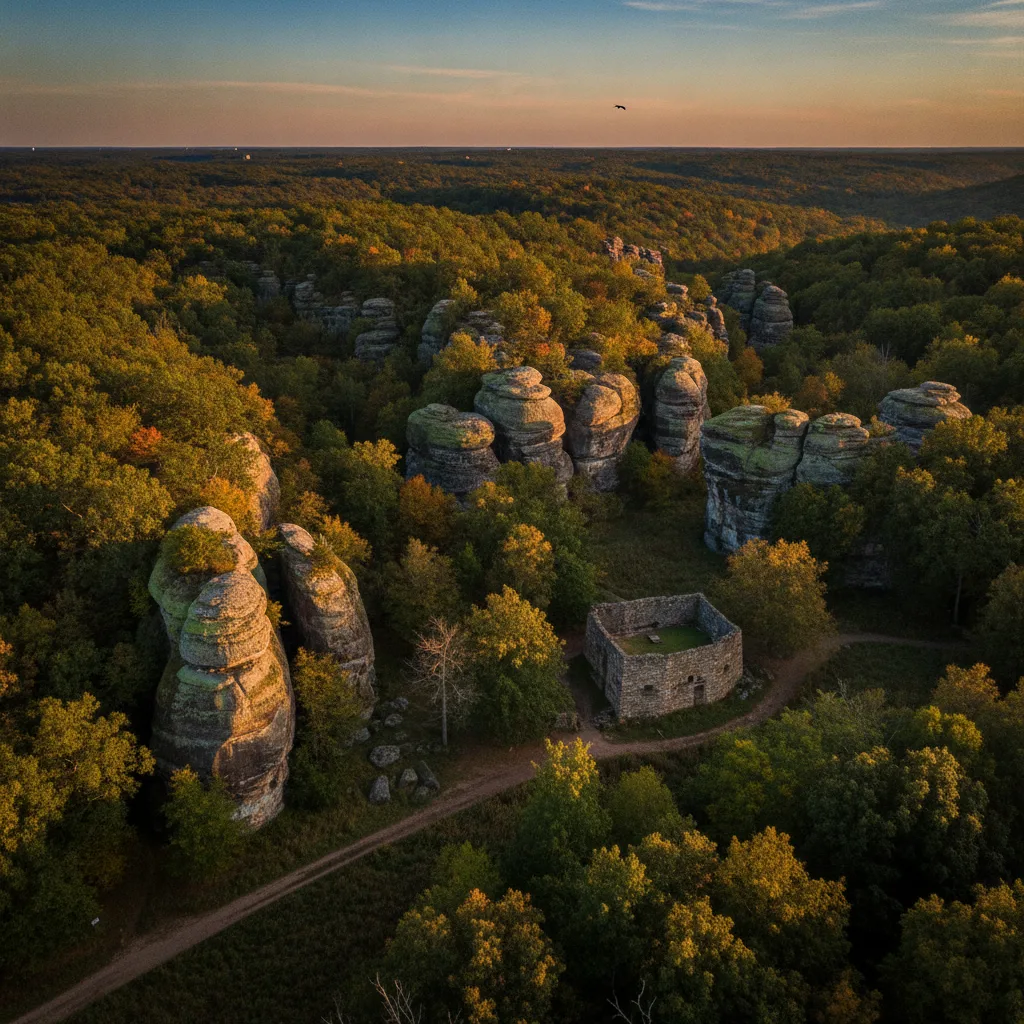
Our Giant City State Park guide covers practical planning for Giant City State Park Illinois — best time to visit, getting there, and what to do on the ground.
Nestled within the breathtaking Shawnee National Forest, Giant City State Park Illinois stands as a testament to ancient geological forces, offering a unique landscape of towering sandstone bluffs and narrow, maze-like passages. Our team at Roam States has explored every nook and cranny of this natural wonder to bring you the most confident and specific guide for planning your visit. Forget generic travel advice; we’re here to equip you with the insider knowledge needed to truly experience the "streets" of this remarkable park, from its exceptional hiking and rock climbing opportunities to its serene scenic beauty.
Why Visit Giant City State Park
Is Giant City State Park worth visiting? Absolutely. This park is a geological marvel, boasting massive sandstone bluffs that have been sculpted by eons of erosion into what locals affectionately call "Giant City Streets." Walking through these narrow, canyon-like passages feels like stepping into another world, a truly unique experience that sets it apart from other state parks. Beyond its distinctive rock formations, the park offers a rich tapestry of natural beauty, including lush forests, diverse wildflowers, and abundant wildlife, making it an outdoor lover's paradise.
The park's appeal extends beyond its visual splendor. It's a hub for outdoor recreation, providing endless opportunities for adventure and relaxation. Whether you're an avid hiker, a thrill-seeking rock climber, a horseback riding enthusiast, or simply looking for a peaceful picnic spot, Giant City State Park delivers. The historic Giant City Lodge, with its rustic charm and famous fried chicken, adds another layer to the experience, offering a comfortable retreat amidst the wilderness.
For those questioning, "is Giant City State Park worth visiting?", we confidently say yes. It's a destination that seamlessly blends natural wonder with recreational activities, offering something for every type of traveler. From its unique geological features to its diverse ecosystems and recreational offerings, Giant City State Park provides a memorable escape into the heart of Southern Illinois' natural beauty.
Who It's Best For
Giant City State Park caters to a wide array of visitors, making it an ideal destination for families, adventure seekers, nature enthusiasts, and those simply looking for a tranquil escape. Families with children will find the park particularly engaging, with accessible trails and a Discovery Corner at the Visitor Center designed to spark curiosity about nature.
Hikers of all skill levels will appreciate the diverse range of Giant City State Park hiking trails, from easy, scenic loops to challenging backpacking routes. Rock climbers and rappellers are drawn to the designated bluffs, offering unique sandstone climbing experiences.
Equestrian enthusiasts can take advantage of the dedicated horse trails and campground, while birdwatchers and photographers will revel in the abundant wildlife and stunning natural backdrops. Even those seeking a leisurely pace will find solace in the scenic drives, picnic areas, and the historic charm of the Giant City Lodge. In essence, if you appreciate the outdoors and seek a blend of adventure and serenity, this park is for you.
Getting There & Parking
Understanding how to get to Giant City State Park is straightforward, as it's conveniently located near Carbondale, Illinois, within the Shawnee National Forest. From the north, take I-57 South to Exit 54B (Route 13 towards Carbondale), then turn left onto Giant City Road after approximately 15 miles. From the south, follow I-24 to I-57 North, or take I-57 to Exit 45 (Route 148), then turn left onto Grassy Road.
The park itself is well-signposted once you're in the vicinity. The Visitor Center, located at 235 Giant City Road, Makanda, IL 62958, is an excellent starting point for maps and current information.
Parking at Giant City State Park is generally ample, with various lots available at trailheads, picnic areas, and the Giant City Lodge. While there are no specific fees for general park entry or parking, it's always wise to arrive earlier on weekends and during peak seasons (like fall foliage) to secure the best spots, especially for popular trailheads. For those wondering how to get to Giant City State Park with larger vehicles or RVs, the main roads within the park are generally accessible, though some smaller parking areas might be tighter. We recommend checking the park's official website or calling the Visitor Center for any specific advisories regarding road conditions or closures, especially during inclement weather.
Top Things to Do
When it comes to things to do at Giant City State Park, the options are as varied as the landscape itself. Our team always recommends starting with the iconic "Giant City Streets" to truly grasp the park's unique geological character.
Giant City State Park Hiking Trails
The Giant City State Park hiking trails are undeniably the park's crown jewel. With eight distinct trails, ranging from easy strolls to challenging backpacking routes, there's a path for every adventurer.
- Giant City Nature Trail: This 1-mile loop is the park's most famous, leading you directly through the awe-inspiring "Giant City Streets"—narrow passages carved by erosion between massive sandstone bluffs. It's a rugged, moderate-difficulty trail, perfect for families and those wanting to experience the park's namesake feature up close. Allow about an hour to fully explore this trail.
- Devil's Standtable Trail: A shorter, ⅓-mile out-and-back trail, rated as moderately difficult, this path leads to the distinctive mushroom-shaped rock formation known as the Devil's Standtable. It's also one of the designated areas for rock climbing and bouldering.
- Indian Creek Trail: This ¾-mile loop is considered moderately rugged, winding through lush forests, rocky bluffs, and creek beds. It offers glimpses of natural shelters once inhabited by Native Americans and can reveal seasonal waterfalls after a good rain.
- Trillium Trail: A 2-mile moderate trail, this is a must-hike in early spring when the forest floor bursts with wildflowers, including its namesake trillium. It features moderate elevation changes and creek crossings.
- Red Cedar Trail: For the more experienced hikers and backpackers, the 12-mile Red Cedar Trail offers a challenging loop through diverse terrain and hardwood forests, with an overnight primitive campsite at the halfway point. A permit is required for camping on this trail.
- Post Oak Trail: An easy ⅓-mile hike, this trail has partial ADA compatibility, making it accessible for disabled visitors, and features interpretive signage for "Forest Bathing."
- Stonefort Trail: This short, easy trail leads to a prehistoric stone fort with interpretive signs and panoramic views, offering a glimpse into the area's ancient history.
Remember that some Giant City State Park hiking trails, like the Indian Creek Shelter Nature Trail and Red Cedar Hiking Trail, are closed during shotgun deer seasons. Bicycles are not allowed on any park trails.
Rock Climbing and Rappelling
Giant City State Park is a premier destination for rock climbing and rappelling in Southern Illinois. Climbing is permitted in two specific areas: Devil's Standtable bluff and Shelter #1 bluff (also known as Makanda Bluff) at the Makanda entrance.
Climbers must bring their own equipment, as the park does not provide any. While individual climbers generally don't need to check in, groups (like training classes) are required to fill out an activity permit and provide insurance information. The Illinois Climbers Association has even assisted the park in installing fixed anchors on established routes at Shelter One to improve safety and increase participation. Always exercise caution, as cliffs are steep and sandstone can be slippery when wet, and venomous copperhead snakes are present.
Horseback Riding
Equestrian enthusiasts will find a 12-mile loop trail and a Class A equestrian campground at Giant City State Park. Giant City Stables offers guided trail rides, pony rides for children, lessons, and summer horse camps. The stables are typically open from March 15 to November 15.
Fishing and Picnicking
Ponds throughout the park are available for bank fishing, requiring an Illinois fishing license. Numerous picnic areas with tables and grills are scattered throughout the park, operating on a first-come, first-served basis. Several shelters are reservable for weekends and holidays from April to October with a $25 non-refundable fee and at least two weeks' notice.
Visitor Center Exploration
The Giant City Visitor Center offers interpretive displays on the park's geology, plants, animals, and history. You can also watch 10-minute films about the park and find information on other Southern Illinois attractions. There's a "Discovery Corner" for children to explore, and seasonal displays from local artists keep the center fresh. The Visitor Center is open daily from 8 AM to 3:30 PM.
Best Time to Visit
The best time to visit Giant City State Park largely depends on your preferred activities and tolerance for crowds. Each season offers a distinct experience:
- Spring (March-May): Our favorite time to visit. The forest floor comes alive with a spectacular display of wildflowers, including trillium, bluebells, and mayapples. Temperatures are mild and ideal for hiking, and migrating birds add to the natural beauty. Crowds are generally moderate, increasing towards late spring.
- Summer (June-August): Summer brings warmer temperatures and more visitors, especially on weekends. The shaded trails and forested campsites offer some relief from the heat. It's a great time for all outdoor activities, though you might encounter more humidity and insects.
- Fall (September-November): Another highly recommended season. The canopy transforms into a stunning display of reds, oranges, and golds, making for incredibly scenic hikes and drives. Vulture Fest in Makanda, typically in mid-October, is a popular local event that celebrates the fall colors and the migration of vultures. This is a peak season, so expect larger crowds and book accommodations and camping well in advance.
- Winter (December-February): For hardy adventurers, winter offers a peaceful, solitary experience with clear star viewing away from light pollution. While some facilities, like the Class A shower building, may close seasonally, primitive camping is still available. The stark landscape reveals geological features more clearly, and rock climbing can be excellent when weather permits. The Giant City Lodge restaurant is closed in December and January.
We recommend visiting during the spring or fall for the most comfortable weather and stunning natural beauty. If you plan a trip during these peak times, especially weekends, make sure to make reservations for lodging and camping well in advance.
Where to Stay Nearby
Finding suitable Giant City State Park lodging is easy, with options ranging from rustic cabins within the park to hotels and unique vacation rentals in nearby towns. We always recommend booking in advance, especially during peak seasons.
Giant City Lodge
For an immersive experience, the historic Giant City Lodge is located right within Giant City State Park. It offers three types of cabins: one-room cabins, duplex cabins with living rooms and decks overlooking the woods, and historic cabins built by the Civilian Conservation Corps. The lodge also features the Bald Knob dining room, famous for its family-style fried chicken, a gift shop, lounge, and an outdoor swimming pool (seasonal). The lodge is generally open from early February to mid-December.
Camping at Giant City State Park
Giant City State Park offers a variety of camping options for those who prefer to sleep under the stars.
- Class A Family Campground: Features 85 sites with electricity, access to water, and a sewage dump station. The fee is $20.00 per site, or $30.00 on holidays. 60 of these sites are reservable, and 25 are first-come, first-served. Reservations are seasonal, available from April 1 to November 30, and can be made up to 180 days in advance online or by calling (866) 716-6550. Shower facilities are available, though the building typically closes after the first shotgun deer season and reopens around April 1st.
- Class A Horse Campground: 25 sites equipped with electricity, water access, and hitching posts, designed for visitors bringing their own horses. This campground operates from May 1 to October 31.
- Class C Camping Area: Located at the south end of the family campground, this area offers 14 walk-in sites for a more primitive tent camping experience, with outdoor privies and access to showers.
- Primitive/Red Cedar Campground: Eight sites accessible via the 12-mile Red Cedar Backpacking Trail, located at the halfway point. A permit, purchased at the Visitor Center by noon, is required, and campers must pack in and out their own water and waste. The fee is $8.00 per night.
- Youth Group Camping Area: Available on a first-come, first-served basis for organized groups with adult supervision.
Alcohol is prohibited in day-use areas of the park from September 1 to May 31.
Hotels and Cabins Near Giant City State Park
Beyond the park, the nearby towns of Makanda and Carbondale offer a range of additional Giant City State Park lodging options. You'll find a variety of hotels, motels, cabins, and vacation rentals to suit different preferences and budgets.
- Carbondale: As a larger town, Carbondale offers more traditional hotel options like Home2 Suites by Hilton Carbondale (rated 8.8/10), Best Western Saluki Inn (rated 8.0/10), Super 8 by Wyndham Carbondale, and Holiday Inn Express & Suites Carbondale - University Area. These provide convenient access to amenities and dining.
- Makanda: This charming, artistic village, just minutes from the park, offers a selection of unique cabins and inns. Options include private cottages, rustic cabins with hot tubs, and farm stays, many of which are situated along the Shawnee Hills Wine Trail. Examples include Southern Illinois Private Cottage (rated 9.8/10), Winetrail Cabin, and Shawnee Wine Trail Farm Stay.
Prices for lodging near Giant City State Park can range from $75 to $290 per night, depending on the type of accommodation, season, and amenities.
Sample 2-Day Itinerary
To help you make the most of your visit, our team has crafted a sample 2-day itinerary for Giant City State Park, blending adventure, relaxation, and local flavor.
Day 1: Geological Wonders & Forest Trails
- Morning (8:00 AM - 12:00 PM): Arrive at Giant City State Park and head straight to the Visitor Center (open 8 AM - 3:30 PM) to grab maps and learn about the park's geology. Begin your exploration on the iconic Giant City Nature Trail (1-mile loop), immersing yourself in the "Giant City Streets." Allow ample time for photos and marveling at the sandstone bluffs. Next, tackle the Devil's Standtable Trail (⅓-mile out-and-back) to see the unique mushroom rock formation.
- Lunch (12:00 PM - 1:30 PM): Enjoy a picnic lunch at one of the park's many scenic picnic areas, or head to the historic Giant City Lodge for their famous fried chicken dinner.
- Afternoon (1:30 PM - 5:00 PM): Continue your hiking adventure on the Indian Creek Trail (¾-mile loop) to discover natural shelters and potential seasonal waterfalls. For a more accessible option, consider the Post Oak Trail. If you're a rock climber, this is an excellent time to head to the designated climbing areas at Devil's Standtable or Shelter #1 bluff.
- Evening (5:00 PM onwards): Check into your chosen Giant City State Park lodging, whether it's a cabin at the lodge or a hotel/cabin in Makanda or Carbondale. Enjoy dinner at the Giant City Lodge's Bald Knob dining room or explore dining options in Makanda, such as the Makanda Country Store on the boardwalk for casual fare.
Day 2: Shawnee Hills & Local Charm
- Morning (8:00 AM - 12:00 PM): Start your day with a hearty breakfast at the Giant City Lodge. Then, for a longer hiking challenge, embark on a section of the Trillium Trail (2-mile loop) or, if you're up for it, a portion of the Red Cedar Trail (12-mile loop for backpacking). Alternatively, if you brought your horses, enjoy a scenic ride on the equestrian trail.
- Lunch (12:00 PM - 1:30 PM): Pack a lunch to enjoy on the trail, or head to the charming village of Makanda, just outside the park, for a bite.
- Afternoon (1:30 PM - 5:00 PM): Explore the artistic Makanda Boardwalk, browsing unique shops and galleries. You might visit Visions Art Gallery or the Makanda Trading Company. Consider a visit to a local winery on the Shawnee Hills Wine Trail, such as Blue Sky Vineyards or StarView Vineyards, which are close to Makanda.
- Evening (5:00 PM onwards): Enjoy a final dinner at the Giant City Lodge, or venture further afield to Carbondale for a wider selection of restaurants. Reflect on the natural beauty and unique experiences of Giant City State Park Illinois.
For those looking to extend their trip, consider exploring other incredible places in Illinois like Starved Rock State Park, the vibrant city life around Millennium Park & The Bean, or the cultural treasures of The Art Institute of Chicago. You can also find more trip planning resources on our Plan Your US Trip page.
Last updated: 2026-07-06 by the Roam States team.