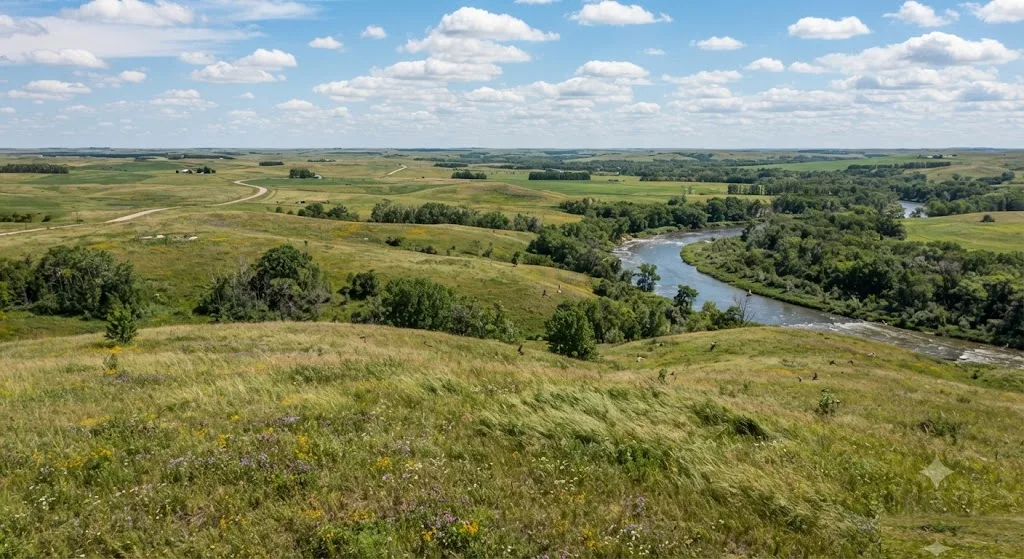
Welcome to the heart of North Dakota's tallgrass prairie, a landscape unlike any other. Sheyenne National Grasslands North Dakota, an expansive and ecologically vital area managed by the U.S. Forest Service. This unique destination, spanning over 70,000 acres of public land, offers a serene escape into rolling sand dunes, ancient river deltas, and oak savannas. It’s a place where the wild prairie still thrives, inviting visitors to disconnect and immerse themselves in nature's quiet grandeur.
Why Visit Sheyenne National Grasslands
The Sheyenne National Grasslands offer a distinctive North Dakota experience, standing out as the only National Grassland in the tallgrass prairie region of the United States. We visit for the unparalleled opportunity to witness a critically endangered ecosystem: the tallgrass prairie and bur oak savanna. This vast expanse of over 70,000 acres of public land is a haven for diverse wildlife and a botanical wonderland.
Imagine walking through fields ablaze with hundreds of wildflower species from spring through early fall, including one of the largest populations of the federally threatened Western Prairie Fringed Orchid, which typically blooms around the Fourth of July. Beyond the flora, the grasslands are a premier birdwatching destination, home to over 300 bird species, including the elusive Greater Prairie-Chicken—North Dakota's only stronghold for this impressive bird—and various migratory songbirds like warblers, vireos, and orioles. We've found that April is particularly excellent for observing male Greater Prairie-Chickens displaying on their booming grounds.
The landscape itself is a testament to ancient geological forces, characterized by sandy soils deposited as the delta of a river emptying into Glacial Lake Agassiz millions of years ago, now shaped into rolling plains and rugged sand dunes. This unique topography provides a stunning backdrop for outdoor activities and a profound sense of solitude, making it an ideal destination for those seeking to truly disconnect.
Who It's Best For
The Sheyenne National Grasslands are ideal for nature enthusiasts, hikers, birdwatchers, equestrians, and anyone seeking a peaceful, remote escape. If you're looking to immerse yourself in a unique natural environment and appreciate the quiet beauty of the prairie, this is your destination. It's particularly well-suited for those who enjoy self-guided outdoor adventures and are prepared for a more rustic experience, as modern amenities are limited.
Families with an adventurous spirit will find ample space for exploration, though it’s important to manage expectations regarding provided entertainment and encourage creativity in the outdoors. The grasslands also appeal to photographers, especially during sunrise and sunset, and stargazers who will be rewarded with expansive night skies due to minimal light pollution.
How to Get There & Parking
Reaching the Sheyenne National Grasslands North Dakota requires a bit of planning, as it's a remote natural retreat. The grasslands are located in eastern Ransom and western Richland counties, approximately 12 miles east of Lisbon, North Dakota.
From major cities, the drive is a few hours. For instance, it's about a four-hour drive from Minneapolis via I-94, and roughly three and a half hours from Sioux Falls via I-29 North. While the roads within the grasslands are generally flat and straight, they are mainly unpaved gravel and sand, which can become difficult to travel during periods of heavy rain or snow. Basic passenger vehicles and large recreational vehicles may encounter difficulties in such conditions.
Our team advises against relying solely on GPS when navigating to the grasslands, as it can sometimes lead to rough roads. Instead, we recommend asking locals for directions to specific trailheads like "Sheyenne National Grassland East trailhead" for the best access. The U.S. Forest Service office in Lisbon (1601 Main Street) is an excellent resource for maps and local knowledge to help with trip planning and to ensure you stay on public land.
For parking, you'll find designated areas at the various trailheads and campgrounds. For example, the eastern trailhead for the North Country Trail is located three miles south of North Dakota 27 on Ransom County Road 54, or 6.5 miles north of North Dakota 27 on Richland County Road 23. Jorgen's Hollow Campground also serves as a trailhead. Dispersed parking is generally allowed throughout the public land, but always be mindful of private property boundaries and avoid off-road driving.
Top Things to Do
The things to do at Sheyenne National Grasslands revolve around embracing its natural beauty and solitude. With over 70,000 acres of open prairieland and rolling sand dunes, the opportunities for outdoor adventure are abundant.
- Hiking: Explore miles of multi-use trails, including a 32-mile segment of the North Country National Scenic Trail, which winds through open prairies and wooded terrain. Other popular trails include the 8-mile Hankinson Hills Trail and the 4-mile Oak Leaf Trail, accessible from the campgrounds.
- Horseback Riding: The open expanses are perfect for horseback riding, with numerous trails and equestrian-friendly campgrounds like Jorgen's Hollow and Hankinson Hills.
- Birdwatching: As a premier birdwatching destination, the grasslands are home to over 300 bird species. Keep an eye out for Greater Prairie-Chickens, various hawks, bluebirds, and owls. Late spring and early summer are prime times for grassland specialists.
- Wildlife Viewing: Beyond birds, you might spot white-tailed deer, elk, coyotes, badgers, and wild turkeys. Early morning and late evening are the best times for viewing larger mammals.
- Photography: The diverse landscapes, wildflowers, and abundant wildlife offer endless photographic opportunities. The golden hours of sunrise and sunset are particularly stunning.
- Mountain Biking: The rugged terrain and vast network of trails, including sections of the North Country Scenic Trail, make for excellent mountain biking.
- Dispersed Camping: For a truly immersive experience, dispersed camping is allowed throughout much of the public land, offering privacy and direct access to trails.
- Wildflower Spotting: From spring through early fall, the prairie bursts with color. Look for prairie smoke, western wallflower, spiderwort, and the rare Western Prairie Fringed Orchid.
- Paddling the Sheyenne River Water Trail: For a different perspective, the Sheyenne River Water Trail offers 199 miles of scenic paddling from Lake Ashtabula to the Sheyenne National Grassland, featuring calm waters and shaded valleys.
- Snowmobiling/Cross-Country Skiing: In winter, the frozen sand dunes and prairieland transform into trails for cross-country skiing and snowmobiling.
When planning your things to do at Sheyenne National Grasslands, remember that this is a place to embrace the wild. Amenities are limited, so come prepared with water, snacks, and a first-aid kit.
Best Time to Visit
Determining the best time to visit Sheyenne National Grasslands depends on your interests, as each season offers a unique experience.
- Spring (April-May): We find spring to be a spectacular time. April is prime for viewing the Greater Prairie-Chicken's booming grounds. Late May through early June is ideal for wildflower spotters, with mild temperatures and the prairie coming alive with color. Migratory songbirds also abound.
- Summer (June-August): Full access to trails and activities is available. Mid-June is particularly recommended for peak orchid blooms, including the Western Prairie Fringed Orchid, and continued prairie chicken activity. However, be prepared for warmer temperatures and insects.
- Fall (September-October): This is another excellent time, especially for hikers. September brings moderate temperatures, fewer insects, and the grasslands display beautiful autumn hues, making it popular for photography and hiking. It's also a great time to view migrating birds and waterfowl.
- Winter (November-March): While cold, winter offers opportunities for cross-country skiing and snowmobiling across the frozen landscape. Short-eared Owls and Lapland Longspurs can be spotted during this time. However, some roads may become difficult to travel due to snow.
Our team generally recommends late spring through early fall for the most pleasant camping and hiking conditions.
Where to Stay Nearby
While the Sheyenne National Grasslands offer excellent camping, if you prefer a roof over your head, there are a few options in nearby towns. The grasslands are near the cities of Lisbon and McLeod.
- Lisbon, North Dakota: As the closest town with a U.S. Forest Service office, Lisbon is a practical base. While specific hotel listings for 2026 require direct search, it's the primary hub for services.
- McLeod, North Dakota: This small town is very close to the grasslands and offers a glimpse into local history at the McLeod Museum Complex.
- Sheyenne Oaks Horse Camp & RV Park: Located just 40 miles southwest of Fargo and bordering the northern boundary of the Sheyenne National Grasslands, this private park offers 38 sites with full hook-ups for RVs, individual horse corrals, and even cabins. It's a fantastic option for those bringing horses or seeking more amenities than the primitive campgrounds within the grasslands.
- Fargo, North Dakota: Approximately an hour's drive east, Fargo is the largest city in the region and offers a wider range of accommodations, dining, and services if you don't mind the commute.
- Fort Ransom State Park: About 25 minutes from Ransom County, Fort Ransom State Park offers camping options, including yurts and a unique Percheron Wagon, providing a different type of lodging experience.
For those interested in a more rustic experience, remember the developed campgrounds within the grasslands: Jorgen's Hollow and Hankinson Hills. Both offer primitive sites with picnic tables, fire pits, drinking water, and vault toilets. These are first-come, first-served and rarely crowded.
Sample 2-Day Itinerary
To fully experience the Sheyenne National Grasslands, we recommend a two-day itinerary focused on immersion in nature.
Day 1: Arrival & Eastern Grasslands Exploration
- Morning (Arrival & Hike): Arrive at the Sheyenne National Grasslands, ideally heading towards the Jorgen's Hollow Campground area. Pick up a map from the Lisbon Ranger District office if you haven't already. Begin your exploration with a hike on the Oak Leaf Trail, a 4-mile loop that connects to the North Country National Scenic Trail. This trail offers a gentle introduction to the oak savanna and tallgrass prairie.
- Lunch: Enjoy a packed picnic lunch at a scenic spot along the trail, such as near the Iron Springs Creek bridge.
- Afternoon (Birdwatching & Wildflowers): Dedicate your afternoon to birdwatching. The grasslands are home to over 300 species, so keep your binoculars ready for sightings of Greater Prairie-Chickens, hawks, and various songbirds. Depending on the season, search for wildflowers, including the Western Prairie Fringed Orchid if visiting in mid-June.
- Evening (Camping & Stargazing): Set up camp at Jorgen's Hollow Campground. Enjoy a campfire (check for current fire restrictions) and a simple meal. As night falls, prepare for spectacular stargazing—the minimal light pollution here offers incredible views of the night sky.
Day 2: Western Grasslands, River & Departure
- Morning (Equestrian Trails or Longer Hike): If you brought horses, spend the morning exploring the equestrian trails around Hankinson Hills Campground. If hiking, tackle the 8-mile Hankinson Hills Trail, known for birdwatching and wildlife viewing. Alternatively, explore another section of the North Country National Scenic Trail.
- Late Morning (Sheyenne River Water Trail): Head to an access point for the Sheyenne River Water Trail. If you have a kayak or canoe, enjoy a peaceful paddle along the river, taking in the shaded valleys and calm waters.
- Lunch: Have another picnic lunch by the river or at a designated picnic area.
- Afternoon (Scenic Drive & Departure): Before departing, take a scenic drive through different parts of the grasslands, perhaps along the Sheyenne River Valley National Scenic Byway, which offers picturesque views of rolling hills and farmland. This is also a good opportunity to visit the nearby McLeod Museum Complex for a bit of local history. Begin your journey home, carrying memories of North Dakota's unique prairie wilderness.
Sheyenne National Grasslands Hiking Trails
The Sheyenne National Grasslands hiking trails are a primary draw for visitors, offering diverse terrain from rolling prairie to wooded river valleys. The crown jewel is the 32-mile segment of the North Country National Scenic Trail (NCT) that traverses the grasslands from east to west.
This multi-use trail is open to hiking, horseback riding, and mountain biking, and is marked by blue diamonds. You can access the NCT from several trailheads. One popular starting point is three miles south of North Dakota 27 on Ransom County Road 54, near Jorgen's Hollow Campground. Another is 6.5 miles north of North Dakota 27 on Richland County Road 23.
Beyond the NCT, other significant Sheyenne National Grasslands hiking trails include:
- Oak Leaf Trail: A milder 4-mile loop that is marked and graveled, connecting to the larger North Country Trail and accessible from Jorgen's Hollow Campground. It's a beginner-friendly walk through tallgrass prairie, rolling sandhills, and shady oak savanna.
- Hankinson Hills Trail: An 8-mile loop that starts from Hankinson Hills Campground. This trail leads through a large oak forest and is excellent for birdwatching and wildlife viewing.
When exploring the Sheyenne National Grasslands hiking trails, be aware that the trails are well-worn and marked, but cow trails can sometimes lead off the main path, so pay attention to the NCT emblems (angle-topped wooden posts with the NCT emblem). There are few restroom facilities, so plan accordingly. We advise wearing long pants and adequate footwear and being prepared for inclement weather, as trails can become muddy after rain.
Sheyenne National Grasslands Camping
For those seeking a true immersion in North Dakota's prairie landscape, Sheyenne National Grasslands camping offers a range of experiences, from developed campgrounds to rustic dispersed camping.
Developed Campgrounds:
- Jorgen's Hollow Campground: This secluded RV campground offers 14 primitive sites nestled in an oak savanna. Each site includes a picnic table and fire pit, and seven are designed to accommodate horses with equestrian pens. Visitors have access to drinking water and vault toilets. It provides direct access to the North Country National Scenic Trail. All sites are first-come, first-served and are rarely crowded.
- Hankinson Hills Campground: Located three miles northwest of Hankinson, this semi-primitive campground features 15 shaded sites with picnic tables and fire pits. It's popular with campers bringing horses and offers direct access to an 8-mile hiking and equestrian trail. Drinking water and vault toilets are available. Like Jorgen's Hollow, sites are first-come, first-served.
These developed campgrounds provide a blend of rustic charm and essential amenities, making them a comfortable base for exploring the grasslands. Interagency Senior and Access Pass holders receive a 50% discount per campsite, per night.
Dispersed Camping:
The Sheyenne National Grasslands also allow for dispersed camping throughout much of the public land, offering a free, primitive, and often remote experience for those seeking solitude. This means no toilets, water, picnic tables, or trash services are provided, so come prepared.
When engaging in Sheyenne National Grasslands camping, especially dispersed camping, keep these tips in mind:
- Location: You can camp almost anywhere on public land where it's not otherwise restricted. However, be vigilant about private property boundaries, as public and private lands are intermixed. Obtain a map from the U.S. Forest Service office in Lisbon.
- Duration: Campers may use dispersed camping for up to 14 days within any 30-day period. After 14 days, you must move to a completely different location.
- Vehicle Access: Drive off designated Forest Service roads only when necessary for dispersed camping, and for no more than 300 feet. Set up campsites within 150-300 feet of designated roads. Avoid driving on wet or soft ground.
- Safety: Camp at least 100-200 feet away from water sources. Avoid camping in active livestock grazing allotments and stay clear of livestock infrastructure. Fire restrictions may apply seasonally, so check current conditions.
- Leave No Trace: Pack out everything you pack in.
Late spring through early fall offers the most pleasant conditions for Sheyenne National Grasslands camping, with September being particularly enjoyable for its moderate temperatures and beautiful autumn colors.
Is It Worth Visiting?
Our team confidently asserts that the Sheyenne National Grasslands North Dakota is absolutely worth visiting, particularly for travelers who appreciate unique natural landscapes, solitude, and authentic outdoor experiences. This isn't your typical national park with visitor centers and paved trails; instead, it offers a raw, expansive beauty that is increasingly rare in the United States.
What makes it worth visiting?
- Ecological Significance: It's the only National Grassland in the tallgrass prairie region, protecting critically endangered ecosystems like the tallgrass prairie and bur oak savanna. This alone makes it a vital and unique destination.
- Biodiversity Hotspot: With over 300 bird species, including the Greater Prairie-Chicken, and one of the largest populations of the federally threatened Western Prairie Fringed Orchid, the grasslands are a haven for wildlife and plant enthusiasts.
- Unparalleled Solitude: In an increasingly crowded world, the Sheyenne National Grasslands offer a chance to truly disconnect. You won't find a barrage of modern activities here, but rather an opportunity for quiet contemplation and immersion in nature.
- Diverse Activities: From hiking and horseback riding on the North Country National Scenic Trail to mountain biking, birdwatching, and dispersed camping, there are abundant opportunities for outdoor recreation. Even in winter, cross-country skiing and snowmobiling are options.
- Stunning Scenery: The rolling sand dunes, oak savannas, and vast prairies, especially when wildflowers are in bloom or during the golden hues of autumn, provide breathtaking photographic opportunities.
However, we emphasize that visitors should come prepared for a rustic experience. Amenities are limited, and planning is essential, especially regarding navigation and supplies. If you're seeking a highly developed tourist destination, the Sheyenne National Grasslands North Dakota might not be for you. But if you're drawn to wide-open spaces, rich biodiversity, and the quiet majesty of a vanishing ecosystem, then it is unequivocally worth visiting.
FAQ: Things to Do in Ransom County
Beyond the Sheyenne National Grasslands, Ransom County, North Dakota, offers additional attractions for outdoor enthusiasts and history buffs. You can explore Fort Ransom State Park, which features trails for hiking and horseback riding, camping, and opportunities for birdwatching. The park also hosts "Sodbuster Days" twice a year, celebrating the region's homesteading heritage. Lake Ashtabula, about 30 minutes from the county, is great for fishing, boating, and swimming in warmer months. For history, visit the Ransom County Society Museum in Fort Ransom, which has a 7-acre property with an original schoolhouse, mill, and barn. The Sheyenne River Valley National Scenic Byway offers picturesque drives through rolling hills and farmland.
FAQ: Sheyenne National Grasslands with Kids
Visiting the Sheyenne National Grasslands with kids can be a rewarding adventure, though it requires a shift in expectations from typical entertainment. Encourage children to embrace the solitude and get creative with nature-based games. Hiking is a great activity, with trails like the Oak Leaf Trail being beginner-friendly. Kids can enjoy spotting wildlife like deer, coyotes, and various birds, as well as searching for wildflowers. Pack plenty of water, snacks, and a first-aid kit, and remind them that modern amenities are scarce. The experience fosters a deeper connection to the outdoors and encourages imaginative play.
FAQ: Sheyenne National Grasslands Tips
Our top tips for visiting the Sheyenne National Grasslands include: always carry a detailed map from the U.S. Forest Service office in Lisbon, as GPS can be unreliable and private land is intermixed with public land. Fill up your gas tank before arriving, as rural communities nearby are not always close. Pack plenty of water, snacks, and a first-aid kit, as amenities are limited. Wear long pants and appropriate footwear to protect against insects and poison ivy, which can be found in shaded, woody areas. Be prepared for changing weather conditions, as roads can become difficult to navigate after heavy rain or snow. Finally, embrace the solitude and disconnect—cell service is generally available, but take advantage of the opportunity to truly immerse yourself in nature.
FAQ: Sheyenne National Grasslands Parking
Parking at Sheyenne National Grasslands is generally available at designated trailheads and campgrounds. For example, the eastern trailhead for the North Country Trail is located three miles south of North Dakota 27 on Ransom County Road 54, or 6.5 miles north of North Dakota 27 on Richland County Road 23. Jorgen's Hollow Campground also offers parking. Dispersed parking is allowed throughout public land, but it is crucial to consult a U.S. Forest Service map to avoid trespassing on private property. Always avoid off-road driving and be mindful that unpaved roads can become challenging in wet conditions.
FAQ: Best Time to Visit Sheyenne National Grasslands
The best time to visit Sheyenne National Grasslands depends on your interests. For wildflowers and migratory birds, late spring (May-June) is ideal, with mid-June being peak for the Western Prairie Fringed Orchid. Birdwatchers keen on the Greater Prairie-Chicken should aim for April. Hikers and those seeking moderate temperatures and beautiful autumn colors will find September and early October excellent. Summer offers full access to all activities but can be warmer and buggier. Winter allows for cross-country skiing and snowmobiling, but road conditions can be challenging.
FAQ: Sheyenne National Grasslands Hours and Fees
As of 2026, the Sheyenne National Grasslands are generally open year-round, 24 hours a day, as it is public land managed by the U.S. Forest Service. There are no entrance fees to access the grasslands themselves. For developed campgrounds like Jorgen's Hollow and Hankinson Hills, primitive sites are available on a first-come, first-served basis. While specific 2026 fees for these campgrounds were not detailed in the search results, Interagency Senior and Access Pass holders receive a 50% discount per campsite, per night. Dispersed camping is free. It's always advisable to check the official Dakota Prairie Grasslands website or contact the Sheyenne Ranger District office in Lisbon for the most up-to-date information on any potential closures, fees, or special use permits, especially for large groups.
In conclusion, our team at Roam States highly recommends a visit to the Sheyenne National Grasslands North Dakota. It's a destination that promises a profound connection with nature, offering a rare glimpse into the vast and vibrant tallgrass prairie ecosystem. Whether you're a seasoned hiker, an avid birdwatcher, or simply seeking a tranquil escape, the grasslands provide an unforgettable experience that will leave you with a deep appreciation for North Dakota's wild heart. Plan your trip to this extraordinary corner of the state, and discover the quiet majesty that awaits.
Last updated: 2026-07-08 by the Roam States team.