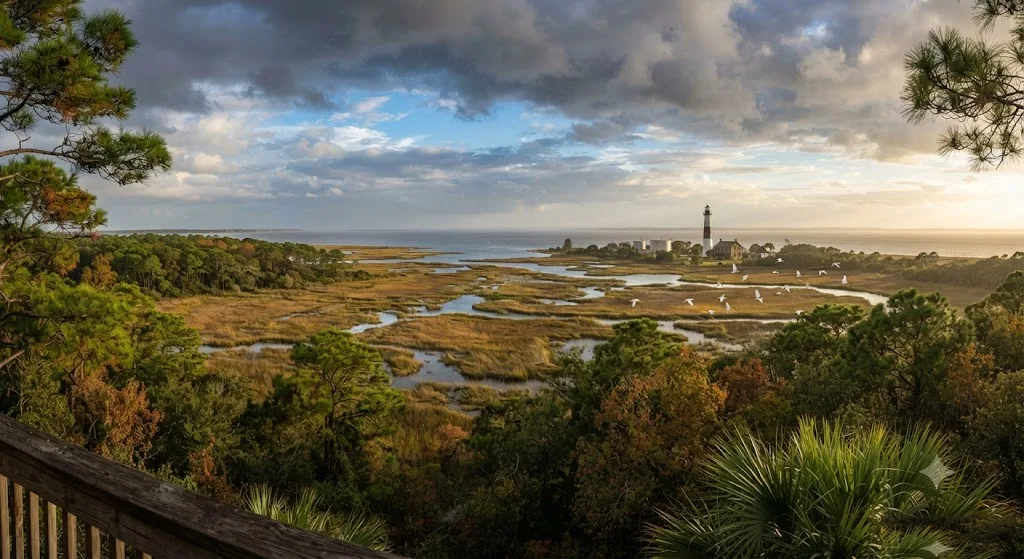
Our St. Marks National Wildlife Refuge guide covers practical planning for St. Marks National Wildlife Refuge Florida — best time to visit, getting there, and what to do on the ground.
As the Roam States editorial team, we pride ourselves on delivering confident and specific travel advice, steering clear of generic fluff. When it comes to discovering authentic Florida, few destinations rival the natural splendor and historical significance of St. Marks National Wildlife Refuge Florida. Established in 1931, this refuge is one of the oldest in the National Wildlife Refuge System, encompassing over 86,000 acres across Wakulla, Jefferson, and Taylor counties along Florida's Gulf Coast. It serves as a vital wintering habitat for migratory birds and is home to the iconic St. Marks Lighthouse.
Why Visit St. Marks National Wildlife Refuge
St. Marks National Wildlife Refuge offers a truly immersive experience in Florida's wild heart. We recommend visiting for its unparalleled wildlife viewing opportunities, diverse ecosystems, and rich history. The refuge’s landscape is a mosaic of salt marshes, tidal flats, freshwater pools, hardwood swamps, and pine forests, providing sanctuary for a vast array of species. Visitors can expect to see everything from migratory waterfowl and shorebirds to alligators, white-tailed deer, and even black bears.
Beyond its ecological importance, the refuge is steeped in history. The St. Marks Lighthouse, originally built in 1831, stands as a testament to the area's maritime past and is the second oldest lighthouse in Florida. Exploring the refuge offers a chance to connect with untouched Florida, providing a stark and beautiful contrast to the state's more developed coastal areas. It's a place where the rhythms of nature dictate the pace, offering a serene escape for those seeking tranquility and a deeper appreciation for the natural world.
Who It's Best For
St. Marks National Wildlife Refuge is an ideal destination for a wide range of travelers, particularly those with a passion for nature and outdoor activities. We find it's best for:
- Birdwatchers: With over 300 recorded bird species, including thousands of wintering waterfowl and migratory songbirds, it's a premier birding hotspot in Florida. Loaner optics and a sightings log are available at the Visitor Center.
- Hikers and Cyclists: An extensive network of trails, including 49.5 miles of the Florida National Scenic Trail, caters to all levels, from short interpretive walks to challenging backcountry routes.
- Photographers: The diverse landscapes, abundant wildlife, and historic lighthouse offer endless opportunities for stunning nature and landscape photography, especially during sunrise and sunset.
- Anglers: Both freshwater and saltwater fishing are permitted year-round in designated areas, with opportunities to catch largemouth bass, red drum, and spotted seatrout.
- Families: The refuge provides educational displays at the Visitor Center and easy trails suitable for children, offering a chance for kids to connect with nature and learn about conservation. Pets are allowed on a leash.
- History Enthusiasts: The St. Marks Lighthouse and nearby Fort San Marcos de Apalache Historic State Park provide insights into Florida's past.
If you're looking for a quiet, natural escape away from the crowds, where wildlife sightings are common and the scenery is breathtaking, St. Marks National Wildlife Refuge is an excellent choice. For those interested in other unique Florida experiences, consider exploring Biscayne National Park for its underwater wonders or Crystal River for manatee encounters.
How to Get There
Getting to St. Marks National Wildlife Refuge is straightforward, as it's located approximately 25 miles south of Tallahassee, Florida. Our team recommends planning your route in advance, especially if you're visiting during peak season.
Driving Directions:
- From Tallahassee, take State Road 363 (Woodville Highway) south to Wakulla.
- Turn left (east) onto State Road 267 (Bloxham Cutoff).
- At U.S. 98 (Coastal Highway), turn left (east) and cross the St. Marks River.
- Turn right onto Lighthouse Road (County Road 59) and drive approximately 3 miles to the Visitor Center.
Parking:
Parking is available at the Visitor Center and at various trailheads along Lighthouse Road. The refuge requires an entrance fee of $5 per vehicle or $1 per pedestrian/bicyclist. An annual refuge pass can be purchased for $25. Federal Recreation Fee (America the Beautiful) Passes are also honored for admission. The main gate on Lighthouse Road opens at 6 AM and closes after dark, with the refuge itself open during daylight hours year-round.
For those arriving by boat, saltwater access is available at a boat ramp near the Lighthouse, and freshwater access is at Otter Lake and East River Pool. However, commercial boats and personal watercraft are prohibited from launching at the lighthouse boat ramp.
Top Things to Do
There are a wealth of things to do at St. Marks National Wildlife Refuge, catering to all interests, from serene nature observation to active exploration. Our team has highlighted the essential experiences for your visit:
- Drive the Scenic Lighthouse Road: This 7-mile scenic drive starts at the Visitor Center and winds through diverse habitats, offering excellent opportunities for wildlife viewing, especially migratory birds. You can stop at various points for short walks or fishing.
- Visit the St. Marks Lighthouse: The historic 1831 lighthouse is a must-see landmark. While the lighthouse itself is no longer operational, the surrounding grounds are open, and the lighthouse keeper's house is open Friday through Sunday, 11 AM to 3 PM, for guided tours. It's a fantastic spot for photography, especially at sunrise or sunset.
- Birdwatching: St. Marks is a birder's paradise, with over 300 species recorded. Key birding spots include the impoundments along Lighthouse Road, Tower Pool, Headquarters Pond, and the Mounds Pools. Winter is particularly good for waterfowl, while spring and fall migrations bring a spectacular array of shorebirds and songbirds.
- Wildlife Observation: Beyond birds, keep an eye out for alligators, white-tailed deer, river otters, bobcats, and even black bears. Early morning and late afternoon are the best times to spot wildlife.
- Fishing: The refuge offers both freshwater and saltwater fishing year-round. Bank fishing is permitted in impoundments along Lighthouse Road, and boats with electric trolling motors are allowed in refuge pools from March 15 to October 15. Crabbing is prohibited in refuge pools and ponds.
- Paddling: Kayaking and canoeing are popular activities, especially along the Florida Circumnavigational Saltwater Paddling Trail, which traces 50 miles of the refuge's coastline. Access points include Mashes Sands Park, Dickerson Bay, and the St. Marks Lighthouse area.
- Visitor Center Exploration: Start your visit at the Visitor Center for maps, educational exhibits, and up-to-date information on wildlife sightings and refuge activities. Federal entrance passes are available for purchase here.
These things to do at St. Marks National Wildlife Refuge provide a comprehensive experience of its natural beauty and ecological significance. For more outdoor adventures in Florida, consider a trip to Everglades National Park or Silver Springs State Park.
St. Marks National Wildlife Refuge Hiking Trails
Exploring the St. Marks National Wildlife Refuge hiking trails is one of the most rewarding ways to experience its diverse ecosystems. The refuge boasts an extensive network of trails, ranging from short, accessible boardwalks to challenging, primitive routes.
Here are some of the notable St. Marks National Wildlife Refuge hiking trails:
- Florida National Scenic Trail: Approximately 49.5 to 56 miles of this national trail traverse the refuge from east to west, offering a primitive hiking experience through coastal pine flatwoods, hardwood hammocks, and salt marsh wilderness. Backcountry camping permits are available at the Visitor Center for through-hikers.
- Plum Orchard Pond Trail: Located behind the Visitor Center, this easy 1/3-mile loop features boardwalks and interpretive signs, making it an excellent, accessible option for all ages and a great spot for birding.
- Stoney Bayou Trail: Starting about 1.5 miles south of the Visitor Center on Lighthouse Road, this 3.3-mile loop winds through wetland prairie and marshlands. It's open to foot, bicycle, and horseback riding traffic, and leashed dogs are permitted.
- Deep Creek Trail: Another primitive walking trail originating near Stoney Bayou, Deep Creek offers a longer, 12-mile route along old logging roads and levees, ideal for seeing shy wildlife and migratory birds.
- Tower Pond Trail (Mounds Trail): Located five miles south of the Visitor Center, this 1-mile loop winds through slash pine forests, oak hammocks, and salt marsh, offering opportunities to see migrant songbirds in spring.
- Headquarters Pond Trail: A short 1/4-mile trail across from the Tower Pond Trailhead, leading to an observation deck. It's a prime location for spotting wading birds, ducks, and bald eagles.
- Levee Trail: A 1/2-mile trail at the end of Lighthouse Road, offering interpretive insights into coastal plants and scenic views between Lighthouse Pool and the bay. It's open to foot, bicycle, and horseback riding.
- Cedar Point Trail: A 1/2-mile trail near the saltwater boat ramp, tunneling through coastal cedars between open marshes and the boat channel.
Many of the St. Marks National Wildlife Refuge hiking trails are mowed regularly and follow levees or old roads. We recommend bringing plenty of water, sunscreen, and insect repellent, especially during warmer months, as shade can be limited on some trails. Always check with the Visitor Center for current trail conditions and any temporary closures. You can find detailed trail maps at the Visitor Center or online through resources like the U.S. Fish and Wildlife Service.
Best Time to Visit
Choosing the best time to visit St. Marks National Wildlife Refuge significantly enhances your experience, particularly for wildlife viewing and comfortable outdoor activities.
Fall (September to November): This is arguably the most popular and comfortable time to visit.
- Migratory Birds: Thousands of migratory birds pass through, making it excellent for birdwatching.
- Monarch Butterflies: In October, thousands of monarch butterflies congregate at St. Marks on their migration to Mexico, creating a spectacular sight. A Monarch Festival is often held in October.
- Weather: Temperatures are generally mild and pleasant, ideal for hiking and exploring.
Winter (December to February): Another prime season for birdwatching, especially for waterfowl.
- Waterfowl: Mid-November through late December is excellent for viewing waterfowl.
- Bald Eagles: The best time to see bald eagles is from November to March.
- Weather: Cooler temperatures make for comfortable hiking, though nights can be near or below freezing.
Spring (March to May): Offers a vibrant display of new life and continued bird migration.
- Songbirds and Shorebirds: Songbirds arrive from their wintering areas in early spring (April), and shorebirds are common in late spring.
- Weather: Comfortable temperatures for outdoor activities, though it can start to get warm by late May.
Summer (June to August): While hot and humid, summer still offers unique opportunities.
- Water Activities: Good for kayaking and canoeing.
- Alligators: Alligators are active and easily spotted.
- Considerations: Bring plenty of water, sunscreen, and insect repellent. Early morning and late evening are best to avoid the heat.
The refuge is open year-round during daylight hours (the gate on Lighthouse Road opens at 6 AM). The Visitor Center is open Monday-Friday, 8 AM-4 PM, and Saturday-Sunday, 10 AM-5 PM, closed on federal holidays. Always check for current conditions and potential closures due to prescribed burns or wildlife events.
St. Marks National Wildlife Refuge Lodging
While there is no St. Marks National Wildlife Refuge lodging directly within the refuge itself—meaning no hotels or food services—there are several excellent options in nearby towns. Our team recommends considering accommodations in Crawfordville, Panacea, or the town of St. Marks for convenient access to the refuge.
Hotels and Motels:
- Crawfordville: This nearby town offers several well-regarded choices.
- The Lodge at Wakulla Springs: A historic and charming option, offering free WiFi and parking.
- Wildwood Inn (Magnuson Hotel Wildwood Inn): A 3-star hotel located about 12.3 miles west of St. Marks NWR, offering a free continental breakfast.
- Best Western Wakulla Inn & Suites: Another solid 3-star option in Crawfordville.
- Panacea: This coastal town offers a more local, fishing village feel.
- The Panacea Motel: A simpler, budget-friendly choice.
- Various rental cottages and homes: Options like "Coastal Getaway on canal-steps to the beach" or "Hideaway Beach Cottage on waterfront" provide a more private stay.
- Tallahassee: For those who prefer a wider range of amenities and dining, Tallahassee is about 25 miles north of the refuge.
- Hyatt House Tallahassee Capitol – University: A 3-star hotel offering a luxurious stay.
- Fairfield Inn & Suites by Marriott Tallahassee Central: A well-liked 3-star hotel.
- Four Points by Sheraton Tallahassee Downtown: Another good downtown option.
Camping:
While the refuge itself does not have a public campground, there are nearby options for those who prefer to camp:
- Newport Park Campground: Located just across from the main refuge gate along US 98, this popular county park campground accommodates tents, campers, and small RVs. It has a bathhouse, boat ramp, and is within walking distance of a seafood restaurant. Reservations can be made by calling 850-745-7780.
- Shell Island Fish Camp: Located at 440 Shell Island Rd in St. Marks, this camp offers tent and RV sites, as well as tiny cabins, roomy cabins, and a small motel, catering especially to anglers. They can also assist hikers with crossing the St. Marks River by boat. Call 850-925-6226 for reservations.
- Backcountry Camping: St. Marks National Wildlife Refuge is one of the few National Wildlife Refuges that offers backcountry campsites along the Florida National Scenic Trail. These require a special permit obtained in advance from the Visitor Center and adherence to specific rules.
When considering St. Marks National Wildlife Refuge lodging, we advise booking in advance, especially during peak bird migration seasons (fall and winter). For more information on places to stay in the Sunshine State, explore our Best Places in Florida guide.
Sample 2-Day Itinerary
To help you make the most of your visit to St. Marks National Wildlife Refuge, our team has crafted a sample 2-day itinerary, balancing wildlife viewing, historical exploration, and relaxation.
Day 1: Lighthouse, Wildlife Drive, and Hiking
- Morning (Sunrise - 12:00 PM):
- Sunrise Photography at St. Marks Lighthouse: We recommend starting your day early to capture the stunning sunrise over Apalachee Bay at the historic St. Marks Lighthouse.
- Lighthouse Keeper's House: If visiting Friday-Sunday, explore the Keeper's House (open 11 AM - 3 PM).
- Scenic Lighthouse Road Drive: After the lighthouse, drive back along Lighthouse Road, making frequent stops at the impoundments and observation points for birdwatching and wildlife viewing. Keep an eye out for alligators and various waterfowl.
- Visitor Center: Stop at the Visitor Center (opens 8 AM on weekdays, 10 AM on weekends) for maps, current wildlife sightings, and educational exhibits.
- Lunch (12:00 PM - 1:00 PM):
- Pack a picnic to enjoy at one of the refuge's picnic areas, or head to the nearby town of St. Marks for fresh seafood at a local eatery like Riverside Cafe.
- Afternoon (1:00 PM - 5:00 PM):
- Hiking the Stoney Bayou Trail: Embark on the 3.3-mile Stoney Bayou Loop Trail, which offers wide-open views of marshlands and opportunities to see wading birds. Remember to bring water and insect repellent.
- Headquarters Pond Trail: For a shorter, accessible walk, explore the 1/4-mile Headquarters Pond Trail with its observation deck, perfect for spotting wading birds and eagles.
- Evening:
- Dinner: Enjoy dinner in Crawfordville or Tallahassee, depending on your accommodation.
- Stargazing: With minimal light pollution, the refuge offers excellent opportunities for stargazing.
Day 2: Deeper Exploration and Nearby Attractions
- Morning (Sunrise - 12:00 PM):
- Florida National Scenic Trail Segment: Dedicate the morning to a longer hike on a segment of the Florida National Scenic Trail within the refuge. Consider the section near the Aucilla River for its diverse forests and potential for spotting larger mammals.
- Paddling Adventure: Alternatively, rent a kayak or canoe from a local outfitter (like St. Marks Outfitters in the town of St. Marks) and explore the tidal creeks and salt marshes, offering a unique perspective of the refuge's aquatic wildlife.
- Lunch (12:00 PM - 1:00 PM):
- Grab a casual lunch in Panacea or Crawfordville.
- Afternoon (1:00 PM - 5:00 PM):
- Fort San Marcos de Apalache Historic State Park: Visit this historic fort in the town of St. Marks to delve into centuries of Spanish, British, and American history. It’s well worth a visit for history buffs.
- St. Marks Historic Railroad State Trail: Enjoy a leisurely bike ride or walk on this paved trail, which connects the town of St. Marks to Tallahassee, following Florida's first railroad line.
- Evening:
- Farewell Dinner: Indulge in fresh seafood at a waterfront restaurant in St. Marks or Panacea.
This itinerary provides a robust exploration of St. Marks National Wildlife Refuge. Remember to check local weather conditions and refuge advisories before and during your trip. For more Florida adventures, consider our guides to Destin & Emerald Coast Beaches or the official Visit Florida tourism site.
Is It Worth Visiting?
Our team confidently asserts that St. Marks National Wildlife Refuge is absolutely worth visiting for any traveler seeking an authentic Florida experience rooted in nature, history, and tranquility. Unlike the bustling theme parks and crowded beaches that often define Florida tourism, St. Marks offers a serene escape, a chance to reconnect with the wild, and an opportunity to witness critical conservation efforts firsthand.
For birdwatchers, the refuge is a non-negotiable destination, especially during migratory seasons, providing unparalleled access to hundreds of species. Hikers and cyclists will find a diverse network of trails, including segments of the Florida National Scenic Trail, that immerse them in unique coastal and forest habitats. The historic St. Marks Lighthouse adds a layer of cultural significance, making it a compelling spot for photographers and history enthusiasts alike.
We believe the modest entrance fee is a small price to pay for access to such a vast and well-preserved natural area. The refuge's commitment to protecting migratory birds and diverse ecosystems ensures that every visit contributes to a larger conservation mission. If you appreciate unspoiled landscapes, abundant wildlife, and a peaceful atmosphere, then St. Marks National Wildlife Refuge is unequivocally worth visiting. It's a testament to Florida's natural heritage and a refreshing alternative to more commercialized destinations.
Expert Verdict: St. Marks National Wildlife Refuge Florida
From the Roam States team, we wholeheartedly recommend St. Marks National Wildlife Refuge Florida as a premier destination for nature lovers, birdwatchers, and anyone seeking a peaceful retreat into Florida's wild heart. Its status as one of the oldest refuges in the National Wildlife Refuge System underscores its critical importance as a wintering habitat for migratory birds and a haven for diverse wildlife. The historic St. Marks Lighthouse stands as a captivating landmark, adding a layer of cultural depth to the natural beauty. We encourage you to plan your trip during the fall or winter for optimal wildlife viewing and comfortable temperatures, and to take full advantage of the extensive hiking trails and scenic drives. This refuge offers a truly enriching experience that highlights the best of Florida's natural heritage.
FAQ
St. Marks National Wildlife Refuge camping
While St. Marks National Wildlife Refuge does not have a public campground within its main unit, backcountry camping is permitted along the Florida National Scenic Trail with a special permit obtained from the Visitor Center. Additionally, several private and county park campgrounds are located nearby. Newport Park Campground, directly across from the refuge's main gate on US 98, offers sites for tents, campers, and RVs, with reservations available by calling 850-745-7780. Shell Island Fish Camp in St. Marks also provides tent and RV sites, along with cabins.
things to do in St. Marks
In St. Marks, Florida, beyond the National Wildlife Refuge, visitors can explore the historic Fort San Marcos de Apalache Historic State Park, which offers insights into centuries of Florida history. The St. Marks Historic Railroad State Trail provides opportunities for cycling and walking, connecting the town to Tallahassee. The town itself offers a charming fishing village atmosphere with seafood restaurants like Riverside Cafe, marinas for boating and fishing charters, and local shops.
St. Marks National Wildlife Refuge with kids
St. Marks National Wildlife Refuge is an excellent destination for families with kids. The Visitor Center offers educational displays and information. Easy, accessible trails like the Plum Orchard Pond Trail (with boardwalks) are suitable for young children. Kids will enjoy spotting alligators, various birds, and other wildlife along the scenic Lighthouse Road. Pets on a leash are permitted, making it a family-friendly outing. Remember to bring bug spray and water, especially in warmer months.
best hotels near St. Marks National Wildlife Refuge
The best hotels near St. Marks National Wildlife Refuge are primarily found in nearby Crawfordville and Tallahassee. In Crawfordville, popular options include The Lodge at Wakulla Springs, Wildwood Inn (Magnuson Hotel Wildwood Inn), and Best Western Wakulla Inn & Suites. For a wider selection and more amenities, Tallahassee offers hotels like Hyatt House Tallahassee Capitol – University and Fairfield Inn & Suites by Marriott Tallahassee Central. For a more local experience, consider rental cottages or the Panacea Motel in Panacea.
St. Marks National Wildlife Refuge tips
For a successful visit to St. Marks National Wildlife Refuge, we offer these tips: arrive early or stay late for optimal wildlife viewing, as animals are most active during these times. Bring binoculars, a field guide, plenty of water, sunscreen, and insect repellent. Always keep pets on a leash and stay on marked trails to protect wildlife and yourself. Check the Visitor Center for current conditions, trail closures, and wildlife sightings. Respect refuge rules, such as observing speed limits and not disturbing wildlife. Consider visiting during fall or winter for the most comfortable weather and best birding opportunities.
where to stay near St. Marks National Wildlife Refuge
When deciding where to stay near St. Marks National Wildlife Refuge, your best options are the towns of Crawfordville, Panacea, and St. Marks, all within a reasonable driving distance. Crawfordville provides hotels like The Lodge at Wakulla Springs and Best Western Wakulla Inn & Suites. Panacea offers more quaint motels and vacation rentals. The town of St. Marks has a historic bed and breakfast and local fish camps with lodging. For those seeking more urban amenities, Tallahassee, about 25 miles north, has a broader range of hotels.
Last updated: 2026-07-14 by the Roam States team.