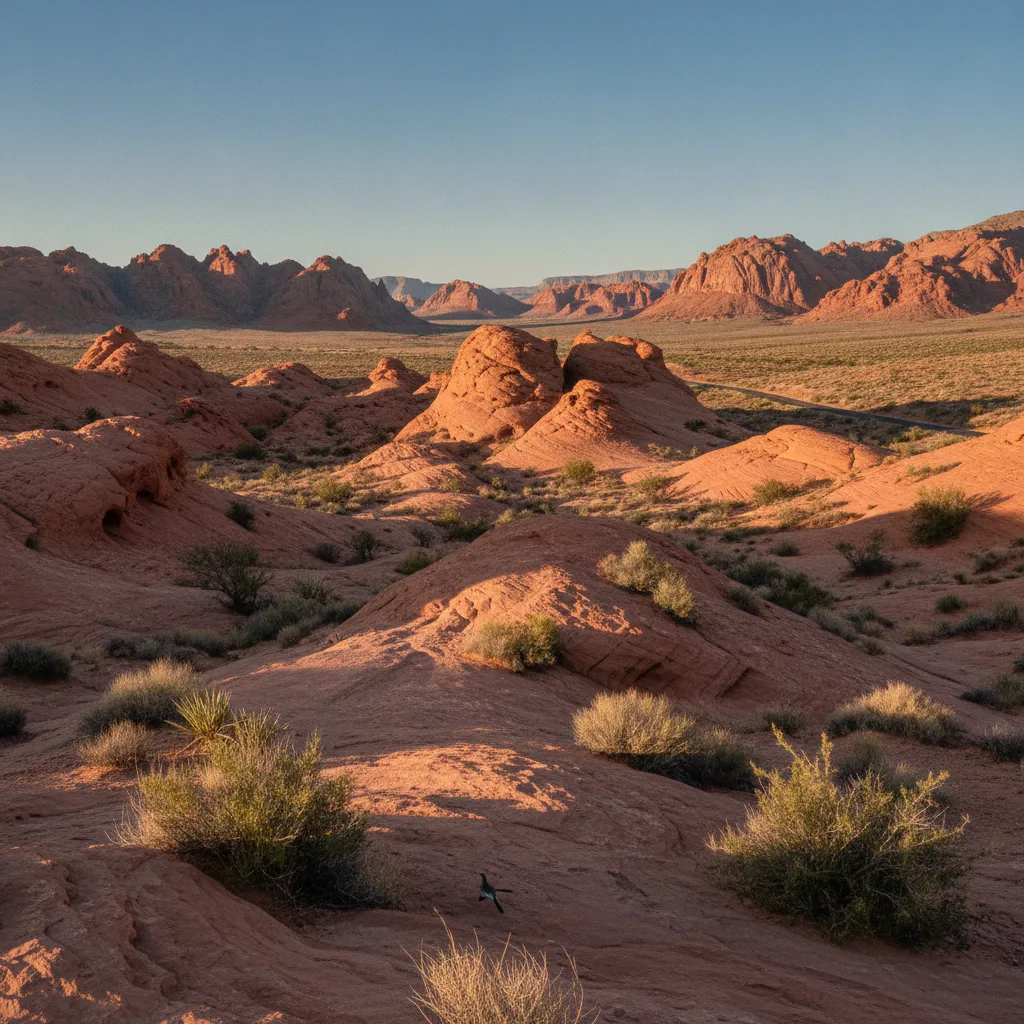
For travelers seeking a truly unique desert experience, Valley of Fire State Park Nevada offers an unparalleled landscape of fiery red Aztec sandstone formations and ancient petroglyphs. As Nevada’s oldest state park, it presents a dramatic contrast to the glittering lights of nearby Las Vegas, inviting visitors to explore a world shaped by millions of years of geological forces and thousands of years of human history. Our team at Roam States has compiled this comprehensive guide to help you plan an unforgettable journey to this stunning natural wonder.
Why Visit Valley of Fire State Park
The allure of Valley of Fire State Park lies in its breathtaking scenery and rich cultural heritage. Covering over 40,000 acres, the park is renowned for its vibrant red Aztec sandstone outcrops, which appear to be ablaze when illuminated by the sun. These striking formations, nestled amidst gray and tan limestone, were formed from shifting sand dunes during the Jurassic period, approximately 150 million years ago. Beyond the geological marvels, the park is a living museum of human history, boasting ancient petrified trees and petroglyphs carved by early Native Americans more than 2,000 years ago.
We believe Valley of Fire offers a profound connection to both the raw power of nature and the enduring legacy of human presence in the desert. It's a place where you can witness geological processes spanning eons and touch the artwork of civilizations long past. The park's well-maintained scenic drives and numerous trails make these wonders accessible to a wide range of visitors, from casual sightseers to avid hikers. Whether you're captivated by geology, history, or simply the sheer beauty of the natural world, Valley of Fire delivers an experience unlike any other in the Silver State. For more incredible destinations in Nevada, be sure to check out our guide to the Best places in Nevada.
Who It's Best For
Valley of Fire State Park is a versatile destination, appealing to a diverse array of travelers:
- Nature Photographers: The dramatic red rock formations, especially during sunrise and sunset, provide unparalleled photographic opportunities. The interplay of light and shadow on the sandstone creates stunning visual effects.
- Hikers of All Levels: With trails ranging from easy, short walks to more strenuous, longer treks, the park accommodates everyone from families with young children to experienced backpackers.
- History Buffs: The abundant petroglyphs and petrified wood offer a tangible link to ancient civilizations and prehistoric ecosystems.
- Road Trippers: Its proximity to Las Vegas makes it an ideal day trip or a rewarding stop on a longer USA Road Trip Planner. The scenic drives alone are worth the visit.
- Families: Many trails are suitable for children, and the unique rock formations spark imagination and wonder. The visitor center also provides educational exhibits.
- Campers: The park offers well-equipped campgrounds, allowing visitors to immerse themselves fully in the desert environment, particularly during the cooler months.
Ultimately, if you appreciate stunning natural landscapes, ancient history, and outdoor adventure, Valley of Fire State Park is an excellent choice for your travel itinerary.
Getting There & Parking
Understanding how to get to Valley of Fire State Park is crucial for a smooth visit. The park is conveniently located approximately 50-58 miles northeast of the Las Vegas Strip, making it an easy day trip.
Directions from Las Vegas:
The most common route from Las Vegas involves taking I-15 North for about 33-40 miles. Take Exit 75, which is the Valley of Fire/Lake Mead exit. From there, head east on Valley of Fire Highway (NV-169) for approximately 17-18 miles to reach the park's west entrance station. The drive typically takes about an hour to 1 hour and 10 minutes.
A more scenic, though slightly longer, route involves taking I-15 North to Lake Mead Boulevard, turning right (east) to Lakeshore Road (NV-166), and then turning right onto Northshore Drive (NV-167) which leads to the park's east entrance.
Entrance Fees (2026):
As of 2026, the day-use entrance fee for Valley of Fire State Park Nevada is $15 per vehicle for non-Nevada residents and $10 per vehicle for Nevada residents. For those entering on foot, bicycle, or horseback, the fee is $2 per person. An annual Nevada State Parks day-use pass is available for $75 and covers vehicle entry at all state parks for 12 months. We recommend carrying both cash and a card, as self-pay kiosks may not always be reliable, especially if arriving after the fee booth closes.
Parking:
Valley of Fire State Park parking is available at various trailheads and scenic overlooks throughout the park. While reservations are not required for day use, parking spaces at popular trailheads like Fire Wave and White Domes can fill up quickly, especially during peak seasons (February through May and October through November) and on weekends. We advise arriving early in the morning to secure a spot. Drive only on approved routes and park only in designated areas along the roadside shoulders. Motor vehicles are not allowed on trails.
The Visitor Center, open daily from 9:00 AM to 4:00 PM, is an excellent first stop for maps, restrooms, and information.
Top Things to Do
There's no shortage of things to do at Valley of Fire State Park, offering a blend of scenic drives, unique rock formations, and ancient history. Our team recommends prioritizing these key attractions:
- Atlatl Rock: A short walk up a metal staircase leads to impressive petroglyphs, some dating back over 4,000 years. These carvings depict an "atlatl," an ancient spear-throwing device.
- Arch Rock: This natural arch, visible directly from the road, is a testament to the power of erosion. While beautiful, please refrain from climbing on it to preserve its delicate structure.
- Elephant Rock: Located near the east entrance, this iconic formation truly resembles an elephant. A short 0.2-mile out-and-back trail makes it easily accessible for a quick photo stop.
- The Beehives: These distinctive sandstone formations showcase fascinating geological cross-bedding, revealing layers of silt deposited by ancient winds and water.
- Rainbow Vista: Offering a panoramic viewpoint, Rainbow Vista presents a vast expanse of multicolored rocks stretching northward, providing incredible photo opportunities.
- Fire Canyon / Silica Dome: This viewpoint offers stunning vistas of red, orange, and pink sandstone, often glowing intensely in the sunlight. Silica Dome itself is a striking white formation in the distance.
- The Cabins: These historic stone structures, built by the Civilian Conservation Corps in 1935, offer a glimpse into the park's early development and provide shaded picnic areas.
- Petrified Logs: Discover ancient petrified wood, evidence of a forested past from approximately 225 million years ago, visible in two locations within the park.
These things to do at Valley of Fire State Park can be enjoyed through scenic drives with frequent stops or by incorporating short walks to viewpoints.
Valley of Fire State Park Hiking Trails
Exploring the Valley of Fire State Park hiking trails is arguably the best way to experience its unique beauty up close. Our team highly recommends these trails, keeping in mind that many popular trails are subject to seasonal closures from May 15 to September 30 due to extreme heat.
- Mouse's Tank Trail (Petroglyph Canyon Trail): This easy, sandy 0.75-mile round trip hike is perfect for families and offers an incredible density of ancient petroglyphs etched into the canyon walls. The trail culminates at Mouse's Tank, a natural basin where rainwater collects.
- Fire Wave Trail: One of the park's most iconic and popular hikes, the Fire Wave is a moderate 1.5-mile out-and-back trail leading to a stunning sandstone formation with swirling patterns of pink, red, and white, resembling an ocean wave. (Note: This trail is typically closed during summer months).
- White Domes Loop Trail: This easy to moderate 1.1-mile loop takes you through a diverse landscape, including a slot canyon, contrasting white sandstone formations, and the remains of an old movie set. (Note: This trail is typically closed during summer months).
- Fire Wave / Seven Wonders Loop: For a more extensive experience, this moderately strenuous 1.8-mile loop combines the Fire Wave with other colorful canyons like Pastel Canyon and Pink Canyon. (Note: This trail is typically closed during summer months).
- Petrified Logs Loop: An easy, short loop that allows you to view the ancient petrified wood formations.
When exploring the Valley of Fire State Park hiking trails, always carry plenty of water, wear appropriate footwear, and be aware of weather conditions, especially during warmer months. Inquire at the Visitor Center for current trail conditions and recommendations.
Best Time to Visit
Choosing the best time to visit Valley of Fire State Park significantly impacts your experience. Due to its desert climate, temperatures can vary dramatically throughout the year.
- Fall (October - November) and Spring (February - April): We consider these the ideal seasons. Temperatures are pleasant, ranging from cool to warm, making hiking and outdoor activities enjoyable. The vibrant colors of the sandstone are particularly striking in the softer light of these seasons. However, these are also peak seasons, so expect larger crowds and plan to arrive early to secure parking at popular trailheads.
- Winter (December - January): Winter offers cooler temperatures, which are excellent for hiking, and fewer crowds. However, the park undergoes an annual maintenance closure from December 1 through December 14, during which it is completely closed to all visitors. The Visitor Center is also closed on state holidays, though the park itself remains open.
- Summer (May - September): Summer brings extreme heat, with temperatures often exceeding 100°F (38°C) and sometimes reaching 120°F (49°C). For visitor safety, many of the park's most popular trails, including Fire Wave and White Domes, are closed annually from May 15 through September 30. While the park remains open for scenic drives and accessible viewpoints, strenuous hiking is not recommended and can be dangerous.
For the best time to visit Valley of Fire State Park, we strongly recommend planning your trip for the spring or fall to fully enjoy all the park has to offer. Early mornings are always best for hiking, regardless of the season, to beat the heat and crowds.
Where to Stay Nearby
While Valley of Fire State Park offers camping, many visitors choose to stay in nearby towns or cities. Here are our recommendations:
- Overton, Nevada: Located about 15 miles southwest of the park's east entrance, Overton is the closest town and offers a few lodging options, including the North Shore Inn at Lake Mead. It's a small, quiet community with basic services.
- Las Vegas, Nevada: Approximately an hour's drive away, Las Vegas provides an extensive range of accommodations, from budget-friendly motels to luxurious resorts. This is an excellent option if you want to combine your nature escape with city entertainment. Popular attractions like the Bellagio Fountains or the Fremont Street Experience are easily accessible.
- Lake Mead Area: There are some lodging and camping options around Lake Mead National Recreation Area, which abuts Valley of Fire. These can offer a different kind of outdoor experience with water activities.
For those seeking a true immersion in the park, camping within Valley of Fire itself is an unbeatable experience.
Valley of Fire State Park Camping
Valley of Fire State Park camping offers a fantastic opportunity to experience the desert's tranquility and stunning night skies. The park features two campgrounds: Atlatl Rock Campground and Arch Rock Campground, with a combined total of 72 units.
- Campsite Amenities: Each campsite is equipped with shaded tables, grills, and water. Restrooms are available, and a dump station and showers are provided.
- RV Camping: RV sites with power and water hookups are available for an additional fee of $10 per night on top of the regular camping fee.
- Group-Use Campsites: There are three group-use campsites, each accommodating up to 45 people. These are available by reservation only.
- Reservations (2026): As of 2026, all campsites are available by reservation through the Nevada State Parks reservation system, Reserve Nevada. Reservations are strongly recommended, especially during peak seasons (February-May and October-November) and on weekends, as walk-in availability fills quickly. We advise making reservations up to 11 months in advance.
- Camping Fees (2026): Camping costs $20 per vehicle per night for Nevada residents and $25 per vehicle per night for non-Nevada residents, plus the additional $10 for utility hook-ups if applicable. This fee is in addition to the day-use entrance fee.
- Camping Limit: A camping limit of 14 days in a 30-day period is enforced.
When planning your Valley of Fire State Park camping trip, be aware that the park is closed for annual maintenance from December 1 to December 14. Pets are welcome in campgrounds but must be kept on a leash no longer than six feet.
Is It Worth Visiting?
Without a doubt, our team confidently states that is Valley of Fire State Park worth visiting. This question is easily answered by the sheer visual spectacle and the unique experiences it offers.
The park's dramatic red rock formations are truly unlike anything else in the American Southwest, providing a constant sense of wonder. The ancient petroglyphs offer a tangible connection to human history spanning millennia, adding a profound cultural layer to the natural beauty. From easy scenic drives to challenging hikes, there's an activity for nearly every interest and ability level. It serves as a striking contrast to the bustling energy of Las Vegas, offering a peaceful and awe-inspiring escape into nature.
Even if you only have a few hours, the main scenic drives and easily accessible viewpoints like Elephant Rock and Atlatl Rock provide a memorable experience. For those with more time, delving into the Valley of Fire State Park hiking trails and spending a night under the stars in one of its campgrounds elevates the experience even further. The park consistently receives high praise from visitors, and we wholeheartedly agree that it is an essential Nevada destination. For another stunning geological site in Nevada, consider a trip to Cathedral Gorge State Park.
Sample 2-Day Itinerary
To help you make the most of your visit to Valley of Fire State Park Nevada, our team has crafted a sample 2-day itinerary. This plan assumes you're staying in or near Overton, or are willing to drive from Las Vegas each day.
Day 1: Iconic Formations & Ancient Art
- Morning (Sunrise - 12:00 PM):
- Arrive Early: Enter the park shortly after sunrise to capture the best light for photography and beat the heat.
- Visitor Center: Make your first stop at the Visitor Center (opens 9:00 AM) to pick up a map, get current trail conditions, and learn about the park's geology and history.
- Atlatl Rock & Arch Rock: Head to Atlatl Rock for a close-up view of ancient petroglyphs via the staircase. Then, drive a short distance to admire Arch Rock.
- The Beehives: Explore these unique cross-bedded sandstone formations.
- Elephant Rock: Drive to the east entrance area to see the famous Elephant Rock. A quick 0.2-mile walk will get you right to it.
- Afternoon (12:00 PM - 5:00 PM):
- Picnic Lunch: Enjoy a shaded picnic at one of the designated areas, such as Seven Sisters or The Cabins.
- Petrified Logs: Take a short walk to view the ancient petrified wood.
- Fire Canyon / Silica Dome Overlook: Drive to this viewpoint for expansive, colorful vistas of the park's eastern section.
- Evening (Sunset & Beyond):
- Rainbow Vista: Head to Rainbow Vista for spectacular sunset views as the light illuminates the multicolored rocks.
- Dinner & Stargazing: If camping, enjoy dinner at your campsite and marvel at the dark desert skies. If staying outside the park, head back to your accommodation.
Day 2: Hiking Adventures & Hidden Gems
- Morning (Sunrise - 12:00 PM):
- Mouse's Tank Trail: Start your day with an easy hike along the Mouse's Tank Trail (Petroglyph Canyon Trail) to discover numerous petroglyphs and the natural water basin. This is one of the best Valley of Fire State Park hiking trails for ancient art.
- Fire Wave Trail (if open): If visiting outside of the summer closures, embark on the Fire Wave Trail for its iconic striped sandstone formation. Alternatively, explore the Fire Wave / Seven Wonders Loop for a more extensive hike.
- Afternoon (12:00 PM - 5:00 PM):
- White Domes Loop Trail (if open): Hike the White Domes Loop to experience a slot canyon and unique white sandstone.
- Explore Scenic Drives: Take your time driving along Valley of Fire Highway (NV-169) and Mouse's Tank Road (also known as White Domes Road), stopping at any overlooks that catch your eye.
- Departure: Head out of the park, perhaps towards your next Nevada adventure, such as Hoover Dam or Red Rock Canyon National Conservation Area, both within reasonable driving distance.
Last updated: 2026-07-13 by the Roam States team.