Our Valley of Fire State Park White Domes Trail guide covers practical planning for Valley of Fire State Park White Domes Trail Nevada — best time to visit, getting there, and what to do on the ground.
As the Roam States editorial team, we’ve explored the ins and outs of Nevada’s diverse landscapes to bring you the most confident and specific travel advice. The Valley of Fire State Park White Domes Trail Nevada is a prime example of the state's natural splendor, offering a popular loop trail that features stunning slot canyons, the remnants of a historic movie set, and vibrant sandstone formations. It provides a diverse hiking experience within Nevada's oldest state park.
Why Visit Valley of Fire State Park White Domes Trail
The White Domes Trail is a standout feature within Valley of Fire State Park, renowned for its unique geological tapestry and a touch of Hollywood history. This 1.0 to 1.1-mile loop trail offers an easy to moderate hike, making it accessible for many visitors seeking an immersive desert experience.
What truly sets the White Domes Trail apart is its incredible diversity packed into a relatively short distance. Hikers are treated to a captivating slot canyon, where the narrow, winding walls of orange and white sandstone create a surreal, almost otherworldly passage. The trail also leads to the remains of an old movie set from the 1966 Western film "The Professionals," starring Burt Lancaster and Lee Marvin. This historical curiosity adds an unexpected layer to the natural beauty, offering a glimpse into the park's past as a cinematic backdrop.
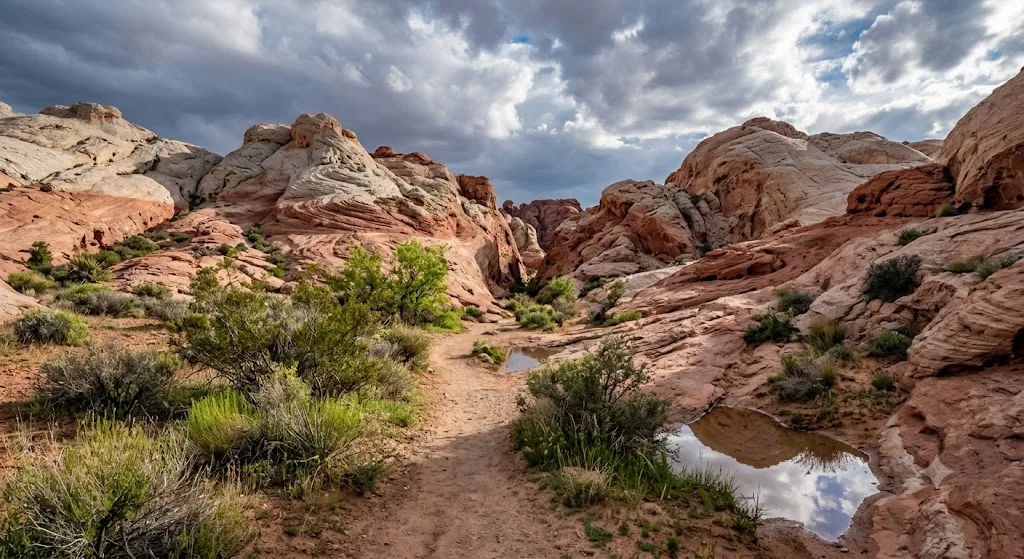
Beyond these specific attractions, the White Domes area is characterized by its brilliant contrasting colors, with sandstone formations displaying hues of red, orange, pink, cream, and gold. The wind and rain have sculpted these Aztec sandstone formations over millions of years, resulting in a landscape that feels truly unique and often compared to another planet. For those wondering is Valley of Fire State Park White Domes Trail worth visiting, we confidently say yes. The combination of geological wonders, a manageable trail length, and historical intrigue makes it an essential stop for anyone exploring the park. It’s an ideal spot for photography, with the soft light of morning or late afternoon bringing out the most vibrant colors in the rock.
Who It's Best For
The White Domes Trail caters to a wide range of visitors, making it a highly recommended experience for families, casual hikers, and photography enthusiasts. Its easy to moderate rating, with an elevation gain of around 150-177 feet, means it's manageable for most fitness levels.
Families with children will appreciate the trail's relatively short length—approximately 1.0 to 1.1 miles, completable in under an hour—and the exciting features like the slot canyon, which can feel like a mini-adventure for younger explorers. While some sections can be rocky or sandy, it's generally considered kid-friendly, though parents with very young children might consider a carrier for certain parts. The movie set ruins also add a fun, interactive element for all ages.
Photographers will find endless opportunities to capture the striking landscapes, especially during the golden hours when the light accentuates the vibrant colors of the sandstone. The slot canyon, with its narrow passages and unique lighting, provides particularly dramatic shots. Hikers seeking a rewarding experience without an overly strenuous trek will also find the White Domes Trail perfectly suited to their preferences. It offers a taste of the park's most iconic features without requiring extensive time or advanced hiking skills.
Getting There & Parking
Understanding how to get to Valley of Fire State Park White Domes Trail is crucial for a smooth visit. Valley of Fire State Park is conveniently located about an hour's drive northeast of Las Vegas. From the Las Vegas Strip, you'll typically take I-15 North for approximately 35-40 miles, then take Exit 75 and head East toward Valley of Fire/Lake Mead. You'll drive about 17 miles on Valley of Fire Highway to reach the park's West Entrance Station. Alternatively, a more scenic route involves taking I-15 North to Lake Mead Blvd, turning right onto Lakeshore Road (NV-166), then right onto Northshore Drive (NV-167) to the park's East Entrance.
The park charges an entrance fee per vehicle. As of 2026, the fee is $15 per vehicle for non-Nevada residents and $10 for Nevada residents. Even if the entrance station is unstaffed, a self-serve kiosk is available, and proof of payment is required to exit the park. The park is open daily from sunrise to sunset, with the Visitor Center operating from 8:30 AM to 4:30 PM, except on Christmas.
Once inside the park, you'll navigate to the White Domes Trailhead. From the Visitor Center, turn onto Mouse's Tank Road (also known as White Domes Road) and follow it for about 5.6 to 5.7 miles to its end, where you'll find the White Domes Day Use Area and parking lot. Parking at the White Domes Trailhead is a paved lot, but it can fill up quickly, especially during peak seasons. We recommend arriving early to secure a spot. Vault toilets are available at the trailhead.
Top Things to Do
While the Valley of Fire State Park White Domes Trail is a highlight, the park offers a wealth of other activities that make it a premier destination in Nevada. Our team suggests dedicating ample time to explore beyond just this single trail.
- Hike the White Domes Trail: Naturally, the primary draw is the White Domes Trail itself. This 1.1-mile loop is an essential experience, offering a slot canyon, unique rock formations, and the historic movie set.
- Explore Other Hiking Trails: The park boasts numerous Valley of Fire State Park White Domes Trail hiking trails.
- Fire Wave Trail: Often considered one of the most iconic hikes, the Fire Wave features mesmerizing, striped sandstone formations resembling an ocean wave. It's a 1.5-mile out-and-back or part of a longer loop. Note that the Fire Wave Trail is subject to seasonal closures from May 15 to September 30 due to extreme heat.
- Mouse's Tank Trail (Petroglyph Canyon Trail): This easy, 0.75-mile round-trip hike leads through a sandy wash adorned with numerous ancient petroglyphs carved by early Native American cultures. It culminates at Mouse's Tank, a natural water basin.
- Atlatl Rock: Easily accessible near the West Entrance, Atlatl Rock features a staircase leading to impressive petroglyphs, some dating back 2,500 to 4,000 years.
- Elephant Rock: A short loop trail or roadside stop near the East Entrance, this formation strikingly resembles an elephant.
- Rainbow Vista: An easy 0.5-mile trail offering panoramic views of the park's multi-colored sandstone formations.
- Beehives: Unique domed sandstone formations that resemble giant beehives, easily accessible from a parking lot for climbing and exploration.
- Scenic Drives: Even if hiking isn't your main goal, the scenic drives through the park are breathtaking. Valley of Fire Highway and White Domes Road (Mouse's Tank Road) offer stunning vistas around every turn, with plenty of pull-offs for photos.
- Visitor Center: Stop at the Visitor Center to learn about the park's geology, ecology, prehistory, and history through exhibits. It's also a good place for restrooms, water refills, and souvenirs.
- Photography: The park is a photographer's paradise. From the iconic winding roads to the intricate patterns of the Fire Wave and the vibrant hues of the slot canyons, there are countless opportunities for stunning shots.
- Wildlife Viewing: Keep an eye out for desert wildlife, including bighorn sheep, especially near the Visitor Center in the early morning, as well as various birds and lizards.
These things to do at Valley of Fire State Park White Domes Trail and the surrounding park ensure a memorable visit, whether you're a seasoned hiker or simply looking for scenic beauty.
Best Time to Visit
Timing your visit to Valley of Fire State Park can significantly impact your experience. We strongly recommend planning your trip during the cooler months to fully enjoy the hiking trails and outdoor activities.
The best time to visit Valley of Fire State Park is generally from October through April. During these months, temperatures are much more pleasant, ranging from approximately 55-85°F (13-29°C), which is ideal for hiking and exploration without the risk of extreme heat.
- Fall (October-November): Often considered the absolute best time, with perfect temperatures typically between 70-85°F in October and 55-75°F in November. The weather is comfortable for all-day hiking, and the golden hour lighting enhances the vibrant colors of the sandstone formations. Crowds are also typically reduced compared to spring.
- Spring (March-May): Offers excellent conditions, with temperatures ranging from 70-85°F. This season also brings the possibility of wildflowers after wet winters. However, late spring (May) can start to see temperatures rise, with some trails, including White Domes, beginning seasonal closures by May 15.
- Winter (December-February): Very good for those who prefer cooler weather and fewer crowds. Daytime temperatures are typically 55-65°F. The entire park is closed for maintenance from December 1 to December 14 annually.
- Summer (June-August): This period is challenging and often dangerous due to extreme heat, with daily highs frequently exceeding 100°F and potentially reaching 115-120°F. Many popular trails, including the White Domes Loop, are closed seasonally from May 15 through September 30 for visitor safety. If you must visit in summer, plan hikes for early morning or late evening, carry excessive amounts of water (at least one gallon per person), and be vigilant for signs of heat-related illness.
For the most enjoyable and safest experience on the White Domes Trail and throughout Valley of Fire State Park, we highly recommend aiming for the fall or early spring months.
Where to Stay Nearby
While Valley of Fire State Park offers a rugged, natural experience, there are several convenient options for Valley of Fire State Park White Domes Trail lodging and camping nearby. The park itself has two campgrounds, and the surrounding towns provide hotels and other accommodations.
Camping in Valley of Fire State Park
For those who wish to extend their stay and fully immerse themselves in the park's beauty, two campgrounds are available: Atlatl Rock Campground and Arch Rock Campground. Both are open year-round and operate on a first-come, first-served basis, meaning reservations are not typically taken. We advise arriving early, especially during peak seasons, to secure a site as they can fill up quickly.
- Atlatl Rock Campground: Offers amenities such as drinking water, flush toilets, showers, and an RV dump station. Each campsite includes a table, fire ring, and grate. It can accommodate tents, trailers, and larger RVs up to 55 feet, with some sites offering electric and water hookups for an additional fee.
- Arch Rock Campground: Also provides drinking water, flush toilets, showers, and an RV dump station, with tables, fire rings, and grates at each site. It's suitable for tents, trailers, and smaller campers. Generators are not allowed in this campground.
Camping within the park allows for stargazing and experiencing the desert's quiet beauty after dark.
Hotels and Lodging Outside the Park
If camping isn't your preference, several towns nearby offer hotel accommodations, providing comfortable Valley of Fire State Park White Domes Trail lodging options:
- Overton, Nevada: Located about 15 miles southwest of the park, Overton is the closest town and offers basic lodging, restaurants, and services. It's a small community that provides a convenient base for exploring the park.
- Mesquite, Nevada: Approximately 30-40 minutes northeast of the park, Mesquite is a larger town with more extensive hotel options, including casinos and resorts, as well as a wider selection of dining and shopping.
- Las Vegas, Nevada: As the major metropolitan hub, Las Vegas is about an hour's drive from the park and offers an unparalleled range of hotels, from budget-friendly to luxury resorts. Many visitors choose to stay in Las Vegas and make Valley of Fire a day trip. From the iconic Bellagio Fountains to the vibrant Fremont Street Experience, Las Vegas provides a stark contrast to the natural beauty of the state park, making for a diverse travel experience.
When selecting your lodging, consider the travel time to and from the park, especially if you plan to visit during peak hours or want to catch sunrise or sunset within Valley of Fire.
Sample 2-Day Itinerary
To truly appreciate the Valley of Fire State Park White Domes Trail Nevada and its surrounding wonders, we recommend a two-day itinerary. This allows for thorough exploration without feeling rushed, ensuring you experience the park's diverse offerings at a comfortable pace.
Day 1: Iconic Hikes and Ancient Art
- Morning (Sunrise - 12:00 PM): Arrival and White Domes Exploration
- Sunrise Drive & Mouse's Tank Road: Arrive at the park early to catch the sunrise painting the red rocks in spectacular hues. Drive along Mouse's Tank Road, known for its scenic beauty and photo opportunities.
- White Domes Trail: Head directly to the White Domes Trailhead. Hike the 1.1-mile loop, exploring the slot canyon, the remnants of "The Professionals" movie set, and the vibrant sandstone formations. This is a moderate hike, best done in the cooler morning hours.
- Fire Wave Trail: After White Domes, drive to the P3 parking area for the Fire Wave Trail. Hike this popular 1.5-mile out-and-back trail to witness the iconic wave-like sandstone formations. (Note: This trail is closed from May 15 to September 30 due to heat.)
- Lunch (12:00 PM - 1:00 PM): Picnic in the Park
- Pack a picnic lunch to enjoy at one of the park's designated picnic areas, such as the Seven Sisters picnic area, which offers shaded tables and restrooms.
- Afternoon (1:00 PM - 5:00 PM): Petroglyphs and Scenic Views
- Mouse's Tank Trail (Petroglyph Canyon Trail): Head to the Mouse's Tank Trail for an easy 0.75-mile round-trip hike to see ancient petroglyphs and the natural water basin.
- Atlatl Rock: Make a quick stop at Atlatl Rock to view more petroglyphs from a short staircase.
- Scenic Overlooks: Drive to various pull-offs and viewpoints along Valley of Fire Highway, such as Rainbow Vista, for panoramic photo opportunities.
- Evening: Dinner and Stargazing
- Dinner: Enjoy dinner in Overton or return to Las Vegas for a wider selection of dining options.
- Stargazing: If camping in the park, take advantage of the dark desert skies for exceptional stargazing.
Day 2: Further Exploration and Departure
- Morning (Sunrise - 12:00 PM): Hidden Gems and Geological Wonders
- Beehives: Start your day with a visit to the Beehives, unique sandstone formations perfect for climbing and exploring, especially with kids.
- Elephant Rock: Drive to the East Entrance to see the iconic Elephant Rock formation.
- Natural Arch & Arch Rock: Explore the small pullouts for Natural Arch and Arch Rock, offering quick views of these fascinating geological features.
- Visitor Center Deep Dive: Spend more time at the Visitor Center to delve deeper into the park's natural and cultural history through its exhibits.
- Lunch (12:00 PM - 1:00 PM): Local Fare or Packed Lunch
- Grab lunch in Overton or enjoy another packed meal amidst the park's scenery.
- Afternoon (1:00 PM - 4:00 PM): Last Views and Departure
- Photography Drive: Revisit any favorite viewpoints or explore other scenic roads you might have missed. Capture any last-minute photos.
- Gift Shop: Pick up souvenirs at the Visitor Center gift shop.
- Departure: Begin your journey out of Valley of Fire State Park, perhaps heading to other incredible places in Nevada like Cathedral Gorge State Park or continuing your USA road trip. For more inspiration, check out our guide to planning your US trip.
Expert Verdict: This itinerary balances popular hikes with lesser-known gems, ensuring a comprehensive experience of Valley of Fire State Park's unique geology and history. Remember to check for seasonal trail closures, especially between May and September.
Last updated: 2026-07-12 by the Roam States team.