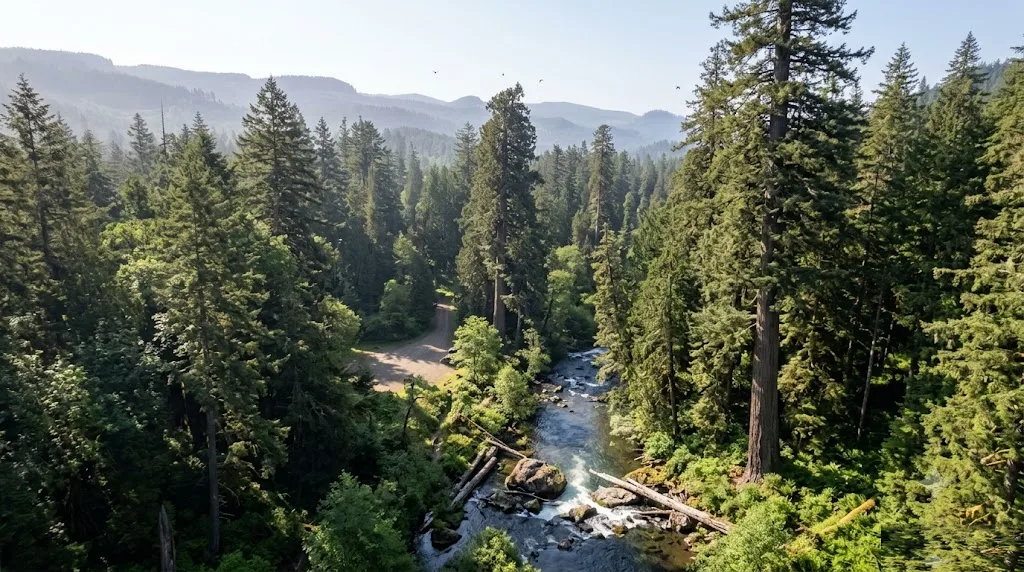
Our Valley of the Giants guide covers practical planning for Valley of the Giants Oregon — best time to visit, getting there, and what to do on the ground. However, our team must preface this guide with a critical update: **The Valley of the Giants is currently closed to public access due to a significant landslide.** As of January 2025, a massive landslide approximately five miles from the trailhead has obliterated the roadway, and the Bureau of Land Management (BLM) estimates that salvage efforts will take years. Public access is currently blocked by a private gate near the route's beginning. We strongly advise contacting the BLM Northwest Oregon District Office in Salem for the most up-to-date information on closures and potential reopening timelines before planning any trip to the immediate area. Our guide will detail the historical experience and what to expect once this remarkable old-growth forest preserve eventually reopens, as well as nearby attractions to explore in the interim.
Why Visit Valley of the Giants
Even with its current closure, the Valley of the Giants Oregon holds a special place in the hearts of those who cherish old-growth forests. This 51-acre natural area, managed by the Bureau of Land Management (BLM), protects some of Oregon's largest and oldest trees, offering a tranquil hiking experience among ancient Douglas firs and western hemlocks. Many of these magnificent trees stand over 200 feet tall and are estimated to be between 400 and 500 years old. It's a rare opportunity to witness an intact ecosystem that has largely disappeared from the Coast Range due to extensive logging. The sheer scale of these titans, some with circumferences exceeding 20 feet, creates an awe-inspiring atmosphere, often compared to California's famous redwood groves.
Historically, visitors were drawn to the Valley of the Giants for its profound sense of peace and the humbling experience of standing amidst such ancient life. It served as a living laboratory for researchers and educators, highlighting the ecological importance of old-growth habitats. The preserve contains all the features of a healthy old-growth forest, including large standing and fallen trees, logs, stumps, and a rich understory of plants, fungi, and mosses. This lush, biodiverse environment, nourished by significant rainfall, creates a palpable sense of life and offers a stark contrast to the surrounding clear-cut landscapes. When the Valley of the Giants reopens, it will once again offer an unparalleled opportunity to connect with Oregon's natural heritage and experience the quiet grandeur of a truly ancient forest.
Who It's Best For
The Valley of the Giants, when accessible, is an ideal destination for nature enthusiasts, serious hikers, and anyone seeking a profound connection with ancient forests. It particularly appeals to those who appreciate the quiet majesty of old-growth trees and are willing to undertake a challenging journey to reach a remote, unspoiled natural area. The historical 1.3 to 2.2-mile loop trail, while relatively short, can be steep and muddy, making it best suited for individuals with sturdy shoes and a good level of fitness.
It's a perfect retreat for photographers looking to capture the dramatic scale and intricate details of a primeval forest. Educators and researchers have historically utilized the preserve as an outdoor classroom, and it remains a vital site for studying old-growth forest habitats. Families with older, adventurous children who are accustomed to rugged trails would also find it a rewarding experience, offering a unique educational opportunity to learn about forest ecosystems. However, due to the remote nature of the location and the challenging access roads even when open, it is not recommended for those with low-clearance vehicles or individuals seeking a quick, easily accessible stroll. The journey itself is part of the adventure, and those who embrace it are most likely to appreciate the rewards of the Valley of the Giants.
Getting There & Parking
Accessing the Valley of the Giants has always been an adventure, even when it was open, and understanding the historical routes is crucial for future planning. The preserve is located in a very remote part of the Coast Range, approximately 30 miles west of Falls City. The route primarily involves navigating unpaved, narrow, and winding logging roads that are generally not suitable for passenger cars. Our team cannot stress enough the importance of contacting the Bureau of Land Management (BLM) Northwest Oregon District Office in Salem at 503-375-5646 for the most current directions and road conditions. Google Maps has historically provided incorrect directions, and relying on it could lead to getting lost or encountering impassable roads.
Historically, the journey from Falls City could take up to 90 minutes in each direction due to the road conditions. Visitors were advised to travel on weekends to avoid the heavy traffic of logging trucks that frequently use these roads on weekdays. The area around the Valley of the Giants is a maze of private logging roads, many of which are gated, and public access is subject to restrictions and fire season closures, typically between July and September. Regarding Valley of the Giants parking, there were no specific fees for the preserve itself, as it is a BLM-managed area. However, visitors should be aware that many Oregon State Parks now charge a day-use parking fee of $10 for residents and $12 for non-residents, or offer 12-month permits for $60 (residents) and $75 (non-residents) as of January 1, 2026. While these fees don't apply directly to the Valley of the Giants, they are relevant for other recreational areas you might visit in Oregon. Always plan to leave well before dark, as navigating the complex logging roads in the absence of cell service is extremely challenging after sunset.
Top Things to Do
While the Valley of the Giants is currently closed due to the landslide, we can reflect on the historical "things to do at Valley of the Giants" and offer alternative "things to do in Falls City" and the surrounding area. When the preserve was open, the primary activity was hiking the 1.3 to 2.2-mile loop trail. This hike led visitors through a stunning old-growth forest, offering close-up views of colossal Douglas firs and Western hemlocks, some reaching 8 feet thick and over 200 feet tall. The trail descended into the valley, crossing a metal bridge over the Siletz River, and wound around massive trunks, providing an immersive experience in the ancient rainforest. One unique feature was a fallen giant that visitors could historically walk through a narrow cut in its trunk.
Given the ongoing closure of the Valley of the Giants, our team recommends exploring the charming town of Falls City and its nearby attractions. Falls City is named for the Little Luckiamute Falls, a beautiful cascade right in the city center. This local treasure is a great spot for a picnic, dipping your feet in the water on a hot day, or simply enjoying the scenic beauty. For those seeking more adventurous "things to do in Falls City," the Black Rock Mountain Bike Area, just west of town, offers world-class mountain biking trails for all skill levels. It's recognized as one of the best free-ride mountain biking areas globally, with routes catering to both beginners and advanced riders. Beyond the falls and biking, Falls City also offers a quaint local vibe, with opportunities to browse antique shops, visit a local pub, or savor goods from an artisan bakery. The nearby Willamette Valley also boasts numerous vineyards, offering scenic bikeways and wine-tasting opportunities. For more extensive outdoor adventures in Oregon, consider destinations like Crater Lake National Park or the stunning Columbia River Gorge, which offer different but equally captivating natural experiences.
Best Time to Visit
Historically, the best time to visit the Valley of the Giants was between April and October. This period generally offered the most favorable weather for navigating the challenging logging roads and hiking the trail. Our team always advised planning your trip for a weekend day to avoid the heavy traffic of logging trucks that operate on the private timber company roads during weekdays. The spring and fall months were particularly recommended for their lush landscapes, with the forest dripping with moss, lichen, and fungi, and the weather often providing a misty, magical atmosphere.
Summer visits, while popular, carried the risk of road closures due to fire season, which typically runs from July to September. In winter, the days are shorter, and the trail, particularly the bridge across the North Fork of the Siletz River and its steps, could become treacherous when wet or icy. Regardless of the season, visitors were always encouraged to be prepared for inclement weather, bring plenty of water and food, and ensure they had a reliable map from the BLM, as cell service is nonexistent in much of the area. While the preserve remains closed, these historical insights into the "best time to visit Valley of the Giants" will be valuable once it eventually reopens to the public.
Where to Stay Nearby
Given the remote location of the Valley of the Giants and its current closure, finding suitable "Valley of the Giants lodging" nearby requires looking at the surrounding towns. Falls City, while small, offers a quaint base for exploring the region. However, for a wider range of accommodations, our team recommends looking at slightly larger towns such as Dallas, Independence, and Salem.
In **Falls City** itself, lodging options may be limited to smaller, local establishments or vacation rentals. For more comprehensive hotel choices, **Dallas, Oregon**, located about 7.5 to 8 miles from Falls City, provides budget-friendly options like the Best Western Dallas Inn & Suites, which is well-regarded for business travelers and offers essential amenities.
**Independence, Oregon**, approximately 20 miles from Falls City, offers hotels such as The Independence, a business-friendly option with free breakfast, WiFi, and parking. Further afield, but still within a reasonable driving distance (around 20 miles from Falls City), **Salem, Oregon**, the state capital, provides the widest array of lodging choices. Here you'll find various hotels, including The Hotel Salem, Comfort Suites Salem, The Grand Hotel - Salem, Holman Riverfront Park Hotel Salem, Tapestry by Hilton, DoubleTree by Hilton Hotel Salem, Oregon, and Holiday Inn Salem by IHG. These options cater to different budgets and preferences, from modern riverfront hotels to those with extensive amenities. When considering Valley of the Giants lodging, our team always advises booking accommodations that allow for comfortable rest after a day of exploring the rugged terrain or nearby attractions.
Sample 2-Day Itinerary
Planning a trip to the Valley of the Giants requires flexibility, especially with its current closure. This sample 2-day itinerary focuses on exploring the surrounding region while acknowledging the preserve's historical significance and potential future reopening.
Day 1: Falls City and Local Exploration
- **Morning:** Start your day in Falls City, a charming former mill town. Head to the Little Luckiamute Falls, the town's namesake, for a peaceful morning. Enjoy a picnic by the cascades and dip your feet in the water.
- **Afternoon:** For adventure seekers, explore the Black Rock Mountain Bike Area, renowned for its world-class trails suitable for various skill levels. If mountain biking isn't your speed, browse the local antique shops or visit an artisan bakery in town.
- **Evening:** Enjoy dinner at a local eatery in Falls City or drive to nearby Dallas for more dining options. Settle into your chosen accommodation in Dallas or Independence.
Day 2: Willamette Valley & Scenic Drives
- **Morning:** Explore more of the Willamette Valley. Consider a scenic drive through Oregon's wine country, stopping at one of the many vineyards for a tasting.
- **Late Morning/Early Afternoon:** Drive towards Salem and visit the Silver Falls State Park, often called the "Crown Jewel" of the Oregon State Parks system. While it's a bit of a drive, its "Trail of Ten Falls" offers a spectacular hiking experience with multiple waterfalls, a stark contrast to the old-growth solitude of Valley of the Giants.
- **Afternoon (If Valley of the Giants Reopens):** If the Valley of the Giants has reopened, allocate a significant portion of your afternoon for the drive and hike. Remember to call the BLM office for updated directions and road conditions. Allow ample time for the rugged drive and the 1.3 to 2.2-mile hike.
- **Evening:** Return to your lodging or consider staying in Salem for a wider variety of dining and evening entertainment options.
This itinerary aims to provide a fulfilling experience of the region, emphasizing that the journey to and the experience of the Valley of the Giants, when accessible, is a full-day commitment. For those interested in exploring more of what Oregon has to offer, our Best Places in Oregon guide provides a wealth of information on diverse destinations, from the dramatic coastline of Cannon Beach & Haystack Rock to the literary haven of Powell's City of Books in Portland.
FAQ
Valley of the Giants with kids
Historically, visiting the Valley of the Giants with kids was feasible for older, more adventurous children accustomed to hiking. The trail itself, while relatively short (1.3 to 2.2 miles), could be steep, muddy, and slippery in places. The remote location and the challenging, unpaved logging roads leading to the trailhead meant a long, bumpy drive, which might be difficult for very young children. Given the current closure due to a landslide, the Valley of the Giants is not accessible. Once it reopens, we would still recommend it for families with children who are experienced hikers and can handle the rugged terrain and extended travel time. Always pack plenty of snacks, water, and prepare for variable weather conditions.
best hotels near Valley of the Giants
The Valley of the Giants is in a very remote area, so there are no hotels directly adjacent to the preserve. The "best hotels near Valley of the Giants" are found in nearby towns. For the closest options, consider Dallas, approximately 7.5 to 8 miles from Falls City, where you might find options like the Best Western Dallas Inn & Suites. Independence, about 20 miles from Falls City, also offers lodging such as The Independence. For a broader selection of hotels, including more upscale choices, Salem (roughly 20 miles from Falls City) provides numerous options like The Hotel Salem, Comfort Suites Salem, The Grand Hotel - Salem, and DoubleTree by Hilton Hotel Salem. Our team recommends checking recent reviews and amenities to find the best fit for your travel style and budget.
Valley of the Giants tips
Historically, our top Valley of the Giants tips included: 1. **Call the BLM:** Always contact the BLM Northwest Oregon District Office (503-375-5646) for current road conditions and directions, as Google Maps can be unreliable. 2. **Vehicle Choice:** Use a high-clearance vehicle, as the logging roads are unpaved and rugged. 3. **Timing:** Visit on weekends to avoid logging trucks. 4. **Be Prepared:** Bring a physical map, plenty of water, food, and emergency supplies, as cell service is absent. 5. **Stay on Trail:** To protect the delicate old-growth ecosystem, stay on designated trails. 6. **Weather:** Be ready for wet and muddy conditions, even if the forecast is clear. Currently, the most important tip is to **verify the preserve's reopening status** before planning any trip, as it is closed due to a landslide.
where to stay near Valley of the Giants
When considering "where to stay near Valley of the Giants," your options will be in the surrounding towns, as the preserve itself is very remote. Falls City is the closest town, offering limited local accommodations. For more established hotel chains and a wider range of services, we recommend looking at Dallas, Oregon (approximately 7.5 to 8 miles from Falls City), which has options like the Best Western Dallas Inn & Suites. Independence, Oregon (around 20 miles from Falls City), also offers hotels. The largest selection of lodging, including various hotel brands and amenities, can be found in Salem, the state capital, located about 20 miles from Falls City. Our team advises booking in advance, especially during peak seasons, and confirming cancellation policies.
Valley of the Giants parking
Historically, parking at the Valley of the Giants trailhead was available, but there were no specific fees for the preserve itself, as it is managed by the Bureau of Land Management (BLM). The challenge with Valley of the Giants parking was primarily the arduous journey to reach the remote trailhead via unpaved logging roads. Visitors were advised to park responsibly and be mindful of any signage. As of January 2025, the Valley of the Giants is closed due to a landslide that has obliterated the roadway, making access and parking impossible. Once the preserve reopens, visitors should anticipate similar parking arrangements and continue to prioritize safe and respectful vehicle placement.
best time to visit Valley of the Giants
Historically, the "best time to visit Valley of the Giants" was generally from April through October. This period offered the most favorable weather for traversing the challenging logging roads and hiking the trail. Spring and fall were particularly recommended for their lush, moss-draped forest and cooler temperatures, making for a more comfortable hiking experience. Weekends were always preferred to avoid the presence of active logging trucks on the access roads. Summer months (July-September) carried a risk of fire season closures. However, it is crucial to remember that the Valley of the Giants is currently closed due to a landslide, and its reopening timeline is uncertain. Therefore, the best time to visit now is after it has officially reopened, and always after checking with the BLM for current conditions.
The Valley of the Giants remains a truly exceptional destination, a testament to Oregon's ancient natural beauty. While its current closure is a significant setback, our team remains hopeful for its eventual reopening. Until then, the surrounding areas of Falls City and the Willamette Valley offer their own unique charms and adventures. When the giants once again welcome visitors, the journey through those rugged roads will undoubtedly be worth it for the profound experience of standing among such ancient, towering life.
Last updated: 2026-07-08 by the Roam States team.