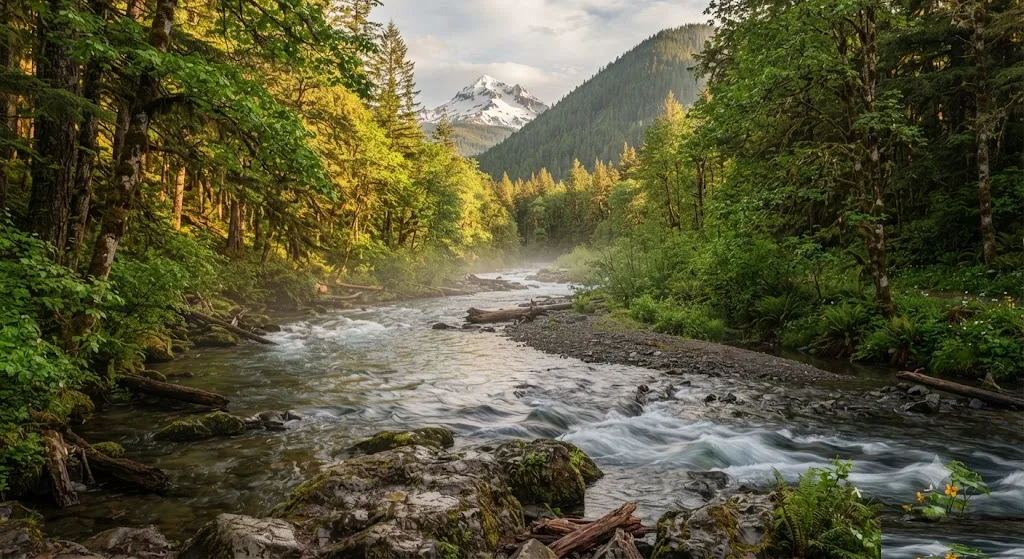
Willamette National Forest Travel Guide — Oregon
Our team at Roam States considers the Willamette National Forest Oregon an essential destination for anyone seeking to immerse themselves in the Pacific Northwest's raw natural beauty. This sprawling forest, covering over 1.6 million acres along the western slopes of the Cascade Range, is a treasure trove of towering old-growth Douglas firs, pristine rivers, and highly sensitive geothermal hot springs. We've compiled this comprehensive guide to ensure your visit is as informed and inspiring as possible, covering everything from permits and fees to the best trails and camping spots for 2026.
Why Visit Willamette National Forest
The allure of the Willamette National Forest lies in its dramatic landscapes and ecological significance. Here, you'll find some of the most impressive old-growth Douglas firs in the world, standing as ancient sentinels of the forest. Beyond these giants, the forest protects several wilderness areas, offering a true escape into untouched nature. The varied terrain includes narrow canyons, cascading streams, and high mountain peaks, providing a backdrop for countless outdoor adventures. It's a place where the air is crisp, the silence is profound, and the sheer scale of nature is humbling.
For those seeking unique geological wonders, the forest is also home to several geothermal hot springs, offering a chance to relax in naturally heated mineral waters. These sensitive areas require respectful visitation to preserve their delicate ecosystems. The forest's central location in Oregon makes it accessible for both day-trippers and extended vacationers, offering a wide array of recreational opportunities.
Who It's Best For
The Willamette National Forest caters to a diverse range of visitors, making it an ideal destination for:
- Serious Hikers and Backpackers: With extensive hiking opportunities and designated wilderness areas like Opal Creek, it's a paradise for those looking to conquer challenging trails and experience true backcountry solitude.
- Nature Photographers: The ancient forests, dramatic waterfalls like Sahalie and Koosah Falls, and stunning alpine lakes provide endless photographic opportunities.
- Hot Spring Enthusiasts: Visitors seeking a unique soaking experience will find several geothermal hot springs, including the popular Terwilliger Hot Springs (Cougar Hot Springs) and McCredie Hot Springs, though some require reservations or have specific usage rules.
- Families: Many developed campgrounds and accessible trails offer a family-friendly environment for introducing children to the outdoors. Ranger-led programs and interpretive sites also provide educational experiences.
- Mountain Bikers and Road Cyclists: Areas like the McKenzie River Ranger District offer excellent mountain biking trails and scenic byways, such as the McKenzie Pass-Santiam Pass National Scenic Byway, for road cycling enthusiasts.
- Campers: With over 70 developed campgrounds and ample opportunities for dispersed camping, there are options for every camping style, from RVs to primitive tent sites.
How to Get There & Parking
The Willamette National Forest stretches along the western slopes of the Cascade Range in central Oregon, making it accessible from various points. The forest headquarters are located in Springfield, Oregon.
Major access routes include:
- From the West (Eugene/Springfield): Highway 126 provides access to the McKenzie River Ranger District, known for its waterfalls and lakes. Highway 58 leads to the Middle Fork Ranger District.
- From the East (Sisters): Highway 20 connects to the McKenzie River Ranger District.
- From the North (Salem): Highway 22 leads to the Detroit Ranger District.
When planning your trip, we strongly recommend checking Travel Oregon and the official Willamette National Forest website for current road conditions and any closures, especially during winter months when Forest Service roads are not maintained for snow and ice. Some roads, like Forest Service Roads 690, 730, and 689 in the McKenzie River area, may be closed due to construction, while others are subject to closures from past wildfires like the Beachie Creek and Lionshead Fires. Forest Service Road 2643 (Foley Ridge Road) is closed for maintenance from May 26 through June 30, 2026.
Willamette National Forest Parking
Parking regulations and fees vary depending on the specific recreation site. Many day-use areas within the Willamette National Forest require a recreation pass. We advise obtaining a Northwest Forest Pass, which costs $30 annually or $5 for a day-use pass, and is valid at Forest Service-operated sites in Oregon and Washington. America the Beautiful Interagency Passes are also accepted. You can purchase these passes online through Recreation.gov, at Forest Service offices, or from local vendors. For day passes, you can also use the Recreation.gov mobile app to scan and pay on-site, but be aware that cell service can be spotty in remote areas.
It's crucial to display your pass prominently in your vehicle. Parking outside designated areas is discouraged and may result in fines or towing. For hot springs like Terwilliger, parking is limited, and visitors should avoid double parking or parking along Forest Service Road 19 to prevent hazardous conditions. If you have an RV, bus, or trailer, consider parking at designated pull-outs or in areas like Cougar Crossing Day Use Area near Terwilliger Hot Springs.
Note that Oregon State Parks have different parking fee structures. As of 2026, a 12-month parking permit for Oregon State Parks costs $60 for residents and $75 for non-residents, with daily permits at $10 for residents and $12 for non-residents. These state park passes are not valid in Willamette National Forest, and federal passes are not valid in Oregon State Parks.
Top Things to Do
The Willamette National Forest offers an incredible array of activities, ensuring there are things to do at Willamette National Forest for every type of outdoor enthusiast.
Willamette National Forest Hiking Trails
Our team highly recommends exploring the extensive network of Willamette National Forest hiking trails. From easy strolls to challenging wilderness treks, the options are plentiful. Always check current trail conditions with the relevant ranger station before heading out, as snow, debris, or closures can impact access.
- Water Falls Loop Trail #3503: Located in the Upper McKenzie Trail Area, this popular 6.25-mile round-trip trail allows you to witness the breathtaking Sahalie and Koosah Falls.
- Clear Lake Loop Trail #4341: This stunning trail offers views of the headwaters of the McKenzie River and the incredibly clear waters of Clear Lake.
- McKenzie River Trail: A renowned multi-use trail popular with hikers and mountain bikers, offering diverse scenery along the McKenzie River. Portions of the trail remain open even with nearby road closures.
- Opal Creek Wilderness and Scenic Recreation Area: For adventurous hikers, the trails here lead through ancient forests to sites like Jawbone Flats and the emerald-green Opal Pool.
- Central Cascades Wilderness Areas: These include Mt. Jefferson, Mt. Washington, and Three Sisters Wilderness areas. Permits are required for overnight visits and at 19 specific trailheads for day use between June 15 and October 15. Day-use permits are released on a 10-day and 2-day rolling window via Recreation.gov. For other wilderness areas, free self-issue permits are available at trailheads during the same period.
Geothermal Hot Springs
Soaking in the natural hot springs is a quintessential Willamette experience. Remember that these are sensitive natural areas requiring respect and adherence to posted rules.
- Terwilliger (Cougar) Hot Springs: These popular springs feature multiple soaking pools with temperatures ranging from 85°F to 112°F. They are day-use only, with no alcohol permitted, and camping is restricted to developed campgrounds in the Cougar Recreation Area. Reservations are not available through Recreation.gov, but parking is limited, so plan accordingly.
- McCredie Hot Springs: Located along Salt Creek, this day-use site provides easy trail access to the hot springs. There is no overnight camping allowed at McCredie Day Use Area. The U.S. Forest Service does not manage these hot springs, and no official trail reaches them, so exercise caution and check local resources for access information.
- Breitenbush Hot Springs: This is a developed retreat center offering several soaking tubs, a steam sauna, and wellness activities. Reservations are typically necessary, even for day-use passes, and the pools are clothing-optional.
- Belknap Hot Springs: A family-friendly resort with two spring-fed pools (not natural hot springs). One pool is for overnight guests, the other for day visitors, with fees around $12 for up to an hour of soaking for day visitors between 9 a.m. and 5 p.m.. Nudity is not permitted here.
Scenic Drives
For those who prefer to experience the forest from the comfort of their vehicle, several scenic byways offer stunning views:
- McKenzie Pass-Santiam Pass National Scenic Byway: Offers panoramic views of Cascade peaks like Mount Washington and the Three Sisters, with a stop at Dee Wright Observatory. Note that Highway 242 (part of this byway) has seasonal opening and closing dates, so check the Oregon Department of Transportation website.
- Aufderheide Scenic Byway (Forest Service Road 19): Part of the West Cascades Scenic Byway, this route offers beautiful forest and river views. Road conditions can change rapidly, especially in winter.
Other Activities
- Mountain Biking: The O'Leary trail complex and Upper McKenzie Trail Area are noted for some of the best mountain biking in the forest.
- Fishing: The many rivers and lakes within the forest offer excellent fishing opportunities.
- Wildlife Viewing: Keep an eye out for diverse wildlife, from deer and elk to various bird species.
- Nature & Heritage Tours: The Sweet Home Ranger District offers reservation-required tours that explore flora, fauna, geology, and cultural history.
Best Time to Visit
The best time to visit Willamette National Forest largely depends on the activities you plan. Our team generally recommends late spring through early fall for the most accessible and varied experiences.
- Summer (June to September): This is peak season, offering the warmest weather and the most open roads and trails. All campgrounds are typically open, and conditions are ideal for hiking, camping, and water activities. However, popular areas can experience crowding, so consider visiting on weekdays or arriving early/late to avoid peak times. Central Cascades Wilderness Permits are required for many areas from June 15 to October 15.
- Spring (April to May): As snow begins to melt, wildflowers emerge, and waterfalls are at their most powerful. Many lower-elevation trails become accessible, but higher-elevation roads and trails may still be snow-covered or muddy. This is a great time to avoid summer crowds.
- Fall (October to November): The forest transforms with vibrant autumn colors, and cooler temperatures make for pleasant hiking. Many seasonal roads and facilities begin to close by mid-October. Wilderness permits are generally not required after October 15.
- Winter (December to March): Much of the forest is covered in snow, making it ideal for snowshoeing, cross-country skiing, and other winter sports, particularly in designated Sno-Parks (which require a Sno-Park permit from November 1 to April 30). Many roads are unmaintained for snow and ice and may be impassable.
Where to Stay Nearby
While Willamette National Forest camping is a popular choice, several nearby towns offer a range of accommodations if you prefer a roof over your head.
- McKenzie Bridge: Located directly within the forest, this small community offers lodges, cabins, and vacation rentals, providing immediate access to the McKenzie River and many trails.
- Oakridge/Westfir: Known as the "Mountain Biking Capital of the Northwest," Oakridge and nearby Westfir offer motels, B&Bs, and vacation rentals, particularly appealing to outdoor adventurers. The Middle Fork Ranger Station is in Westfir.
- Detroit: Situated near Detroit Lake, this town provides lodging options and is a gateway to the northern parts of the forest, including the Detroit Ranger District.
- Sweet Home: East of Eugene, Sweet Home offers a more rural experience with access to the Sweet Home Ranger District and various recreational activities.
- Eugene/Springfield: As larger cities to the west, Eugene and Springfield offer the widest range of hotels, restaurants, and services, though they are a bit further from the main forest attractions. The Willamette National Forest Headquarters is in Springfield. Consider visiting Oregon's Best Places for more comprehensive travel planning.
Sample 2-Day Itinerary
Our team has crafted a sample itinerary to help you make the most of your visit to the Willamette National Forest, focusing on a mix of iconic sights and activities.
Day 1: McKenzie River Wonders & Hot Springs
- Morning: Start your day with a hike on the Water Falls Loop Trail #3503 in the Upper McKenzie Trail Area to experience Sahalie and Koosah Falls. This is one of the essential things to do at Willamette National Forest.
- Lunch: Enjoy a picnic lunch amidst the forest scenery or grab a bite at a local eatery near McKenzie Bridge.
- Afternoon: Head to Terwilliger (Cougar) Hot Springs for a relaxing soak. Remember to check current conditions and parking availability, and be prepared for limited parking.
- Evening: Set up camp at a developed campground along the McKenzie River, such as Paradise Campground, which is open for the 2026 season and offers sites amidst old-growth Douglas firs. Reservations for campgrounds can be made via Recreation.gov.
Day 2: Scenic Byways & Wilderness Exploration
- Morning: Drive the McKenzie Pass-Santiam Pass National Scenic Byway (Highway 242, when open) for breathtaking panoramic views of the Cascade peaks. Stop at Dee Wright Observatory.
- Late Morning: Embark on one of the Willamette National Forest hiking trails that requires a Central Cascades Wilderness Permit (if applicable and reserved in advance for June 15 - Oct 15). Consider a portion of the McKenzie River Trail or a trail leading into the Three Sisters Wilderness.
- Lunch: Pack a trail lunch to enjoy in the wilderness.
- Afternoon: Explore a different part of the forest, perhaps visiting Clear Lake for a leisurely stroll around its loop trail or enjoying some quiet time by the water.
- Evening: Enjoy a final night of camping or head to a nearby town like Oakridge for dinner and lodging.
For those looking to extend their Oregon adventure, consider combining your Willamette National Forest trip with a visit to Crater Lake National Park to the south or exploring the Mount Hood National Forest further north. If you're planning a longer journey, our USA Road Trip Planner can help you craft the perfect itinerary.
Last updated: 2026-07-13 by the Roam States team.