Our Wounded Knee Massacre Site guide covers practical planning for Wounded Knee Massacre Site South Dakota — best time to visit, getting there, and what to do on the ground.
The Wounded Knee Massacre Site South Dakota is more than just a historical landmark; it’s a sacred place of profound remembrance and reflection. Our team at Roam States believes that understanding the complexities of American history, particularly the tragic events of December 29, 1890, is essential for any thoughtful traveler. Located on the Pine Ridge Indian Reservation, this site commemorates the massacre of hundreds of Lakota men, women, and children by the U.S. Army, serving as a powerful testament to Native American history and resilience. Visiting in 2026 offers a unique opportunity to connect with this somber past and honor those who suffered.
Why Visit Wounded Knee Massacre Site
Visiting the Wounded Knee Massacre Site is a deeply moving and educational experience that transcends typical tourism. It’s a pilgrimage to a place where a pivotal, tragic event in American history unfolded, marking the end of major armed conflicts between the U.S. government and Native American tribes. We believe it's crucial for visitors to engage with this history firsthand, to understand the human cost of westward expansion and the enduring impact on Indigenous communities.
The site itself, now jointly owned by the Oglala Sioux Tribe and Cheyenne River Sioux Tribe, has been designated a memorial and sacred site, ensuring its preservation without commercial development. This recent legislative protection, signed into law by President Trump in December 2025, underscores its significance and the ongoing efforts by tribal nations to safeguard their heritage. Standing at the mass grave where hundreds of Lakota people were buried, many of whom were women and children, offers a sobering perspective that no textbook can fully convey. It’s a place to honor the deceased, reflect on the past, and consider the ongoing struggles for Native American rights and sovereignty.
Who It's Best For
The Wounded Knee Massacre Site is best suited for travelers seeking a profound historical and cultural experience, rather than a conventional tourist attraction. It appeals to those with a genuine interest in American history, Native American studies, and social justice. This includes:
- History Enthusiasts: Individuals keen on understanding the darker chapters of U.S. history and the complexities of the American Indian Wars.
- Students and Educators: A powerful field trip destination for those studying Indigenous history, cultural preservation, and human rights.
- Native American Descendants and Allies: A significant pilgrimage site for those with personal connections to the events or those dedicated to supporting Indigenous communities.
- Thoughtful Travelers: Visitors who prioritize respectful engagement with somber historical sites and are prepared for a contemplative, emotionally impactful journey.
It is less suited for those looking for extensive visitor amenities, recreational activities, or a lighthearted vacation experience. The site is a place of solemn reflection, and visitors should approach it with respect and an open mind.
Getting There & Parking
Accessing the Wounded Knee Massacre Site requires personal transportation, as it is located in a remote area of the Pine Ridge Indian Reservation. We recommend planning your route carefully, as signage can be limited, and services are few and far between.
How to Get There
The Wounded Knee Massacre Site is situated on BIA 27 near its junction with BIA 28, south of Porcupine.
- From Rapid City: The site is approximately a 1.5-hour drive (about 90 miles or 145 km) southeast. You can take Highway 79 south, which changes to Highway 18, leading you to the Pine Ridge Indian Reservation. Alternatively, you can take SD-44 and Highway 27, or I-90 east to Wall, then south through Badlands National Park.
- From Badlands National Park: If you're coming from the Badlands, head southwest on SD-240 W for about 20 miles, then turn left onto SD-44 E for approximately 6 miles. Finally, turn right onto Wounded Knee Road for about 1 mile to reach the memorial. This route from Badlands National Park offers a scenic drive, but be aware that some roads within the reservation may be unpaved Bureau of Indian Affairs (BIA) roads, which can be rough.
Public transportation directly to the Wounded Knee Massacre Site is not available. While you can take a shuttle or bus to the nearby town of Pine Ridge, you would then need to arrange for a taxi or rideshare service for the remaining 20 miles, which could cost around $30. Given the remote nature and potential for limited cell service, we strongly advise having offline maps or printed directions. When traveling to Wounded Knee Massacre Site, be prepared for potentially rough road conditions once you enter the reservation.
Parking
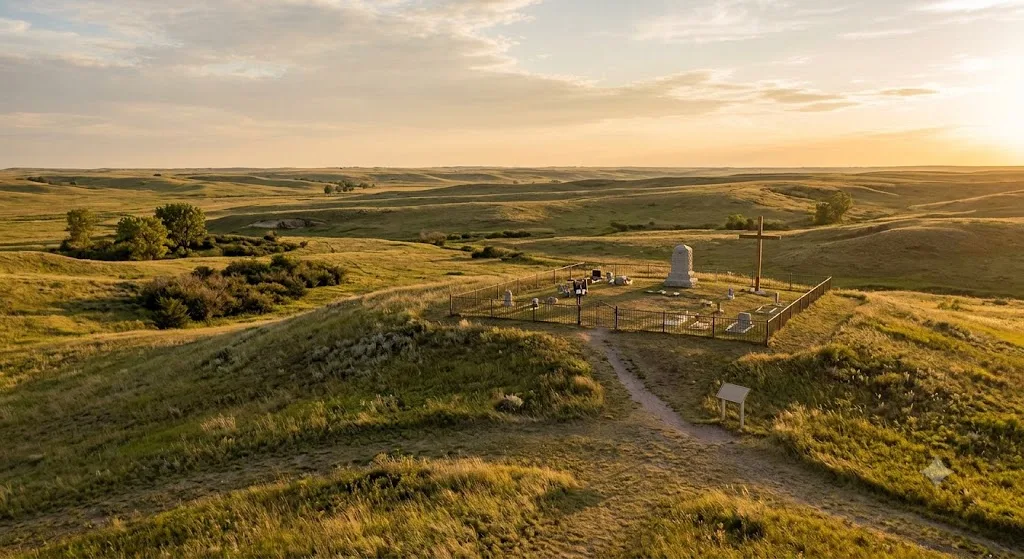
At the Wounded Knee Massacre Site, you will find a small parking area directly by the road. There is a sign marking the site, and the cemetery is accessible on foot via a dirt track from this parking area. As of 2026, there are no formal parking fees or reservation requirements for visiting the memorial site itself. However, as a sacred and tribally owned site, respectful conduct is expected from all visitors.
Top Things to Do
While the Wounded Knee Massacre Site is primarily a place for solemn reflection, there are specific things to do at Wounded Knee Massacre Site and within the surrounding Pine Ridge Reservation that offer a deeper understanding of Lakota culture and history.
At the Wounded Knee Massacre Site
- Visit the Mass Grave and Monument: The central focus of the site is the mass grave and the 1903 monument commemorating the victims. Take time to walk to the cemetery, reflect on the events, and pay your respects. This is a powerful and somber experience.
- Read the Memorial Plaque: A plaque by the road provides a brief overview of the massacre, offering context to the site.
- Engage with Local Guides (if available): Occasionally, Lakota individuals may be present at the site, offering personal insights and historical context. Engaging with them can provide an invaluable, authentic perspective on the tragedy and its ongoing legacy. Our team recommends inquiring with the Oglala Tribal office for potential local guide arrangements to enhance your visit to the Wounded Knee Massacre Site.
- Participate in the Big Foot Memorial Ride (December): If your visit aligns with late December, you may witness or support the Chief Big Foot Memorial Ride, an annual pilgrimage on horseback that retraces the journey of Chief Spotted Elk (Big Foot) and his band to Wounded Knee. This ride honors the ancestors and keeps their memory alive.
Things to Do in Pine Ridge Reservation
Beyond the immediate memorial, the Pine Ridge Indian Reservation offers opportunities to immerse yourself in Lakota culture and history. When considering things to do in Pine Ridge Reservation, remember it is sovereign land, and respectful engagement is paramount.
- Pine Ridge Visitor Center: Located in Pine Ridge, this center provides valuable travel information and features displays of Lakota art and wildlife.
- Chatkú Arts Center at Maȟpíya Lúta (formerly The Heritage Center): Situated in Pine Ridge, this center at Red Cloud Indian School boasts an impressive collection of historic and contemporary Native art. Admission and tours are free, and it hosts the largest and longest-running Native art exhibit of its kind, the Red Cloud Indian Art Show, during the summer.
- Oglala Lakota College Historical Center: This center offers further insights into the rich history and culture of the Oglala Lakota people.
- Billy Mills Monument: Located near Pine Ridge, this monument honors Billy Mills, an Oglala Lakota Olympian who won a gold medal in the 10,000-meter race at the 1964 Tokyo Olympics.
While not directly on the reservation, the Wounded Knee Museum in Wall, South Dakota, offers a comprehensive narrative museum experience, detailing the events of the massacre with exhibits, photographs, and a Remembrance Room. It's a significant resource for historical context and is easily accessible from I-90.
Best Time to Visit
The best time to visit the Wounded Knee Massacre Site is generally during the late spring, summer, and early fall months (May through October). During these periods, the weather is typically more favorable for travel and outdoor reflection. The site is open year-round, but winter conditions in South Dakota can be harsh, with snow and extreme cold making travel difficult, especially on unpaved roads within the reservation.
Visiting in December, particularly around the anniversary of the massacre on December 29th, offers a unique, albeit somber, experience. This is when the annual Chief Big Foot Memorial Ride culminates at the site, and ceremonies are held to honor the victims. While deeply meaningful, this time of year requires careful preparation for cold weather and potentially icy road conditions. For a more comfortable visit with easier travel, we recommend the warmer months.
Where to Stay Nearby
When planning your trip to the Wounded Knee Massacre Site, it's important to note that direct Wounded Knee Massacre Site lodging options are very limited, as the site itself is preserved without commercial development. Most visitors choose to stay in nearby towns or within the Pine Ridge Reservation, embracing the local experience.
Within Pine Ridge Reservation
For an immersive experience that supports the local community, consider staying within the Pine Ridge Indian Reservation. The most notable option for Wounded Knee Massacre Site lodging is:
- Lakota Prairie Ranch Resort (Kyle, SD): Approximately 22 miles from Wounded Knee, this family-owned resort offers rooms, cabins, and a bunkhouse. It's managed by tribal members and features an on-site restaurant serving hearty meals. Guests frequently praise its cleanliness, friendly staff, and proximity to cultural landmarks like the Oglala Lakota College Historical Center and the Wounded Knee Massacre Site.
While other small, locally-run accommodations might exist, information can be scarce, and reservations are highly recommended, especially for the Lakota Prairie Ranch Resort.
Nearby Towns
For more conventional hotel options, you'll need to look further afield. The closest towns with a range of services are:
- Wall, South Dakota: Located about 90 miles (145 km) north of Wounded Knee, Wall is a popular stop along I-90, famous for Wall Drug Store. It offers several hotel chains, including Travelodge, Econo Lodge, Super 8, and Best Western. Wall is also home to the Wounded Knee Museum, which provides extensive historical context. This is a good option if you plan to combine your visit with Badlands National Park.
- Rapid City, South Dakota: As the second-largest city in South Dakota, Rapid City is about 1.5 to 2 hours northwest of Wounded Knee. It offers the widest range of lodging, dining, and other amenities. This is a convenient base if you plan to explore other Black Hills attractions like Mount Rushmore National Memorial or Badlands National Park.
- Hot Springs, South Dakota: Located to the southwest, Hot Springs is about an hour's drive from the site and offers some motel options.
Camping is also an option near the Pine Ridge Reservation, with various campgrounds in Badlands National Park, Custer State Park, and the Black Hills National Forest. Hipcamp lists over 175 options near Wounded Knee, with some remote grassland sites closer to the reservation, though 4WD or high-clearance vehicles may be recommended for dirt road access.
Sample 2-Day Itinerary
To fully appreciate the Wounded Knee Massacre Site and its surrounding historical and cultural landscape, we recommend a two-day itinerary, ideally based out of Wall or Rapid City due to limited lodging directly on the reservation.
Day 1: Historical Immersion and Reflection
- Morning (Wall/Rapid City to Wounded Knee): Begin your day with an early drive from your accommodation to the Wounded Knee Massacre Site. If staying in Wall, consider a stop at the Wounded Knee Museum first to gain comprehensive historical context before arriving at the actual site. The drive from Wall through Badlands National Park (via Highway 27 and SD-44) is scenic, but allow ample time.
- Late Morning (Wounded Knee Massacre Site): Arrive at the Wounded Knee Massacre Site. Take your time to walk to the mass grave, view the monument, and reflect on the tragic events of 1890. This is a place for quiet contemplation and respect. If a local guide is available, engage with them to hear firsthand perspectives.
- Afternoon (Pine Ridge Reservation Exploration): After your visit to Wounded Knee, drive to the town of Pine Ridge. Visit the Pine Ridge Visitor Center for local information and exhibits on Lakota culture. Then, explore the Chatkú Arts Center at Maȟpíya Lúta (formerly The Heritage Center) at Red Cloud Indian School, which showcases impressive Native American art and history.
- Evening: Return to your lodging in Wall or Rapid City. Enjoy dinner and reflect on the day's profound experiences.
Day 2: Surrounding Natural Beauty and Further History
- Morning (Badlands National Park): Dedicate your second day to exploring the stunning natural landscapes surrounding the reservation. Drive through Badlands National Park, located just north of the Pine Ridge Reservation. Enjoy scenic drives, short hikes, and wildlife viewing. Stop at the Ben Reifel Visitor Center to learn about the park's geology and ecology.
- Afternoon (Black Hills or Additional Native Sites): Depending on your interest, you can either head west into the Black Hills to visit iconic sites like Mount Rushmore National Memorial or the Crazy Horse Memorial, both significant in their own ways to the region's history. Alternatively, explore other Native American sites further afield, such as The Journey Museum & Learning Center in Rapid City, which offers an excellent introduction to South Dakota's Lakota culture.
- Evening: Conclude your trip with dinner and relaxation, perhaps in Rapid City, which offers a wide array of dining options.
This itinerary provides a balance of solemn historical reflection and appreciation for the natural beauty and broader cultural heritage of South Dakota.
Last updated: 2026-07-07 by the Roam States team.