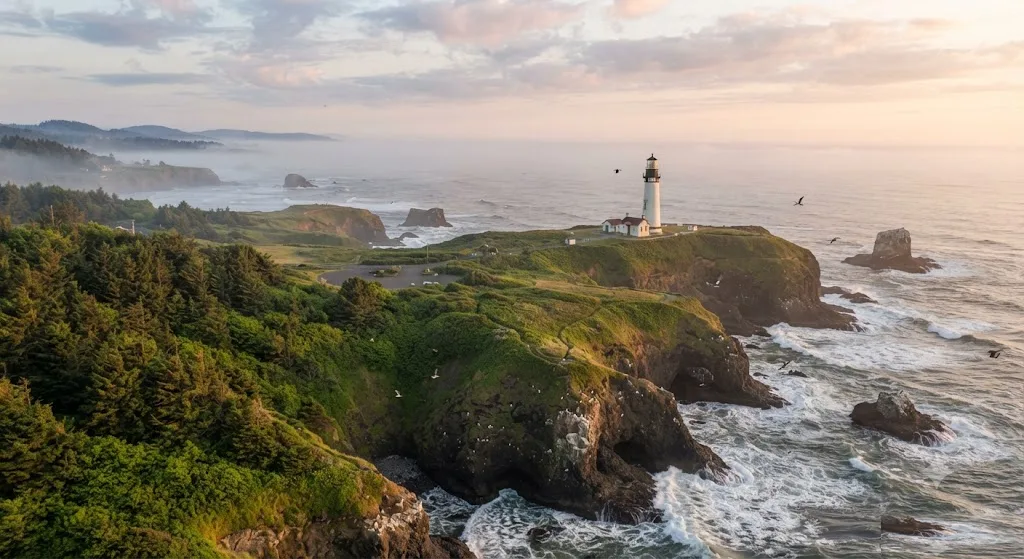
Yaquina Head Outstanding Natural Area Travel Guide — Oregon
Welcome to the definitive guide for exploring the Yaquina Head Outstanding Natural Area Oregon. Our team at Roam States has meticulously compiled everything you need to know for an unforgettable visit to this iconic stretch of the Oregon Coast. Here, ancient lava flows meet the powerful Pacific, creating a landscape of dramatic cliffs, phenomenal basalt tide pools teeming with marine life, and the state's tallest lighthouse. We'll cut through the generic travel fluff to bring you confident, specific advice, ensuring your trip is nothing short of spectacular.
Expert Verdict: Yaquina Head Outstanding Natural Area is an absolute must-visit for anyone exploring the Oregon Coast. Its unique blend of geological history, abundant wildlife, and the majestic Yaquina Head Lighthouse offers a truly immersive coastal experience. We recommend dedicating at least half a day, ideally timed with low tide, to fully appreciate its natural wonders.
Why Visit Yaquina Head Outstanding Natural Area
The allure of Yaquina Head is undeniable. This narrow, coastal headland, jutting a mile into the Pacific Ocean, is a testament to millions of years of geological forces, shaped by ancient lava flows and relentless ocean surf. It's a place where history and nature converge, offering visitors a profound connection to Oregon's rugged coastline. We find that the dramatic basalt formations provide a stunning backdrop for photography, while the rich biodiversity beneath the waves offers endless opportunities for discovery.
Beyond its striking beauty, Yaquina Head serves as a vital habitat for a diverse array of wildlife. From the majestic gray whales that migrate along its shores to the bustling colonies of seabirds nesting on its cliffs, and the playful harbor seals basking on rocks, the area is a living classroom. The crown jewel, of course, is the Yaquina Head Lighthouse, standing proudly at 93 feet, the tallest lighthouse in Oregon. Its beacon has guided mariners since 1873, and its stoic presence adds a layer of maritime heritage to the natural splendor.
For those seeking a deeper understanding of the region, the Yaquina Head Interpretive Center provides invaluable insights into the natural and cultural history of the central Oregon coast. Through engaging exhibits, a short film, and educational resources, visitors can learn about the ecosystems, marine life, and human history that have shaped this remarkable place. It’s an enriching experience that enhances every aspect of your visit.
Who It's Best For
Yaquina Head Outstanding Natural Area caters to a wide range of travelers, making it an ideal destination for many.
- Nature Enthusiasts and Wildlife Watchers: With opportunities for whale watching, bird watching, and seal observation, it's a paradise for those who love to connect with nature. Resident gray whales can be spotted year-round, with major migrations occurring from December to January (southbound) and March to April (northbound). In summer, around 150 whales feed along the Oregon coast, often close to shore.
- Families with Curious Kids: The tide pools at Cobble Beach offer an interactive and educational experience, allowing children to discover sea stars, anemones, and urchins up close. The Interpretive Center is also designed with hands-on exhibits that appeal to younger visitors.
- Photographers: The dramatic coastline, the historic lighthouse, and the vibrant marine life provide endless subjects for stunning photography, especially during sunrise or sunset.
- History Buffs: The Yaquina Head Lighthouse and its interpretive center delve into the rich maritime history of the Oregon Coast, offering a glimpse into the lives of early light keepers and the importance of this navigational aid.
- Hikers and Walkers: A network of paved paths and more challenging trails offers options for all fitness levels, providing breathtaking coastal views.
We believe that whether you're planning a solo adventure, a romantic getaway, or a family vacation, Yaquina Head offers something truly special.
Getting There & Parking
Navigating to the Yaquina Head Outstanding Natural Area Oregon is straightforward. The area is located approximately 3.5 miles north of Newport, Oregon, directly off US Highway 101. If you're driving from the south, proceed through Newport, then turn left onto Lighthouse Drive. From the north, turn right onto Lighthouse Drive about half a mile past the Newport city limit sign. The address for GPS is 750 NW Lighthouse Drive, Newport, OR 97365.
Parking at Yaquina Head is well-organized, though it can get busy during peak seasons, holidays, and summer months. There are a total of four designated parking areas within the natural area. The two most convenient are located at the Interpretive Center and further up the road, closer to the lighthouse itself. If the lighthouse parking lot is full, we recommend parking at the Interpretive Center and enjoying a scenic walk along the paved Lighthouse Trail to reach the lighthouse. Be aware that this particular path is not wheelchair accessible. Accessible restrooms are available at the Interpretive Center, the lighthouse parking lot, and the Quarry Cove parking area.
An entrance fee is required to access the Yaquina Head Outstanding Natural Area. As of May 2026, the fee for passenger vehicles is $7 for a 3-day pass, while motorcycles are $3 for a 3-day pass. Buses have a higher fee, ranging from $25 to $50 depending on their passenger capacity. We appreciate that Yaquina Head honors all America the Beautiful National Parks and Federal Recreational Lands passes, as well as Oregon Pacific Coast passes, offering a great option for frequent visitors to federal lands. You can purchase your pass upon arrival or in advance through Recreation.gov.
Top Things to Do
When planning your visit, you'll find an abundance of things to do at Yaquina Head Outstanding Natural Area. Our team highly recommends prioritizing these experiences to make the most of your time.
Explore the Yaquina Head Lighthouse
Dominating the headland, the Yaquina Head Lighthouse is Oregon's tallest, standing at 93 feet. It has been an active aid to navigation since 1873. While restoration projects may sometimes limit full access, ranger-led tours are frequently offered, typically lasting 15 minutes and limited to 10-16 people on a first-come, first-served basis. These tours often focus on the ground floor, but when full access is available, climbing the 114 steps to the top offers unparalleled panoramic views of the Pacific coastline. For summer visits, we strongly recommend booking reservations up to 90 days in advance through Recreation.gov or by calling 1-877-444-6777, as day-of passes are limited and available in person at the Interpretive Center.
Discover Marine Life in the Tide Pools
The phenomenal basalt tide pools at Cobble Beach are a highlight of any visit. This unique area, covered in smooth black basalt stones, reveals a hidden world of marine life during low tide. Here, you can observe vibrant anemones, sea stars, purple sea urchins, and various other fascinating creatures in their natural habitat. We emphasize the importance of checking tide charts and planning your visit to coincide with low tide, ideally arriving one to two hours before the lowest point for optimal viewing. Negative tides, in particular, expose a greater area of the shoreline. Remember to practice tide pooling etiquette: observe only, do not touch or remove any marine life, and walk carefully on dry, bare rocks to protect this delicate ecosystem. This is truly one of the most rewarding things to do at Yaquina Head Outstanding Natural Area.
Wildlife Viewing
Yaquina Head is a prime location for wildlife spotting. From the observation decks above Cobble Beach and west of the lighthouse, you can scan the horizon for whale spouts. Resident gray whales are present year-round, while the major migration periods in winter (southbound) and spring (northbound) offer increased chances of sightings. Harbor seals are frequently seen resting on the rocks in Quarry Cove and off Cobble Beach, especially at low tide. In spring, the cliffs come alive with thousands of nesting seabirds, including common murres, cormorants, and gulls, often attracting bald eagles and peregrine falcons. Rangers sometimes set up spotting scopes during summer months to help visitors get a closer look at seal pups and their mothers.
Visit the Interpretive Center
Before or after exploring the outdoor wonders, a stop at the Yaquina Head Interpretive Center is highly recommended. Open daily from 10:00 AM to 4:00 PM (except Thanksgiving and Christmas), this center offers engaging exhibits on the headland's geology, marine ecosystems, and human history. It's a fantastic resource for all ages, providing context and deeper appreciation for what you'll see outside. There's also an educational store where you can find maps, books, and souvenirs.
Yaquina Head Outstanding Natural Area Hiking Trails
The Yaquina Head Outstanding Natural Area hiking trails offer diverse experiences, from easy paved walks to more challenging climbs with panoramic views. The entire headland features a network of paths suitable for various activity levels.
- Lighthouse Trail: This paved path circles the historic Yaquina Head Lighthouse, offering sweeping coastal views. It's an easy walk, perfect for families and those seeking accessible routes near the lighthouse.
- Quarry Cove Trail: Once an active basalt quarry until 1980, Quarry Cove has been transformed into an intertidal area. The trail here provides easy access to observe harbor seals resting on the rocks during high tide and offers unique geological insights.
- Salal Hill Trail: For those seeking a bit more elevation, the Salal Hill trail offers a moderate climb through coastal shrubbery and salal thickets. It's an easy 1.0-mile (1.6 km) hike with a modest 109 feet (33 meters) of elevation gain, taking approximately 27 minutes. From the summit, you're rewarded with breathtaking 360-degree panoramas of the Pacific Ocean and Colony Rock.
- Communications Hill Trail: This trail leads to the highest point of the headland, providing even more expansive views to the south and glimpses through the trees to the north. It's a gravel road, offering a good workout with rewarding vistas.
When exploring the Yaquina Head Outstanding Natural Area hiking trails, we recommend wearing sturdy, non-slip shoes, especially if you plan to venture onto rocky areas or during wet conditions. Always be mindful of changing weather and ocean conditions.
Best Time to Visit
Yaquina Head Outstanding Natural Area is open year-round, and each season offers a unique experience. However, based on our extensive travel, we can guide you to the optimal times.
- Summer (June-August): This is the most popular time to visit, with generally warmer, drier weather. However, summer on the Oregon Coast can be unpredictable, bringing cold temperatures, high winds, and fog. Expect larger crowds, especially during holidays and weekends, which can lead to longer lines at the entrance and full parking lots. Lighthouse tour reservations are highly recommended during these months.
- Spring (March-May): We consider spring one of the best times to visit. The weather is often mild, and the headland comes alive with nesting seabirds. Gray whales are actively migrating north to their feeding grounds, offering excellent whale-watching opportunities. Tide pooling is also fantastic during spring, with several ideal low tide windows in 2026, such as May 17-19. Crowds are generally smaller than in summer.
- Fall (September-November): Fall is another excellent choice, often referred to as the "hidden tide pooling season." Tourist crowds diminish significantly after Labor Day, and conditions remain favorable through October. You'll find lower nightly rates at nearby accommodations and reliable dry weather before the winter rains.
- Winter (December-February): While winter brings more rain and high winds, it's a magical time for storm watching and witnessing the southbound gray whale migration. The park is less crowded, offering a more serene experience. Remember to dress in layers and be prepared for wet conditions.
For tide pooling, specifically, the best time is always during low tide. In 2026, some of the best daytime low tides for exploring the tide pools occur on May 17-19, June 15-16, and July 14-15. We advise checking the Yaquina Head Tidepool Discovery Times or a local tide chart for the most accurate daily low tide predictions.
Where to Stay Nearby
While there is no Yaquina Head Outstanding Natural Area camping allowed directly within the natural area itself, the nearby city of Newport and surrounding state parks offer excellent accommodation options, from hotels to campgrounds.
Hotels in Newport
Newport, located just a few miles south, provides a wide array of lodging choices to suit every budget and preference. Many hotels offer convenient access to Yaquina Head and other local attractions.
- Little Creek Cove Beach Resort: This resort offers private beach access and units with fully equipped kitchens, fireplaces, and ocean-facing terraces, making it a great value for those seeking beachfront comfort.
- Embarcadero Resort: Situated directly on Yaquina Bay, it's close to the Yaquina Bay State Recreation Site. A unique feature is its private crabbing and fishing dock, where guests can rent crab rings and boats.
- Best Western Plus Agate Beach Inn: Offering breathtaking views of the Pacific Ocean and the Yaquina Head Lighthouse, this hotel provides amenities like a heated indoor pool and an on-site restaurant.
- Elizabeth Oceanfront Suites, an Ascend Collection Hotel: Known for its exceptional guest ratings, this hotel offers comfortable stays with ocean views.
For budget-conscious travelers, we recommend booking at least six weeks ahead for July and August stays, as Newport's budget inventory can be limited. The shoulder season (late September through October) often provides significantly lower rates and fewer crowds.
Yaquina Head Outstanding Natural Area Camping Options
If you prefer to immerse yourself in nature, several excellent campgrounds are available near Yaquina Head. Remember, direct Yaquina Head Outstanding Natural Area camping is not permitted.
- South Beach State Park: Located just south of Newport, this state park offers extensive camping facilities for both tents and RVs. It features 325 campsites, including 60 tent-only sites, 27 yurts, and three group tent areas. Amenities include flush toilets, hot showers, and full hookups for RVs (up to 56 feet). Reservations can be made up to six months in advance via oregonstateparks.reserveamerica.com. A $10 per-use fee for the RV dump station begins March 30, 2026.
- Beverly Beach State Park: Hidden in a forest between Cape Foulweather and Yaquina Head, Beverly Beach State Park is one of the state's largest campgrounds. It offers 53 full-hookup sites, 76 electrical sites with water, and 128 tent sites. Like South Beach, it also has yurts, group tent areas, and hiker/biker camps, with similar amenities. Some campsites are just steps from miles of ocean beach extending from Yaquina Head to Otter Rock.
- Whalers Rest RV & Camping Resort: This private resort offers 164 sites with amenities such as restrooms, showers, a pool, clubhouse, and fitness center.
- Harbor Village RV Park: Provides 140 spaces with full hookups, showers, and laundry facilities.
We strongly advise making camping reservations well in advance, especially for summer and holiday weekends, as these popular spots fill up quickly.
Sample 2-Day Itinerary
To help you maximize your visit to Yaquina Head and the surrounding Newport area, our team has crafted a sample 2-day itinerary. This plan balances exploration of the natural area with other local attractions.
Day 1: Yaquina Head Immersion
- Morning (9:00 AM - 1:00 PM): Arrive at Yaquina Head Outstanding Natural Area. Begin your visit at the Interpretive Center to get an overview of the area's natural and cultural history. Then, head to the Yaquina Head Lighthouse for a ranger-led tour (reservations recommended). Take your time to enjoy the panoramic views from the lighthouse grounds.
- Lunch (1:00 PM - 2:00 PM): Enjoy a picnic lunch at one of the scenic viewpoints within Yaquina Head (no food for purchase on-site).
- Afternoon (2:00 PM - 4:30 PM): Check the tide charts and head down to Cobble Beach for an unforgettable tide pooling experience during low tide. Afterward, explore some of the Yaquina Head Outstanding Natural Area hiking trails, such as the Salal Hill Trail, for elevated views.
- Evening: Check into your accommodation in Newport. Enjoy fresh seafood at one of Newport's acclaimed restaurants.
Day 2: Newport Exploration & Coastal Wonders
- Morning (9:00 AM - 12:00 PM): Explore Newport's Historic Bayfront. Watch the sea lions lounging on the docks, browse unique shops, and perhaps try crabbing from the public fishing pier.
- Lunch (12:00 PM - 1:00 PM): Grab a casual lunch at a Bayfront eatery.
- Afternoon (1:00 PM - 4:00 PM): Visit the Oregon Coast Aquarium, a world-class facility offering immersive exhibits and opportunities to see various marine animals. Alternatively, explore the Hatfield Marine Science Center for interactive exhibits and research insights.
- Late Afternoon (4:00 PM - Sunset): Consider a visit to another Oregon coastal gem. You could head north to Devil's Punch Bowl State Natural Area for its unique geological formations, or south to the Yaquina Bay Lighthouse for more maritime history. For those interested in broader Oregon adventures, consider exploring Crater Lake National Park or the stunning Columbia River Gorge on a separate trip.
- Evening: Enjoy a relaxed dinner in Newport, perhaps at a spot with ocean views.
This itinerary provides a solid framework, but feel free to customize it based on your interests. Remember that the entire state of Oregon offers incredible diversity, from its vibrant cities to its dramatic coastline and majestic mountains. For more ideas on planning your journey, consult our Plan Your US Trip guide.
Frequently Asked Questions (FAQ)
things to do in Newport
Newport, Oregon, offers a wealth of activities beyond Yaquina Head. Our top recommendations include exploring the Historic Bayfront, where you can watch sea lions, browse shops, and dine on fresh seafood. The Oregon Coast Aquarium is a must-visit for marine life enthusiasts, and the Hatfield Marine Science Center provides educational exhibits. You can also enjoy Nye Beach for its charming district, art galleries, and beach access, or visit the Yaquina Bay Lighthouse. For outdoor adventure, consider crabbing, fishing, kayaking, or surfing.
Yaquina Head Outstanding Natural Area with kids
Yaquina Head is very family-friendly. Kids will particularly love exploring the tide pools at Cobble Beach, where they can discover sea stars, anemones, and other marine creatures during low tide. The Interpretive Center features hands-on exhibits designed to engage younger visitors and teach them about local wildlife and history. The paved Lighthouse and Quarry Cove trails are easy for little legs and strollers, offering safe and scenic walks. Remember to keep pets on a leash and away from the lighthouse interior and tide pools.
Yaquina Head Outstanding Natural Area tips
To make the most of your visit, we recommend arriving early, especially during peak season, to secure parking and avoid crowds. Check the tide charts in advance to plan your tide pooling adventure at Cobble Beach during low tide. Dress in layers, as coastal weather can change rapidly, bringing cold temperatures, high winds, and fog even in summer. Wear sturdy, non-slip shoes, especially if you plan to explore the rocky tide pools or unpaved trails. Bring binoculars for enhanced wildlife viewing, particularly for whales and seabirds. Finally, remember that pets must be leashed and are not allowed inside buildings or in the tide pools.
Yaquina Head Outstanding Natural Area parking
There are four parking areas within Yaquina Head Outstanding Natural Area. The main lots are located at the Interpretive Center and closer to the lighthouse. If the lighthouse parking lot is full, you'll need to park at the Interpretive Center and walk the paved Lighthouse Trail to reach the lighthouse. Be aware that the Lighthouse Trail is not wheelchair accessible. Accessible restrooms are available at the Interpretive Center, the lighthouse parking lot, and Quarry Cove. An entrance fee of $7 per passenger vehicle for a 3-day pass is required, with federal and Oregon Pacific Coast passes honored.
best time to visit Yaquina Head Outstanding Natural Area
The best time to visit Yaquina Head depends on your priorities. For pleasant weather and wildlife viewing, we suggest spring (March-May) for northbound whale migration and nesting seabirds, or fall (September-October) for fewer crowds and good tide pooling. Summer (June-August) offers the warmest weather but also the largest crowds. If tide pooling is your main goal, plan your trip around the lowest tides of the year, which in 2026 include specific dates in May, June, and July. Always check the daily tide charts for optimal viewing times.
Yaquina Head Outstanding Natural Area hours and fees
The Yaquina Head Outstanding Natural Area (park grounds, trails, and restrooms) is generally open year-round from 8:00 AM to 4:30 PM daily. The Interpretive Center operates from 10:00 AM to 4:00 PM daily. The area is closed on Thanksgiving Day and Christmas Day. The entrance fee for a passenger vehicle is $7 for a 3-day pass. Motorcycles cost $3 for a 3-day pass, and buses range from $25 to $50. Federal America the Beautiful passes and Oregon Pacific Coast passes are accepted. Lighthouse tours, when available, are limited and may require advance reservations, especially in summer.
Conclusion
Our team at Roam States hopes this comprehensive guide has equipped you with all the knowledge needed to confidently explore the Yaquina Head Outstanding Natural Area Oregon. From the historic beacon of its lighthouse to the vibrant ecosystems within its tide pools, this destination truly embodies the wild and captivating spirit of the Oregon Coast. We encourage you to take your time, embrace the natural beauty, and create lasting memories at this outstanding natural treasure.
Last updated: 2026-07-08 by the Roam States team.