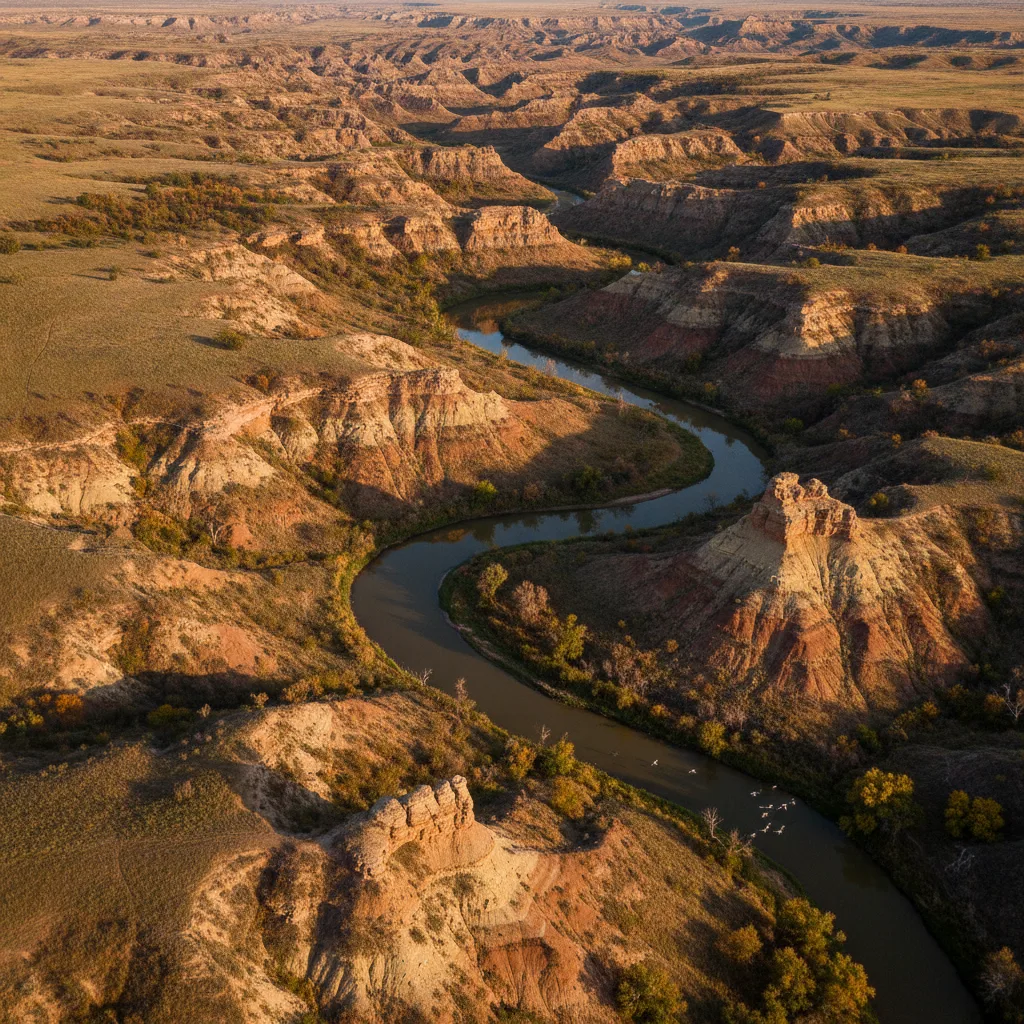
Our Arikaree Breaks guide covers practical planning for Arikaree Breaks Kansas — best time to visit, getting there, and what to do on the ground. We’re here to cut through the generic travel fluff and give you the definitive Roam States take on this hidden gem in the Sunflower State.
In the remote northwest corner of Kansas, where the plains typically stretch unbroken to the horizon, lies a dramatic landscape carved by wind and water: the Arikaree Breaks. Often referred to as the "Grand Canyon of Kansas," this unique geological formation offers a breathtaking contrast to the surrounding prairie, inviting intrepid travelers to explore its rugged terrain and panoramic vistas. Our team at Roam States has ventured into these breaks to bring you an independent and confident guide to planning your visit in 2026.
Why Visit Arikaree Breaks
The primary draw of the Arikaree Breaks is its astounding geology. This isn't the flat Kansas you might imagine; here, deep ravines and gullies slice through the landscape, revealing layers of wind-deposited sand, silt, and clay particles known as loess. These loess deposits, which can be up to 100 feet thick, have been dramatically eroded by the tributaries of the Arikaree River and the South Fork of the Republican River, creating steep-sided canyons that are a marvel to behold. The angular grains in the packed loess create a cohesion that allows these seemingly fragile walls to stand firm against thousands of years of weathering.
Beyond the geological spectacle, the Arikaree Breaks offers a profound sense of solitude and natural beauty. It’s a place where you can truly disconnect and immerse yourself in the vastness of the prairie. The area is home to native grasses, yucca plants, and prickly pear cactus, along with two species of sage found nowhere else in Kansas and 16 native plants listed as "rare" in the state. Wildlife, including mule deer and various bird species, can be spotted throughout the year, adding to the allure for nature enthusiasts. For those seeking an authentic, untrodden path in the American Midwest, the Arikaree Breaks presents an unforgettable experience.
Who It's Best For
The Arikaree Breaks is ideal for travelers who appreciate raw, unspoiled natural landscapes and seek a quiet escape from crowded tourist destinations. It's a prime destination for:
- **Nature Photographers:** The dramatic light, expansive skies, and unique geological formations offer endless opportunities for stunning landscape photography, especially during sunrise and sunset.
- **Geology Enthusiasts:** Those interested in geological processes will find the exposed loess, Ogallala Formation, and Pierre Shale layers fascinating.
- **Solitude Seekers:** The remote location ensures a peaceful visit, allowing for quiet contemplation and a deep connection with nature.
- **Road Trippers and Adventurers:** Travelers exploring the Land & Sky Scenic Byway or those looking for an off-the-beaten-path adventure will find the rugged drive and unique scenery rewarding.
- **Wildlife Observers:** Birdwatchers and those hoping to spot prairie wildlife will enjoy the undisturbed habitat.
This destination is less suited for those expecting extensive visitor facilities, marked hiking trails, or a highly curated tourist experience. Its charm lies in its wild, undeveloped character.
Getting There & Parking
Reaching the Arikaree Breaks Kansas requires a bit of planning, as it's located in the extreme northern edge of Cheyenne County, a truly remote part of the state. The primary access point is from the town of St. Francis, Kansas. We recommend heading north from the Benton and Washington intersection in St. Francis, crossing the Republican River bridge, and then turning right at the first fork. From there, you'll watch for numbered red-disk signs as you head north, eventually on County Road 15 (which is unpaved). One of the most outstanding views is approximately 14 miles north of St. Francis.
The Arikaree Breaks are primarily accessed via unpaved county roads. While these roads are generally passable, they can become extremely difficult, or even impassable, during wet weather. We strongly advise checking local weather and road conditions before you go, and a vehicle with higher clearance or four-wheel drive is recommended, especially if there has been recent rain or snow. There are no designated parking lots with formal facilities within the breaks themselves. Visitors typically pull off onto the shoulder of the public roads at various scenic overlooks, such as Lookout Point, where you'll find some of the best views. Copies of a self-guided driving tour can be picked up at the St. Francis Information Kiosk at the Rest Area on US Highway 36 in St. Francis, or at local restaurants and gas stations. This map is invaluable for navigating the area and identifying public viewing sites.
It's crucial to remember that much of the Arikaree Breaks lies on private land. Visitors are explicitly asked to respect landowners by remaining on public roads and not trespassing or hopping fences. There are no fees to access the Arikaree Breaks themselves, nor are reservations required.
Top Things to Do
When exploring the Arikaree Breaks, the emphasis is on soaking in the natural beauty and rugged solitude. While formal amenities are few, there are several compelling things to do at Arikaree Breaks that our team highly recommends:
- **Scenic Driving Tour:** The most popular way to experience the breaks is via a self-guided driving tour along the public county roads that wind through the formations. Pick up a map in St. Francis to guide you to key overlooks and points of interest. The drive itself is an adventure, offering constantly changing perspectives of the canyons and prairie vistas.
- **Photography:** Bring your camera! The dramatic cliffs, sweeping horizons, and unique light make for incredible photographic opportunities. Sunrises and sunsets, in particular, paint the landscape with amber and rose hues.
- **Wildlife Viewing:** Keep an eye out for prairie wildlife. Mule deer are commonly sighted, as are various bird species. The native grasses and sparse trees provide habitat for a variety of creatures adapted to this rugged environment.
- **Geological Observation:** Take time to appreciate the exposed layers of loess, the Ogallala Formation, and the Pierre Shale. Understanding how these formations were created over thousands of years adds another layer of appreciation to the landscape.
- **Stargazing:** Far from city lights, the night skies above the Arikaree Breaks are incredibly dark, offering spectacular opportunities for stargazing and astrophotography.
While there aren't extensive marked Arikaree Breaks hiking trails, visitors can enjoy short walks from designated pull-offs to explore viewpoints. Be sure to wear sturdy footwear, as the terrain can be uneven with packed dirt and rocky outcrops. Remember, when enjoying these things to do at Arikaree Breaks, always stay on public land and respect private property boundaries.
Best Time to Visit
The best time to visit the Arikaree Breaks largely depends on your priorities and tolerance for weather conditions. Our team generally recommends the **spring and fall** for the most pleasant experience.
- **Spring (April-May):** This is an excellent time to witness the prairie coming alive. Wildflowers are particularly prevalent, adding splashes of color to the landscape. Temperatures are generally mild, making it comfortable for exploring. However, spring can also bring unpredictable weather, including rain, which can make unpaved roads muddy and difficult to navigate.
- **Summer (June-August):** Summers can be very hot, with intense sun and strong winds. While the long daylight hours offer ample exploration time, heat exhaustion is a concern, and you'll need to carry plenty of water. The roads are typically dry and more easily passable.
- **Fall (September-October):** Similar to spring, fall offers mild temperatures and beautiful clear skies. The changing colors of the prairie grasses can be subtle but striking. This is often considered an ideal time for photography and comfortable drives.
- **Winter (November-March):** Winters are cold, often with snow and ice. While the stark, snow-dusted landscape can be incredibly beautiful for hardy adventurers, unpaved roads may become impassable, and facilities are non-existent. If you visit in winter, be prepared for extreme conditions and check road closures carefully.
Regardless of the season, the prairie wind is a constant companion and can intensify near the breaks, so dressing in layers and bringing wind-resistant clothing is always a good idea.
Where to Stay Nearby
Given the remote nature of the Arikaree Breaks, you won't find on-site accommodations. However, several towns in the vicinity offer convenient Arikaree Breaks lodging options. The closest and most practical base for exploring is St. Francis, Kansas, located about 15 miles south of the breaks.
In St. Francis, you'll find a selection of local motels, RV parks, and guesthouses that provide a comfortable and provincial setting for your stay. Options include the Homesteader Motel & RV Park, Killingsworth Kottages, and the Spencer House Bed & Breakfast. These local establishments offer a chance to experience the charm of a small Kansas town. For those seeking more chain hotel options, Goodland, Kansas, located about 30 miles south of St. Francis, offers several choices. Here, you can find hotels like the Holiday Inn Express & Suites Goodland I-70, Comfort Inn & Suites Goodland, Quality Inn Goodland I-70, and Super 8 by Wyndham Goodland. These hotels typically offer modern amenities and are a reliable choice for Arikaree Breaks lodging.
While camping isn't permitted directly within the breaks due to private land, nearby Lake Atwood offers camping facilities with a small fee. Additionally, the Goodland KOA Journey is an award-winning retreat with tent sites, providing another option for those who prefer to camp.
Sample 2-Day Itinerary
To truly appreciate the Arikaree Breaks and the surrounding northwest Kansas region, we recommend a two-day itinerary, allowing for exploration at a relaxed pace.
Day 1: Arrival and Arikaree Breaks Exploration
- **Morning/Afternoon:** Arrive in St. Francis, Kansas. Check into your chosen accommodation. If you're staying in Goodland, allow an extra 30-45 minutes for the drive north to St. Francis.
- **Late Afternoon:** Head to the St. Francis Information Kiosk on US Highway 36 to pick up a self-guided driving tour map of the Arikaree Breaks.
- **Late Afternoon/Evening:** Begin your scenic drive into the Arikaree Breaks. Follow the map to navigate the public roads and stop at various overlooks, such as Lookout Point, for breathtaking views. We suggest starting your drive at least two hours before sunset to catch the best light for photography.
- **Evening:** Enjoy the sunset over the breaks, a truly magical experience. Head back to St. Francis or Goodland for dinner. Options in St. Francis are typically local diners and cafes, while Goodland offers a few more choices.
Day 2: Northwest Kansas Highlights & Departure
- **Morning:** After breakfast, consider a visit to some other unique attractions in northwest Kansas. You could explore more of the Land & Sky Scenic Byway, which features the Wallace Branch of the Great Western Cattle Trail, and a replica of Van Gogh's sunflower painting on an 80-foot easel. You might even venture to Mount Sunflower, the highest point in Kansas.
- **Late Morning/Lunch:** Visit Keller Pond in St. Francis for a leisurely walk, picnic, or some fishing. Alternatively, head to Bird City to see the Tri-State Antique Engine & Thresher Show grounds (check their schedule for events).
- **Afternoon:** Depending on your route, you could head south towards other significant Kansas destinations. Consider a visit to Monument Rocks or Little Jerusalem Badlands State Park for more dramatic geological formations. For a different kind of adventure, the Tallgrass Prairie National Preserve offers an expansive look at the state's iconic ecosystem.
- **Departure:** Begin your journey home or continue your exploration of the best places in Kansas.
Our team's verdict: The Arikaree Breaks is a must-see for anyone who appreciates raw, untamed nature and seeks a truly unique Kansas experience. It’s a testament to the surprising diversity of the state's landscape and offers a profound sense of peace away from the crowds.
Last updated: 2026-07-05 by the Roam States team.