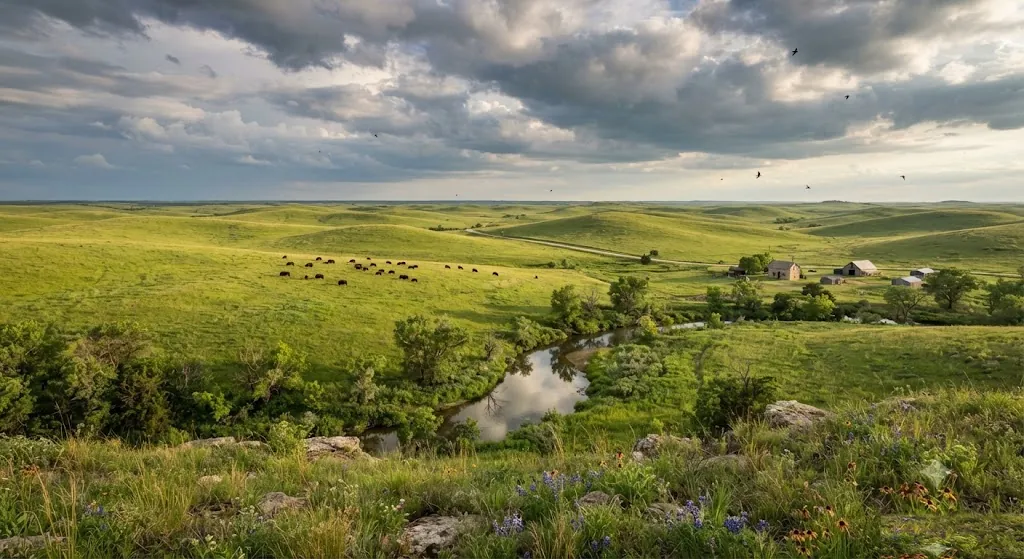
Tallgrass Prairie Preserve Travel Guide — Kansas
Welcome to the heart of the Flint Hills! Our comprehensive guide to the Tallgrass Prairie Preserve in Kansas is designed to help you plan an unforgettable journey into one of America's most vital and beautiful ecosystems. We'll cover everything from what to expect to how to make the most of your visit, ensuring you experience the vast, rolling landscapes and unique wildlife of this incredible national preserve.
For those seeking an authentic American experience, the Tallgrass Prairie Preserve Kansas offers a profound connection to a landscape that once dominated the continent. This is more than just a park; it's a living testament to a vanishing ecosystem, co-managed by the National Park Service and The Nature Conservancy. We believe a trip here is essential for understanding the natural heritage of the United States.
Why Visit Tallgrass Prairie Preserve
The Tallgrass Prairie National Preserve stands as the last significant expanse of tallgrass prairie left in the world, a truly unique ecosystem that once covered over 140 million acres of North America. Today, less than 4% remains, with the largest portion protected right here in the Kansas Flint Hills. We visit to witness the sheer scale of this natural wonder, where big bluestem, Indian grass, and switchgrass can grow to impressive heights, creating a "sea of grass" that stretches to the horizon.
Beyond the breathtaking vistas, the preserve is a haven for biodiversity, home to over 500 species of plants and a diverse array of fauna, including a resident herd of approximately 100 wild bison. Birdwatchers will delight in spotting grassland birds like the greater prairie-chicken, while history enthusiasts can explore the 1880s historic ranch buildings, including a limestone mansion, a massive three-story barn, and the Lower Fox Creek one-room schoolhouse. It's a place where natural beauty and rich history converge, offering a powerful reminder of America's past and the importance of conservation.
Who It's Best For
The Tallgrass Prairie Preserve is an ideal destination for a wide range of travelers. Nature lovers and photographers will find endless inspiration in the sweeping landscapes, vibrant wildflowers, and abundant wildlife. Families with children will appreciate the Junior Ranger activities and the opportunity to see bison in their natural habitat. Hikers, from casual strollers to avid trekkers, will discover miles of trails catering to various fitness levels.
History buffs will be drawn to the meticulously preserved 19th-century ranch, offering a glimpse into the cowboy era and the challenges of ranching on the prairie. Even those simply passing through on a USA road trip will find the Flint Hills National Scenic Byway along K-177 offers stunning views directly from their vehicle. We recommend it for anyone seeking solitude, a connection to nature, or a deeper understanding of American history and ecology.
Getting There & Parking
To experience the Tallgrass Prairie Preserve, you'll head to the heart of the Flint Hills in Chase County, Kansas. The preserve headquarters are conveniently located two miles north of Strong City, Kansas, on Highway 177, also known as the Flint Hills National Scenic Byway. If you're coming from Emporia, travel 16 miles west on U.S. Highway 50 and then two miles north on K-177. From Council Grove, it's about 17 miles south on K-177. Wichita is approximately 85 miles northeast via I-35, U.S. Hwy 50, and K-177, while Topeka is about 60 miles southwest via the Kansas Turnpike (I-335) to Emporia.
When considering how to get to Tallgrass Prairie Preserve, we advise checking for any road closures, especially on K-177, as sections can be closed for bridge replacements, requiring access from the south. The preserve offers multiple parking lots, with the Visitor Center accommodating the most vehicles, including accessible spaces and pull-through options for buses and trailers. While visitation peaks on major holiday weekends, ample parking is generally available throughout the year. Please note that personal vehicles cannot be driven on the preserve's interior roads, but the scenic byway provides excellent views. It's important to safely use the highway underpass to the Fox Creek Trail just south of the visitor center parking lot, as Highway 177 has a 60 mph speed limit and blind spots. This information on how to get to Tallgrass Prairie Preserve should help you plan your journey efficiently.
Top Things to Do
There are numerous things to do at Tallgrass Prairie Preserve, catering to a variety of interests. Our team suggests starting your visit at the Visitor Center, where you can watch a 10-minute orientation film, explore exhibits, and pick up Junior Ranger activities for kids. From there, step back in time by touring the historic Z Bar Ranch buildings, including the limestone mansion, the massive three-story barn, and other outbuildings. Self-guided cell phone tours are available for both the historic buildings and the prairie.
Wildlife viewing is a highlight; the preserve is home to a free-roaming bison herd, which you can often spot from the scenic overlooks or even near the one-room schoolhouse. Remember to maintain a safe distance of at least 125 yards from the bison. Birdwatching is also exceptional, with over 210 species of birds making their home here. For those interested in a more active experience, the preserve offers over 40 miles of hiking trails. Additionally, catch-and-release fishing is permitted in three preserve ponds and along Fox Creek, though a valid Kansas fishing license is required. These are just some of the rewarding things to do at Tallgrass Prairie Preserve.
Tallgrass Prairie Preserve Hiking Trails
Exploring the Tallgrass Prairie Preserve hiking trails is one of the most immersive ways to experience this unique landscape. With over 40 miles of trails, ranging from easy nature walks to more challenging backcountry routes, there's a path for every adventurer. The trails are open 24 hours a day, year-round, and no permit is required.
For an accessible and leisurely stroll, we recommend the Bottomland Trail, a half-mile loop that winds through the Sand Creek bottomland on level terrain. This trail is wheelchair-friendly (when dry) and features interpretive waysides and a picnic area. The Southwind Nature Trail is another excellent option, offering a 1.75-mile journey through forest and tallgrass. For those seeking more solitude and a vigorous hike, the Prairie Earth Trail is approximately two miles long, covering rough terrain with steep hills and offering seclusion. Backcountry trails, such as the Scenic Overlook Trail (3.2 miles one way) and its extensions like Prairie Fire and Gas House loops (8-10 miles total), lead to commanding views and often provide opportunities to see bison. The Two Section Trail, 3.1 miles one-way, is unique as it's pet-friendly when cattle are not present and accesses three fishing ponds. Trail maps are available at the Visitor Center and kiosks near the historic ranch buildings. When planning your adventure on the Tallgrass Prairie Preserve hiking trails, always check for current trail conditions, especially regarding bison presence or prescribed fires.
Best Time to Visit
The Tallgrass Prairie Preserve offers a distinct beauty in every season, but we find certain times of the year particularly rewarding. Spring (late March through early May) brings the prairie to life with fresh green growth and the "booming" calls of greater prairie-chickens at sunrise. Wildflowers begin to emerge, painting the landscape with color. Summer (mid-May through mid-June) sees the prairie grasses reach their full height, often eight feet or more, and a peak display of wildflowers. This is also when bison calves are frolicking across the prairie.
Fall offers a different kind of splendor, with the grasses turning golden and rust-colored, creating a dramatic landscape. The cooler temperatures make for pleasant hiking. Winter, while stark, provides a unique beauty and excellent opportunities for solitude and spotting wildlife against the muted backdrop. However, the Visitor Center is closed on Mondays and Tuesdays from November 1 to March 31, though historic buildings remain open seven days a week during winter hours (9:00 a.m. to 4:30 p.m.). We generally recommend late spring through early fall for the most vibrant experience, but always check the weather, as temperatures can range from below freezing in winter to over 90 degrees in summer, with strong prairie winds.
Where to Stay Nearby
While the Tallgrass Prairie Preserve itself does not offer camping, there are several charming towns and lodging options nearby that provide a comfortable base for your exploration. Strong City, just two miles south of the preserve on K-177, offers restaurants, gasoline, and postal services. Cottonwood Falls, the county seat, is five miles southeast of the preserve and provides additional restaurants, lodging, gasoline, and local shops. We recommend exploring the unique bed and breakfasts or small hotels in these communities for an authentic Flint Hills experience.
For more extensive amenities, Emporia is about 30 minutes east of the preserve and offers a wider selection of hotels, larger retail stores, and various dining options. Council Grove, approximately 20 minutes north, also has fast-food chains and other services. These towns allow you to immerse yourself in the local culture after a day spent on the prairie. For those interested in other Kansas attractions, consider extending your trip to places like the Boot Hill Museum in Dodge City or the Brown v. Board of Education National Historical Park in Topeka.
Tallgrass Prairie Preserve Camping
It's important to clarify that Tallgrass Prairie Preserve camping is not permitted directly within the preserve itself, and overnight parking is also unauthorized. The preserve's focus is on day-use activities to protect the delicate ecosystem. However, this doesn't mean you can't enjoy a camping experience in the beautiful Flint Hills region. There are several excellent options for Tallgrass Prairie Preserve camping in the surrounding areas.
Camping is available at Chase State Fishing Lake, Swope Park in Cottonwood Falls, and in the nearby communities of Emporia and Council Grove. For a more comprehensive camping experience, Eisenhower State Park, located on Melvern Lake, offers 163 utility campsites with water/electric hookups, as well as primitive camping options. They also have modern cabins and primitive yurts for rent. Other highly-rated campsites near the preserve include Bare Ass Acres, Little Spot on the Prairie, and Basecamp Flint Hills. We recommend checking local campground websites or resources like the Chase County Chamber of Commerce for a complete listing and to make reservations, especially during peak season. While you can't pitch a tent directly on the preserve, these nearby campgrounds provide a fantastic way to extend your immersion in the natural beauty of the Flint Hills.
Is It Worth Visiting?
Without a doubt, is Tallgrass Prairie Preserve worth visiting? Our team emphatically says yes. This preserve offers an unparalleled opportunity to connect with a landscape that is both historically significant and ecologically vital. It's the only unit of the National Park Service dedicated solely to preserving the tallgrass prairie, a testament to its irreplaceable value. The chance to walk through towering grasses, observe a free-roaming bison herd, and explore historic ranch buildings provides a unique and profound experience found nowhere else.
The preserve's commitment to accessibility, with wheelchair-friendly trails and facilities, ensures that a wide range of visitors can enjoy its wonders. Whether you're a seasoned traveler or new to national parks, the serene beauty, abundant wildlife, and rich history of the Tallgrass Prairie will leave a lasting impression. It offers a chance for quiet contemplation, active exploration, and a deep appreciation for the natural world. If you're questioning is Tallgrass Prairie Preserve worth visiting, we assure you it's an enriching journey into the heart of America's natural heritage.
Sample 2-Day Itinerary
To help you make the most of your visit to the Tallgrass Prairie Preserve, our team has crafted a sample 2-day itinerary:
Day 1: Immersion in History & Nature
- **Morning:** Arrive at the Tallgrass Prairie National Preserve. Start at the Visitor Center for an orientation film and exhibits. Pick up a Junior Ranger booklet if traveling with children.
- **Late Morning:** Explore the historic Z Bar Ranch buildings. Take a self-guided tour of the limestone mansion, three-story barn, and other outbuildings, imagining life on the prairie in the 1880s.
- **Lunch:** Enjoy a picnic at one of the tables near the historic ranch headquarters or the Bottomland Nature Trail. Alternatively, head to Strong City for a local meal.
- **Afternoon:** Embark on an easy hike. We recommend the Bottomland Trail (0.5 miles) or the Southwind Nature Trail (1.75 miles) to experience the diverse plant life and look for birds.
- **Late Afternoon:** Drive the Flint Hills National Scenic Byway (K-177) for panoramic views of the prairie, tuning your radio to 1680 AM for interpretive information. Keep an eye out for bison from a safe distance.
- **Evening:** Check into your lodging in Strong City or Cottonwood Falls. Enjoy dinner at a local restaurant and take in the small-town charm.
Day 2: Deeper Exploration & Nearby Gems
- **Morning:** Head back to the preserve for a more challenging hike. Tackle a portion of the backcountry trails, such as the Scenic Overlook Trail, which offers stunning vistas and the best chance to see the bison herd up close (remembering to maintain distance).
- **Late Morning:** Visit the Lower Fox Creek one-room schoolhouse, accessible via the Southwind Nature Trail or by driving. It's open seasonally, but you can view it through the windows year-round.
- **Lunch:** Grab a bite in Cottonwood Falls, perhaps exploring the historic Chase County Courthouse, which offers views of the preserve from its highest window.
- **Afternoon:** Explore other attractions in the wider Flint Hills region. Consider a visit to the Kansas Tourism website for ideas. You might visit the Flint Hills Discovery Center in Manhattan for interactive exhibits on the prairie ecosystem, or explore the unique rock formations at Castle Rock Badlands.
- **Evening:** Enjoy a final Flint Hills sunset, perhaps from a scenic overlook or a quiet spot near your accommodation.
FAQ
things to do in Flint Hills
The Flint Hills region offers a wealth of activities beyond the Tallgrass Prairie Preserve. You can explore charming small towns like Cottonwood Falls and Strong City, known for their historic architecture and local shops. The Flint Hills Discovery Center in Manhattan provides interactive exhibits on the region's ecology and culture. Outdoor enthusiasts can enjoy scenic drives along the Flint Hills National Scenic Byway, go fishing in local lakes and rivers, or explore other nature preserves. History buffs can delve into the area's ranching heritage and visit museums. The Flint Hills are also renowned for their dark skies, making them excellent for stargazing.
Tallgrass Prairie Preserve with kids
Visiting the Tallgrass Prairie Preserve with kids is a fantastic educational and adventurous experience. Our team recommends starting at the Visitor Center, where children can pick up Junior Ranger booklets and complete activities to earn a badge. The preserve offers easy, accessible trails like the Bottomland Trail and Southwind Nature Trail, perfect for little legs. Spotting the bison herd is often a highlight for children, and the historic ranch buildings provide a tangible link to the past. Remember to pack plenty of water, snacks, sunscreen, and bug spray, and always keep children a safe distance from wildlife.
Tallgrass Prairie Preserve tips
Our top Tallgrass Prairie Preserve tips include planning your visit during the spring or fall for comfortable temperatures and vibrant scenery. Always check the preserve's website or social media for current conditions, including trail closures due to prescribed fires or bison activity. Wear sturdy shoes suitable for hiking, bring plenty of water, and protect yourself from the sun and insects. Maintain a safe distance from all wildlife, especially bison (at least 125 yards). Start at the Visitor Center to get oriented and pick up maps. Consider downloading the park's audio tours or podcasts for an enhanced self-guided experience.
Tallgrass Prairie Preserve parking
Tallgrass Prairie Preserve parking is available at several designated lots. The main Visitor Center parking lot can accommodate the most vehicles, including accessible spaces and pull-through options for larger vehicles like buses and trailers. Other lots serve specific trailheads, such as the Bottomland Nature Trail. All parking is free. We advise caution when entering and exiting parking areas directly off K-177, as it's a 60 mph highway with no shoulder. While ample parking exists most of the year, major holiday weekends can see increased visitation.
best time to visit Tallgrass Prairie Preserve
The best time to visit Tallgrass Prairie Preserve largely depends on your interests. For wildflowers and vibrant green grasses, late spring (April-May) and early summer (June) are ideal. This period also offers the chance to hear prairie-chickens booming and see bison calves. Fall (September-October) brings stunning golden and rust hues to the prairie, cooler temperatures for hiking, and fewer insects. While beautiful, winter can be cold and windy, and the Visitor Center has limited hours (closed Mondays and Tuesdays from November 1 to March 31).
Tallgrass Prairie Preserve hours and fees
The Tallgrass Prairie National Preserve is open 24 hours a day, year-round, allowing access to its hiking trails at any time. There is no entrance fee for the preserve, and all activities are free. The Visitor Center and historic buildings have seasonal hours: May through October, they are open daily from 8:30 a.m. to 4:30 p.m. From November through April, hours are 9:00 a.m. to 4:30 p.m. daily, but the Visitor Center is closed on Mondays and Tuesdays during this winter period (November 1 to March 31). The Visitor Center is also closed on all federal holidays. The Lower Fox Creek Schoolhouse is open daily from 9 a.m. to 4 p.m. from May 1 to December 31.
Conclusion
The Tallgrass Prairie National Preserve in Kansas offers a profound and vital travel experience, connecting visitors to the last significant remnant of America's original heartland. Our team at Roam States believes that exploring this vast, rolling landscape, rich in both natural beauty and human history, is an essential journey for anyone seeking to understand the diverse tapestry of the United States. From the majestic bison herds to the quiet solitude of its extensive hiking trails, and the preserved 19th-century ranch, the preserve provides an unforgettable immersion into a truly unique ecosystem. We encourage you to plan your visit, embrace the wide-open spaces, and discover the enduring spirit of the Tallgrass Prairie.
Last updated: 2026-07-13 by the Roam States team.