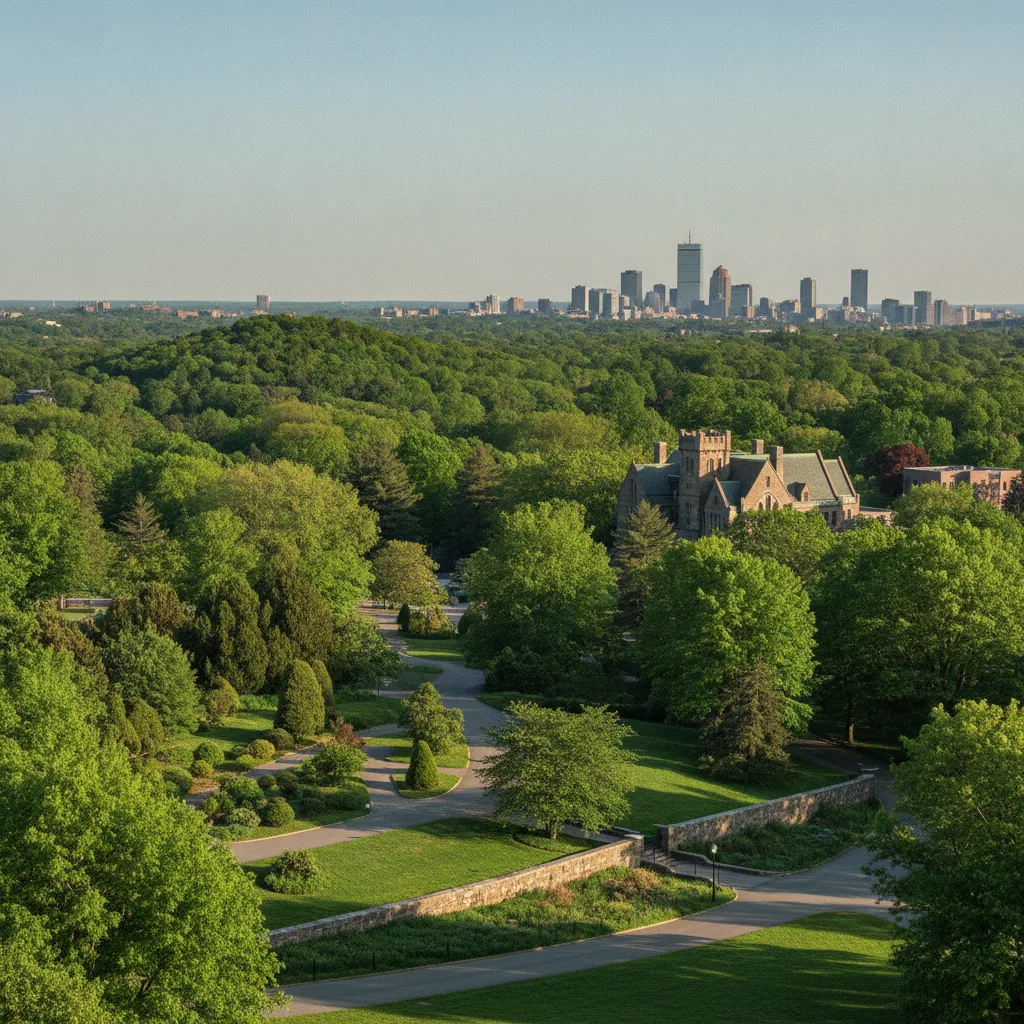
Arnold Arboretum of Harvard University Travel Guide — Massachusetts
Our Arnold Arboretum of Harvard University guide covers practical planning for Arnold Arboretum of Harvard University Massachusetts — best time to visit, getting there, and what to do on the ground.
As independent US travel authorities, our team at Roam States believes that some destinations simply transcend the ordinary, offering more than just a fleeting experience. The Arnold Arboretum of Harvard University Massachusetts is precisely one such place. A National Historic Landmark, this sprawling 281-acre living museum, designed by the visionary Frederick Law Olmsted, is a testament to botanical diversity and landscape artistry. It's a sanctuary of trees, shrubs, and vines from around the globe, providing breathtaking walking trails, engaging educational programs, and a profound connection to nature throughout the year.
Why Visit Arnold Arboretum of Harvard University
We consider the Arnold Arboretum of Harvard University a quintessential New England experience, especially for those seeking tranquility, natural beauty, and a dose of botanical education. It’s not merely a park; it's a dynamic, living collection of over 15,000 accessioned plants, meticulously curated and studied by Harvard University. We find ourselves drawn back season after season, as the landscape transforms from the vibrant blooms of spring to the lush greens of summer, the fiery hues of autumn, and the stark, sculptural beauty of winter.
Beyond its aesthetic appeal, the Arboretum serves as a vital scientific research station, contributing to our understanding of plant life and conservation. Visitors can appreciate this dedication through its diverse collections, which emphasize plants from eastern North America and East Asia. It’s a place where you can wander for hours, discovering rare species, enjoying panoramic views from Peters Hill, and immersing yourself in a landscape that has been carefully cultivated for over 150 years.
Who It's Best For
The Arnold Arboretum of Harvard University truly offers something for everyone, making it a versatile destination on any Massachusetts itinerary. We recommend it highly for:
- **Nature Enthusiasts and Gardeners:** With its vast and diverse plant collections, it's an unparalleled resource for identifying, learning about, and simply admiring woody plants.
- **Hikers and Walkers:** Miles of paved and unpaved trails wind through varied terrain, offering routes for leisurely strolls or more invigorating walks.
- **Families with Children:** The open spaces are perfect for exploration, and the Arboretum offers specific programs like "Little Explorers" designed for younger visitors.
- **Photographers:** The ever-changing landscape provides endless opportunities for stunning shots, from macro details of blossoms to sweeping vistas.
- **History Buffs:** As a National Historic Landmark and a key component of Frederick Law Olmsted's Emerald Necklace, the Arboretum offers a rich historical context.
- **Those Seeking Solitude:** Despite its popularity, the Arboretum's expansive size allows for quiet contemplation and an escape from urban bustle.
Whether you're looking for an active day outdoors or a peaceful retreat, this botanical gem delivers.
Getting There & Parking
Understanding how to get to Arnold Arboretum of Harvard University is key to a smooth visit, especially given its urban setting. We always advise considering public transportation first, particularly during peak seasons.
Public Transportation
The Arboretum is easily accessible via Boston's MBTA system, affectionately known as "the T."
- Subway: Take the Orange Line to its southern terminus, Forest Hills Station. From there, the Arboretum's Forest Hills Gate is a short walk, ranging from 5 to 17 minutes depending on the source. To reach the main Arborway Gate and Hunnewell Visitor Center, you can continue along the Arborway sidewalk (about a 12-minute walk from Forest Hills Gate) or enter Forest Hills Gate and bear right at the pond.
- Bus: Several MBTA bus lines serve the Arboretum. Routes 38, 39, and 35 stop near various gates, including Centre Street and South Street. For the Arborway Gate, take the #39 bus to the South Street @ Bardwell Street stop, then follow directions to the gate.
- Biking: The Arboretum is bike-friendly, with paved paths welcoming cyclists at speeds of 10 mph or slower. Bluebike rentals are available on South Street and Centre Street, and outside Faulkner Hospital. Bike racks are available throughout the grounds.
Driving & Parking
For those driving, free public street parking is available along the Arborway, Flora Way, and Walter Street. However, we must stress that parking can be severely limited, especially on weekends and during popular events like Lilac Sunday (May 10, 2026), or during peak bloom season (typically late April through May). On these days, public transportation is strongly encouraged.
Accessible parking spaces are designated at the Arborway Gate (which provides access to the Hunnewell Building and Visitor Center), Forest Hills Gate, Walter Street Gate, and Centre Street Gate. For visitors with accessibility needs, a 2-hour driving permit is available by online reservation Monday through Friday. This permit allows entry through the Arborway Gate, but vehicles must exit by 4:00 PM. It's crucial to book these permits in advance via the Arboretum's calendar.
While the Arboretum itself does not offer dedicated on-site parking lots for general visitors, third-party services like SpotHero and ParkWhiz list various paid parking options in the surrounding areas of Brookline and Boston.
Top Things to Do
When planning your visit, you'll find an abundance of things to do at Arnold Arboretum of Harvard University, regardless of your interests or the season. Our team always recommends prioritizing exploration and immersion in the natural environment.
- Explore the Plant Collections: The Arboretum is a living library of plants. Wander through specific collections like the renowned Lilac Collection, which boasts over 400 plants and 173 taxa, and is celebrated annually on Lilac Sunday. Other notable collections include conifers, maples, oaks, rhododendrons, and magnolias.
- Walk the Trails: With over 281 acres, there are miles of paved and unpaved paths to explore. The main roads are paved, making them accessible, while numerous walking paths offer a more rustic experience. Don't miss the ascent to Peters Hill for panoramic views of the Boston skyline.
- Take a Guided or Self-Guided Tour: The Arboretum offers guided tours led by experts, providing insights into its history and plant collections. You can also opt for self-guided tours using downloadable maps or the "Expeditions" mobile app, which offers information on over 60 plants and areas in multiple languages.
- Visit the Hunnewell Visitor Center: Located at the Arborway Gate, the Visitor Center is open daily from 10:00 AM to 4:00 PM. Here, you'll find a scale model of the Arboretum, seasonal highlight displays, maps, and friendly staff to answer your questions.
- Attend Special Events and Programs: Check the Arboretum's calendar for events like "Lilac Sunday" (May 10, 2026), which features tours, children's programming, and chalk art. They also offer "Arboretum Highlights Tours" and "Little Explorers" programs for children aged three to five.
- Photography: The diverse flora and changing seasons make the Arboretum a fantastic spot for photography, from close-ups of blossoms to sweeping landscape shots.
- Cycling: Bicycles and electric bikes are permitted on paved paths and Blackwell Footpath, provided you maintain a speed of 10 miles per hour or slower. It’s a wonderful way to cover more ground and experience the landscape.
When enjoying the myriad things to do at Arnold Arboretum of Harvard University, remember that picnicking is generally prohibited, with exceptions for school groups and on Lilac Sunday. Dogs are welcome but must be kept on a leash at all times.
Best Time to Visit
The Arnold Arboretum is a year-round destination, each season offering a unique perspective on its living collections. However, based on our experience, certain times truly shine:
- Spring (April to early June): This is arguably the most popular time, and for good reason. The Arboretum bursts into color with magnolias, cherries, and especially the renowned lilac collection in bloom. Lilac Sunday, typically held in May (May 10, 2026, for this year), is a highlight, though it can be very crowded.
- Summer (June to August): The landscape is lush and green, offering ample shade for walks. Many trees and shrubs are in full leaf, and the diverse collection provides continuous interest. It's a great time for longer hikes and enjoying the cooler pockets of the arboretum.
- Autumn (September to November): New England fall foliage is legendary, and the Arboretum is no exception. The maples, oaks, and other deciduous trees put on a spectacular display of reds, oranges, and yellows. This season offers crisp air and beautiful light for photography.
- Winter (December to March): Often overlooked, winter at the Arboretum offers a serene and contemplative experience. The bare branches reveal the structural beauty of the trees, and evergreen conifers provide a splash of color. It's a peaceful time for quiet walks, and the "Winter Tour" brochure can guide you to hidden treasures.
We recommend checking the Arboretum's online "Seasonal Plant Highlights" or "Arboretum Explorer" tool before your visit to see what's currently in bloom or at its peak.
Where to Stay Nearby
Finding suitable Arnold Arboretum of Harvard University lodging is straightforward, with options ranging from charming guesthouses to well-known hotel brands in nearby neighborhoods. We suggest focusing on Jamaica Plain and Brookline for the closest proximity, or considering central Boston for broader access to attractions.
For those prioritizing proximity, several hotels are located within a mile of the Arboretum's main Arborway entrance, primarily in the Brookline corridor. These include:
- Iris Hotel Boston: A 4-star option, approximately 0.6 miles from the main entrance, about a 12-minute walk.
- Courtyard by Marriott Boston Brookline: A 3-star hotel, also about 0.6 miles away, offering a mid-range option with good guest ratings.
- The Coolidge Corner Guest House: A Brookline Bed and Breakfast, rated 3 stars and about 0.7 miles from the entrance.
- Longwood Inn: Another 3-star choice, approximately 0.8 miles away, some rooms include kitchenettes.
- Homewood Suites by Hilton Boston Brookline-Longwood Medical: A 3-star property, about 0.9 miles from the Arboretum.
These Brookline properties offer easy access to the Green Line for connections into downtown Boston and a walkable area with restaurants and shops along Harvard Street. Jamaica Plain properties, while fewer on some lists, put you closer to the Forest Hills Orange Line station and the Arboretum's main gate.
If you prefer to stay closer to other major Boston attractions and don't mind a short subway ride, consider hotels in areas like Back Bay, Fenway, or the Seaport District. Popular choices include citizenM Boston Back Bay, The Lenox Hotel Boston, and The Revolution Hotel. These areas offer a wider array of dining, shopping, and entertainment options, and are well-connected to the Forest Hills Orange Line station via the MBTA.
When researching Arnold Arboretum of Harvard University lodging, we recommend booking in advance, especially during peak travel seasons, to secure the best rates and availability.
Sample 2-Day Itinerary
To truly appreciate the breadth and beauty of the Arnold Arboretum and its surroundings, we suggest a relaxed two-day itinerary.
Day 1: Deep Dive into the Arboretum
- Morning (9:00 AM - 1:00 PM): Arrival and Main Collections
- Arrive at the Arboretum via the MBTA Orange Line to Forest Hills Station, or park along Arborway if early enough.
- Start at the Hunnewell Visitor Center (open 10:00 AM - 4:00 PM) to pick up a map and get an overview of current highlights.
- Embark on a self-guided tour focusing on the main collections. Walk through the Conifer Path, explore the magnolias, and make your way to the famous Lilac Collection (especially if visiting in spring).
- Consider joining a public guided tour if available (check the schedule in advance).
- Lunch (1:00 PM - 2:00 PM): Picnic or Local Eatery
- Grab a casual lunch at a local cafe in Jamaica Plain or Brookline. Remember, picnicking is generally not allowed within the Arboretum, except for school groups and on Lilac Sunday.
- Afternoon (2:00 PM - 5:00 PM): Peters Hill and Emerald Necklace Connection
- Head to Peters Hill, the highest point in the Arboretum, for stunning panoramic views of Boston.
- Explore the Peters Hill collections, including oaks and crabapples.
- Consider extending your walk onto a segment of the Emerald Necklace, the historic park system designed by Frederick Law Olmsted, which connects the Arboretum to other green spaces in Boston.
- Evening: Dinner in Brookline or Jamaica Plain
- Enjoy dinner at one of the many excellent restaurants in Brookline or Jamaica Plain, known for their diverse culinary scenes.
Day 2: Thematic Exploration & Nearby Boston Highlights
- Morning (9:00 AM - 12:00 PM): Specialized Trails or Family Fun
- Return to the Arboretum for a more focused exploration. If you enjoy hiking, tackle some of the unpaved paths on Bussey Hill or Hemlock Hill.
- Alternatively, if traveling with kids, check for "Little Explorers" programs (registration encouraged).
- Explore specific plant groups you missed on day one, perhaps the maples or beeches.
- Lunch (12:00 PM - 1:00 PM): Quick Bite
- Grab a quick bite near your next destination.
- Afternoon (1:00 PM - 5:00 PM): Boston's Best
- Take the MBTA into downtown Boston to explore other iconic Massachusetts attractions. We suggest:
- Walking a portion of The Freedom Trail to immerse yourself in Revolutionary War history.
- Visiting Harvard University/Cambridge for a different academic atmosphere.
- Exploring the vibrant neighborhoods of Boston, perhaps Back Bay or Beacon Hill.
- Take the MBTA into downtown Boston to explore other iconic Massachusetts attractions. We suggest:
- Evening: Boston Dining & Entertainment
- Indulge in Boston's renowned dining scene, from fresh seafood to international cuisine, followed by a show or live music.
For more ideas on extending your Massachusetts adventure, consider exploring our guide to the Best Places in Massachusetts, or venturing further afield to destinations like Cape Cod National Seashore, Martha's Vineyard, or Salem.
Is It Worth Visiting?
Absolutely, we confidently assert that asking "is Arnold Arboretum of Harvard University worth visiting" can be answered with a resounding yes. In a city renowned for its historical landmarks and vibrant culture, the Arboretum stands out as a unique and invaluable natural escape. It offers a distinct experience that complements the urban attractions of Boston.
The fact that the Arboretum is free and open to the public every day from sunrise to sunset makes it incredibly accessible. This commitment to open space, a core principle of its original design by Frederick Law Olmsted, means that anyone can enjoy its beauty and tranquility without an admission fee. We believe that this alone makes the Arnold Arboretum of Harvard University worth visiting for any traveler to the Boston area.
Beyond the cost, the sheer scale and diversity of the plant collections, the meticulously maintained landscape, and the ongoing scientific research make it an educational and inspiring destination. Whether you’re a serious botanist, a casual stroller, a family with young children, or simply someone seeking a peaceful respite, the Arboretum provides a rich and rewarding experience that evolves with each season.
FAQ
Arnold Arboretum of Harvard University camping
Camping is not permitted at the Arnold Arboretum of Harvard University. The Arboretum is a research institution and public park, and its rules prohibit activities such as picnicking (with exceptions for school groups and Lilac Sunday) and fires. Visitors seeking overnight accommodations should look for hotels, guesthouses, or other lodging options in nearby Boston neighborhoods like Jamaica Plain or Brookline.
things to do in Boston
Boston offers a wealth of activities beyond the Arboretum. We recommend exploring the historical Freedom Trail, visiting world-class museums like the Museum of Fine Arts, catching a Red Sox game at Fenway Park, or taking a whale watching tour from the harbor. For academic and cultural pursuits, a visit to Harvard University/Cambridge is highly recommended. Enjoy the vibrant culinary scene, explore diverse neighborhoods like the North End or Beacon Hill, and consider a day trip to coastal destinations like Cape Cod National Seashore, Martha's Vineyard, or Salem.
Arnold Arboretum of Harvard University with kids
The Arnold Arboretum is an excellent destination for families with children. Its expansive grounds offer plenty of space for kids to run and explore. We suggest engaging them with the "Little Explorers" program, designed for ages three to five, which includes nature-inspired stories, crafts, and nature walks. Children can also enjoy self-guided family activities, and the Hunnewell Visitor Center has exhibits that can capture their imagination. Remember to dress them appropriately for the weather, and note that school groups are a special exception to the no-picnicking rule. Dogs must be leashed.
best hotels near Arnold Arboretum of Harvard University
For the best hotels near Arnold Arboretum of Harvard University, we recommend focusing on properties in the Brookline and Jamaica Plain areas for convenience. Top choices within a mile of the main entrance include the Iris Hotel Boston, Courtyard by Marriott Boston Brookline, The Coolidge Corner Guest House, Longwood Inn, and Homewood Suites by Hilton Boston Brookline-Longwood Medical. These offer a range of amenities and price points, with easy access to public transport for further exploration of Boston.
Arnold Arboretum of Harvard University tips
Our top tips for visiting the Arnold Arboretum of Harvard University include: always check the Arboretum's website for current events and seasonal highlights before you go. Wear comfortable walking shoes, as you'll be covering a lot of ground. Consider public transportation, especially during spring bloom, as parking can be very limited. Bring water, but remember that picnicking is generally prohibited (except for school groups and Lilac Sunday). Dogs are welcome but must be leashed. Download the "Expeditions" mobile app or a self-guided tour map for an enhanced experience.
where to stay near Arnold Arboretum of Harvard University
When deciding where to stay near Arnold Arboretum of Harvard University, we advise looking at hotels in Brookline and Jamaica Plain for the closest options. These neighborhoods provide a local feel with good access to public transit (MBTA Green and Orange Lines). If you prefer to be in the heart of Boston with more dining and entertainment choices, areas like Back Bay, Fenway, or the Seaport District are excellent alternatives, offering easy subway connections to the Arboretum. Consider hotels like citizenM Boston Back Bay or The Revolution Hotel for a central Boston experience.
The Arnold Arboretum of Harvard University Massachusetts is more than just a garden; it's a living, breathing testament to nature's enduring beauty and humanity's commitment to understanding and preserving it. We encourage you to plan your visit and discover its many wonders for yourselves.
Last updated: 2026-07-06 by the Roam States team.